
Most Efficient Solar Panels in 2026: Top Technologies & Best Models

The “most efficient solar panel” now pushes 24% module efficiency under lab-standard test conditions — a level certified for commercial back-contact modules in 2023–2024 — while many premium residential panels ship at 21–23% (manufacturer datasheets; TÜV SÜD/NRTL certifications). That spread matters: on an area-limited roof, moving from a 20% to a 22.5% module can unlock 12–15% more DC capacity and thousands of extra kilowatt-hours over the system life. In this guide, we explain what efficiency really means, compare leading cell technologies, and profile the top commercial modules you can actually buy in 2026.
If you want a deeper tech primer alongside this comparison, see Solar Panel Technology in 2026: A Complete Guide to Modern Photovoltaics.
What ‘efficiency’ means for solar panels (STC vs real-world)
- Module efficiency is the fraction of sunlight a panel turns into DC electricity at its face. A 22% efficient 1.6 m² panel under 1,000 W/m² sunlight at Standard Test Conditions (STC) makes roughly 352 W DC.
- STC is a lab definition: 1,000 W/m² irradiance, 25°C cell temperature, air mass 1.5 (AM1.5G), and no wind. It’s a common basis for comparing modules but it is not the weather on your roof.
- Real-world output is typically measured at NMOT/NOCT (Nominal Module Operating Temperature), often around 800 W/m², 20°C ambient, 1 m/s wind — which yields cell temperatures of ~40–45°C. Because silicon loses output as it heats, real energy yield depends on the temperature coefficient, mounting airflow, and climate.

Solar PV Engineering and Installation: White, Sean
It really hit the nail on the head.’ ... PV Installation Professional · Sean White is an <strong>experienced teacher, instructor and professional in solar PV based in the USA</strong>....
Check Price on AmazonTwo panels with the same STC efficiency can diverge in annual energy if one runs cooler (better thermal design) or has a better temperature coefficient (less loss per degree of heat). NREL’s PVWatts uses a default 14% system loss bucket to capture these non-idealities (soiling, wiring, mismatch, inverter, shading, age), which is a good planning baseline (NREL PVWatts default assumptions).
How efficiency is measured: cell tech, temperature coefficient, degradation
- Cell technology and architecture. Monocrystalline PERC (Passivated Emitter and Rear Cell) has dominated for years at ~20–21% module efficiency. N‑type architectures — TOPCon (Tunnel Oxide Passivated Contact), HJT (heterojunction), and back-contact (IBC/ABC) — reduce recombination losses and raise voltage, enabling 21–24% modules. NREL’s “Best Research-Cell Efficiencies” chart shows why these designs lead the lab records (NREL).
- Temperature coefficient (typically −0.24% to −0.35% per °C). This specifies the power drop for each degree Celsius above 25°C cell temperature. Example: a −0.26%/°C HJT panel at 45°C cell temp loses ~5.2%, while a −0.34%/°C PERC panel would drop ~6.8%. In hot climates, that 1.6 percentage-point gap can translate to 2–4% more annual kWh.
- Degradation rate. All panels lose output slowly over time due to light and heat stress. Premium n‑type lines commonly warrant ≤0.25–0.33% loss per year (roughly 90–92% power guaranteed at year 25), while older p‑type designs were closer to 0.5%/year. Field studies summarized by IEA PVPS indicate modern mono modules are reliably under 0.5%/year on average, with n‑type trending lower (IEA PVPS Task 13; PVEL Reliability Scorecard).
Leading solar cell technologies: Monocrystalline, IBC, HJT, TOPCon, tandems
- Monocrystalline PERC (p‑type). Mature, cost-effective, widely available. Module efficiency: ~19–21.5%. Temp coefficient: ~−0.30 to −0.35%/°C. Good value but not the peak performer.
- TOPCon (n‑type). Adds ultra-thin oxide and doped poly contacts to reduce recombination. Module efficiency: ~21–22.5% (select models ~22.7%+). Temp coefficient: ~−0.27 to −0.30%/°C. Growing rapidly due to manufacturability and cost declines (IEA 2024 trends).
- HJT (n‑type). Crystalline silicon sandwiched between thin amorphous silicon layers. High open-circuit voltage, excellent low-light response, and best-in-class temperature coefficients (−0.24 to −0.26%/°C). Module efficiency: ~21.5–23%.
- IBC/ABC (n‑type back-contact). All metal contacts on the rear, maximizing light capture on the front. Highest commercial module efficiencies, frequently 22.5–23%+, with premium pricing. Temp coefficient typically ~−0.27 to −0.29%/°C.
- Tandems (perovskite/silicon). Research cells now exceed 33% in the lab, but bankable, mass-market tandem modules are still emerging (NREL; peer-reviewed literature). Expect pilot deployments before mid-decade with broader availability later if stability and manufacturing scale prove out.
For a deep dive into how these architectures work, see Solar Panel Technology in 2026: A Complete Guide to Modern Photovoltaics.
Top commercial panels today — models, rated efficiencies, and specs
The models below represent widely available, high-efficiency options for residential and C&I projects as of late 2024–2025. Always verify the exact datasheet for your market; specifications change frequently and vary by region.
| Manufacturer & Model | Cell Tech | Module Efficiency (STC) | Wattage Range (W) | Temp. Coeff. (%/°C) | Power Warranty (typ.) | Notes |
|---|---|---|---|---|---|---|
| Aiko N‑type ABC (All‑Back‑Contact) | ABC/IBC (n‑type) | Up to ~24.0% (certified record variant) | 430–470 (residential formats) | ~−0.28 to −0.30 | ≥90% @ 25 yrs (typ.) | Record-setting module class; check local availability |
| Maxeon (SunPower) Maxeon 6/7 | IBC (n‑type) | ~22.8–23.0% | 420–450 | ~−0.29 | ~92% @ 25 yrs | Long product warranty; robust degradation specs |
| REC Alpha Pure‑R | HJT (n‑type) | ~22.0–22.3% | 410–430 | ~−0.24 to −0.26 | ~92% @ 25 yrs | Excellent hot-climate performance |
| Canadian Solar HiHero | HJT (n‑type) | ~22.2–22.5% | 420–445 | ~−0.26 | ~92% @ 25 yrs | Low degradation, strong low-light |
| Jinko Solar Tiger Neo | TOPCon (n‑type) | ~21.8–22.3% | 420–475 | ~−0.28 to −0.30 | ~89% @ 30 yrs | Competitive price/performance |
| Trina Solar Vertex S+ (n‑type) | TOPCon (n‑type) | ~22.0–22.5% | 430–460 | ~−0.29 to −0.30 | ~89% @ 30 yrs | Dual-glass, durable for C&I |
| LONGi Hi‑MO X6 | TOPCon (n‑type) | ~21.8–22.3% | 430–475 | ~−0.29 | ~89% @ 30 yrs | High-volume, bankable brand |
| Risen Hyper‑ion | HJT (n‑type) | ~22.5–23.0% | 420–450 (res.) | ~−0.26 | ~90% @ 25 yrs | High-efficiency HJT class |
| Meyer Burger MB Black | HJT (n‑type) | ~21.7–22.2% | 380–410 | ~−0.26 | ~92% @ 25 yrs | European manufacturing focus |
| Panasonic EverVolt H | HJT (n‑type) | ~21.7–22.2% | 400–410 | ~−0.26 | ~92% @ 25 yrs | Strong warranty support in residential |
Notes and sources: Manufacturer datasheets and third-party certifications (TÜV Rheinland, TÜV SÜD, UL/IEC). Record module efficiency claims (e.g., ~24% for n‑type back-contact) have been independently certified; check the specific sub-model and certificate number in your region. For a broader shopping short list, see Best Solar Panels 2026: Top Picks, Specs & Buying Guide.
Real-world performance: area constraints, system losses, and climate effects
- Area-limited roofs. If you can only fit 10 panels in a given array footprint, moving from 400 W panels (~20% eff) to 440 W panels (~22%+) adds 10% capacity: 4.0 kW to 4.4 kW. In a 1,400 kWh/kW-year location (good U.S. sun), that’s ~560 extra kWh/year.
- Temperature effects. A −0.26%/°C panel running at 45°C cell temp loses ~5.2% vs STC; a −0.34%/°C panel would lose ~6.8%. In Phoenix or Dubai, this differential alone can mean 2–4% more annual energy.
- Low-light behavior. HJT and back-contact modules typically maintain higher relative output in mornings, late afternoons, and overcast conditions due to higher open-circuit voltage and spectral response. Over a year, this can add ~1–3% vs otherwise similar PERC/TOPCon in diffuse-light climates (field studies; IEA PVPS Task 13).
- System losses. PVWatts’ default 14% system loss (NREL) includes inverter efficiency, wiring, mismatch, soiling, light-induced degradation, and shading. Premium modules do not erase these; careful design, quality BOS components, and maintenance reduce them.

TENMARS TM-207 Solar Power Meter Remove Sensor Wire Length 1.5M with 3 1/2 Digits LCD Display: Amazon.com: Industrial & Scientific
View on AmazonFor planning a constrained roof, use How Many Solar Panels Do I Need? A Practical Guide & Estimate and then test scenarios with different module wattages.
Cost vs efficiency: price per watt, lifetime energy yield, and ROI examples
Installed residential costs in the U.S. have hovered around $2.50–$3.50/W DC before incentives depending on market, labor, and equipment (NREL Solar Cost Benchmark; SEIA/Wood Mackenzie). Module premiums for the highest-efficiency lines typically add $0.10–$0.40/W to hardware cost, translating to a smaller but real impact on total installed price.
Key economic levers:
- Price per watt (PPW). If a 20% module system is $3.00/W and a 22.5% module adds $0.20/W to modules but only $0.10/W to total installed price, the net is $3.10/W. The 22.5% system often wins on $/kWh over its life, especially when space-limited.
- Lifetime energy yield (kWh/kW). High-efficiency, low-degradation panels in hot climates can deliver 3–6% more kWh/kW-year than baseline technologies. Over 25 years, compounding degradation advantages add meaningful energy.
- Incentives and tariffs. Federal ITC in the U.S. (30%) applies to system cost, not module efficiency. Where net billing pays less for exports, squeezing more generation into your roof area improves self-consumption economics.
Example A: Area-limited suburban roof
- Constraint: 10-panel array max
- Option 1: 10 × 400 W (20% eff) = 4.0 kW DC; system price $3.00/W → $12,000 pre-ITC
- Option 2: 10 × 440 W (≈22% eff) = 4.4 kW DC; system price $3.10/W → $13,640 pre-ITC
- Annual yield (1,400 kWh/kW-year):
- 4.0 kW → 5,600 kWh/yr
- 4.4 kW → 6,160 kWh/yr (extra 560 kWh/yr)
- At $0.18/kWh retail, extra value ≈ $101/yr. Over 25 years (undiscounted): ~$2,525. If the premium is $1,640 pre-ITC ($1,148 after 30% ITC), the high-efficiency option pays back the premium and adds cushion — plus better production late in life due to lower degradation.
Example B: Space-plenty rural roof
- Constraint: None; roof can fit either option
- Option 1: 16 × 400 W = 6.4 kW @ $3.00/W → $19,200 pre-ITC
- Option 2: 14 × 440 W = 6.16 kW @ $3.10/W → $19,096 pre-ITC
- If racking/labor is similar per module, fewer higher-watt panels can slightly reduce BOS costs (fewer modules, clamps, wiring runs). Evaluate installer quotes carefully — the “most efficient solar panel” may lower soft costs by letting you hit a target kW with fewer units.
For granular budgeting, see Solar Panel Cost Guide: How Much You'll Pay & How to Save and Solar Panel Installation Cost: 2026 Pricing, Breakdown & Savings Guide.
By the numbers
- Typical residential module efficiency (2026): 20–23%; top certified commercial modules: ~24% (NREL records; TÜV certifications)
- Temperature coefficient spread: −0.24%/°C (HJT) to −0.35%/°C (older PERC) → 2–4% annual kWh swing in hot climates
- NREL PVWatts default system losses: 14%
- Degradation warranties: ~92% at year 25 (premium n‑type) vs ~84–87% historic baseline; field-averaged degradation often <0.5%/yr (IEA PVPS; PVEL)
- Area-limited boost: 20% to 22.5% module = roughly 12.5% more nameplate in the same footprint
How to choose the most efficient panel for your roof or project (checklist)
- Confirm constraints first. Roof area, obstructions, preferred array layout, and service panel capacity often decide whether you need maximum wattage per panel.
- Compare STC module efficiency and wattage — and NMOT power. NMOT gives a better clue of real output on your roof.
- Prioritize temperature coefficient for hot sites. For Phoenix, Las Vegas, Austin, or the Gulf, look for −0.26%/°C or better.
- Check degradation and warranty terms. Best-in-class: ≤0.25–0.33%/yr warranted degradation; 25–30 years power; 20–25+ years product. Scrutinize linear vs step warranties and exclusions.
- Evaluate $/kWh, not just $/W. Ask your installer to model annual kWh and 25-year lifetime kWh for each option. The higher-efficiency choice often wins on LCOE in space-limited systems.
- Balance aesthetics and BOS. All-black modules run hotter but can be worth it for HOA or personal preference; consider dual-glass for durability. Fewer, higher-watt panels can trim racking and labor.
- Verify bankability. Choose Tier 1 manufacturers with independent certifications (UL/IEC), participation in PVEL’s Reliability Scorecard, and strong service presence.
- Pair with right inverter. High-watt modules may benefit from module-level power electronics (MLPE) for shade mitigation and rapid shutdown compliance. Optimize DC/AC ratio to avoid clipping.
- Plan maintenance. Keep soiling losses low with occasional cleaning where dusty and check for shading growth. See Solar Panel Maintenance Tips: Maximize Output & Lifespan.
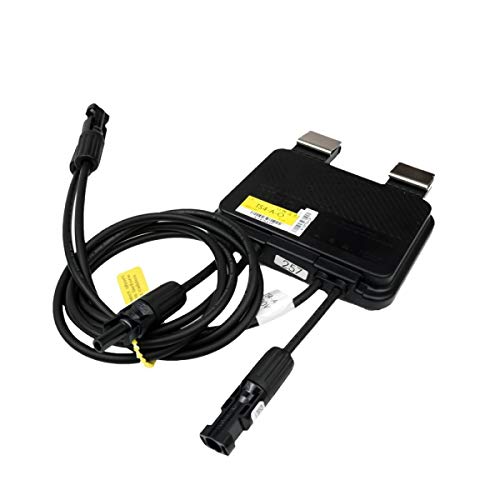
Tigo TS4-A-O Module Add-On Rapid Shutdown ...
View on AmazonIf you’re assembling a shortlist, Best Solar Panels 2026: Top Picks, Specs & Buying Guide compares high-efficiency lines side-by-side.
FAQs, warranty & degradation expectations, and recommended next steps
What is the most efficient solar panel available today?
- Among commercially available, certified modules, n‑type back-contact (IBC/ABC) panels hold the top module efficiency marks around 23–24% under STC, with several HJT and n‑TOPCon modules close behind in the 22–23% range. Always confirm the specific sub-model and certificate.
Does higher efficiency always mean more energy for me?
- If your array is space-limited, yes — higher efficiency means more watts in the same footprint. If space is abundant, the most efficient solar panel might not minimize total system cost; a slightly lower-efficiency, lower-cost module can have equal or better economics when you can simply install more panels.
Are premium panels worth the price?
- In hot climates, with high electricity prices, or on constrained roofs, the extra kWh from better temperature coefficients and higher wattage usually covers the premium over time. On large, unconstrained roofs with lower tariffs, focus on proven reliability and $/kWh.
What warranties should I expect?
- Power warranty: typically 90–92% at year 25 for premium n‑type; some brands extend to 30 years with ~87–90% remaining. Product warranty: 20–25+ years. Read the fine print on installer workmanship and module handling requirements.
What about perovskite/silicon tandems?
- Lab cell records keep climbing (30%+), but mass-market, bankable tandem modules are still in early commercialization. Expect pilot or premium offerings first; mainstream availability depends on proven stability and scalable production (NREL; IEA).
Recommended next steps
- Get two or three quotes that model your roof with at least two module options: a high-efficiency n‑type (IBC/HJT/TOPCon) and a value TOPCon.
- Ask for PVWatts or similar hourly production simulations including temperature effects and shading.
- Compare 25-year kWh, not just system price, and factor warranty coverage and brand service footprint.
Affiliate picks worth a look
- For area-limited roofs, an IBC/ABC kit such as the Maxeon Residential High-Efficiency Bundle typically delivers top STC and strong hot-weather performance.
- For hot climates, a high-watt HJT like the REC Alpha Pure‑R Package balances excellent temperature coefficient with robust 25‑year guarantees.
- For value-driven C&I arrays, n‑TOPCon strings such as the Jinko Tiger Neo 54HL4‑V Kit often hit a compelling $/kWh while staying above 22% module efficiency.
Where the tech is heading
- TOPCon at scale. IEA reports rapid conversion of PERC lines to TOPCon, pushing mainstream module efficiencies toward 22%.
- HJT cost drops. Silver and wafer thinning, copper plating, and low-temperature metallization are chipping away at HJT’s cost gap, widening its hot-climate niche.
- Back-contact and tandems. Back-contact modules will likely hold the commercial efficiency crown in 2026, while the first bankable tandem modules begin niche deployments. Expect certified module efficiencies to creep past 24% in specialty lines as manufacturing tightens around lab innovations.
Useful internal resources
- Solar Panel Technology in 2026: A Complete Guide to Modern Photovoltaics
- Best Solar Panels 2026: Top Picks, Specs & Buying Guide
- Solar Panel Cost Guide: How Much You'll Pay & How to Save
- How Many Solar Panels Do I Need? A Practical Guide & Estimate
Sources and further reading: IEA PVPS Task 13 reliability reports; NREL Best Research-Cell Efficiencies and PVWatts defaults; SEIA/Wood Mackenzie U.S. Solar Market Insight; PVEL PV Module Reliability Scorecard; TÜV Rheinland/SÜD certification announcements for module efficiency records; manufacturer datasheets (Maxeon, REC, Jinko, Trina, LONGi, Canadian Solar, Panasonic, Meyer Burger, Risen, Aiko).
Recommended Products
Solar PV Engineering and Installation: White, Sean
It really hit the nail on the head.’ ... PV Installation Professional · Sean White is an <strong>experienced teacher, instructor and professional in solar PV based in the USA</strong>....
TENMARS TM-207 Solar Power Meter Remove Sensor Wire Length 1.5M with 3 1/2 Digits LCD Display: Amazon.com: Industrial & Scientific
Measuring the Solar radiation emitted by the sun. Display units: W/m2 (<strong>Watts per square meter</strong>) or BTU. Data Hold/ MAX/MIN functions. External sensor. ... This item: TENMARS TM-207 Sol
Tigo TS4-A-O Module Add-On Rapid Shutdown ...
BougeRV 44PCS Solar Connector with Spanners IP67 Waterproof Solar Panel Cable Connectors Male/Female 22Pairs(10AWG) · BougeRV 12 PCS Solar Connectors with Spanners Solar Panel Cable Connectors 6 Pairs