
Solar Inverter Buyer’s Guide: Types, Sizing & Top Picks
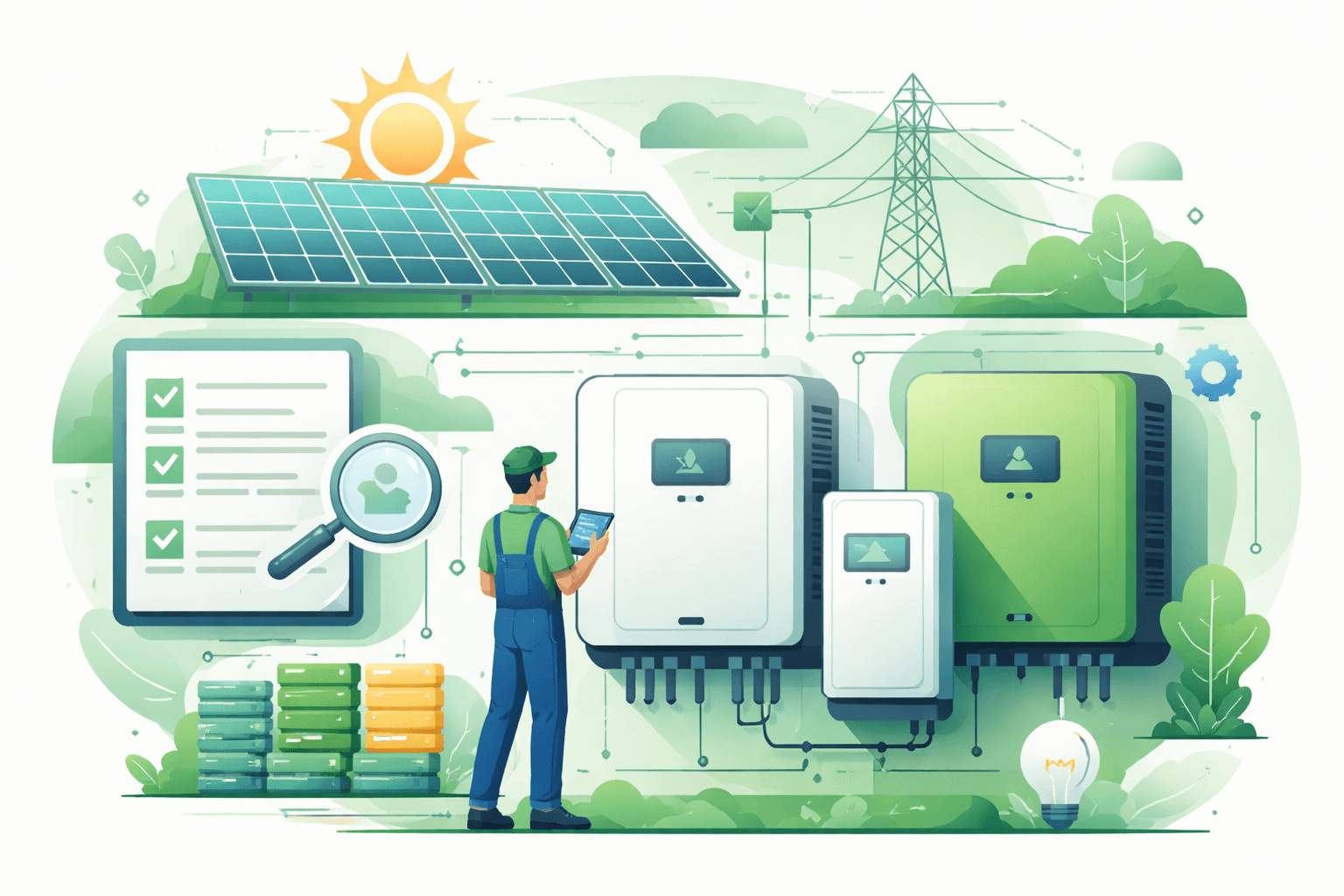
A modern solar inverter converts your panels’ DC power into grid-ready AC and acts as the brain of your system—managing safety, optimization, and communications. Today’s best units reach 97–99% weighted efficiency (per the California Energy Commission database), support advanced grid functions required by IEEE 1547-2018, and can integrate batteries for backup. Choosing the right solar inverter can raise annual energy yield by several percent, reduce maintenance costs, and future-proof your system for storage.
This guide explains the essentials—what a solar inverter does, how to compare specs, how to size it, which brands to consider, and how warranties and incentives affect ROI.
What is a solar inverter and why it matters
A solar inverter converts direct current (DC) from photovoltaic (PV) modules into alternating current (AC) for your home or business and the grid. It also provides protective functions (anti-islanding, ground fault detection), maximum power point tracking (MPPT) to harvest the most power from panels, and communications for monitoring and utility interoperability.
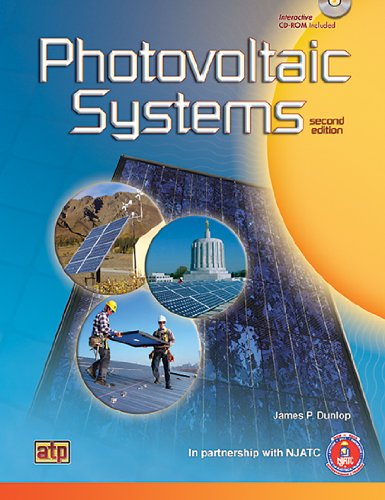
Photovoltaic Systems: Njatc, Cor
Among the topics are <strong>solar radiation, system components and configurations, batteries, inverters, system sizing, mechanical and electrical integration, utility interconnection, and economic an
Check Price on AmazonThere are three core categories:
- Grid-tied inverters: Feed power to the grid. They shut down automatically when the grid is out (anti-islanding) unless paired with a battery and backup interface. Most residential and commercial rooftop systems use grid-tied equipment.
- Off-grid inverters: Provide standalone AC power from PV and batteries with no grid connection. They are “grid-forming” (generate and regulate voltage/frequency) and often support generators.
- Hybrid (battery-ready) inverters: Operate grid-tied day-to-day but can form a microgrid during outages. They support DC-coupled or AC-coupled batteries and are increasingly common for homeowners who want backup.
Why it matters: The inverter is the single most common source of PV service events in field fleets (NREL field reliability assessments) and typically represents a large share of lifetime operations and maintenance. Selecting the right topology, efficiency class, and warranty can materially improve uptime and long-term returns.
By the numbers: Solar inverter performance and practice
- 97–99%: Typical CEC-weighted efficiency for modern string inverters; microinverters often land around 96.5–97.5% (CEC database; manufacturer datasheets)
- 1.2–1.3: Common DC/AC ratio (array-to-inverter sizing) used by designers to maximize annual yield without excessive clipping (NREL/industry practice)
- <3%: Total harmonic distortion (THD) on quality pure sine wave inverters
- −40 to +60 °C: Typical inverter operating range; most units derate (reduce output) above ~45 °C unless well ventilated (datasheets)
- 10–12 years: Standard warranty for many string inverters; 20–25 years for microinverters and DC optimizers; 10–15 years for premium hybrid units (manufacturer warranties)
Key specs to compare for a solar inverter
Efficiency ratings
- CEC-weighted efficiency: The go-to U.S. metric for comparing real-world performance across varying loads. Top string inverters: 97.5–99%; microinverters: ~96.5–97.5%.
- Peak efficiency: Often higher than weighted, but less meaningful for annual yield.
MPPT (Maximum Power Point Tracking)
- MPPT range: Input voltage window over which the inverter can track the panels’ maximum power point. Wider is better for flexible string design and cold/hot conditions.
- Number of MPPT inputs: Residential string inverters commonly have 2–3 independent trackers; commercial units may have 6–12. Microinverters and power optimizers essentially give per-module MPPT.
Start-up/cut-in voltage and operating window
- Start-up voltage: Minimum DC voltage to wake the inverter (e.g., 80–200 V for many residential string units). A lower start-up can extend morning/evening harvest.
- Operating window: The sustained DC range (e.g., 200–480 V MPPT) in which the inverter tracks power efficiently.
Waveform quality and power factor
- Pure sine wave with low THD (<3%) is standard for grid-tied inverters.
- Adjustable power factor and reactive power support are required under IEEE 1547-2018 in many jurisdictions.
Temperature ratings and derating curve
- Look for a high maximum ambient rating (≥50–60 °C) and clear derating graphs. Wall-mounting in full sun can trigger early derate in hot climates.
Protection and compliance
- Anti-islanding (IEEE 1547), rapid shutdown compliance for rooftops (NEC 690.12; often via MLPE), AFCI/ground fault protection.
Communications and monitoring
- Native Ethernet/Wi-Fi/Cellular, revenue-grade metering options (ANSI C12.20), open protocols (Modbus, SunSpec) for third-party integration.
Noise and form factor
- Residential string inverters can produce 25–55 dB; fanless designs are quieter. NEMA/IP ratings matter for outdoor exposure (e.g., NEMA 3R, IP65).
Types of solar inverters: string, microinverters, optimizers, and hybrids
String inverters
- What they are: A single inverter (or a few) converts DC from one or more series “strings” of panels. Typically 1–3 MPPT trackers; each MPPT manages a string or pair of strings.
- Pros: Highest efficiency and lowest $/W hardware; simple service; widely available. Excellent for unshaded arrays with uniform orientation.
- Cons: Shade on one module can affect its whole string; roof complexity may require compromises unless you add MLPE or multiple MPPTs.
- Best for: Unshaded roofs with a few uniform planes; commercial rooftops and ground-mounts.
Microinverters
- What they are: A small inverter mounted under each solar panel. Each has its own MPPT and outputs AC right at the module.
- Pros: Per-panel optimization, excellent in shade/complex roofs; 20–25-year warranties; granular monitoring; simpler rapid shutdown compliance.
- Cons: Higher cost/W; more devices on the roof; service requires roof access (though failure rates are low for top brands).
- Best for: Multi-azimuth roofs, partial shading, small systems where optimization boosts yield, homeowners who value long warranties.
Power optimizers (MLPE) + central inverter
- What they are: Per-module DC/DC optimizers perform MPPT at each panel and send conditioned DC to a high-efficiency string inverter.
- Pros: Per-panel optimization with a single ground-level inverter; cost typically lower than microinverters; strong monitoring and shade tolerance.
- Cons: Rooftop electronics add complexity; central inverter still a single point of conversion.
- Best for: Residential systems needing optimization plus a ground-accessible inverter; commercial rooftops with moderate complexity.
Hybrid (battery-ready) inverters
- What they are: Grid-tied inverters that can charge/discharge batteries and provide backup power by forming a microgrid when the grid is down.
- Pros: Backup capability; efficient DC coupling with certain batteries; integrated load control; future-proof if you plan to add storage.
- Cons: Higher upfront cost; more complex code requirements (transfer equipment, critical loads panel); battery compatibility lists matter.
- Best for: Homeowners and small businesses prioritizing resilience; sites with frequent outages.
How to size a solar inverter for your array and loads
A right-sized inverter maximizes lifetime energy while keeping clipping losses and costs in check. Designers typically target a DC/AC ratio around 1.2–1.3 for residential (higher for utility-scale), guided by location, tilt, and module characteristics.
Follow this step-by-step:
- Define your PV array size (DC)
- Example: 18 modules × 400 W = 7,200 WDC (7.2 kWDC)
- Choose a target DC/AC ratio
- Industry practice for rooftops: 1.15–1.35 depending on climate and tilt. Colder, sunnier sites may favor 1.15–1.25 to avoid heavy clipping; hot climates can support 1.25–1.35.
- For our 7.2 kWDC array, an inverter AC rating of 5.5–6.0 kW is typical. Let’s pick 6.0 kWAC → DC/AC = 7.2 / 6.0 = 1.2.
- Check stringing against MPPT voltage windows (string or hybrid designs)
- Gather panel data: Vmp (e.g., 34 V), Voc (e.g., 40 V) at Standard Test Conditions (STC) and temperature coefficients (e.g., Voc tempco −0.28%/°C).
- Confirm inverter MPPT range (e.g., 200–480 V) and max DC input (e.g., 600 V).
- Estimate operating temps: Use local design temps (ASHRAE/NEC tables). Example: cold −10 °C, hot 50 °C cell temp.
- Calculate worst-case cold Voc: Voc_cold = Voc_STC × [1 + |tempco| × (T_STC − T_cold)]. For 40 V, −0.28%/°C, (25 − (−10)) = 35 °C → 40 × [1 + 0.0028 × 35] ≈ 44 V. Ten modules in series → 440 V < 600 V max. Pass.
- Check hot Vmp: Vmp_hot ≈ Vmp_STC × [1 − |tempco_mpp| × (T_hot − T_STC)]. If Vmp tempco is −0.30%/°C and cell temp is 50 °C: (50 − 25)=25 °C → 34 × (1 − 0.003 × 25) ≈ 31.5 V. Ten in series → ~315 V, comfortably inside the 200–480 V MPPT. Pass.
- Result: Two strings of 10 could feed a dual-MPPT inverter; or one string of 18–20 if within voltage limits.
- Verify current limits
- Ensure string short-circuit current (Isc) times string count and combiners do not exceed inverter input current limits. Add NEC 690 correction factors where applicable.
- Consider shade, roof planes, and mismatch
- If significant shade or multiple orientations, either split strings across separate MPPTs or use microinverters/optimizers to avoid energy losses.
- For battery-backed systems
- Size the hybrid inverter to cover critical loads’ peak and surge (e.g., 6–12 kW continuous, higher surge for motor starts). Confirm split-phase capability for U.S. homes (120/240 V) and battery max charge/discharge power relative to your outage needs.
- Check interconnection limits
- Utility service size and local rules may cap inverter export (e.g., 120% rule on busbars per NEC 705.12). Export limiting features can help right-size within constraints.
- Validate with production modeling
- Use PVWatts, NREL SAM, or installer software to estimate annual yield, clipping, and ROI. Aim for minimal annual clipping (<2–5%) unless you intentionally oversize DC for economics.
Tip: If you’re early in the journey, it helps to read a broader system overview first: see Solar Panels for Beginners: A Practical, Data-Driven Guide. (/renewable-energy/solar-panels-for-beginners-guide)
Top brands and recommended models by use case
Below are widely deployed, well-supported options with typical specs. Always check the latest datasheet and local certifications.
Residential, grid-tied (no battery)
- Enphase IQ8 Series microinverters
- Use case: Complex roofs, shade, long warranty, rapid shutdown simplicity.
- Highlights: Per-panel MPPT; grid-forming capability at the micro level when paired with specific configurations; CEC efficiency ~97% (model dependent); 25-year warranty.
- Typical pricing: ~$140–$220 per microinverter (≈$0.25–$0.40/W depending on module size and channel).
- Affiliate pick: Based on roof complexity and long warranties, the Enphase IQ8 Microinverter Kit offers strong value for residential retrofits.

Enphase ENPHASE IQ8PLUS-72-2-US IQ8+ ...
View on AmazonSolarEdge Home Wave / Energy Hub (with power optimizers)
- Use case: Per-panel optimization with a single ground-level inverter; easy battery path via DC coupling on Energy Hub.
- Highlights: High inverter efficiency (often 99% peak), 12-year standard inverter warranty (extendable), 25-year optimizer warranty; excellent monitoring.
- Typical pricing: Inverter ~$1,500–$3,000; optimizers ~$60–$90/module.
- Affiliate pick: For shaded roofs planning a battery later, the SolarEdge Home Wave 7.6 kW balances efficiency, per-panel visibility, and upgrade paths.
SMA Sunny Boy (US series) or Fronius Primo
- Use case: Unshaded arrays, premium reliability, strong service networks.
- Highlights: CEC-weighted efficiency typically 97.0–98.5%; 10–12-year standard warranties; robust thermal design (Fronius active cooling).
- Typical pricing: ~$1,500–$2,800 depending on size and model.
Residential, battery-ready (hybrid)
- Sol-Ark 12K/15K (hybrid, grid-forming)
- Use case: Whole-home backup or large critical-loads panel; integrates PV, battery, and generator.
- Highlights: Split-phase 120/240 V; high surge capability; flexible battery chemistry support; strong monitoring.
- Typical pricing: ~$5,000–$8,000 for the inverter/EMS, batteries priced separately.
- Affiliate pick: If you prioritize resilience and flexible storage, the Sol-Ark 12K Hybrid Inverter is a feature-rich, installer-favorite platform.

Sol-Ark 12K Hybrid Solar Inverter, Split-Phase 120/240 V : Patio, Lawn & Garden
12000W Hybrid Solar Inverter <strong>48V DC to 110V/120V AC Pure Sine Wave, 240V Split Phase, 200A MPPT Controller, Supports Grid-Tie/Off-Grid, Battery & Solar Charging for Home, RV, Backup Power<
Check Price on AmazonSungrow SH-RS series (e.g., SH6.0RS/SH10RS)
- Use case: Cost-effective hybrid with high efficiency and integrated backup.
- Highlights: CEC efficiency around 97–98%; high-voltage battery support; integrated EPS (backup) outputs.
- Typical pricing: ~$2,500–$4,000 (inverter only).
SolarEdge Energy Hub + Backup Interface
- Use case: Seamless DC-coupled storage with per-panel optimization.
- Highlights: Single platform for PV, storage, EV charger (select markets); advanced monitoring; modular backup.
- Typical pricing: ~$2,500–$3,500 for inverter; additional hardware for backup.
Commercial and C&I rooftops/ground-mount
SMA Sunny Tripower CORE1/CORE2 (e.g., STP 50 kW class)
- Use case: Medium C&I rooftops with multiple MPPTs.
- Highlights: 6+ MPPTs; CEC efficiency ~98%; free-standing design options simplify installation; strong O&M tools.
- Typical pricing: ~$6,000–$12,000 depending on power class.
Sungrow CX series (e.g., SG110CX–SG125CX)
- Use case: Large rooftops/ground-mount; high power density.
- Highlights: 9–12 MPPTs; max efficiency >98.5%; string-level monitoring; Type II/III SPD protection.
- Typical pricing: ~$10,000–$20,000.
CPS America (Chint) 25–60 kW series
- Use case: North American C&I with service support and competitive pricing.
- Highlights: Multiple MPPTs; integrated AFCI; good fleet tools.
- Typical pricing: ~$5,000–$12,000.
Note: International markets may also consider Huawei SUN2000 commercial inverters; availability and support vary by region.
Installation, warranties, certifications, and maintenance
Certifications and grid codes
- UL 1741 SB listing for inverters/controls that meet IEEE 1547-2018 interoperability and advanced grid support. Many jurisdictions (e.g., California Rule 21) require comparable functionality.
- NEC 690.12 rapid shutdown for rooftops typically requires MLPE or certified inverter+MLPE solutions (SunSpec Rapid Shutdown).
- Safety standards: UL 1741 (general), UL 62109/IEC 62109 (inverter safety), IEC 62116 (anti-islanding), IEEE 1547.1 (testing).
Warranties
- String inverters: 10–12 years standard; extensions to 15–20 often available.
- Microinverters/optimizers: 20–25 years.
- Hybrid inverters: Typically 10–12 years; battery warranties are separate (often 10 years with throughput limits).
- Read the fine print: Labor coverage, advance replacement, shipping, and site visit caps can differ and affect real cost of downtime.
Installation best practices
- Mount in shaded/ventilated locations where possible; respect clearance for airflow.
- Use appropriately rated overcurrent protection, grounding/bonding, and DC/AC disconnects; follow manufacturer string limits and torque specs.
- Keep conduits tight and weatherproof; use wire management to prevent abrasion and UV damage.
- Commission with updated firmware; verify monitoring and utility interconnection settings.
Maintenance and monitoring
- Check inverter and array performance monthly via the monitoring portal; look for anomalies between strings/modules.
- Clean filters (where applicable), ensure vents are clear, and inspect for corrosion annually.
- Update firmware to maintain compliance and reliability; many vendors push over-the-air updates.
Costs, incentives, and ROI: how inverters shape value
Hardware cost share
- The inverter typically represents ~5–10% of turnkey residential system cost, varying by topology (microinverters and hybrids trend higher). Optimizers add per-module cost but can increase yield on complex roofs.
Efficiency and yield
- A one-point increase in CEC-weighted efficiency (e.g., 97% → 98%) on a 7 kWAC system in a 1,500 kWh/kW-year location can mean ~105 kWh/year more AC energy—small but compounding over 20+ years.
Replacement planning
- Many string inverters will require one replacement over a 25-year PV life. Budgeting $1,500–$2,500 (today’s dollars) plus labor in year 12–15 is common practice. Microinverters’ longer warranties can reduce this risk but cost more upfront.
Incentives and interconnection
- In the U.S., the 30% federal Investment Tax Credit (ITC) applies to the full installed PV system, including inverters and eligible storage (subject to IRS rules). Many states and utilities offer additional rebates or performance incentives.
- For practical steps to claim credits and stack rebates, see Maximizing Solar Incentives: A Practical Guide to Credits, Rebates, and ROI. (/renewable-energy/solar-energy-financial-incentives-guide-credits-rebates-roi)
Payback
- Residential PV paybacks commonly range 6–10 years depending on electricity rates, incentives, and system cost (EIA retail rates; installer quotes). The inverter choice can shift yield by a few percent and O&M profile by more, nudging payback either way.
Performance guarantees
- Some vendors offer availability or replacement-time commitments; others rely on standard warranties. Prioritize brands with documented advance replacement and clear service channels.
Tip: If you’re comparing full system packages, our Best Solar Energy Systems (2026) guide breaks down configurations by home type and budget. (/renewable-energy/best-solar-energy-systems-2026-guide)
Common pitfalls and how to avoid them
- Underestimating temperature effects: Not checking cold Voc against the inverter’s max DC input can risk nuisance trips or damage. Always run cold/hot string calcs.
- Over- or under-sizing DC/AC: A DC/AC of 1.05 may waste inverter dollars at low loading; 1.5 can cause heavy clipping. Target 1.2–1.3 unless modeling suggests otherwise.
- Ignoring shade/complex roofs: A simple string inverter on a dappled or multi-azimuth roof can underperform by 5–25%. Use MLPE or split MPPTs.
- Neglecting code and utility settings: Wrong grid profiles or missing rapid shutdown hardware can delay PTO (permission to operate). Confirm local requirements early.
- Heat and placement: Mounting in full sun with poor airflow triggers thermal derating. Shade and ventilation pay back in kWh.
- Skipping monitoring or firmware: Quiet faults linger without dashboards and alerts; enable email/SMS notifications and keep firmware current.
FAQs
Do I need a pure sine wave inverter?
- Yes for grid-tied systems; all certified grid-tie/hybrid inverters produce grid-quality pure sine AC with low THD.
Can I add batteries later?
- Yes. AC-coupled batteries can pair with existing grid-tied systems via a battery inverter. If you want DC-coupled efficiency and whole-home backup, pick a hybrid inverter from day one.
Are microinverters worth the premium?
- On shaded or complex roofs, the per-panel MPPT and 20–25-year warranties often justify the cost through higher yield and lower replacement risk. On simple, unshaded roofs, a quality string inverter can be the best value.
How long do inverters last?
- Quality string inverters often run 12–15 years before replacement; microinverters and optimizers are commonly warranted for 20–25 years.
What about whole-home backup?
- Look for hybrid inverters with split-phase output (120/240 V), adequate continuous/surge power, and certified transfer/backup interfaces. Confirm critical loads and battery capacity.
Quick decision checklist for buyers
Site conditions
- Roof complexity and shade level
- Desired backup capability (yes/no; whole-home vs critical loads)
Technical fit
- Target DC/AC ratio (≈1.2–1.3 residential)
- MPPT count and voltage window match your string plan
- Rapid shutdown approach confirmed (MLPE/inverter solution)
- Compliance: UL 1741 SB, IEEE 1547-2018, NEC 690.12
Performance & lifecycle
- CEC-weighted efficiency ≥97%
- Thermal design and derating suitable for climate
- Warranty length and terms (parts, labor, advance replacement)
Economics
- Hardware $/W versus expected yield gain (especially for MLPE)
- Replacement risk and O&M plan
- Incentives captured (federal ITC, state/utility rebates)
Vendor & support
- Local installer experience with your chosen brand
- Monitoring platform quality; data access (API/Modbus)
Finally, sanity-check your system choices in context of your broader goals—budget, roof constraints, and backup needs. For a side-by-side of system architectures and trade-offs, see Solar Panels Pros and Cons: A Data-Driven Guide. (/renewable-energy/solar-panels-pros-and-cons-data-driven-guide)
Recommended Products
Photovoltaic Systems: Njatc, Cor
Among the topics are <strong>solar radiation, system components and configurations, batteries, inverters, system sizing, mechanical and electrical integration, utility interconnection, and economic an
Enphase ENPHASE IQ8PLUS-72-2-US IQ8+ ...
Enphase · 240v · Solar · Hoymiles · Iq8 See more · Eligible for Free Shipping · Free Shipping by Amazon · Get FREE Shipping on eligible orders shipped by Amazon · Delivery Day · Get It by Tomorrow · D
Sol-Ark 12K Hybrid Solar Inverter, Split-Phase 120/240 V : Patio, Lawn & Garden
12000W Hybrid Solar Inverter <strong>48V DC to 110V/120V AC Pure Sine Wave, 240V Split Phase, 200A MPPT Controller, Supports Grid-Tie/Off-Grid, Battery & Solar Charging for Home, RV, Backup Power<