
Federal Solar Tax Credit 2026: What Homeowners Need to Know
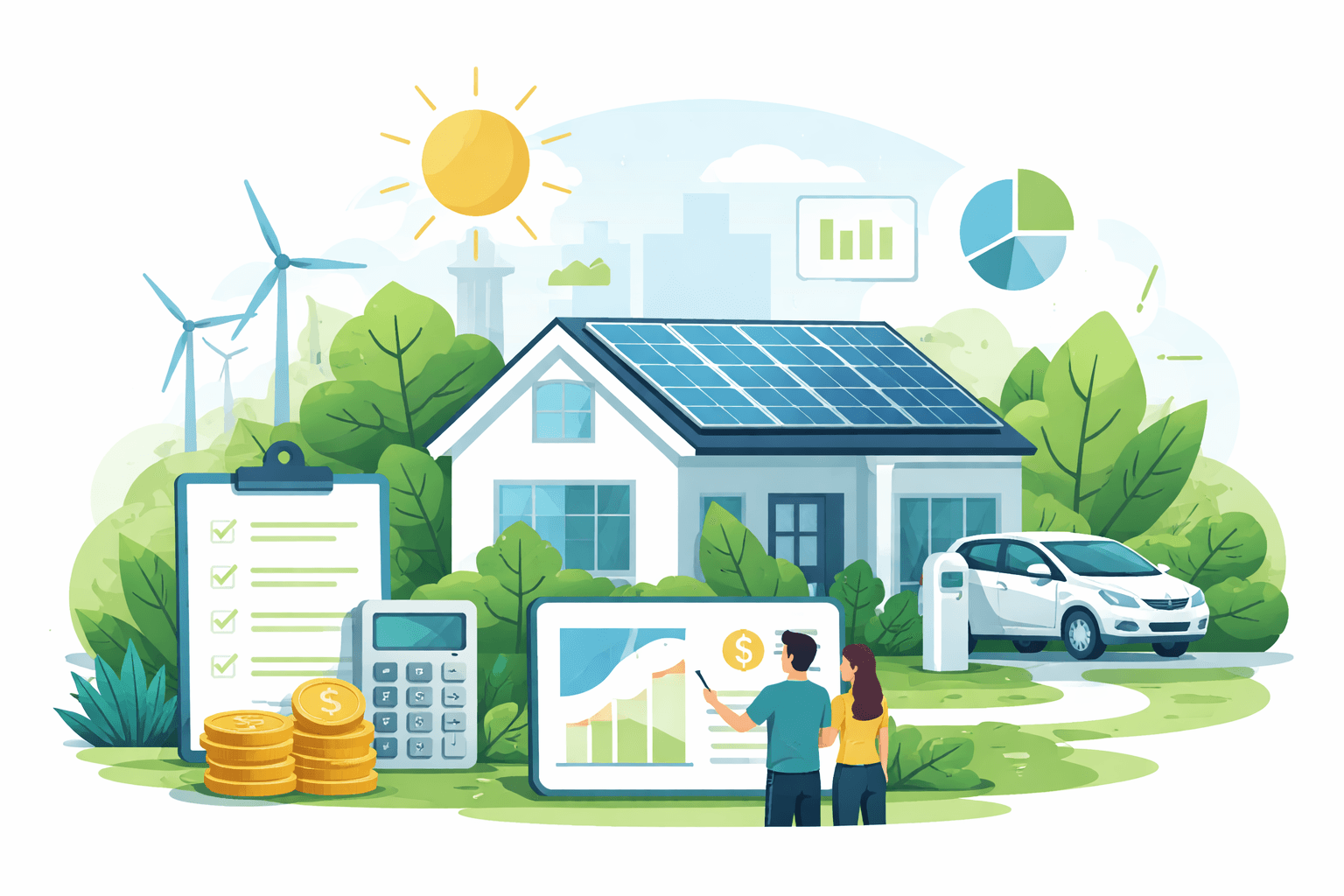
The federal solar tax credit 2026 remains one of the most valuable incentives for home solar and battery storage in the United States. In 2026, most homeowners who purchase and place in service a qualifying rooftop solar system and/or a battery of at least 3 kWh can claim a 30% nonrefundable federal income tax credit on eligible costs under the Residential Clean Energy Credit (Internal Revenue Code §25D). That headline rate—extended by the Inflation Reduction Act—applies through 2032 before stepping down (IRS, Form 5695 Instructions; Pub. 17; IRA, Pub. L. 117-169).
Note: This article is informational and not tax advice. Always confirm details with the latest IRS guidance or a qualified tax professional.
What is the Federal Solar Tax Credit (ITC)? A quick history and purpose
- The Investment Tax Credit (ITC) for solar was created in 2005 (Energy Policy Act) and took effect in 2006 to accelerate clean energy adoption by lowering upfront costs.
- For homeowners, the credit lives in §25D of the tax code (often called the “residential ITC”). For businesses, the credit historically sat in §48; from 2025 forward, many commercial projects transition to a new technology-neutral credit (§48E) if they meet emissions criteria (IRA).
- The credit spurred rapid growth: residential solar capacity climbed from under 1 GW in 2009 to more than 50 GW cumulative by 2024, helping cut installation costs and enabling economies of scale (U.S. EIA; SEIA/Wood Mackenzie 2024).
- The policy goal: reduce greenhouse gas emissions by accelerating deployment of zero-emitting generation at homes and businesses. Home PV replaces grid electricity that in many regions still includes fossil generation, reducing CO₂ emissions; typical residential PV offsets 3–4 metric tons CO₂ annually depending on grid mix and system size (NREL emissions factors and PV performance modeling).
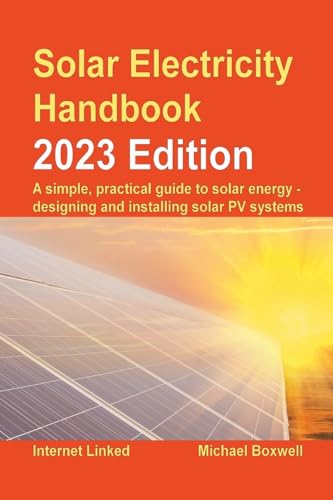
Solar Electricity Handbook - 2023 Edition: A simple, practical guide to solar energy – designing and installing solar photovoltaic systems: Boxwell, Michael
Solar Electricity Handbook - 2023 Edition: <strong>A simple, practical guide to solar energy – designing and installing solar photovoltaic systems</strong> [Boxwell, Michael] on Amazon.com. *FREE* shi
Check Price on AmazonWhat changed after the Inflation Reduction Act — and why 2026 matters
- Rate restored: The IRA restored the residential clean energy credit to 30% for systems placed in service from 2022 through 2032. It then steps down to 26% in 2033 and 22% in 2034. Under current law, the residential credit ends in 2035 for new placements in service (IRS Form 5695 Instructions; IRA §13302).
- Batteries count: Starting in 2023, standalone residential battery storage technology of at least 3 kWh capacity qualifies at 30%—no requirement that the battery be charged only from solar (IRS, Form 5695 Instructions for “Battery storage technology expenditures”).
- Tech-neutral shift (business side): Beginning in 2025, the commercial investment credit transitions to §48E (Clean Electricity Investment Credit) based on emissions rather than specific technologies. This does not change the residential §25D credit rules, but it’s relevant if part of a property is used for business (IRA §§13702–13704).
- 2026 significance: The 30% rate is still in force, and batteries are eligible. Supply chains and installer backlogs typically surge late in the year as filers try to hit placed-in-service deadlines—planning early in 2026 helps ensure your project is complete in the desired tax year.
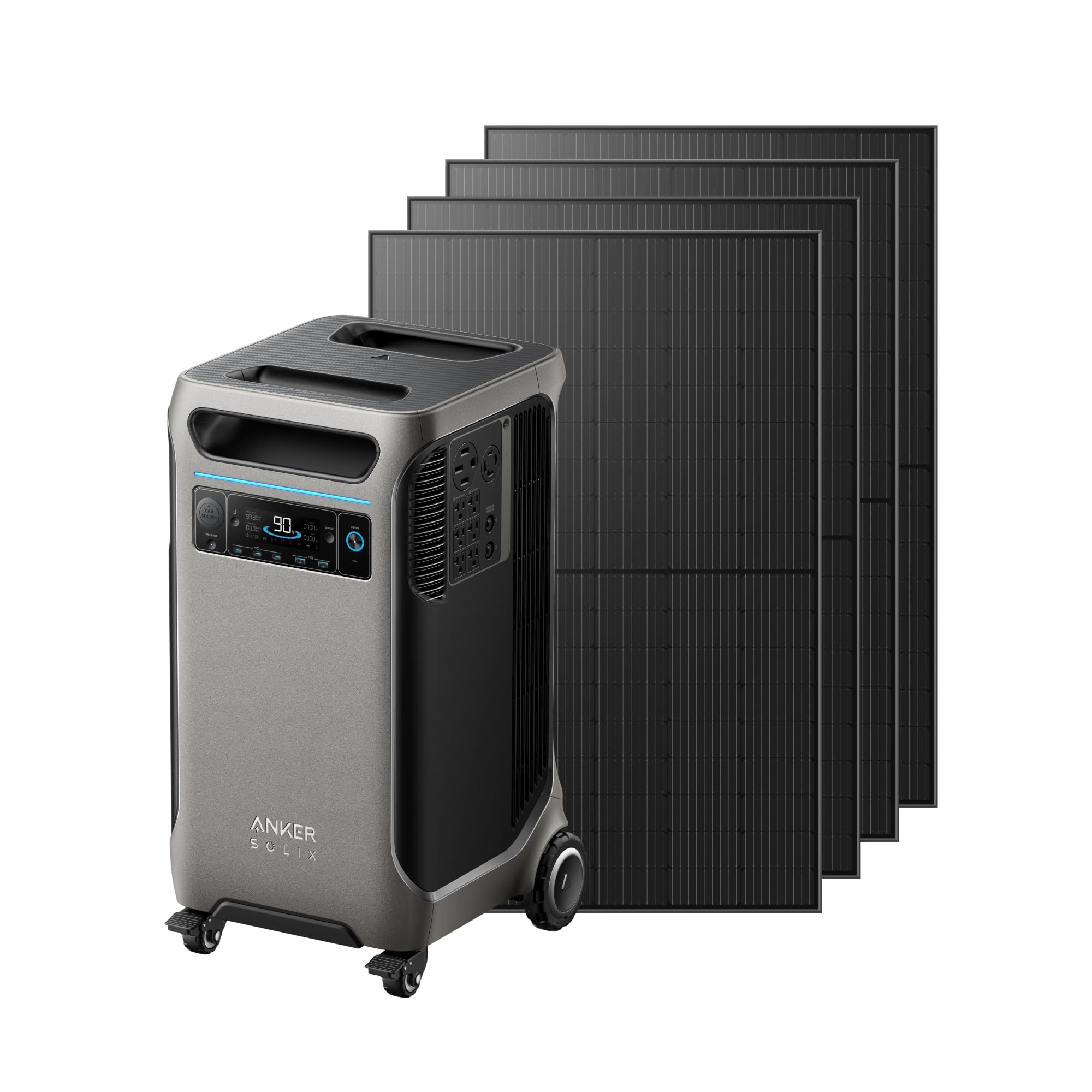
Anker SOLIX F3800 Portable Power Station, 3840Wh, LiFePO4 Batteries, Ultra-High 6000W AC Output with 120V/240V, Solar Generator for Home Backup, RVs, Emergencies, Power Outages, and Outdoor Camping : Patio, Lawn & Garden
View on AmazonFederal solar tax credit 2026 eligibility: who qualifies and common edge cases
You may qualify in 2026 if:
- You purchase and own (not lease) a solar PV system installed on a home you use as a residence in the U.S. (primary or secondary). Systems placed in service in 2026 are eligible for 30% (IRS §25D; Form 5695 Instructions).
- You purchase and place in service a standalone battery of at least 3 kWh capacity, whether installed with new PV or added to an existing system (placed in service in 2026). AC- or DC-coupled systems both qualify.
Key eligibility rules and edge cases (IRS Form 5695 Instructions; IRS Notice 2013-70):
- Ownership: You must be the system owner. If you sign a lease or PPA, the third-party owner claims the credit, not you.
- Residence status: The property must be used as a residence by you (primary home or second home). Rental-only properties are not eligible under §25D. If part of the property is rented, you must allocate costs to your personal-use portion.
- Condos and co-ops: If a condominium association or cooperative installs a qualifying system serving the building, individual owners can typically claim their proportionate share of eligible costs, as allocated by the association and documented (see Form 5695 Instructions for condominium and cooperative rules).
- New construction: Solar installed as part of a new home can qualify. The credit is claimed by the first owner-occupant for the portion of the home price reasonably allocable to the solar equipment. Builders cannot claim §25D for systems they own and include in the sales price to a consumer; the homeowner claims it when they occupy the home (IRS Notice 2013-70 Q&A 29–33).
- Mixed-use (home + business): If you use part of your home for business (e.g., home office), you can generally claim §25D for the personal-use share. The business portion may be eligible under business energy credit rules (now §48/§48E) with different documentation and depreciation considerations—consult a tax professional.
- Roofing and structural work: Ordinary roof replacement and structural work are not eligible. Solar roofing tiles/shingles that generate electricity are eligible; mounting hardware and electrical components that are integral to solar generation are eligible. Structural components serving only as roofing are not (IRS Notice 2013-70).
- Community solar: If you buy and own specific panels or a defined portion of an offsite array and the power is credited to your residence, some costs may qualify. Most subscription or PPA community solar programs without ownership do not qualify for §25D (see Form 5695 Instructions and program agreements).
- No income cap: There is no income limit, but the credit is nonrefundable—you need sufficient tax liability to use it. Unused amounts can carry forward to future tax year(s) while the credit is in effect (Form 5695 Instructions).
How much you can save in 2026 — examples and a simple calculator approach
In 2026, the residential credit rate is 30% of eligible costs. Eligible costs generally include solar panels, inverters, racking, wiring, balance-of-system equipment, permitting and inspection fees, and labor for on-site preparation and installation. For batteries, the cost of the battery system and associated electrical work qualifies (IRS Form 5695 Instructions).
Cost context:
- NREL’s 2023 U.S. Solar Photovoltaic System and Energy Storage Cost Benchmark reported a modeled all-in residential PV cost around $2.90/Wdc (NREL, 2023). Actual market prices vary widely by state, installer, and equipment.
- Lawrence Berkeley National Laboratory’s Tracking the Sun 2023 found median installed prices for host-owned residential PV in 2022 around $3.8/W before incentives, with significant variation (LBNL, 2023).
- For batteries, NREL’s 2023 benchmark placed typical residential storage costs in the $1,000–$1,400 per kWh range depending on configuration.
Illustrative 2026 examples (your quotes will vary):
- 7 kW rooftop PV only
- Quoted cost: $3.25/W × 7,000 W = $22,750
- Utility rebate: $1,000 (non-taxable, treated as purchase price adjustment) reduces eligible basis to $21,750
- Federal credit (30%): $6,525
- Net post-credit cost (excluding state tax effects): $15,225
- 9 kW PV + 13.5 kWh battery
- PV: $2.90/W × 9,000 W = $26,100
- Battery: $1,200/kWh × 13.5 kWh = $16,200
- Total eligible basis: $42,300 (assuming no basis-reducing rebates)
- Federal credit (30%): $12,690
- Mixed-use duplex (50% owner-occupied, 50% rental)
- System cost: $24,000
- Personal-use allocation (50%): $12,000
- Federal §25D credit at 30%: $3,600 (The rental share may be evaluated under business energy credit rules—requires separate tax analysis.)
Simple calculator approach for 2026:
- Step 1: Add up eligible solar and/or battery costs from installer invoices.
- Step 2: Subtract any rebates from public utilities or other incentives that are treated as purchase price adjustments (these typically are not taxable and reduce basis). State tax credits generally do not reduce the federal basis, but confirm taxability of each incentive (IRS Notice 2013-70; program terms).
- Step 3: Multiply the adjusted basis by 0.30 to estimate your federal credit.
- Step 4: Compare the credit to your estimated federal income tax liability for 2026. Any unused amount can carry forward to a future tax year while the credit is in effect (Form 5695 Instructions).
How to claim the credit (forms, timing, and documentation)
- Timing (placed in service): You claim the credit for the tax year the system is placed in service—generally when installation is complete and the system is legally ready to operate. For grid-tied PV, the “permission to operate” (PTO) date from your utility is commonly used.
- Forms: File IRS Form 5695 (Residential Energy Credits) with your Form 1040. Enter qualified expenditures for solar electric property and/or battery storage in Part I, compute the allowable credit (30% subject to limitations), and carry the result to Schedule 3 (Form 1040). If you have a carryforward from a prior year, Form 5695 includes a worksheet for that amount.
- Documentation to keep (don’t mail unless requested):
- Itemized installer contract(s) and paid invoices showing equipment, labor, and dates
- Utility PTO letter or final inspection confirming placed-in-service date
- Manufacturer’s certification statement for qualifying equipment (commonly provided by module/battery makers; keep on file)
- Evidence of capacity for batteries (≥3 kWh)
- Records of any incentives and whether they were taxable or reduced the purchase price
- If you amended scope mid-project, maintain change orders and revised totals. For new construction, retain the builder’s allocation statement showing the portion of the home price attributable to solar equipment (IRS Notice 2013-70).
Stacking the federal credit with state, local, and utility incentives
You can often combine the federal credit with other incentives. Interactions matter:
- Utility rebates: Typically reduce your federal-eligible basis if treated as a purchase price adjustment (IRS Notice 2013-70). Your installer or utility program should clarify tax treatment; when in doubt, ask a tax professional.
- State income tax credits: Usually do not reduce the federal basis but may affect your state tax liability. Some states cap credits or allow carryforwards.
- Property and sales tax relief: Many states exempt solar from sales tax and/or provide property tax exemptions or abatements on the added value from PV. These generally do not reduce federal basis (check program rules at DSIRE).
- Performance-based incentives/SRECs: Payments you earn from generation (e.g., Solar Renewable Energy Certificates) are typically taxable income and do not reduce your federal basis.
- Electrical panel and wiring upgrades: The Energy Efficient Home Improvement Credit (§25C) may provide up to 30% (subject to annual caps) for panel or wiring upgrades supporting electrification. You can claim §25C and §25D in the same year, but you can’t count the same cost toward both credits. Low- and moderate-income households may also qualify for state-administered IRA rebates for panels and wiring (HEEHR Program) where available—check state program details.
Resource for policy details: DSIRE (Database of State Incentives for Renewables & Efficiency) provides up-to-date summaries of state, local, and utility incentives and links to program rules.
Planning for 2026 installations — contract timing, permits, and installer requirements
- Start early: Typical rooftop PV timelines—from contract to PTO—run 6–16 weeks depending on permitting, utility interconnection, and equipment availability. End-of-year backlogs are common.
- Placed-in-service year: If you sign in 2026 but your PTO arrives in January 2027, you will claim the credit on your 2027 return. The rate remains 30% in 2027 under current law, but timing may matter for your cash flow and state incentives with calendar-year deadlines.
- Contracts and ownership: To claim §25D, ensure your contract is for system ownership (cash or loan), not a lease or PPA. Avoid language transferring tax benefits to the installer if you intend to claim them.
- Equipment eligibility: Use UL-listed modules/inverters and code-compliant equipment. Keep manufacturer eligibility statements for PV and batteries (≥3 kWh). Energy Star is not required for PV/batteries.
- Permits and interconnection: Verify your installer handles AHJ permitting, structural evaluation, and interconnection applications. Keep copies of approvals and final inspection sign-offs.
- Roofing coordination: If your roof is near end-of-life, coordinate reroofing before PV. Ordinary reroofing costs are not eligible for §25D; however, mounting and flashing integral to PV are eligible, and solar shingles that generate electricity are eligible (Notice 2013-70). Get itemized invoices separating roofing from solar.
- Net metering and rate design: Economics depend on your utility’s export compensation and time-of-use rates. Policy changes (e.g., California’s NEM 3.0) shift value toward right-sizing and adding batteries. This doesn’t affect §25D eligibility but matters for payback.

Sense Energy Monitor with Solar – Track Electricity Usage and Solar Production in Real Time
View on AmazonBy the Numbers: Federal Solar Tax Credit 2026
- Credit rate: 30% for systems placed in service 2022–2032; 26% in 2033; 22% in 2034 (IRS; IRA)
- Eligible technologies: Solar PV, battery storage ≥3 kWh, solar water heating (with restrictions), small wind, geothermal heat pumps, fuel cells (limits apply)
- Battery rule: Standalone residential batteries qualify starting 2023 (Form 5695)
- Refundability: Nonrefundable; excess can carry forward to future year(s) while credit is in effect
- Ownership: Required; leases/PPAs do not qualify for homeowner under §25D
- Basis adjustments: Utility rebates typically reduce basis; state tax credits typically do not
Frequently asked questions
- Is the federal solar tax credit refundable in 2026? No. It reduces your federal income tax; any unused amount may carry forward to a future year while the credit is active (Form 5695 Instructions).
- Can I claim the credit on a second home? Yes, if it’s used as a residence by you (not exclusively a rental). Allocate if there is any rental use.
- Can I add a battery to an existing solar system and claim 30%? Yes, if the battery is ≥3 kWh and placed in service in 2026. It does not need to be exclusively charged by solar under §25D starting in 2023 (Form 5695 Instructions).
- Do I have to reduce my credit if I receive a utility rebate? Generally yes—rebates that reduce your purchase price reduce the eligible basis for the federal credit (IRS Notice 2013-70). Performance-based incentives usually do not reduce basis.
- Does re-roofing qualify? Ordinary roofing does not. Solar shingles or tiles that generate electricity qualify; mounting hardware integral to PV qualifies (Notice 2013-70).
- What if my tax liability is smaller than my 30% credit? You can carry forward the unused amount to future year(s) while §25D remains in effect (Form 5695 Instructions).
- I signed a contract in 2026 but my PTO is in 2027—what year do I claim? Claim in the year placed in service (2027). The 30% rate remains available in 2027 under current law.
- Can I claim the credit for a DIY installation? Potentially, yes, for equipment costs and eligible permitting/inspection fees. Labor you perform yourself is not eligible; only professional installation labor qualifies (Form 5695 Instructions). Verify local code and interconnection requirements for DIY.
Authoritative resources
- IRS Form 5695 and Instructions (Residential Energy Credits)
- IRS Notice 2013-70 (Guidance for §25D residential energy credits)
- IRS Residential Clean Energy Credit FAQs
- Database of State Incentives for Renewables & Efficiency (DSIRE)
- NREL U.S. Solar Photovoltaic System and Energy Storage Cost Benchmark (2023)
- LBNL Tracking the Sun (latest edition)
Practical implications for 2026: homeowners, installers, and policymakers
- Homeowners: 2026 remains an excellent window to go solar and/or add a battery with a predictable 30% federal credit. Prioritize getting accurate, itemized contracts and understand how any local rebates affect your federal basis.
- Installers: Educate customers about placed-in-service timing, documentation, and battery eligibility. Provide manufacturer certification statements and clear invoices separating roofing and structural work from PV/storage.
- Policymakers and program administrators: Align state rebate terms and timelines with placed-in-service realities to prevent end-of-year bottlenecks. Clear guidance on taxability of incentives helps consumers avoid basis errors.
Where the policy is heading
Under current law, the residential clean energy credit holds at 30% through 2032 before stepping down. Congress could modify timelines, but planning on the existing schedule is prudent: 30% in 2026, 2027, 2028, 2029, 2030, 2031, and 2032; then 26% in 2033 and 22% in 2034. Batteries will remain central as utilities adopt time-varying rates and as more states reduce export compensation. Pairing PV with storage can improve bill savings and resilience while still qualifying for the 30% federal solar tax credit in 2026.
Recommended Products
Solar Electricity Handbook - 2023 Edition: A simple, practical guide to solar energy – designing and installing solar photovoltaic systems: Boxwell, Michael
Solar Electricity Handbook - 2023 Edition: <strong>A simple, practical guide to solar energy – designing and installing solar photovoltaic systems</strong> [Boxwell, Michael] on Amazon.com. *FREE* shi
Anker SOLIX F3800 Portable Power Station, 3840Wh, LiFePO4 Batteries, Ultra-High 6000W AC Output with 120V/240V, Solar Generator for Home Backup, RVs, Emergencies, Power Outages, and Outdoor Camping : Patio, Lawn & Garden
Anker SOLIX F3800 Plus Portable ... Outages, RVs, and Emergencies · Anker SOLIX E10 with <strong>2x 400W Solar Panel, Extra Battery, 12kWh Expandable to 90kWh, 10kW Turbo</strong> ......
Sense Energy Monitor with Solar – Track Electricity Usage and Solar Production in Real Time
KNOW WHAT’S ON: Track how much electricity you’re using, what time your kids got home, or when someone leaves the basement light on. Sense <strong>identifies patterns in your energy use to help your f