
Maximizing Solar Incentives: A Practical Guide to Credits, Rebates, and ROI

Solar energy financial incentives can shave 30–60% off the cost of a rooftop system and cut payback periods to as low as 6–9 years in favorable markets. The 30% federal Investment Tax Credit (ITC) is the anchor policy through 2032 under the Inflation Reduction Act, and many states add tax credits, exemptions, rebates, or performance payments on top. With U.S. residential electricity averaging about 16–17¢/kWh in 2024 (U.S. Energy Information Administration), the right stack of incentives materially improves cash flow and return on investment.
This guide explains every major incentive type, who qualifies, how to claim benefits, and how incentives change project economics for homeowners and businesses.
By the Numbers: Solar Incentives at a Glance
- 30%: Federal residential ITC (Internal Revenue Code §25D) through 2032; steps down beginning 2033 (IRS/DOE, Inflation Reduction Act)
- 30%: Base commercial ITC (IRC §48), with potential 10–20 percentage-point bonus credits for domestic content, energy communities, and qualifying low‑income projects under 5 MWac (U.S. Treasury/DOE guidance)
- 1 MWh = 1 REC/SREC: Renewable Energy Certificate created per megawatt-hour generated; value varies by state market and compliance demand
- 20%: Federal bonus depreciation level in 2026 for businesses (phase‑down schedule under the Tax Cuts and Jobs Act)
- 30–40+: Number of states offering at least one sales or property tax incentive for PV; dozens of utilities offer rebates (Database of State Incentives for Renewables & Efficiency – DSIRE)
What Are Solar Energy Financial Incentives?
Solar energy financial incentives are policies and programs that reduce the net cost of a solar PV or solar‑plus‑storage project or increase its revenue. They include tax credits, state or utility rebates, sales and property tax exemptions, net metering or net billing credits, renewable energy certificates (SRECs/RECs), specialized financing (PACE), and municipal programs. Taken together, these incentives lower upfront cost, increase lifetime value, or both.
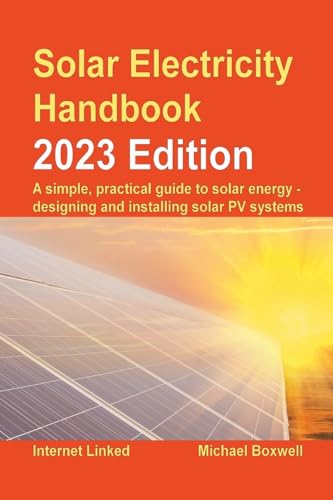
Solar Electricity Handbook - 2023 Edition: A simple, practical guide to solar energy – designing and installing solar photovoltaic systems: Boxwell, Michael
Solar Electricity Handbook - 2023 Edition: <strong>A simple, practical guide to solar energy – designing and installing solar photovoltaic systems</strong> [Boxwell, Michael] on Amazon.com. *FREE* shi
Check Price on AmazonTypes of Incentives and How They Reduce Cost
Federal Tax Credits (Residential §25D and Commercial §48)
- Residential ITC (Section 25D): 30% credit on eligible costs for solar PV and standalone battery storage ≥3 kWh, available for systems placed in service through 2032. It is nonrefundable but can carry forward to future tax years. Ownership is required (leasing/PPA customers cannot claim). Eligible expenses include equipment, installation labor, permitting, and sales tax.
- Commercial ITC (Section 48): 30% base credit for businesses, tax‑exempts (via elective pay), and public entities, with adders:
- Domestic content bonus: +10 percentage points if steel/iron are U.S.-made and manufactured product components meet rising domestic content thresholds.
- Energy community bonus: +10 percentage points for projects in designated coal, brownfield, or high fossil‑employment areas.
- Low‑income communities bonus: +10 or +20 percentage points for qualified projects ≤5 MWac under the Low‑Income Communities Bonus Credit Program (competitive allocation).
- Prevailing wage/apprenticeship rules apply to secure the full 30% (otherwise the credit drops to 6%).
- Interaction with depreciation (business): Accelerated MACRS plus bonus depreciation (20% in 2026) applies; the depreciable basis is reduced by half the ITC claimed.
For deeper detail on the federal credit mechanics and timing, see our overview: Solar Tax Credit Explained: Save on Solar with the Federal ITC and the 2026 homeowner perspective: Federal Solar Tax Credit 2026: What Homeowners Need to Know.
State Tax Credits and Exemptions
- State income tax credits: Several states offer credits (e.g., South Carolina up to 25% of system cost, subject to caps/carryforwards). Credits reduce state tax liability but generally do not reduce the federal ITC basis.
- Sales tax exemptions: Many states exempt PV equipment from state sales tax, cutting 4–8% off upfront costs at the point of sale (DSIRE).
- Property tax exemptions/abatements: Commonly exclude the added value of solar from assessed property value for tax purposes, preventing higher annual property taxes.
Utility Rebates and Performance Payments
- Upfront rebates: Utilities may pay a fixed dollar amount per watt (e.g., $0.20/W) or per project. These typically reduce the federal ITC basis if treated as an energy conservation subsidy excluded from income (IRC §136).
- Production‑based incentives (PBIs): Payments per kWh generated over a term (e.g., 8–10 years). PBIs are often taxable income but do not reduce ITC basis.
Net Metering and Net Billing
- Net metering: Credits exported solar at or near the retail rate, allowing one‑for‑one energy banking within a billing cycle or annual true‑up. Available or mandated in many states, though program rules are evolving.
- Net billing/time‑variant export: Exports credited at a set rate (often tied to avoided cost or time‑of‑day value). Example: California’s NEM 3.0 pays variable export rates, strongly favoring pairing with batteries to self‑consume or shift to evening hours. Net policies can be the most impactful “incentive” for long‑term bill savings.

EF ECOFLOW Smart Home Panel 2, the Center of the Whole
Alternatively connect <strong>3 x EcoFlow DELTA Pro 3 units with 6 x Extra Batteries for energy storage up to 36kWh</strong>. It's not just for longer backup but lets you to control and run every
Check Price on AmazonSRECs and RECs (Renewable Energy Certificates)
- What they are: One REC is minted for each 1 MWh generated. In SREC states, solar‑specific RECs can be sold to utilities for Renewable Portfolio Standard compliance. Homeowners may receive upfront REC payments (e.g., via state programs) or ongoing revenue via brokers/aggregators.
- Value: Prices vary widely by state and over time, reflecting supply/demand and Alternative Compliance Payments. In strong markets (e.g., Washington, D.C.), SRECs have historically traded at high values; in others, they can be modest. Revenue streams can offset loan payments or shorten payback.
PACE Financing (Property Assessed Clean Energy)
- How it works: A project is financed via a special property tax assessment repaid over 10–25 years. Payments are tied to the property, not the individual. Commercial PACE (C‑PACE) is active in many states; Residential PACE is limited and subject to enhanced consumer protections.
- Pros/cons: Long terms and non‑recourse can improve cash flow; however, PACE assessments are senior to mortgages and can complicate sale or refinancing if not disclosed. New federal rules extend Truth in Lending protections to residential PACE.
Municipal and Local Programs
- City/county rebates or grants: Often limited‑time, capped offers for rooftop PV or batteries.
- Permit fee reductions/expedited permitting: Lowers soft costs and project timelines.
- Community solar subscriptions: Bill credits from off‑site projects; can be paired with low‑income incentives and require minimal upfront cost.
Where relevant, our state guides detail local incentives and net metering rules (e.g., Florida’s sales tax exemption and utility policies: Solar in Florida: Costs, Incentives & Top Installers (2026); Illinois’ REC‑based incentives under Illinois Shines: Solar in Illinois: Costs, Incentives & Top Installers (2026)).
Eligibility and Qualification: Who Can Claim What?
Ownership and System Type
- You must own the system to claim the residential ITC; third‑party PPAs/leases assign tax benefits to the owner (installer/financier).
- New systems placed in service (passing final inspection/Permission to Operate) in the tax year are typically eligible. Expanded systems may qualify only for the incremental capacity.
- Standalone batteries ≥3 kWh (residential) qualify for the 30% §25D credit; commercial storage qualifies under §48 with the same bonus rules.
Location and Use
- The system must be located at a U.S. residence you own (primary or secondary) for §25D; rental properties do not qualify for §25D but may qualify under business rules.
- Businesses/organizations can claim §48 for systems at U.S. facilities; tax‑exempt/public entities can use elective pay (direct pay) to receive cash‑like refunds for §48.
Income Limits and Caps
- Federal ITC: No income limit. Some state/utility programs have income caps (e.g., low‑income carve‑outs) or first‑come, first‑served caps.
Equipment and Installation Standards
- Must meet electrical and building codes; use UL‑listed equipment.
- Interconnection approval from the utility is required for net metering/net billing and for most rebates or REC programs.
Documentation You’ll Need
- Contract and paid invoices (itemized equipment/labor)
- Proof of payment (receipts, bank records)
- Final inspection/Permission to Operate letter
- Manufacturer spec sheets, model numbers, serials
- Interconnection agreement and production meter details (for SRECs/PBIs)
How to Claim Incentives and Typical Timelines
Step‑by‑Step for Homeowners
- Pre‑qualify and reserve funds
- Check state/utility portals for rebate reservation requirements before installation; many programs require pre‑approval.
- Interconnection application
- Your installer submits drawings and specs to the utility; allow 2–8 weeks for review depending on utility volume.
- Install, inspect, and PTO
- After installation, local inspection and utility Permission to Operate (PTO) typically take 1–4 weeks.
- Submit rebate/SREC paperwork
- Upload invoices, PTO, and meter details. Utility rebates may pay out in 30–90 days; SREC registry approvals can take 2–6 weeks.
- File taxes
- Claim the federal ITC on IRS Form 5695 (Residential Energy Credits) with your annual return; carry forward any unused amount. State credits use state‑specific forms.
Step‑by‑Step for Businesses and Nonprofits
- Determine credit strategy
- Model §48 ITC with potential bonus credits; confirm prevailing wage/apprenticeship compliance to secure full value.
- Consider direct pay or transferability
- Applicable entities (governments, schools, nonprofits, tribes) can use elective pay for §48 to receive cash‑like payment. Taxable entities may transfer credits to monetize them, subject to IRS rules and market discounts.
- Secure interconnection and incentive reservations
- Reserve low‑income bonus capacity (if eligible), REC contracts, or utility PBIs before NTP (notice to proceed) as required.
- Commissioning and documentation
- Maintain commissioning reports, as‑built drawings, and meter data for incentive verification and tax files.
- File taxes
- Claim ITC on IRS Form 3468; set depreciation schedules (5‑year MACRS; 20% bonus in 2026). Coordinate with a tax advisor on basis reductions and timing.
Tax Filing Tips
- The §25D credit can offset AMT and carries forward. It’s nonrefundable.
- Utility rebates excluded from income under IRC §136 reduce the project cost basis for the federal ITC; state tax credits generally do not reduce federal basis. Keep a clear audit trail.
- Keep all documentation for at least 7 years; incentives are commonly audited.
Financial Impact: What Incentives Do to Payback and ROI
Assumptions for illustrative examples (your results will vary by state, utility rate, and system):
- 7 kW residential PV at $3.00/W installed = $21,000 gross cost
- Annual production: 1,200 kWh/kW = 8,400 kWh/year
- Retail electricity rate: 17¢/kWh; export rate under net billing: 7–15¢/kWh depending on time
Scenario A: Homeowner with 30% ITC + State Sales Tax Exemption + Net Metering
- Upfront cost: $21,000 (no sales tax)
- Federal ITC (30%): −$6,300 (claimed at tax time)
- Net metering savings: 8,400 kWh × $0.17 = $1,428/year
- Simple payback: Roughly 10.3 years ($21,000 − $6,300 = $14,700 net; $14,700 / $1,428 ≈ 10.3)
Scenario B: Add $1,000 Utility Rebate (basis reduction) and SREC Revenue
- Utility rebate: −$1,000; ITC basis becomes $20,000 ⇒ ITC = $6,000
- Net first‑year outlay effective: $21,000 − $1,000 − $6,000 = $14,000
- SRECs: If state pays $70/REC and system generates 8.4 RECs/year ⇒ ~$588/year
- Annual value: $1,428 bill savings + $588 SREC = ~$2,016
- Simple payback: ~$14,000 / $2,016 ≈ 6.9 years
Scenario C: Net Billing State (lower export rate), No SRECs
- Without a battery, assume 40% of generation is exported at 8¢/kWh and 60% self‑consumed at 17¢/kWh
- Annual value: (0.6 × 8,400 × $0.17) + (0.4 × 8,400 × $0.08) ≈ $856 + $269 = $1,125
- With 30% ITC only: Net cost $14,700; payback ≈ 13.1 years
- Add a 10 kWh battery ($10,000 gross; 30% ITC applies): may increase self‑consumption to 85% and shift exports to higher‑value periods; updated economics depend on time‑of‑use rates and battery cycling limits.
Small Business Example (100 kW rooftop, $200,000 gross)
- Base §48 ITC (30%): −$60,000
- Energy community bonus (10 pp): −$20,000 additional (if eligible)
- Net capitalized basis after ITC for depreciation: $200,000 − (50% × $80,000 total ITC) = $160,000
- Depreciation year 1 (20% bonus in 2026 + MACRS): material tax shield in early years
- Effective net present cost reduction: often 45–60% when combining ITC, bonus credits, and depreciation (NREL/IRS modeling; actuals vary). Cash paybacks of 4–7 years are common where demand charge management and high rates apply.
How to Combine Incentives and Avoid Pitfalls
Stacking Rules and Basis Adjustments
- Federal + state: You can generally layer the federal ITC with state credits, sales/property tax exemptions, and SRECs.
- Rebates and basis: Utility or state rebates that are excluded from income typically reduce the federal ITC basis; production payments usually do not. Keep precise records and consult a tax professional.
- Leases/PPAs: You cannot claim §25D if you don’t own the system. Third‑party owners may share value via lower PPA rates but retain tax attributes.
Interactions with Utility Policies
- Net metering vs. net billing: The value of exports drives ROI; a battery can recover value in net‑billing states by shifting exports to peak prices and boosting self‑consumption.
- SRECs: Minted from generation, not net exports. You must register the system and choose a broker/aggregator; don’t double‑sell RECs if you’ve already transferred them to a utility under another program.

Emporia Gen 2 Smart Home Energy Monitor with 16 50A Circuit Level Sensors | Real Time Electricity Monitor/Meter | Solar/Net Metering - Amazon.com
View on AmazonProgram Caps, Queues, and Expirations
- Budgets and waitlists: Many rebates and low‑income carve‑outs are first‑come, first‑served. Reserve early and confirm your spot.
- Federal timeline: The residential 30% ITC runs through 2032, then steps down (26% in 2033, 22% in 2034). Commercial credits also step down later but retain a base credit beyond the phase‑down under tech‑neutral rules. Policy could change—watch for extensions or adjustments.
Common Disqualifiers
- Missing pre‑approval for rebates before install
- Ineligible equipment or lack of UL listing
- Failing to meet prevailing wage/apprenticeship on commercial projects
- Ownership and title issues; unresolved liens interfering with PACE or interconnection
Where to Find Up‑to‑Date Programs and Help
- DSIRE (Database of State Incentives for Renewables & Efficiency): Comprehensive, state‑by‑state listings and statutes.
- State energy offices and utility program portals: Current rebate budgets, net metering tariffs, and application forms.
- Qualified installers and tax advisors: Many utilities require approved “trade ally” installers; tax advisors can validate basis and filing positions.
- For federal ITC specifics and state‑level overviews, see: Solar Tax Credit Explained: Save on Solar with the Federal ITC, Federal Solar Tax Credit 2026: What Homeowners Need to Know, Solar in Florida: Costs, Incentives & Top Installers (2026), and Solar in Illinois: Costs, Incentives & Top Installers (2026).
Practical Guidance: Timelines and Verification
Timeline Benchmarks
- Rebate reservation: Ideally before contract signing; confirm funds are available.
- Interconnection review: 2–8 weeks (longer for multi‑family or commercial with upgrades).
- Installation to PTO: 1–4 weeks depending on inspection backlogs.
- Rebate/SREC payout: 1–3 months post‑PTO; commercial REC contracts may pay quarterly.
- Tax credit: Realized at next tax filing; carryforward if needed.
Paperwork Checklist
- Program reservation confirmation and tracking number
- Executed interconnection agreement and PTO letter
- Itemized invoices and proof of payment
- As‑built one‑line diagram, spec sheets, equipment serials
- Production meter documentation and registration (for SRECs/PBIs)
- IRS Forms 5695 (residential) or 3468 (business); depreciation schedules (business)
Forward Look: Policy Trends and What They Mean for ROI
- Net metering reform: Expect continued movement toward time‑varying export rates and net billing. Batteries will increasingly unlock value, and some states will add storage‑specific incentives to support grid flexibility.
- IRA implementation: Domestic content and energy community guidance will continue to clarify eligibility, making bonus credits more accessible. The Low‑Income Communities Bonus Credit is likely to remain oversubscribed—early application is key.
- Low‑income solar expansion: EPA’s Solar for All grants (announced 2024–2025) are expected to support no‑ or low‑cost rooftop and community solar for income‑qualified households starting to scale in 2025–2027, often paired with bill guarantees.
- Soft‑cost reduction: More jurisdictions are adopting instant online permitting (e.g., SolarAPP+) and reducing or capping permit fees, shaving weeks and hundreds of dollars off projects.
Solar energy financial incentives are evolving, but the fundamentals are stable: the 30% federal ITC anchors the stack through 2032, and well‑designed state/utility policies can add thousands of dollars in value or accelerate payback by several years. With careful sequencing, accurate documentation, and awareness of basis adjustments and net metering dynamics, most homeowners and businesses can materially improve project economics while reducing emissions and hedging against rising electricity costs.
Recommended Products
Solar Electricity Handbook - 2023 Edition: A simple, practical guide to solar energy – designing and installing solar photovoltaic systems: Boxwell, Michael
Solar Electricity Handbook - 2023 Edition: <strong>A simple, practical guide to solar energy – designing and installing solar photovoltaic systems</strong> [Boxwell, Michael] on Amazon.com. *FREE* shi
EF ECOFLOW Smart Home Panel 2, the Center of the Whole
Alternatively connect <strong>3 x EcoFlow DELTA Pro 3 units with 6 x Extra Batteries for energy storage up to 36kWh</strong>. It's not just for longer backup but lets you to control and run every
Emporia Gen 2 Smart Home Energy Monitor with 16 50A Circuit Level Sensors | Real Time Electricity Monitor/Meter | Solar/Net Metering - Amazon.com
See how much electricity your home is using anywhere, anytime. ... <strong>Add individual 50A sensors to your Vue to monitor up to 16 individual circuits</strong> — providing accurate energy use for t