
Floating Solar Panels Explained: How They Work and Why They Matter
What are floating solar panels?
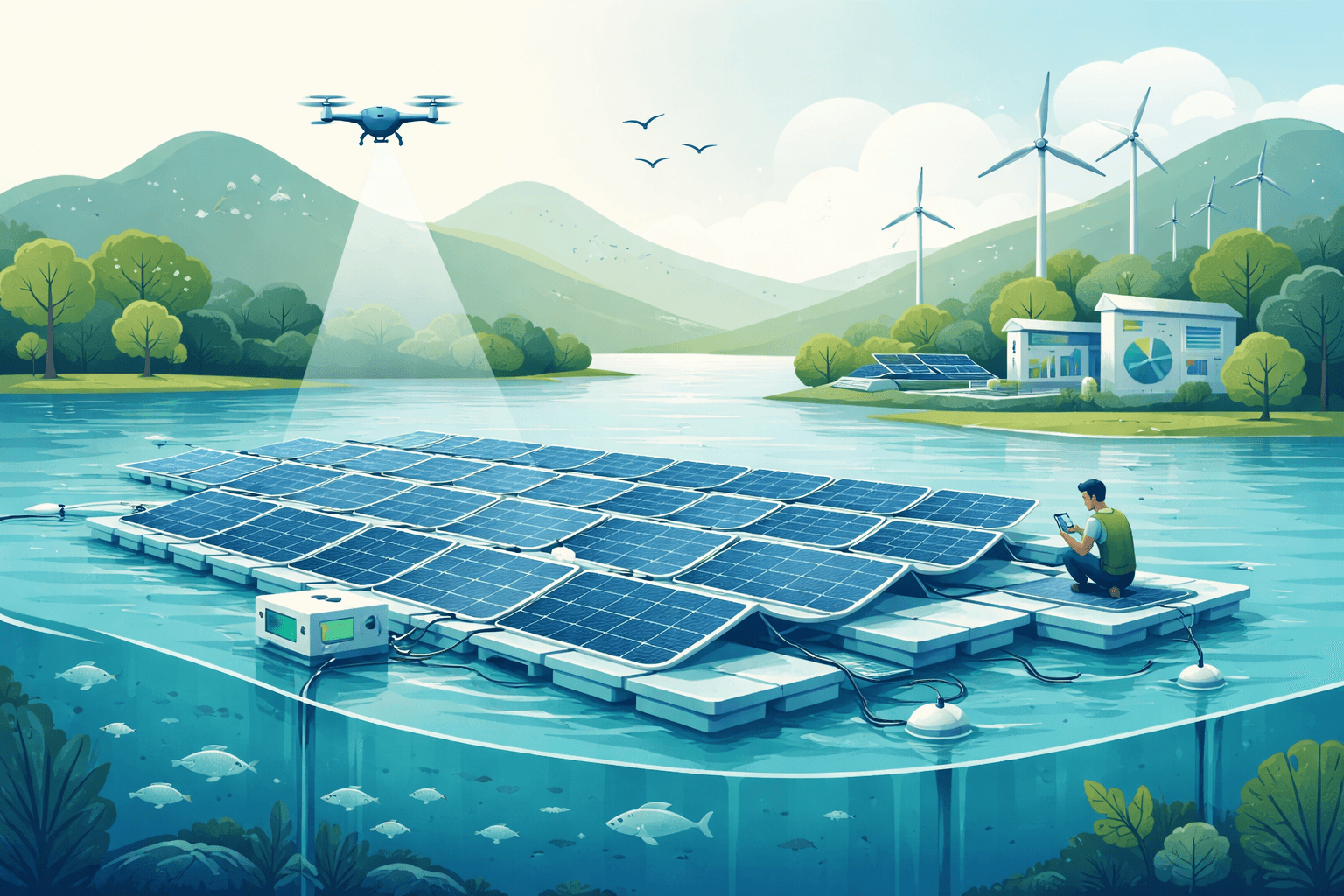
Floating solar panels—often called floating PV (FPV) or floatovoltaics—are photovoltaic arrays mounted on buoyant platforms and installed on calm water bodies such as reservoirs, lakes, irrigation ponds, and wastewater lagoons. Instead of occupying roofs or land, the modules ride on interconnected floats, anchored and moored to withstand wind, waves, and seasonal water-level changes. The core idea is simple: place solar where there’s unused surface area, close to water and often near existing grid infrastructure.
Floating PV Plants: Rosa-Clot, Marco, Marco Tina, Giuseppe
He is the <strong>author of more than 300 works published in international journals and proceedings, on power system analysis, distributed generation, PV system analysis, and modeling</strong>. Notabl
Check Price on AmazonThe concept has moved rapidly from pilot to mainstream. The World Bank and SERIS (Solar Energy Research Institute of Singapore) reported in 2019 that global FPV capacity had crossed 1 GW; by 2023–2024, industry trackers and the IEA estimate more than 5 GW installed worldwide with a multi‑gigawatt pipeline, led by Asia. Utilities are turning to floating solar panels to add clean capacity without competing for land, especially where reservoirs already connect to the grid.
How floating PV systems work
A floating solar project uses many of the same electrical components as a ground-mounted array, re‑engineered for water.
- Floats and walkways: High‑density polyethylene (HDPE) or similar UV‑stabilized, corrosion‑resistant plastics form modular floats that support modules and create safe access paths for maintenance.
- Module mounting: Racks integrated into the floats set module tilt—often 5–15 degrees to balance energy yield with wind loading and array stability.
- Mooring and anchoring: Lines, chains, or elastic moorings connect the array to anchors on the bed, banks, or pilings. Designs accommodate reservoir depth, water‑level variation, wind, currents, and wave climate. Moorings prevent drift, rotation, or excessive stress on cables and frames.
- Cabling and balance of system: Wet‑rated DC cabling and connectors, cable floats, and flexible routing accommodate movement. Inverters and transformers may be shore‑mounted to reduce weight on the platform; in some designs, string inverters float on dedicated service platforms. Grounding, lightning protection, and residual current devices are engineered for a water environment.
- Electrical conversion: As with any PV plant, DC power is converted to grid‑synchronous AC by inverters sized to the array and interconnection. If you need a refresher on inverter types and sizing, see our Solar Inverter Buyer’s Guide: Types, Sizing & Top Picks (/renewable-energy/solar-inverter-buyers-guide-types-sizing-top-picks).
Why floating solar panels matter now
Several converging pressures make FPV compelling:
- Land scarcity and competing land uses drive up project costs and timelines in many regions.
- Reservoirs are close to load centers and transmission, lowering balance‑of‑system costs.
- Water’s cooling effect can lift energy yield, shaving levelized cost of electricity (LCOE).
- Co‑benefits for water management—like reduced evaporation—are increasingly valuable in drought‑prone regions.
Benefits of floating solar panels
1) Land conservation and siting flexibility
FPV displaces little or no productive land. World Bank/SERIS analysis suggests that covering a small fraction of human‑made reservoirs could host hundreds of gigawatts to terawatts of PV capacity globally, depending on assumed coverage limits. NREL’s U.S. assessment (2018) estimated technical potential of roughly 2.1 TW if floating solar occupied portions of 24,000+ man‑made water bodies—equating to around 9–10% of current U.S. electricity generation if fully realized. Because many reservoirs already have grid access, interconnection can be simpler than greenfield land sites.
2) Cooler modules and higher efficiency
PV modules lose efficiency as they heat up. Water moderates temperature swings and can keep modules several degrees cooler than ground‑mount. Field studies compiled by SERIS and IEA PVPS report typical yield gains of about 3–10% for floating arrays compared with adjacent land‑based systems, depending on climate, tilt, ventilation, and wind. Lower operating temperatures also reduce thermal stress on components, potentially extending service life.
3) Evaporation reduction and water co‑benefits
By shading the surface, floating solar can significantly cut evaporation. Controlled studies on reservoirs and irrigation ponds show evaporation reductions ranging from about 30% to more than 60% under partial coverage, climate‑dependent. A 2023 Nature Sustainability modeling study estimated that covering 30% of the surface of the world’s reservoirs could save on the order of 100 cubic kilometers of water annually while generating thousands of terawatt‑hours of electricity—illustrating the magnitude of potential co‑benefits at scale.
Additional water‑quality benefits are plausible: shading can suppress harmful algal blooms and moderate thermal stratification in some settings. However, effects vary with depth, mixing, and nutrient loads; site‑specific monitoring is essential.
4) Grid and infrastructure synergies
- Hydropower hybrids: Co‑locating FPV on hydro reservoirs leverages existing transmission and operations staff. Because solar output peaks midday, hydropower operators can conserve water and shift generation to evening peaks—acting like a “virtual battery.” EGAT’s 45 MW Sirindhorn project in Thailand and Portugal’s Alqueva hybrid (floating PV plus storage connected to a dam) demonstrate this model.
- Water-utility assets: Wastewater ponds and drinking‑water reservoirs often sit within utility campuses, simplifying interconnection and permitting while avoiding public recreation conflicts.
5) Visual and acoustic profile
Relative to ground arrays, FPV can be visually discreet when sited away from shorelines and public vantage points. Operational noise is low; there are no rotating blades or tall towers.
By the numbers: floating solar at a glance
- Global installed FPV capacity: 5+ GW by 2023–2024 (IEA; industry trackers), with a double‑digit GW pipeline.
- Technical potential: U.S. ~2.1 TW on man‑made water bodies (NREL, 2018). Global potential ranges from hundreds of GW to multiple TW depending on coverage assumptions (World Bank/SERIS; academic studies).
- Energy yield gain vs. ground‑mount: typically 3–10% (SERIS; IEA PVPS case studies).
- Evaporation reduction: roughly 30–60% under partial coverage; much higher with very dense coverage (various reservoir studies; 2023 Nature Sustainability modeling).
- Cost premium: capital costs historically ~5–15% above comparable ground‑mount; gap narrowing with scale and supply chain learning (IEA; World Bank/SERIS market reports).
- O&M: typically 5–15% higher than ground‑mount due to marine‑grade components, access, and mooring inspections (World Bank/SERIS; utility owner reports).
Challenges and considerations
Engineering complexity and site dynamics
- Mooring/anchoring: Designs must handle extreme wind events (e.g., 50‑year gusts), wave climate, seiches, and water‑level changes that can exceed several meters seasonally. Improperly engineered moorings risk drift, cable strain, or array damage.
- Bathymetry and sediment: Anchor selection (deadweights, screw anchors, piles) depends on depth, sediment type, and bank stability. Dredging or bank reinforcement may be needed.
- Array movement: Floating platforms flex and move. Cable management systems must prevent abrasion and fatigue at all water levels.
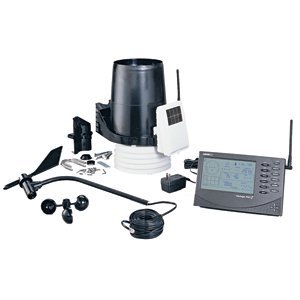
Davis Instruments 6152 Vantage Pro2 Wireless Weather ...
View on AmazonCorrosion, materials, and electrical safety
- Corrosion: Freshwater is less aggressive than brackish or marine environments, but UV, humidity, and biofouling still attack metals and polymers. Materials must be UV‑stabilized and corrosion‑resistant; fasteners and frames often use marine‑grade aluminum and stainless steels.
- Leakage and buoyancy: Floats require puncture resistance, robust seals, and periodic inspections; design includes reserve buoyancy to tolerate water ingress without loss of freeboard.
- Electrical: All DC and AC equipment requires appropriate ingress protection (e.g., IP67/68 for connectors), ground‑fault protection, and clear emergency procedures. Many owners keep inverters and transformers on shore to reduce electrical complexity over water.
Operations and maintenance (O&M)
- Access: Safe walkways, life‑safety equipment, and boat access are necessary. Storm debris and bird droppings can accumulate; cleaning protocols must avoid contaminating drinking‑water reservoirs.
- Mooring inspections: Tension checks, line wear, and anchor integrity are recurring tasks, especially after storms or rapid water‑level changes.
- Biofouling: Algae and mussels can accumulate on floats and cables, adding weight and drag.
For basic PV upkeep considerations that still apply on water (cleaning, degradation, monitoring), see Solar Panel Maintenance Tips: Maximize Output & Lifespan (/renewable-energy/solar-panel-maintenance-tips).
Environmental impacts and permitting
- Light and habitat: Shading reduces photosynthesis in the covered area. At modest coverage ratios, whole‑lake productivity impacts are often limited, but sensitive or shallow ecosystems demand caution. Many regulators cap surface coverage (e.g., 10–40%) and require buffer zones from shorelines and intakes.
- Water quality: Potential benefits include cooler surface temperatures and reduced algal bloom risk; potential risks include altered mixing and oxygen profiles. Baseline studies and ongoing monitoring are best practice.
- Wildlife: Bird interactions (perching, nesting) and fish behavior changes should be assessed. Designs may include deterrents or wildlife‑friendly features depending on site goals.
- Materials and leachates: Use certified potable‑water‑safe polymers where relevant and avoid coatings or cleaners that could contaminate drinking water.
- Permitting: Jurisdiction varies—water utilities, dam operators, environmental agencies, and in some countries, national energy regulators (e.g., for hydro‑reservoirs connected to the transmission grid).
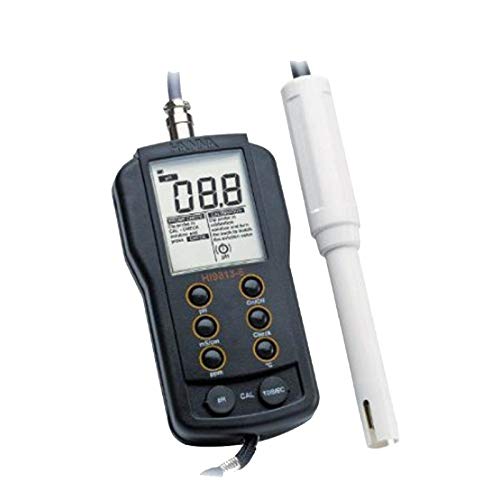
Hanna Instruments HI 9813-5N pH/EC/TDS/ Degree C Portable Meter: Science Lab Multiparameter Meters: Amazon.com
View on AmazonCosts and bankability
- Capital expenditure: FPV carries added costs for floats, moorings, and marine‑grade BOS. Recent utility‑scale projects report EPC prices in the neighborhood of $0.8–$1.2 per watt (region‑ and scale‑dependent), generally within ~5–15% of comparable ground‑mount systems, according to World Bank/SERIS and IEA briefings.
- LCOE drivers: Higher yield from cooling can partially offset higher capex and O&M. Bankability has improved as standard designs, codes, and multi‑MW references have accumulated, but insurers and lenders still evaluate mooring risk carefully.
Where floating solar makes sense
Hydropower reservoirs
- Strongest fit: Leverages existing interconnection and operations teams.
- Operational synergy: Solar covers midday; hydropower shifts to evenings or high‑price hours, effectively storing water. This firming effect supports grid decarbonization.
- Examples: 45 MW Sirindhorn (Thailand) hybridized with hydro; 100 MW Ramagundam (India) on a thermal plant reservoir; Portugal’s Alqueva hybrid floating PV plus storage.
Water utilities and wastewater ponds
- Advantages: On‑site consumption, proximity to substations, and control over permitting.
- Examples: Dozens of municipal wastewater FPV plants in the U.S., Japan, and Europe in the 1–10 MW range, often offsetting plant loads with behind‑the‑meter PPAs.
Irrigation and agricultural reservoirs
- Advantages: High evaporation savings in arid regions; potential to power pumps and farm processes.
- Considerations: Seasonal drawdowns and irrigation schedules drive mooring design; water quality protections are paramount.
Former mines and quarries
- Advantages: Limited recreational value and large, calm water surfaces; co‑benefit of repurposing degraded land.
- Example: China has commissioned multiple 100+ MW FPV plants on subsidence lakes and former mine pits in Anhui and Shandong provinces.
Land‑constrained regions and islands
- Advantages: Avoids competition for scarce land and can be sited near coastal or inland reservoirs on islands with high electricity costs.
- Example: 192 MW Cirata floating solar in Indonesia (commissioned 2023) demonstrates scale on an islanded grid.
Real‑world performance and case snapshots
- Sirindhorn, Thailand (45 MW): Utility EGAT reports stable operation as part of a planned multi‑site hybrid program across dams, using existing transmission and enabling hydro‑shifting.
- Cirata, Indonesia (192 MW): Southeast Asia’s largest FPV at commissioning, designed for monsoon conditions with large water‑level swings.
- Ramagundam, India (100 MW): NTPC’s plant reduces evaporation and powers a nearby thermal station campus, showcasing the water‑energy nexus.
- Healdsburg, California (~4.8 MW): A municipal wastewater FPV offsets plant loads and demonstrates the U.S. municipal use case.
- Alqueva, Portugal (5 MW FPV + battery): Co‑located with a dam, pairing solar with storage for higher value and flexibility.
Practical implications
For utilities and water managers
- Screen portfolios: Rank reservoirs by proximity to substations, wind/wave exposure, depth variation, and environmental sensitivity. Favor man‑made, non‑recreational basins where possible.
- Right‑size coverage: Many owners target 10–30% surface coverage to balance yield, evaporation savings, and ecological caution. Maintain shore buffers and navigation corridors.
- Standardize O&M: Implement storm protocols, mooring inspections, and water‑safe cleaning procedures. Train electrical staff on water‑specific safety.
- Consider hybrids: Pair FPV with hydropower, batteries, or onsite loads (e.g., water treatment plants) for higher capacity value and reduced curtailment.
For developers and financiers
- Prioritize bankable designs: Use proven float platforms, conservative mooring safety factors, and redundancy. Require certified materials for potable water.
- Model yield appropriately: Incorporate temperature‑dependent performance, albedo, and site wind data. Monitor pilot strings to validate gains.
- Engage early with regulators: Environmental baselines, stakeholder outreach (recreation, fisheries), and clear end‑of‑life plans improve permitting odds.
For communities and policymakers
- Accelerate standards: Support codes and design guides that reflect FPV realities (mooring, electrical safety). Clear, science‑based coverage limits and monitoring reduce uncertainty.
- Align incentives: Where water savings are valuable, recognize co‑benefits in project scoring or tariffs for FPV at reservoirs.
For individuals exploring solar at home
Floating solar panels are primarily a utility or municipal solution. If you’re weighing rooftop or ground‑mount options, see:
- Solar Panels Explained: How They Work, Costs, and Installation Guide (/articles/solar-panels-explained-how-they-work-costs-installation-guide)
- Solar Panels for Home: Complete Buying & ROI Guide (2026) (/renewable-energy/solar-panels-for-home-complete-buying-roi-guide-2026)
How floating solar supports grid decarbonization and water resilience
Floating PV neatly complements grid needs and climate adaptation:
- Transmission‑ready sites: Hydropower reservoirs and water‑utility campuses reduce interconnection timelines and costs—an increasing bottleneck for new renewables per IEA and national regulators.
- Higher capacity value via hybrids: Pairing FPV with hydropower or storage reduces variability and can deliver evening power, raising effective capacity credit.
- Reduced curtailment: Locating FPV behind the same point of interconnection as existing plants and co‑optimizing dispatch helps use existing wires more fully.
- Water security: Lower evaporation supports agriculture and municipal supply during droughts; power‑for‑pumping loops can enhance resilience for water agencies.
What’s next for floating solar panels
Technology learning, scale, and standards are driving down costs and risk:
- Cost curve: As with ground PV, standardized float platforms, optimized logistics, and regional manufacturing are narrowing the capex premium. Industry surveys suggest mid‑single‑digit percent premiums at utility scale in leading markets.
- Design codes and best practices: Guidance from IEA PVPS, SERIS, and national bodies is coalescing around mooring design, electrical safety, environmental monitoring, and decommissioning.
- Materials innovation: More durable polymers, UV‑resistant coatings, and recyclable floats aim to extend lifetimes and ease end‑of‑life recovery.
- Data and digital: SCADA, drone inspections, and structural health monitoring for moorings are becoming standard, reducing O&M surprises.
- Market expansion: Beyond Asia, expect growth in Europe (hydro‑rich countries), the Middle East (evaporation savings), Latin America (hydro reservoirs), and parts of the U.S. where water utilities and irrigation districts control suitable sites.
Floating solar panels won’t replace rooftops or utility ground‑mounts. But by unlocking low‑conflict, infrastructure‑ready water surfaces, FPV can add tens to hundreds of gigawatts this decade, complement hydropower as flexible clean capacity, and save scarce water—all with maturing, increasingly bankable technology.
Recommended Products
Floating PV Plants: Rosa-Clot, Marco, Marco Tina, Giuseppe
He is the <strong>author of more than 300 works published in international journals and proceedings, on power system analysis, distributed generation, PV system analysis, and modeling</strong>. Notabl
Davis Instruments 6152 Vantage Pro2 Wireless Weather ...
Explore professional-grade Davis weather stations. Monitor temperature, wind, rainfall, and more with wireless precision.
Hanna Instruments HI 9813-5N pH/EC/TDS/ Degree C Portable Meter: Science Lab Multiparameter Meters: Amazon.com
Hanna Instruments HI 9813-5N pH/EC/TDS/ Degree C Portable Meter: Science Lab Multiparameter Meters: Amazon.com: Tools & Home Improvement