
How Do Solar Panels Work? A Clear, Data-Driven Guide

Quick answer: how do solar panels work?
Solar panels convert sunlight directly into electricity through the photovoltaic (PV) effect: photons strike a semiconductor (usually silicon), freeing electrons that flow as direct current (DC). An inverter then converts that DC into usable alternating current (AC) for your home and the grid.
The science: the photovoltaic effect explained
At the heart of how solar panels work is a p-n junction in a silicon cell. Manufacturers dope one silicon layer with phosphorus (n‑type, extra electrons) and another with boron (p‑type, extra holes). Where they meet, an electric field forms. When sunlight hits the cell:
- Photons transfer energy to electrons in the silicon lattice, knocking them into a higher energy state (the conduction band).
- The built-in electric field at the p-n junction pushes these freed electrons toward the n‑side, creating a voltage.
- Metal contacts on the front and back of the cell collect electrons, driving DC current through an external circuit.
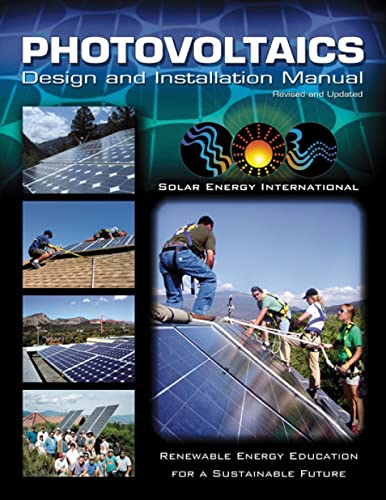
Photovoltaics: Design and Installation Manual: Solar Energy International
It also includes chapters on sizing photovoltaic systems, analyzing sites and installing PV systems, as well as detailed appendices on PV system maintenance, troubleshooting and solar insolation data
Check Price on AmazonKey terms made simple:
- Bandgap: The minimum photon energy needed to free an electron. Silicon’s bandgap (~1.1 eV) aligns well with the solar spectrum.
- Open-circuit voltage (Voc): The maximum voltage a cell produces with no load attached.
- Short-circuit current (Isc): The current produced when the cell’s terminals are shorted.
- Maximum Power Point (MPP): The voltage/current combination where a cell’s power output is highest; modern inverters use maximum power point tracking (MPPT) to sit here in real time.
Modern module technologies:
- Mono PERC: The mainstream workhorse, ~20–22% module efficiency.
- TOPCon/HJT: Higher efficiency (often 22–24%), better low-light and temperature performance.
- Bifacial: Glass/glass modules that capture rear‑side light; 5–15% energy gain depending on site albedo and racking.
Data sources: NREL’s Best Research-Cell Efficiency chart shows record silicon cells above 26%, with commercial modules typically several points lower. IEA PVPS reports global PV capacity surpassing 1.5 TW by 2023.
Core components of a PV system
A grid-tied residential PV system has five core elements:

Renogy 200 Watt 12 Volt Monocrystalline Solar Panel Starter 20A Rover MPPT Charge Controller/Mounting Z Brackets/Tray Cable/Adaptor Kit for RV, Boats, Trailer, Camper, Marine,Off-Grid System, 200W : Patio, Lawn & Garden
View on Amazon- PV modules (panels): Strings of silicon cells laminated under glass generate DC power. Nameplate ratings are in watts (W) at standard test conditions (STC: 1,000 W/m² irradiance, 25°C cell temperature, AM1.5 spectrum).
- Inverter: Converts DC to AC at your home’s voltage and frequency. Options include string inverters, microinverters (one per panel), and DC optimizers paired with a central inverter. MPPT hardware maximizes harvest under changing irradiance.
- Mounting and wiring: Roof or ground racking sets tilt/azimuth and ensures code-compliant structural attachment and grounding. Wiring combines modules into strings and routes power via combiner boxes and disconnects.
- Battery (optional): A DC- or AC-coupled storage system shifts solar energy to evening hours, provides backup, or participates in time-of-use arbitrage. Round-trip efficiency is typically 85–95%.
- Metering and protection: A bidirectional utility meter accounts for imports/exports. Breakers, fuses, rapid-shutdown devices, and surge protection meet safety codes like NEC 690.
If you want a broader foundation on PV tech and benefits, see our explainer: Solar Power Explained: How It Works, Costs, and Climate Benefits.
How panels produce electricity step-by-step
From photons to outlet power:
- Sunlight hits the silicon cell, creating electron–hole pairs.
- The cell’s internal electric field separates charges, generating DC.
- Cells wired in series add voltage; modules wired in parallel add current.
- DC travels through home-run conductors to the inverter.
- MPPT adjusts operating voltage/current to maximize watts.
- The inverter converts DC to grid-synchronized AC.
- Your home loads consume solar electricity first; excess flows to the grid (or to a battery if installed).
- The utility meter records any exports per local tariff (e.g., net metering).
Simple system flow: Sun → PV modules (DC) → Inverter (AC) → Home loads → Grid/Battery.
New to solar? Our primer dives into key terms and installation basics: Solar Panels Explained: How They Work, Costs, and Installation Guide.
Performance factors: angle, orientation, shading, temperature, and degradation
Design and site conditions drive your actual energy yield. Important variables:

Renogy 28in Adjustable Solar Panel Mount Brackets, with Foldable Tilt Legs on Any Flat Surface for RV, Roof, Boat, Any Off-Grid Systems : Patio, Lawn & Garden
View on Amazon- Tilt and azimuth: In the Northern Hemisphere, south-facing arrays at a tilt roughly equal to latitude often maximize annual energy. East/west faces can be within ~10–15% of south if tilt is similar. Flatter tilts favor summer production; steeper tilts boost winter output and shedding of snow.
- Shading: Even partial, transient shading (vents, trees, chimneys) can reduce string output significantly due to series wiring. Module-level power electronics (microinverters/optimizers) localize shading losses.
- Temperature: Silicon efficiency declines as cells heat up. Typical temperature coefficients range from −0.30% to −0.45% per °C above 25°C STC. Good airflow and lighter roofs can improve performance.
- Soiling: Dust, pollen, salt, and bird droppings can cause 1–5% losses (higher in arid or agricultural areas). Rain often mitigates; targeted cleaning may help in dry seasons.
- Degradation: NREL meta-analyses suggest median module degradation around 0.5% per year for modern silicon modules, with most warranties guaranteeing 80–88% of nameplate output at year 25.
- Inverter clipping and DC/AC ratio: Systems are often designed with DC capacity 1.1–1.3× the inverter AC rating to capture more shoulder irradiance. Brief mid-day clipping is normal and economical.
- Albedo and bifacial gain: Light-colored ground or reflective membranes can deliver a 5–15% boost to bifacial arrays.
Capacity factor (the ratio of actual annual output to output at full nameplate 24/7) for residential PV typically ranges 15–25% in the U.S., depending on location, tilt, and system design.
By the numbers
- 1.5–1.6 TW: Estimated global cumulative PV capacity by end of 2023 (IEA PVPS Snapshot 2024).
- 20–24%: Typical efficiency range for modern mono-crystalline modules (manufacturer datasheets; NREL benchmarks).
- −0.30% to −0.45%/°C: Common module temperature coefficients (manufacturer specs).
- ~0.5%/year: Median long-term module degradation (NREL reliability studies).
- 10–15 years: Typical inverter replacement interval for residential systems.
- 25–30 years: Typical system life, with proper O&M and periodic inverter swap.
Estimating energy output: sample kWh calculations and sizing a system
A quick back-of-the-envelope method uses “peak sun hours” (PSH) and a performance ratio (PR) to approximate annual energy.
Formula: Annual kWh ≈ System size (kW DC) × PSH (hours/day) × 365 × PR
Where PR accounts for temperature, inverter, wiring, soiling, mismatch, and age. Residential PR commonly runs 0.75–0.85.
Example A: 6 kW in Phoenix, AZ (PSH ≈ 5.5)
- Annual kWh ≈ 6 × 5.5 × 365 × 0.80 ≈ 9,600 kWh
- Capacity factor ≈ 9,600 ÷ (6 × 8,760) ≈ 18.3%
Example B: 6 kW in Boston, MA (PSH ≈ 4.2)
- Annual kWh ≈ 6 × 4.2 × 365 × 0.78 ≈ 7,200 kWh
Example C: 6 kW in Seattle, WA (PSH ≈ 3.6)
- Annual kWh ≈ 6 × 3.6 × 365 × 0.78 ≈ 6,150 kWh
Sizing a system to your usage:
- Pull your last 12 months of electricity usage (kWh). Suppose that’s 9,000 kWh/year.
- Estimate kWh per kW-year for your location: kWh/kW-year = PSH × 365 × PR.
- Phoenix: 5.5 × 365 × 0.80 ≈ 1,606 kWh/kW-year.
- Boston: 4.2 × 365 × 0.78 ≈ 1,194 kWh/kW-year.
- System size (kW) = Annual kWh ÷ (kWh/kW-year).
- Phoenix: 9,000 ÷ 1,606 ≈ 5.6 kW.
- Boston: 9,000 ÷ 1,194 ≈ 7.5 kW.
Battery adders:
- To cover an evening peak of 3–5 kWh, a 10–13.5 kWh battery often provides partial-home backup and TOU shifting. For whole-home backup with HVAC, 20–30+ kWh is common, depending on load and outage duration.
Tip: NREL’s PVWatts (free) can refine these estimates using local weather files and module/inverter models.
Installation, operation, and maintenance basics
Safety and permitting:
- Electrical safety: Only licensed electricians should make service-panel connections. Rapid-shutdown requirements (NEC 690.12) protect first responders.
- Structural: Roof assessments verify rafter spacing, load paths, and attachment points. Building and electrical permits, followed by AHJ and utility inspections, are standard.
- Interconnection: Utility approval defines export limits, metering, and any grid-support functions (volt/VAR, frequency ride‑through) for inverters.
Commissioning and monitoring:
- Commissioning tests validate grounding, insulation resistance, open-circuit voltage, string polarity, and inverter startup.
- Monitoring dashboards (from the inverter or third-party) track real-time and historical production, enabling early fault detection (e.g., a drop in one string suggests shading or a connector issue).
Maintenance:
- Visual checks: Annually inspect for loose wiring, cracked modules, animal nests under arrays, and water ingress.
- Cleaning: In many climates, rainfall keeps modules within a few percent of maximum. Where soiling is heavy, soft-bristle brush and deionized water can restore output; avoid abrasive cleaners.
- Inverter/battery updates: Firmware updates improve MPPT, grid-support behavior, and safety features. Batteries may require software state-of-charge calibration.
- Lifespan: Expect 25–30 years of service from quality modules, with an inverter replacement around year 10–15.
Costs, incentives, and payback: simple ROI examples
Installed prices vary by market, roof complexity, and component selection. U.S. residential systems in 2024 commonly ranged around $2.50–$3.50 per watt (before incentives), per analyses from national labs and industry trackers. Soft costs (sales, permitting, interconnection) remain a sizable share.
Baseline example: 7.5 kW system at $3.00/W
- Gross cost: 7.5 kW × $3,000/kW = $22,500
- Federal incentive: The Investment Tax Credit (ITC) at 30% (subject to eligibility) reduces net cost to $15,750.
- Production (Boston-like site): ~7.5 × 1,194 ≈ 8,955 kWh/year.
- Bill savings depend on retail rates and tariff structure:
- At $0.20/kWh: ~$1,791/year → simple payback ≈ 8.8 years.
- At $0.13/kWh: ~$1,164/year → simple payback ≈ 13.5 years.
Battery add-on example: 10 kWh battery at, say, $12,000 installed
- Eligible for 30% ITC when paired with solar (and, under recent IRS guidance, often as standalone). Net cost ≈ $8,400.
- Economic value depends on TOU spreads, outage frequency, and export compensation. In high spread markets ($0.20 day vs $0.45 peak), arbitrage can materially shorten payback; in flat-rate markets, backup value is primarily resilience.
Export compensation matters:
- Full retail net metering shortens paybacks; export at a lower “avoided cost” rate lengthens them. Understand your local tariff structure.
To dig into U.S. incentives and policy mechanics, see:
- Solar Tax Credit Explained: Save on Solar with the Federal ITC
- Net Metering Explained: How Solar Owners Get Credit for Excess Power
- For typical price ranges and what drives them, visit our Solar Panel Cost Guide: How Much You'll Pay & How to Save.
Frequently asked questions
Do solar panels work on cloudy days?
Yes. Diffuse light still generates electricity, though output may fall to 10–40% of clear-sky levels depending on cloud thickness. Modern modules and MPPT maintain efficient operation under varying irradiance.
What’s the difference between DC-coupled and AC-coupled batteries?
DC-coupled batteries sit between the PV array and a hybrid inverter, enabling a single DC→AC conversion and high round‑trip efficiency. AC-coupled batteries attach on the AC side with their own inverter; they retrofit easily to existing PV and can operate independently.
How much roof area do I need?
Rule of thumb: ~100 square feet per kW DC for standard modules and typical spacing. A 6 kW array might need ~600–700 square feet, depending on module wattage and layout.
Will snow damage panels?
Quality modules are rated for specific snow and wind loads (e.g., 5,400 Pa snow). Snow usually slides off on sunny days; energy lost in snowy periods is partly regained via cooler, more efficient operation after melt.
How long until panels “pay back” their embodied energy?
Studies generally find energy payback times of 1–4 years depending on location and module type, after which systems produce net clean energy for decades. Lifecycle analyses by IEA and NREL show very low operational emissions (tens of grams CO2e/kWh), falling as grids decarbonize.
Practical implications for homeowners, businesses, and policymakers
- Homeowners: Focus on shade-free area, appropriate tilt/azimuth, and right-sizing to your load and tariff. Module-level power electronics are valuable on complex roofs. Plan for inverter replacement.
- Businesses: Consider demand charges and TOU structures—pairing PV with storage can flatten peaks. Evaluate tax incentives and accelerated depreciation where applicable.
- Policymakers: Streamlined permitting and interconnection (e.g., automated approvals for small PV) reduce soft costs. Stable, transparent export compensation and enabling rules for virtual power plants unlock greater grid value.
Where this technology is heading
The learning curve in PV remains steep: module watt-classes keep rising, balance-of-system costs are falling through standardized designs, and reliability data supports 25–30+ year lifetimes. Tandem perovskite–silicon cells are demonstrating >30% efficiency in labs, with early pilot lines emerging. On the balance-of-system side, smart inverters are adding grid-support capabilities (volt/VAR control, ride-through), enabling higher PV penetrations without compromising stability. Storage integration, demand flexibility, and aggregated virtual power plants will increasingly determine the value stack for distributed solar.
For deeper tech trends and buying considerations, see our guide to modern PV: Solar Panel Technology in 2026: A Complete Guide to Modern Photovoltaics.
Recommended Products
Photovoltaics: Design and Installation Manual: Solar Energy International
It also includes chapters on sizing photovoltaic systems, analyzing sites and installing PV systems, as well as detailed appendices on PV system maintenance, troubleshooting and solar insolation data
Renogy 200 Watt 12 Volt Monocrystalline Solar Panel Starter 20A Rover MPPT Charge Controller/Mounting Z Brackets/Tray Cable/Adaptor Kit for RV, Boats, Trailer, Camper, Marine,Off-Grid System, 200W : Patio, Lawn & Garden
Amazon.com : Renogy 200 Watt 12 Volt Monocrystalline Solar Panel Starter 20A Rover MPPT Charge Controller/Mounting Z Brackets/Tray Cable/Adaptor Kit for RV, Boats, Trailer, Camper, Marine,Off-Grid Sys
Renogy 28in Adjustable Solar Panel Mount Brackets, with Foldable Tilt Legs on Any Flat Surface for RV, Roof, Boat, Any Off-Grid Systems : Patio, Lawn & Garden
Adjustable Solar Panel Tilt Mount Brackets Aluminum Alloy Solar Panel Mounting Support up to 50 70 100 150 200 300 400 Watt Solar Panel for Flat Surface Roof RV Boat Off-Grid (Mount Only) Silver