
How Much Can Solar Panels Save You? Real Costs, Savings & Payback

Solar added a record 32.4 GW of new U.S. capacity in 2023, meeting 53% of all new electricity additions, according to SEIA/Wood Mackenzie. For households, the core question is simple: how much can solar panels save me? The short answer is typically $1,200–$3,000 in year one for a standard system, with 6–12 year paybacks depending on your rates, roof, incentives, and metering policy. Below, we quantify those savings with real numbers you can adapt to your home.
By the way, comparing quotes from multiple vetted installers often trims 15–25% off system price through equipment and labor competition—directly increasing your ROI. If you’re early in research, see our Solar Panel Cost Guide for current price ranges and ways to save.
- Internal resource: Solar Panel Cost Guide: How Much You'll Pay & How to Save (/renewable-energy/solar-panel-cost-guide)
By the numbers: what typical homeowners can expect
- First-year bill reduction: about $1,300–$3,100 for a 7.5 kW system, depending on your utility rate and metering rules (calcs below)
- Production: roughly 1,200–1,700 kWh per kW per year in the U.S. (NREL PVWatts), so a 7.5 kW system makes 9,000–12,750 kWh annually
- Installed price: $2.50–$3.50 per watt before incentives (SEIA/Wood Mackenzie 2023), or $18,750–$26,250 for 7.5 kW
- Federal incentive: 30% Residential Clean Energy Credit through 2032 (U.S. Treasury/IRS), cutting net cost by nearly a third
- Payback: commonly 6–12 years; lifetime bill savings of $25,000–$60,000 over 25 years are typical in medium-to-high rate markets
- Carbon impact: offsetting 10,000 kWh/year avoids ~3.8 metric tons CO₂ annually at average U.S. grid intensity (EPA eGRID)

Solar Electricity Handbook - 2023 Edition: A simple, practical guide to solar energy – designing and installing solar photovoltaic systems: Boxwell, Michael
Solar Electricity Handbook - 2023 Edition: <strong>A simple, practical guide to solar energy – designing and installing solar photovoltaic systems</strong> [Boxwell, Michael] on Amazon.com. *FREE* shi
Check Price on Amazon1) How solar savings are calculated — the key metrics
Savings come from replacing grid electricity (kWh) you would have bought with solar electricity you produce. Four variables drive the math:
- Your usage (kWh)
- Look at 12 months of bills. The average U.S. home uses ~10,500 kWh/year (EIA).
- System size (kWdc)
- Residential systems are usually 5–12 kWdc. Size is the sum of panel wattage, e.g., 20 panels × 400 W = 8.0 kW.
- Production (kWh)
- Annual generation depends on sun, tilt, azimuth (orientation), and losses. A good shorthand: 1,200–1,700 kWh per kW per year. Tools like NREL’s PVWatts estimate this using your address and roof.
- Capacity factor is production divided by nameplate capacity over time; for U.S. rooftop PV it’s typically 15–22% depending on location.
- Electric rate and metering policy
- Retail rate: average U.S. residential price was about 16¢/kWh in 2023 (EIA). Some states exceed 30¢ (California, Hawaii), while others are 12–16¢.
- Net metering vs. net billing:
- Retail net metering credits each exported kWh at your full retail rate, often with monthly netting.
- Net billing pays a lower export rate (e.g., 5–12¢/kWh) for excess sent to the grid. California’s NEM 3.0 is a prominent example.
- Time-of-use (TOU) rates mean kWh are worth more at certain hours. Solar that offsets peak rates boosts savings; exported kWh during low-value periods are worth less under net billing.
Rule of thumb for first-year savings
- Retail net metering: First-year savings ≈ annual solar kWh × retail rate.
- Net billing: First-year savings ≈ (self-consumed kWh × retail rate) + (exported kWh × export price). Self-consumption is often 40–70% without a battery, higher with load shifting or storage.
2) Typical annual savings by system size and U.S. region
Assumptions below use representative production and rates; your numbers may vary. We show ranges and call out where net billing changes the math.
Regional production assumptions (NREL PVWatts typical):
- Northeast/Mid-Atlantic: ~1,200–1,350 kWh/kW-year
- Midwest: ~1,300–1,500 kWh/kW-year
- South: ~1,450–1,600 kWh/kW-year
- Southwest/West: ~1,600–1,800 kWh/kW-year
Representative rates (EIA):
- Northeast: 20–26¢/kWh
- Midwest: 13–16¢/kWh
- South: 13–16¢/kWh
- West: 18–34¢/kWh (state-specific; CA is among the highest)
Example systems: 5 kW, 7.5 kW, 10 kW
Northeast (retail net metering common)
- 5 kW × 1,250 ≈ 6,250 kWh; at 23¢ → ~$1,440/year
- 7.5 kW × 1,250 ≈ 9,375 kWh; at 23¢ → ~$2,160/year
- 10 kW × 1,250 ≈ 12,500 kWh; at 23¢ → ~$2,875/year
Midwest (many states retain net metering)
- 5 kW × 1,400 ≈ 7,000 kWh; at 14¢ → ~$980/year
- 7.5 kW × 1,400 ≈ 10,500 kWh; at 14¢ → ~$1,470/year
- 10 kW × 1,400 ≈ 14,000 kWh; at 14¢ → ~$1,960/year
South (varies by utility; retail net metering or bill-credit programs)
- 5 kW × 1,525 ≈ 7,625 kWh; at 14.5¢ → ~$1,105/year
- 7.5 kW × 1,525 ≈ 11,438 kWh; at 14.5¢ → ~$1,659/year
- 10 kW × 1,525 ≈ 15,250 kWh; at 14.5¢ → ~$2,211/year
Southwest/West (net billing in some markets like CA)
- If retail net metering applies:
- 5 kW × 1,700 ≈ 8,500 kWh; at 24¢ → ~$2,040/year
- 7.5 kW × 1,700 ≈ 12,750 kWh; at 24¢ → ~$3,060/year
- 10 kW × 1,700 ≈ 17,000 kWh; at 24¢ → ~$4,080/year
- Under net billing (example: 60% self-consumption, 7¢ export, 32¢ retail):
- 7.5 kW example → 12,750 kWh: (7,650 × $0.32) + (5,100 × $0.07) ≈ $2,805/year
These are first-year estimates; most utilities raise rates 1–3% annually over time (EIA long-run trend), so nominal savings typically grow, while panel output gradually declines ~0.25–0.7%/year depending on module specs.
3) Real-world case studies
Case 1: “Average” home, Mid-Atlantic
- Load: 10,500 kWh/year
- Roof/site: 200° azimuth (south-southwest), 25° tilt, minimal shade
- System: 7.5 kW (about 19 panels × 400 W)
- Production: ~10,125 kWh/year (1,350 kWh/kW-year)
- Rate/policy: 17¢/kWh retail, retail net metering
- Gross installed price: $3.10/W → ~$23,250 (SEIA range-consistent)
- Federal credit (30%): −$6,975 → net cost ~$16,275
- Year 1 savings: 10,125 × $0.17 ≈ $1,721
- Simple payback: ~$16,275 ÷ $1,721 ≈ 9.5 years
- 25-year value: With 2% annual rate escalation and 0.5% annual panel degradation, nominal bill savings approximate $50,000–$55,000; internal rate of return (IRR) often 7–10% depending on roof and financing.
Case 2: EV owner, California (net billing/TOU)
- Load: 12,300 kWh/year (home) + 3,300 kWh/year for EV = 15,600 kWh total
- System: 8.5 kW (21 × 405 W panels)
- Production: ~14,450 kWh/year (1,700 kWh/kW-year)
- Rate/policy: TOU average ~32¢ retail; export value ~7¢; self-consumption ~65% (EV charging shifted to sunny periods via schedule)
- Gross installed price: $3.20/W → ~$27,200; federal credit −$8,160 → net ~$19,040
- Year 1 savings: (9,392 × $0.32) + (5,058 × $0.07) ≈ $3,359
- Simple payback: ~$19,040 ÷ $3,359 ≈ 5.7 years
- Notes: A small battery can raise self-consumption to 80–90%, but adds cost; in high-rate, net-billing markets, storage frequently improves ROI by shifting excess midday solar to evening peaks.
Case 3: High-consumption home, Texas (retail choice, solar buyback)
- Load: 18,000 kWh/year (pool + large A/C)
- System: 12 kW (30 × 400 W)
- Production: ~19,200 kWh/year (1,600 kWh/kW-year)
- Rate/policy: 14¢ retail; export credit ~10¢; self-consumption ~55% (pool pump midday)
- Gross installed price: $2.70/W → ~$32,400; federal credit −$9,720 → net ~$22,680
- Year 1 savings: (10,560 × $0.14) + (8,640 × $0.10) ≈ $2,342
- Simple payback: ~$22,680 ÷ $2,342 ≈ 9.7 years
- Notes: Some retail electric providers offer near-retail netting up to monthly usage—if available, savings could rise to ~$2,688/year and payback to ~8.4 years. Shopping your buyback plan matters as much as module brand in Texas.
4) Factors that change your savings
- Roof orientation and tilt: South-facing roofs at ~20–40° tilt maximize yield. East/west roofs typically produce 10–20% less, but can better match morning/evening loads under TOU.
- Shading: Even partial shade (trees, chimneys) can cut output 10–30%. Module-level power electronics (microinverters/optimizers) mitigate shade losses.
- Local rates and escalations: High and rising retail rates amplify solar value. In low-rate markets (<13¢), savings are smaller but still meaningful with incentives.
- Net metering vs. net billing: Retail net metering makes exports as valuable as on-site use; net billing rewards self-consumption. Batteries, smart EV charging, and load shifting boost savings in net-billing markets.
- TOU schedules: Aligning big loads (EVs, heat pumps, water heating, pool pumps) to sunny hours increases the fraction of high-value self-consumption.
- System pricing: Quotes vary by equipment, labor, permitting (soft costs), and roof complexity. A $0.50/W price difference on 8 kW is $4,000—often the gap between an 8-year and 10-year payback.
- Degradation and maintenance: Typical module degradation ~0.25–0.7%/year; modern inverters carry 10–25 year warranties. Budget modest O&M and a mid-life inverter replacement for a conservative ROI.

EMPORIA Level 2 EV Charger w/ J1772 Charger, 48 amp ...
View on Amazon5) Incentives & rebates that increase your savings
- Federal Residential Clean Energy Credit (ITC): 30% of installed costs for solar and batteries through 2032; steps down after. Reduces tax liability dollar-for-dollar; excess may carry forward (consult a tax advisor).
- State/utility rebates: Examples include NYSERDA upfront incentives in New York; local utility rebates in parts of CO, TX, and AZ. These stack with the federal credit (sequence rules vary—ask your installer).
- Performance-based incentives (PBIs):
- SRECs/RECs: States like New Jersey, Pennsylvania, and Illinois pay per MWh generated via markets or set-price programs. Values range widely (e.g., ~$50–$100+/MWh in some programs, subject to change).
- Massachusetts SMART: A fixed $/kWh incentive for 10 years, adjusted by adders/site specifics.
- Tax exemptions: Many states exempt solar from sales tax and/or offer property tax exemptions for the added home value from PV.
- Low-income and community programs: Some states and utilities offer enhanced rebates or community solar subscriptions for income-qualified customers.
These can collectively trim thousands off upfront cost and raise internal returns several percentage points. A local installer should model all active incentives on your proposal.
6) Payback period, ROI, and lifetime value
Key financial metrics
- Simple payback = net upfront cost ÷ first-year savings. Quick to compute, but ignores rate escalation, degradation, O&M, and financing costs.
- Net present value (NPV) discounts future savings back to today using your chosen discount rate (e.g., 3–6%). A positive NPV means the investment beats your hurdle rate.
- Internal rate of return (IRR) is the discount rate at which NPV = 0. Many residential systems deliver after-tax IRRs of ~6–12% in medium/high-rate markets; lower in cheap-power regions.
Modeling tips
- Include utility rate escalation (1–3%/yr historic U.S. average; EIA) and panel degradation (~0.5%/yr mid-case).
- Add O&M: cleaning optional, monitoring often included; budget a mid-life inverter replacement ($1,200–$2,500) unless you choose a 25-year microinverter warranty.
- Financing: Loans add interest but may still pencil if monthly bill reduction exceeds payment. Cash yields the highest IRR.
7) Step-by-step: get an accurate estimate for your home
- Gather data
- 12 months of electricity usage (kWh) and your current tariff (flat, tiered, or TOU)
- Address and roof details: azimuth(s), pitch, and any shading obstacles
- Goals: offset percentage (e.g., 80–100%), EV plans, future electrification (heat pump, induction)
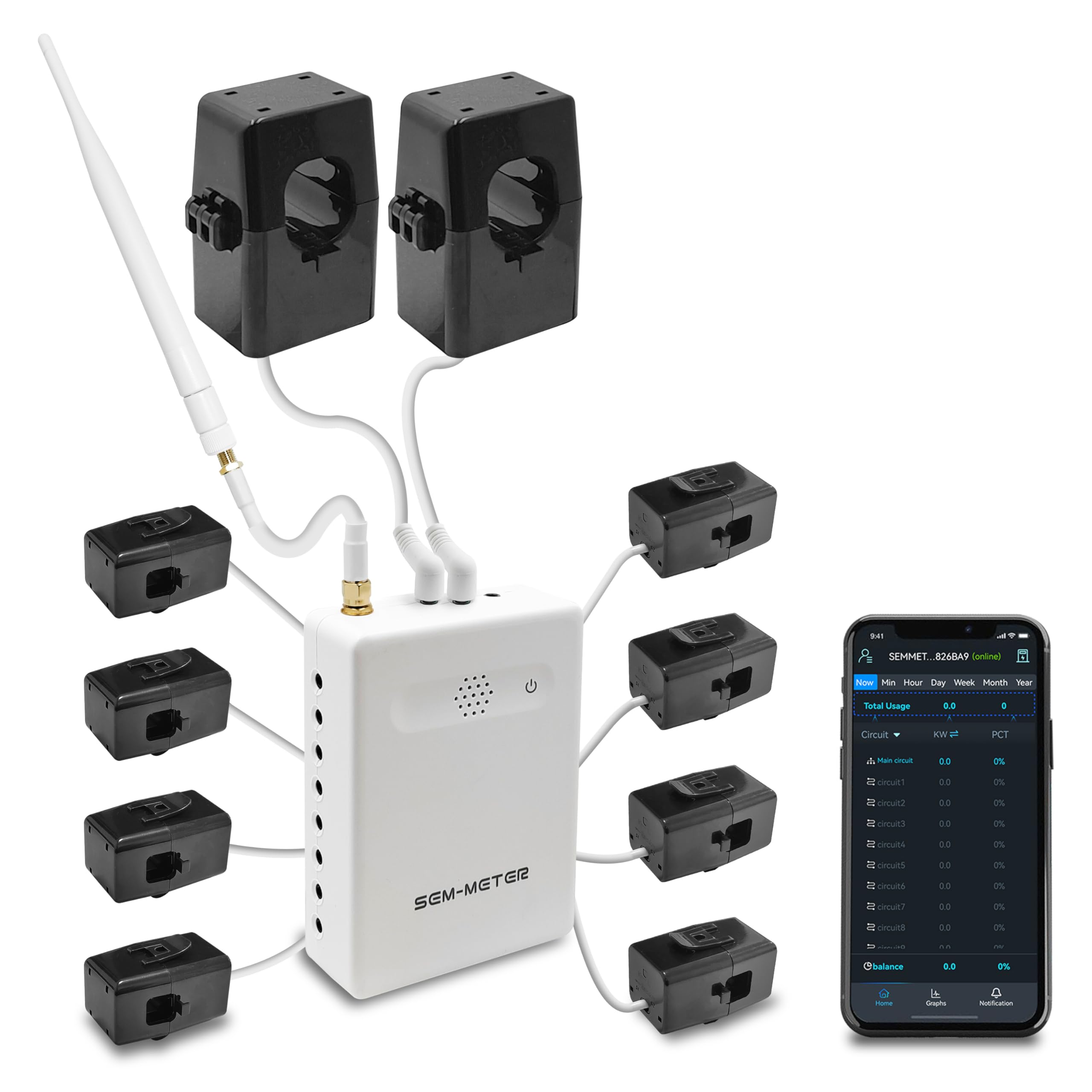
Smart Home Energy Monitor with 8 50A Circuit Level Sensors | Vue - Real Time Electricity Monitor/Meter | Solar/Net Metering - Amazon.com
View on Amazon- Estimate system size and production
- Use a sizing tool or rule of thumb: annual kWh ÷ regional yield (kWh/kW-year) ≈ kW needed. For example, 10,000 kWh ÷ 1,400 ≈ 7.1 kW.
- See: How Many Solar Panels Do I Need? A Practical Guide & Estimate (/renewable-energy/how-many-solar-panels-do-i-need-guide)
- Run NREL PVWatts for your address to get kWh forecasts with tilt/azimuth losses.
- Price it and apply incentives
- Multiply kW × $/W for a range. For example, 7 kW × $3.00/W = $21,000 before incentives.
- Subtract the 30% federal credit and any state/utility rebates.
- For a deeper breakdown of equipment, labor, and permitting, see: Solar Panel Installation Cost: 2026 Pricing, Breakdown & Savings Guide (/renewable-energy/solar-panel-installation-cost-2026-pricing-breakdown-savings)
- Model savings under your rate and metering rules
- Retail NEM: savings ≈ solar kWh × retail rate.
- Net billing/TOU: estimate self-consumption (start with 50–65% without a battery) and apply export price to the rest. Adjust loads you can shift to sunny hours.
- Compare 2–3 installer quotes
- Ask each for: module/inverter makes and warranties, production estimate (kWh), shading analysis, structural notes, incentive modeling, and expected payback/IRR.
- Comparing quotes from multiple solar installers typically saves 15–25% on total system cost and surfaces better equipment/warranty options.
- Plan for operations
- Clarify monitoring access, workmanship warranty length (often 10–25 years), and who handles service calls. See: Solar Panel Maintenance Tips: Maximize Output & Lifespan (/renewable-energy/solar-panel-maintenance-tips)
CTA: Ready to see your numbers? Request two or three local quotes with your 12-month usage handy. A 30-minute site review is usually enough to get an accurate savings model tailored to your roof and rate plan.
8) FAQs, common objections, and next steps
How much can solar panels save me if I don’t have net metering?
- In net-billing markets, savings depend on your self-consumption rate and export price. Without a battery, expect 40–70% self-consumption; shifting loads (EV charging, hot water, pool pumps) to sunny hours and/or adding a small battery can materially increase savings. We modeled a California case above at ~$3,359/year on an 8.5 kW system under net billing.
What if my utility rates fall?
- It happens occasionally, but over decades U.S. residential rates have trended upward 1–3% per year (EIA). Solar hedges your bill against volatility; even modest escalation improves lifetime value.
Do solar panels increase home value?
- Studies by Lawrence Berkeley National Laboratory have consistently found that homes with owned PV sell for a premium roughly in line with the system’s market value. See our guide for data and selling tips: Do Solar Panels Increase Home Value? Data, ROI & Selling Tips (/renewable-energy/do-solar-panels-increase-home-value)
What about maintenance and reliability?
- Panels have no moving parts and typical 25-year power warranties guaranteeing ~80–92% of original output by year 25. Expect occasional inverter servicing. Monitoring apps make performance issues easy to spot. Routine cleaning is optional in most climates.
Should I replace my roof first?
- If your asphalt roof is >15 years old, consider re-roofing before solar to avoid future removal/reinstall costs. Installers can quote integrated roofing/solar timelines.
Do I need a battery to save money?
- No—most savings come from the panels. In net-billing or TOU markets, batteries can increase savings by shifting solar to high-value evening hours and improving backup resilience, but weigh added cost versus benefit.
How do electrification plans (EVs, heat pumps) affect sizing and savings?
- Electrification increases your usage and the value of solar. Tell installers your 1–3 year plans so they can size appropriately and model TOU impacts.
What if I move in 5–10 years?
- With typical paybacks of 6–12 years and documented home value premiums for owned PV, many sellers recoup a substantial portion of net cost at sale while enjoying several years of lower bills.
Next steps
- Skim a data-driven decision guide: Are Solar Panels Worth It in 2026? Cost, Payback & Decision Guide (/renewable-energy/are-solar-panels-worth-it-2026)
- Gather your last 12 months of bills and request quotes. Ask for production (kWh), savings under your exact tariff, equipment warranties, and a firm all-in price.
Where the trendline is headed
- Hardware keeps improving (higher-efficiency TOPCon/heterojunction modules), soft costs are slowly falling, and utilities are refining export compensation. NREL shows steady gains in panel reliability and lifespan, while batteries and smart load controls make self-consumption easier. The bottom line: even as policies evolve, households in medium-to-high rate markets will continue to see strong solar savings—and an even stronger case when paired with electrification.
Recommended Products
Solar Electricity Handbook - 2023 Edition: A simple, practical guide to solar energy – designing and installing solar photovoltaic systems: Boxwell, Michael
Solar Electricity Handbook - 2023 Edition: <strong>A simple, practical guide to solar energy – designing and installing solar photovoltaic systems</strong> [Boxwell, Michael] on Amazon.com. *FREE* shi
Smart Home Energy Monitor with 8 50A Circuit Level Sensors | Vue - Real Time Electricity Monitor/Meter | Solar/Net Metering - Amazon.com
Lightweight commercial 3-phase option available as a separate bundle. APPLICATION MONITORING WITHOUT GUISEWORK <strong>Up to sixteen (16) 50A sensors to accurately monitor your air conditioner, oven,
EMPORIA Level 2 EV Charger w/ J1772 Charger, 48 amp ...
Explore a wide selection of hardwired Level 2 EV charging stations. Features include 25-foot cables, app control, and weather-resistant construction.