
Solar Carport Installation Guide: Planning, Costs, and Installation Basics
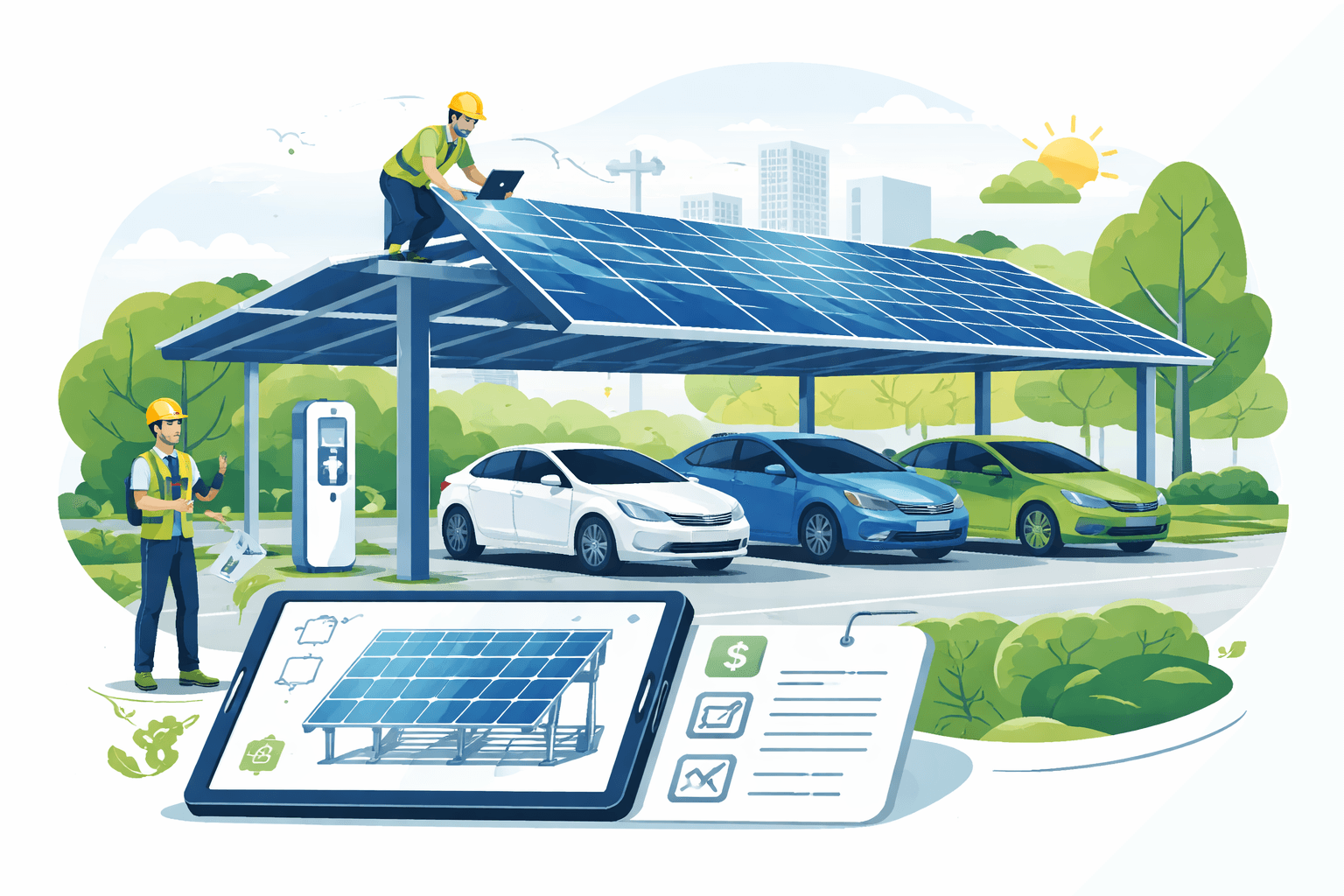
Solar carports are moving from niche to mainstream. U.S. distributed solar added roughly 12–15 GW in 2025 (SEIA/Wood Mackenzie), and a growing share is being installed over parking—turning dead space into generation. Well-sited systems typically produce 1,200–1,800 kWh per kW each year depending on location (NREL PVWatts), equivalent to a 15–21% capacity factor for fixed-tilt arrays. This guide walks through solar carport installation from planning and permits to costs, wiring, and maintenance—with data-backed checkpoints you can use with your designer or EPC.
What is a Solar Carport and Why Build One?
A solar carport is a canopy structure topped with photovoltaic (PV) modules that provides shade or weather protection for vehicles while generating electricity. Unlike rooftop solar, a carport is a ground-supported structure, so PV orientation, tilt, and ventilation can be optimized independent of building roof constraints.
Key differences from rooftop solar:
- Structure and foundations: Carports require steel or aluminum canopy frames and concrete footings or piles sized for wind and snow loads. That structural scope is not present on typical rooftop systems.
- Siting flexibility: Designers can choose module tilt (often 5–10°), azimuth (south in the Northern Hemisphere), and row spacing without roof obstructions, improving energy yield.
- Electrical routing: Power and communications often run in underground conduit to a building service or dedicated meter. Rooftop systems route through building pathways.
Benefits for homes, businesses, and parking lots:
- Shade and comfort: Shading can cool pavement by 20–45°F (11–25°C), reducing heat islands and improving driver comfort (U.S. EPA Heat Island Compendium).
- Higher energy yield vs. low-slope rooftops: Optimized tilt and airflow can raise production several percent compared to flush-mounted arrays, especially with bifacial modules that can add 5–15% yield when ground albedo is high (NREL field studies).
- Dual use of space: No need for open land. Carports monetize parking lots and driveways.
- Stormwater and snow: Canopies keep snow and rain off vehicles; integrated gutters can manage runoff.
- EV readiness: Conduit and panelboard capacity can be pre-planned for EV chargers, reducing future retrofit costs.
Planning a Solar Carport: Site, Loads, Permits, and Power
Thorough planning is the difference between a reliable asset and costly change orders. Use this checklist before you request bids.
Site assessment and shading
- Measure parking layout: Stall width (8.5–9 ft typical), drive aisle (24–26 ft), light pole locations, fire lanes, and ADA spaces. Note vehicle types; delivery trucks may need 14 ft clearance vs. 9 ft for passenger vehicles.
- Map solar access: Use a shade analysis tool or NREL’s PVWatts inputs to quantify annual solar resource. Aim for at least 85–90% solar access across the array. Avoid north-facing slopes or persistent shading from trees/buildings.
- Choose tilt and orientation: 5–10° tilt reduces soiling and improves drainage; south-facing azimuth maximizes annual yield. East–west dual-tilt “sawtooth” canopies improve energy distribution and fit tight sites.
Structural requirements
- Codes and standards: Most jurisdictions follow the International Building Code (IBC 2018/2021/2024) and ASCE 7-16 or 7-22 for wind, snow, and seismic loads. Carports are flexible-frame structures subject to significant uplift; conservative design is essential.
- Foundations: Common options are drilled piers/caissons, helical piles, or spread footings. Geotechnical investigation (soil borings) is recommended for commercial projects to size foundations and reduce risk.
- Materials and corrosion: Hot-dip galvanized steel (ASTM A123/A153) is common. In coastal or de-icing salt zones, specify higher corrosion protection and sealed connections. Consider powder coating for aesthetics.
- Clearances and drainage: Maintain required vertical clearances and confirm drip line management—integrated gutters/downspouts reduce icing and puddling.
Permitting and utility interconnection
- Building and electrical permits: Expect plan review of structural calculations, stamped drawings, and one-line electrical diagrams. Many AHJs apply NEC 2023 (NFPA 70). Some treat canopies as “accessory structures” with setback and height limits.
- Fire code and access: Coordinate with local fire marshal for apparatus clearances and signage. Maintain hydrant and egress access.
- Interconnection: Inverter-based resources must meet IEEE 1547-2018 and UL 1741 SB/SA grid support requirements. Utility study may assess transformer capacity, anti-islanding, and potential upgrades. Timelines vary from 2 to 12+ weeks depending on utility queue.
Electrical and safety considerations
- Rapid shutdown: NEC 690.12 rapid shutdown applies to PV on or in buildings. Many AHJs extend similar requirements to canopies; verify local interpretation.
- Conductors and raceways: PV Wire/USE-2 on the DC side; THWN-2/THHN in conduit for AC. Above-grade wiring should be protected from physical damage per NEC 300.
- Overcurrent protection and grounding: Follow NEC 690/705 for OCPD sizing, equipment grounding/bonding, and labeling. Racking should be listed to UL 2703; modules to UL 61730; inverters to UL 1741.
- Lightning protection: Evaluate surge protective devices (SPDs) on DC and AC combiner points, particularly in high keraunic regions.

MidNite Solar MNSPD-300-DC Surge Protection Device 300VDC : Electronics
View on Amazon
PV and the NEC: White, Sean, Brooks, Bill
Used throughout the United States ... to photovoltaic (PV) systems. <strong>This new edition is based on the 2023 NEC, with most of the interpretations and material staying true long after</strong>...
Check Price on AmazonFor sizing your array and estimating production, see our practical walkthrough: How to Calculate Solar Panel Needs (NREL PVWatts-based examples).
- Link: /renewable-energy/how-to-calculate-solar-panel-needs
Solar Carport Installation: Step-by-Step Overview
Every project is unique, but most follow this sequence:
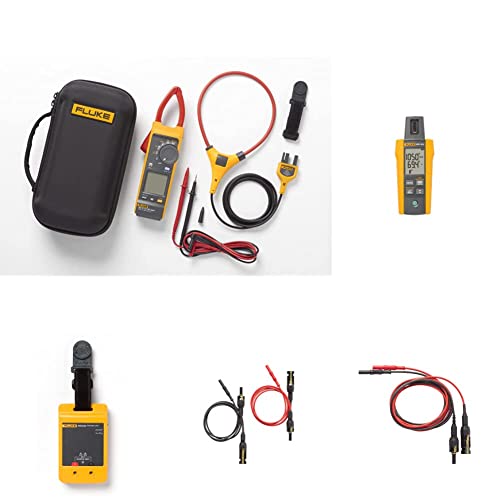
Fluke 393 FC Solar Clamp Meter, CAT III 1500 V, IP54- ...
Discover professional-grade Fluke meters for electrical testing. Find clamp meters, multimeters, and voltage testers for accurate measurements.
Check Price on Amazon- Layout and underground work
- Utility locates and staking of columns, conduit runs, and equipment pads.
- Trenching for conduits (DC homeruns or AC, communications, grounding) to service equipment. Use proper burial depths and caution tape.
- Foundations and steel erection
- Drill and pour pier foundations or install helical piles per structural drawings. Concrete typically reaches design strength in 7–28 days depending on mix and schedule.
- Set columns, torque anchor bolts, plumb and brace. Install beams/purlins. Verify clearances, bay spacing, and slope.
- Racking and module installation
- Attach listed racking and wire management. Install modules with manufacturer-specified torque and bonding hardware. Maintain drip edge alignment for gutters.
- If using bifacial modules, specify light-colored or high-albedo surfaces beneath to capture gains.
- Electrical equipment and wiring
- String design: Choose between string inverters with DC optimizers, microinverters, or central inverters for large lots. Minimizing string lengths exposed to public areas reduces risk.
- Mount inverters on canopy columns or a dedicated equipment pad. Install combiner/transition boxes, AC disconnects, and production meter if required.
- Pull and terminate conductors, label per NEC 690/705, and install SPDs. Commission data acquisition and monitoring.
- Interconnection and commissioning
- Utility witness test (if required), anti-islanding verification, and protective relay settings.
- Commissioning checklist: insulation resistance tests, I-V curve sampling, torque audits, array map verification, and performance baselines.
- Safety and quality checks
- Structural punchlist: weld inspections (if applicable), bolt torque logs, protective coatings touch-up.
- Electrical QA/QC: polarity checks, ground continuity, GFDI verification, labeling, arc-fault tests.
- Owner training: shutoff procedures, monitoring portal, and maintenance intervals.
For PV component basics—modules, inverters, wiring—see Solar Panels Explained: How They Work, Costs, and Installation Guide.
- Link: /articles/solar-panels-explained-how-they-work-costs-installation-guide
By the Numbers: Solar Carports
- Energy yield: 1,200–1,800 kWh per kW-year across most U.S. sites (NREL PVWatts); capacity factor ~15–21% for fixed-tilt carports.
- Tilt: 5–10° common; east–west dual-tilt can improve midday production without tall leading edges.
- Clearance: 9 ft passenger vehicles; 12–14 ft for delivery vehicles and emergency access (check local code/fire).
- Structural loads: Designed to ASCE 7 local wind (e.g., 115–140 mph 3-sec gust) and ground snow (e.g., 20–70 psf) zones; uplift governs column and embedment sizes.
- Interconnection: Small residential carports typically 4–12 kW; commercial lots frequently 100 kW to multi-MW with dedicated services.
- O&M: Commercial PV O&M typically $10–$20 per kW-year (NREL cost benchmarks), covering inspections, cleaning, and monitoring.
Solar Carport Costs, Timeline, and Common Pitfalls
What does a solar carport cost?
Because carports add steel and foundations, they cost more than comparable rooftop systems. Industry data and NREL cost benchmarking suggest typical all-in installed prices (before incentives) of:
- Residential single-bay or driveway canopies: roughly $3.5–$5.5 per watt DC for 4–15 kW systems, depending on steel spans, finishes, and site work.
- Commercial and municipal parking lots: roughly $2.8–$4.0 per watt DC for 100 kW–5 MW, with economies of scale lowering the per-watt price.
- Structural “adder”: canopy steel and foundations often contribute $0.5–$1.5 per watt of the total, varying widely by wind/snow zone and aesthetics.
Adders to consider:
- EV charging integration: $1,500–$7,000 per Level 2 port plus service upgrades; DC fast charging (DCFC) is much higher and may need new utility service.
- Stormwater and lighting: Gutters, downspouts, LED lighting, and controls can add $0.05–$0.20 per watt.
- Aesthetics: Architectural cladding and powder coating increase steel costs 10–30%.
For broader context on current solar pricing trends, see our 2026 breakdown: Solar Panel Installation Cost: 2026 Pricing, Breakdown & Savings Guide.
- Link: /renewable-energy/solar-panel-installation-cost-2026-pricing-breakdown-savings
Incentives and tax credits
- Federal ITC: In the U.S., the Investment Tax Credit (ITC) under the Inflation Reduction Act provides a 30% credit for residential (Section 25D) and most commercial projects (Section 48/48E), subject to prevailing wage/apprenticeship rules for larger systems (Treasury/IRS guidance). Some or all canopy structural costs may qualify when integral to the PV system; consult a tax professional.
- Bonus credits (commercial): Up to +10% for domestic content and +10% for energy community locations; low-income community bonus credits of 10–20% for eligible small projects (<5 MW) are allocated annually.
- Depreciation (commercial): 5-year MACRS with potential bonus depreciation can significantly improve after-tax economics.
- State/local: Net metering or value-of-solar tariffs, sales/property tax exemptions, and grants vary; check DSIRE and your utility.
Timeline expectations
- Concept and preliminary design: 2–6 weeks
- Geotech (if needed) and final engineering: 3–8 weeks
- Permitting and utility interconnection review: 4–12+ weeks depending on AHJ/utility
- Procurement and fabrication: 6–16 weeks (steel lead times can drive schedule)
- Construction and commissioning: 1–6 weeks for residential/small commercial; multi-MW campuses can span months in phases
Maintenance needs
- Semiannual inspections: Check bolts, coatings, wiring, labels, and guttering. Re-torque structural and electrical connections per manufacturer specs.
- Module cleaning: 1–2 times per year in dusty regions; otherwise, natural rainfall may suffice. Monitor soiling losses via performance ratio (PR).
- Vegetation and pavement: Maintain clear sightlines and keep trench patches sealed to prevent water intrusion.
- Inverters and monitoring: Replace air filters per OEM; review alarms and uptime monthly.
Common mistakes to avoid
- Underestimating wind uplift and snow drift loads, leading to oversized change orders after plan review.
- Misplaced columns that obstruct ADA access, fire lanes, or driver swing paths.
- Insufficient drainage: No gutters or splash management causes icing or puddles in walkways.
- Ignoring future EV charging: Failing to oversize conduits/panels for later chargers can double retrofit costs.
- Overloading building service: Without a load study, backfeed limits under NEC 705 can be exceeded, triggering expensive service upgrades.
- Public exposure of DC strings: Run DC in protected raceways or use module-level conversion to reduce hazard.
Choosing Contractors for Solar Carport Installation
The right team reduces risk and delivers predictable performance.
What to look for:
- Proven carport experience: Ask for at least three completed carport references of similar size and climate, with contact info and photos.
- In-house or partnered structural engineering: Stamped drawings to IBC/ASCE 7 with foundation calculations and anchor schedules.
- Safety record: EMR below 1.0, OSHA 300 logs, site-specific safety plans for working around vehicles and the public.
- Component listings and warranties: UL 2703 racking, UL 61730 modules, UL 1741 inverters; workmanship warranty 2–5 years; inverter 10–15; module performance 25–30.
- Commissioning and QA/QC: Documented test procedures (insulation resistance, I-V curves), torque logs, and as-builts.
Questions to ask bidders:
- How are wind uplift and snow drift handled in this design? Show calcs and connection details.
- What corrosion protection and paint spec will you use for our environment?
- Where will the inverters and combiner boxes be located for service access and public safety?
- How will construction be phased to keep the lot usable and safe?
- What monitoring platform and data granularity are included (string-level vs. inverter-level)?
DIY note: Because carports combine structural engineering, concrete, steel erection, and public safety, most homeowners and businesses should use licensed professionals. If you’re considering partial DIY (e.g., trenching), read our risk overview in Can I Install Solar Panels Myself? A Practical DIY Guide.
- Link: /renewable-energy/can-i-install-solar-panels-myself-diy-guide
Financing Options and Project Viability
- Cash purchase: Highest lifetime savings and control. Suitable for organizations with tax appetite.
- Loans: Fixed-rate loans spread costs over 7–20 years; interest may be tax-deductible for businesses.
- PPA (power purchase agreement): Third party owns the system; you buy power at a contracted rate. Shifts performance and maintenance risk to the provider; common for schools and municipalities.
- Lease: Similar to PPA but with fixed payments rather than per-kWh pricing.
- C-PACE (commercial): Property Assessed Clean Energy can finance long-lived improvements and be repaid via property tax assessments.
Evaluating if a solar carport is right for you:
- Energy and load match: Use interval data to size the system to daytime loads and EV charging plans. Self-consumption improves value where export rates are low.
- Site conditions: Ample, unshaded parking with room for columns and equipment. Geotech risks manageable.
- Aesthetics and community goals: Shade benefits, heat island mitigation, and visible sustainability can justify premium vs. rooftop.
- Interconnection and tariffs: Friendly net metering or favorable value-of-solar improves economics; demand charge management with carport PV plus storage can further enhance returns.
A quick sizing sanity check: In many U.S. climates, each kW of DC capacity yields 1,300–1,600 kWh per year. A 250 kW carport might generate ~350,000 kWh annually—offsetting around 250 metric tons of CO₂ if it displaces grid electricity at 0.7 kg CO₂/kWh (U.S. EPA eGRID typical).
Practical Tips and Forward Look
- Design for operations: Place equipment where technicians can safely service during business hours without blocking traffic.
- Optimize albedo: Light-colored pavement or ballast under bifacial modules can add several percent yield at low cost.
- Pre-wire for EV: Pull spare conduits and oversize panels/transformers now; it’s far cheaper than trenching later.
- Consider storage: Pairing carports with batteries can manage demand charges and provide resilience; ensure space for future battery enclosures and clearances (NFPA 855).
What’s next: Expect more prefabricated canopy systems, domestic-content steel options, and standardized interconnection packages as utilities implement IEEE 1547-2018. As EV adoption accelerates—over 14 million global EV sales in 2025 (IEA Global EV Outlook)—solar carports will increasingly anchor “charging hubs” where on-site generation, storage, and managed charging converge. With sound engineering and careful planning, they turn parking lots into productive, visible clean-energy assets.
Recommended Products
PV and the NEC: White, Sean, Brooks, Bill
Used throughout the United States ... to photovoltaic (PV) systems. <strong>This new edition is based on the 2023 NEC, with most of the interpretations and material staying true long after</strong>...
Fluke 393 FC Solar Clamp Meter, CAT III 1500 V, IP54- ...
Discover professional-grade Fluke meters for electrical testing. Find clamp meters, multimeters, and voltage testers for accurate measurements.
MidNite Solar MNSPD-300-DC Surge Protection Device 300VDC : Electronics
The MidNite Solar Surge Protector Device (MNSPD) is a <strong>Type 1 device per UL1449 rev3</strong>. It is designed for both AC and DC systems and provides protection to service panels, load centers