
Solar Panels Pros and Cons: A Data-Driven Guide to Decide If They’re Right for You

Solar is having a record run. The International Energy Agency (IEA) reports solar PV additions jumped 76% in 2023 to roughly 420 GW of new capacity worldwide, with the U.S. installing a record 33 GWdc that year (SEIA/Wood Mackenzie). Yet whether rooftop solar pencils out for a specific home still comes down to local rates, incentives, and your roof. This guide walks through solar panels pros and cons with hard numbers—costs, savings, carbon, and lifecycle impacts—so you can make a confident decision.
Solar panels pros and cons at a glance
Pros
- Lower electric bills and hedge against rate hikes; typical payback 6–12 years in many U.S. markets (SEIA, NREL, LBNL)
- Big carbon cuts: lifecycle emissions ~20–50 gCO2e/kWh vs. ~820 for coal and ~490 for gas (IPCC AR6)
- 30% federal tax credit through at least 2032 in the U.S.; many state/utility incentives
- Often boosts home value: buyers pay ~$3–4 per installed watt premium (Lawrence Berkeley Lab) and ~4.1% more on average (Zillow 2019)
- Long lifetimes: 25–35 years; typical degradation ~0.5%/year (NREL)
Cons
- Upfront cost: $2.50–$3.50/W for residential systems before incentives; batteries add $10,000–$15,000
- Intermittent generation; value depends on net metering/export rates and time-of-use pricing
- Manufacturing has embodied energy/emissions and supply-chain concerns; recycling infrastructure is still maturing in many regions
- Site constraints: shading, roof condition/orientation, structural limits; performance declines slowly over decades
How solar panels work and the main panel types
Photovoltaic (PV) panels convert sunlight directly into electricity. Sunlight knocks electrons loose in a semiconductor (usually silicon), creating direct current (DC) electricity. An inverter converts DC to alternating current (AC) that your home uses; excess can power neighbors or charge a battery.

Photovoltaic Design & Installation For Dummies: Mayfield, Ryan
Photovoltaic Design & Installation For Dummies <strong>helps you understand the technologies used in all types of PV systems, from modules and batteries to charge controllers, inverters, and more<
Check Price on AmazonFor a deeper dive on hardware, efficiency, and installation steps, see our explainer: Solar Panels Explained: How They Work, Costs, and Installation Guide.
Panel types
- Monocrystalline silicon (mono): Cut from a single crystal, these offer the highest efficiencies—typically 20–23% module efficiency for today’s premium products (TOPCon/HJT architectures). Best for limited roof space.
- Polycrystalline silicon (poly): Slightly lower efficiency, often 17–19%, with modest cost savings. Less common in new residential installs as mono prices have fallen.
- Thin-film (CdTe, CIGS): Lower efficiency at the module level (often 13–19% for CdTe utility modules) but strong performance in high heat and low light. Most common in utility-scale projects; limited rooftop use.
Other features
- Bifacial modules harvest light on both sides (best on reflective surfaces or elevated racking).
- Half-cut cells and multi-busbar designs reduce resistive losses and improve shade tolerance.
- Degradation warranties typically guarantee 80–88% of original output after 25–30 years.
By the numbers
- 420 GW: Global solar PV added in 2023 (IEA Renewables 2024)
- 5.5%: Solar’s share of global electricity in 2023 (Ember Global Electricity Review 2024)
- $2.50–$3.50/W: Typical U.S. residential installed price before incentives (SEIA/WoodMac; NREL benchmarks)
- 30%: U.S. federal Investment Tax Credit (ITC)
- ~0.5%/yr: Median module degradation (NREL)
- ~20–50 gCO2e/kWh: PV lifecycle emissions (IPCC AR6 WGIII Annex III)
- 1–4 years: Energy payback time depending on location and technology (IEA-PVPS/NREL analyses)
Major benefits—lower bills, carbon reductions, incentives, home value
Lower bills and price certainty
- Bill savings depend on how much your system produces, how much you use during solar hours, and whether exports earn retail, time-varying, or discounted rates. At a U.S. average residential price of ~15–17¢/kWh (EIA 2023–2024), a typical 7 kW system producing ~9,000–10,000 kWh/year can offset $1,350–$1,700 annually under retail net metering.
- Solar locks in a portion of your energy at a predictable cost, hedging against rate volatility and utility fixed charges.
Carbon reductions you can measure
- Lifecycle emissions for rooftop PV are typically ~20–50 grams CO2-equivalent per kWh—an order of magnitude lower than fossil generation (IPCC AR6). If your 7 kW system generates 9,500 kWh/year, and your grid averages ~0.39 kg CO2/kWh (U.S. eGRID-scale average), you avoid about 3.7 metric tons of CO2 annually.
Incentives that accelerate payback
- The U.S. federal ITC covers 30% of total installed cost for residential systems through at least 2032, including batteries paired with solar. Many states add sales/property-tax exemptions, rebates, or Solar Renewable Energy Credits (SRECs).
- Net metering and export compensation policies vary widely and are changing; consult state utility commission resources and your utility’s tariff.
Home value impacts
- Multiple studies show buyers pay a premium for owned (not leased) solar. A Lawrence Berkeley National Laboratory study across eight states found sale price premiums averaging ~$3–4/W; Zillow’s nationwide analysis found an average 4.1% premium. Market effects depend on system ownership, documentation, and local buyer familiarity.
Main drawbacks—upfront cost, intermittency and storage, manufacturing impacts, siting and degradation
Upfront cost and financing
- A 7 kW system at $3.00/W costs ~$21,000 before incentives. The 30% ITC drops net cost to ~$14,700, but cash or loan financing is still required. Loans add interest; leases/PPAs can reduce upfront cost but shift some value to the provider and may affect home sale complexity.
Intermittency and the value of exports
- Solar produces most at midday, which may not match your highest usage or peak utility prices. Export rates under modern tariffs (e.g., time-of-use or net billing) can be much lower than retail, reducing savings. Batteries can increase self-consumption and resilience but add significant cost.
Manufacturing and supply chain
- Producing polysilicon wafers, cells, and modules uses energy and industrial chemicals. Most embodied emissions come from the electricity used in manufacturing; making panels on cleaner grids cuts lifecycle emissions substantially. Global supply chains are improving traceability and environmental performance, but recycling scale-up remains a priority.
Siting, shading, and performance degradation
- Trees, dormers, and neighboring buildings can reduce output. Roofs nearing end-of-life should be replaced before installation. Typical module degradation is ~0.5%/year, and inverters may require replacement once over a 25–30 year project life (string inverters ~10–15 years; microinverters often carry 20–25-year warranties).
Costs, savings, and payback: sample calculations and ROI drivers
Baseline assumptions for a 7 kW system
- Installed price: $3.00/W → $21,000 before incentives; $14,700 after 30% ITC
- Annual production: ~9,100 kWh (varies by location; use NREL PVWatts for site-specific estimates)
Scenario A: Retail net metering, $0.20/kWh
- Annual bill offset ≈ 9,100 × $0.20 = $1,820
- Simple payback ≈ $14,700 / $1,820 ≈ 8.1 years
Scenario B: Time-of-use export, California-style net billing (NEM 3.0), no battery
- Assume 40% self-consumption at $0.30/kWh and 60% exported at $0.08/kWh
- Annual savings ≈ (0.40 × 9,100 × $0.30) + (0.60 × 9,100 × $0.08) ≈ $1,529
- Payback ≈ $14,700 / $1,529 ≈ 9.6 years
Add a 10–15 kWh battery (~$12,000 after ITC on paired storage)
- Boost self-consumption to 80%; savings ≈ (0.80 × 9,100 × $0.30) + (0.20 × 9,100 × $0.08) ≈ $2,330
- New net cost ≈ $26,700; simple payback ≈ 11.5 years
- Non-monetary benefit: backup power during outages and TOU arbitrage
Scenario C: Lower-rate market, $0.12/kWh, retail net metering
- Annual bill offset ≈ 9,100 × $0.12 = $1,092
- Payback ≈ $14,700 / $1,092 ≈ 13.5 years
Key ROI drivers
- Retail rates and tariff design (flat vs. TOU; fixed charges)
- Export compensation (retail net metering vs. net billing at avoided-cost rates)
- Solar resource (kWh/kW-year), tilt/orientation/shading
- System cost ($/W), equipment choice, and installer pricing
- Incentives and tax appetite (ability to use credits)
- Adding a battery for resilience and TOU savings vs. added capital cost
For deeper budgeting and incentive specifics, see our Solar Panel Cost Guide: How Much You'll Pay & How to Save and our decision walkthrough, Are Solar Panels Worth It in 2026? Cost, Payback & Decision Guide.
Environmental lifecycle: emissions, energy return, recycling and end-of-life
Lifecycle emissions and energy payback
- The IPCC’s AR6 assessment places PV lifecycle emissions around 20–50 gCO2e/kWh, influenced by manufacturing energy mix, module type, and performance. That’s roughly 10–25× lower than gas and 15–40× lower than coal per kWh.
- Energy payback time (EPBT)—the time a system needs to generate the energy used to make it—ranges about 1–4 years depending on location and technology (IEA-PVPS, NREL). With 25–35 year lifetimes, PV’s energy return on investment (EROI) generally falls in the 10–30 range in modern installations.
Materials and recycling
- A crystalline-silicon module is largely glass and aluminum by mass, with smaller amounts of silicon, copper, silver, and encapsulants. CdTe thin-film uses cadmium and tellurium in small quantities within laminated modules and has long-standing takeback programs (e.g., >90% material recovery reported by leading manufacturers).
- IRENA/IEA-PVPS estimate cumulative global PV waste could reach 60–78 million metric tons by 2050, but also note substantial recovery value in glass, aluminum, and critical metals if recycling is scaled.
- Policy is evolving: the EU includes PV under WEEE (producer responsibility). In the U.S., rules vary by state; dedicated PV recycling is growing but not yet universal.
Land use and biodiversity
- Utility-scale PV typically requires ~5–10 acres per MWac (NREL), but dual-use strategies—agrivoltaics (co-locating crops/livestock) and pollinator-friendly plantings—can improve land productivity and ecological outcomes.
How to decide: a practical checklist
Roof and site suitability
- Unshaded south, southwest, or west roof planes are best; east-facing can work with modest yield reductions.
- Aim for contiguous space: ~100–150 square feet per kW for typical modules.
- Roof age/condition: replace or repair before installing if a replacement is likely within ~10 years.
- Structure: verify rafter spacing and loading; most pitched residential roofs are suitable with standard engineering.
System design and size
- Right-size to your annual usage and tariff: designing to match midday loads can maximize value under net billing.
- Inverter choice: microinverters or DC optimizers can improve shade performance and panel-level monitoring; string inverters are cost-effective in unshaded arrays.
- Consider future loads (EV, heat pump) when choosing system size and service panel capacity.
Battery vs. grid-tied only
- Choose battery storage if you value backup power, TOU arbitrage, or higher self-consumption under reduced export rates. Expect $10,000–$15,000 added cost for a 10–15 kWh system before incentives.
- Grid-tied without storage maximizes near-term ROI in many net metering markets.
Incentives and interconnection
- Confirm federal ITC eligibility and state/utility incentives; check whether local sales/property tax exemptions apply.
- Ask your installer to model savings under your actual tariff (TOU windows, fixed charges) and to estimate export values.
- Understand interconnection timelines and any application fees or grid upgrade requirements.
Installer diligence
- Compare at least three bids with identical system assumptions (module/inverter models, $/W, production estimate, monitoring, warranties, adders).
- Request a shade analysis (e.g., Solmetric SunEye or similar) and a production estimate (PVWatts-based) with degradation assumptions.
For component selection deep dives, see Best Solar Panels 2026: Top Picks, Specs & Buying Guide and our broader primer, The Complete Guide to Solar Energy: How It Works, Costs, and Benefits.
FAQs and next steps
How long does installation take?
- Site assessment and design: 1–2 weeks
- Permitting and utility approval: 2–8+ weeks (faster in jurisdictions using NREL’s SolarAPP+)
- Physical installation: 1–3 days for rooftop; battery adds 0.5–1.5 days
- Inspection and permission to operate (PTO): 1–4 weeks depending on utility
What warranties matter?
- Module product warranty: typically 12–25 years covers workmanship/materials.
- Module performance warranty: often 25–30 years, guaranteeing 80–88% of nameplate by year 25–30.
- Inverter warranty: 10–12 years standard for string inverters (extendable), ~20–25 years for many microinverters/optimizers.
- Workmanship/labor: 1–10 years depending on installer; ask for roof-penetration coverage.
What maintenance is required?
- Minimal: periodic monitoring via app; rinse dust/pollen if production drops and it doesn’t rain frequently; avoid abrasive cleaning.
- Electrical inspections if production deviates significantly; plan for one inverter replacement over 25–30 years for string-inverter systems.
How do batteries change the equation?
- Batteries can provide outage resilience and improved savings under TOU or reduced export rates by shifting solar to evenings. They add capital cost and may extend payback; their value is highest where export rates are low and outages or high evening rates are common.
What trusted resources can I use to model and verify?
- NREL PVWatts for production estimates
- DSIRE for U.S. incentives and policy details
- SEIA and Lawrence Berkeley National Lab (Tracking the Sun) for market trends and cost benchmarks
- Your utility’s tariff sheets for exact TOU windows, fixed charges, and export rates
Where the market is heading
- Continued module efficiency gains (TOPCon/HJT), lower balance-of-system costs via standardized permitting and interconnection, and smarter rate design will keep improving customer economics. Pairing solar with demand flexibility (water heaters, EV charging, heat pumps) and modest storage can deliver the best value under modern tariffs—while continuing to drive steep emissions reductions.
Bottom line: Understanding solar panels pros and cons in your specific context—roof, rates, incentives, and resilience needs—is the surest way to a good decision. If the numbers work, solar remains one of the most reliable, scalable tools to cut bills and carbon for decades.
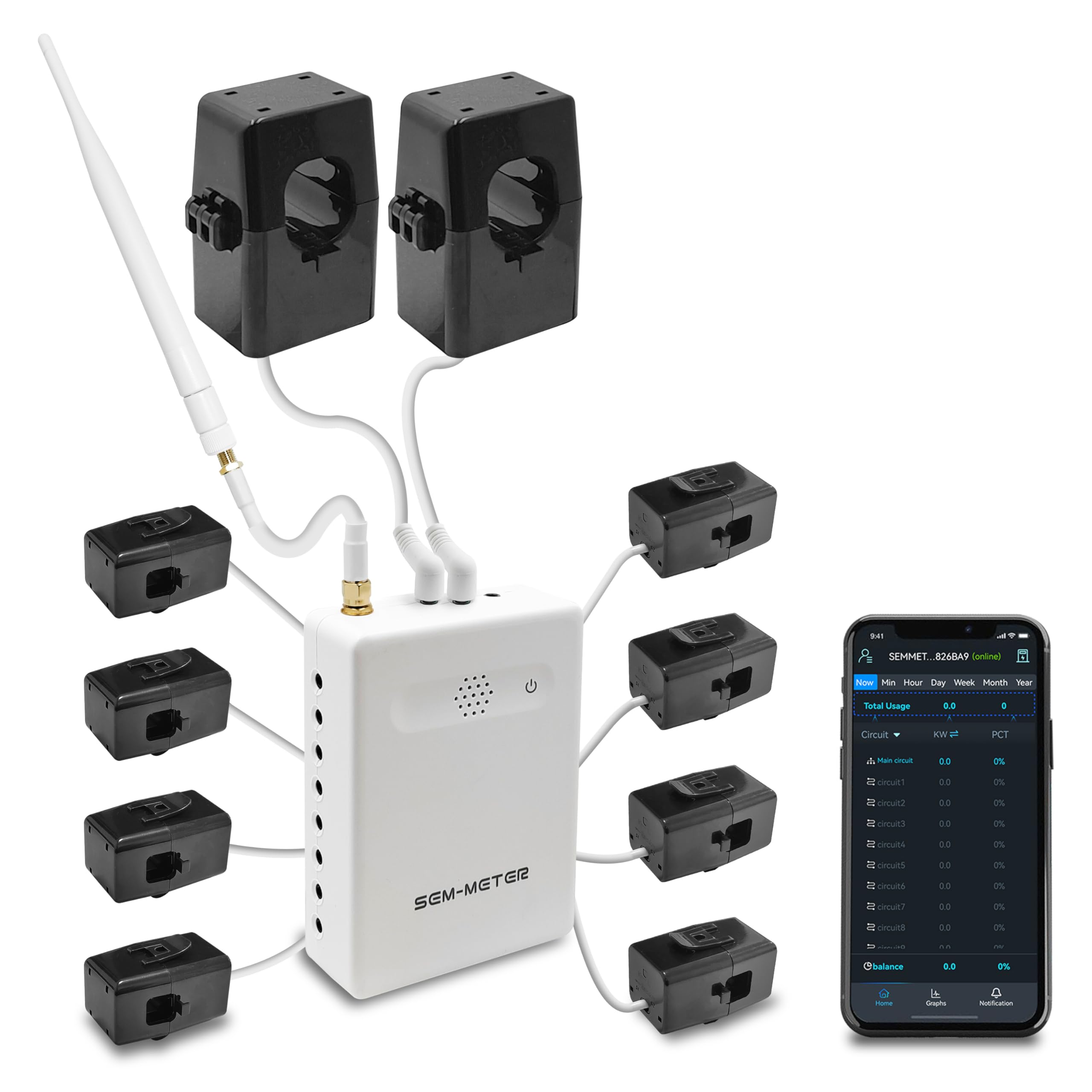
Smart Home Energy Monitor with 8 50A Circuit Level Sensors | Vue - Real Time Electricity Monitor/Meter | Solar/Net Metering - Amazon.com
View on Amazon
EF ECOFLOW Portable Power Station DELTA 2, 1024Wh LiFePO4 (LFP) Battery, 1800W AC/100W USB-C Output, Solar Generator(Solar Panel Optional) for Home Backup Power, Camping & RVs : Patio, Lawn & Garden
Amazon.com : EF ECOFLOW Portable Power Station DELTA 2, <strong>1024Wh LiFePO4 (LFP) Battery, 1800W AC/100W USB-C Output, Solar Generator(Solar Panel Optional) for Home Backup Power, Camping & RVs
Check Price on AmazonRecommended Products
Photovoltaic Design & Installation For Dummies: Mayfield, Ryan
Photovoltaic Design & Installation For Dummies <strong>helps you understand the technologies used in all types of PV systems, from modules and batteries to charge controllers, inverters, and more<
Smart Home Energy Monitor with 8 50A Circuit Level Sensors | Vue - Real Time Electricity Monitor/Meter | Solar/Net Metering - Amazon.com
Lightweight commercial 3-phase option available as a separate bundle. APPLICATION MONITORING WITHOUT GUISEWORK <strong>Up to sixteen (16) 50A sensors to accurately monitor your air conditioner, oven,
EF ECOFLOW Portable Power Station DELTA 2, 1024Wh LiFePO4 (LFP) Battery, 1800W AC/100W USB-C Output, Solar Generator(Solar Panel Optional) for Home Backup Power, Camping & RVs : Patio, Lawn & Garden
Amazon.com : EF ECOFLOW Portable Power Station DELTA 2, <strong>1024Wh LiFePO4 (LFP) Battery, 1800W AC/100W USB-C Output, Solar Generator(Solar Panel Optional) for Home Backup Power, Camping & RVs