
Solar in Oregon: Costs, Incentives & Top Installers (2026)

Oregon homeowners added thousands of rooftop systems in the past two years as utility rates jumped—Portland General Electric (PGE) raised prices roughly 18% in 2024 and Pacific Power increased residential rates by double digits, according to utility filings and the Oregon Public Utility Commission (OPUC). With the 30% federal Clean Energy Credit locked in through 2032 and robust state rebates, solar in Oregon now pencils out for many households—even west of the Cascades where cloud cover is common.
This guide walks through Oregon’s solar potential, current costs, incentives, installer options, and what to expect from permitting to payback.
By the numbers: Solar in Oregon (2026)
- 30% federal Clean Energy Credit (Investment Tax Credit) available through 2032 (IRA, U.S. Treasury)
- Typical installed price: $2.50–$3.25 per watt (residential, Q4 2025–2026 quotes; SEIA and installer surveys)
- Typical system size: 6–9 kW for a single-family home
- Modeled annual production per 1 kWdc (NREL PVWatts):
- Portland: ~1,200–1,350 kWh/year
- Eugene/Salem: ~1,300–1,450 kWh/year
- Medford/Bend: ~1,450–1,600 kWh/year
- Eastern Oregon (Pendleton/La Grande): ~1,550–1,700 kWh/year
- Average residential electricity price: roughly 13–16¢/kWh range in 2025–2026 depending on utility and rate class (EIA Electric Power Monthly, utility tariffs)
- Simple payback: ~7–12 years depending on location, shading, and incentives
- Net metering: available for PGE and Pacific Power customers with monthly rollover at the retail rate (OPUC rules)
- Oregon Solar + Storage Rebate Program: up to 40% of net system cost for residential customers, capped amounts apply; higher support for low-income households and eligible service providers (Oregon Department of Energy)
- Energy Trust of Oregon (ETO) incentives: utility-specific cash incentives for PGE and Pacific Power customers; levels vary over time (ETO program schedules)
Solar Electricity Handbook - 2023 Edition: A simple, practical guide to solar energy – designing and installing solar photovoltaic systems: Boxwell, Michael
Solar Electricity Handbook - 2023 Edition: <strong>A simple, practical guide to solar energy – designing and installing solar photovoltaic systems</strong> [Boxwell, Michael] on Amazon.com. *FREE* shi
Check Price on AmazonSolar energy potential in Oregon: sun hours, irradiance, and climate factors
Oregon’s solar resource is stronger than many assume. While the Willamette Valley averages more overcast days, high summer irradiance, long daylight hours, and relatively cool temperatures help panels perform efficiently. According to NREL’s solar irradiance maps and PVWatts modeling, a 1 kWdc array in Portland typically generates roughly 1,200–1,350 kWh per year. That climbs to 1,450–1,600 kWh in sunnier microclimates like Medford and Bend, and up to 1,700 kWh in parts of eastern Oregon.
Key climate considerations:
- Cloud cover and seasonality: West of the Cascades, winter production drops, but summer yields are high. Annual totals still support strong economics with net metering.
- Temperature: Photovoltaic modules operate more efficiently in cooler conditions; Oregon’s temperate climate reduces heat-related efficiency losses compared with hot desert regions (NREL temperature derate factors).
- Snow and rain: Coastal and valley sites see minimal snow-related downtime; in central and eastern Oregon, occasional snow events can temporarily reduce output. Steeper roof pitches shed snow faster.
- Wildfire smoke: Heavy smoke can reduce irradiance and output during late-summer events; year-to-year impact is typically a small percentage of annual production, but it’s prudent to factor a modest performance margin into forecasts (NREL/DOE analyses of smoke and PV).
Bottom line: Solar in Oregon works statewide, with the best capacity factors in southern and eastern regions. Even in Portland and Eugene, modeled outputs translate to competitive paybacks when incentives are applied.
Average cost of solar panels in Oregon and price-per-watt breakdown
Most 2026 residential quotes in Oregon fall between $2.50 and $3.25 per watt (pre-incentive) for standard rooftop systems, based on SEIA national benchmarks, regional installer quotes, and recent ETO-participating contractor bids. For a typical 7 kW system, that’s $17,500–$22,750 before incentives.
Where the dollars go (typical ranges):
- Modules: 30–40% of system cost. High-efficiency monocrystalline panels command a premium but can save roof space.
- Inverters: 10–15%. Microinverters or DC optimizers cost more than a single string inverter but boost performance on complex roofs.
- Balance of system (racking, wiring, combiner boxes): 10–15%.
- Labor and design: 15–25%.
- Permitting, interconnection, overhead, and margin: 15–25%.
Factors that push costs up or down:
- Roof complexity: Multiple planes, steep pitch, or tile roofing increase labor and racking costs.
- Electrical upgrades: Service panel upgrades or trenching (for detached garages or ground mounts) add cost.
- Equipment choices: Premium modules (e.g., TOPCon/heterojunction) and microinverters add upfront cost but can improve lifetime energy yield, particularly on shaded roofs.
- Scale: Larger systems benefit from some economies of scale, but roof-limited sites may land at higher $/W due to fixed costs.
If you’re comparing markets, Oregon’s pricing is generally lower than coastal California but similar to other Mountain West states. Homeowners evaluating multi-state options can also review our neighboring-state pages for context, such as Solar in California: Costs, Incentives & Top Installers (2026) and Solar in Idaho: Costs, Incentives & Top Installers (2026).
Oregon solar incentives: state tax credits, rebates, net metering, and SRECs
Oregon no longer offers a statewide residential income tax credit for solar, but it supports adoption through rebates, utility incentives, and net metering.
Oregon Solar + Storage Rebate Program (ODOE)
- What it is: A state-funded rebate administered by the Oregon Department of Energy for residential customers and eligible low-income service providers.
- Residential amount: For most homeowners, the rebate covers up to a set percentage of the net system cost, up to capped dollar amounts for solar and for storage. Program levels are updated as funding cycles renew; recent cycles have offered up to 40% of net cost with caps (e.g., up to $5,000 for solar and up to $2,500 for storage for general-market customers), and higher support for low- and moderate-income households and for low-income service providers (ODOE program guidance).
- How to get it: Your installer applies on your behalf before installation; funds are first-come, first-served.
Because rebate levels and funding availability change, ask your contractor to confirm your eligibility and current caps before you sign. The rebate can be combined with the 30% federal credit and with ETO incentives.
Energy Trust of Oregon (ETO) incentives
- Who’s eligible: Customers of PGE and Pacific Power within ETO’s service territory.
- Incentive structure: Cash incentives are typically paid per installed watt or per project and vary by utility, system size, and income-qualification. Incentive levels change throughout the year based on budget and market activity; recent schedules have ranged in the low hundreds of dollars per kilowatt with project caps, with enhanced incentives for income-qualified households.
- How it works: Participating ETO trade allies handle paperwork; incentives reduce your invoice at project completion.
Check the current ETO incentive table during your quoting process—levels can change quickly as budgets fill.
Net metering in Oregon
- Availability: Both PGE and Pacific Power offer net metering for residential solar under OPUC rules. System size limits commonly extend up to 25 kW for residential interconnections, which covers nearly all rooftop projects.
- Credit value: Excess generation exported to the grid is credited at the retail rate and rolls over monthly. Many tariffs donate or expire long-held surplus credits annually; check your utility’s net metering agreement for anniversary details.
- Meters and interconnection: Utilities will install a bi-directional meter after approval; most residential systems qualify for streamlined (Level 1) interconnection with modest fees and short timelines.
SRECs in Oregon
Oregon does not have a tradable Solar Renewable Energy Credit (SREC) market for homeowners like New Jersey or Washington, D.C. While Renewable Energy Certificates (RECs) may be created, homeowners often assign RECs to utilities when participating in certain incentive programs. Expect no ongoing SREC cash payments in Oregon’s current policy framework.
Federal ITC and how it applies to Oregon homeowners
The federal Investment Tax Credit—rebranded as the Clean Energy Credit under the Inflation Reduction Act—covers 30% of qualified residential solar costs through 2032. Key points for Oregon households (IRS/Treasury guidance):
- 30% applies to equipment, labor, permitting, and sales tax (if any), net of state rebates that reduce basis. Certain up-front rebates may reduce the eligible amount; tax credits generally do not.
- Standalone battery storage of 3 kWh or larger also qualifies for the 30% credit, even without solar, starting in 2023. That includes common home batteries sized 10–20 kWh.
- It’s a nonrefundable personal income tax credit—unused amounts can typically be carried forward to future years.
- Keep all invoices and incentive award letters; consult a tax professional for your specific situation.
Best solar installers and companies serving Oregon
Oregon’s market blends established local EPCs (engineering, procurement, construction) with national providers. Rather than a single “best” installer, look for a strong local track record, NABCEP-certified staff, transparent pricing, and equipment that matches your roof and goals. Companies frequently cited in Oregon bids include:
- Sunlight Solar Energy (Oregon-based, long operating history; offices in Bend and Portland)
- A&R Solar (PNW regional; Portland office; design-forward with battery expertise)
- Green Ridge Solar (Oregon-focused residential and small commercial)
- Elemental Energy (Portland-based; custom residential, storage integrations)
- Synchro Solar (Portland-area; solar plus battery)
- Premier Solar NW (serves Oregon from the Portland/Vancouver area)
- Advanced Energy Systems (Eugene-based; residential and commercial)
- Purelight Power (regional residential provider; southern Oregon presence)
- National providers: Sunrun, Tesla, and Blue Raven also quote across much of Oregon
What to compare in quotes:
- Price per watt and total cost after all incentives
- Modeled annual production (kWh) and assumptions (module power, tilt/azimuth, shading losses, inverter clipping)
- Equipment: panel efficiency, degradation warranty, inverter type, monitoring platform
- Workmanship warranty (10 years is common; 25 years from some firms)
- Service commitments (response times, roof leak coverage, production guarantees)
ROI and payback period for solar in Oregon
A realistic payback analysis starts with energy production and your current rate. Let’s model a typical Portland-area home installing a 7.2 kW system at $2.85/W ($20,520 pre-incentive):
- State rebate and ETO incentive (illustrative): Suppose a combined $2,000–$4,500 reduction depending on eligibility and program levels.
- Federal 30% credit: Applied to eligible net cost after any basis-reducing rebates. If incentives don’t reduce basis, 30% of $20,520 is $6,156. If basis is reduced by $2,500 in upfront rebates, the 30% credit would be ~$5,404.
- Net out-of-pocket after incentives: Roughly $10,000–$13,500 in many 2026 scenarios.
- Annual production (Portland): 7.2 kW × ~1,300 kWh/kW-year = ~9,360 kWh/year.
- Bill offset: At 15¢/kWh effective retail value, that’s ~$1,400/year in avoided purchases; at 13¢/kWh, ~$1,215/year. If you’re on time-of-use, the value can be higher if midday exports offset peak rates.
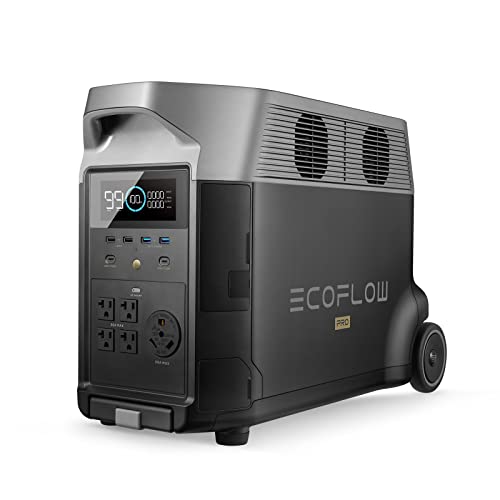
EF ECOFLOW Portable Power Station 3600Wh DELTA Pro, 120V AC Outlets x 5, 3600W, 2.7H Fast Charge, Lifepo4 Power Station, Solar Generator for Home Use, Power Outage, Camping, RV, Emergencies : Patio, Lawn & Garden
<strong>Fully recharge the lifepo4 battery in 1.8 hrs with 240V outlets(3000W), 2.7 hrs with 1800W wall outlets or solar charged in 2.8 hours with 4*400W solar panels</strong> thanks to the industry-l
Check Price on AmazonResulting simple payback: about 7–11 years for many households, shorter in sunnier regions (Medford/Bend/Eastern Oregon) or for homes with higher retail rates and excellent roof orientation. Over 25 years, even conservative escalators (1.5–2.5%/yr) yield strong net savings, with lifetime internal rates of return in the mid-single to low-double digits depending on assumptions.
Battery storage can add resilience during Public Safety Power Shutoffs or winter storms. Financial payback for batteries is more variable; economics improve on TOU rates or when backup is a priority. Storage also qualifies for the 30% federal credit and may receive an ODOE rebate.
Oregon-specific permitting, HOA rules, and interconnection process
Permitting
- Most jurisdictions require structural and electrical permits. Many cities and counties participate in Oregon’s ePermitting system, speeding submittals.
- Typical timeline: 2–4 weeks for standard residential reviews; structural engineering letters may be required for older roofs or heavy snow zones.
- Roof condition: Many installers recommend reroofing if your roof has <10 years of life left; integrating reroofing with solar can reduce labor duplication.
HOA and solar access
- Oregon law limits unreasonable restrictions on residential solar. While HOAs can enforce aesthetic guidelines, they generally cannot prohibit standard-conforming rooftop systems. If you live in a covenant-controlled community, submit your design early to avoid delays.
Interconnection (PGE and Pacific Power)
- Application: Your installer submits a Level 1 interconnection application with a one-line diagram and site plan.
- Approval and meter swap: After utility approval and municipal inspection, the utility installs a bi-directional meter and issues Permission to Operate (PTO). Straightforward projects often receive PTO within 10–20 business days of final inspection.
- Net metering agreement: You’ll sign a standard net metering contract outlining credit rollover and annual true-up provisions.
Equipment recommendations for Oregon roofs
Complex rooflines, partial shading from evergreens, and cool temperatures inform good equipment choices in Oregon.
- Microinverters for shaded/complex roofs: Module-level power electronics can maximize harvest when parts of the array see morning or afternoon shade. Based on Oregon shading profiles and reliability records, the Enphase IQ8 Microinverters are a strong fit, offering rapid shutdown compliance and panel-level monitoring.
- High-efficiency, durable modules: Panels with strong snow-load and wind-load ratings are a plus east of the Cascades. Given performance and warranty terms, Qcells Q.TRON or similar high-efficiency monocrystalline modules offer solid value for residential installations.
- Storage for resilience: For backup during PSPS events or ice storms, a 10–20 kWh battery can keep essentials running. The Tesla Powerwall 3 or comparable UL 9540-listed systems integrate well with Oregon utility interconnection requirements and qualify for the 30% credit.

Enphase ENPHASE IQ8PLUS-72-2-US IQ8+ ...
View on AmazonAlways confirm UL listings, NEC 2023 rapid-shutdown compliance, and manufacturer warranty support through your installer.
How solar in Oregon compares regionally
- California: Higher utility rates (often 25–40+¢/kWh in major IOU territories) but more complex export compensation under NEM 3.0. Oregon’s lower rates mean smaller dollar savings per kWh, but net metering is simpler and paybacks remain competitive due to moderate system prices. See our breakdown for Solar in California: Costs, Incentives & Top Installers (2026).
- Idaho: Similar equipment pricing and net metering policies that are evolving by utility. Eastern Oregon and western Idaho share sun profiles; costs and outputs can be comparable. See Solar in Idaho: Costs, Incentives & Top Installers (2026).
Step-by-step: From quote to PTO in Oregon
- Site assessment and PVWatts modeling (NREL assumptions disclosed in your proposal)
- Select equipment, verify incentives (ODOE rebate, ETO incentive), and sign contract
- Installer submits permits and utility interconnection application
- Installation (1–3 days for most rooftops)
- City/county inspection, utility meter swap, Permission to Operate
- Final incentive paperwork and federal tax credit documentation at tax time
FAQ: Common questions about going solar in Oregon
- Does solar work in rainy Portland? Yes. Annual production is what matters. Even with winter clouds, long summer days and cool temperatures drive strong annual output—~1,200–1,350 kWh per kW.
- What roof orientation is best? True south at 25–40° tilt maximizes annual production, but southwest/west can align with late-day loads and still model well. East-west arrays perform competitively on low-slope roofs.
- Will shade from firs or maples kill my ROI? Partial shading reduces yield, but module-level electronics (microinverters/optimizers) mitigate losses. Ask for a shade report using a digital irradiance tool.
- How long do panels last? Most Tier 1 panels carry 25-year performance warranties with ~0.25–0.6%/year degradation. Inverters typically carry 10–25-year warranties depending on type.
- What maintenance is needed? Little beyond visual checks and occasional rinsing in dusty areas. Rain keeps most arrays clean; schedule inspection if output drops unexpectedly.
- Snow and ice east of the Cascades? Steeper pitches and dark-framed modules aid shedding. Production lost to a few winter storms is usually small in annual terms.
- Should I add a battery? If you value backup power or face PSPS events, yes. Financial payback depends on rate structure; batteries qualify for 30% federal credit and may get an ODOE rebate.
- What if I move? Solar can increase home value. Appraisal studies (e.g., Lawrence Berkeley National Laboratory) find premiums for owned PV. If you choose a loan, confirm transfer terms with your lender.
- Community solar options? Oregon’s community solar program lets renters and homeowners subscribe to offsite projects; savings depend on project terms and your utility.
- Can HOAs say no? They can set reasonable design standards but generally cannot prohibit standard-conforming rooftop solar under Oregon law.
Practical tips for Oregon buyers
- Get at least three quotes and request both microinverter and string+optimizer options.
- Confirm current ODOE and ETO incentive levels on the day you sign—they change as budgets fill.
- Ask for a production guarantee or at minimum a transparent monitoring plan.
- If your roof is due within 10 years, coordinate reroofing and solar to avoid future removal/reinstall costs.
- Consider snow-load ratings and wind exposure east of the Cascades when selecting racking and modules.
Where Oregon solar is heading
SEIA reports continued growth in Oregon’s installed PV capacity through the mid-2020s, buoyed by falling module prices, IRA incentives, and rising retail rates. NREL expects steady efficiency gains from TOPCon and heterojunction cells and broader adoption of module-level power electronics in shaded markets like the Pacific Northwest. On the policy side, watch for updates to ETO incentive budgets, ODOE rebate funding refreshes, utility rate design (including TOU), and grid modernization that could expand hosting capacity and streamline interconnections.
For most Oregon homeowners, the case for solar in 2026 is stronger than it was just a few years ago: stable 30% federal support, meaningful state rebates, straightforward net metering, and equipment that performs well in Oregon’s cool climate. If your roof sees a decent slice of sun, the numbers increasingly add up.
Recommended Products
Solar Electricity Handbook - 2023 Edition: A simple, practical guide to solar energy – designing and installing solar photovoltaic systems: Boxwell, Michael
Solar Electricity Handbook - 2023 Edition: <strong>A simple, practical guide to solar energy – designing and installing solar photovoltaic systems</strong> [Boxwell, Michael] on Amazon.com. *FREE* shi
Enphase ENPHASE IQ8PLUS-72-2-US IQ8+ ...
Enphase · 240v · Solar · Hoymiles · Iq8 See more · Eligible for Free Shipping · Free Shipping by Amazon · Get FREE Shipping on eligible orders shipped by Amazon · Delivery Day · Get It by Tomorrow · D
EF ECOFLOW Portable Power Station 3600Wh DELTA Pro, 120V AC Outlets x 5, 3600W, 2.7H Fast Charge, Lifepo4 Power Station, Solar Generator for Home Use, Power Outage, Camping, RV, Emergencies : Patio, Lawn & Garden
<strong>Fully recharge the lifepo4 battery in 1.8 hrs with 240V outlets(3000W), 2.7 hrs with 1800W wall outlets or solar charged in 2.8 hours with 4*400W solar panels</strong> thanks to the industry-l