
Solar Panel Cleaning and Maintenance: How to Keep Your System Running at Peak Efficiency

Solar panel cleaning and maintenance may not be glamorous, but it’s one of the simplest ways to protect your investment and squeeze more kilowatt-hours out of every sunny day. Field studies from NREL and IEA PVPS (Task 13) find typical soiling losses of 2–5% in temperate climates, rising to 10–30% or more in arid, dusty, or agricultural regions. Over a 25-year life, that’s months of lost generation if you never intervene. Add routine system checks and you’ll reduce the risk of inverter downtime, catch damage early, and stay in good standing with manufacturer warranty requirements.
Why solar panel cleaning and maintenance matter
- Energy output: Dust, pollen, salt spray, bird droppings, wildfire ash, and leaf litter reduce incident light and can cut production measurably. IEA PVPS reports global average soiling losses often cluster around a few percent but vary widely by site and season. In extreme dust events, utility-scale plants have recorded double-digit daily losses until cleaning resumes.
- System lifespan: Localized soiling can create “hot spots”—areas that run hotter because part of the cell string is shaded, forcing current through fewer active cells. Elevated temperatures accelerate aging of encapsulants and solder joints (reported in IEC reliability literature and field diagnostics). Keeping glass clean and intact helps limit these stressors.
- Warranty protection: Product and performance warranties typically cover defects and long-term output (often guaranteeing ~80–92% of nameplate power after 25–30 years). Manufacturers commonly require owners to follow care instructions and avoid abrasive cleaning, harsh chemicals, or unsafe practices that can damage coatings or seals. Good records of maintenance and monitoring support any future claims.

Solar Electricity Handbook - 2023 Edition: A simple, practical guide to solar energy – designing and installing solar photovoltaic systems: Boxwell, Michael
Solar Electricity Handbook - 2023 Edition: <strong>A simple, practical guide to solar energy – designing and installing solar photovoltaic systems</strong> [Boxwell, Michael] on Amazon.com. *FREE* shi
Check Price on AmazonThe performance ratio lens
If your system or monitoring portal reports performance ratio (PR)—the fraction of expected DC energy converted to AC after accounting for irradiance and temperature—drops of more than 3–5 percentage points relative to the same season and clean conditions often indicate soiling or a fault. Even without PR, specific yield (kWh generated per kW of DC capacity) is a simple way to benchmark performance over time.
Safe solar panel cleaning and maintenance methods
Universal rules before you start
- Prioritize safety. Roof work is hazardous. Use fall protection, never step on modules, and consider ground-based tools or professionals for pitched or multi-story roofs.
- Clean cool, not hot. Early morning is best. Spraying cold water on hot glass can create thermal stress.
- Use the gentlest effective method. Start with rinse-only; escalate only as needed.
- Avoid high-pressure washers and abrasive pads. They can force water into seals or scratch anti-reflective coatings.
- De-energize when possible. Follow your inverter’s shutdown procedure (often a DC disconnect, then AC breaker off). Consult your manual.
Recommended tools
- Soft-bristle brush or foam pad on a telescoping pole
- Low-pressure hose with spray nozzle; deionized (DI) or softened water reduces spotting
- Squeegee or microfiber mop for drying, if needed
- Non-abrasive, pH-neutral soap (only if water alone won’t remove residue)
- Personal protective equipment (non-slip shoes, gloves, harness on pitched roofs)
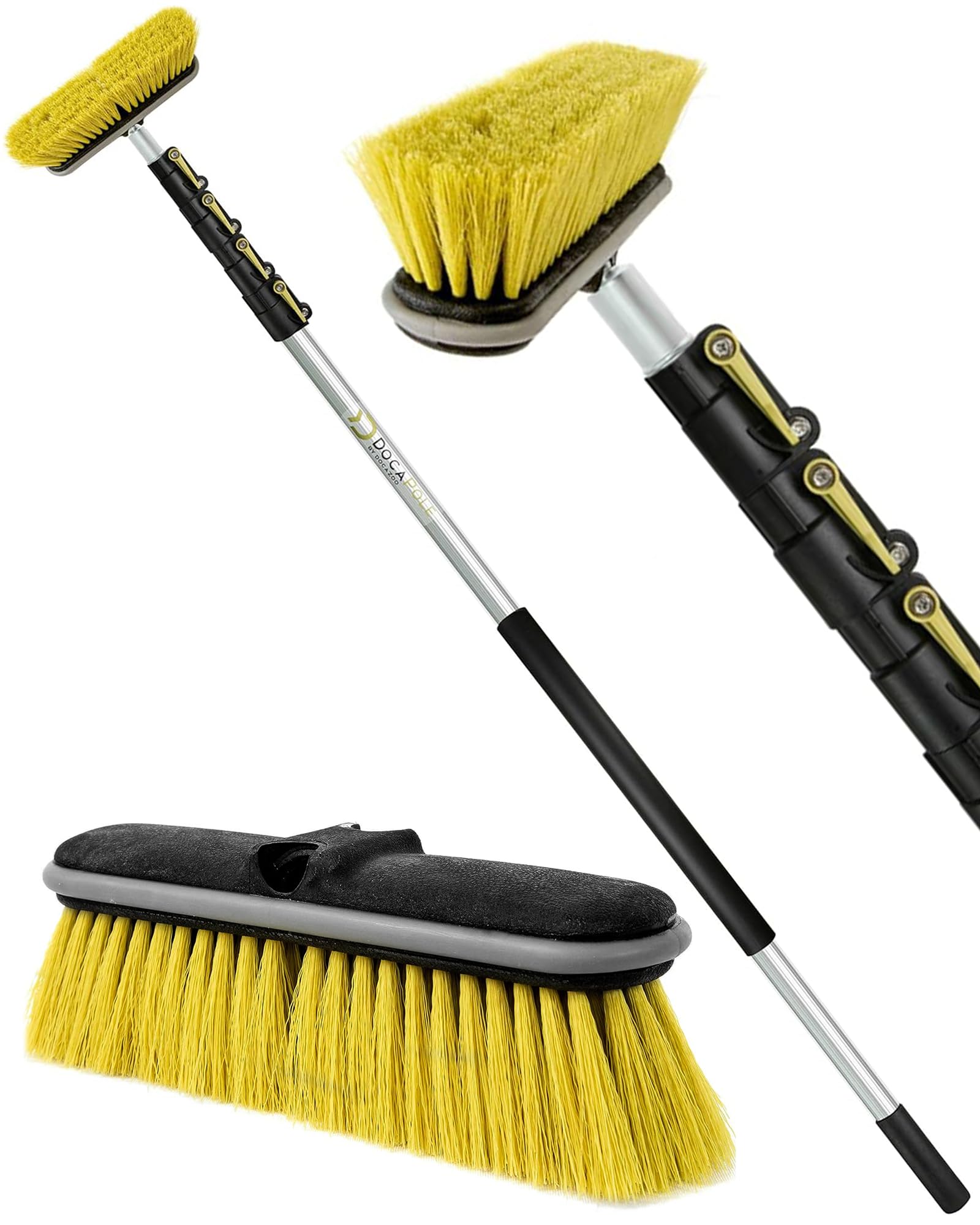
DOCA Scrub Brush 6-24 Ft with Long Handle Extension Pole - Outdoor Broom and Scrubbing Brush for House Floor, Deck, Patio, Car - Hard Brush : Industrial & Scientific
View on AmazonStep-by-step cleaning process
- Check weather and system status. Aim for a cool, overcast morning or early hours. Power down per manufacturer instructions if you’ll be in contact with wiring or junction boxes.
- Dry brush loose debris. Gently remove leaves or dry dust to avoid creating muddy films.
- Pre-rinse from the top down with low pressure. Let water soften stuck-on grime for a few minutes.
- Light agitation. Use a soft brush with DI water. Add a small amount of pH-neutral soap only for greasy residues (e.g., bird droppings); rinse thoroughly.
- Final rinse and optional squeegee. DI water often air-dries spot-free; otherwise lightly squeegee.
- Visual inspection. Look for chips, cracks, delamination, hazy spots, frame corrosion, or damaged wiring.
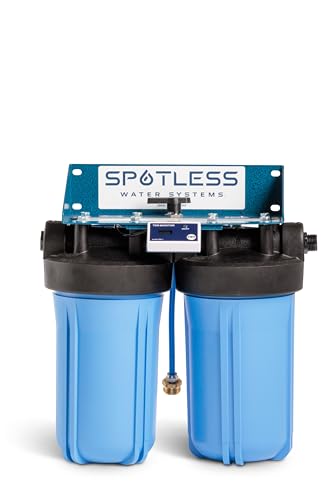
Spotless Water Systems - DI-120, Simple Window, Solar ...
View on AmazonFrequency guidance by climate and debris
- Temperate, rainy climates: Rainfall often removes most loose dust. Inspect quarterly; clean when visual soiling is evident or production drops beyond normal seasonal swings.
- Arid/dusty regions or near construction, mining, or agriculture: Expect faster soiling. Monthly visual checks; cleaning every 1–3 months may be justified during dry, windy periods, especially if you observe >5% output recovery after cleaning.
- Coastal zones (salt spray): Salt can leave conductive films. Rinse quarterly or after storm events; periodic gentle washes help prevent residue buildup.
- High pollen seasons: Pollen can form sticky layers. Clean at the end of peak bloom or as performance indicates.
- Wildfire smoke/ash: Ash can be hydrophobic and smear with light rain. Rinse after ashfall events; a gentle brush may be required.
- Snow climates: Snow typically slides off on sunny days, especially above 30–35° tilt. In heavy-snow regions, NREL field work has found annual snow-related losses ranging from ~1–12% depending on tilt and local climate. If safe access isn’t possible, let sun and gravity do the work; avoid metal shovels. For winter performance details, see Do Solar Panels Work in Winter? (/renewable-energy/do-solar-panels-work-in-winter).
Maintenance checks beyond cleaning
Cleaning gets the headlines, but a quick, structured inspection prevents small issues from becoming big ones. Many of these are visual for homeowners; internal electrical tests should be performed by qualified technicians.
Monthly (visual and app-based)
- Monitoring data: Compare daily/weekly specific yield to your baseline for the same season and weather. Sudden divergence suggests soiling or a component fault.
- Inverter/optimizer alerts: Check the app or display for error codes, ground fault warnings, or repeated restarts.
- Debris and shading: New tree growth, bird nests, or nearby structures can introduce shade. Trim vegetation around ground mounts.
- Pest guards and wiring: Look for gnaw marks, nests under arrays, or loose conduit straps. Squirrels and birds often target cozy gaps near the roof edge.
Quarterly
- Mounting hardware: From the ground or roof edge, look for loose clamps, missing mid/end clamps, or visible rack misalignment. Don’t re-torque unless you’re trained—improper torque can damage modules or roofs.
- Roof and penetrations: Inspect for lifted shingles, cracked flashing, or signs of moisture intrusion around mounts.
- Junction boxes and cable management: Ensure strain reliefs are intact and cables aren’t rubbing on sharp edges.
Annually (or after major storms)
- Detailed visual inspection: Check for glass cracks (even hairline), delamination, browning, or snail trails. Cracked glass can admit moisture and should be de-energized and replaced.
- Electrical health (pro service): A technician can perform insulation resistance tests, I–V curve tracing, and thermal imaging to detect weak strings, hot spots, or failing diodes.
- Inverter condition: String inverters often carry 10–12 year warranties and may need one replacement over a 25-year system life; microinverters and optimizers commonly have 20–25 year warranties. Keeping inverter fans/vents clear and firmware updated supports reliability (manufacturer guidance).
If a panel must be removed and cannot be reused, see What Happens to Solar Panels at End of Life? Recycling, Reuse & Disposal (/renewable-energy/what-happens-to-solar-panels-at-end-of-life-recycling-reuse-disposal) for responsible options.
DIY or hire a professional?
Good candidates for DIY
- Single-story homes with low-slope roofs or ground mounts
- Light to moderate soiling removable with gentle tools from a secure position
- Owners comfortable with basic ladder safety and following shutdown procedures
When to call a professional
- Steep or multi-story roofs, skylights, or slippery surfaces
- Heavy, baked-on deposits that require specialized tools (water-fed poles with DI, pure-water systems)
- Electrical issues: ground fault codes, repeated breaker trips, observed arcing, burning smells, or visible melted connectors
- Physical damage: cracked glass, delamination, frame warping, water inside junction boxes
- After hail, hurricane-force winds, or significant seismic events
Professionals bring safety equipment, water quality control (DI), and diagnostics (thermal cameras, I–V tracers) that quantify module health. Many offer bundled annual service plans that include cleaning, mechanical checks, and a performance report.
Safety considerations if you DIY
- Use a sturdy ladder with a stabilizer; have a spotter.
- Wear a harness on pitched roofs; tie off to rated anchors.
- Keep feet and tools away from module edges to avoid leverage on glass.
- Treat conductors as energized; do not open connectors unless qualified.
- Never clean during lightning risk or when surfaces are icy.
Practical tips to keep panels efficient year-round
- Record a baseline. Use NREL’s PVWatts or your installer’s model to estimate monthly production for a “clean” system. Track specific yield (kWh per kW) so system size doesn’t mask trends.
- Use data to time cleaning. If a quick rinse restores 3–5%+ on a clear day versus the day before (with similar irradiance), your site may benefit from a routine. Keep simple before/after notes.
- Focus on localized issues. Bird droppings often create outsized losses on small cell areas—spot-cleaning can be more effective than whole-array washing.
- Let rain help, but don’t rely on it exclusively. Light rain can redistribute grime and create films; a post-storm rinse may outperform waiting for the next downpour.
- Manage vegetation and pests. Trim branches that shed leaves/sap; install critter guards where animals nest.
- Mind water use. Use DI or captured rainwater when possible and avoid detergents unless necessary.
- Schedule “shoulder season” checks. Spring pollen and autumn leaves are prime times for quick interventions.
- Keep documentation. Photos, dates, notes on weather, and production make patterns obvious and support any warranty claims.
For a quick homeowner checklist that complements this deep dive, see Solar Panel Maintenance Tips: Maximize Output & Lifespan (/renewable-energy/solar-panel-maintenance-tips).
Estimating the ROI of cleaning
A simple back-of-the-envelope approach helps decide whether a cleaning visit pays for itself.
- Assume a 7 kW residential system produces ~900 kWh in a typical summer month (site-dependent). A 5% soiling loss equals 45 kWh. At $0.20/kWh retail electricity value, that’s $9/month.
- If professional cleaning costs $200 and the site re-soils to the same level in three months, you’d recoup ~$27 in energy value—unlikely to pencil. At 15% loss, the three-month energy value rises to ~$81, still below $200.
Takeaways:
- In many temperate, rainy regions, cleaning only when you observe measurable losses or visible grime is most cost-effective.
- In dusty/arid regions, near agriculture or construction, or with frequent bird activity, scheduled cleaning can be justified—especially for larger systems where percentage gains translate to more kWh.
By the numbers: solar panel cleaning and maintenance
- 2–5%: Typical annual energy loss from soiling in temperate climates; 10–30% or higher in dusty/arid regions (NREL; IEA PVPS Task 13 field studies).
- 0.3–0.5%/year: Median module power degradation reported in recent NREL meta-analyses of modern crystalline silicon modules over long-term field exposure.
- 1–12%: Annual snow-related losses observed in cold-climate field studies depending on tilt, snowfall, and array access to sun (NREL and utility datasets).
- 10–12 years vs. 20–25 years: Common warranty spans for string inverters versus microinverters/optimizers, respectively (manufacturer summaries; NREL market reports).
3–5 percentage points: A practical performance ratio drop threshold that often signals soiling or faults when compared to clean-season baselines (industry monitoring practice).
Common questions
- Will rain keep panels clean? Often partially, but not reliably. Light rain can move dust into films; periodic rinsing or gentle brushing improves clarity and performance.
- Can I use vinegar, window cleaner, or soap? Stick to DI water whenever possible. If needed, use a small amount of pH-neutral, non-abrasive soap; rinse thoroughly to avoid residue.
- Is pressure washing safe? Generally no. High-pressure jets can compromise seals and coatings.
- Do anti-soiling coatings eliminate cleaning? They can reduce adhesion of dust and water spotting, but field results vary. Expect to clean less often, not never.
Where the field is heading
- Data-informed cleaning. Utility plants already optimize cleaning schedules using irradiance, wind, and particulate data. Homeowners increasingly get similar insights from inverter apps paired with satellite irradiance and soiling indices.
- Waterless and robotic solutions. In water-scarce regions, robotic dry brushes and electrostatic methods are being piloted to reduce water use and labor at scale.
- Better surfaces. Research groups (including NREL and university labs) are developing more durable hydrophobic and anti-soiling coatings to resist dust adhesion and reduce spotting.
- Smarter diagnostics. Affordable thermal cameras and built-in string-level monitoring will push maintenance toward condition-based interventions rather than fixed schedules.
Keeping your array clean and mechanically sound is about measurable, bankable performance. Use data to guide when you act, clean safely with the gentlest tools that work, and build an annual habit of quick inspections. Done right, solar panel cleaning and maintenance can recover the 2–5% many systems quietly leave on the table—while keeping your equipment healthy for decades.
Recommended Products
Solar Electricity Handbook - 2023 Edition: A simple, practical guide to solar energy – designing and installing solar photovoltaic systems: Boxwell, Michael
Solar Electricity Handbook - 2023 Edition: <strong>A simple, practical guide to solar energy – designing and installing solar photovoltaic systems</strong> [Boxwell, Michael] on Amazon.com. *FREE* shi
DOCA Scrub Brush 6-24 Ft with Long Handle Extension Pole - Outdoor Broom and Scrubbing Brush for House Floor, Deck, Patio, Car - Hard Brush : Industrial & Scientific
24’ HIGH-REACH HARD BRISTLE BRUSH ... surfaces – the 24 foot DocaPole Extension Pole <strong>makes it possible to reach almost any dust, dirt, gunk, and grime that needs washing</strong>...
Spotless Water Systems - DI-120, Simple Window, Solar ...
Spotless Water System for car wash,Pre-Filled with DI 5L Resin, DI Water System,Garden Hose Quick Connector, Deionized Water System for RV, Vehicles, Motorcycles, Bikes, Boats, · CarShine Sleek Deioni