
B Corp Certification Process: What to Expect and How to Prepare
Why the B Corp certification process matters now
More than 8,000 companies across 90+ countries have achieved B Corp certification, according to B Lab’s global directory in 2024. Each has demonstrated at least 80 points on the 200-point B Impact Assessment (BIA), adopted legal accountability to stakeholders, and passed an independent verification. With investor and customer scrutiny of environmental and social claims rising, the B Corp certification process offers a structured, auditable pathway to prove real impact—not just marketing.
This guide explains what B Corp certification is, who’s eligible, and how to navigate the step-by-step pathway from readiness to verification and beyond. If your team is building an ESG program or formalizing sustainability practices, understanding the B Corp certification process will help you plan timelines, budgets, and documentation with eyes wide open.
What B Corp certification is—and why organizations pursue it
B Corp certification is an independent accreditation administered by the nonprofit B Lab. It evaluates a company’s practices and performance across five areas—Governance, Workers, Community, Environment, and Customers—using the B Impact Assessment. Certification requires meeting a minimum verified score (80/200), making legal changes to embed stakeholder governance, and complying with transparency and verification rules.
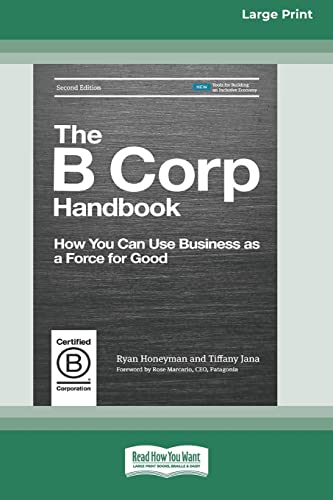
The B Corp Handbook, Second Edition: How You Can Use Business as a Force for Good: Honeyman, Ryan, Jana, Tiffany, Marcario, Rose
This book--winner of an Independent Book Publisher's Association IPPY Award as one of the best business books of 2020--is <strong>the authoritative guide to the what, why, and how of B Corp certi
Check Price on AmazonWhy companies pursue it:
- Credibility and trust: Certification is based on a scored, verified assessment. B Lab publishes each company’s score breakdown on a public directory, which adds transparency to claims.
- Investor and customer alignment: The BIA aligns with material ESG topics (e.g., worker practices, supply chain management, climate), making it easier to communicate performance to stakeholders.
- Operational improvements: The BIA is a management tool as much as a standard—identifying gaps and codifying policies. Companies often discover cost savings (e.g., energy efficiency, waste reduction) and risk reductions (e.g., supply chain due diligence) through the process.
- Talent attraction and retention: Employee engagement and purpose-driven culture are frequent benefits reported by B Corps in B Lab surveys.
Note: B Lab has been evolving its standards to clarify baseline requirements on topics like climate, human rights, and governance, with updates publicly communicated for implementation beginning in 2025. Companies beginning now should track these updates to anticipate future obligations.
Core eligibility and requirements
- Operating history: Most companies need at least 12 months of operations to certify. New ventures can opt for “Pending B Corp” status for up to 12 months if they commit to the process and fee (B Lab guidance).
- Performance threshold: Achieve at least 80 points on the B Impact Assessment across five sections: Governance, Workers, Community, Environment, and Customers. The BIA adapts by company size, sector, and geography so questions are relevant and weighted appropriately.
- Legal accountability: Adopt B Lab’s legal requirement to consider stakeholders alongside shareholders. The exact mechanism depends on jurisdiction and entity type (e.g., becoming a benefit corporation or adding stakeholder clauses to governing documents). Deadlines vary by company size and location; B Lab provides a Legal Requirement Tool to determine what’s required and when.
- Verification and disclosure: Complete a Disclosure Questionnaire (covering sensitive practices and potential controversies), provide documentation during verification, and agree to possible site reviews or audits. Companies in higher-risk sectors undergo additional checks.
- Fees: Certification is subject to an annual license fee scaled to revenue and may include submission or verification fees. B Lab publishes fee schedules by region; for many small and mid-sized companies, annual fees typically land in the low thousands of dollars, with larger enterprises paying more.
The B Corp certification process: step by step
This section outlines the high-level journey most companies follow. Timelines vary by company size, complexity, and verification queue. B Lab indicates that many small and mid-sized companies complete certification in 6–10 months; larger or multi-entity groups may take 12–18 months.
1) Assess readiness and scope
- Map your entity and revenue structure: Know which legal entities, geographies, and lines of business are in scope. Complex corporate structures may require a Multinational or Large Enterprise approach and additional documentation.
- Baseline your likely starting score: Complete the B Impact Assessment in “practice mode” to gauge current performance. Many first-time assessments land in the 40–60 range before improvements.
- Identify material gaps: Highlight low-scoring questions that are operationally feasible to improve within your timeline (e.g., formal policies, measurable targets, supplier standards, environmental data collection).
2) Build the improvement plan
- Prioritize high-impact, achievable actions: Examples include adopting a stakeholder governance policy, formalizing employee benefits, implementing DEI policies and training, setting science-aligned climate targets, improving waste diversion, or establishing supplier codes of conduct.
- Assign owners and timelines: Cross-functional ownership (HR, Ops, Finance, Sustainability, Legal, Procurement) is essential. Create a RACI and a monthly cadence.
- Stand up a documentation system: Use a shared drive or ESG data platform to house written policies, handbooks, training logs, invoices, utility data, supplier attestations, and board minutes.
Relevant resources:
- For small teams building emissions baselines, see Carbon Accounting for Small Business: A Practical Guide to Tracking and Reducing Emissions (/sustainability-policy/carbon-accounting-for-small-business-practical-guide)
- For spend and supplier practices, see Sustainable Supply Chain Management: A Practical Guide to Greener, More Responsible Operations (/sustainability-policy/sustainable-supply-chain-management-practical-guide)
- For reporting structure and governance, see ESG Reporting for Small Business: A Practical Getting-Started Guide (/green-business/esg-reporting-small-business-practical-guide)
3) Complete the B Impact Assessment (BIA)
- Use the correct track: The BIA tailors questions by sector, size, and geography. Confirm your track to ensure accurate scoring and documentation prompts.
- Aim for 85–90 points before submission: Verification often adjusts scores downward as evidence is reviewed. Targeting a buffer above 80 reduces the risk of falling short.
- Answer consistently with evidence in mind: Only claim points you can substantiate during verification. Add internal notes on where documents live and who can explain the practice.
4) Submit the assessment and pay applicable fees
- Submission queue: Once you submit, your assessment enters B Lab’s review queue. Expect a wait time before an analyst is assigned.
- Disclosure Questionnaire (DQ): Complete the DQ on sensitive topics (e.g., legal violations, product safety, political activity). The DQ does not directly affect your BIA score but can trigger additional reviews or conditions.
5) Verification and analyst review
- Document requests: An analyst will request evidence for a subset of your claims (commonly 8–15 question areas, more for complex companies). Typical requests include policies, data extracts, employee and supplier lists, utility bills, certifications, and training records.
- Verification call(s): Expect one or more calls to walk through evidence, clarify methodologies (e.g., how you calculated emissions or living wage coverage), and discuss any flagged risks.
- Score adjustments: Points may be added, reduced, or reallocated after evidence review. If you fall below 80, the analyst may keep your case open to allow targeted improvements.
6) Quality assurance and final decision
- Internal QA: After analyst verification, B Lab conducts internal quality checks to ensure consistency.
- Legal requirement confirmation: You’ll confirm or complete the legal accountability step as required for your jurisdiction and timeline.
- Certification agreement and listing: If approved, you’ll sign the B Corp Agreement, pay the annual license fee, and your profile and verified score will be published in B Lab’s public directory.
7) Optional: Site review or audit
- Randomized or risk-based checks: B Lab may conduct site visits or deeper audits, especially for larger or higher-risk companies.
By the Numbers: B Corp at a glance
- 80/200: Minimum verified BIA score required for certification (B Lab)
- 5 sections: Governance, Workers, Community, Environment, Customers
- 6–10 months: Typical certification timeline for SMEs; 12–18 months for complex firms (B Lab guidance)
- 3 years: Recertification cycle to maintain B Corp status
- 8,000+: Certified B Corporations worldwide (B Lab, 2024)
Common challenges—and how to prepare
Governance and accountability
- Challenge: Lack of formal stakeholder governance and inconsistent board oversight of impact.
- Preparation tips:
- Adopt a board-approved stakeholder governance policy and integrate impact KPIs into quarterly reviews.
- Establish conflict-of-interest and ethics codes; record annual attestations.
- If required, plan your legal entity updates early, coordinating with counsel and your board calendar.
Worker policies and data
- Challenge: Strong informal culture but weak documentation and incomplete benefits data.
- Preparation tips:
- Document benefits eligibility, paid leave, safety training, grievance procedures, and professional development.
- Assess living wage coverage by location and job type; verify with payroll data.
- Track turnover, injury rates, and demographics to support DEI metrics and benchmarking.
Environmental measurement
- Challenge: Limited operational data for energy, water, waste, and emissions.
- Preparation tips:
- Centralize utility bills and waste hauler reports; calculate intensity metrics (per unit revenue or production).
- Build a greenhouse gas inventory for Scope 1 and 2; plan a credible approach for Scope 3 hotspots (e.g., purchased goods, logistics). See Carbon Accounting for Small Business (/sustainability-policy/carbon-accounting-for-small-business-practical-guide).
- Set targets and an action plan (e.g., energy efficiency, renewable procurement, fleet electrification). Complementary references: Corporate Carbon Neutrality Strategies: A Practical Guide for Businesses (/sustainability-policy/corporate-carbon-neutrality-strategies-practical-guide).

Emporia Gen 2 Smart Home Energy Monitor with 16 50A Circuit Level Sensors | Real Time Electricity Monitor/Meter | Solar/Net Metering - Amazon.com
View on AmazonSupply chain practices
- Challenge: Minimal supplier oversight beyond price and delivery.
- Preparation tips:
- Implement a supplier code of conduct with environmental and social criteria; require acknowledgment for key vendors.
- Tier suppliers by risk and spend; begin with questionnaires and certifications for higher-risk categories.
- Evaluate local purchasing, diverse suppliers, and long-term relationships to strengthen Community and Governance scores. See Sustainable Supply Chain Management (/sustainability-policy/sustainable-supply-chain-management-practical-guide).
Customer stewardship and product impact
- Challenge: Limited processes for customer feedback, data privacy, and product responsibility.
- Preparation tips:
- Formalize complaint handling, satisfaction tracking, and responsible marketing standards.
- For high-impact products/services, document evidence of measurable social or environmental outcomes (e.g., energy saved, emissions avoided, health improvements) with methods and baselines.
Documentation and audit trail
- Challenge: Evidence exists but is scattered across teams.
- Preparation tips:
- Build a “B Corp data room” with clear naming conventions and version control.
- Save board minutes, policies, training logs, benefits summaries, supplier lists, and environmental data extracts with date stamps.
- Keep calculations reproducible; include assumptions and data sources in a brief methodology note for each metric.
Costs, staffing, and timelines
- Internal resourcing: Small organizations often dedicate a project lead (0.2–0.5 FTE for several months) plus functional contributors. Mid-sized companies may run a full-time PM during the improvement and verification phases.
- External support: Some firms use BIA-savvy consultants or auditors to accelerate readiness and documentation. Not required, but can help for complex scopes.
- Fees: Expect an annual certification fee scaled to revenue (published by B Lab regionally). Many SMEs pay in the low-thousands range, while larger enterprises pay higher tiers. Additional submission or verification fees may apply—budget a modest contingency. Always confirm the latest fee schedule from B Lab.
- Timeline drivers: Data availability, policy approvals, legal changes, and B Lab’s review queue are the most common gating factors.
What to expect during verification
- Evidence sampling: Do not expect to submit proof for every answer. Analysts use sampling to test accuracy. Be ready to provide comprehensive proof for sampled items.
- Clarifications: Analysts may ask for calculations (e.g., GHG boundary and emission factors), definitions (e.g., “local” supplier radius), or eligibility (e.g., which employees receive a benefit and how you calculated coverage).
- Score dynamics: It’s common for the score to change. A prudent approach is to over-prepare documentation for your highest-value claims and maintain an 85–90 pre-verification buffer.
Legal requirement: embedding stakeholder governance
- Mechanisms vary: Depending on jurisdiction and entity type, companies may need to amend articles, adopt specific language, or convert to a benefit corporation/public benefit corporation (e.g., Delaware PBC for Delaware entities). LLCs typically adopt equivalent language in operating agreements.
- Timing: B Lab sets timelines by size and jurisdiction. Some companies must complete the legal change before certification; others can complete it by their first recertification. Use B Lab’s Legal Requirement Tool and coordinate with counsel early.
- Practical tip: Schedule legal changes to align with board meetings and state filing calendars to avoid delays near the end of verification.
Post-certification responsibilities
- Recertification every three years: You’ll complete a new BIA, undergo verification, and need to maintain a score at or above 80 as standards evolve.
- Annual obligations: Pay annual license fees, keep your public profile current, and notify B Lab of material changes (e.g., acquisitions, leadership or scope changes) that could affect your score or risk profile.
- Continuous improvement: Many B Corps use annual targets tied to BIA sections—e.g., raising living wage coverage, expanding renewable energy procurement, or strengthening supplier due diligence.
- Brand use and claims: Follow B Lab’s brand guidelines and avoid overstating certification scope (e.g., do not imply product-level certification when it’s company-level).
- Investigations and complaints: B Lab can review complaints or alleged violations. Cooperate promptly and document corrective actions.
Practical implications for leaders
- For executives: Treat the B Corp certification process as a change-management project. Tie actions to enterprise risk reduction, cost savings (e.g., energy, waste), and talent outcomes. Embed oversight at the board or executive committee level.
- For sustainability and operations: Use the BIA as your roadmap for policies, data systems, and controls. Build auditable baselines now; future standards updates are expected to raise clarity and baseline expectations.
- For finance and legal: Coordinate the legal requirement, disclosure controls, and data integrity. Anticipate auditor-style reviews and ensure claims are backed by primary documents.
Where the standard is heading
B Lab’s public “Evolving Standards” process focuses on clarifying baseline expectations in areas like climate action, human rights due diligence, and governance accountability. Companies certifying today should expect continuing refinement, more explicit topic-level requirements, and increased emphasis on credible measurement. That direction benefits companies willing to operationalize impact, not just document it.
Checklist: getting started in 60 days
- Week 1–2: Establish scope, assemble a cross-functional team, enroll counsel on legal requirement implications.
- Week 3–4: Complete a baseline BIA; identify top 10 improvement opportunities with point potential and feasibility.
- Week 5–6: Draft or update keystone policies (governance, ethics, DEI, supplier code, climate/energy, health & safety). Build a data room.
- Week 7–8: Collect environmental and HR data; calculate GHG Scope 1–2; initiate supplier questionnaires.
- Week 9–10: Implement quick wins (e.g., formalize grievance process, codify training, set energy targets). Begin legal requirement planning.
- Week 11–12: Re-score the BIA; aim for 85–90; prepare for submission and documentation mapping.

Kasa Smart Plug Mini with Energy Monitoring, Smart Home Wi-Fi Outlet Works with Alexa, Google Home & IFTTT, Wi-Fi Simple Setup, No Hub Required (KP115), White - Amazon.com
View on AmazonEmbedding these practices pays dividends beyond the certificate: resilient supply chains, lower operating costs, better hiring pipelines, and clearer ESG narratives for investors and customers.
Recommended Products
The B Corp Handbook, Second Edition: How You Can Use Business as a Force for Good: Honeyman, Ryan, Jana, Tiffany, Marcario, Rose
This book--winner of an Independent Book Publisher's Association IPPY Award as one of the best business books of 2020--is <strong>the authoritative guide to the what, why, and how of B Corp certi
Emporia Gen 2 Smart Home Energy Monitor with 16 50A Circuit Level Sensors | Real Time Electricity Monitor/Meter | Solar/Net Metering - Amazon.com
See how much electricity your home is using anywhere, anytime. ... <strong>Add individual 50A sensors to your Vue to monitor up to 16 individual circuits</strong> — providing accurate energy use for t
Kasa Smart Plug Mini with Energy Monitoring, Smart Home Wi-Fi Outlet Works with Alexa, Google Home & IFTTT, Wi-Fi Simple Setup, No Hub Required (KP115), White - Amazon.com
Kasa Smart Plug Mini with Energy Monitoring, <strong>Smart Home Wi-Fi Outlet Works with Alexa, Google Home & IFTTT, Wi-Fi Simple Setup, No Hub Required</strong> (KP115), White - Amazon.com
More in Sustainability Policy
- Essential Guide to Product Sustainability Certifications: Choosing, Verifying, and Leveraging the Right Labels
- Green Building Certification Guide: What It Means, How It Works, and Which Standard Fits Your Project
- Carbon Neutral Strategies for Businesses: Practical Approaches to Measure, Reduce, and Credibly Offset Emissions
- Corporate Carbon Neutrality Strategies: A Practical Guide for Businesses