
Essential Guide to Product Sustainability Certifications: Choosing, Verifying, and Leveraging the Right Labels
Consumers, investors, and regulators are rewarding credible sustainability certifications for products. In 2023, consumer packaged goods with ESG-related claims grew 8.7% versus 4.8% for products without such claims over a five‑year period, according to a McKinsey–NielsenIQ analysis. At the same time, governments are tightening rules on green claims—from the U.S. Federal Trade Commission’s forthcoming update to the Green Guides to the EU’s proposed Green Claims Directive—raising the bar for verification and transparency. Navigating labels well can unlock market access, reduce compliance risk, and build resilient brands.
Why sustainability certifications for products matter now
- Credibility and trust: Third‑party certification (by accredited bodies under ISO/IEC 17065) provides independent assurance that a product meets defined environmental or social criteria. Surveys from Edelman and IBM’s Institute for Business Value consistently show trust and verified performance are decisive for eco‑conscious buyers.
- Regulatory compliance: Public procurement often requires certified attributes (e.g., ENERGY STAR or EPEAT in U.S. federal IT purchasing; EU Green Public Procurement referencing the EU Ecolabel criteria). Forthcoming EU rules on green claims and digital product passports will make traceable product data a baseline rather than a bonus.
- Market access and retailer programs: Major marketplaces (e.g., retailer “sustainability badges”) and B2B buyers increasingly filter catalogs by recognized labels.
- Operational and cost benefits: Energy‑efficient and low‑toxicity design often lowers operating costs (e.g., ENERGY STAR products can use 10–50% less energy depending on category, per U.S. EPA), reduces waste, and improves worker safety.
- Investor and reporting alignment: Product‑level disclosures feed into corporate sustainability reporting and scope 3 emissions accounting under the GHG Protocol Product Standard, CDP questionnaires, and emerging regulatory reporting.
Making sense of labels: scope, rigor, and what they actually certify
Sustainability certifications for products vary widely. A helpful way to parse them is by scope and verification model.
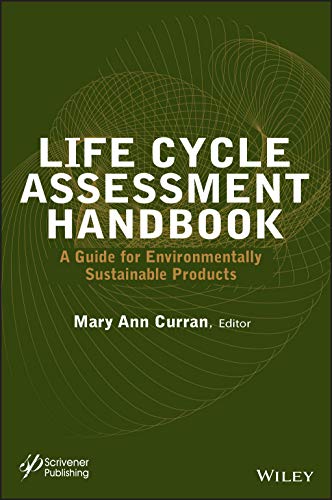
Life Cycle Assessment Handbook: A Guide for Environmentally Sustainable Products: Curran, Mary Ann
Life Cycle Assessment Handbook: A Guide for Environmentally Sustainable Products [Curran, Mary Ann] on Amazon.com. *FREE* shipping on qualifying offers. Life Cycle Assessment Handbook: A Guide for Env
Check Price on Amazon- Scope
- Single‑attribute: Focus on one impact (e.g., energy efficiency, low emissions, organic content).
- Multi‑attribute: Assess several lifecycle criteria (materials health, recyclability, energy, water, social fairness).
- Product vs. company: Some certify a specific product (e.g., EU Ecolabel), others certify the company or brand (e.g., B Corp), which can be confused by buyers if not explained clearly.
- Verification rigor (ISO references)
- Type I ecolabels (ISO 14024): Voluntary, multi‑criteria labels awarded by a third party (e.g., EU Ecolabel, Nordic Swan, Blue Angel).
- Type II self‑declared (ISO 14021): Claims by manufacturers (e.g., “recyclable,” “compostable”) that must be truthful and substantiated but are not independently certified.
- Type III Environmental Product Declarations—EPDs (ISO 14025): Third‑party verified, LCA‑based quantified environmental data following Product Category Rules (PCRs). Common in building products and packaging.
Understanding these dimensions helps align certifications to your product strategy and buyer expectations.
Major certifications by sector and what they mean
Energy and electronics
- ENERGY STAR (U.S. EPA/DOE): Category‑specific energy performance thresholds verified by EPA‑recognized labs; covers appliances, HVAC, office equipment, lighting, and more. Often required or preferred in public procurement. ENERGY STAR Most Efficient recognizes top performers within categories.
- EPEAT (Global Electronics Council): Multi‑attribute rating (Bronze/Silver/Gold) for IT products, including climate, circularity, chemicals of concern, and supply‑chain responsibility. Criteria are updated regularly and require ongoing verification.
- TCO Certified: For IT hardware, emphasizes socially responsible manufacturing, hazardous substances, and circular design (repairability, durability). Independent verification and surveillance audits.
- 80 PLUS: Efficiency ratings for computer power supplies at various loads; laboratory tested.
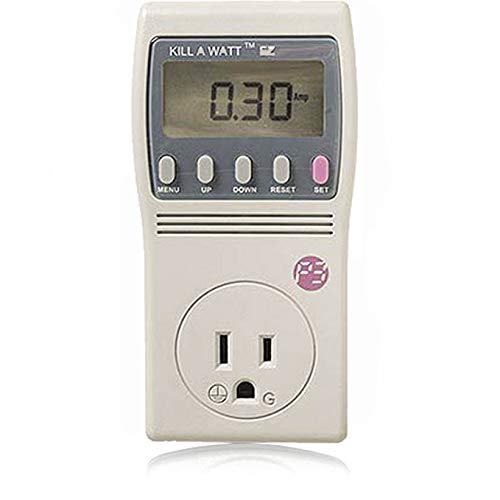
P3 International P4460 Kill A Watt EZ Electricity Usage ...
View on AmazonGeneral ecolabels
- EU Ecolabel (European Commission): Type I ecolabel covering a wide range of products and services (over 88,000 listed as of 2023). Criteria include lifecycle impacts, hazardous substances, and durability/repairability.
- Blue Angel (Germany) and Nordic Swan (Nordic countries): Long‑standing Type I ecolabels with stringent, product‑specific criteria and third‑party verification.
Forestry, paper, and packaging
- FSC (Forest Stewardship Council): Certifies responsible forest management and chain‑of‑custody (CoC) for wood and paper. Over 220 million hectares globally are FSC‑certified (FSC data). Labels include 100%, Mix, and Recycled—each with distinct sourcing requirements.
- PEFC (Programme for the Endorsement of Forest Certification): An umbrella that endorses national forest certification systems with CoC requirements; large global coverage of certified forest area.
- Recycled content and recyclability claims (ISO 14021): Must be substantiated with mass‑balance data and local recycling capabilities; some markets expect third‑party assurance.
Food and agriculture
- Fairtrade (Fairtrade International): Focuses on fair prices, premiums, and labor standards for farmers and workers; supply chain traceability required.
- Rainforest Alliance: Environmental and social certification for agriculture and forestry, including deforestation risk mitigation and living income differential in some crops.
- USDA Organic / EU Organic: Organic production standards restrict synthetic inputs and GMOs; verified by accredited certifiers.
- MSC (Marine Stewardship Council) and ASC (Aquaculture Stewardship Council): Sustainability standards for wild‑caught fisheries (MSC) and farmed seafood (ASC). MSC reports around 15% of global marine catch is certified or in assessment.
- RSPO (Roundtable on Sustainable Palm Oil): Criteria to reduce deforestation and social harms; supply‑chain models from Identity Preserved to Book & Claim.
Materials, textiles, and indoor air quality
- GOTS (Global Organic Textile Standard): Organic fiber content plus processing criteria on chemicals, wastewater, and social compliance.
- OEKO‑TEX STANDARD 100: Tests for harmful substances in textiles; MADE IN GREEN adds traceability.
- GREENGUARD and GREENGUARD Gold (UL): Low chemical emissions for indoor air quality in products like furniture, building materials, and electronics.

Temtop Air Quality Meter: Precision Indoor/Outdoor CO2, PM2.5, PM10, Detection with Audio Alarm, Temperature & Humidity Insights for Enhanced Home Comfort, M2000C: Amazon.com: Industrial & Scientific
View on AmazonCircularity and product innovation
- Cradle to Cradle Certified (C2C Certified): Multi‑attribute program evaluating material health, product circularity, clean air and climate protection, water stewardship, and social fairness, with levels from Bronze to Platinum. Companies pursuing this often align with circular economy strategies; see examples in our feature on Circular Economy Leaders: How Companies Are Eliminating Waste.
Carbon and climate claims
- Product Carbon Footprint (PCF): Quantified cradle‑to‑gate or cradle‑to‑grave greenhouse gas emissions using the GHG Protocol Product Standard or ISO 14067; often published via EPDs. For methodology guidance, see our explainer on Carbon Footprint: What It Is, How to Measure and Reduce Yours.
- CarbonNeutral product/company: A certification used by brands that quantify emissions, reduce where feasible, and purchase high‑quality offsets to neutralize residual emissions, typically aligned with PAS 2060 requirements and third‑party verification.
- Carbon Trust labels: “Carbon Footprint,” “Reducing CO2,” or “Carbon Neutral” marks validated by the Carbon Trust, indicating measurement and, in some cases, certified reduction trajectories.
- Offsets and claims integrity: If neutrality claims rely on carbon credits, ensure credits meet quality criteria (additionality, permanence, no double counting). Our guide to Carbon Credits Explained: How Emissions Trading Markets Actually Work covers what to look for.
Company‑level certifications (important but distinct from product labels)
- B Corp (B Lab): Certifies companies on governance, workers, community, environment, and customers. It’s not a product ecolabel but can complement product‑level certifications by signaling broader corporate responsibility.
By the numbers
- 8.7% vs. 4.8%: CPG products with sustainability claims grew faster than those without over five years (2017–2022), per McKinsey–NielsenIQ (2023).
220 million hectares: Forest area certified under FSC (FSC data, 2024). PEFC reports comparable global coverage under its endorsed systems.
88,000: Products and services bearing the EU Ecolabel (European Commission, 2023).
- 10–50%: Typical energy savings for many ENERGY STAR‑certified products compared with standard models (U.S. EPA category documentation).
- ~15%: Share of global wild‑caught seafood certified by the MSC or in assessment (MSC impact reports).
How to choose and pursue the right certification
Start with your buyers and regulatory context
- Map buyer requirements: Analyze RFPs, retailer onboarding guides, and public procurement criteria. Many corporate IT tenders require EPEAT or TCO Certified; building projects may request EPDs and GREENGUARD.
- Align with regulations: Track rules in your target markets. In the EU, the Ecodesign for Sustainable Products Regulation (ESPR) will set product durability, repairability, and data disclosure requirements, including digital product passports for priority categories. The EU is also advancing rules against vague environmental claims. For a policy overview, see The EU Green Deal in 2026: What New Climate Regulations Mean for Business.
- Fit to strategy: Certifications should reinforce your core sustainability roadmap and KPIs, not drive it. If you’re still defining that roadmap, start here: Why Every Business Needs a Sustainability Strategy — Not Just the Big Ones.
Select the right certification type for your product
- Energy‑using products: Prioritize ENERGY STAR, then consider EPEAT or TCO Certified for IT equipment.
- Wood/paper packaging: FSC or PEFC chain‑of‑custody to prove responsible sourcing.
- Food/agri: Organic where relevant; complement with Fairtrade or Rainforest Alliance depending on buyer priorities.
- Indoor environments/building materials: GREENGUARD for emissions; EPDs to quantify lifecycle impacts and meet green building credits.
- Circular design leadership: Cradle to Cradle Certified to demonstrate multi‑attribute progress.
- Carbon claims: Publish a Product Carbon Footprint (ISO 14067 or GHG Protocol Product Standard), set reduction targets, and if using offsets, substantiate neutrality with PAS 2060‑aligned verification.
Understand cost, time, and resource implications
Indicative ranges vary by size, scope, and region; plan for:
- Program and audit fees: Typically from low thousands to tens of thousands of dollars per product line annually. Examples: FSC/PEFC chain‑of‑custody audits often start in the low thousands; EPEAT registry and verification fees scale with portfolio size; ENERGY STAR requires accredited lab testing per model.
- Testing and data collection: Laboratory tests (e.g., energy, emissions, material content) can range from a few thousand dollars per model up to tens of thousands for complex categories.
- Timeline: 3–6 months for straightforward labels; 6–12+ months for multi‑attribute programs or when deep supply‑chain mapping is required.
- Internal capacity: Expect cross‑functional effort (R&D/engineering, procurement, quality, regulatory, legal, marketing). A part‑time program manager is typical for SMEs; large portfolios may need a dedicated team.
Auditor‑verified vs. self‑declared claims
- Prefer third‑party certification for market‑facing claims that influence purchasing decisions. Buyers and regulators increasingly discount self‑declared statements unless backed by recognized standards and verifiable data.
- If using self‑declared claims (ISO 14021), maintain detailed substantiation files: methodology, test reports, supplier attestations, system boundaries, and geographic applicability.
Supply‑chain data requirements
- Chain of custody: For FSC/PEFC, maintain documented transfer and volume control systems; train staff; ensure suppliers are certified and listed correctly.
- Life cycle assessment (LCA): For EPDs and PCFs, define functional unit, system boundaries, and use peer‑reviewed datasets. Follow ISO 14040/44 and category‑specific Product Category Rules.
- Chemical management: Maintain restricted substances lists (RSLs), safety data sheets (SDS), and test results for programs like OEKO‑TEX, GREENGUARD, and TCO Certified.
- Traceability and digital product passports: Build a data model now—bill of materials (BOM), supplier IDs, batch/lot tracking—to prepare for EU passport pilots in electronics, batteries, and textiles.
Common pitfalls and how to avoid them
- Vague or absolute claims: Avoid unqualified terms like “eco‑friendly,” “green,” or “zero impact.” The U.S. FTC Green Guides and EU consumer law target generic claims lacking proof.
- Logo misuse: Do not display a certification mark without a valid license, scope, and product list. Keep certificates current and accessible.
- Carbon neutrality shortcuts: Claiming “carbon neutral” without a robust PCF, credible reductions, and high‑quality offsets (with clear retirement records) invites scrutiny. If offsets are used, disclose project type, vintage, and registry. See our guide to Carbon Footprint and Carbon Credits Explained for methodologies and market quality signals.
- Supply‑chain breaks: For chain‑of‑custody labels, a single uncertified transfer invalidates claims. Audit your tier‑1 and tier‑2 suppliers early.
- Over‑customization: Engineering a product solely to meet one label can conflict with other performance or compliance needs. Balance criteria in early design.
How certifications influence buyers, sales, and ROI
How buyers read labels
- Consumers: Labels act as heuristics. Research consistently shows a willingness to pay a modest premium for trustworthy labels, especially when they imply direct benefits (e.g., energy cost savings, healthier indoor air).
- Procurement teams: Prefer binary filters (certified/not) and tiered ratings (e.g., EPEAT Gold). They also look for verifiable IDs or registry listings to confirm claims.
- Public sector: Procurement policies often mandate preference for certain certifications (e.g., ENERGY STAR, EPEAT, FSC/PEFC). Documentation and easy verification can be decisive in bids.
Impacts on sales and margins
- Growth premium: Products with credible sustainability claims have outpaced category growth in multiple datasets (e.g., McKinsey–NielsenIQ 2023). The premium is strongest for durable, functional benefits (energy savings, durability) and recognized third‑party labels.
- Total cost of ownership (TCO): Energy‑efficient products and durable materials reduce operating costs and returns, improving TCO for buyers and supporting value‑based pricing.
- Channel access: Some retailers restrict “green” filters to recognized certifications, driving discoverability and conversion.
Reporting and marketing best practices
- Be specific and verifiable: Name the certification, standard version, level (e.g., “EPEAT Gold 2023”), scope (model numbers), and ID or registry link/QR code.
- Consistent claims language: Align marketing copy with the certification owner’s approved claim wording and your certificate scope.
- Visual hierarchy: Use a small set of high‑value labels rather than a collage; explain in plain language what each means for the buyer (energy savings, safer materials, traceability).
- Educate sales teams: Provide one‑page briefs with buyer talking points, standards references, and objection handling.
- Monitor misuse: Set up periodic web and retail audits to catch outdated or incorrect claims.
Measuring certification value
Define a simple measurement framework:
- Commercial: Track revenue share, price realization, and win rates for certified SKUs versus non‑certified peers; capture the role of certification in RFP scoring.
- Operational: Measure warranty/return reductions, energy/water savings in use phase (where measurable), and material yield improvements.
- Brand: Monitor web traffic to certification landing pages, time on page, and assisted conversions; track retailer “badge” impressions and CTR.
- Compliance: Maintain a dashboard of certificate expirations, audit findings closed, and supplier conformance rates.
Implementation checklist for teams
- Identify the 1–3 certifications that matter most to your top customers and channels.
- Gap‑assess products against criteria; prioritize high‑volume SKUs for fastest ROI.
- Build a cross‑functional data room (LCA inputs, test reports, supplier certificates, BOMs).
- Select accredited certification bodies and ISO 17025 labs; align on timelines and sample needs.
- Pilot with one product line; document process maps and templates; scale to portfolio.
- Stand up governance: change control for design tweaks, logo use approvals, and renewal calendars.
What’s next: more data, less noise
The direction of travel is clear: more quantified, verifiable product data and fewer generic claims. Three trends to plan for now:
- Digital product passports: The EU is rolling out passports under ESPR, building on the Battery Regulation’s precedent. Expect requirements for standardized product data (materials, carbon footprint, repairability) accessible via QR/NFC.
- Convergence on LCA‑based metrics: EPDs and product carbon footprints are becoming common denominators, with sector‑specific Product Category Rules improving comparability.
- Continuous improvement models: Multi‑attribute programs (e.g., Cradle to Cradle, EPEAT) increasingly reward measurable year‑over‑year gains and supply‑chain engagement.
Organizations that invest early in clean product data, credible verification, and clear buyer communication will be best positioned to meet evolving regulations, win procurement decisions, and capture the growth premium associated with trusted sustainability certifications for products.
Recommended Products
Life Cycle Assessment Handbook: A Guide for Environmentally Sustainable Products: Curran, Mary Ann
Life Cycle Assessment Handbook: A Guide for Environmentally Sustainable Products [Curran, Mary Ann] on Amazon.com. *FREE* shipping on qualifying offers. Life Cycle Assessment Handbook: A Guide for Env
P3 International P4460 Kill A Watt EZ Electricity Usage ...
Discover versatile watt meters that measure voltage, current, power, and energy usage. Get overload protection, backlit displays, and cost-tracking features.
Temtop Air Quality Meter: Precision Indoor/Outdoor CO2, PM2.5, PM10, Detection with Audio Alarm, Temperature & Humidity Insights for Enhanced Home Comfort, M2000C: Amazon.com: Industrial & Scientific
Temtop Air Quality Meter: <strong>Precision Indoor/Outdoor CO2, PM2.5, PM10, Detection with Audio Alarm, Temperature & Humidity Insights for Enhanced Home Comfort</strong>, M2000C: Amazon.com: Ind
More in Sustainability Policy
- How to Choose Truly Sustainable Products: Criteria, Trusted Picks, and Smart Buying Tips
- Eco‑Friendly Products: Buyer’s Guide to the Best Sustainable Picks
- ESG Investing Guide for Beginners: How to Start Investing with Your Values
- Sustainable Supply Chain Management: A Practical Guide to Greener, More Responsible Operations