
Personal Carbon Offsetting Options: How to Choose Credible, Effective Ways to Neutralize Your Emissions
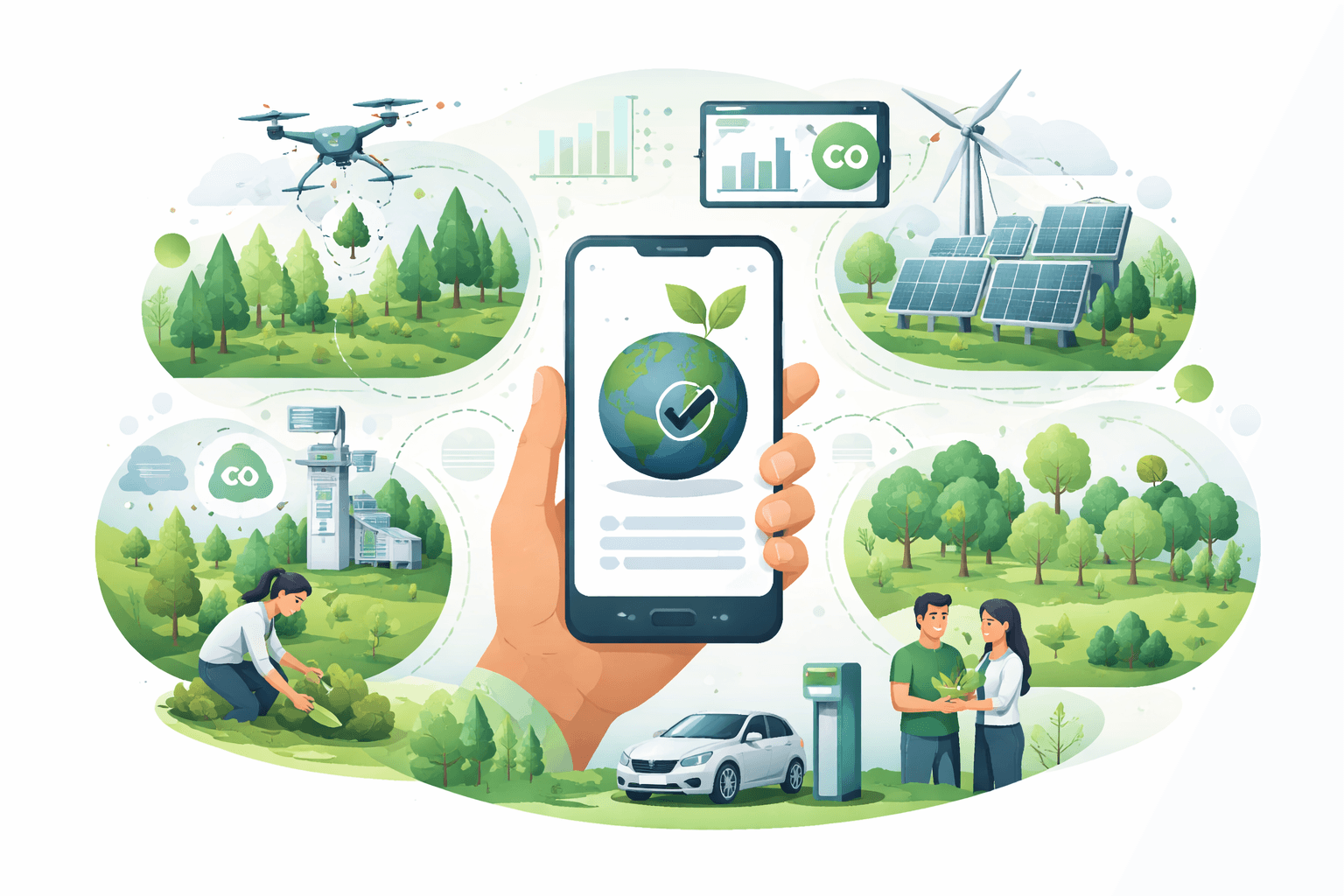
Personal carbon offsetting options have expanded fast as more people look to balance the emissions they can’t avoid. In 2023, voluntary carbon market (VCM) retirements totaled on the order of 150–160 million tCO2e, according to Ecosystem Marketplace, even as quality scrutiny intensified. The average American still emits ~15 tCO2e per year (Our World in Data; Global Carbon Budget 2023), while the global average is ~4.7 tCO2e. Offsets won’t solve climate change alone, but—when used after aggressive reductions—they can channel real money to methane capture, forest restoration, and engineered carbon removals.
This guide explains the main personal carbon offsetting options, how to evaluate quality (additionality, permanence, leakage), what credible certification looks like, and how to build a portfolio that matches your budget and values.
Personal carbon offsetting options: project types and mechanisms
Not all offsets are the same. They fall into two big buckets: avoidance/reduction (preventing emissions from happening) and removals (pulling CO2 from the air and storing it). Both can be valid if they are high quality.
Nature-based projects
- Reforestation and afforestation (removals): Planting or regenerating forests that absorb CO2. Typical net sequestration ranges ~3–10 tCO2e per hectare per year depending on species and climate (IPCC 2019). Risks include fire, disease, and illegal logging. Credible programs use buffer pools and monitoring.
- Improved Forest Management (IFM) (avoidance and sometimes removals): Changing harvest schedules or practices to increase carbon stocks. Quality varies; robust baselines and frequent verification matter.
- Blue carbon (removals): Restoring mangroves, salt marshes, and seagrasses. Coastal ecosystems can store carbon 4–10x faster per hectare than terrestrial forests and lock large stocks in soils (UNEP; IPCC Wetlands Supplement). Project supply is smaller and prices are often higher due to complex permitting and monitoring.
Technology and waste-based projects
- Methane capture and destruction (avoidance): Capturing landfill gas, coal mine methane, or livestock biogas and flaring or using it for energy. Methane’s 100-year global warming potential is ~27–30x CO2 (IPCC AR6), so abatement is highly impactful. These credits often have strong additionality and clear metering.
- Renewable energy (avoidance): Supporting wind, solar, small hydro. In markets where renewables are already the least-cost option, additionality can be weak. In places where capital cost or policy barriers remain, credits may still be additional. Quality depends on location and project start date.
- Clean cookstoves and clean cooking fuels (avoidance): High-efficiency stoves and fuels reduce biomass burning. Field studies suggest 30–60% fuel savings, often avoiding ~1–3 tCO2e per household per year while improving health (Clean Cooking Alliance; WHO).
- Soil carbon and biochar (removals): Agricultural practices that build soil organic carbon and stable biochar added to soils. Permanence and measurement uncertainty vary; better projects use conservative baselines, frequent sampling, and buffers.
- Engineered removals (removals): Direct air capture (DAC) with geological storage, enhanced weathering, and biomass with carbon capture and storage (BECCS). These offer high permanence (1000+ years when geologically stored) and clearer accounting but currently cost much more.
Ways to buy or participate
- Certified offset credits: You purchase a verified, serialized credit equal to 1 tCO2e, then retire it in your name on a public registry. This is the most straightforward and auditable route.
- Direct donations or investments: Supporting a conservation NGO or project developer without receiving credits. This can be impactful, but without a retired credit you cannot claim to have offset a specific tonne.
- Subscriptions and micro-offsets: Monthly plans, airline add-ons, credit card round-ups, and retailer opt-ins. These can be convenient; confirm that credits are certified and actually retired, and check the project list and standards.
- Tokenized offsets and blockchain: Some platforms tokenize carbon credits to improve traceability. Major registries (e.g., Verra) now require that credits be retired before tokenization to prevent double counting. On-chain records can improve transparency, but the climate integrity still depends on the underlying project quality and proper retirement on the original registry.
For an overview of market mechanics and terminology, see our explainer on how emissions trading and credits work: Carbon Credits Explained: How Emissions Trading Markets Actually Work.
How to evaluate credibility and effectiveness
Quality hinges on a few testable concepts. Look for projects certified under recognized standards and scrutinize public documentation.
Recognized standards and registries
- Gold Standard (GS): Strong focus on sustainable development co-benefits and household/community-scale projects. Frequent verification; often higher prices.
- Verra’s Verified Carbon Standard (VCS): The largest registry by volume; covers a wide range of methodologies, including REDD+ (avoided deforestation), renewable energy, and technology-based projects.
- Climate Action Reserve (CAR) and American Carbon Registry (ACR): Prominent North American registries with rigorous methodologies for forestry, methane, and industrial gases.
Credible projects undergo third-party validation (design stage) and verification (monitoring stage) and issue serialized credits that appear on a public registry.
Core quality criteria
- Additionality: Would the emission reduction or removal have happened without the carbon finance from your purchase? Warning signs include renewable projects in regions where renewables are already the cheapest option and fully mandated by policy. Studies have found weak additionality in parts of legacy markets (e.g., EU-commissioned reviews of CDM projects), which is why current standards emphasize robust financial and regulatory tests.
- Permanence: How long will the carbon stay out of the atmosphere? Forestry typically uses 30–100-year crediting with buffer pools to insure against reversals; DAC with geological storage targets millennia. The longer and better-insured, the more credible the tonne.
- Leakage: Does the project simply shift emissions elsewhere (e.g., protecting one forest causes logging to move next door)? High-quality methodologies include leakage accounting and conservative deductions.
- Measurement, reporting, and verification (MRV): Are emissions measured directly (e.g., methane meters) or modeled with conservative assumptions? Look for transparent monitoring reports and verification statements.
- Safeguards and co-benefits: Health, biodiversity, and livelihoods matter. Projects aligned with UN Sustainable Development Goals and with documented safeguards (free, prior, and informed consent; grievance mechanisms) are preferable.
Documentation to check
- Project design document (PDD) and methodology used
- Validation and verification reports from accredited auditors
- Public registry page with issuance and retirement records
- Monitoring reports with data on actual performance
- For removals: storage pathway (e.g., durable wood products vs. geologic storage) and reversal risk management
Independent ratings and labels
- Third-party rating agencies (e.g., BeZero, Calyx Global, Sylvera) assess project risks like additionality and permanence. Ratings can disagree, but they add a layer of diligence.
- ICROA-endorsed providers adhere to best-practice purchasing principles.
Red flags to avoid
- No recognized standard or registry listing
- Vague or outdated project documentation; no recent monitoring/verification
- Ultra-cheap credits (e.g., <$3/tCO2e) with sweeping claims
- No clear retirement record linking a unique serial number to you or your organization
- Large over-crediting claims relative to peers, or press investigations alleging inflated baselines without corrective action
For a deeper buyer’s checklist and program overview, see: Carbon Offset Programs Available: How to Assess, Buy, and Use Credible Offsets.
Decision factors for individuals
What does a tonne cost?
Prices vary by project type and quality. Market snapshots from Ecosystem Marketplace, Trove Research, and registry data suggest the following typical ranges in 2023–2025:
- Renewable energy (selected regions): ~$2–$8/tCO2e (quality and additionality concerns often higher here)
- Cookstoves and distributed energy: ~$6–$15/tCO2e
- Landfill gas and methane capture: ~$8–$20/tCO2e
- Improved forest management and reforestation: ~$8–$25/tCO2e (blue carbon often higher)
- Biochar and soil carbon with strong MRV: ~$20–$60/tCO2e
- Engineered removals (DAC with storage, mineralization): ~$150–$600+/tCO2e (prices have been declining as capacity scales)
Quality often correlates with price, but not always. Pay for documentation, not marketing.
Co-benefits and values
- Health: Cookstoves reduce indoor air pollution; WHO estimates 2.3 billion people still rely on polluting fuels and technologies.
- Biodiversity and water: Forest and mangrove projects can restore habitats and protect coasts.
- Local development: Jobs, income, and energy access. Gold Standard and many VCS projects document SDG impacts.
Decide what matters most and choose projects with verified co-benefits aligned to those goals.
Geography preferences
- Local vs. global: Some buyers prefer projects near home for connection and education value. Climate impact is global, but local co-benefits may sway your choice.
- Policy context: Additionality is easier to demonstrate in places without strong emissions mandates or where finance is a real barrier.
Permanence horizon and project mix
- Aim for a portfolio: For example, 60–70% high-certainty, metered reductions (e.g., methane, cookstoves) and 30–40% long-lived removals (forestry with buffers today; increasing engineered removals over time). As removal supply scales and costs fall, shift more budget to durable removals.
Where to apply offsets
- Travel: Aviation often dominates discretionary emissions. The ICAO CO2 calculator can estimate flight emissions. Consider offsetting premium cabins at a higher factor.
- Home energy: Prioritize efficiency and clean electricity first (e.g., heat pumps, insulation, rooftop solar). Offset the remainder if you want to be carbon neutral year-to-year.
- Lifestyle and goods: Food, services, and purchases add up. Use credible calculators to estimate a baseline before offsetting.

Emporia Gen 2 Smart Home Energy Monitor with 16 50A Circuit Level Sensors | Real Time Electricity Monitor/Meter | Solar/Net Metering - Amazon.com
View on AmazonTo calculate and cut your footprint before buying credits, start here: Carbon Footprint: What It Is, How to Measure and Reduce Yours.
How to buy well (step-by-step)
- Measure your annual emissions (tCO2e) with a credible calculator and set a reduction plan.
- Pick a budget per tonne and a portfolio mix (e.g., 70% reductions, 30% removals this year; increase removals over time).
- Choose projects certified by GS, VCS, CAR, or ACR; read the PDD, monitoring reports, and the latest verification.
- Confirm retirement: Ensure credits are retired in your name with a public serial number and a retirement certificate.
- Track and disclose: Keep a simple ledger of tonnes, serials, projects, and prices. Revisit annually.
By the numbers
- 15 tCO2e: Approximate annual per-capita footprint in the U.S.; ~4.7 tCO2e global average (Our World in Data; Global Carbon Budget 2023)
- 27–30x: Methane’s warming impact vs. CO2 over 100 years (IPCC AR6)
- 150–160 MtCO2e: Scale of voluntary market retirements in 2023 (Ecosystem Marketplace)
- 4–10x: Coastal blue carbon ecosystems’ carbon burial vs. terrestrial forests per hectare (UNEP; IPCC Wetlands Supplement)
- $6–$15/tCO2e: Typical high-quality cookstove credit range; $150–$600+/tCO2e engineered removals, trending down as projects scale
Offsetting within a broader climate strategy
Offsets are not a license to emit. Most standards and scientific bodies recommend the hierarchy: measure → avoid and reduce → offset residuals.

How Bad Are Bananas?: The Carbon Footprint of Everything: Berners-Lee, Mike
Mike Berners-Lee is <strong>author of the timely best-sellers 'There Is No Planet B' and 'How Bad Are Bananas? The Carbon Footprint of Everything'</strong>. An expert in sustainabi
Check Price on Amazon- Measure: Establish a baseline and hotspots (e.g., flights, heating fuel, diet).
- Avoid and reduce: Prioritize actions with durable impact and strong economics. Examples include home weatherization, heat pumps, EV adoption, and diet shifts.
- Offset: Use credits for what remains—and be explicit about scope (e.g., “2026 household residual emissions after reductions”).
Useful reduction guides:
- Households: How to Reduce Your Carbon Footprint: Practical Steps for Every Household
- Portfolio approach to offsets: Strategies to Offset Your Carbon Footprint: Practical, Credible Approaches for Individuals and Businesses
Tracking and transparency
- Keep records: Project names, standards, serial numbers, tonnes retired, and prices.
- Time-match where possible: If you emit in 2026, try to buy and retire 2026 credits or later to align with contemporaneous impact.
- State your claims precisely: “We measured X tCO2e, reduced Y tCO2e, and retired Z tCO2e under [standard] with serial numbers listed here.” Avoid terms like “carbon neutral for life” unless backed with annual data and durable removals.
When offsets are appropriate vs. investing directly
- Appropriate when: You’ve cut what you can in the near term; remaining emissions are hard to abate (e.g., long-haul flights, district heating you don’t control); and you can fund high-quality, verified projects now.
- Consider investing directly when: A technology or behavior change will permanently reduce your footprint and likely save money (e.g., insulation, a heat pump, or a bike for short commutes). The internal rate of return for many efficiency upgrades exceeds typical offset prices.
Practical examples: building a personal portfolio
Scenario A: Frequent flyer, U.S. household
- Footprint: 12 tCO2e home and car, 6 tCO2e flights = 18 tCO2e
- Reductions this year: Switch to 100% clean electricity plan or rooftop solar; replace gas stove with induction; 10% flight reduction via telepresence → cut 4 tCO2e
- Residual: 14 tCO2e
- Offset budget: $20/t average = $280
- Portfolio: 8 tCO2e methane capture (metered, CAR/ACR); 4 tCO2e reforestation with strong buffers (VCS/GS); 2 tCO2e engineered removals purchase (DAC pre-purchase) to build future permanence

Duxtop Portable Induction Cooktop, Countertop Burner Induction Hot Plate with LCD Sensor Touch 1800 Watts, Silver 9600LS BT-200DZ
View on AmazonScenario B: Student with limited budget
- Footprint: 4 tCO2e
- Reductions: Public transit and efficient heating → down to 3 tCO2e
- Offset budget: $10/t = $30
- Portfolio: 2 tCO2e cookstoves (GS with health co-benefits), 1 tCO2e reforestation (VCS) and a plan to increase budget as income rises
What’s changing next
- Shift toward durable removals: Science-based frameworks increasingly expect organizations to prioritize long-lived carbon storage for “neutral” or “net zero” claims over time. This will likely pull more demand and investment toward DAC, mineralization, and highly durable biomass storage by the 2030s.
- Higher integrity and tighter claims: Registries and standard-setters are refining methodologies, improving baseline conservatism, and clarifying allowable claims. Expect more standardized labels (e.g., “reduction vs. removal,” “storage longevity”).
- Better digital MRV: Satellite, LIDAR, and smart metering will reduce uncertainty in forestry and waste projects. That should improve credit quality and help price discovery.
- Tokenization with guardrails: Digital ledgers can enhance traceability, but registries will continue to require retirement-first tokenization and robust anti–double counting controls.
- Price dispersion: High-integrity credits, especially durable removals and well-verified blue carbon, will command premiums; generic avoidance credits may stay inexpensive or face stricter claims limits.
For a practical overview of comparing providers and purchase flow (calculators, credit types, retirement), see: Carbon Offset Programs Available: How to Assess, Buy, and Use Credible Offsets.
Key takeaways for buyers
- Use offsets after reductions, not instead of them.
- Favor projects with strong additionality, conservative baselines, robust MRV, and clear retirement records under GS, VCS, CAR, or ACR.
- Build a portfolio that balances near-term, metered reductions (e.g., methane, clean cooking) with a growing share of long-lived removals.
- Document everything: tonnes, serials, standards, and the nature of storage.
- Expect the market to keep evolving—lean toward transparency and conservative claims.
Recommended Products
How Bad Are Bananas?: The Carbon Footprint of Everything: Berners-Lee, Mike
Mike Berners-Lee is <strong>author of the timely best-sellers 'There Is No Planet B' and 'How Bad Are Bananas? The Carbon Footprint of Everything'</strong>. An expert in sustainabi
Emporia Gen 2 Smart Home Energy Monitor with 16 50A Circuit Level Sensors | Real Time Electricity Monitor/Meter | Solar/Net Metering - Amazon.com
See how much electricity your home is using anywhere, anytime. ... <strong>Add individual 50A sensors to your Vue to monitor up to 16 individual circuits</strong> — providing accurate energy use for t
Duxtop Portable Induction Cooktop, Countertop Burner Induction Hot Plate with LCD Sensor Touch 1800 Watts, Silver 9600LS BT-200DZ
PORTABLE INDUCTION BURNER: Duxtop induction cooktop <strong>uses 110/120 V 15 amp electrical outlet</strong>–standard in all North American homes. ETL listed and built to North American electrical sta
More in Sustainability Policy
- Carbon Offset Programs Available: How to Assess, Buy, and Use Credible Offsets
- How to Choose Carbon Offset Programs: A Practical Buyer's Guide
- Strategies to Offset Your Carbon Footprint: Practical, Credible Approaches for Individuals and Businesses
- Carbon Neutral Strategies for Businesses: Practical Approaches to Measure, Reduce, and Credibly Offset Emissions