
How to Reduce Your Carbon Footprint: Practical Steps for Every Household
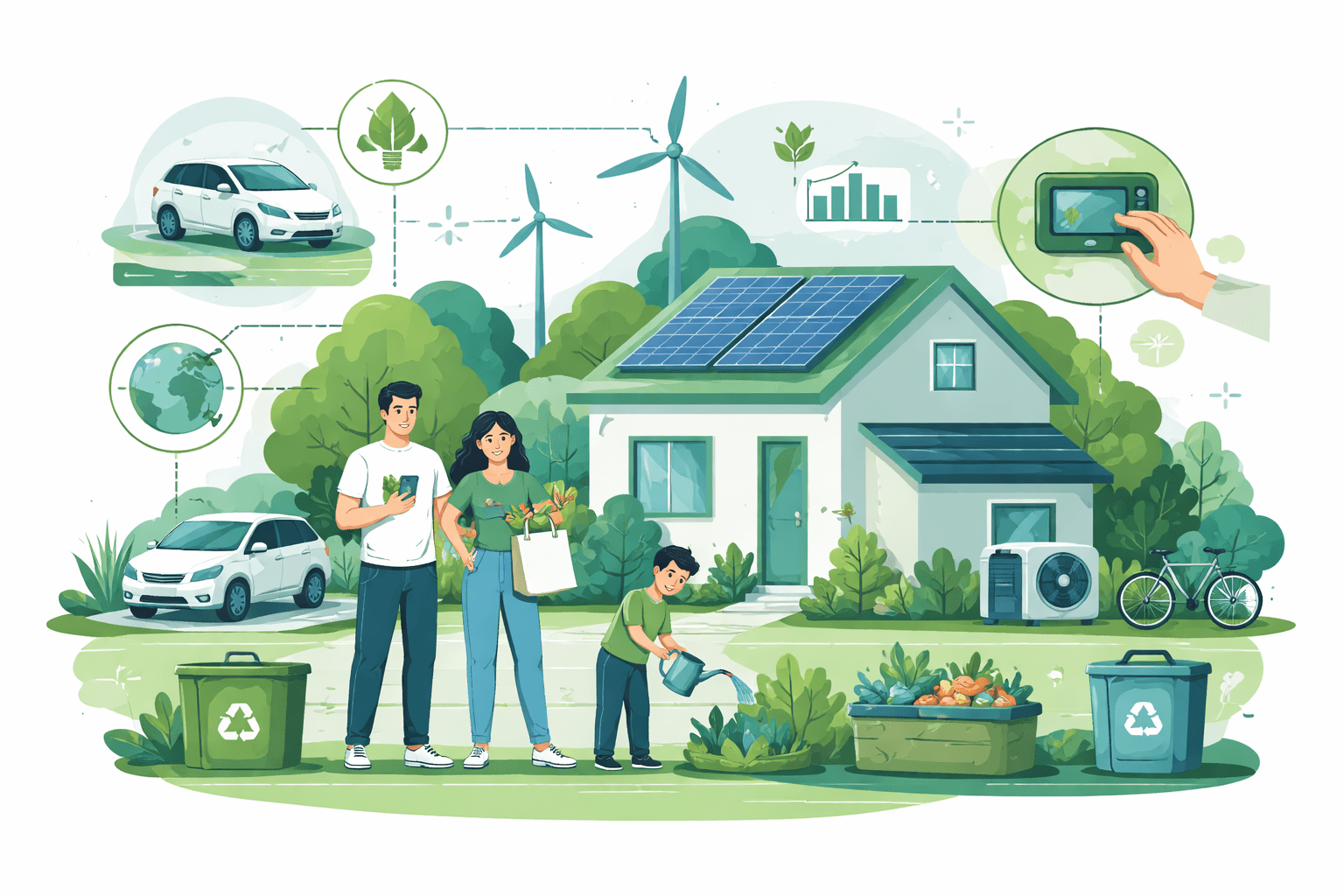
Cutting personal emissions is no longer abstract. Energy-related CO2 hit 37.4 gigatonnes in 2023—an all-time high—rising 1.1% year-over-year despite record renewables growth (IEA, 2024). The good news: households influence a large share of global emissions through energy use, travel, food, and purchasing choices. With data-backed actions, you can reduce carbon footprint measurably while saving money and improving comfort at home.
What is a carbon footprint? Key sources and latest statistics
A carbon footprint is the total greenhouse gas emissions (CO2, methane, nitrous oxide, and others) associated with an activity, product, person, or organization, expressed as carbon dioxide equivalent (CO2e). For households, this includes direct emissions (like burning gas for heating or gasoline in a car) and indirect emissions from purchased electricity, goods, and services.

How Bad Are Bananas?: The Carbon Footprint of Everything: Berners-Lee, Mike
Mike Berners-Lee is <strong>author of the timely best-sellers 'There Is No Planet B' and 'How Bad Are Bananas? The Carbon Footprint of Everything'</strong>. An expert in sustainabi
Check Price on Amazon- The IPCC’s latest assessment places total global greenhouse gases at roughly 59 GtCO2e in 2019, with energy use and industry the largest sources (IPCC AR6, 2023).
- Energy-related CO2 alone reached 37.4 Gt in 2023, up by 410 Mt (IEA, 2024).
- Household consumption influences a majority share of global emissions through energy, transport, food, and goods. Academic analyses estimate 60–70% of consumption-based emissions are linked to household demand (Ivanova et al., Journal of Industrial Ecology, 2016; 2020).
- Per-capita footprints vary widely: about 14–15 tCO2e in the United States, 6–8 tCO2e across much of Europe, and ~4.7 tCO2e globally (Our World in Data, 2022).
Typical household hotspots:
- Home energy: Space heating, water heating, cooling, and appliances. In the U.S., nearly half of home energy goes to heating and cooling alone (EIA RECS; U.S. DOE).
- Transport: Personal vehicles are often the single largest source in developed economies; air travel can dominate for frequent flyers.
- Food: Diet and food waste contribute significantly; beef and lamb have especially high emissions per kilogram (Poore & Nemecek, Science, 2018).
- Goods and services: Embodied emissions from manufacturing and supply chains, often hidden in household budgets.
For a fuller primer on categories and scopes, see our plain-language explainer, Carbon Footprint: What It Is, How to Measure and Reduce Yours. Read more
How to measure your carbon footprint: simple tools and calculators
Before you reduce carbon footprint effectively, get a baseline. A good calculator estimates emissions across energy, transport, food, and shopping.
Reliable tools:
- UC Berkeley CoolClimate Household Calculator (U.S.): Robust and transparent, with regional electricity and travel defaults.
- EPA Household Carbon Footprint Calculator (U.S.): Fast and simple, focuses on home energy, waste, and vehicles.
- WWF Footprint Calculator (global variants): Accessible interface to gauge lifestyle choices.
Tips for better accuracy:
- Gather 12 months of utility bills to capture seasonality.
- Note your vehicle fuel economy, annual miles driven, and typical flight routes (short-, medium-, and long-haul).
- Track major purchases (electronics, furniture, renovation materials) to understand embodied emissions.
- For electricity, note your supplier’s emissions intensity if available; grid averages vary by region.
Set a target:
- A practical first goal is a 20–30% reduction over 2–3 years through efficiency, mode shifts, and behavior changes.
- Longer term, align with science-based pathways: cutting per-capita emissions toward ~2–3 tCO2e by 2030 in high-income regions, with continued declines thereafter (IPCC AR6 pathway ranges).
By the numbers: high‑impact actions and why they work
- 37.4 Gt: Global energy-related CO2 in 2023 (IEA, 2024)
- ~50–70%: Lower lifetime emissions of a battery-electric car vs. a gasoline car on today’s average grids (ICCT, 2021; IEA, 2023)
- ~48%: Share of home energy used for heating and cooling in U.S. homes (EIA/DOE)
- Up to 10%: Annual heating/cooling energy saved by adjusting thermostat 7–10°F for 8 hours/day (U.S. DOE)
- 75%: Less electricity used by LEDs vs. incandescents (U.S. DOE)
- 8–10%: Share of global GHGs from food loss and waste (IPCC; UNEP Food Waste Index)
- ~60 kgCO2e/kg: Emissions intensity of beef vs. ~0.9 kgCO2e/kg for legumes (Poore & Nemecek, 2018)
How to reduce your carbon footprint: quick daily wins
Low-effort changes add up quickly, especially when multiplied across households.

Solid Metal 1.8 GPM High-Efficiency, Low-Flow Shower ...
View on Amazon- Thermostat discipline: In heating season, lower setpoint by 1–3°C (2–5°F). In cooling season, raise it by the same. Programmable or smart thermostats can automate schedules. DOE estimates up to 10% energy savings with 7–10°F setbacks for 8 hours/day.
- LED everything: Replace remaining incandescent and halogen bulbs. LEDs use about 75% less energy and last 15–25 times longer (U.S. DOE).
- Cold-water laundry: About 90% of washing machine energy goes to heating water. Modern detergents clean effectively in cold.
- Line dry when possible: Dryers are major loads; even partial air-drying trims kWh use.
- Power strips and sleep modes: Standby power can be 5–10% of household electricity; smart strips shut off peripherals when the main device sleeps.
- Efficient cooking: Match pot size to burner; use lids; pressure cookers and microwaves are often more energy-efficient. Induction cooktops transfer ~80–90% of energy to the pot vs. ~35% for gas (U.S. DOE; LBNL).
- Shorter, efficient showers: Efficient showerheads (≤2.0 gpm) and 1–3 minutes shorter showers reduce both water and water‑heating energy.
Track these changes for a month and recheck your calculator. Even without large investments, households often shave 5–15% off energy-related emissions with these habits.
Home energy: reducing emissions from heating, cooling, and electricity
Heating, cooling, and water heating dominate home energy use, so structural upgrades yield big, durable cuts.
Air sealing and insulation (the foundation)
- Air sealing stops uncontrolled leaks; blower-door–guided sealing can reduce infiltration by 10–40% in leaky homes.
- Insulate attics and rim joists first; add cavity or exterior wall insulation where feasible; upgrade windows strategically (air sealing + storms often beat full replacements on cost/ton CO2 reduced).
- Typical savings: 10–30% on heating/cooling energy in existing homes (U.S. DOE; utility program evaluations).
For a prioritized upgrade roadmap and how to time projects, see our guide to Energy-Efficient Green Renovations. Read the guide
Heat pumps for space and water heating
- Heat pumps move heat rather than make it, delivering 2–4 units of heat per unit of electricity (seasonal COP), slashing emissions especially as grids clean up.
- Cold-climate air-source heat pumps now heat efficiently well below freezing; variable-speed systems boost comfort.
- Heat pump water heaters cut water-heating electricity use by ~50–70% vs. standard electric tanks.
- Emissions impact: In regions with moderate to clean grids, switching from gas/oil furnaces or resistance heaters to heat pumps can reduce heating emissions by 30–70% today, with more over time (IEA; NREL field studies).
Smart controls and demand response
- Smart thermostats can trim HVAC energy 5–15% when used well. Geofencing, occupancy sensors, and learning schedules reduce waste.
- Time-of-use rates and demand response programs shift consumption away from peak, lowering grid emissions and bills.

ecobee Smart Thermostat Premium with Smart Sensor and Air Quality Monitor - Programmable Wifi Thermostat - Works with Siri, Alexa, Google Assistant - Amazon.com
ecobee Smart Thermostat Premium with Smart Sensor and Air Quality Monitor - Programmable Wifi Thermostat - <strong>Works with Siri, Alexa, Google Assistant</strong> - Amazon.com
Check Price on AmazonEfficient appliances and plug loads
- ENERGY STAR refrigerators, washers, and dishwashers use 10–40% less energy than standard models.
- Induction ranges and heat pump dryers further cut electricity and indoor pollution.
Clean electricity: rooftop and community solar, green tariffs
- Rooftop solar paired with efficiency often halves a home’s net electricity emissions, depending on system size and local grid mix.
- 2023 set a renewables record: 473 GW of new renewable capacity added globally, with solar leading (IRENA, 2024).
- If a roof isn’t viable, consider community solar or a green electricity tariff if offered by your utility.
Explore performance, costs, and climate benefits in our explainer, Solar Power Explained. Learn how solar works
Transport and commuting: lower-carbon travel choices and EV considerations
Transport is often the largest slice of a personal footprint.
Drive less, drive smarter
- Combine trips, carpool, and use transit where available.
- Keep tires properly inflated; under-inflation can lower fuel economy by up to ~3% (U.S. DOE).
- Moderate speeds and gentle acceleration can improve fuel economy by 10–40% vs. aggressive driving (U.S. DOE/Fueleconomy.gov).
Shift modes
- For short trips (nearly half of U.S. car trips are under 3 miles), walking, biking, or e-biking are high-impact swaps. E-bikes have ~20–40 gCO2e/km lifecycle emissions, orders of magnitude below cars, even on fossil-heavy grids.
Electric vehicles (EVs)
- Market momentum: ~14 million EVs sold in 2023, 18% of new car sales worldwide (IEA Global EV Outlook, 2024).
- Climate impact: Battery-electric cars typically deliver 50–70% lower lifecycle emissions than gasoline cars today, depending on the grid (ICCT, 2021; IEA, 2023). As grids decarbonize, this advantage grows.
- Charging strategy: Charge off-peak, enroll in managed charging if available, and pair with rooftop solar when possible.
- Not ready to buy? Consider a used EV, plug-in hybrid for specific needs, or replace one household car with an e-bike/transit pass.
We break down costs, charging, and real-world emissions in Electric Vehicles Explained. Dive deeper
Rethink flights
- A single roundtrip transatlantic flight can emit ~1–2 tCO2 per economy passenger, comparable to months of home electricity in a typical U.S. household (ICAO Calculator; U.S. EPA). Fly less, stay longer, choose economy, and prioritize direct flights.
- For essential travel, favor modern, high-occupancy routes and airlines with newer fleets.
Food, diet, and waste: impactful lifestyle shifts
Food systems account for roughly a quarter of global GHGs, with livestock and land-use change significant drivers (IPCC; Poore & Nemecek, 2018).
Eat lower on the carbon curve
- Swap beef and lamb more often for poultry, fish, eggs, or plant proteins. Average cradle‑to‑shelf emissions: beef ~60 kgCO2e/kg, lamb ~24, cheese ~21, poultry ~6, legumes ~0.9 (Poore & Nemecek, 2018).
- Plant-rich diets can cut food-related emissions 25–50% while improving health outcomes (EAT‑Lancet; meta-analyses cited by IPCC).
- Favor seasonal, minimally processed foods; reduce food miles when feasible, but what you eat usually matters more than where it comes from.
Kill food waste
- Roughly 1.05 billion tonnes of food were wasted in 2022—almost one-fifth of food available to consumers—contributing 8–10% of global GHGs (UNEP Food Waste Index 2024; IPCC).
- Actions: Plan meals, shop with lists, use “first in, first out” fridge practices, portion smartly, freeze extras, and revive leftovers.
- Compost unavoidable scraps where facilities exist; this cuts methane from landfills and returns nutrients to soils.
Consumption, shopping, and circular habits: buy less, choose better
Every product has an embodied footprint from extraction, manufacturing, and transport.
- Buy fewer, higher‑quality goods and extend lifespans via repair and maintenance. Keeping a smartphone for 5 years vs. 3 can avoid tens of kgCO2e.
- Choose refurbished electronics, durable textiles, and modular or repairable designs.
- Prioritize materials with lower embodied carbon: recycled aluminum and steel, certified wood, and products with Environmental Product Declarations (EPDs).
- Reuse beats recycle, but recycling still helps: recycled aluminum uses up to 95% less energy than primary production; recycled paper and steel save 20–70% (U.S. EPA; IAI).
- Opt for minimal packaging; bring reusables for bottles, bags, and containers.
Households planning major works can cut embodied and operational carbon by selecting low‑carbon materials and efficient designs. See strategies in our building guides when you reach that stage.
Offsets, carbon credits, and community-level actions: what helps most
Offsets can play a narrow, last‑step role—but they’re not a substitute for direct cuts.
When and how to use offsets
- Direct reductions come first: efficiency, electrification, clean electricity, travel changes, and dietary shifts.
- If you purchase offsets, vet rigorously for additionality (would not happen without offset funds), permanence (durable storage), leakage (no emissions shifting), and robust monitoring.
- Favor high‑quality standards and transparent registries; be wary of cheap credits with vague methodologies or overstated baselines.
For a practical walkthrough on evaluating options and avoiding common pitfalls, see Carbon Offset Programs Available. How to assess and buy credible offsets
Community and policy multipliers
Your personal footprint sits inside bigger systems. Engage locally to amplify impact:
- Community solar and aggregated heat‑pump or weatherization programs lower costs through bulk procurement.
- Advocate for building performance standards, clean electricity options, and transit/bike infrastructure.
- Support school and workplace initiatives: EV charging at the office, telework options, composting, and procurement policies.
- Participate in utility demand response and time‑of‑use pilots; these speed grid decarbonization by aligning demand with clean supply.
Putting it all together: a staged plan that sticks
A realistic, staged approach sustains momentum and maximizes emissions cuts per dollar.
Phase 1: No/low‑cost (0–3 months)
- Baseline with a calculator; set 1‑ and 3‑year targets.
- Implement quick wins: thermostat schedules, LEDs, cold wash, standby power cuts, efficient cooking, shorter showers.
- Plan weekly menus; set up a food‑waste routine and composting if available.
Phase 2: Medium upgrades (3–18 months)
- Home energy audit; prioritize air sealing and insulation.
- Replace end‑of‑life appliances with high‑efficiency models; consider induction and heat pump dryers.
- Mode shift for short trips; evaluate an e‑bike; reduce flights where feasible.
Phase 3: High‑impact transitions (18–36 months)
- Convert space and water heating to heat pumps.
- Install rooftop solar or enroll in community solar/green power.
- Switch a primary vehicle to an EV or right-size your fleet; plan charging smartly.
- For residual emissions you cannot yet eliminate, consider limited, high‑quality offsets.
Recheck your footprint annually. Many households in high‑income countries can cut 40–60% over several years by combining efficiency, electrification, clean power, smart mobility, and dietary shifts—while maintaining or improving comfort and resilience (IEA; IPCC behavioral pathways).
Practical implications for households, businesses, and policymakers
- Households: Start with data and the biggest loads (heating, driving, flights, beef/dairy). Time equipment swaps for end‑of‑life to save costs and emissions.
- Businesses: Enable remote work, electrify fleets, and offer commuter benefits. Tackle supply‑chain (Scope 3) emissions by specifying low‑carbon materials and logistics.
- Policymakers and utilities: Scale incentives for heat pumps, weatherization, EVs, and distributed solar; expand time‑of‑use pricing, demand response, and public transit. Support repairability and right‑to‑repair laws to curb embodied emissions.
Where this is heading
Renewables are scaling at record pace, heat pumps are out‑selling gas furnaces in many markets, and EVs are going mainstream. As grids decarbonize and clean technologies mature, each household step—insulating an attic, swapping to a heat pump, or choosing a plant‑rich meal—delivers greater carbon leverage year after year. The path to reduce carbon footprint is increasingly practical, cost‑effective, and aligned with healthier homes and communities. Start with the biggest wins, measure progress, and let cleaner systems do more of the work in the years ahead.
Recommended Products
How Bad Are Bananas?: The Carbon Footprint of Everything: Berners-Lee, Mike
Mike Berners-Lee is <strong>author of the timely best-sellers 'There Is No Planet B' and 'How Bad Are Bananas? The Carbon Footprint of Everything'</strong>. An expert in sustainabi
ecobee Smart Thermostat Premium with Smart Sensor and Air Quality Monitor - Programmable Wifi Thermostat - Works with Siri, Alexa, Google Assistant - Amazon.com
ecobee Smart Thermostat Premium with Smart Sensor and Air Quality Monitor - Programmable Wifi Thermostat - <strong>Works with Siri, Alexa, Google Assistant</strong> - Amazon.com
Solid Metal 1.8 GPM High-Efficiency, Low-Flow Shower ...
High Sierra® - CLASSIC™ Solid Lead-Free Metal 1.8 GPM Award Winning. Low Flow Shower Head. Patented Nozzle Never Clogs - Polished Chrome Finish - Amazon.com
More in Sustainability Policy
- Carbon Footprint: What It Is, How to Measure and Reduce Yours
- Everyday Sustainability: Practical, High-Impact Steps to Reduce Your Environmental Footprint
- Everyday Sustainable Living: Practical Tips to Save Money, Reduce Waste, and Lower Your Carbon Footprint
- Tech-Driven Sustainable Living: A Practical Guide to Lower Your Footprint