
Best Solar Energy Systems (2026): Choose the Right System for Your Home or Business
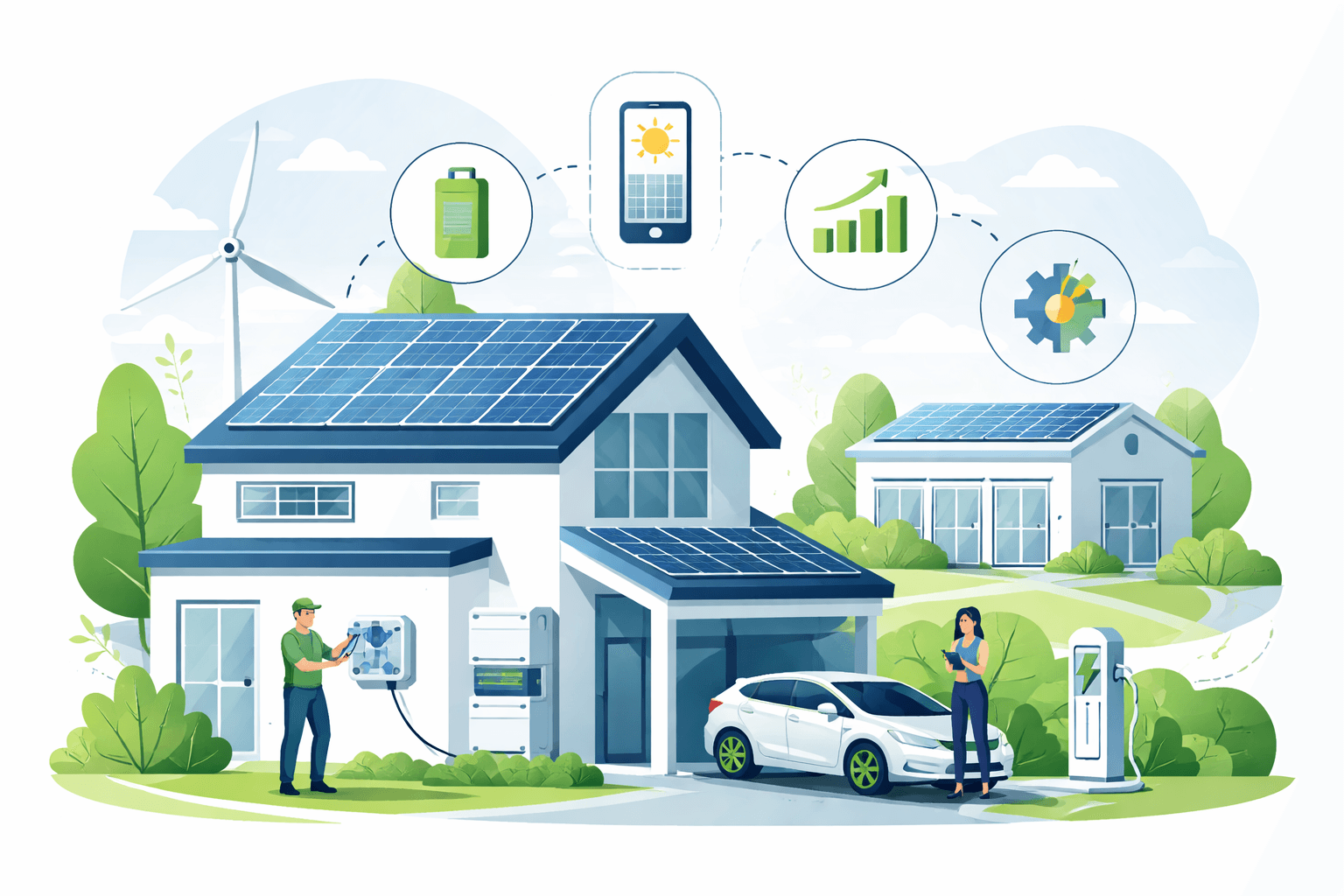
Solar is now the cheapest new electricity in much of the world, and residential PV in the U.S. continues to expand—2023 saw a record 32+ GWdc of new PV installed nationwide (SEIA/Wood Mackenzie). Yet “best” depends on your roof, load profile, utility rates, and resilience needs. This guide compares the best solar energy systems by type and components, then walks through sizing, budgeting, and lifecycle choices so you can select a system that delivers real kWh, savings, and reliability in 2026.
What “best” really means in a solar energy system
“Best” is situational. Use these criteria to define it for your site:
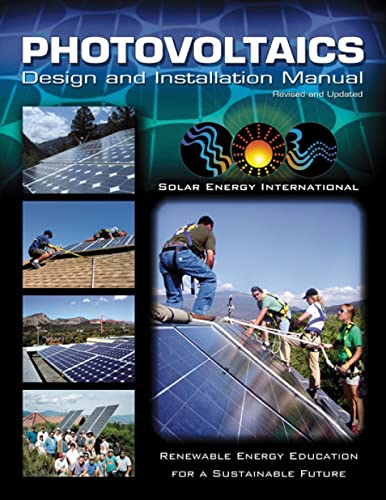
Photovoltaics: Design and Installation Manual: Solar Energy International
It also includes chapters on sizing photovoltaic systems, analyzing sites and installing PV systems, as well as detailed appendices on PV system maintenance, troubleshooting and solar insolation data
Check Price on Amazon- Energy yield per area: kWh output per square foot, influenced by panel efficiency, temperature coefficient, and shading.
- Lifecycle cost: All-in cost per delivered kWh over 25–30 years, not just $/W at installation.
- Reliability and safety: Proven components, appropriate warranties, and certifications (UL/IEC). Avoid single points of failure for critical loads.
- Policy fit: Maximize value under your utility’s net metering/net billing or time-of-use (TOU) tariffs.
- Resilience: Ability to ride through outages (batteries, backup circuits) and black-start without the grid.
- Environmental footprint: Low lifecycle emissions, long warranties, and end-of-life recyclability.
Best Solar Energy Systems: compare system types and inverter architectures
System types
- Grid-tied (no battery)
- Pros: Lowest cost per watt; highest simple payback where exports are well-compensated; fewer components.
- Cons: Shuts down during outages (anti-islanding); less benefit under net billing with low export rates.
- Best for: Sites with strong net metering, stable grids, daytime-heavy loads.
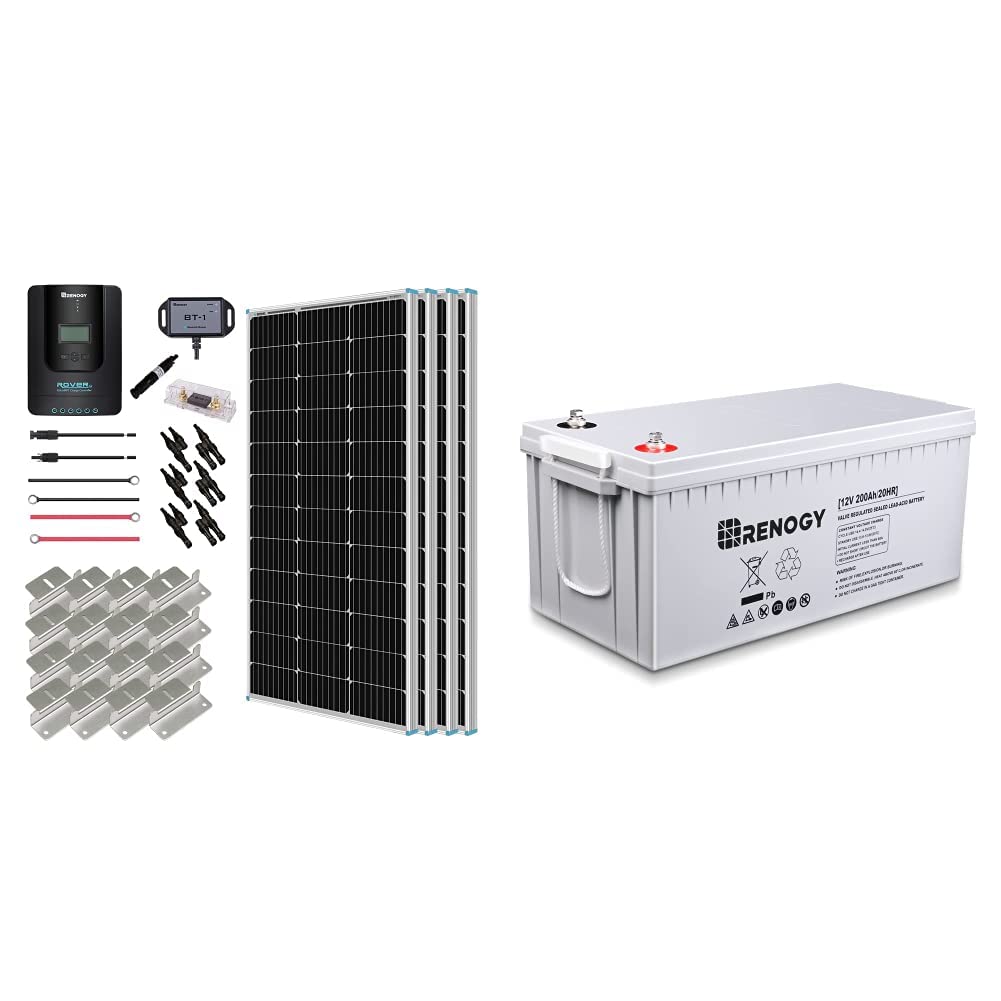
Renogy 400 Watt 12 Volt Premium 4 Pcs 100W Panel+40A MPPT Charge Controller+ Bluetooth Module Fuse+ Mounting Z Brackets+Adaptor Kit +Tray Cables Set, 400W, Grid 12V Solar Power System : Patio, Lawn & Garden
View on AmazonHybrid (grid-tied with battery)
- Pros: Backup power during outages; TOU arbitrage; higher self-consumption when export credits are low; potential demand charge reduction (commercial).
- Cons: Higher upfront cost; needs careful sizing and control strategies.
- Best for: TOU markets, places with frequent outages, California-style net billing tariffs.
Off-grid
- Pros: Full energy autonomy; ideal for remote locations; can integrate generators.
- Cons: Highest complexity; requires right-sizing for winter/shoulder seasons and multiple days of autonomy; ongoing battery management.
- Best for: Remote homes, cabins, agribusiness, telecom. For a deep dive on standalone systems, see our Off-Grid Solar Buyer’s Guide: Off-Grid Solar: Complete Buyer’s Guide to Systems, Costs & Setup.
Portable/temporary (power stations + foldable panels)
- Pros: Plug-and-play; modular; perfect for rentals, RVs, and events.
- Cons: Limited capacity; higher $/kWh; not a building-permit solution.
- Best for: Mobile work, recreation, emergency kits.
Inverter architectures
String inverters
- How it works: Several modules wired in series feed a centralized inverter with 1–3 maximum power point trackers (MPPTs).
- Pros: Lower cost; high efficiency (97–99%); straightforward maintenance.
- Cons: Shade on one module can reduce string output unless mitigated; single point of failure; may require module-level shutdown devices to meet code.
- Ideal when: Uniform, unshaded arrays with simple roof planes or ground-mounts.
Microinverters
- How it works: One inverter per module (or per 2–4 modules on some units), converting DC to AC on the roof.
- Pros: Module-level optimization and monitoring; excellent in complex or partially shaded roofs; built-in rapid shutdown compliance in the U.S.
- Cons: Higher upfront cost; distributed electronics exposed to heat; truck rolls can be roof work.
- Ideal when: Multiple roof faces, dormers, chimneys, or partial shade; owners value granular monitoring and expandability.
DC optimizers + string inverter (MLPE)
- How it works: Module-level power electronics (optimizers) handle MPPT and safety; a central inverter does DC→AC.
- Pros: Shade mitigation like microinverters with a single ground-level inverter; typically lower cost than all-micro systems.
- Cons: More rooftop components than string-only; central inverter remains a single point of failure.
- Ideal when: Moderate shading or complex layouts with preference for a ground-accessible main inverter.
Note on code: U.S. NEC 2017/2020 rapid shutdown rules generally require module-level shutdown. Microinverters or DC optimizers simplify compliance.
By the numbers: performance, costs, and lifetimes
- Module efficiency: Modern monocrystalline panels commonly 20–23% (NREL). Temperature coefficients ~−0.26% to −0.35%/°C.
- Degradation: Median long-term panel degradation ~0.5%/year; top-tier modules ~0.2–0.45%/year (NREL reliability data).
- Inverter life: 10–15 years typical warranty for string/micro; extended options to 20–25 years are available.
- Batteries: Lithium iron phosphate (LFP) cycle life often 6,000–10,000 cycles to ~70–80% remaining capacity; round-trip efficiency 90–95% (manufacturer data; NREL).
- Emissions: PV lifecycle emissions ~20–50 g CO2e/kWh vs. 400–900 g for coal-dominant grids (IPCC, NREL).
- U.S. pricing: NREL Q1 2023 benchmark estimated host-owned residential PV around $2.9/Wdc; market prices vary widely by state, installer, and project specifics.
- Rooftop capacity factor: ~15–25% depending on latitude, weather, tilt, and shading (NREL PVWatts).
Core components and specs that matter
Panels: technologies and what to prioritize
Monocrystalline silicon (PERC, TOPCon, HJT, IBC)
- Pros: Highest efficiencies (typically 20–23%); best area utilization; strong low-light performance.
- Watch: Temperature coefficient (closer to −0.26%/°C is better), degradation warranty (≤0.4%/yr), bifacial options for ground-mounts.
Polycrystalline silicon
- Pros: Historically cheaper; still serviceable where area is ample.
- Watch: Lower efficiency (typically 16–19%); less common in 2026 residential markets.
Thin-film (CdTe, CIGS)
- Pros: Low temperature sensitivity; uniform aesthetics; strong utility-scale track record (CdTe).
- Watch: Lower efficiency at module level; limited availability in residential formats.
Key datasheet specs
- Efficiency: Higher means more kW on a constrained roof.
- Temperature coefficient (Pmax): Lower absolute value means less hot-day loss.
- Mechanical load rating and hail rating: Important for high-wind/hail regions.
- Bifaciality (for ground mounts): Potential 5–15% yield gain with reflective surfaces.
- Certifications: IEC 61215/61730, UL 61730; Fire Class A assemblies for rooftop use.
Warranties
- Product (materials/workmanship): 12–25 years. Higher is better.
- Performance (power output): 25–30 years with 80–92% end-of-warranty output; look for linear, not step, declines.
Inverters: matching to your roof and tariff
- Efficiency: 97–99% CEC efficiency is common; choose a model that supports your module count and layout.
- MPPT channels: More MPPTs allow mixing orientations; critical on string-based systems.
- Grid-support functions: IEEE 1547-2018 compliant inverters provide volt/VAR, frequency-watt support for future grid programs.
- Rapid shutdown: UL 1741 SB and NEC compliance for U.S. rooftops.
- Warranty: 10–12 years standard; consider extendable coverage to 20–25 years to match panel life.

Sol-Ark 12K Hybrid Solar Inverter, Split-Phase 120/240 V : Patio, Lawn & Garden
12000W Hybrid Solar Inverter <strong>48V DC to 110V/120V AC Pure Sine Wave, 240V Split Phase, 200A MPPT Controller, Supports Grid-Tie/Off-Grid, Battery & Solar Charging for Home, RV, Backup Power<
Check Price on AmazonBatteries: chemistry, sizing, and integration
- Chemistry: LFP (LiFePO4) dominates new home storage for safety, long cycle life, and thermal stability; NMC is common in legacy systems and some high-power applications.
- Usable capacity: Home systems typically 10–20 kWh usable; commercial C&I systems range from tens to hundreds of kWh.
- Power rating: kW determines what you can run simultaneously (e.g., 5 kW supports lights + fridge + small HVAC zone; whole-home often 10–15+ kW).
- Round-trip efficiency: 90–95% for LFP; DC-coupled hybrids minimize conversion losses.
- Warranty: Often 10 years to a throughput limit (e.g., MWh cycled) or % capacity remaining.
- Safety: UL 9540 (system), UL 9540A test data for fire characteristics; proper spacing/room ventilation and code-compliant installation are essential.
Real-world performance metrics to watch
- Performance ratio (PR): Delivered AC kWh vs. reference kWh from irradiance; typical 0.75–0.90 on rooftops.
- Specific yield: Annual kWh per kWdc installed—useful for comparing sites and years.
- Uptime: Inverter and monitoring availability; look for >99% after commissioning.
Selection and sizing: from bills to a right-sized system
Step 1: Quantify energy needs
- Gather 12 months of utility bills to find annual kWh and seasonal peaks.
- Identify electrification plans (EV, heat pump) to avoid undersizing.
- Decide target offset: 60–100% of annual kWh depending on tariff and roof space.
Step 2: Assess the site
- Orientation and tilt: South-facing at latitude tilt is ideal in the Northern Hemisphere; east-west can broaden production.
- Shading: Trees, chimneys, neighboring buildings; use shade tools or satellite surveys.
- Roof: Age, structural capacity, available contiguous areas, roof material for mounting hardware compatibility.
- Electrical: Service panel capacity, space for breakers, grounding and rapid shutdown path.
Step 3: Estimate system size with PVWatts
Use NREL’s PVWatts or similar modeling:
- Example A (Phoenix, AZ): Home uses 10,800 kWh/yr. PVWatts suggests ~1,650 kWh/kWdc/yr for a typical roof. Size ≈ 10,800 / 1,650 ≈ 6.5 kWdc.
- Example B (New Jersey): Same home might see ~1,250 kWh/kWdc/yr. Size ≈ 10,800 / 1,250 ≈ 8.6 kWdc.
Model different tilts/orientations and include system losses (~14% default in PVWatts). If your export rate is low, consider slightly undersizing to increase self-consumption.
Step 4: Budget tiers and financing
- Budget tiers (2026 ballpark, varies by market and roof):
- Grid-tied, no battery: Often in the range of $2.5–$4.0/Wdc installed for typical residential.
- Hybrid with battery: Add ~$8,000–$15,000+ for 10–15 kWh storage, depending on integration and labor.
- Financing options:
- Cash purchase: Lowest lifetime cost and fastest payback.
- Solar loans: Spread cost over 10–25 years; check APR and dealer fees.
- PPAs/leases (where available): Lower or zero upfront; value depends on escalators and buyout terms.
Incentives and tariffs
- Federal: 30% Investment Tax Credit (ITC) for residential and commercial projects through at least 2032 under the Inflation Reduction Act. Businesses may also use accelerated depreciation (MACRS).
- State/utility: Strongly site-specific—SRECs in some Northeast markets, property/ sales tax exemptions in many states, and export compensation rules matter.
- California (NEM 3.0) greatly reduced export credit value; batteries often improve economics. See our state guide: Solar in California: Costs, Incentives & Top Installers (2026).
- Texas offers competitive electricity markets and some retailer solar buybacks; high irradiance boosts yield. Learn more: Solar in Texas: Costs, Incentives & Top Installers (2026).
- New Jersey maintains robust net metering/net billing and SREC-style programs benefiting rooftop PV. Details here: Solar in New Jersey: Costs, Incentives & Top Installers (2026).
Payback and ROI scenarios
- Grid-tied, strong net metering: 6–10 year simple payback is common in high-rate states when offsetting $0.20–$0.35/kWh retail energy (LBNL Tracking the Sun analyses show median paybacks in the high single digits in many markets).
- Grid-tied, low export value: Undersize slightly and shift flexible loads to solar hours; expect longer payback without a battery unless TOU spreads are large.
- Hybrid with battery (TOU market): Batteries can arbitrage peak rates, reduce demand charges (C&I), and provide resilience. Financial payback may be 10–15+ years for residential batteries on bill savings alone but can be shorter in high TOU spread markets or where backup value is prioritized.
- Off-grid: Economics are driven by avoided line-extension costs and generator fuel savings; focus on reliability, not payback.
Practical recommendations and lifecycle considerations
System configurations that consistently work well
Residential, simple roof, good net metering
- High-efficiency monocrystalline panels
- String inverter with sufficient MPPTs or DC optimizers where shade is modest
- No battery; consider future-ready conduit and subpanel space
Residential, complex roof or partial shade
- High-efficiency monocrystalline
- Microinverters (or optimizers) for module-level MPPT and monitoring
- Optional small battery if TOU or outage concerns exist
Residential hybrid where exports are poorly compensated or outages are frequent
- DC-coupled hybrid inverter with LFP battery (10–20 kWh)
- Smart controls for TOU arbitrage and backup reserve; critical loads subpanel
- Load management for large appliances (EVSE, heat pump water heater)
Off-grid home/cabin
- Array sized for winter load and irradiance; ground-mount if roof is small/shaded
- LFP battery bank sized for 2–3 days autonomy at typical load
- MPPT charge controller(s), generator integration, and conservative design margins
- See: Off-Grid Solar: Complete Buyer’s Guide to Systems, Costs & Setup
Commercial rooftop (C&I)
- High-power modules; multi-MPPT string inverters or central with MLPE where shading/obstructions exist
- Consider battery for demand charge reduction and backup for critical processes
- Structural review for ballasted racking; walkway and safety planning
Portable/temporary
- LiFePO4 power station (1–3 kWh) + 200–400 W foldable panel kit
- Prioritize cycle life (>3,000 cycles at 80% capacity), IP rating, and modular expandability
Installation and permitting checklist
- Site survey: Structural assessment, shading analysis (including winter sun angles), roof condition.
- Design: Array layout, stringing, conductor sizing, rapid shutdown, grounding, and labeling per NEC.
- Interconnection: Utility application; understand net metering/net billing and metering upgrades.
- Permits and approvals: Building, electrical, fire department, and HOA if applicable.
- Procurement: Match datasheet specs to design; verify UL/IEC certifications and fire rating.
- Construction: Roof prep, flashing and waterproofing best practices, torque specs, cable management.
- Commissioning: Insulation resistance, polarity, IV curve checks where applicable; inverter firmware updated; monitoring configured.
- Inspections: Utility and AHJ sign-offs; PTO (permission to operate).
Monitoring and maintenance best practices
- Track daily yield (kWh), specific yield (kWh/kW), and inverter uptime.
- Use module-level monitoring (if available) to detect string/module anomalies early.
- Clean panels strategically: Only if soiling is significant; safety first. Many roofs need little to no cleaning outside dust/smoke events.
- Annual check: Visual inspection, check racking fasteners, ensure clear roof drains/gutters, review production vs. model (PVWatts) to spot degradation beyond expectation.
- Battery health: Review state-of-charge windows, cycle counts, and firmware; keep batteries within manufacturer temperature limits.
Lifespan and environmental impact
- Panels: 25–30+ years; gradual output decline per warranty. Energy payback time ~1–4 years depending on location (NREL/IEA).
- Inverters: 10–15 years typical service before replacement or refurbishment.
- Batteries: 10–15 years depending on cycles, depth-of-discharge, and temperature.
- End-of-life: Module recycling is expanding (SEIA runs a U.S. network; the EU has WEEE requirements). LFP and other Li-ion batteries are increasingly recoverable for lithium, copper, and aluminum. Designing for longevity is the biggest sustainability lever.
How to choose the best solar energy systems in 2026, step-by-step
- Define your goal: lowest payback vs. highest resilience vs. maximum carbon reduction.
- Map your tariff: Understand net metering vs. net billing export rates, TOU periods, and demand charges.
- Right-size: Use 12 months of kWh, model with PVWatts, and align array size to self-consumption if exports are low.
- Pick the architecture: Simple roof and good exports → string or optimizers; complex roof or shading → microinverters; low export value or outage risk → hybrid with LFP battery.
- Validate components: High-efficiency mono panels, low temp coefficient, robust warranties (25–30-year panel, 10–25-year inverter, 10-year battery with throughput), UL/IEC certifications, IEEE 1547-2018 inverter functions.
- Plan for the future: Conduit for expansion, EV chargers on managed circuits, space for additional battery capacity, and grid-interactive features for virtual power plant participation.
Where the market is heading
- Higher-efficiency cells: TOPCon and heterojunction (HJT) are mainstreaming in residential, nudging typical module efficiencies upward and improving low-light performance.
- Smarter inverters: IEEE 1547-2018 compliance enables voltage and frequency ride-through and utility programs that pay for grid services.
- Batteries everywhere: LFP dominates residential storage, with multi-day backup strategies combining PV, storage, and smart load control. Virtual power plants (VPPs) pay homeowners for aggregated flexibility in a growing number of markets.
- Better economics under complex tariffs: As more states shift to net billing, the “best” system increasingly pairs right-sized PV with storage and load management to maximize self-consumption and peak-shaving value.
- Sustainability: Longer warranties, repairable hardware, and maturing recycling pathways reduce lifecycle impacts while keeping more kWh flowing over decades.
The best solar energy systems in 2026 are the ones tailored to your roof, your tariff, and your tolerance for outages. Start with your data—kWh, rates, site constraints—and let that drive architecture and component choices. With modern panels, smarter inverters, and safer LFP batteries, you can build a system that delivers reliable clean power, strong savings, and resilience for the long haul.
Recommended Products
Photovoltaics: Design and Installation Manual: Solar Energy International
It also includes chapters on sizing photovoltaic systems, analyzing sites and installing PV systems, as well as detailed appendices on PV system maintenance, troubleshooting and solar insolation data
Sol-Ark 12K Hybrid Solar Inverter, Split-Phase 120/240 V : Patio, Lawn & Garden
12000W Hybrid Solar Inverter <strong>48V DC to 110V/120V AC Pure Sine Wave, 240V Split Phase, 200A MPPT Controller, Supports Grid-Tie/Off-Grid, Battery & Solar Charging for Home, RV, Backup Power<
Renogy 400 Watt 12 Volt Premium 4 Pcs 100W Panel+40A MPPT Charge Controller+ Bluetooth Module Fuse+ Mounting Z Brackets+Adaptor Kit +Tray Cables Set, 400W, Grid 12V Solar Power System : Patio, Lawn & Garden
【New Version】 Renogy Premium 400 Watt 12 Volt Solar Kit 4 Pcs 100W Panel+40A MPPT Charge Controller+ Bluetooth Module Fuse+ Mounting Z Brackets+Adaptor Kit +Tray Cables Set for RV Cabin and More · Ren