
Solar in Washington: Costs, Incentives & Top Installers (2026)

Washington’s wet winters don’t mean solar is a non‑starter. Residential solar in Washington works—especially east of the Cascades—and the math keeps improving as equipment prices fall and the federal 30% tax credit holds through 2032. This guide breaks down solar in Washington with hard numbers: sun hours by region, price-per-watt, incentives, net metering, installers, and payback timelines.
By the numbers: solar in Washington (2026)
- Sun hours (annual average, NREL PVWatts): roughly 3.6–4.0 peak sun hours/day in Western WA (Seattle/Tacoma), 4.5–5.3 in Central/Eastern WA (Yakima, Tri‑Cities, Spokane)
- Annual production per kW (typical rooftop, fixed tilt): ~1,000–1,300 kWh (West); ~1,200–1,500 kWh (East)
- Typical residential system size: 6–10 kW DC
- Installed price (before incentives): about $2.50–$3.40/W for turnkey residential systems; $15,000–$34,000 for 6–10 kW
- State incentives: 100% sales and use tax exemption for qualifying solar equipment ≤100 kW through 2029 (WA Dept. of Revenue)
- Net metering: retail-rate credits, monthly rollover, annual true-up on April 30; system cap 100 kW; utility program caps apply (RCW 80.60)
- Federal tax credit: 30% Investment Tax Credit (ITC) for solar and standalone batteries
- Average residential electricity price: ~11¢/kWh in 2024—among the lowest in the U.S. (U.S. EIA)
- Typical simple payback: ~9–13 years East of Cascades, ~12–18 years West—site- and utility-dependent
Solar Electricity Handbook - 2023 Edition: A simple, practical guide to solar energy – designing and installing solar photovoltaic systems: Boxwell, Michael
Solar Electricity Handbook - 2023 Edition: <strong>A simple, practical guide to solar energy – designing and installing solar photovoltaic systems</strong> [Boxwell, Michael] on Amazon.com. *FREE* shi
Check Price on AmazonSources: NREL PVWatts; U.S. Energy Information Administration (EIA); Washington RCW 80.60 and WA Dept. of Revenue guidance; Lawrence Berkeley National Laboratory (LBNL) Tracking the Sun.
Solar in Washington: sun hours, irradiance, and climate factors
Washington’s solar resource varies sharply by geography.
- Western Washington (Puget Sound, Olympic Peninsula): Annual global horizontal irradiance (GHI) supports ~3.6–4.0 peak sun hours/day. That translates to capacity factors in the ~13–16% range for typical rooftops, according to NREL performance benchmarks.
- Central and Eastern Washington (Yakima Valley, Tri‑Cities, Spokane): Clearer skies and drier air yield ~4.5–5.3 peak sun hours/day, with capacity factors often ~16–19%. In summer, daily solar output rivals parts of the Southwest, even if winters are dimmer.
Temperature helps. Photovoltaic (PV) modules operate more efficiently in cool weather; Washington’s mild summers can boost performance compared to hotter regions. Snow can temporarily reduce output, but tilted arrays often shed snow quickly, and annual snow-related losses in much of Washington are modest in NREL’s U.S. PV snow-loss studies.
Practical takeaway: Don’t judge by winter clouds alone. Use NREL’s PVWatts or an installer’s shading and production model for your address to estimate annual kilowatt-hours (kWh) per installed kilowatt (kW) accurately.
Average cost of solar panels in Washington and price-per-watt
Residential systems in Washington generally price in the $2.50–$3.40 per watt range before incentives for full turnkey installations (modules, inverters, racking, balance of system, labor, permitting, and typical interconnection fees). A 7.5 kW system would therefore run roughly $18,750–$25,500 before incentives. Recent LBNL “Tracking the Sun” reports show national medians clustering around $3/W, and Washington tends to be slightly below or near that midpoint depending on equipment and roof complexity.
What drives price variation:
- Equipment choices: Premium high‑efficiency modules and microinverters/optimizers cost more but can add energy yield on shaded or complex roofs.
- Roof characteristics: Steep pitches, multiple facets, or roofing materials like tile can add labor and mounting costs.
- Electrical upgrades: Main panel or service upgrades for older homes add $1,500–$4,000+.
- Scale: Per‑watt price often drops slightly as systems get larger.
Rule of thumb after incentives:
- Washington’s sales tax exemption meaningfully reduces upfront cost (state/local sales tax is commonly ~8.5–10% but is waived for qualifying solar equipment; see Incentives below).
- The 30% federal ITC applies to the net installed cost (after sales-tax exemption), further cutting outlays.
Example estimate (illustrative):
- System: 8 kW at $2.90/W = $23,200
- WA sales tax on eligible equipment: 0% (exempt)
- Federal ITC (30%): −$6,960
- Net out-of-pocket (post-ITC): ~$16,240
Your actual quotes will vary. Always get multiple bids with the same system size and equipment so you can compare price per watt apples-to-apples.
Washington solar incentives: state tax credits, rebates, net metering, and SRECs
Washington’s incentive landscape is simple but valuable for homeowners.
Sales and use tax exemption (major benefit): Washington provides a 100% sales and use tax exemption for qualifying renewable energy machinery and equipment, including residential solar PV systems up to 100 kW. Current statute runs through 2029 and applies at the point of sale when documentation is filed. Source: Washington Department of Revenue renewable energy equipment exemption.
Net metering (retail credit): State law (RCW 80.60) requires utilities to offer net metering to systems ≤100 kW. Key features:
- Credit rate: Retail energy rate for excess generation sent to the grid
- Rollover: Credits roll month-to-month
- Annual true-up: Each utility sets a 12‑month period; state law aligns the annual reset on April 30, at which point unused credits typically expire without cash payment
- Program caps: Utilities have aggregate caps (state minimum is 4% of 1996 peak demand), so availability can vary by utility; check your utility’s current cap status
Production incentives: Washington’s previous performance-based incentive programs are closed to new applicants. If you see mentions of the legacy “Cost Recovery” or “Renewable Energy System Incentive Program,” those no longer accept new systems.
SRECs: Washington does not have a tradable Solar Renewable Energy Credit (SREC) market for residential systems.
Community solar: Washington supports community solar, including programs focused on low‑income participation administered in part by the Washington State University (WSU) Energy Program. If you rent or have a shaded roof, ask your utility or local developers about current community solar offerings.
Context for border residents:
- Comparing across the Columbia? Incentives differ. See our guide to Solar in Oregon: Costs, Incentives & Top Installers (2026).
- If you’re near Spokane/Coeur d’Alene, policies may differ just across the line—our Solar in Idaho: Costs, Incentives & Top Installers (2026) guide outlines that market.
Federal ITC and how it applies to Washington homeowners
The federal Residential Clean Energy Credit (the Investment Tax Credit, or ITC) covers 30% of eligible project costs for systems placed in service through 2032 (then steps down). Key points for Washington:
- Eligible costs: Panels, inverters, racking, balance-of-system hardware, wiring, permitting/engineering, applicable roof work directly related to mounting (not full reroofs), and labor. Standalone batteries (≥3 kWh) also qualify at 30% under current rules.
- Credit vs. deduction: It’s a dollar‑for‑dollar reduction in your federal income tax liability, not a deduction. Unused credit may carry forward to future tax years; consult a tax professional for your situation.
- Stacking with WA sales tax exemption: The state sales tax exemption reduces your upfront invoice; the 30% ITC then applies to that net project cost.
Illustration (paired with the earlier example):
- 8 kW PV system price: $23,200
- WA sales tax on equipment: Exempt (0)
- Federal ITC (30%): $6,960
- Optional battery (e.g., 13.5 kWh): add $11,000–$15,000 before ITC, then subtract another 30%
Note: The ITC is not refundable. If you have limited federal tax liability in the installation year, the unused portion can typically roll forward.
Best solar installers and companies serving Washington
Washington has a mature, quality‑focused installer ecosystem—especially around Puget Sound and the I‑5 corridor—with experienced crews and NABCEP‑certified professionals. Always solicit at least three bids and compare:
- Equipment spec sheets and warranties (module, inverter, workmanship)
- Modeled annual kWh (PVWatts or equivalent) with assumptions disclosed
- Price per watt and any required electrical or roof upgrades
- Licenses (WA electrical contractor), NABCEP certifications, and safety record
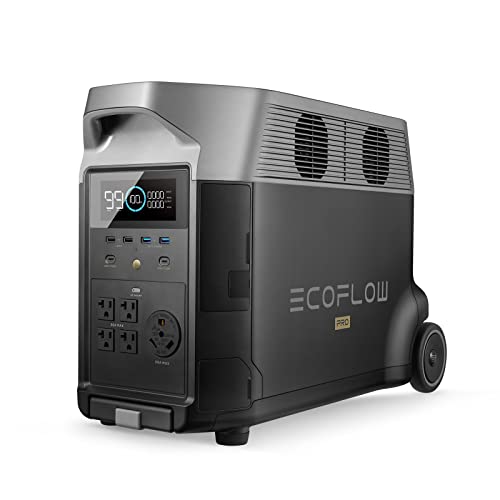
EF ECOFLOW Portable Power Station 3600Wh DELTA Pro, 120V AC Outlets x 5, 3600W, 2.7H Fast Charge, Lifepo4 Power Station, Solar Generator for Home Use, Power Outage, Camping, RV, Emergencies : Patio, Lawn & Garden
View on AmazonStandout regional players (non‑exhaustive):
- A&R Solar (WA/OR): Longstanding local EPC, strong design focus, battery integration expertise.
- Sunergy Systems (Seattle area): Residential specialists with module/inverter variety.
- Artisan Electric (Puget Sound): Emphasis on quality installs and service.
- Puget Sound Solar (Seattle area): Early mover in WA solar with broad project experience.
- SolTerra (Seattle/Tacoma): Rooftop solar and storage offerings.
- Northwest Renewables (Spokane/Central WA): Eastern WA focus; solar + battery + EV charging.
- National providers present in WA: Tesla (direct Powerwall + Solar Roof/solar panels), SunPower dealers (high‑efficiency modules with long warranties), and Blue Raven (sales/installation model varies by market).
Equipment picks that pair well with Washington’s mix of shade and cool temperatures:
- For complex or partially shaded roofs, module‑level power electronics help maximize yield. Based on high CEC efficiencies and rapid-shutdown compliance, Enphase IQ8 Microinverters represent strong value for residential installations.
- For premium modules with strong performance and 25‑year warranties, the heterojunction‑based REC Alpha Pure‑R line delivers top‑tier efficiency that helps smaller roofs hit target kWh.
- For backup during winter storms, Tesla Powerwall 3 offers whole‑home backup potential, with the 30% federal credit applying to standalone batteries.
Note: Products evolve rapidly—compare efficiency, degradation, and warranty terms, not just sticker wattage.
ROI and payback period for solar in Washington
Because grid power in Washington is relatively inexpensive (about 11¢/kWh residential in 2024 per EIA) and fairly low‑carbon (large hydro share), the financial payback is more site‑sensitive than in high‑rate states. That said, declining equipment costs and the 30% ITC make solar pencil out at many homes—especially east of the Cascades or for high-usage households.
Illustrative scenarios (owner‑occupied, roof in good condition, retail net metering, no battery):
- Western WA (8 kW system): Modeled production ~8,500–9,500 kWh/year; bill savings at 11–12¢/kWh: ~$935–$1,140/year. Net cost after ITC (example above): ~$16,240. Simple payback: ~14–17 years. If electricity rates escalate 2–3% annually, effective payback shortens several years.
- Eastern WA (8 kW system): Modeled production ~10,500–12,000 kWh/year; savings ~$1,155–$1,440/year. Similar net cost: ~$16,240. Simple payback: ~11–14 years.
Additional factors:
- Roof orientation/tilt: South‑facing 25–35° tilt performs best; east/west works with ~10–15% lower yield.
- Shading: Trees and nearby buildings reduce output; microinverters/optimizers mitigate string losses.
- Batteries: Great for backup and self‑consumption but typically extend payback by several years without time‑of‑use arbitrage. In Washington, battery value is primarily resilience.
- Home value: Multiple appraisals studies (incl. LBNL) show PV‑equipped homes tend to sell at a premium roughly in line with annual bill savings capitalized. Market conditions vary by county.
What about carbon? While Washington’s grid is relatively clean, rooftop solar still displaces marginal fossil generation during many hours, cutting household emissions and improving local resilience.
Washington-specific permitting, HOA rules, and interconnection process
Permitting
- Authority Having Jurisdiction (AHJ): City or county building departments issue electrical/building permits; many Washington jurisdictions offer streamlined residential PV permits and online submittals.
- Typical documents: Site plan, roof layout with attachment points, electrical one‑line diagram, equipment spec sheets, and structural letter if required by AHJ.
- Timelines/fees: 1–4 weeks for straightforward residential projects; fees vary.
Interconnection and net metering
- Apply to your utility for interconnection/net metering approval before install. For investor‑owned utilities, interconnection rules are set under WAC 480‑108; public utility districts and munis have their own procedures.
- After local inspection, the utility conducts a final review, may swap the meter, and issues permission to operate (PTO). Expect ~1–4 weeks post‑inspection depending on utility workload.
- Net metering details (RCW 80.60): Retail credit, monthly rollover, annual April 30 true‑up; system limit 100 kW; program caps apply.
HOA and historic districts
- HOAs: Washington law (RCW 64.38.055) generally prevents homeowners’ associations from prohibiting solar installations on single‑family homes, while allowing “reasonable” aesthetic or placement restrictions that don’t meaningfully increase cost or reduce performance. Provide your HOA an engineered plan set early to streamline approval.
- Historic districts or view‑sensitive overlays: Expect additional design review; flush‑mount, all‑black modules and concealed conduits can ease approvals.
Roof condition and warranties
- If your asphalt roof has <10 years of life, coordinate reroofing with the PV install to avoid later remount costs. Confirm mounting hardware meets manufacturer requirements to maintain roof warranty.
Frequently asked questions: solar in Washington
- Do solar panels work in Seattle’s cloudy climate? Yes. Annual energy—not winter days—is what matters. Seattle‑area rooftops commonly yield ~1,000–1,300 kWh per installed kW annually based on NREL data.
- What is the net metering annual true‑up date? Utilities align true‑up with the statutory April 30 timeline; any unused credits typically expire at that point.
- Can I oversize my system to “cash out”? No. Washington’s net metering provides bill credits, not cash payments, and leftover credits at true‑up are generally forfeited. Size to your annual usage.
- How big should my system be? Most homes install 6–10 kW. Size to cover 80–110% of historical annual kWh usage after planned electrification (EVs, heat pumps).
- Are batteries worth it in Washington? For backup: yes, if outages are a concern. For pure bill savings: less compelling given flat, relatively low rates. The 30% federal credit helps either way.
- What maintenance is required? Little. Rain handles most cleaning. Inspect once or twice a year for debris, check monitoring, and clear seasonal shading.
- Will snow ruin production? Snow temporarily blocks output but often slides off pitched arrays. Annual snow losses are typically small in much of WA; Eastern WA may see more winter downtime but higher summer output.
- Can renters go solar? Consider community solar subscriptions or work with your landlord on a building‑owned system.
- How green is Washington’s grid already? Very—dominated by hydropower. But PV still cuts marginal fossil generation during peak/sunny hours and boosts local resilience.
- What about heat pumps and EVs? Pairing PV with electrification can improve solar economics by shifting more of your consumption to on‑site generation.
Practical steps to get started
- Pull your last 12 months of kWh usage from utility bills.
- Use NREL PVWatts or an installer’s model to estimate annual kWh from 1 kW on your roof; multiply by a target system size.
- Get at least three bids with the same system size and equipment for clean comparisons.
- Confirm Washington’s sales tax exemption is applied on your contract and that your installer handles interconnection paperwork.
- Ask for production guarantees, workmanship warranty terms, and battery backup options if outages are a concern.
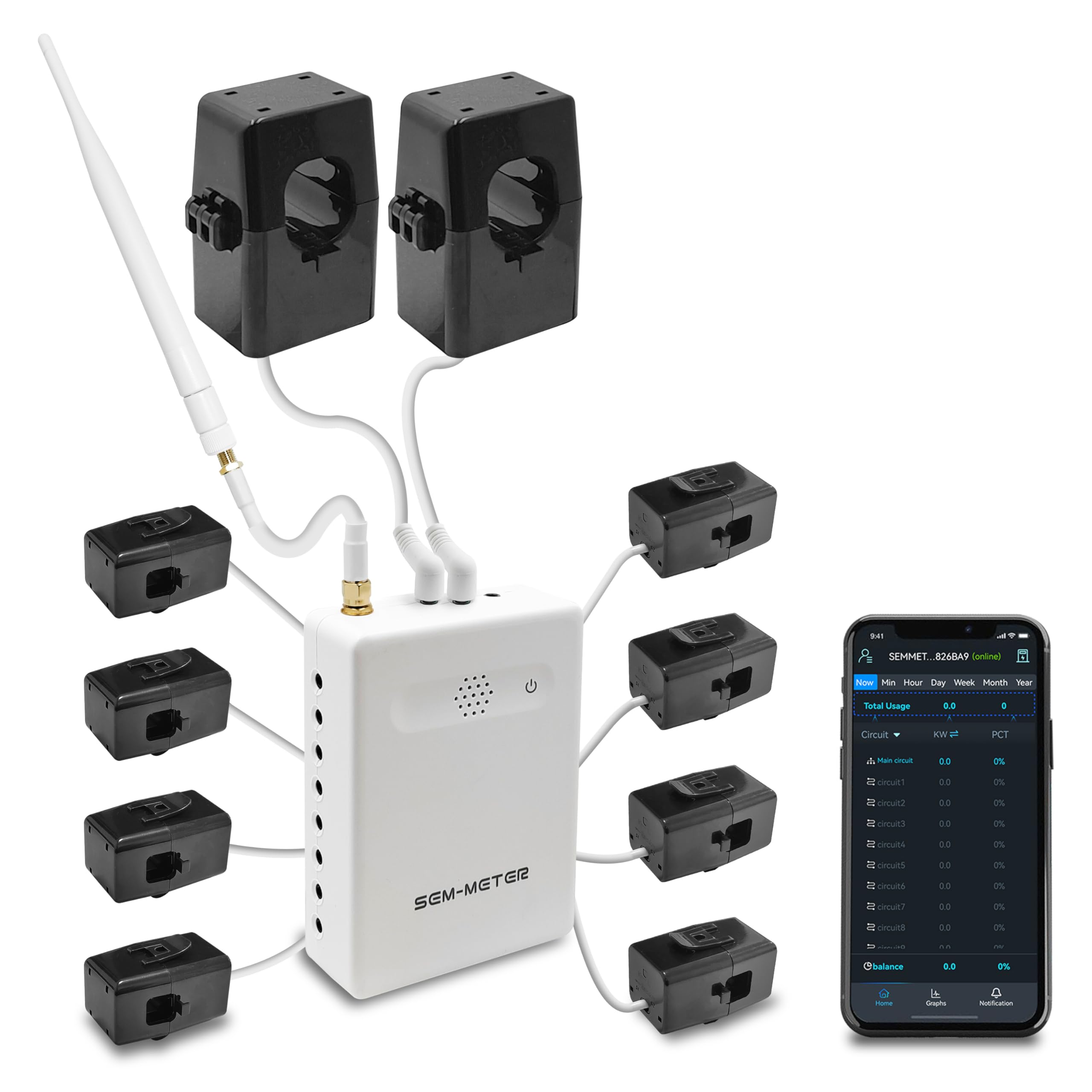
Smart Home Energy Monitor with 8 50A Circuit Level Sensors | Vue - Real Time Electricity Monitor/Meter | Solar/Net Metering - Amazon.com
View on AmazonWashington still offers retail net metering, a full sales tax exemption, and the 30% federal credit—a trio that makes well‑sited projects cash‑flow positive over time even with relatively low utility rates. If your roof is unshaded—especially east of the Cascades—solar can be a durable, inflation‑resistant way to power your home for decades.
If you’re researching other nearby markets, our guides to Solar in California: Costs, Incentives & Top Installers (2026) and Oregon/Idaho (linked above) show how policy differences change payback.
Recommended Products
Solar Electricity Handbook - 2023 Edition: A simple, practical guide to solar energy – designing and installing solar photovoltaic systems: Boxwell, Michael
Solar Electricity Handbook - 2023 Edition: <strong>A simple, practical guide to solar energy – designing and installing solar photovoltaic systems</strong> [Boxwell, Michael] on Amazon.com. *FREE* shi
EF ECOFLOW Portable Power Station 3600Wh DELTA Pro, 120V AC Outlets x 5, 3600W, 2.7H Fast Charge, Lifepo4 Power Station, Solar Generator for Home Use, Power Outage, Camping, RV, Emergencies : Patio, Lawn & Garden
<strong>Fully recharge the lifepo4 battery in 1.8 hrs with 240V outlets(3000W), 2.7 hrs with 1800W wall outlets or solar charged in 2.8 hours with 4*400W solar panels</strong> thanks to the industry-l
Smart Home Energy Monitor with 8 50A Circuit Level Sensors | Vue - Real Time Electricity Monitor/Meter | Solar/Net Metering - Amazon.com
Lightweight commercial 3-phase option available as a separate bundle. APPLICATION MONITORING WITHOUT GUISEWORK <strong>Up to sixteen (16) 50A sensors to accurately monitor your air conditioner, oven,