
Tesla Powerwall in Maine: Cost, Availability & Is It Worth It?
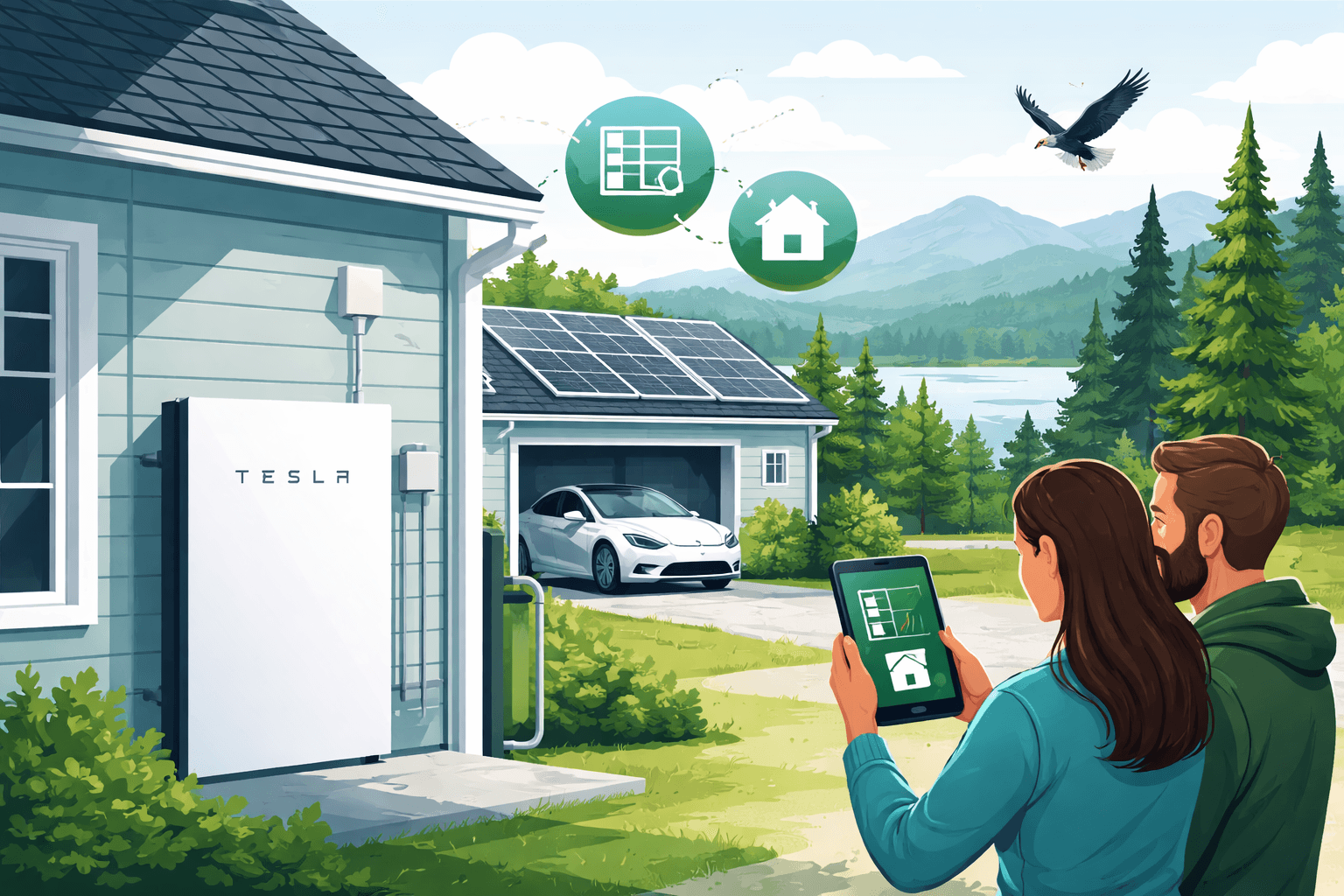
Maine homeowners are paying some of the highest electricity prices in the continental U.S., with residential rates averaging roughly the mid–20 cents per kWh range in 2023–2024, according to the U.S. Energy Information Administration (EIA). Add the reality of storm-driven outages each winter, and it’s no surprise that interest in a Tesla Powerwall in Maine has surged. This guide covers costs, incentives, utility programs, and how to size and use a Powerwall for Maine’s climate and rate structures.
Tesla Powerwall overview: specs, capacity, and how it works
The Tesla Powerwall is a lithium-ion home battery that stores electricity for later use. It can charge from rooftop solar or the grid, then discharge to power your home—either to save on rates (time-shifting) or to keep the lights on during outages.
Electrify: An Optimist’s Playbook for Our Clean Energy Future
In Electrify, <strong>Griffith lays out a detailed blueprint—optimistic but feasible—for fighting climate change while creating millions of new jobs and a healthier environment</strong>. Griffith’s pl
Check Price on AmazonKey specs (Powerwall 3, 2024 product sheet):
- Usable energy: 13.5 kWh per unit
- Continuous power output: up to 11.5 kW (higher than previous models, enabling more whole-home backup capability)
- Scalability: stack multiple units to increase both energy (kWh) and power (kW)
- Round-trip efficiency: typically around 90% for AC-coupled systems; DC-coupled PW3 improves effective efficiency by avoiding extra conversions
- Operating temperature: roughly -4°F to 122°F (-20°C to 50°C); the unit includes thermal management and can self-heat to protect the battery in cold weather
- Protection rating: outdoor-rated enclosure (weather-resistant); many Maine installers still prefer garages or basements to minimize snow/ice exposure
- Warranty: 10 years with a typical 70%+ capacity retention guarantee at warranty end (Tesla warranty terms)
How it works, briefly:
- With solar: During the day, excess solar charges the Powerwall. In the evening, the battery discharges to power your home, increasing your solar self-consumption and providing backup if the grid fails.
- Without solar: The Powerwall can charge from the grid off-peak and discharge during peak hours (if a time-of-use rate is available) or simply sit ready for emergencies.
- During an outage: The Powerwall islanding system isolates your home from the grid and supplies backup power within a fraction of a second through an automatic transfer switch and Tesla Gateway.
Powerwall pricing in Maine including installation costs
Installed costs vary with site complexity (service upgrades, trenching, cold-climate mounting), permits, and whether you bundle with a new solar system.
Typical 2024–2025 price ranges reported by installers in the Northeast:
- First Powerwall (hardware + Gateway + labor): $12,000–$15,000 before incentives
- Additional Powerwall units: $8,000–$9,500 each before incentives
- Bundle with new solar: often trims $500–$1,500 in balance-of-system and labor overlap
Federal tax credit (Investment Tax Credit, IRA 2022):
- 30% ITC applies to standalone batteries ≥3 kWh from 2023 onward and to solar-plus-storage. For a $14,000 installed Powerwall, the federal credit reduces net cost to about $9,800. Consult a tax professional.
What drives the range in Maine:
- Electrical service upgrades (older 100A panels or knob-and-tube remediation)
- Cold-weather placement (heated space vs. exterior wall, snow load clearances)
- Distance between the main panel, meter, and battery location
- Local permitting and inspection fees
Financing: Many Maine homeowners use low-interest green loans or solar loans. Tesla and third-party installers also offer financing; compare APRs carefully and ensure you understand whether the lender captures your ITC.
Maine battery storage incentives: state rebates, SGIP, utility programs
- State rebates: As of 2024–2025, Maine does not have a statewide residential battery rebate akin to California’s SGIP (Self-Generation Incentive Program). Always check Efficiency Maine Trust for pilot updates—programs can launch or pause year to year.
- Federal incentives: The 30% ITC is the headline incentive for most households.
- Utility/aggregator demand response: Some New England states run “ConnectedSolutions” pay-for-performance battery programs (e.g., MA, RI, CT). Maine’s options have been more limited and may be pilot-based or seasonal. If/when available, these programs pay homeowners for allowing the utility or aggregator to discharge the battery during peak grid events on hot summer afternoons. Typical payouts in neighboring states have ranged roughly $200–$400 per kW enrolled per season, performance-based. Maine residents should check Central Maine Power (CMP) and Versant Power, and ask installers whether any Bring Your Own Device (BYOD) enrollment is open for Powerwall.
Why this matters: With no evergreen state rebate, Maine homeowners usually stack the federal ITC with any occasional demand-response payments and the backup value (avoided outage costs) to make the economics work.
How the Powerwall pairs with solar in Maine: backup vs. self-consumption
NREL’s PVWatts data suggest a typical 7 kW rooftop array in southern Maine generates roughly 8,000–9,000 kWh per year, with lower winter output and strong spring/summer production. Pairing this with one or two Powerwalls does four things:
- Backup power: Keep critical loads (refrigeration, lighting, internet, well pump, circulator pumps, ductless heat pump) running during outages. A single Powerwall (13.5 kWh, up to ~11.5 kW power) can often handle essentials. Whole-home backup or electric ranges/dryers may require two or more units.
- Increase solar self-consumption: Store midday surplus and use it in the evening. This is more valuable if your net energy billing credit is less than your full retail cost, or if future rate reforms tilt against exports.
- Smooth shoulder-season variability: On bright spring days, you may fully charge the battery and export less, then draw it down on cloudy days.
- Electrification synergy: If you run cold-climate heat pumps, an induction range, or an EV charger, the battery helps shave peaks and keeps critical loads on during storms.
Backup vs. bill savings: In many Maine homes, the primary value driver is resilience. Bill savings can be material if you have a time-of-use (TOU) rate or if export credits are less than what you pay to import at night. Without TOU, arbitrage value is modest; the self-consumption benefit is mainly about using more of your own solar in the evening.
Maine utility rate structures and how Powerwall saves with time-of-use
- Standard residential rates: Most CMP and Versant residential customers are on flat volumetric rates (supply + delivery). Maine’s average residential price has hovered in the mid–20¢/kWh range in recent years (EIA), higher than the U.S. average. That lifts the value of every kWh your battery helps you avoid buying.
- Time-of-use (TOU): TOU options have been limited and sometimes piloted. If you can enroll, a Powerwall can shift 8–12 kWh from on-peak to off-peak daily. For example, with a 15¢/kWh differential, shifting 10 kWh/day yields about $1.50/day, or ~$45/month during applicable seasons. Always verify the current TOU windows and price spreads with your utility before sizing your system for arbitrage.
- Net Energy Billing (NEB): Maine’s NEB lets residential solar customers receive credits for exported energy. Program details and credit values depend on system size and tariff. If your export credit is close to retail, the arbitrage case is weaker; if export compensation is lower than what you pay to import at night, the Powerwall boosts value by letting you consume more of your own solar.
Demand charges: Most Maine residential tariffs don’t have demand charges (measured in kW). If you’re on a special rate or a small-business account with demand charges, a battery can clip peaks and reduce that line item—ask your installer to model it.
Powerwall availability and certified installers in Maine
Availability: Tesla has shipped Powerwall 3 widely across the U.S., but direct Tesla installation availability varies by ZIP code. Maine customers typically work with Tesla Certified Installers who handle site assessment, design, permitting, utility interconnection, installation, and commissioning.
What to expect in Maine:
- Lead times of 4–12 weeks, longer in winter due to weather and holiday backlogs
- Site-specific decisions about indoor vs. outdoor placement to manage cold exposure
- A critical loads subpanel is common to stretch backup time; whole-home backup with multiple Powerwalls is also possible
- Utility approval for solar-plus-storage interconnection; battery-only installs typically require an electrical permit and utility notification if grid-interactive
Tip: Ask prospective installers for recent Powerwall references north of Portland or in snow-belt towns, and for winter commissioning experience. Cold climate practices (conduit runs, snow-shedding clearances, equipment heaters) matter in Maine.
Alternatives to Powerwall available in Maine: Enphase, LG, Generac
Maine homeowners often compare Tesla with other batteries and with traditional generators.

Generac Guardian 14kW Home Standby Generator with 200 Amp Transfer Switch - Automatic Whole House Backup Power for Storms, Emergencies, and Outages, WiFi Enabled, Runs on Natural Gas or Liquid Propane : Patio, Lawn & Garden
View on Amazon- Enphase IQ Battery 10/10T and 5P: AC-coupled, modular systems that pair cleanly with Enphase IQ8 microinverters. Known for strong software and granular monitoring. If you already have Enphase microinverters, these can simplify integration. Based on efficiency and module-level resilience, the Enphase IQ Battery 5P represents strong value for retrofits in cold climates.
- LG ESS Home 8: An AC-coupled, 7.5–16 kWh scalable unit with a 10-year warranty. LG’s heating and BMS design is well-suited to northern climates. For homeowners prioritizing brand reliability and service networks, the LG ESS Home 8 is a solid contender.
- Generac PWRcell/PWRI: Offers DC-coupled configurations with high power output and flexible cabinet sizing. Generac also sells propane/natural gas standby generators. A hybrid approach—battery for silent daily resilience plus a small generator for multi-day outages—can be cost-effective in rural Maine. If outages routinely exceed 24–48 hours, a cold-weather-rated Generac standby generator sized at 10–14 kW can complement one or two batteries.
What to compare:
- Usable capacity (kWh) and continuous output (kW)
- Cold-weather performance and whether the unit has active heating
- Warranty throughput and capacity-retention terms
- Software features (storm watch, TOU scheduling, demand response compatibility)
- Local service and parts availability
By the Numbers: Powerwall and solar in Maine
- 13.5 kWh: Usable energy per Tesla Powerwall unit (Tesla)
- ~11.5 kW: Continuous power output (Tesla Powerwall 3)
- 30%: Federal tax credit for standalone or solar-coupled batteries (IRA, IRS guidance)
- Mid–20¢/kWh: Typical recent residential electricity prices in Maine (EIA)
- 8,000–9,000 kWh/yr: Approximate output from a 7 kW Maine rooftop system (NREL PVWatts estimate, site-dependent)
- 1–2 units: Common Powerwall count for essential-load to whole-home backup in Maine
Practical sizing for Maine homes
- One Powerwall (13.5 kWh): Good for essential circuits plus a ductless heat pump head, fridge, lights, modem/router, and a well pump. Expect 10–20 hours of backup depending on load discipline and season.
- Two Powerwalls (27 kWh): Suitable for larger homes, multiple heat pump zones, or near-whole-home backup (without electric resistance heat or large electric ranges running continuously).
- Three or more: Consider if you have high winter loads, frequent multi-day outages, or want to run a deep well, induction range, dryer, and multiple heat pump heads concurrently.
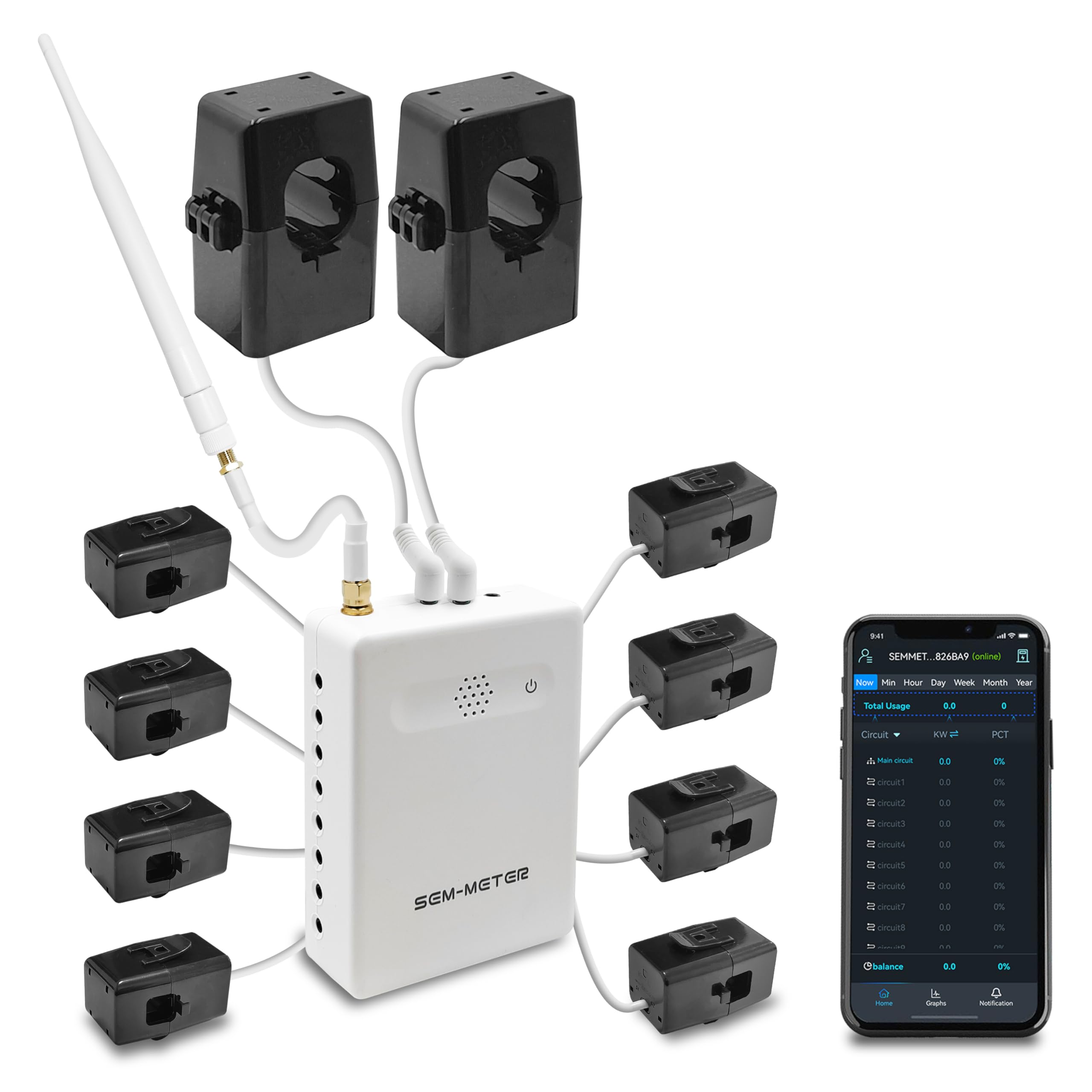
Smart Home Energy Monitor with 8 50A Circuit Level Sensors | Vue - Real Time Electricity Monitor/Meter | Solar/Net Metering - Amazon.com
View on AmazonAsk your installer for a winter scenario: January load profile with sunset at ~4:30 p.m., low PV production, and cold-start surges. That’s the real test for backup autonomy in Maine.
Is a Powerwall worth it in Maine?
It depends on what you value most.
- Highest value if: You experience frequent outages; you have or plan solar; you can enroll in TOU or a demand-response program; your home is already electrified (heat pumps, induction, EV), raising the cost of losing power.
- Moderate value if: You have reliable service, no TOU, and generous NEB export credits. Here, the battery is more about resilience and hedging against future rate changes.
- Consider a hybrid: Pair one or two Powerwalls with a small propane generator for long storms. The battery covers 90% of events silently; the generator refuels autonomy for day 2–3.
Simple payback: With no state rebate, most homeowners shouldn’t expect a pure bill-savings payback under 8–12 years unless TOU spreads are large or demand-response payments are available. But when you factor outage avoidance (spoiled food, frozen pipes risk, lost work time) and the ITC, many Maine households find the resilience premium justified.
FAQ: common questions about Tesla Powerwall in Maine
Q: How much does a Tesla Powerwall cost in Maine? A: Generally $12,000–$15,000 installed for the first unit and $8,000–$9,500 for each additional unit, before the 30% federal tax credit. Complex sites and service upgrades add cost.
Q: Can a Powerwall back up my heat pump in winter? A: Yes, most ductless heat pumps draw 500–2,500 W per head in steady state; a Powerwall 3’s high power output can handle one or more heads plus essentials. Very low temperatures increase draw—size accordingly, and consider two units for whole-home heating loads.
Q: How many Powerwalls do I need? A: For essential loads, one is common. For near-whole-home backup (especially with electric cooking/drying), plan on two. Your installer should simulate your winter critical load profile and outage duration goals.
Q: Will cold weather damage the battery? A: Powerwall includes thermal management and can self-heat to protect the battery. In extreme cold snaps below -4°F, charging may pause until warmed. Indoor or semi-conditioned installation is recommended in much of Maine for performance and longevity.
Q: Do I need solar to use a Powerwall? A: No. Standalone batteries qualify for the 30% ITC and can provide backup and TOU shifting (if offered). Pairing with solar maximizes value and extends outage autonomy.
Q: Are there Maine rebates like California’s SGIP? A: Not currently on a permanent statewide basis. Check Efficiency Maine and your utility for pilot demand-response programs that may pay for event participation.
Q: How does interconnection work? A: Your installer manages permits and utility sign-off. For solar-plus-storage, you’ll submit an interconnection application to CMP or Versant. Battery-only installs typically require an electrical permit and utility notification if the system is grid-interactive.
Q: What maintenance is required? A: Virtually none. Keep vents clear of snow and debris, maintain internet connectivity for firmware updates, and review settings (storm watch, backup reserve) seasonally.
Q: Does the Powerwall qualify for property tax exemptions in Maine? A: Property tax treatment can vary by municipality. Ask your local assessor and installer; statewide exemptions for residential solar/battery equipment are not universal.
What this means for Maine homeowners
- If outages are your pain point, start with one Powerwall and a critical loads strategy, then consider a second unit if you want near-whole-home coverage.
- If you have or plan solar, model self-consumption and NEB crediting now, but also stress-test winter backup scenarios.
- Monitor TOU and demand-response offerings from CMP/Versant annually—these can tilt the economics in your favor with performance payments.
- In the bid stage, request: a winter load analysis, outage autonomy estimates by season, total cost of ownership with ITC, and any demand-response revenue scenarios.
Where the market is heading: As more New England utilities adopt pay-for-performance programs and as winter storms challenge grid reliability, distributed batteries like Powerwall are increasingly valuable as both resilience assets and grid partners. Maine’s high electricity prices and electrification trend (heat pumps) make storage a pragmatic hedge—especially when stacked with federal incentives and potential future grid-service revenues.
Recommended Products
Electrify: An Optimist’s Playbook for Our Clean Energy Future
In Electrify, <strong>Griffith lays out a detailed blueprint—optimistic but feasible—for fighting climate change while creating millions of new jobs and a healthier environment</strong>. Griffith’s pl
Generac Guardian 14kW Home Standby Generator with 200 Amp Transfer Switch - Automatic Whole House Backup Power for Storms, Emergencies, and Outages, WiFi Enabled, Runs on Natural Gas or Liquid Propane : Patio, Lawn & Garden
Amazon.com : Generac Guardian 14kW Home Standby Generator with 200 Amp Transfer Switch - <strong>Automatic Whole House Backup Power for Storms, Emergencies, and Outages, WiFi Enabled, Runs on Natural
Smart Home Energy Monitor with 8 50A Circuit Level Sensors | Vue - Real Time Electricity Monitor/Meter | Solar/Net Metering - Amazon.com
Lightweight commercial 3-phase option available as a separate bundle. APPLICATION MONITORING WITHOUT GUISEWORK <strong>Up to sixteen (16) 50A sensors to accurately monitor your air conditioner, oven,