
Tesla Powerwall in Connecticut: Cost, Availability & Is It Worth It?

Connecticut homeowners are paying some of the highest electricity rates in the U.S. — 26–30¢/kWh on average in recent years (U.S. EIA). That’s why interest in home batteries is surging. The Tesla Powerwall in Connecticut can lower bills under new time-of-use (TOU) rates, provide storm-ready backup, and tap into a state incentive that knocks thousands off the price. Here’s how the numbers pencil out in 2026.
Tesla Powerwall overview: specs, capacity, and how it works
The Tesla Powerwall is a rechargeable lithium-ion home battery that stores electricity from rooftop solar or the grid and automatically powers your home during outages. It also shifts consumption from expensive peak hours to cheaper off-peak times.
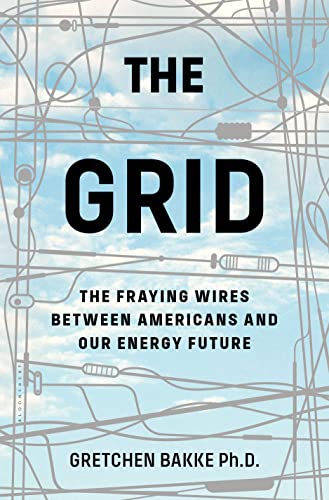
The Grid: The Fraying Wires Between Americans and Our Energy Future: Bakke, Gretchen
Cultural anthropologist Gretchen Bakke <strong>unveils the many facets of America's energy infrastructure, its most dynamic moments and its most stable ones, and its essential role in personal an
Check Price on AmazonKey specifications (Powerwall 3):
- Usable energy: 13.5 kWh per unit
- Power (on- and off-grid): up to 11.5 kW continuous
- Integrated solar inverter: accepts multiple PV strings (reduces extra hardware when installed with new solar)
- Operating temperature: designed for cold climates with active thermal management
- Warranty: 10 years (energy throughput and performance terms apply)
What that means in practice:
- Outage backup: One Powerwall can keep essentials (refrigerator, internet, lighting, a gas furnace blower, sump pump) running for 1–2 days, depending on load and weather. Two units extend backup and support larger 240V loads.
- Solar self-consumption: Store your daytime solar generation and use it at night instead of exporting to the grid at a lower credit rate.
- TOU arbitrage: Charge when rates are low; discharge when they’re high.
The Powerwall 3’s higher power rating enables whole‑home backup for more households without a separate “critical loads” subpanel, though large central AC, heat pumps, or EV charging may still require two or more batteries.
Powerwall pricing in Connecticut including installation costs
Installed pricing varies with electrical complexity, main panel upgrades, trenching/conduit, and whether you’re adding solar simultaneously. In Connecticut, expect:
- Hardware (Powerwall 3 + Backup equipment): $8,700–$9,500 per unit (Tesla published pricing; market can vary)
- Typical installation and permitting: $3,000–$6,000 per project (New England labor, service upgrades, and standby generator interlocks, if any)
Typical all-in before incentives:
- Single Powerwall installed: $12,000–$15,000
- Two Powerwalls installed: $21,000–$27,000
In higher‑cost projects (long wire runs, 400A service, complex whole‑home backup), pricing can exceed these ranges.
Federal incentive:
- 30% Residential Clean Energy Credit (IRS) applies to standalone batteries ≥3 kWh and to batteries paired with solar through 2032 under the Inflation Reduction Act.
Illustrative net cost (one unit):
- Gross cost: $13,500
- Minus 30% tax credit: –$4,050
- Connecticut upfront incentive (see next section): –$2,700 (example; varies)
- Estimated net: ≈$6,700
Your actual price will depend on your utility, eligibility, and project specifics. Always confirm final incentives with your installer and tax advisor.
Connecticut battery storage incentives: state rebates, utility programs
Connecticut does not use California’s SGIP program. Instead, the state’s Energy Storage Solutions (ESS) program — administered by the Connecticut Green Bank with Eversource and United Illuminating (UI) — provides both upfront and performance-based incentives to residential customers.
What’s available as of 2026:
Upfront residential incentive: A base $/kWh payment toward your installed battery capacity, paid to reduce the purchase price. Program steps and values adjust over time. Historically, the base incentive has been around $200 per kWh of usable capacity, with adders for low-income customers and those in vulnerable communities that can significantly increase the incentive. For a 13.5 kWh Powerwall, a $200/kWh base equates to about $2,700 off upfront. Check the Energy Storage Solutions website for the current step and caps (Connecticut Green Bank).
Performance incentive: If you enroll in utility-managed dispatch (typically a summer peak program plus winter events), you earn seasonal payments based on average power delivered (measured in kW) during grid events. Program documents from Eversource/UI indicate typical annual earnings can range from a few hundred dollars to over $1,000 depending on battery size, event frequency, and participation. Some years see higher earnings during extreme heat waves; calmer seasons pay less.
Who qualifies:
- Residential customers of Eversource or UI with qualifying battery systems (including Tesla Powerwall) installed by a program-participating contractor.
- Income-eligible and customers in “distressed municipalities” may receive higher upfront amounts.
Why it matters: Combining the 30% federal tax credit with ESS can reduce out-of-pocket costs by 40–60% for many households, materially improving payback.
How the Powerwall pairs with solar in Connecticut: backup vs. self-consumption
Connecticut replaced traditional net metering with the Residential Renewable Energy Solutions (RRES) tariff, which compensates exported solar generation at fixed rates set annually by each utility. Those export credits are typically below the all-in retail price you pay for electricity. That makes self-consumption — using more of your own solar onsite — more valuable.
With a Powerwall, your system can:
- Store midday solar and run your home through the evening peak (roughly 3–9 p.m.) when TOU rates are highest.
- Maintain backup power when storms knock out the grid, a meaningful benefit in a state with frequent weather-driven outages (EIA reports major-event outages materially increase annual average outage duration in the Northeast).
- Participate in utility dispatch events to earn performance incentives without impacting your evening comfort, because the battery can pre-charge from solar or the grid ahead of events.
If you’re considering solar in Connecticut, pairing at install time can reduce equipment duplication because the Powerwall 3 includes an integrated solar inverter. For homeowners already with solar, the Powerwall can be added as an AC-coupled retrofit — an installer will evaluate your inverter, main panel, and code requirements.
For broader solar context — panel pricing, installer options, and the RRES tariff — see our state guide: Solar in Connecticut: Costs, Incentives & Top Installers (2026).
Connecticut utility rate structures and how Powerwall saves with time-of-use
Both Eversource and UI offer time-of-use (TOU) supply options that make electricity more expensive during weekday late-afternoon/evening peaks and cheaper overnight and midday. While exact on/off-peak prices change seasonally, the spread between off-peak and on-peak is often in the range of several cents to over 10¢/kWh.

Emporia Gen 2 Smart Home Energy Monitor with 16 50A Circuit Level Sensors | Real Time Electricity Monitor/Meter | Solar/Net Metering - Amazon.com
View on AmazonHow savings stack up:
- Arbitrage: If the on/off-peak spread is 8¢/kWh and your Powerwall reliably shifts 10 kWh/day from off-peak to on-peak, that’s about $0.80/day or ~$290/year. If the spread is 12¢, that’s ~$440/year. The battery management app can automate this.
- Demand response: Enrolling in the ESS performance program can add a few hundred dollars or more per year, depending on dispatch. Many Connecticut homes see total annual value from arbitrage plus performance incentives in the $500–$1,200 range, before assigning any value to outage protection.
- Solar self-consumption: Every kWh you use onsite instead of exporting at the tariff rate increases savings by the difference between your retail cost and the export credit.
Important: Your results depend on your load profile, rate selection, whether you heat with heat pumps, and how much solar you have. A pre-install monitoring period (with a smart energy monitor) helps size the system and estimate savings.
Powerwall availability and certified installers in Connecticut
Tesla sells and installs Powerwalls directly in much of Connecticut and also lists multiple Tesla Certified Installers throughout the state. Typical steps and timeline:
- Site assessment and load analysis: 1–2 weeks
- Design, utility interconnection application, and permits: 2–6 weeks (varies by town)
- Installation: 1–2 days on site for one to two units
- Inspection and utility approval to operate: 1–3 weeks
From contract to commissioning, many projects complete in 6–12 weeks, though storm seasons and permitting backlogs can extend timelines.
What to look for in an installer:
- Program participation in Connecticut’s Energy Storage Solutions
- NABCEP certification (PV Installation Professional or Energy Storage)
- Clear modeling of TOU savings and ESS performance revenues
- Experience integrating with existing solar inverters and main service upgrades
For an end-to-end look at equipment choices, wiring topologies, and commissioning, see our Tesla Powerwall: Complete Buyer’s Guide — Cost, Installation & Alternatives.
Alternatives to Powerwall available in Connecticut: Enphase, LG, Generac
Powerwall isn’t the only capable home battery in Connecticut. Depending on your priorities — modularity, whole-home backup, or inverter compatibility — one of these may fit better:
Enphase IQ Battery 5P/10P/15P
- Modular 5 kWh blocks; high power per module (around 3.8 kW per 5 kWh unit)
- Excellent for microinverter-based solar (common in New England)
- Strong app and UL 9540A-tested safety profile
- Typical installed price per kWh is competitive with Powerwall, especially for smaller systems
LG Energy Solution RESU Prime 10H/16H
- 10 or 16 kWh; pairs with third-party hybrid inverters (SolarEdge, SMA)
- Good for retrofits where you want to keep an existing string inverter ecosystem
Generac PWRcell
- Scalable 9–18 kWh cabinets with high surge output, useful for starting large motors
- Often paired with Generac’s transfer equipment for whole‑home backup
When to pick an alternative:
- You already have Enphase microinverters and want native integration
- You need unusually high surge power for well pumps or large compressors
- You want a small (5–10 kWh) starter system today with the option to add more modules later
Weighing costs: Ask installers for apples-to-apples quotes showing usable kWh, continuous kW, installation scope (subpanel vs whole-home), and incentive eligibility across brands.
By the numbers: Tesla Powerwall in Connecticut
- Battery capacity: 13.5 kWh per unit (Tesla)
- Power rating: up to 11.5 kW continuous (on/off-grid) (Tesla)
- Typical installed cost in CT: $12,000–$15,000 before incentives (market quotes)
- Federal tax credit: 30% of installed cost (IRS)
- CT Energy Storage Solutions upfront incentive: commonly around $200/kWh base, with adders for income/vulnerability (Connecticut Green Bank; step values vary)
- Annual value stack potential: ~$500–$1,200 from TOU shifting + performance incentives; more with large solar self-consumption
- CT retail electricity: ~26–30¢/kWh in recent years (U.S. EIA)
Practical savings examples
Scenario A: One Powerwall, TOU + dispatch, no solar
- Net installed (after 30% ITC and a representative ESS upfront incentive): ≈$6,500–$8,500
- Annual value: $300–$500 (TOU arbitrage) + $250–$600 (dispatch) = $550–$1,100
- Simple payback: 6–13 years, plus resiliency value during outages
Scenario B: Solar + one Powerwall, TOU + dispatch
- Net installed battery cost similar to Scenario A, with higher savings from solar self-consumption (dependent on RRES export tariff vs retail rates)
- Many homes see better-than-standalone economics and improved outage coverage
Your economics improve if:
- You face frequent/long outages (resiliency value)
- You select a TOU plan with a large peak/off-peak spread
- You participate consistently in the ESS performance program
Affiliate picks: gear that pairs well with home batteries
- Smart panel control: A load management panel can stretch a single battery further by shedding non-essential loads during outages. Based on field performance and flexible load control, the Smart Load Controller is a strong value for backup-focused installations.
- Energy monitoring: A whole-home monitor helps size your system and verify savings. With granular circuit data and open integrations, the Emporia Vue Energy Monitor is cost-effective for pre- and post-install analytics.
- High-efficiency solar modules: For homes with limited roof space, high-wattage, high‑efficiency panels can maximize daytime charging. Backed by strong degradation warranties, REC Alpha Pure-R panels represent solid value on New England roofs.
FAQ: common questions about Tesla Powerwall in Connecticut
- How many Powerwalls do I need?
- One unit (13.5 kWh, up to 11.5 kW) supports essentials and many whole‑home scenarios without large 240V loads. Two units better handle central AC/heat pumps, electric ranges, and EV chargers.
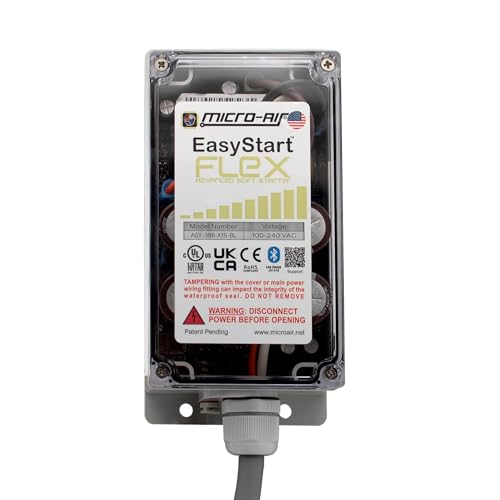
MICRO-AIR EasyStart 368 Bluetooth Soft Start Kit for Home Air Conditioner, RV & Commercial Use, Works with Generators, Reduces Power Surge, Efficient Start-Up - Up to 2-3.5 Tons(ASY-368-X48 BlueTooth) : Automotive
View on AmazonWill a Powerwall run my heat pump or central AC?
- Often yes, especially with two units, but starting currents vary. Your installer will check nameplate amps and compressor LRA and may propose soft-starts or load management.
How does cold weather affect performance?
- The system includes thermal management. Expect reduced charge/discharge rates if the battery is very cold; indoor locations (garage, basement) maintain performance. Installers follow UL 9540 fire and NFPA/IFC spacing rules.
Can I add a Powerwall to my existing solar?
- Yes. Retrofits use AC coupling with a Backup Gateway/transfer equipment. The Powerwall 3 can also replace/add an inverter for new PV systems, reducing hardware.
How long will it power my home in an outage?
- It depends on loads. A typical essential-loads setup (fridge, lights, Wi-Fi, gas furnace blower, sump pump) may consume 5–8 kWh/day, providing one to two days per battery. Heavy use of electric heating or cooking shortens runtime.
What about permitting and interconnection in Connecticut?
- Expect electrical and building permits, plus a utility interconnection for grid-tied operation. Many towns are familiar with UL 9540 systems; plan for 2–6 weeks for approvals.
Do I get sales or property tax exemptions?
- Connecticut’s key incentive for batteries is the Energy Storage Solutions program. Sales and property tax treatment can vary; confirm with your installer and local assessor for the latest guidance.
Will participating in utility dispatch drain my battery before an outage?
- Dispatch programs schedule events with notice, and you can set a backup reserve in the Tesla app (e.g., keep 30–50% always available). Many homeowners pre-charge ahead of storms.
Is the Tesla Powerwall in Connecticut worth it?
For households on TOU rates, those with rooftop solar under the RRES tariff, and anyone seeking reliable storm backup, the value stack is compelling:
- Upfront cost drops substantially with the 30% federal tax credit and Connecticut’s ESS upfront incentive.
- Annual savings from TOU shifting plus performance payments can exceed $500–$1,000 for many homes.
- Resiliency during hurricanes, Nor’easters, and ice storms is hard to price but increasingly important.
If your priority is the fastest financial payback with no interest in backup, consider starting with a smaller battery or optimizing solar self-consumption first. But if you value outage protection and bill control — especially with heat pumps or EV charging in the mix — a Powerwall can be a strong investment in Connecticut.
Next steps:
- Get quotes from at least two program-participating installers, including a Tesla direct quote.
- Request a load study and savings model using your actual interval data.
- Verify current ESS step values and performance incentive terms with Eversource/UI or the Connecticut Green Bank.
Helpful resources cited: Connecticut Green Bank (Energy Storage Solutions program design and incentives), Eversource and UI (TOU and performance dispatch details), U.S. EIA (retail rates and outage statistics), IRS (30% Residential Clean Energy Credit).
Related reading on DigitalWindmill:
Recommended Products
The Grid: The Fraying Wires Between Americans and Our Energy Future: Bakke, Gretchen
Cultural anthropologist Gretchen Bakke <strong>unveils the many facets of America's energy infrastructure, its most dynamic moments and its most stable ones, and its essential role in personal an
Emporia Gen 2 Smart Home Energy Monitor with 16 50A Circuit Level Sensors | Real Time Electricity Monitor/Meter | Solar/Net Metering - Amazon.com
See how much electricity your home is using anywhere, anytime. ... <strong>Add individual 50A sensors to your Vue to monitor up to 16 individual circuits</strong> — providing accurate energy use for t
MICRO-AIR EasyStart 368 Bluetooth Soft Start Kit for Home Air Conditioner, RV & Commercial Use, Works with Generators, Reduces Power Surge, Efficient Start-Up - Up to 2-3.5 Tons(ASY-368-X48 BlueTooth) : Automotive
COMPATIBILITY WITH GENERATORS: ... power-limited locations. This Easy Start flex home ac soft starter is <strong>compatible with 2-stage compressors and heat pump units</strong>, making it a versatile