
Tesla Powerwall in Pennsylvania: Cost, Availability & Is It Worth It?
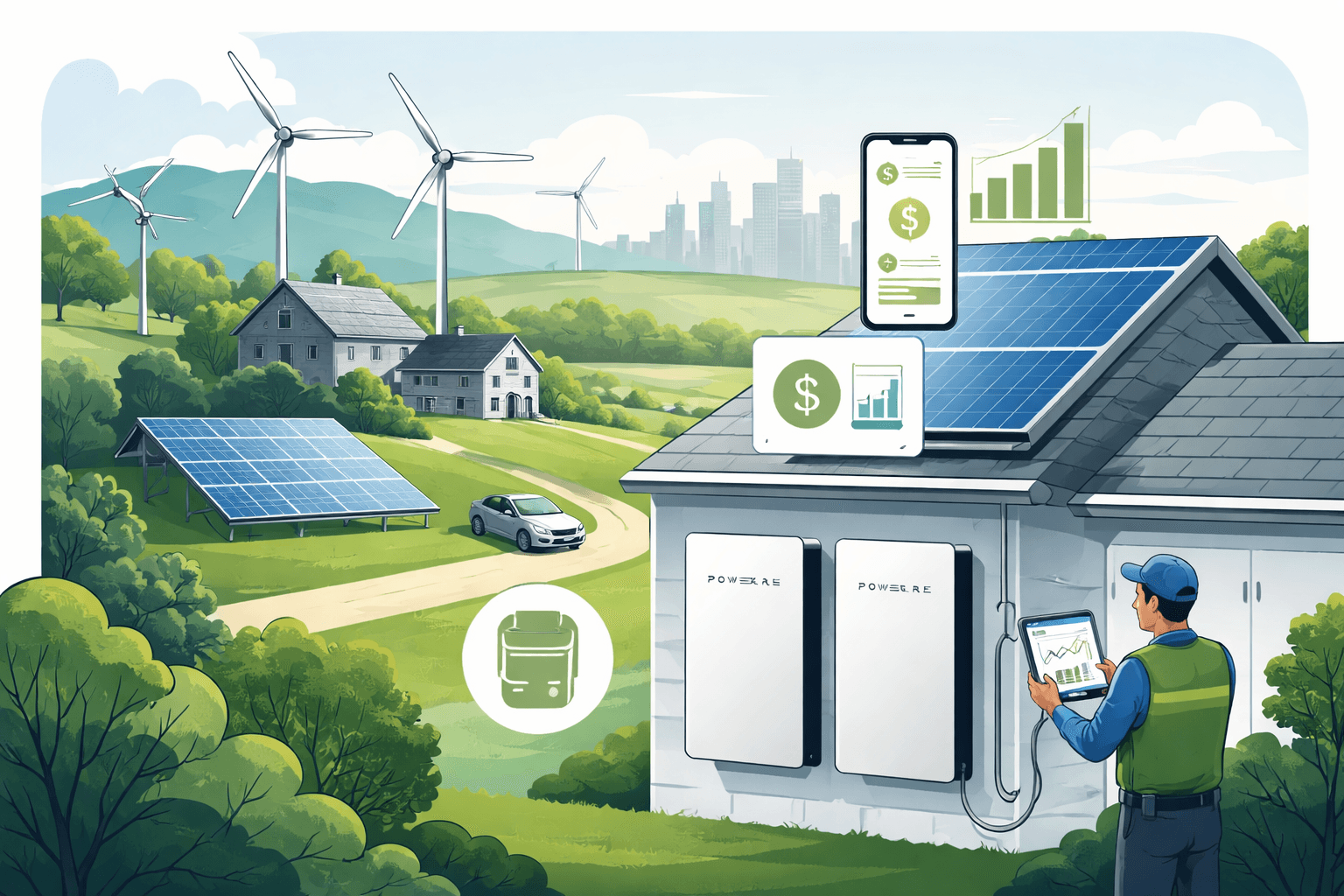
Pennsylvania homeowners are asking whether the Tesla Powerwall in Pennsylvania pencils out as outages and electricity prices shift. Energy storage is scaling fast: BloombergNEF estimates the world added roughly 42 GW/99 GWh of stationary storage in 2023, with the U.S. leading new deployments. At the home scale, the 30% federal tax credit now applies to standalone batteries, and Pennsylvania utilities have rolled out optional time-of-use (TOU) rates—making storage more compelling than it was just a few years ago.
This guide breaks down Powerwall specs, realistic installed costs in Pennsylvania, state and utility incentives, and how batteries create value under local rate structures. We’ll also compare alternatives like Enphase, LG, and Generac and answer the most common questions we hear from PA homeowners.
Tesla Powerwall overview: specs, capacity, and how it works
Tesla’s Powerwall is a lithium-ion home battery designed for backup power and energy management. Two versions are relevant in 2026:
The Grid: The Fraying Wires Between Americans and Our Energy Future: Bakke, Gretchen
Cultural anthropologist Gretchen Bakke <strong>unveils the many facets of America's energy infrastructure, its most dynamic moments and its most stable ones, and its essential role in personal an
Check Price on Amazon- Powerwall 2 (AC-coupled): 13.5 kWh usable capacity; ~90% round-trip efficiency; 5 kW continuous power, up to ~7 kW peak for short durations; pairs easily with existing solar inverters and microinverters.
- Powerwall 3 (DC-coupled with integrated solar inverter): 13.5 kWh usable capacity; higher power output around 11.5 kW continuous; optimized for new solar-plus-storage installations and whole-home backup; can accept significant DC solar input (Tesla specifies high PV input capacity per unit), reducing conversion losses.
Shared features and performance characteristics
- Backup transition: sub-second switchover (typically under 200 ms) to keep lights and Wi‑Fi on during grid outages.
- Modular scaling: stack multiple units to increase both capacity (energy) and power (how much you can run at once). Example: two Powerwalls provide ~27 kWh.
- Operating temperature: about −20°C to 50°C (−4°F to 122°F) with active thermal management; garages, basements, or utility rooms are common locations in Pennsylvania’s climate.
- Warranty: 10 years with a guaranteed energy-retention level (typically 70% at year 10 for residential use). Tesla’s warranty terms vary slightly by mode (backup, self-consumption, or time-based control), so review the current warranty document before purchase.
How it works day to day
- Self-consumption: store solar generated midday and use it in the evening.
- Backup: reserve part or all of the battery for outages; Tesla’s Storm Watch mode automatically charges the battery from solar or the grid when severe weather is forecast.
- Time-based control: shift charging to low-cost hours and discharge during high-cost hours on TOU rates; the Tesla app automates these schedules.
Powerwall pricing in Pennsylvania including installation costs
Installed costs vary by house and installer, but Pennsylvania quotes we’ve reviewed in 2025–2026 show these typical ranges:
- First Powerwall (turnkey): $11,000–$15,000 before incentives
- Each additional unit: $7,500–$10,000 before incentives
Why the range? Main drivers are:
- Electrical service upgrades (e.g., moving to 200 A service) and line-side taps
- Whether you choose whole-home backup vs. an essential-loads subpanel
- Conduit runs and mounting complexity
- Powerwall 3 vs Powerwall 2 (PW3 can offset the cost of a separate solar inverter for new systems)
Federal tax credit: The Investment Tax Credit (ITC) under the Inflation Reduction Act provides 30% off eligible project costs for batteries ≥3 kWh, whether paired with solar or installed standalone. For a single $13,500 install, the 30% ITC lowers the net cost to roughly $9,450 if you have the tax liability to claim it. Consult a tax professional; credits can often be carried forward.
Cost metrics to sanity-check quotes
- Cost per kWh of capacity (installed): for a single unit at $13,500, that’s ~$1,000/kWh before incentives; after the 30% ITC, ~$700/kWh.
- Effective price for delivered energy: with ~90% round-trip efficiency, delivering 10 kWh per day translates to roughly 3,650 kWh/year cycled. Over 10 years, that’s ~36,500 kWh throughput. At a net cost of ~$9,450 after ITC, you’re paying about $0.26/kWh for storage service before any grid savings. Your TOU arbitrage, outage-avoidance benefits, and solar value-stacking need to exceed this to “cash-flow” the battery, though backup value and resilience are often primary drivers.
Pennsylvania battery storage incentives: state rebates, SGIP, utility programs
- Statewide battery rebate: Pennsylvania does not currently offer a statewide battery rebate program comparable to California’s SGIP. Check the Pennsylvania Public Utility Commission (PA PUC) or DSIRE database for updates.
- Federal incentives: the 30% ITC is the primary driver for residential batteries in PA as of 2026 (U.S. Treasury guidance confirms standalone storage eligibility).
- Local/municipal support: Some Pennsylvania municipalities have offered solar rebates (for PV only), but we’re not seeing active, large-scale battery rebates for homeowners at the city level. Program funding can change; installers often know what’s live.
- Utility pilots and demand response: Several PA utilities have tested or are exploring virtual power plant (VPP) and demand response programs. Enrollment windows can be limited, and incentive amounts vary. Ask your installer about current options with PECO, PPL Electric Utilities, Duquesne Light, FirstEnergy utilities (Met-Ed, Penelec, Penn Power, West Penn Power), and electric cooperatives. Credits commonly pay for allowing limited battery discharges during peak grid events.
Commercial properties can consider C-PACE financing for eligible energy improvements in participating counties, but that’s a non-residential tool.
How the Powerwall pairs with solar in Pennsylvania: backup vs. self-consumption
Solar production in Pennsylvania is solid but seasonal. NREL’s PVWatts indicates annual yields around 1,150–1,300 kWh per installed kW of DC capacity depending on location (Philadelphia, Pittsburgh, Erie, Scranton). A typical 7 kW home PV system might produce roughly 8,000–9,000 kWh/year.
- Backup value: The U.S. average outage duration was about 5–6 hours in 2022 including major events (EIA). Pennsylvania’s weather—thunderstorms, remnants of tropical systems, heavy snow—creates pockets of higher outage risk. A single Powerwall can usually cover essentials like a fridge, lights, internet, a gas furnace blower, sump pump, and a few outlets for a day; electric resistance heating or central AC typically requires two or more units, especially for whole-home backup.
- Self-consumption value: Pennsylvania’s net metering rules generally credit exported solar at or near the full retail rate for residential systems sized to meet on-site loads (PA PUC AEPS rules; residential systems up to 50 kW are typically eligible). When net metering pays full retail, batteries don’t add much financial value just for shifting solar from noon to evening because you already get credited well for exports. Where batteries shine is backup and TOU shifting.
- New solar vs. retrofit: Powerwall 3 is ideal for new PV systems (DC-coupled) and can reduce BOS costs by replacing a separate inverter. If you already have AC-coupled solar (e.g., Enphase microinverters or a string inverter), the Powerwall 2 often integrates more simply.
Practical tip: If resilience is your top goal, consider load triage with a smart or managed loads panel. A device like the Span Smart Panel can prioritize circuits during an outage so your battery lasts longer.
Pennsylvania utility rate structures and how Powerwall saves with time-of-use
Pennsylvania’s electricity market is competitive—you can choose retail suppliers—or you can stay on your utility’s default supply (the “price to compare”). On top of supply, delivery charges are regulated and vary by utility. Many PA utilities now offer optional TOU rates for residential customers (e.g., PECO, PPL, Duquesne Light), typically with:

ChargePoint HomeFlex Level 2 EV Charger J1772 - Fast Smart Battery Power Charging at Home for Electric Automobile Vehicles - NEMA 14-50 Plug for Electric Car : Automotive
Home Flex Hardwired offers the fastest charge at up to 50A. NEMA 6-50 and 14-50 versions <strong>provide up to 40A and work with existing 240V wall outlets</strong>. Yes! Choose from our list of prefe
Check Price on Amazon- On-peak window: weekday late afternoons/early evenings (often 2–6 p.m.)
- Off-peak: all other hours
- In some cases, a super off-peak overnight window
Battery arbitrage math (illustrative)
- Suppose off-peak is $0.10/kWh and on-peak is $0.20/kWh. If a Powerwall charges 10 kWh off-peak and discharges on-peak, at 90% round-trip efficiency, you deliver ~9 kWh to the home during peak.
- Gross bill savings: 9 kWh × ($0.20 – $0.10) = $0.90/day, or ~$328/year if done every day.
- Add resilience value and potential utility program credits to the stack. If the TOU spread is wider (say $0.12–$0.18), arbitrage improves. If flatter, savings shrink.
Most Pennsylvania residential customers are not on demand charges, but small businesses (commercial tariffs) often are. In those cases, batteries can shave peaks and reduce demand charges—savings can be substantial when peak kW charges are high.
Net metering interactions
- Some TOU tariffs also make net metering time-differentiated; exporting solar at peak can be valuable. Check your utility’s rules about exporting grid-charged energy; most prevent earning net-metering credits on grid-charged exports. Tesla’s app can restrict export of grid-charged energy to keep you compliant.
EV charging synergy
- If you have an EV, schedule charging for off-peak. A flexible Level 2 charger like the ChargePoint Home Flex plus a Powerwall running time-based control can meaningfully cut bills on TOU rates.
Powerwall availability and certified installers in Pennsylvania
Availability has improved. Tesla sells direct in most Pennsylvania metros (Philadelphia, Pittsburgh, Harrisburg, Lehigh Valley), and there’s a robust network of Tesla Certified Installers across the state.
What to expect in the process
- Site survey: electrical assessment, roof/ground layout for solar, permitting requirements
- Design and permitting: 2–6 weeks depending on your jurisdiction
- Installation: 1–3 days for a single Powerwall; longer for whole-home backup or service upgrades
- Inspection and permission to operate (PTO): 1–6 weeks depending on utility and AHJ
How to vet an installer
- Credentials: Look for NABCEP-certified professionals and a Pennsylvania home improvement contractor registration (HIC). Ask about Tesla certification for Powerwall 3 if you’re doing new solar.
- Software and support: Ensure they’ll configure the Tesla app modes (Backup-Only, Self-Powered, Time-Based Control) and help with TOU enrollment if desired.
- Interconnection experience: Familiarity with PA PUC net metering and your utility’s interconnection portal speeds PTO.
Alternatives to Powerwall available in Pennsylvania: Enphase, LG, Generac
Several strong competitors are available through PA installers. Which is “best” depends on your existing equipment, backup goals, and budget.

Emporia Gen 2 Smart Home Energy Monitor with 16 50A Circuit Level Sensors | Real Time Electricity Monitor/Meter | Solar/Net Metering - Amazon.com
View on AmazonEnphase IQ Battery 5P/10P
- Architecture: AC-coupled, modular 5 kWh units; two units make 10 kWh, and so on. High reliability via distributed microinverters.
- Power: Each 5P provides robust surge and continuous output suitable for essential-loads backup; scaling increases both kW and kWh.
- Best fit: Homes already on Enphase IQ8 microinverters; excellent app and monitoring. Often priced similarly to Powerwall on a per-kWh basis.
- Consider pairing with an energy monitor like the Emporia Vue 2 to optimize load shifting.
LG Energy Solution RESU Prime (10H/16H)
- Architecture: DC-coupled via compatible inverters (e.g., SolarEdge), 9.6 kWh and 16 kWh sizes.
- Power: Around 5–7 kW per battery depending on the inverter; stackable for higher capacity.
- Best fit: New solar installs with SolarEdge; compact footprint.
Generac PWRcell
- Architecture: Modular DC-coupled cabinet (roughly 9–18 kWh per cabinet), integrates with Generac generators and load management.
- Power: Competitive continuous output; strong for whole-home backup when paired with a generator.
- Best fit: Rural homes with longer outages, well pumps, or electric heat where generator integration is a priority.
Other brands (Sonnen, BYD, FranklinWH) also appear in PA. Compare:
- Power (kW) needed for key loads (e.g., heat pump vs. gas furnace)
- Usable capacity (kWh) vs. expected outage duration or TOU shifting needs
- Warranty terms (years, throughput, capacity retention)
- Integration with your existing or planned inverter/microinverters
By the Numbers: Tesla Powerwall in Pennsylvania
- 13.5 kWh: usable capacity per Powerwall unit (PW2 and PW3)
- ~11.5 kW vs. 5 kW: PW3’s higher continuous power vs. PW2
- ~90%: round-trip efficiency
- 10 years: warranty term (70% capacity typical at year 10)
- $11,000–$15,000: typical turnkey cost for the first unit in PA before incentives
- 30%: federal tax credit on eligible installed costs
- 1,150–1,300 kWh/kW-year: typical PV production potential in PA (NREL PVWatts)
- 2–6 p.m. weekdays: common on-peak window for optional TOU rates in PA utilities
Is a Powerwall “worth it” in Pennsylvania?
Financially, it depends on your priorities and tariff.
Stronger case
- You value resilience: you work from home, have a sump pump, medical devices, or frequent micro-outages.
- You can enroll in a TOU rate with a meaningful peak/off-peak spread or a battery demand response/VPP program.
- You’re installing new solar and can leverage Powerwall 3’s integrated inverter to reduce BOS costs.
Weaker case
- You rely solely on net metering at flat rates and rarely lose power; the bill savings from storage alone may not justify the cost.
Non-financial value is real: Quiet, automatic backup with no fuel and low maintenance is a major reason many Pennsylvania households choose batteries over standby generators.
FAQ: common questions about Tesla Powerwall in Pennsylvania
Q: How many Powerwalls do I need? A: For essential circuits (fridge, lights, internet, gas furnace blower, sump), one unit often suffices. For central AC, electric water heaters, or whole-home backup, plan on two or more. Your installer can model starting watts and running watts to size correctly.
Q: Can Powerwall charge from the grid in Pennsylvania? A: Yes. Since 2023, the federal ITC applies to standalone storage and Tesla supports grid charging in Time-Based Control and Storm Watch. Utilities may restrict exporting grid-charged energy for net metering credits; Tesla’s app can prevent that.
Q: Will it work with my existing Enphase or SolarEdge system? A: Yes, typically via the AC-coupled Powerwall 2. Powerwall 3 is optimized for new DC-coupled solar; retrofits with existing microinverters often use PW2 for simpler integration.
Q: What about cold winters? A: Powerwall’s thermal management keeps the battery in its preferred temperature band. Indoor locations (basement, utility room, attached garage) are common in Pennsylvania and improve performance.
Q: How quickly does it switch during an outage? A: Sub-second—usually under 200 milliseconds—so your lights and electronics often don’t notice the transition.
Q: What maintenance is required? A: Very little. Software updates occur over Wi‑Fi or cellular. Keep vents clear and ensure a dry, ventilated location.
Q: How does the warranty work? A: Tesla provides a 10-year warranty with a guaranteed capacity retention (commonly 70% at year 10) and operating-mode conditions. Review the latest Tesla warranty for throughput or mode-specific terms.
Q: Can I pair a Powerwall with a backup generator? A: Yes, but it requires careful design (transfer switches, load management). Many homeowners either pick one solution or design coordinated operation—your installer should have experience with hybrid setups.
Q: What about insurance, app connectivity, and resale value? A: Notify your insurer after installation; premiums usually don’t change materially. The Tesla app requires internet connectivity for advanced features but can operate in backup without it. Batteries and solar can improve home marketability, though resale premiums vary by market.
Practical steps for Pennsylvania homeowners
- Start with goals: resilience vs. bill savings vs. solar optimization. If outages matter most, prioritize power (kW) and managed load panels.
- Collect at least two quotes: ask for both Powerwall 2 (if retrofitting) and Powerwall 3 (if new solar) with line-item pricing for BOS components.
- Ask about TOU enrollment and any current VPP/demand response opportunities with your utility.
- Confirm interconnection and net metering details under PA PUC rules; most residential PV systems up to 50 kW qualify when sized to meet on-site use.
- Consider complementary tech: a smart panel like the Span Smart Panel or an energy monitor such as the Emporia Vue 2 can extend backup time and sharpen TOU savings.
If you’re comparing nearby markets, see our state guides for neighbors like Tesla Powerwall in New Jersey: Cost, Availability & Is It Worth It? and Tesla Powerwall in Maryland: Cost, Availability & Is It Worth It?. Delaware homeowners may also find our guide useful: Tesla Powerwall in Delaware: Cost, Availability & Is It Worth It?
Where this is heading
- More TOU adoption: As PJM and PA utilities refine peak pricing and capacity needs, TOU spreads may widen, improving arbitrage.
- Growing virtual power plants: Batteries earning seasonal or per-event payments for grid support will boost ROI.
- Smarter load management: Heat pump adoption and smart panels will make batteries go further during winter peaks.
- Falling costs and higher power: The trend is toward higher kW output per battery—better for whole-home backup without adding multiple units.
For Pennsylvania homeowners who value resilience and can stack the 30% ITC with TOU or grid-service earnings, a Tesla Powerwall can be a strong addition to a solar system—or a capable standalone backup solution.
Recommended Products
The Grid: The Fraying Wires Between Americans and Our Energy Future: Bakke, Gretchen
Cultural anthropologist Gretchen Bakke <strong>unveils the many facets of America's energy infrastructure, its most dynamic moments and its most stable ones, and its essential role in personal an
ChargePoint HomeFlex Level 2 EV Charger J1772 - Fast Smart Battery Power Charging at Home for Electric Automobile Vehicles - NEMA 14-50 Plug for Electric Car : Automotive
Home Flex Hardwired offers the fastest charge at up to 50A. NEMA 6-50 and 14-50 versions <strong>provide up to 40A and work with existing 240V wall outlets</strong>. Yes! Choose from our list of prefe
Emporia Gen 2 Smart Home Energy Monitor with 16 50A Circuit Level Sensors | Real Time Electricity Monitor/Meter | Solar/Net Metering - Amazon.com
See how much electricity your home is using anywhere, anytime. ... <strong>Add individual 50A sensors to your Vue to monitor up to 16 individual circuits</strong> — providing accurate energy use for t