
Tesla Powerwall in New Jersey: Cost, Availability & Is It Worth It?

New Jersey homeowners are asking about the Tesla Powerwall for two big reasons: more solar on rooftops and more storms on the grid. The U.S. added a record 7–8 GW of battery storage in 2023 alone (SEIA/Wood Mackenzie), while the federal 30% investment tax credit (ITC) now applies to standalone batteries under the Inflation Reduction Act. If you’re evaluating a Tesla Powerwall in New Jersey, costs, incentives, and how it fits your utility’s rates are what determine whether it pencils out.
This guide breaks down Powerwall specs, real installed costs in New Jersey, current state and utility incentives, how batteries pair with solar under New Jersey’s net metering rules, and alternatives worth considering.
By the Numbers: Tesla Powerwall in New Jersey
- Usable capacity: 13.5 kWh per unit (Tesla)
- Power output (Powerwall 3): up to ~11.5 kW continuous per unit, enabling whole‑home backup for many homes (Tesla)
- Warranty: 10 years; typical end‑of‑warranty capacity guarantee ~70% (Tesla)
- Round‑trip efficiency: ~90% or higher depending on configuration (NREL benchmarks; Tesla)
- Typical New Jersey installed price: $12,000–$16,000 before incentives for one unit; $8,400–$11,200 after 30% federal ITC (market quotes; installer reports)
- NJ solar context: ~4+ GW of cumulative solar capacity and top‑10 U.S. market status (SEIA)
- Outages: U.S. customers averaged ~5–6 hours of interruptions in 2022 including major events (EIA Form 861), with storm‑driven spikes in the Mid‑Atlantic
The Grid: The Fraying Wires Between Americans and Our Energy Future: Bakke, Gretchen
Cultural anthropologist Gretchen Bakke <strong>unveils the many facets of America's energy infrastructure, its most dynamic moments and its most stable ones, and its essential role in personal an
Check Price on AmazonWhat is the Tesla Powerwall? How it works and key specs
A home battery stores excess electricity, then discharges it when you need it—during outages, at night, or when grid prices spike. The Tesla Powerwall line is the best‑known residential battery in the U.S., with two current flavors you’ll see in New Jersey installations:
- Powerwall 2: 13.5 kWh usable capacity; 5 kW continuous/7 kW peak output; AC‑coupled to any solar inverter.
- Powerwall 3: 13.5 kWh usable capacity; significantly higher power output (up to ~11.5 kW continuous) and an integrated solar inverter for simpler, often lower‑cost installations with new solar.
Key concepts you’ll hear from installers:
- Usable capacity (kWh): How much energy the battery can actually deliver when full. A 13.5 kWh unit can run a 1,000‑watt load for roughly 13.5 hours, minus efficiency losses.
- Power (kW): The maximum rate of delivery. Higher kW lets you run more or larger appliances simultaneously—think well pumps, HVAC, or induction ranges.
- Round‑trip efficiency: Energy lost to charging/discharging. Modern lithium‑ion home batteries typically achieve ~90% or better.
- Capacity factor for your solar: The percentage of time your PV array runs at rated power. In New Jersey, PV capacity factors often sit around 15–20% annually (NREL), driving seasonal and daily production swings a battery can smooth out.
Multiple Powerwalls can be combined to increase both capacity and power. As a rule of thumb, one Powerwall can back up essential loads; two can often support whole‑home operation for typical New Jersey homes, depending on HVAC type and winter heating.
Tesla Powerwall pricing in New Jersey (hardware + installation)
Installed costs in New Jersey for a single Tesla Powerwall typically land between $12,000 and $16,000 before incentives when added to an existing solar system. New systems designed around Powerwall 3 can sometimes come in lower per‑unit thanks to the integrated inverter and simplified wiring.
What drives the price range:
- Labor and electrical scope: Adding a critical loads subpanel or a smart electrical panel adds cost but improves backup flexibility.
- Permitting and interconnection: Municipal permit fees and utility metering work vary by town and utility.
- Balance of system: Conduit runs, trenching for detached garages, or main service upgrades (e.g., 100A to 200A) can add $1,000–$4,000.
- Additional units: A second Powerwall is usually cheaper on a per‑unit basis because site mobilization and fixed costs are already covered.
After the 30% federal ITC, many homeowners see net pricing around $8,400–$11,200 for one unit, or $15,000–$19,000 for two, assuming typical New Jersey installation conditions. Installers will provide line‑item quotes; ask for the split between hardware, labor, and permitting so you can compare apples to apples.
New Jersey battery storage incentives: what exists—and what doesn’t
- Federal 30% ITC (yes): The Inflation Reduction Act extended the 30% federal tax credit to standalone storage placed in service after 2022. Claimable whether or not you add new solar, subject to tax liability. Consult a tax professional.
- State sales/property tax (partial): New Jersey exempts solar equipment from state sales tax and provides a property tax exemption for renewable energy systems. Batteries may or may not qualify depending on how the local assessor and installer classify the system (standalone vs integrated with solar). Confirm with your installer and municipality.
- State battery rebate (currently no broad residential program): As of 2026, New Jersey does not have a statewide residential battery rebate akin to California’s SGIP. The NJ Board of Public Utilities (NJBPU) has a statutory energy storage goal (2,000 MW by 2030) and has been exploring program designs; watch NJBPU dockets for future developments.
- Utility demand response/TOU adders (limited today): Some New Jersey utilities run demand response for thermostats and C&I batteries. Residential battery performance‑based programs remain limited but are likely to expand as AMI smart meters are fully deployed.
A note on SGIP: SGIP is specific to California. New Jersey homeowners are not eligible for SGIP rebates.
If you live near state borders or own property regionally, our state‑specific guides can help with differences in incentives and TOU tariffs. For example, see our coverage for Tesla Powerwall in Delaware: Cost, Availability & Is It Worth It? and Tesla Powerwall in Connecticut: Cost, Availability & Is It Worth It?. Maryland readers may also find Tesla Powerwall in Maryland: Cost, Availability & Is It Worth It? useful for comparing Mid‑Atlantic programs.
How the Powerwall pairs with solar in New Jersey: backup vs. self‑consumption
New Jersey remains a favorable state for rooftop solar, with retail net metering generally available for residential systems up to annual usage and annual excess credited at avoided cost (NJBPU program rules). That has two implications for how to operate a Powerwall:
- Backup‑first strategy: Because net metering is strong, most homeowners prioritize resilience—keeping the lights, sump pump, internet, and fridge on through storms. Set the Powerwall to reserve a percentage (e.g., 20–50%) for outages, charging from solar during the day.
- Self‑consumption/time‑shifting: Batteries can also store midday solar and discharge in the evening. In flat retail rate structures, this doesn’t save much because exported kWh are credited at retail. If you adopt a Time‑of‑Use (TOU) plan with higher evening prices, the battery can arbitrage the spread while still providing backup.
What a day looks like in practice:
- Sunny day, no outage: Solar covers daytime loads; surplus solar charges the Powerwall; evening loads run on stored solar; any extra either charges to reserve or exports to the grid.
- Outage: The Powerwall isolates (“islands”) your home in milliseconds and powers your backed‑up loads. Solar continues operating during the day to recharge the battery (Powerwall 3’s integrated inverter simplifies this for new systems).
New Jersey utility rate structures and how Powerwall saves with TOU
New Jersey’s big investor‑owned utilities include PSE&G, JCP&L (FirstEnergy), Atlantic City Electric (Exelon), and Rockland Electric. Historically, many residential customers have paid flat rates, but AMI smart meter rollouts are enabling optional TOU tariffs and EV‑optimized rates.
- TOU availability: Optional residential TOU or EV‑optimized rates exist or are in pilot stages for portions of the state. Terms vary by utility and may have seasonal schedules and on‑peak windows. Check your utility’s current tariff book for eligibility before modeling savings.
- TOU arbitrage math: If your on‑peak price exceeds off‑peak by $0.12/kWh and you can reliably cycle 10 kWh daily, gross savings could approach $1.20/day (~$440/year). Round‑trip efficiency and solar charging windows will trim that. With a wider spread (e.g., $0.18/kWh), annual savings increase materially.
- Demand charges: Common for commercial accounts, rare for New Jersey residential. If you’re on a residential plan with demand components (uncommon), a battery can cap peaks and reduce that line item.
Reality check: In New Jersey, economic returns for a Powerwall are currently driven more by resilience value and solar interconnection simplicity (especially with Powerwall 3) than by bill savings—unless you opt into a TOU plan with a meaningful price spread or your home experiences frequent outages.
Powerwall availability and certified installers in New Jersey
Availability is strong. You can purchase through Tesla’s online portal or a network of Tesla Certified Installers across New Jersey. Lead times often run 2–10 weeks from contract to commissioning, depending on:
- Local permitting timelines (municipal authority having jurisdiction)
- Utility interconnection approval and meter work
- Equipment stock and whether your project requires a main service upgrade
What to ask prospective installers:
- Which model (Powerwall 2 vs 3) fits my site? If adding to existing solar with an external inverter, Powerwall 2 may be simplest. For new solar, Powerwall 3 can cut BOS and labor costs.
- Whole‑home or critical loads? Whole‑home backup requires adequate kW output; otherwise, a critical‑loads subpanel targets essentials.
- Reserve settings and outage performance: How do they size and configure reserve percentages seasonally?
- Warranty and service: Confirm the 10‑year performance warranty, workmanship coverage, and response time for service calls.
Permitting tip: Many New Jersey towns require a dedicated concrete pad or wall‑mount clearances and adherence to the National Electrical Code and local fire codes. Expect the inspector to look for working clearances, labeling, and proper disconnects.
Alternatives to Powerwall in New Jersey: Enphase, LG, Generac—and others
While Tesla leads mindshare, several solid alternatives compete on price, modularity, and integration with specific inverter ecosystems.
Enphase IQ Battery 5P/10T
- Specs: 5 kWh usable per 5P module (3.84 kW continuous; 7.68 kW peak). Stackable for higher capacity and power.
- Strengths: Tight integration with Enphase microinverters and the Enlighten app; excellent modularity for townhouse/condo footprints.
- Installed pricing: Often $1,200–$1,600/kWh in New Jersey quotes; multiple modules benefit from economies of scale.
- Practical pick: Based on its high surge capability and microinverter compatibility, the Enphase IQ Battery 5P represents strong value for partial‑home backup and phased upgrades.
LG Energy Solution ESS Home 8/16
- Specs: Nominal 7.5–14.4 kWh usable; pairs with compatible inverters.
- Strengths: Compact cabinet form factor; strong brand support; good for tight garages.
- Pricing: Competitive with Tesla when bundled in new solar installs.
Generac PWRcell (and updated systems)
- Specs: Modular 9–18 kWh+; DC‑coupled architecture reduces conversion losses when paired with new solar.
- Strengths: Good whole‑home designs with large PV arrays; robust installer base.
- Watch‑outs: Confirm latest firmware and warranty terms; ensure installer has battery‑specific experience, not just standby generators.
Also worth a look: SolarEdge Home Battery (DC‑coupled with SolarEdge inverters), FranklinWH aPower, and sonnenCore for premium energy management and virtual power plant readiness.
Complementary gear: Smart electrical panels help you prioritize loads and stretch backup time without a second battery. If you’re optimizing resilience, the SPAN Smart Panel offers granular control and can defer buying an extra battery by letting you shed non‑essentials automatically during outages. If you’re building toward vehicle‑to‑home in the future, coordinating with a certified EV charger such as the ChargePoint Home Flex keeps your electrical infrastructure future‑ready.
Is a Tesla Powerwall worth it in New Jersey?
It depends on your goals:
- Strong case (resilience‑focused): If you experience outages (coastal storms, tree‑related faults) and want seamless backup without a generator’s noise, fuel, and maintenance, a Powerwall is compelling. With the 30% ITC, many households effectively pay under $10,000 for a high‑power, 10‑year‑warranted backup system that recharges from solar.
- Conditional case (bill‑savings‑focused): If your utility offers an optional TOU plan with a significant on/off‑peak spread (≥$0.12/kWh), modeled annual arbitrage savings of $300–$700 per battery are common assumptions. That won’t deliver a short payback on its own but can offset a portion of the ownership cost while you primarily value resilience.
- Lower priority (flat‑rate and infrequent outages): If your service is highly reliable and your rate is flat with robust retail net metering, a battery does less financially. Consider starting with solar alone and adding storage later if your utility rolls out TOU or you want backup.
Practical steps for New Jersey homeowners
- Gather 12 months of bills and interval data if available. Note your average daily kWh and winter peaks (space heating behavior matters).
- Identify critical loads: fridge, lights, internet, sump pump, gas furnace blower, well pump, mini‑split heat pump. Add their wattages and starting surges.
- Get two to three quotes: Ask for Powerwall 2 vs 3 scenarios and one vs two units. Request projected TOU savings under your specific tariff.
- Check incentives: Confirm federal ITC eligibility and ask your installer how they treat NJ sales tax on integrated solar+storage vs standalone batteries.
- Plan for inspection day: Clear wall space, check code‑required setbacks (e.g., from meters and appliances), and confirm Wi‑Fi or cellular signal for monitoring.
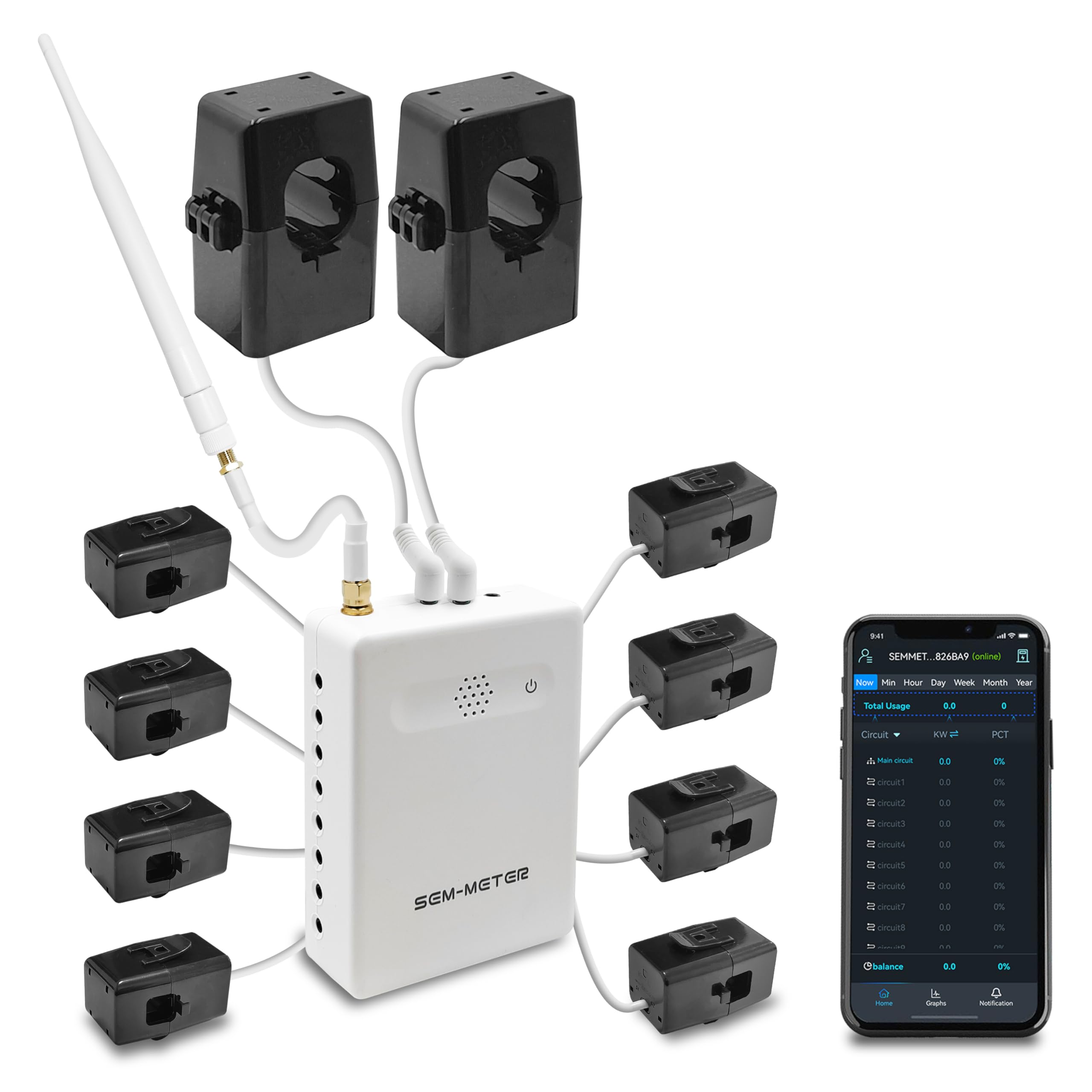
Smart Home Energy Monitor with 8 50A Circuit Level Sensors | Vue - Real Time Electricity Monitor/Meter | Solar/Net Metering - Amazon.com
View on AmazonFAQ: Tesla Powerwall in New Jersey
- How many Powerwalls do I need for a typical New Jersey home?
- For essential loads in a 2,000–2,500 sq ft home, one unit often suffices. For whole‑home backup—especially with central AC/heat pump—plan on two. Electric resistance heat or large well pumps may require additional capacity or careful load management.
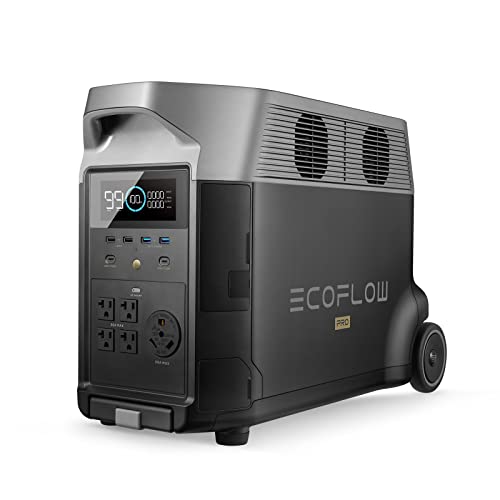
EF ECOFLOW Portable Power Station 3600Wh DELTA Pro, 120V AC Outlets x 5, 3600W, 2.7H Fast Charge, Lifepo4 Power Station, Solar Generator for Home Use, Power Outage, Camping, RV, Emergencies : Patio, Lawn & Garden
<strong>Fully recharge the lifepo4 battery in 1.8 hrs with 240V outlets(3000W), 2.7 hrs with 1800W wall outlets or solar charged in 2.8 hours with 4*400W solar panels</strong> thanks to the industry-l
Check Price on AmazonCan a Powerwall charge from the grid in New Jersey?
- Yes. Since the IRA, standalone storage qualifies for the federal ITC without a solar‑charging requirement. Most installers still set batteries to prioritize solar charging, especially if you have net metering, but grid charging can be used for TOU arbitrage where allowed by your tariff.
What’s the lifespan and warranty?
- Tesla provides a 10‑year warranty with an end‑of‑term capacity guarantee (commonly ~70%). Real‑world lifespan can exceed the warranty if daily cycling is moderate and temperatures are within spec. Keep batteries in conditioned or shaded spaces when possible.
Can I install a Powerwall outdoors in New Jersey?
- Yes, Powerwalls carry a weather‑resistant rating for outdoor wall or pad mounting. Protect from direct sun and allow winter clearance from snow/ice. Many New Jersey homeowners choose garages or basements for thermal stability.
How does a Powerwall compare to a generator for outages?
- Batteries are silent, instant, and maintenance‑light. Generators can run indefinitely with fuel, which can matter in week‑long outages. Hybrid strategies exist: a modest battery for instant backup plus a small generator for multi‑day events, so the generator runs fewer hours at high efficiency while the battery handles short interruptions.
Will I still get New Jersey SRECs with a battery?
- Solar incentives under the Successor Solar Incentive (SuSI) program are based on solar generation, not battery capacity. You can still earn solar incentive credits for production; the battery itself doesn’t create separate credits under current rules.
How long will a Powerwall run my home?
- Divide 13.5 kWh by your hourly load. If you average 1 kW (1 kWh/hour) during an outage, a single unit could run ~12–13 hours before solar recharging. With careful load management and daytime solar, multi‑day resilience is often achievable.
Forward look: what’s next in New Jersey
New Jersey’s 2,000 MW by 2030 energy storage target positions the state for more robust residential programs over the next few years as utilities complete smart meter deployments and the NJBPU finalizes incentive frameworks. Expect:
- More optional TOU rates and EV‑optimized tariffs that improve battery arbitrage value
- Growing opportunities for aggregated residential batteries to provide grid services (PJM market participation under FERC Order 2222), sharing revenues with homeowners
- Streamlined permitting and interconnection as municipalities and utilities gain experience with standardized battery installations
For now, the Tesla Powerwall in New Jersey is primarily a resilience and solar‑integration asset that benefits from federal incentives. If you can also leverage a TOU plan—or you value silent backup during increasingly volatile weather—it’s a strong, future‑ready addition to a New Jersey solar home.
Recommended Products
The Grid: The Fraying Wires Between Americans and Our Energy Future: Bakke, Gretchen
Cultural anthropologist Gretchen Bakke <strong>unveils the many facets of America's energy infrastructure, its most dynamic moments and its most stable ones, and its essential role in personal an
Smart Home Energy Monitor with 8 50A Circuit Level Sensors | Vue - Real Time Electricity Monitor/Meter | Solar/Net Metering - Amazon.com
Lightweight commercial 3-phase option available as a separate bundle. APPLICATION MONITORING WITHOUT GUISEWORK <strong>Up to sixteen (16) 50A sensors to accurately monitor your air conditioner, oven,
EF ECOFLOW Portable Power Station 3600Wh DELTA Pro, 120V AC Outlets x 5, 3600W, 2.7H Fast Charge, Lifepo4 Power Station, Solar Generator for Home Use, Power Outage, Camping, RV, Emergencies : Patio, Lawn & Garden
<strong>Fully recharge the lifepo4 battery in 1.8 hrs with 240V outlets(3000W), 2.7 hrs with 1800W wall outlets or solar charged in 2.8 hours with 4*400W solar panels</strong> thanks to the industry-l