
Tesla Powerwall in Delaware: Cost, Availability & Is It Worth It?

Delaware homeowners are asking whether a Tesla Powerwall in Delaware pencils out—especially as storms get more frequent and grid reliability is increasingly top of mind. The U.S. Energy Information Administration (EIA) reports average U.S. outage duration typically ranges 5–8 hours per customer per year when major events are included, with weather driving most interruptions. For many, the value of resilient backup is now as important as cutting the power bill. Below, we break down specs, pricing, incentives, rate structures, and real-world economics specific to Delaware.
By the numbers: Tesla Powerwall essentials
- Usable storage: 13.5 kWh per unit (Powerwall 2 and Powerwall 3)
- Continuous power: up to 11.5 kW (Powerwall 3); 5 kW (Powerwall 2)
- Peak surge capability: sufficient to start most central A/C and well pumps with Powerwall 3 (manufacturer data)
- Round-trip efficiency: ~90% (AC) under typical conditions (NREL-tested ranges for lithium-ion)
- Operating temperature: about -4°F to 122°F; performance throttles in extreme cold/heat
- Warranty: 10 years to 70% capacity, with unlimited cycles for solar self-consumption/time-based control per Tesla’s warranty documents
- Typical backup: 1 unit = essentials; 2–3 units = whole-home for average Delaware houses
Sources: Manufacturer specifications; National Renewable Energy Laboratory (NREL) testing on Li-ion efficiencies; EIA reliability metrics.
Tesla Powerwall overview: specs, capacity, and how it works
Tesla’s Powerwall is a residential lithium-ion battery that stores surplus solar power or lower-cost grid power for use later. The system detects outages and switches to backup in ~100–200 milliseconds—fast enough that most electronics stay on.
Solar Electricity Handbook - 2023 Edition: A simple, practical guide to solar energy – designing and installing solar photovoltaic systems: Boxwell, Michael
Solar Electricity Handbook - 2023 Edition: <strong>A simple, practical guide to solar energy – designing and installing solar photovoltaic systems</strong> [Boxwell, Michael] on Amazon.com. *FREE* shi
Check Price on Amazon- Powerwall 2 is AC-coupled: It connects to your home’s AC panel and works with virtually any solar inverter. Continuous output is 5 kW per unit.
- Powerwall 3 is DC-coupled with an integrated solar inverter: It can take PV strings directly and deliver up to 11.5 kW of continuous power, which helps run larger loads during outages. It simplifies new solar+storage installs by reducing the number of separate boxes and can lower balance-of-system costs.
Capacity vs. power is key: capacity (kWh) is how much energy you can store; power (kW) is how fast you can deliver it. A single 13.5 kWh unit can run a 1.5 kW refrigerator, lights, router, and a few outlets for most of a day—but if your HVAC draws 4–6 kW continuously, you may need multiple units or load management. Many Delaware homes pair two Powerwalls for both resilience and meaningful bill savings with time-based control.
For a deeper dive into hardware generations, wiring topologies, and app features, see our broader overview: Tesla Powerwall: Complete Buyer’s Guide — Cost, Installation & Alternatives.
Powerwall pricing in Delaware including installation costs
Installed pricing varies with site complexity, whether you’re adding to existing solar or building a new solar+storage system, and whether you need service-panel upgrades. Based on installer quotes across the Mid-Atlantic in 2024, typical ballpark pricing is:
- 1 Powerwall (turnkey, retrofit): $12,000–$16,000 before incentives
- Additional units on the same job: $7,500–$9,500 each before incentives
- Gateway or Backup Switch, permits, engineering, and labor are included in these ranges
Delaware’s 0% state sales tax is a quiet advantage—neighboring states often add hundreds of dollars in tax to similar installs. If you qualify for the 30% federal Residential Clean Energy Credit (Internal Revenue Code §25D), your net cost drops substantially:
- Single-unit example: $14,000 gross − 30% ITC = $9,800 net
- Two units example: $23,000 gross − 30% ITC = $16,100 net
Costs can be lower when the Powerwall 3 replaces a separate solar inverter on new builds, or higher if main service panel upgrades and trenching are required. Rural properties on the Delaware Electric Cooperative (DEC) may have longer wire runs; urban properties in New Castle County sometimes need load-calculation signoffs that add design time.
Delaware battery storage incentives: state rebates, SGIP, utility programs
- Federal 30% ITC (Residential Clean Energy Credit): Since 2023, standalone batteries of 3 kWh+ qualify for the full 30% credit without needing to be charged only from solar (U.S. Treasury/IRS guidance pursuant to the Inflation Reduction Act). This is the primary financial incentive for batteries in Delaware.
- Statewide rebates: As of late 2024, Delaware does not offer a statewide, storage-specific rebate akin to California’s SGIP. The Database of State Incentives for Renewables & Efficiency (DSIRE) and the Delaware Sustainable Energy Utility list PV rebates and grants historically, but storage rebates have not been broadly available. Check for utility pilots.
- Utility programs: Some municipal utilities and co-ops run demand response or “peak-shaving” alerts (e.g., DEC’s Beat the Peak). While not a direct storage rebate, these programs can align with battery scheduling to lower bills if your tariff has peak pricing or demand components. Availability and compensation vary by utility; call customer service or review the latest tariff sheets.
- Sales/property tax: Delaware has no state sales tax, and there is no known battery-specific property tax adder. Local property tax treatment of solar/battery improvements should be confirmed with your county assessor.
Bottom line: In Delaware, the 30% federal credit is the big lever. Keep an eye on utility pilots—small enrollment programs for batteries sometimes open with limited capacity and can add meaningful savings.
How the Powerwall pairs with solar in Delaware: backup vs. self-consumption
Delaware has long supported net metering, allowing most residential customers to export excess solar to the grid and receive credits. When net metering credits are close to the retail rate, the economic case for “self-consumption” (using a battery to avoid exports) is weaker than in states with low export compensation. However, batteries still add value in three ways:
Backup power: Outage protection is the most tangible benefit. One Powerwall can keep essentials on; two or more can support central A/C, sump pumps, and well pumps, which matters during hurricane remnants and nor’easters common to the Mid-Atlantic.
Time-based control: If your utility offers a time-of-use (TOU) plan or seasonal peak pricing, the Powerwall can charge off-peak and discharge on-peak (often called arbitrage). Even with modest TOU spreads (e.g., 10–15¢/kWh between off-peak and peak), a daily 10 kWh discharge can produce $1–$1.50/day in gross savings—$365–$550/year before efficiency losses. Larger spreads yield more.
Solar clipping and inverter constraints: On sunny spring days, PV output can exceed your inverter’s AC rating (“clipping”). A DC-coupled Powerwall 3 can capture some of that surplus before it’s lost, slightly boosting total solar harvest.
If you’re planning solar, Delaware-specific pricing, incentives, and top installers are here: Solar in Delaware: Costs, Incentives & Top Installers (2026).
Delaware utility rate structures and how Powerwall saves with time-of-use
- Delmarva Power (investor-owned): Most residential customers are on a standard bundled rate. Optional EV/TOU pilots have been offered in some Mid-Atlantic territories; if a Delaware TOU or EV off-peak plan is available, a Powerwall can amplify savings by shifting 8–12 kWh/day from off-peak to peak periods.
- Delaware Electric Cooperative (DEC): Historically has promoted “Beat the Peak” alerts to reduce demand during system peaks. While not a formal TOU tariff, customers who shift usage away from peaks help keep co-op wholesale costs down. A battery scheduled to discharge during peak alerts can reduce your contribution to system costs and may indirectly lower bills if you are on a demand component or a seasonal peak rate.
- Municipal utilities (DEMEC members such as Newark or Dover): Tariffs vary. Some munis include seasonal or time-differentiated rates, and a few have residential demand charges. Batteries can be very effective on any tariff with a demand component by shaving the top 15-minute peaks.
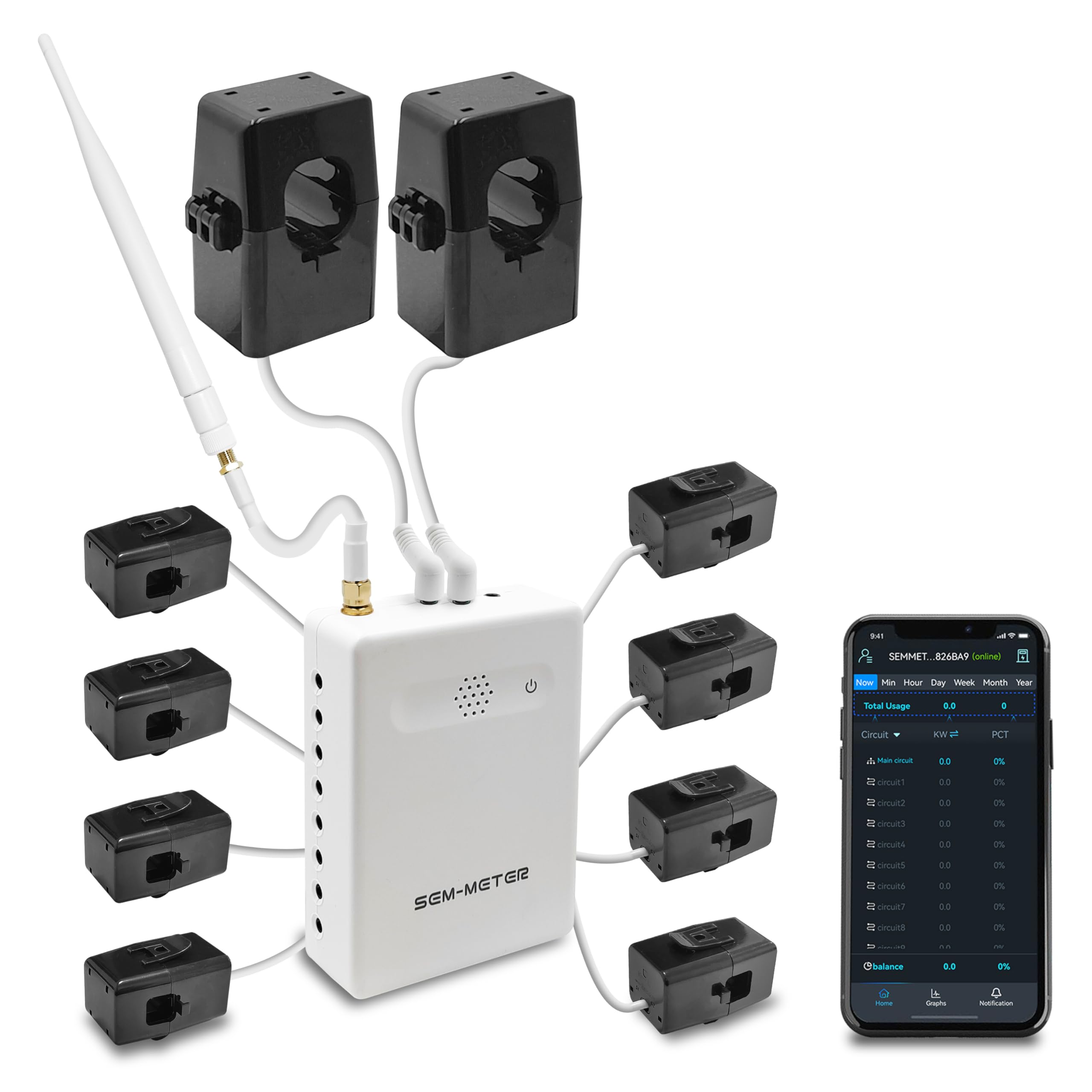
Smart Home Energy Monitor with 8 50A Circuit Level Sensors | Vue - Real Time Electricity Monitor/Meter | Solar/Net Metering - Amazon.com
View on AmazonModeling savings:
- Fixed-rate tariff: Expect most value from resilience; bill savings are modest unless you avoid high-demand events or leverage smart load control.
- TOU tariff with 12¢ spread and 90% round-trip efficiency: 10 kWh shifted/day × $0.12 × 365 ≈ $438/year gross, ≈$394 net after 10% losses.
- Demand-charge tariff (rare for DE residential): Shaving a 5 kW peak that occurs 10–15 times/month could save $20–$60/month depending on demand rates.
Always pull the latest tariff from your utility and ask your installer to run a 12-month interval-data model. Many Delaware smart meters can export Green Button data to support an accurate battery dispatch simulation.
Powerwall availability and certified installers in Delaware
Delaware is served by Tesla’s direct installation arm and a network of certified installers based in Delaware and neighboring Maryland, Pennsylvania, and New Jersey. Typical project timelines:
- 1–3 weeks: Site visit, load calculations, and design
- 2–6 weeks: Utility interconnection review and municipality permitting (New Castle, Kent, or Sussex County AHJs)
- 1–2 days: Installation and commissioning
What to look for in a bid:
- NABCEP-certified PV/Storage professional listed on the proposal
- Clear load management plan (what runs during outages, how many Powerwalls required, any smart panel or subpanel work)
- Explicit line items for permits, utility fees, and main panel upgrades
- Warranty and service response times (who you call if the Gateway throws an error in a storm)
If you’re getting quotes that bundle new PV, you can compare regional solar pricing and policy context here: Solar in Maryland: Costs, Incentives & Top Installers (2026) and our Delaware-specific solar guide linked above.
Alternatives to Powerwall available in Delaware: Enphase, LG, Generac
Healthy competition benefits homeowners. Consider these common alternatives that Delaware installers carry:
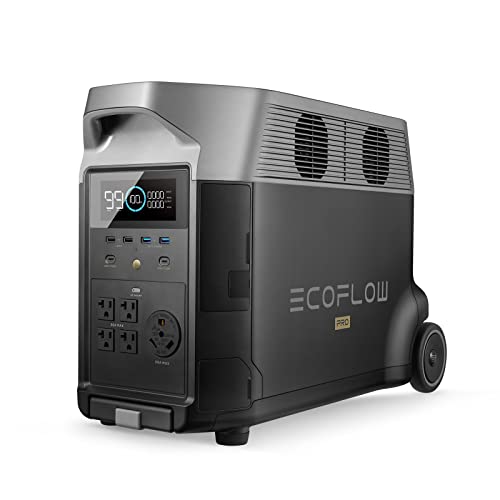
EF ECOFLOW Portable Power Station 3600Wh DELTA Pro, 120V AC Outlets x 5, 3600W, 2.7H Fast Charge, Lifepo4 Power Station, Solar Generator for Home Use, Power Outage, Camping, RV, Emergencies : Patio, Lawn & Garden
<strong>Fully recharge the lifepo4 battery in 1.8 hrs with 240V outlets(3000W), 2.7 hrs with 1800W wall outlets or solar charged in 2.8 hours with 4*400W solar panels</strong> thanks to the industry-l
Check Price on AmazonEnphase IQ Battery 5P/10T (AC-coupled): Pairs seamlessly with Enphase IQ8 microinverters common in Mid-Atlantic installs. Strong modularity and blackout performance with the Enpower switch. If your home already runs Enphase, this is often the cleanest retrofit. Based on recent efficiency testing and tight integration, the Enphase IQ Battery 5P represents strong value for Enphase microinverter homes.
LG ESS Home 8 (DC-coupled, hybrid inverter): 7.5–9.6 kW backup power depending on configuration. Good option for new builds where a hybrid inverter can simplify equipment. The LG ESS Home 8 offers competitive power output and a 10-year warranty backed by a Tier-1 manufacturer.
Panasonic EverVolt 2.0 (AC/DC options): Flexible configurations with robust temperature performance and a strong warranty. For coastal Delaware where humidity and salt air are considerations, the Panasonic EverVolt 2.0 is worth a look for outdoor-rated installs.
Generac PWRcell (DC-coupled): High-power backup with modular capacity. Some installers favor PWRcell for whole-home backup with large air conditioners; confirm current product availability and any recall/service bulletins with your contractor.
Comparison notes:
- AC-coupled batteries (Powerwall 2, Enphase 5P/10T) are easiest for retrofits.
- DC-coupled systems (Powerwall 3, LG ESS, PWRcell) can reduce conversion losses and simplify new solar+storage installs.
- Check continuous power ratings—backup performance often hinges more on kW than on kWh.
Practical design tips for Delaware homes
- Whole-home vs. essential loads: If you have central A/C, a well pump, and a sump pump, plan on two or more batteries or use a smart load panel to prioritize circuits.
- Location: Garage or conditioned spaces keep batteries within the optimal 32–86°F band. Outdoor-rated enclosures are fine, but output may throttle on very cold or hot days.
- Flood risk: In low-lying areas near the bays and rivers, mount batteries above base flood elevation and avoid basements with water intrusion history.
- Smart panels and controls: Products like smart load centers can stretch one battery further by shedding non-essential loads automatically.
Is a Tesla Powerwall in Delaware worth it?
It depends on your tariff, outage tolerance, and whether you’re adding solar. A reasonable rule of thumb:
- You value resilience: If you’ve had multi-hour outages or rely on sump/well pumps, the Powerwall’s resilience benefit often justifies the spend, especially after the 30% ITC.
- You have or can opt into TOU: A daily 8–12 kWh shift with a 10–15¢ spread can stack $300–$600/year in bill savings. Over 10 years, that offsets a significant share of net cost, alongside resilience value.
- You’re on flat rates and have few outages: Financial payback is slower; consider a smaller battery, smart load control, or alternatives.
For buyers comparing kWh-per-dollar strictly, Powerwall remains competitive in installed cost, particularly with Powerwall 3’s integrated inverter reducing equipment count on new systems.
FAQ: common questions about Tesla Powerwall in Delaware
Q: How many Powerwalls do I need in Delaware? A: One unit covers essential loads; two or more are typical for whole-home backup with central A/C, well, and sump pumps. Your installer will do a load calc and review starting currents for HVAC.
Q: Does Delaware have a battery rebate like California’s SGIP? A: No statewide storage rebate as of late 2024. Most homeowners pair the 30% federal ITC with any applicable utility TOU or demand program.
Q: Can I get the 30% federal credit if I don’t have solar? A: Yes. Since 2023, standalone batteries of 3 kWh+ qualify for the 30% Residential Clean Energy Credit, regardless of energy source, per IRS guidance implementing the Inflation Reduction Act.
Q: How does net metering affect the value of a Powerwall in Delaware? A: If your export credits are close to retail, the battery’s self-consumption value is lower. Savings then hinge on TOU spreads, demand components, and resilience.
Q: Will a Powerwall keep my solar running in an outage? A: Yes—when installed with Tesla’s Backup Gateway (or the integrated backup in Powerwall 3). It isolates your home from the grid (anti-islanding) and forms a “microgrid” so PV can keep charging the battery.
Q: How long will a Powerwall run my home? A: Divide battery capacity by your load. Example: 13.5 kWh ÷ 1.2 kW essential loads ≈ 11 hours. With two units or daytime solar, outage runtime extends significantly.
Q: Are there Delaware-specific permitting hurdles? A: Requirements vary by county/city, but batteries are widely permitted. Expect an electrical permit, updated one-line diagram, and utility interconnection review when paired with PV.
Q: What about noise and maintenance? A: Powerwalls are quiet (a faint fan). Maintenance is minimal—keep vents clear and software updated via Wi‑Fi.
Q: Can I join a Tesla Virtual Power Plant (VPP) in Delaware? A: As of 2024, Tesla VPPs are active in a handful of states and utilities. None are widely available in Delaware yet; check Tesla’s app for updates.
Q: What’s the lifespan? A: The warranty guarantees 70% of original capacity at year 10. Field data on modern Li-ion home batteries suggests practical life often extends beyond the warranty when kept within normal operating temperatures.
What this means for Delaware homeowners
- If outage protection is a priority, a Powerwall delivers immediate resilience and qualifies for the 30% federal credit.
- If you can enroll in a TOU or have seasonal peak pricing, model time-based control—savings can be material in Delaware’s rate context.
- For new solar builds, the Powerwall 3’s integrated inverter can reduce equipment count and soft costs, improving economics.
Next steps: Get interval data from your smart meter, ask installers for a 12-month dispatch model under your actual tariff, and compare bids that include load management strategies. For a broader buying framework (including when alternatives may fit better), see our Tesla Powerwall: Complete Buyer’s Guide — Cost, Installation & Alternatives and Delaware’s solar market overview: Solar in Delaware: Costs, Incentives & Top Installers (2026).
Recommended Products
Solar Electricity Handbook - 2023 Edition: A simple, practical guide to solar energy – designing and installing solar photovoltaic systems: Boxwell, Michael
Solar Electricity Handbook - 2023 Edition: <strong>A simple, practical guide to solar energy – designing and installing solar photovoltaic systems</strong> [Boxwell, Michael] on Amazon.com. *FREE* shi
Smart Home Energy Monitor with 8 50A Circuit Level Sensors | Vue - Real Time Electricity Monitor/Meter | Solar/Net Metering - Amazon.com
Lightweight commercial 3-phase option available as a separate bundle. APPLICATION MONITORING WITHOUT GUISEWORK <strong>Up to sixteen (16) 50A sensors to accurately monitor your air conditioner, oven,
EF ECOFLOW Portable Power Station 3600Wh DELTA Pro, 120V AC Outlets x 5, 3600W, 2.7H Fast Charge, Lifepo4 Power Station, Solar Generator for Home Use, Power Outage, Camping, RV, Emergencies : Patio, Lawn & Garden
<strong>Fully recharge the lifepo4 battery in 1.8 hrs with 240V outlets(3000W), 2.7 hrs with 1800W wall outlets or solar charged in 2.8 hours with 4*400W solar panels</strong> thanks to the industry-l