
Tesla Solar in California: Panels, Roof & Pricing Guide (2026)
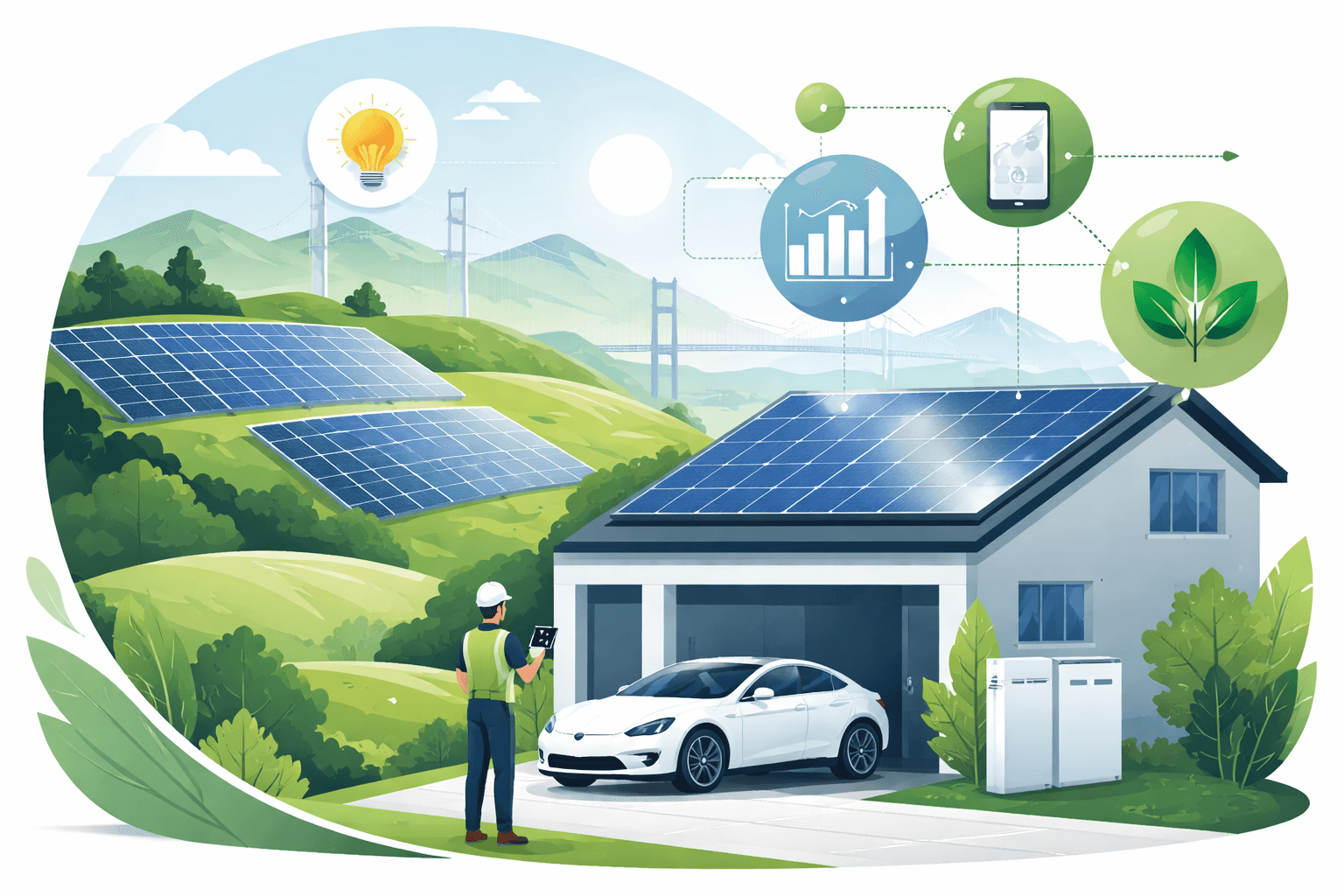
California added record solar and storage in the past two years, with SEIA estimating more than 45 GW of cumulative solar installed statewide by late 2024 and CAISO reporting over 10 GW of grid-scale batteries online by mid‑2024. That grid context matters for homeowners: under California’s Net Billing Tariff (NEM 3.0), daytime export values have fallen to a few cents per kWh in many hours, while evening power remains pricey. The upshot for Tesla Solar in California is clear—pairing panels with a battery like Powerwall to shift solar to evening use now drives most of the savings.
This 2026 guide covers Tesla panels, Solar Roof, current pricing, how installation works, the incentives that still move the math, and how Tesla stacks up against local installers under NEM 3.0. If you want a broader market view (equipment options, statewide incentives, and installer picks), see our state overview: Solar in California: Costs, Incentives & Top Installers (2026).
By the numbers: California rooftop solar and storage
- 26% of California’s electricity generation came from solar in 2023 (SEIA, Solar Market Insight 2024).
- 45+ GW of total solar capacity installed statewide through 2024, including utility-scale and distributed (SEIA).
- More than 10 GW of grid-scale batteries online by mid‑2024, frequently providing over 20% of evening peak capacity (CAISO).
- Typical export rates under NEM 3.0 average around $0.05–$0.08/kWh by season and hour, with rare evening peaks far higher (CPUC Net Billing Tariff, ACC values, 2023–2025 filings).
- Median installed price for U.S. residential PV in recent LBNL data clusters around $3.0–$4.0/W before incentives; California trends near the higher end due to labor and permitting but varies widely by market and equipment (LBNL Tracking the Sun, 2023–2024).
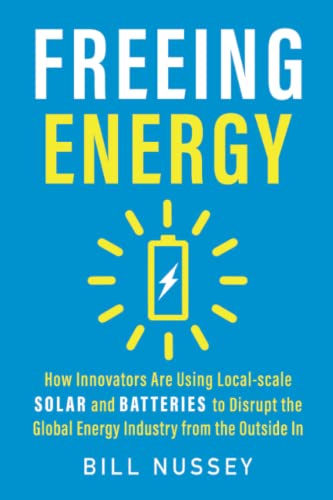
Freeing Energy: How Innovators Are Using Local-scale Solar and Batteries to Disrupt the Global Energy Industry from the Outside In: Nussey, Bill
Nussey is comprehensive and convincing in his portrayal of the relentless technological innovation driving down costs for small-scale solar and battery solutions, and the ability of these systems to i
Check Price on AmazonTesla Solar products available in California: panels, Solar Roof, and Powerwall bundles
Tesla sells two primary solar options in California:

EF ECOFLOW Smart Home Panel 2, the Center of the Whole
Alternatively connect <strong>3 x EcoFlow DELTA Pro 3 units with 6 x Extra Batteries for energy storage up to 36kWh</strong>. It's not just for longer backup but lets you to control and run every
Check Price on Amazon- Tesla Solar Panels (rack‑mounted): All‑black monocrystalline modules typically rated ~400–430 W, paired with Tesla’s string inverter or Powerwall 3’s integrated solar inverter. A low‑profile mounting system and concealed edge trim create a uniform look. Monitoring runs through the Tesla app.
- Tesla Solar Roof: Glass solar tiles replace conventional roofing, with active (energy‑producing) and inactive tiles integrated for a uniform aesthetic. Power electronics and wiring are routed under the roof system to maintain a clean look.
Most California quotes now emphasize bundling with Powerwall because NEM 3.0 rewards self‑consumption. Owners use daytime solar to charge the battery and then run the home during peak evening rates.
- Powerwall (current generation): 13.5 kWh usable capacity per unit, indoor/outdoor rated, with a 10‑year warranty to 70% capacity when used for daily cycling. The latest models integrate a solar inverter to reduce equipment count and simplify installation. The Tesla app manages time‑of‑use arbitrage, backup reserve levels, and storm watch features.
When a Tesla Solar array is paired with Powerwall in California, the control strategy typically prioritizes on‑site use during highest TOU periods (e.g., 4–9 pm), minimizing low‑value exports and reducing grid imports when electricity is most expensive.
For a deeper dive on storage economics, Powerwall specs, and California‑specific program details, see: Tesla Powerwall in California: Cost, Availability & Is It Worth It?
Tesla Solar pricing in California: panels vs. Solar Roof cost comparison
Pricing varies with roof complexity, electrical upgrades, and equipment. Based on recent market data and buyer quotes through late 2024, here’s how Tesla Solar in California typically lands before incentives:
- Tesla Solar Panels (roof‑mounted): Roughly $2.25–$3.25/W before incentives for straightforward projects. Complex roofs, main panel upgrades, long conduit runs, and premium racking add cost.
- Tesla Solar Roof: Project‑specific and best treated as “roof + solar” rather than pure $/W. Total project costs often land 1.5–3.0× higher than a standard reroof plus rack‑mounted PV, depending on roof size, pitch, and the fraction of active tiles. Many California homeowners report all‑in Solar Roof quotes in the $60,000–$120,000+ range before incentives for typical suburban homes; larger or complex roofs can exceed that.
How does this compare to the broader California market? Recent LBNL Tracking the Sun data places median residential PV prices around $3.0–$4.0/W nationally, with California often near the upper end due to labor and permitting. Competitive local installers may quote $3.00–$4.50/W for high‑efficiency panels plus premium inverters. Tesla’s pricing tends to be aggressive on standard panel systems but can rise for nonstandard roofs or long service upgrades.
Important context under NEM 3.0: The value of kilowatt‑hours you self‑consume is now greater than the value of kWh you export. A $/W comparison should include:
- Battery adders: Powerwall equipment plus installation typically adds $10,000–$16,000 for the first unit, less for additional units if installed together. Affordability can improve with California’s Self‑Generation Incentive Program (SGIP) and the 30% federal tax credit.
- Time‑of‑use rates: Evening rates of $0.30–$0.60/kWh (varies by utility and season) reward battery‑backed self‑consumption much more than daytime exports worth a few cents.
How to order Tesla Solar in California: timeline, site assessment, and installation
Tesla’s online process is standardized, but city and utility timelines differ. A typical path:
- Online design and quote
- Enter your address and historical usage. Tesla’s tool sizes a system, estimates production using irradiance modeling (e.g., PVWatts‑like methods), and suggests Powerwall units based on loads and backup goals.
- You can adjust system size and battery count; a revised estimate updates savings under NEM 3.0 and TOU rates.
- Remote/onsite assessment
- Tesla or a partner team confirms roof dimensions, shading, main panel rating, and any clearance issues for equipment placement.
- If your service panel is undersized for solar + storage (common in older California homes), expect a main panel upgrade or load management device.
- Final design, permits, and interconnection
- Detailed plans are stamped for your Authority Having Jurisdiction (AHJ) building department and submitted for utility interconnection (PG&E, SCE, SDG&E, LADWP, etc.).
- Permit and utility review can take 2–6+ weeks depending on backlog. Many California AHJs have streamlined solar permitting; storage permits can still add time.
- Installation day(s)
- Typical rack‑mounted PV installs complete in 1–2 days; adding Powerwall can extend to 2–3 days if a main panel upgrade is required. Solar Roof jobs are more variable—often a week or longer.
- Inspection and Permission to Operate (PTO)
- City inspection plus utility PTO adds 1–4 weeks under normal conditions. In high‑volume periods, plan for longer.
Total timeline: 6–12 weeks for straightforward panel + Powerwall jobs; 10–16+ weeks for Solar Roof or projects requiring significant electrical work. Weather, AHJ scheduling, and utility queues are the big variables.
California solar incentives that apply to Tesla installations
- Federal Investment Tax Credit (ITC): 30% for qualified solar and storage projects placed in service through at least 2032 (U.S. Treasury/IRS guidance). Stand‑alone batteries also qualify at 30% if they meet capacity and use criteria.
- California Self‑Generation Incentive Program (SGIP): Upfront incentives for behind‑the‑meter batteries. Equity and Equity Resiliency tiers can cover a substantial share of Powerwall costs for eligible customers (e.g., medical baseline, high fire‑threat districts, or low‑income). General Market incentive levels are lower and funding availability varies by utility. Check current step and waitlist status with your Program Administrator (CPUC‑administered).
- Property tax exclusion: California continues to exclude the added value of an active solar energy system from property tax assessments (state Board of Equalization; timelines subject to legislative renewal, historically extended).
- Local rebates and financing: Some municipal utilities and CCAs offer rebates or on‑bill financing for storage and electrification measures that pair well with solar.
- NEM 3.0 (Net Billing Tariff): Not an incentive per se, but the export rate structure dictates economics. ACC‑based export rates vary by hour, month, and utility; expect low daytime export values and occasional evening peaks. Batteries improve bill savings by shifting solar to high‑value periods.
If you’re evaluating batteries first or considering staged installation, see our guide: Tesla Powerwall in California: Cost, Availability & Is It Worth It?
Tesla Solar reviews from California customers: what owners actually report
Themes we see consistently in verified owner feedback, public forums, and consumer surveys:
What owners like
- Aesthetics: Uniform, all‑black panels and tidy conduit runs. Solar Roof owners praise the curb appeal when replacing aging roofs.
- Price for standard jobs: Tesla is often among the lowest quotes for simple, medium‑size systems.
- App and ecosystem: Single app for solar, Powerwall, and EVs, with smart TOU control and storm‑watch features.
- Quiet operations and reliability: Few moving parts; remote diagnostics for inverters and batteries.
Common pain points
- Scheduling and communication: Centralized scheduling can lead to reschedules; customer service response times vary by region.
- Roof or electrical complexity: Nonstandard roofs, tile retrofits, and main panel upgrades can increase cost and timeline.
- Change orders: Site surprises (conduit pathways, structural upgrades) may lead to adders.
Performance under NEM 3.0
- Solar‑only systems still cut bills but deliver longer paybacks when most production exports at low value.
- Solar + Powerwall improves savings by shifting to evening peaks; the best outcomes combine right‑sized arrays, adequate battery capacity, and optimized TOU settings.
Tesla vs. local California installers: pros, cons, and price comparison
Tesla advantages
- Pricing power: For standard roof‑mounted arrays, Tesla’s $/W is often at or below market medians.
- Integrated storage: Tight hardware‑software integration with Powerwall and the Tesla app.
- Streamlined design: Fewer SKUs, simplified racking, and (with newer Powerwall) integrated inverter can reduce balance‑of‑system costs.
Local installer advantages
- Equipment flexibility: Microinverters (e.g., Enphase IQ8) or DC optimizers (e.g., SolarEdge) tailored to complex roofs and partial shading.
- Service model: Dedicated project managers, faster site visits, and local AHJ/utility familiarity can shorten timelines.
- Premium panels and warranties: Some offer modules like REC Alpha Pure or Qcells with strong performance guarantees and local service relationships.
Price comparison ranges in California (before incentives)
- Tesla panels: ~$2.25–$3.25/W for standard projects; Powerwall adders ~$10k–$16k for the first unit.
- Local installers: ~$3.00–$4.50/W for premium equipment and custom electrical work; battery adders vary, often similar or slightly higher depending on brand and labor.
Which to choose?
- Simple roof, price‑sensitive, want Tesla ecosystem: Tesla often wins on cost and app cohesion.
- Complex roof, heavy shade, want microinverters or specific modules: A reputable local installer may offer better production and long‑term service, even at a higher upfront cost.
Based on efficiency and field reliability data from manufacturers and third‑party testing, two value‑forward alternatives many California homeowners consider are the Enphase IQ8 Microinverters for shade‑tolerant designs and the Qcells Q.TRON/G4+ panels for high efficiency at attractive price points. If you’re pairing solar with whole‑home electrification, a smart panel like Span Panel can optimize backup loads with Powerwall and may defer a costly main panel upgrade in smaller homes.
Tesla Solar warranty and what it covers in California
- Panels: 25‑year performance warranty, typically guaranteeing ~80–85% of nameplate output at year 25, and a 10–12‑year product/materials warranty depending on module model.
- Inverter: Tesla’s stand‑alone solar inverter carries a limited warranty commonly around 12.5 years. For Powerwall‑integrated inverters, coverage tracks the Powerwall warranty terms.
- Powerwall: 10 years of coverage to 70% retained capacity for daily cycling, with throughput terms that effectively support daily time‑of‑use shifting in residential use.
- Workmanship: Tesla advertises a workmanship warranty (often 10 years) covering roof penetrations and installation defects; confirm terms on your final contract.
- Solar Roof: The tempered glass tiles carry long material and weatherization warranties (up to 25 years for weatherization in many contracts), plus 25‑year power production coverage on active tiles. Because contract language can evolve, carefully review the current agreement.
Always confirm the exact warranty documents at purchase; Tesla has updated terms across product generations.
FAQ: common questions about Tesla Solar in California
How does NEM 3.0 change the economics?
- Exports during sunny hours are worth far less than retail prices—often just a few cents per kWh. Self‑consuming solar and shifting energy to evenings with a battery increases savings. CPUC’s ACC‑based export values vary widely by hour/month, so modeling with your actual TOU rate is critical.

Emporia Gen 2 Smart Home Energy Monitor with 16 50A Circuit Level Sensors | Real Time Electricity Monitor/Meter | Solar/Net Metering - Amazon.com
View on AmazonWhat size system do I need?
- Start with 12 months of usage (kWh) and your utility’s TOU schedule. Under NEM 3.0, slightly undersizing the array and adding storage often produces better bill outcomes than oversizing a solar‑only system that exports lots of daytime kWh at low value.
How many Powerwalls should I get?
- Many 2,000–2,500 sq. ft. homes pair 1–2 units (13.5–27 kWh). One unit covers lighting, refrigeration, networking, and some HVAC cycling; two units handle heavier evening loads and small central ACs more comfortably. Critical loads panels or smart load management (e.g., Span) can stretch backup time.
What about wildfire outages and Public Safety Power Shutoffs (PSPS)?
- Powerwall provides automatic backup. Solar will recharge the battery during daylight even when the grid is down (subject to inverter and system configuration). Consider at least one Powerwall if you live in high fire‑threat areas.
Can I add Powerwall later?
- Yes. Many California homeowners stage installations: start with solar, then add storage when SGIP funding or budget allows. Staging can add labor costs; bundling may qualify for better pricing.
What maintenance is required?
- Panels are low‑maintenance. Light rain usually handles dust; coastal salt spray or heavy pollen may warrant an occasional rinse. The Tesla app will surface production anomalies. Batteries require no routine maintenance.
Will my HOA approve Tesla Solar or Solar Roof?
- California’s Solar Rights Act limits HOA restrictions that significantly increase cost or decrease performance. Aesthetics reviews are permitted but cannot create unreasonable barriers. Tesla’s low‑profile designs typically meet HOA guidelines.
What is the typical payback in 2026?
- Paybacks vary widely by utility and TOU plan. Under NEM 3.0, solar‑only systems may run longer (often 9–14 years), while solar + storage can be similar or better (8–12 years) depending on system sizing, SGIP eligibility, and TOU spread. Use a personalized model with utility‑specific rates.
Does Tesla coordinate permits and PTO in California?
- Yes. Tesla manages AHJ permits and utility interconnection. Expect faster timelines in jurisdictions with online solar permitting; storage permits and main panel upgrades typically add time.
Can Tesla Solar integrate with EV charging and whole‑home electrification?
- Yes. The Tesla app coordinates solar, storage, and EV charging. Time‑based charging with excess solar and peak‑shaving strategies can lower fuel cost per mile. Adding a smart load center can further optimize.
Practical takeaways for California homeowners
- Under NEM 3.0, design for self‑consumption: Right‑size the array, add storage if budget allows, and enable TOU automation in the Tesla app.
- Price check locally: Get at least two non‑Tesla quotes. Microinverter‑based systems can outperform on complex roofs; Tesla’s integrated approach wins on simplicity and cost for standard roofs.
- Leverage incentives: The 30% ITC plus SGIP (where eligible) can materially improve project economics for Powerwall bundles.
- Plan the electrical scope early: Verify main panel rating, conduit paths, and equipment locations during site assessment to avoid change orders.
Where the market is headed
- California’s evening peaks will keep rewarding storage. As grid‑scale batteries grow and utilities refine TOU windows, software‑defined home energy systems will matter more than raw panel wattage. Tesla’s integrated stack is well positioned, and so are local installers that pair high‑efficiency modules with advanced inverters and smart panels. Expect ongoing price competition—and better outcomes for homeowners who compare both.
If you’re just getting started or want state‑specific installer options beyond Tesla, bookmark our guide: Solar in California: Costs, Incentives & Top Installers (2026).
Recommended Products
Freeing Energy: How Innovators Are Using Local-scale Solar and Batteries to Disrupt the Global Energy Industry from the Outside In: Nussey, Bill
Nussey is comprehensive and convincing in his portrayal of the relentless technological innovation driving down costs for small-scale solar and battery solutions, and the ability of these systems to i
EF ECOFLOW Smart Home Panel 2, the Center of the Whole
Alternatively connect <strong>3 x EcoFlow DELTA Pro 3 units with 6 x Extra Batteries for energy storage up to 36kWh</strong>. It's not just for longer backup but lets you to control and run every
Emporia Gen 2 Smart Home Energy Monitor with 16 50A Circuit Level Sensors | Real Time Electricity Monitor/Meter | Solar/Net Metering - Amazon.com
See how much electricity your home is using anywhere, anytime. ... <strong>Add individual 50A sensors to your Vue to monitor up to 16 individual circuits</strong> — providing accurate energy use for t