
Tesla Solar in Texas: Panels, Roof & Pricing Guide (2026)

Texas added more utility-scale and rooftop solar in the last two years than any other state, and midday solar output in ERCOT repeatedly set new records above 20 GW in 2024 (ERCOT seasonal assessments). For homeowners, that momentum is translating into faster installs, more buyback plan options, and competitive pricing. If you’re comparing Tesla Solar in Texas—panels, Solar Roof, and Powerwall—this 2026 guide lays out pricing, incentives, timelines, warranties, and real owner feedback.
By the end, you should be able to estimate your total project cost, decide between Tesla panels and the Solar Roof, and understand how Texas incentives and buyback plans stack with the 30% federal tax credit.
By the Numbers: Texas + Tesla Solar
- Average installed price for rooftop solar in Texas: $2.30–$3.10/W before incentives for standard panels (EnergySage Marketplace data 2023–2024)
- Typical Tesla Solar panels quote in TX: commonly lands in the $2.30–$2.80/W range pre-credit, depending on roof complexity and array size (market quotes)
- Solar production in Texas: roughly 1,450–1,800 kWh per kW per year depending on location and tilt (NREL PVWatts)
- Dallas/Fort Worth ~1,500–1,600 kWh/kW-year; Austin/San Antonio ~1,550–1,650; El Paso ~1,750–1,850; Houston ~1,450–1,550
- Residential electricity price: ~14¢/kWh statewide average in 2023 (EIA)
- Federal tax credit (ITC): 30% for residential systems placed in service through 2032 (IRS/Inflation Reduction Act)
- Texas incentives that often apply: 100% property tax exemption on added value (Texas Tax Code 11.27) and sales tax exemption for solar energy devices (Texas Tax Code 151.355)
- Powerwall capacity: 13.5 kWh per unit; Powerwall 3 offers higher continuous output and an integrated solar inverter for new installs (Tesla product specs)

Solar Electricity Handbook - 2023 Edition: A simple, practical guide to solar energy – designing and installing solar photovoltaic systems: Boxwell, Michael
Solar Electricity Handbook - 2023 Edition: <strong>A simple, practical guide to solar energy – designing and installing solar photovoltaic systems</strong> [Boxwell, Michael] on Amazon.com. *FREE* shi
Check Price on AmazonTesla Solar in Texas: products you can buy
Tesla Solar panels (rooftop PV)
- Aesthetics: black-on-black modules with low-profile racking and skirted edges.
- Inverter: Tesla Inverter (common sizes: ~3.8–7.6 kWac per unit) or the integrated inverter in Powerwall 3 for new systems.
- Monitoring: Tesla app shows real-time solar, home usage, grid import/export, and storage.
Performance notes: Tesla sources Tier-1 modules with efficiencies typically around 20–22%. In most Texas cities, each 1 kWdc of panels will generate 1,450–1,800 kWh/year (NREL PVWatts), so a 10 kW system might produce ~15,000–18,000 kWh annually depending on your roof.
Tesla Solar Roof (building-integrated PV)
- Roofing + solar in one: active PV tiles interspersed with non-solar glass tiles.
- Best for: homes already replacing the roof and owners prioritizing aesthetics.
- Considerations: cost per watt is usually higher than panels; design is more complex; timelines can be longer because it’s a full roof replacement.
Powerwall bundles in Texas
- Powerwall 2: 13.5 kWh usable energy, 5 kW continuous output, 7 kW peak.
- Powerwall 3: 13.5 kWh usable energy with significantly higher power output and an integrated solar inverter for new installs (Tesla specs). Suitable for larger home loads and whole-home backup.
- Use cases in Texas: backup for storms and grid stress days, time-of-use arbitrage where applicable, and maximizing self-consumption under solar buyback plans.

EF ECOFLOW Smart Home Panel 2, the Center of the Whole
Alternatively connect <strong>3 x EcoFlow DELTA Pro 3 units with 6 x Extra Batteries for energy storage up to 36kWh</strong>. It's not just for longer backup but lets you to control and run every
Check Price on AmazonIf you’re exploring storage economics and model fits specific to Texas utilities and retail plans, see our in-depth state buyer’s guide: Tesla Powerwall in Texas: Cost, Availability & Is It Worth It?
Tesla Solar pricing in Texas: panels vs. Solar Roof
Typical Tesla panels pricing
- Common quote range in Texas: $2.30–$2.80 per watt (before incentives). Larger systems on simple, single-plane roofs trend toward the low end.
- Example: 10 kW system at $2.50/W = $25,000 before incentives.
- 30% federal ITC: -$7,500
- Texas sales tax exemption: avoids ~6.25–8.25% sales tax that would otherwise apply to eligible equipment (rate varies by locality)
- Net after ITC (illustrative): ~$17,500
Payback snapshot: At 1,600 kWh/kW-year and 14¢/kWh, a 10 kW array could offset ~16,000 kWh/year worth about $2,240 in year-one bill savings. With modest rate inflation (e.g., 2–3%/yr) and assuming you capture solid solar buyback credits for excess generation, simple payback typically lands around 7–11 years for panel-only systems in Texas. Actuals depend on your retail plan and self-consumption.
Tesla Solar Roof pricing (and when it pencils)
- Cost drivers: total roof area, number of planes/hips/valleys, percent of active tiles, and underlayment/structure needs.
- Market reality: For homes NOT already replacing their roof, Solar Roof usually runs 1.5–3.0x the cost of panels on an existing asphalt roof.
- Example comparison (illustrative for a 2,400 ft² roof needing replacement):
- New architectural asphalt roof: ~$10,000–$15,000 (varies widely)
- 10 kW Tesla panels at $2.60/W: ~$26,000 before ITC
- Combined (roof + panels): ~$36,000–$41,000 before ITC
- Tesla Solar Roof for same home: often $55,000–$90,000 before ITC, depending on design and active tile ratio
Solar Roof can make sense when you value integrated aesthetics and must replace your roof anyway. Otherwise, panels tend to deliver a lower cost per kWh produced.
Pro tip: If you’re combing through quotes across providers statewide, our curated market overview can help: Solar in Texas: Costs, Incentives & Top Installers (2026)
How to order Tesla Solar in Texas: timeline, site assessment, installation
- Online design and quote
- You’ll enter your address and recent electric bills; Tesla generates a preliminary design and production estimate using satellite imagery.
- Expect a small reservation deposit to proceed (Tesla has historically used a modest, refundable order fee).
- Remote assessment and final design
- Tesla verifies roof geometry, shading, electrical service size, and main panel capacity; they’ll adjust system size to match your annual usage and roof constraints.
- If you have an HOA, Texas law generally supports your right to install solar; HOAs can enforce reasonable restrictions but cannot prohibit solar outright in most cases (Texas Property Code 202.010). Provide design materials early, as HOAs often have a 30-day review window.
- Permitting and interconnection
- City permit requirements vary. In unincorporated areas, permitting may be minimal; in major metros (Austin, Dallas, Houston, San Antonio), plan for a standard electrical/structural permit.
- Your Transmission and Distribution Utility (TDU)—Oncor, CenterPoint, AEP Texas, TNMP—must approve interconnection. Approval can take 1–3 weeks after final documentation.
- Installation day(s)
- Panels: typically 1–2 days for a standard residential system; add 1 day for main panel upgrades.
- Solar Roof: often a full week or more, depending on roof complexity.
- Powerwall: 1 additional day per 1–2 units, especially if whole-home backup is configured.
- Inspection and Permission to Operate (PTO)
- City inspection usually occurs within a week of install completion (varies). TDU meter swap and PTO commonly arrive 1–3 weeks later.
- Total timeline (order to PTO): 6–12 weeks for straightforward panel jobs; 10–16+ weeks for Solar Roof or complex electrical work. Seasonal demand can extend schedules.
Texas solar incentives that apply to Tesla installations
Federal Investment Tax Credit (ITC) — 30%: Applies to Tesla panels, Solar Roof’s solar-generating components, and Powerwall IF it’s charged at least 75% by solar (IRS guidance). The credit is available for systems placed in service through 2032 under the Inflation Reduction Act.
Texas sales tax exemption: Solar energy devices are exempt from state and local sales tax under Texas Tax Code §151.355, lowering your upfront cost by roughly 6.25–8.25% of eligible equipment, depending on your locality.
100% property tax exemption on added value: Under Tax Code §11.27, Texas excludes the appraised value added by your solar installation from property taxes. Your taxable value doesn’t rise due to adding solar, which protects your operating savings.
Utility/retail solar buyback plans (no statewide net metering): Texas doesn’t mandate net metering. Instead, many competitive retail electric providers (REPs) in ERCOT offer solar buyback plans. Common structures include:
- Retail-rate credit for exports up to your monthly usage, with variable or fixed energy charges
- Credits at a set cents/kWh (often 6–15¢/kWh), sometimes with monthly true-ups
- Annual rollovers are rare; most plans settle monthly Check plan fine print: export caps, rollover rules, and whether credits offset only energy charges or the full bill. Municipals/co-ops have their own rules (e.g., Austin Energy uses a Value of Solar tariff; CPS Energy has had distinct solar programs). Always confirm current tariffs directly.
Local rebates and programs: Availability fluctuates. Austin Energy has historically offered a residential solar rebate and a Value of Solar credit; CPS Energy (San Antonio) has periodically offered residential PV incentives. Co-ops and muni utilities may run seasonal programs. Consult your utility and DSIRE (Database of State Incentives for Renewables & Efficiency) for current offerings.
Tesla Solar reviews from Texas customers: what owners report
Themes we consistently see in Texas owner feedback (Tesla forums, BBB filings, Reddit homeowner threads, marketplace reviews):
What owners like
- Clean aesthetics, especially on darker roofs; skirted modules look “OEM.”
- Seamless app for monitoring and Powerwall control; outage transitions are fast.
- Competitive pricing on straightforward roofs; bundled Powerwall pricing can be strong value versus third-party pairings.
What owners flag as challenges
- Scheduling and communication: peak seasons can bring delays from permitting to PTO; some installs are performed by subcontractors, and experience varies.
- Change orders for main panel upgrades or roof repairs can add cost/time if discovered late.
- Solar Roof queues can be longer and require more onsite coordination than panels.
Performance notes from Texas homes
- Production tracks NREL PVWatts fairly closely when shading is minimal. In Central and West Texas, 1,600–1,850 kWh/kW-year is common for well-sited arrays.
- During outages, a single Powerwall often backs up critical loads (refrigeration, lights, Wi-Fi). Whole-home backup usually needs 2–3+ units, especially for large HVAC and well pumps.
Tesla vs. local Texas installers: pros, cons, and price comparison
Tesla advantages
- Transparent, online-first pricing and standardized hardware.
- Strong storage integration—Powerwall is among the most field-proven residential batteries in North America.
- App experience and ecosystem simplicity (one vendor, one app).
Tesla tradeoffs
- Less system customization (module brand options, racking variety, module-level power electronics if not using Powerwall 3’s integrated inverter).
- Customer service can feel centralized; scheduling may flex with nationwide demand.
Local installer advantages
- Custom designs for complex roofs, east/west splits, shaded arrays with module-level optimizers (e.g., Enphase microinverters, SolarEdge power optimizers).
- Handholding through HOA and utility paperwork; familiarity with local REPs’ solar buyback nuances and city inspectors.
- Often faster service dispatch for post-install tweaks.
Local installer tradeoffs
- Pricing can be higher: Texas marketplace averages often span $2.50–$3.50/W before incentives for similar-size systems (EnergySage 2023–2024).
- App and monitoring experience differs by equipment stack; multi-vendor systems can be more fragmented.
Bottom line on price: On simple, single-plane roofs, Tesla frequently lands near the low end of Texas pricing. On complex roofs or when you need heavy customization, a quality local installer using Enphase or SolarEdge may match or beat performance even at a slightly higher price per watt—especially if they design around partial shading or multiple roof planes.
Affiliate tip: For homeowners prioritizing module-level optimization and third-party storage, the Enphase IQ Battery 10T paired with Enphase IQ8 microinverters is a widely adopted, high-reliability alternative. For load management and whole-home backup, a Span Smart Panel can reduce the number of batteries you need by prioritizing circuits.
Tesla Solar warranty and what it covers in Texas
- Panel performance warranty: 25 years, with output typically guaranteed to ~80–85% at year 25 (exact curve varies by module generation—check your agreement).
- Panel product warranty: commonly 10–12 years on materials and workmanship for modules and racking; Tesla provides a system warranty covering major components—verify your contract for current terms.
- Tesla Inverter: limited warranty commonly around 12.5 years (check your model’s datasheet).
- Powerwall: 10-year warranty. Powerwall 2 and 3 guarantee energy throughput/capacity retention suitable for daily cycling; specifics vary by model and application (self-consumption vs. backup-only).
- Solar Roof: limited lifetime roof tile warranty and 25-year power output warranty on active tiles; workmanship coverage specified in your order agreement.
Service in Texas: Warranty service is provided by Tesla or authorized partners. Response times vary by season and region; document issues in the Tesla app to open a service ticket and track progress.
FAQ: common questions about Tesla Solar in Texas
What size system do I need?
- Start with annual kWh usage. Many Texas homes consume 12,000–20,000+ kWh/year due to air conditioning. Divide by your city’s expected kWh/kW-year (e.g., 1,550 in Austin) to estimate DC kW. Example: 15,000 kWh/year ÷ 1,550 ≈ 9.7 kWdc.
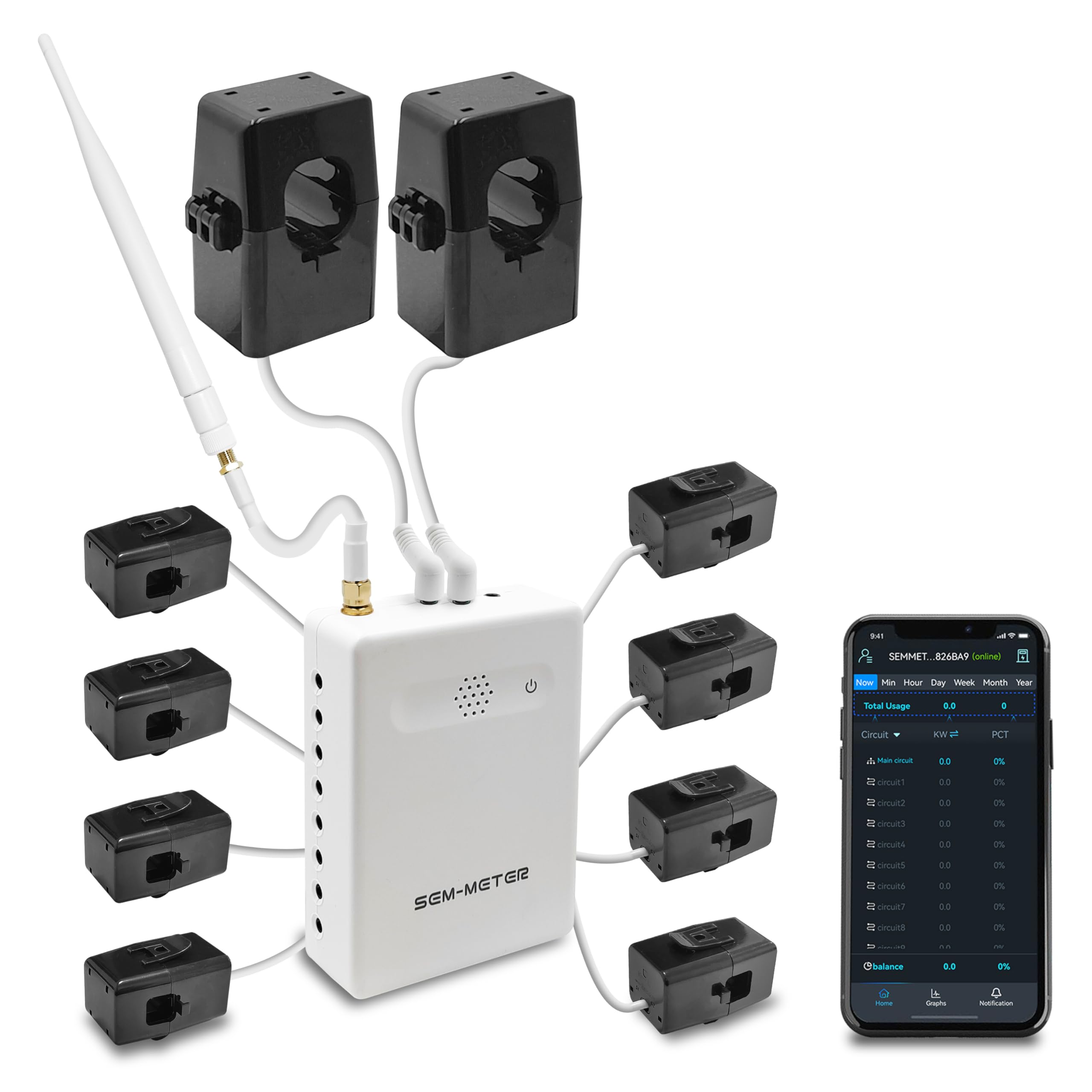
Smart Home Energy Monitor with 8 50A Circuit Level Sensors | Vue - Real Time Electricity Monitor/Meter | Solar/Net Metering - Amazon.com
View on AmazonDoes Tesla work with my utility and retail plan?
- In ERCOT, your TDU (Oncor, CenterPoint, AEP Texas, TNMP) handles interconnection and net meter setup. You then select a retail plan with a solar buyback if desired. In municipal/co-op territories (Austin Energy, CPS Energy, etc.), you’ll follow their specific policies.
Will I get true net metering?
- Texas has no statewide net metering. Many REPs offer near-retail credits up to your monthly usage, but credits may not roll over and may not offset fixed charges. Read the EFL (Electricity Facts Label) closely.
How many Powerwalls do I need in Texas?
- For critical loads (fridge, lights, outlets, Wi-Fi), 1 Powerwall may suffice. For central AC, well pumps, or whole-home backup, plan on 2–3+. Powerwall 3’s higher power output can reduce total units needed for large loads.
Can HOAs stop me from installing?
- Generally no. Texas law (Property Code 202.010) protects your right to install, with reasonable restrictions on placement and aesthetics. Some exceptions apply (e.g., historic districts, common areas). Submit a complete packet early to meet review windows.
What roof types work best?
- Asphalt shingle is fastest and cheapest to mount. Standing seam metal is excellent (no roof penetrations). Tile works too but may need extra labor or replacement tiles. Very old or brittle roofs may require re-roofing before solar.
Is the Solar Roof worth it?
- It’s a fit if you already need a new roof and value the integrated look. On a sound roof, standard panels almost always deliver a lower cost per kWh and faster payback.
How long from order to PTO in Texas?
- Typical panel projects: 6–12 weeks. Solar Roof or complex electrical upgrades: 10–16+ weeks. Demand spikes in spring/summer can extend timelines.
Can I stack incentives with the ITC?
- Yes. The 30% federal ITC stacks with Texas’s sales tax exemption and property tax exemption. Local utility rebates generally also stack but can affect the tax credit basis—confirm with a tax professional.
Affiliate tip: If you want to track real-time usage and optimize self-consumption under Texas buyback plans, the Emporia Vue Energy Monitor is a cost-effective add-on that helps you shift large loads (EV charging, laundry) into solar hours.
Practical steps for Texas homeowners
- Get at least two quotes: one from Tesla and one from a reputable local installer using Enphase or SolarEdge. Confirm equipment, warranty, and line-item costs.
- Ask about your main service panel: Many Texas homes have 150A–200A panels; EVs and heat pumps may necessitate an upgrade. Consider a smart panel to manage big loads.
- Model your buyback plan: Compare at least two REP solar plans with your expected monthly exports. The best plan for you depends on your midday/export profile.
- Consider future electrification: If you’ll add an EV or heat pump in 1–3 years, size the array and storage with that in mind—now is cheaper than a later retrofit.
Where this is heading in Texas
ERCOT’s rapid midday solar growth is already reshaping retail plans, with more REPs introducing solar-friendly buybacks and time-of-use structures. As storage costs continue to fall and Powerwall 3 rolls out more broadly, expect more whole-home backup designs and higher self-consumption strategies—especially in areas with lower export credits. For many Texas homes, the most economical path in 2026 will be a well-sized Tesla panel system paired with one or two batteries, tuned to your summer afternoon loads and retail rate details.
Want a broader comparison set before you order? Browse our state market snapshot: Solar in Texas: Costs, Incentives & Top Installers (2026)
And if backup is a priority, dive deeper here: Tesla Powerwall in Texas: Cost, Availability & Is It Worth It?
Recommended Products
Solar Electricity Handbook - 2023 Edition: A simple, practical guide to solar energy – designing and installing solar photovoltaic systems: Boxwell, Michael
Solar Electricity Handbook - 2023 Edition: <strong>A simple, practical guide to solar energy – designing and installing solar photovoltaic systems</strong> [Boxwell, Michael] on Amazon.com. *FREE* shi
Smart Home Energy Monitor with 8 50A Circuit Level Sensors | Vue - Real Time Electricity Monitor/Meter | Solar/Net Metering - Amazon.com
Lightweight commercial 3-phase option available as a separate bundle. APPLICATION MONITORING WITHOUT GUISEWORK <strong>Up to sixteen (16) 50A sensors to accurately monitor your air conditioner, oven,
EF ECOFLOW Smart Home Panel 2, the Center of the Whole
Alternatively connect <strong>3 x EcoFlow DELTA Pro 3 units with 6 x Extra Batteries for energy storage up to 36kWh</strong>. It's not just for longer backup but lets you to control and run every