
Tesla Powerwall in California: Cost, Availability & Is It Worth It?
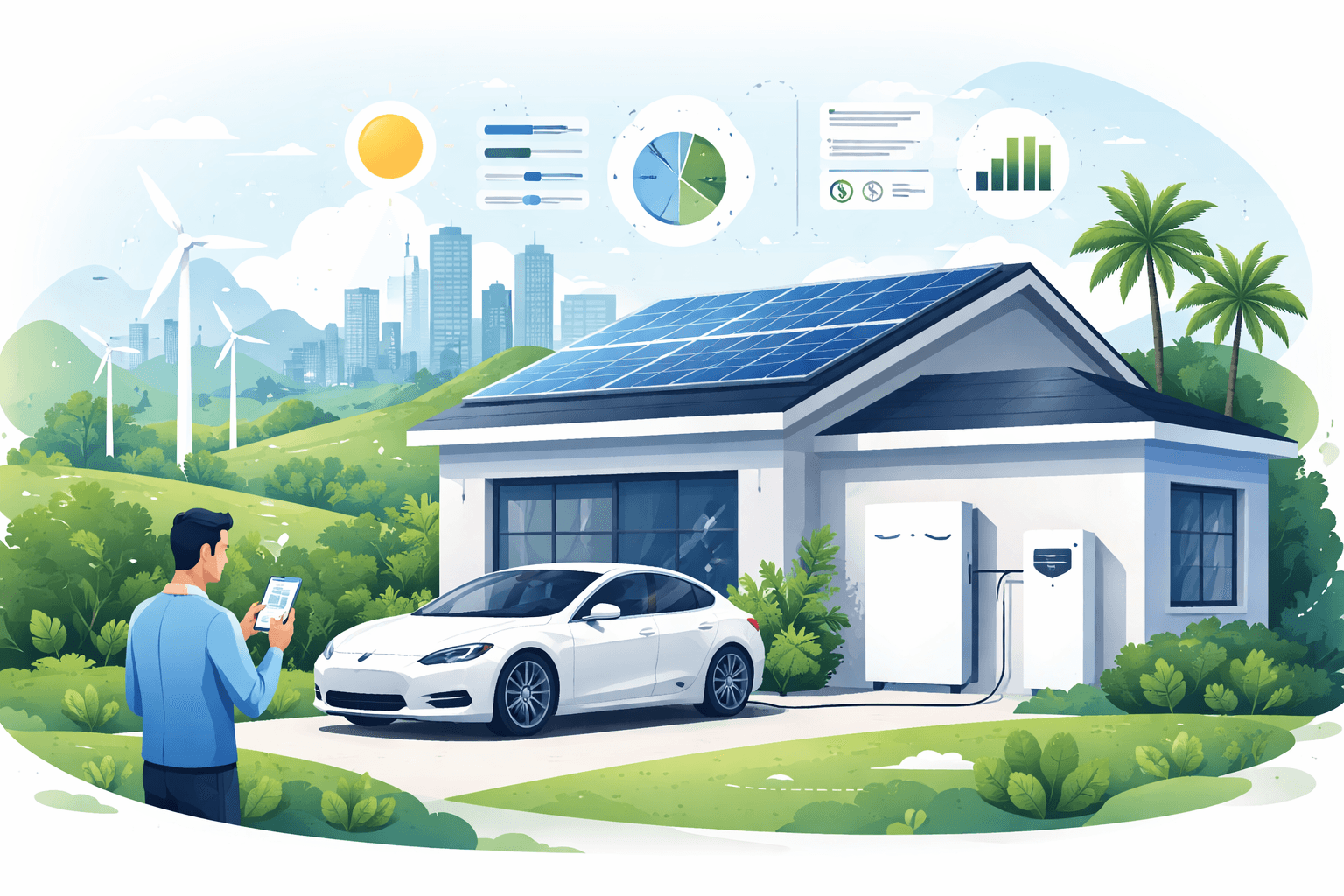
California added more than 10 GW of grid-connected battery capacity by 2025, according to CAISO, with residential systems playing a growing role in evening peak management and wildfire-related backup. For homeowners, the Tesla Powerwall in California sits at the center of this shift: it’s a proven home battery that pairs with solar to keep the lights on and reduce bills under time-of-use (TOU) rates and the state’s Net Billing Tariff (NEM 3.0).
This guide covers specs, pricing, incentives like SGIP, how savings work under California’s utility rate structures, availability, alternatives, and FAQs—so you can decide whether the Tesla Powerwall in California is worth it for your home.
Tesla Powerwall overview: specs, capacity, and how it works
A home battery stores excess solar power during the day and discharges it when electricity is expensive or during outages. Tesla’s Powerwall line is one of the most widely deployed residential batteries in the U.S. (NREL regularly cites Tesla among market leaders), with three configurations you’ll encounter:
Solar Electricity Handbook - 2023 Edition: A simple, practical guide to solar energy – designing and installing solar photovoltaic systems: Boxwell, Michael
Solar Electricity Handbook - 2023 Edition: <strong>A simple, practical guide to solar energy – designing and installing solar photovoltaic systems</strong> [Boxwell, Michael] on Amazon.com. *FREE* shi
Check Price on Amazon- Powerwall 2 (PW2): AC-coupled battery with integrated inverter/charger
- Powerwall+ (PW+): PW2 bundled with a Tesla solar inverter for new solar installs
- Powerwall 3 (PW3): Next-gen unit with higher power output and an integrated solar inverter (rolling out broadly in 2024–2026)
Key characteristics (consult Tesla’s datasheet for final specs and code updates in your jurisdiction):
- Usable energy: roughly 13.5 kWh per unit (the energy you can draw before it’s considered empty)
- Power output: PW2 commonly delivers up to 5 kW continuous; PW3 increases available power to support larger loads/whole-home backup with fewer units
- Round-trip efficiency: around 90% (energy lost to charging/discharging)
- Chemistry: lithium-ion; recent models use lithium iron phosphate (LFP) for enhanced thermal stability
- Warranty: 10 years; Tesla’s limited warranty typically guarantees at least 70% of nameplate capacity at year 10 when used as intended for solar self-consumption and backup
- Scalability: multiple Powerwalls can be stacked to increase energy and power; many California homes install two or more for whole-home backup
How it works day-to-day:
- Daytime: Solar charges the battery after serving home loads
- Evening peak: The battery discharges to avoid high TOU rates
- Outages: The Powerwall isolates (islands) your home from the grid, powering selected circuits or the whole home depending on system design
For a deeper technology dive (wiring topologies, inverter types, and system design), see our Tesla Powerwall: Complete Buyer’s Guide — Cost, Installation & Alternatives.
By the numbers: California storage and solar
- 10+ GW: Utility-scale battery capacity operating on the CAISO grid by 2025, up from near-zero in 2019 (CAISO)
- 27%: Share of California’s utility-scale electricity from solar in 2023 (EIA), rising midday export pressures and increasing the value of late-afternoon storage
- 5–8¢/kWh: Typical midday export compensation under California’s Net Billing Tariff (varies hourly/seasonally by the CPUC Avoided Cost Calculator)
- 35–60+¢/kWh: Typical evening peak retail TOU prices for investor-owned utilities (PG&E, SCE, SDG&E filings)
- 13.5 kWh: Usable energy for a single Powerwall—often enough to cover critical loads overnight or enable meaningful TOU bill savings
Tesla Powerwall in California: pricing and installation costs
Installed costs vary by home electrical complexity, service upgrades, permit/utility fees, and whether you add solar at the same time.
Typical ranges we see quoted in California (2025–2026):
- Single Powerwall installed: $12,000–$16,000 before incentives
- Second unit (marginal cost): $9,000–$13,000 (shared labor and balance-of-system reduce per-unit price)
- Main panel upgrade (if required): $1,500–$4,000
- Whole-home backup components (e.g., smart load panel, subpanel work): $1,000–$3,500
Why the spread?
- Labor rates and permitting timelines differ by city/county
- Roof type and conduit runs influence labor hours
- Older homes may need service upgrades or neutral/grounding corrections
- New installs with solar can leverage integrated designs that lower total cost per kWh
Note: Under the federal Investment Tax Credit (ITC), most homeowners can claim 30% of eligible installed costs for standalone batteries and solar-plus-storage through 2032 (Inflation Reduction Act; IRS guidance). Consult a tax professional for eligibility in your case.
California battery storage incentives: SGIP and utility programs
California’s Self-Generation Incentive Program (SGIP), administered by the CPUC and utilities, is the state’s flagship battery rebate. Amounts vary by customer category, utility territory, and funding step.
As of 2026, indicative incentive levels often seen (check current SGIP Handbook and your Program Administrator):
- General Market Residential: roughly $150–$250 per kWh of battery capacity
- Equity: up to ~$850 per kWh (income-qualified customers)
- Equity Resiliency: up to ~$1,000 per kWh for customers at high wildfire risk, eligible medical baseline, or those who have experienced Public Safety Power Shutoffs (PSPS)
What this means for a 13.5 kWh Powerwall:
- General Market: ~$2,000–$3,400 off
- Equity: up to ~$11,500 off
- Equity Resiliency: can approach or exceed full battery cost coverage (subject to caps and documentation)
Additional programs to ask about:
- Virtual Power Plants (VPPs) and demand response: Utilities like PG&E and aggregators have enlisted residential batteries in peak events (e.g., summer heatwaves). Programs have paid customers event-based incentives in the tens to hundreds of dollars per year, depending on participation and event frequency (PG&E’s ELRP pilots are an example cited by CPUC/utility reports). Program rules, dispatch windows, and payments vary—your installer will know current options.
Remember: Rebates stack with the 30% federal ITC in most cases, but SGIP can affect the cost basis for the ITC. Work with your installer and tax advisor on sequencing and documentation.
How the Powerwall pairs with solar in California: backup vs. self-consumption
California’s Net Billing Tariff (NEM 3.0), in effect for new interconnections since April 2023, shifted economics from generous one-to-one net metering to hourly export values based on the CPUC Avoided Cost Calculator. Midday exports often earn just a few cents per kWh, while evening retail rates can exceed 40–60 cents per kWh. That makes batteries valuable for self-consumption.
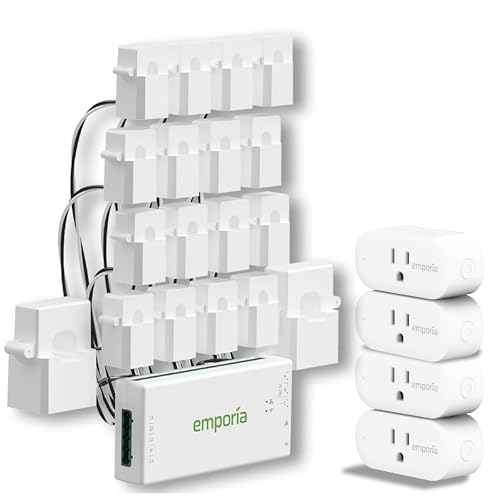
Emporia Energy Monitor with 16 Sensors + 4 Smart Plugs Super Bundle - Whole Home Electricity Usage Tracking & Real-Time Control - Supports Solar Net Metering - Works with iOS, Android, Alexa - Amazon.com
View on AmazonTwo common design strategies:
- Backup-first: Size for resilience. One Powerwall (~13.5 kWh) typically covers a refrigerator, lighting, internet, gas furnace fan, and a few outlets overnight. Two or more units plus intelligent load control can run air conditioning, heat pumps, or well pumps. If you’re in PSPS-prone areas, pairing a Powerwall with a smart load panel helps prioritize critical circuits during long outages.
- Self-consumption-first: Size to arbitrage TOU. A single Powerwall cycling ~10 kWh per day across a 25–35¢/kWh spread can save roughly $900–$1,300 per year, assuming consistent solar charging and minimal export. Savings depend on your utility, season, and how tightly you align charging and discharging with the tariff.
If you already have solar:
- PW2 can be AC-coupled to most existing PV systems (common with string inverters or microinverters)
- PW3 integrates a solar inverter, which can simplify new installs but may require reconfiguring existing arrays
- In both cases, your installer will configure non-export or limited-export modes to comply with interconnection rules and maximize on-site use
Practical tip: Adding a circuit-level energy monitor like the Emporia Vue 2 clarifies your load profile (EV charging, HVAC, water heating), informing how many kWh of storage—and how much discharge power—you truly need.
California utility rate structures and how Powerwall saves with time-of-use
Most residential customers of PG&E, SCE, and SDG&E are on TOU rates with steep evening peaks. Under NEM 3.0’s Net Billing Tariff, exports are credited at avoided-cost values that are generally low at midday and higher in the evening shoulder seasons.
How savings materialize:
- TOU arbitrage: Charge when rates (or export values) are low; discharge during peak windows
- Peak shaving: Flatten usage spikes to avoid the highest-priced intervals
- Self-consumption: Store solar you’d otherwise export midday at 5–8¢/kWh and displace evening purchases at 35–60+¢/kWh
A simple example:
- 10 kWh discharged daily during a 30¢/kWh price spread → ~$3/day → ~$1,095/year
- Factor round-trip efficiency (~90%): you’ll need ~11.1 kWh of charge to deliver 10 kWh
- Real-world results vary by season, weather, HVAC loads, EV charging, and program participation (e.g., VPP dispatch events)
Rate nuances to know:
- SDG&E often has the steepest peaks, boosting arbitrage potential but with higher fixed charges
- SCE’s TOU-D-PRIME is popular for EV owners; combining EV charging schedules with a battery can yield strong savings
- PG&E’s peak windows and seasonal variations reward careful scheduling; solar-plus-storage can reduce reliance on evening grid imports
Availability and certified installers in California
California has one of the largest networks of Tesla-certified installers in the country. Lead times for Powerwall installations have generally shortened compared to the 2020–2022 surge, though supply can tighten heading into summer.
What to ask prospective installers:
- Are you recommending PW2, PW+, or PW3, and why for my loads and roof/solar design?
- Will I need a main panel upgrade or a smart load panel for whole-home backup?
- How will you program self-consumption and time-based control for my specific tariff?
- What is the realistic timeline for permits (AHJ), utility interconnection, and PTO? Typical projects run 6–12 weeks end-to-end.
For a broader look at solar economics, incentives, and vetted providers statewide, see our guide to Solar in California: Costs, Incentives & Top Installers (2026).
Alternatives to Powerwall available in California: Enphase, LG, Generac
While Tesla leads in brand recognition and app experience, several strong competitors serve California’s solar-plus-storage market. Your best choice depends on your inverter ecosystem, desired power output, service model, and installer expertise.
- Enphase IQ Battery (5P/10T series): A natural match for homes with Enphase microinverters. The IQ Battery 5P offers high power per kWh and modular 5 kWh blocks, enabling flexible sizing and robust whole-home backup when stacked. Enphase’s distributed architecture and mature monitoring are pluses.
- LG Energy Solution RESU Prime (10H/16H): Higher-capacity LFP batteries compatible with multiple inverter brands. Slim form factor and strong warranty support. Good fit where a DC-coupled architecture with a compatible hybrid inverter is preferred.
- Generac PWRcell: Scalable cabinet-based system paired with a Generac hybrid inverter; known for high surge capability and flexible backup configurations. Attractive in projects prioritizing large motor starts (deep well pumps, large HVAC) without stacking many units.
Also consider ecosystem add-ons that enhance value regardless of brand:
- Smart panels and load controllers: Products like the SPAN Smart Panel enable dynamic load shedding and circuit-level prioritization during outages, effectively stretching your usable battery hours.
- Heat pump water heaters and smart thermostats: Shifting thermal loads to solar hours acts like “virtual storage,” reducing how hard the battery must work in peak windows.
Is a Tesla Powerwall in California worth it?
Short answer: For many solar homes under NEM 3.0, yes—especially where evening TOU rates are steep or where outages and PSPS are a concern. The combination of 30% federal ITC, potential SGIP rebates, and strong arbitrage spreads often brings simple paybacks into the 6–10 year range for self-consumption-focused designs, with resilience as a high-value co-benefit.
Where it’s most compelling:
- SDG&E and SCE territories with pronounced TOU peaks
- Homes with regular PSPS or outage exposure
- Households with high evening loads (EV charging, heat pumps) that can be optimized
- Income-qualified customers eligible for SGIP Equity or Equity Resiliency
Where to be cautious:
- Very low evening usage or limited solar generation may reduce arbitrage potential
- Complex electrical upgrades can add cost and extend timelines
- If you plan near-term service panel or major appliance upgrades, coordinate to avoid rework
FAQ: common questions about Tesla Powerwall in California
How many Powerwalls do I need?
- Start with your critical loads and peak demand. One unit (~13.5 kWh, modest continuous power) handles essentials; two or more support heat pumps, larger AC, or whole-home backup. An energy audit or a few weeks of circuit-level data logging helps size correctly.

MICRO-AIR Easystart 364, Air Conditioner Soft Start Compressor Unit for Travel Trailer Accessories, Soft Start Up for RV 115 Volt A/C Motor, RV Easy to Install Electric Accessories, 364-X20 Model : Automotive
View on AmazonWill a Powerwall run my air conditioner or heat pump?
- Often yes, especially with PW3 or multiple units. Check the compressor’s running current and locked-rotor amps (LRA) against the battery’s continuous and surge ratings. Your installer may recommend soft-start kits or smart load shedding.
Is Powerwall compatible with existing solar?
- PW2 can AC-couple to most PV systems. PW3 integrates a solar inverter, ideal for new solar or when replacing an old inverter. Interconnection under the Net Billing Tariff will be configured to prioritize self-consumption.
How long will it power my home in an outage?
- Divide usable battery capacity by your average load. Example: 13.5 kWh powering a 600 W average essential loads panel lasts ~22 hours. Add solar and daytime extends runtime significantly.
What is the warranty?
- Tesla’s limited warranty is 10 years, typically with 70% capacity retention for solar self-consumption/backup use cases. Terms vary—review Tesla’s warranty document for details.
How long does installation take?
- Site survey to Permission to Operate (PTO) often spans 6–12 weeks in California, depending on AHJ permitting and utility processing. The physical installation is usually 1–2 days.
Can I join a Virtual Power Plant (VPP)?
- Many California customers can enroll in utility or aggregator programs that dispatch batteries during grid stress. Payments vary but can help offset ownership costs. Ask your installer about current PG&E, SCE, and SDG&E offerings.
What about fire safety and code?
- California follows the CEC and local fire code/NEC rules for energy storage (clearances, indoor vs. outdoor placement, ventilation, working space). LFP chemistries offer better thermal stability; installers must adhere to manufacturer specs and AHJ requirements.
Practical implications and next steps for California homeowners
- Get interval usage data: Download Green Button data from your utility or install a temporary monitor. This informs battery sizing and savings potential under your TOU tariff.
- Model NEM 3.0 exports: Ask your installer to simulate hourly exports and battery dispatch; the goal is to minimize low-value midday exports.
- Design for resilience: If PSPS is a risk, combine a Powerwall with a smart load panel and consider electrifying critical end-uses (e.g., heat pump water heater) you can pre-heat during solar hours.
- Compare ecosystems: If you’re an Enphase household already, an IQ Battery may integrate most smoothly; if you value high discharge power per unit and a polished app, Tesla remains a strong default.
If you’re also exploring new solar, our state guide to Solar in California: Costs, Incentives & Top Installers (2026) outlines current equipment choices, incentives, and vetted installers.
Where the market is heading
California is leaning on distributed storage to firm a rapidly solarizing grid. The CPUC’s Net Billing Tariff intentionally incentivizes self-consumption and evening support. Expect:
- More robust VPPs: Utilities and aggregators will scale programs that pay homeowners to export during peak events—making batteries an active grid resource.
- Higher power density: Batteries like Powerwall 3 increase continuous output, simplifying whole-home backup without stacking many units.
- Smarter controls: TOU- and event-aware dispatch, appliance-level coordination, and solar forecasting will boost real-world savings.
- Electrification synergy: As heat pumps and EVs proliferate, home batteries will increasingly act as a control hub, orchestrating when major loads run and when they don’t.
Bottom line: With strong TOU spreads, frequent PSPS risk in some regions, and the combination of SGIP plus a 30% federal ITC, the Tesla Powerwall in California offers compelling financial and resilience value for many households—especially when right-sized, smartly controlled, and paired with efficient electric appliances.
Recommended Products
Solar Electricity Handbook - 2023 Edition: A simple, practical guide to solar energy – designing and installing solar photovoltaic systems: Boxwell, Michael
Solar Electricity Handbook - 2023 Edition: <strong>A simple, practical guide to solar energy – designing and installing solar photovoltaic systems</strong> [Boxwell, Michael] on Amazon.com. *FREE* shi
Emporia Energy Monitor with 16 Sensors + 4 Smart Plugs Super Bundle - Whole Home Electricity Usage Tracking & Real-Time Control - Supports Solar Net Metering - Works with iOS, Android, Alexa - Amazon.com
Comprehensive Whole-Home Monitoring: Includes the Emporia Vue Energy Monitor with 16 sensors to <strong>track usage from your main panel and up to 16 individual circuits</strong>.
MICRO-AIR Easystart 364, Air Conditioner Soft Start Compressor Unit for Travel Trailer Accessories, Soft Start Up for RV 115 Volt A/C Motor, RV Easy to Install Electric Accessories, 364-X20 Model : Automotive
ENERGY SAVING: Get cool air with ... compressor on an inverter generator. MIicro-air EasyStart <strong>provides up to 30 amps of power to two air conditioners at one time</strong>....