
Tesla Solar in Maryland: Panels, Roof & Pricing Guide (2026)
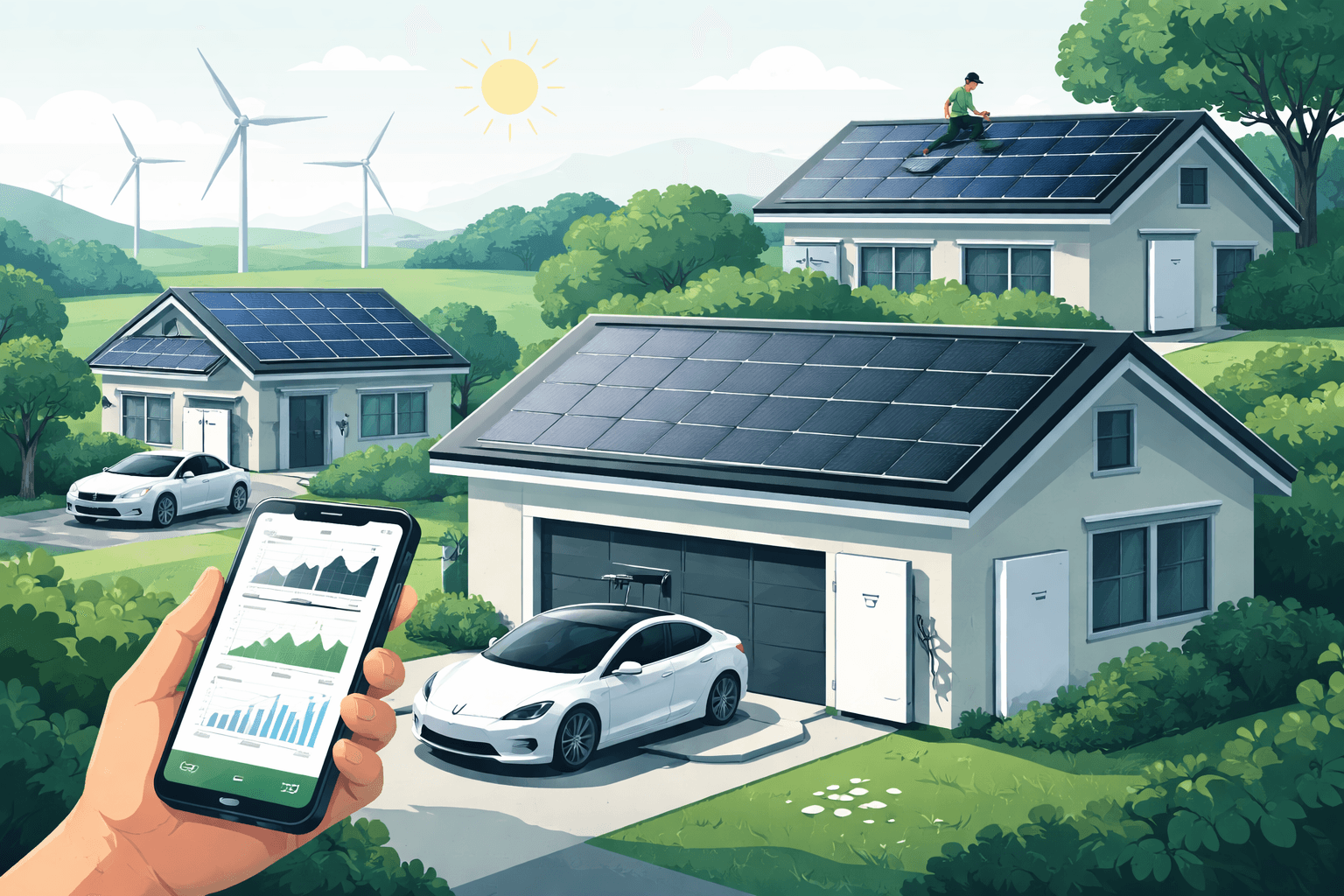
Maryland homeowners researching Tesla Solar in Maryland have strong tailwinds in 2026: a 30% federal tax credit, statewide net metering, SREC income potential, and a state rebate that has historically provided $1,000 per home (subject to annual funding). At Maryland’s typical electricity rates (~17–19¢/kWh per EIA 2025 data), a well‑sited 7–10 kW Tesla system can offset most household usage, often paying back in 7–10 years depending on roof and incentive stack.
This guide explains Tesla’s Maryland offerings (panels, Solar Roof, Powerwall), current pricing ranges, the installation timeline, incentives, real-world owner feedback, and how Tesla compares with local installers.
What Tesla Solar offers in Maryland: panels, Solar Roof, and Powerwall
Tesla sells three core products in Maryland, available a la carte or bundled.
Tesla solar panels (roof-mounted)
- Module power and efficiency: Tesla’s current “Tesla-branded” monocrystalline panels are typically 400–440 W with around 20% module efficiency (Tesla product sheets, 2025). Panels are all-black for aesthetics.
- Inverter: Tesla Solar Inverter integrates rapid shutdown (NEC 690.12), arc-fault protection, and monitoring in the Tesla app. Commonly offered in 3.8 kW and 7.6 kW sizes, stacked for larger arrays; warranty typically 12.5 years.
- Racking: Low-profile, flashed attachments to maintain roof integrity and meet Maryland wind/snow code requirements.
Tesla Solar Roof (building-integrated PV)
- What it is: A full roof replacement using tempered glass tiles, some active (solar) and some inactive. The system blends roofing and PV into one product.
- When it fits: Best when you already need a roof replacement or have strong aesthetic priorities. Complex roofs (multiple planes, dormers) and structural upgrades can add cost and lead time.
Powerwall home battery (often bundled)
- Powerwall 3: Integrated hybrid inverter with ~13.5 kWh usable capacity and high continuous power output, designed to connect PV directly and back up whole-home or critical loads. Warranty: 10 years, typically with 70% capacity retention at end of term (Tesla warranty booklet).
- Use cases in Maryland: Backup for storms, self-consumption arbitrage if your utility has time-varying rates, and compliance with interconnection rules where export limits apply. Storage also qualifies for the 30% federal Investment Tax Credit (ITC) whether paired or installed standalone under the Inflation Reduction Act.
For a deeper dive on storage sizing and pricing, see our Maryland-specific explainer: Tesla Powerwall in Maryland: Cost, Availability & Is It Worth It?
Tesla Solar pricing in Maryland: panels vs. Solar Roof
Pricing varies by roof complexity, service panel capacity, distance to main electrical equipment, and utility interconnection requirements. The ranges below reflect recent Maryland quotes we’ve seen in 2025–2026 and market data from sources such as EnergySage and NREL cost benchmarks.
Typical Tesla panel system pricing (before incentives)
- Price per watt (DC): roughly $2.40–$2.85/W in Maryland for standard roof-mount systems with Tesla’s inverter and monitoring.
- Example systems:
- 6 kW system: $14,400–$17,100
- 8 kW system: $19,200–$22,800
- 10 kW system: $24,000–$28,500
- Adders that can move price upward:
- Main panel upgrade: $1,500–$3,500
- Long wire runs/conduit or trenching: $500–$2,000
- Structural/roofing remediation: case-dependent
Powerwall adders (before incentives)
- One Powerwall 3 (installed): often $9,000–$12,500 depending on site and backup scope; incremental units typically slightly less per unit. Eligible for 30% ITC.
Tesla Solar Roof pricing
- Solar Roof projects price primarily by roofing area/complexity plus PV capacity. Typical full-roof projects in Maryland often land between $50,000 and $90,000 before incentives, though complex roofs can exceed $100,000.
- Equivalent price per watt can vary widely ($5–$10+/W) because you’re buying a premium roof and PV simultaneously. Solar Roof tends to be cost-competitive only when you already need a high-quality roof replacement.
After-incentive payback snapshot (illustrative)
- 8 kW Tesla panel system at $2.60/W: $20,800 gross cost
- 30% federal ITC: −$6,240
- Maryland state rebate (historically $1,000, subject to funding): −$1,000
- Net upfront: ~$13,560
- Production (NREL PVWatts typical): 8 kW in central Maryland yields ~10,000–11,000 kWh/year depending on tilt/shading.
- Bill savings at 18¢/kWh: ~$1,800–$1,980/year
- SRECs (Maryland solar carve-out; price varies): illustrative $300–$700/year at recent market ranges.
- Simple payback: ~6.5–8.5 years depending on production, tariffs, and SREC pricing.
These are examples; actual quotes and savings depend on your roof, utility, and consumption. For broader state context and alternatives, see our full guide: Solar in Maryland: Costs, Incentives & Top Installers (2026)
By the numbers: Maryland solar context
- Solar resource: A typical 1 kW PV array in Maryland produces ~1,250–1,450 kWh/year (NREL PVWatts), implying a capacity factor near 14–17% depending on orientation/shading.
- Electricity prices: ~17–19¢/kWh residential average in 2025 (U.S. EIA). Higher tariffs improve solar payback.
- Installed capacity: Maryland has added roughly two gigawatts of solar statewide by 2025 (SEIA estimates), with a continued buildout driven by the state’s Renewable Portfolio Standard.
- RPS and SRECs: Maryland’s RPS includes a dedicated solar carve‑out (Maryland General Assembly/MEA materials). SREC prices fluctuate year to year; check an SREC aggregator for live markets.
Solar Electricity Handbook - 2023 Edition: A simple, practical guide to solar energy – designing and installing solar photovoltaic systems: Boxwell, Michael
Solar Electricity Handbook - 2023 Edition: <strong>A simple, practical guide to solar energy – designing and installing solar photovoltaic systems</strong> [Boxwell, Michael] on Amazon.com. *FREE* shi
Check Price on AmazonHow to order Tesla Solar in Maryland: timeline and steps
Tesla’s process is standardized and largely app/portal-driven.

Emporia Gen 2 Smart Home Energy Monitor with 16 50A Circuit Level Sensors | Real Time Electricity Monitor/Meter | Solar/Net Metering - Amazon.com
View on Amazon- Online design and instant estimate
- You’ll enter your address, average monthly bill, and roof photos. Tesla’s tool drafts a layout and provides a preliminary size and price. You can request panel-only or Solar Roof, with or without Powerwall.
- Remote/onsite site assessment
- Tesla validates roof geometry with imagery and, where needed, a site visit to confirm structural conditions, main service panel capacity, and shading. Surprises (e.g., re-roofing needs, subpanels) can affect final design and cost.
- Final design, contracts, and financing
- You’ll review a stamped design set and sign. Financing options typically include cash, third‑party loans, or home equity. The federal ITC can be claimed on your tax return; consult a tax advisor for eligibility.
- Permitting and utility interconnection
- Tesla submits permit plans to your county/city and applies to your utility (BGE, Pepco, Potomac Edison, SMECO, etc.) for interconnection. Some utilities require a bi‑directional meter changeout.
- Installation day(s)
- Roof‑mount panel installs usually take 1–2 days; Solar Roof often takes a week or more, depending on complexity. Powerwall adds hours to a day for electrical work and commissioning.
- Inspection and Permission to Operate (PTO)
- Local inspectors sign off first; then your utility issues PTO. Only then does the system export/earn full credits. Typical end‑to‑end timeline in Maryland: ~6–12 weeks for panels; ~10–16+ weeks for Solar Roof. Timelines vary with season, jurisdiction, and utility queues.
Practical tip: If you want to closely manage energy flows, a real‑time monitor like the Emporia Vue 2 Home Energy Monitor pairs well with solar and storage by helping you spot phantom loads and right‑size backup circuits.
Maryland solar incentives that apply to Tesla installations
Maryland stacks multiple incentives on top of the 30% federal ITC.
Federal ITC (30%): Applies to Tesla panels, Solar Roof (PV portion), and Powerwall. The ITC runs at 30% through at least 2032 under the Inflation Reduction Act (IRS guidance). Batteries qualify whether installed with solar or standalone.
Maryland Residential Clean Energy Rebate Program (MEA): Historically $1,000 for residential PV (<=20 kW) installed by a NABCEP-certified or approved contractor and meeting program rules. Funding and rules are released annually by the Maryland Energy Administration; confirm current fiscal‑year availability before you sign.
SRECs (Solar Renewable Energy Certificates): In Maryland’s RPS, every 1 MWh your array generates earns an SREC you can sell to utilities seeking compliance. Prices are market-driven and volatile; some homeowners pre-sell via an aggregator for predictable cash flow.
Net metering: Maryland credits excess solar generation at retail rates, rolling monthly credits forward. At your annual true‑up, most utilities compensate leftover credits at a lower “avoided cost” rate. Right‑sized systems that minimize annual surplus typically yield the best economics.
Sales and property tax exemptions: Maryland has historically exempted solar equipment from state sales/use tax and allowed property tax exemptions for the added solar value. Check your county for additional programs or caps.
For current program details, utility rules, and how to combine incentives, our state primer is a helpful resource: Solar in Maryland: Costs, Incentives & Top Installers (2026)
Tesla Solar reviews from Maryland owners: what we hear
From Maryland homeowners who installed Tesla Solar in 2024–2026, a few themes recur:
What owners like
- Competitive, transparent pricing: Many report quotes under the statewide marketplace average for comparable hardware.
- Clean aesthetics and strong app: All‑black panels, tidy conduit runs, and a single app for PV + Powerwall control are frequent positives.
- Reliable performance vs. estimates: Production often matches PVWatts‑based estimates when shading and tilt are validated in the site survey.
What owners flag as pain points
- Communication gaps during permitting/PTO: Tesla’s national operations can mean message delays or limited project manager continuity during busy seasons.
- Scheduling and reschedules: Weather and utility backlogs can push dates; Solar Roof logistics are particularly sensitive.
- Custom/edge cases: Non‑standard roofs, ground mounts, or complex electrical upgrades can be slower to scope. Some homeowners choose local installers for bespoke needs.
Reliability observations
- Powerwall backup: Owners commonly praise seamless switchover during outages and robust power output for essentials, with the app’s Storm Watch mode pre‑charging before severe weather.
- Winter performance: Maryland winters reduce irradiance but bright, cold days can boost panel efficiency; production rebounds strongly March–October.
If whole‑home backup is your priority, compare Tesla’s integrated approach with alternatives like Enphase IQ Batteries, which pair well with microinverters and can be sourced via local installers.
Tesla vs. local Maryland installers: pros, cons, and price comparison
Price and product standardization vs. customization and service depth is the core trade‑off.

ecobee Smart Thermostat Premium with Smart Sensor and Air Quality Monitor - Programmable Wifi Thermostat - Works with Siri, Alexa, Google Assistant - Amazon.com
View on AmazonWhere Tesla often wins
- Price per watt: Tesla’s scale and standardized designs frequently produce bids in the $2.40–$2.85/W range in Maryland, often below marketplace averages reported by third‑party platforms in recent years.
- Integrated ecosystem: Single-vendor panels, inverter, battery, and app reduce vendor fragmentation and simplify service.
- Aesthetics and brand support: Clean look and a long operating history in residential solar and storage.
Where local installers often win
- Customization: Microinverters or optimizers, panel brand choice, ground mounts, carport structures, and complex roofs. Local teams also tend to be nimble about unusual service panels or multi‑unit dwellings.
- Handholding on incentives: Many local installers will file MEA rebate paperwork, register your SRECs, and coordinate HOA approvals.
- Post‑install responsiveness: Smaller service territories can mean faster onsite visits if troubleshooting is needed.
Price comparison reality
- Recent Maryland marketplace data place many local quotes around $2.70–$3.20/W (before incentives) for quality equipment and workmanship, though top‑tier local firms can match Tesla’s pricing when running promotions or using high‑volume modules. Always compare a Tesla quote with at least two local proposals using identical system size, expected annual kWh, and warranty terms.
If you’re solar‑curious but not ready for a battery, you can still prepare your home with load controls. A smart thermostat such as the Ecobee Smart Thermostat Premium can trim HVAC demand, improving your solar self‑consumption profile.
Tesla Solar warranty in Maryland: what it covers
- Panels: Typically a 25‑year performance warranty (commonly guaranteeing ~80–85% of nameplate power at year 25) and a product warranty covering defects; exact terms depend on the panel SKU Tesla sources at the time of install.
- Inverter: Tesla Solar Inverter carries a 12.5‑year limited warranty per Tesla’s documentation.
- Workmanship/leak protection: Tesla typically offers a 10‑year workmanship warranty and roof penetration leak coverage for panel systems. Solar Roof includes a 25‑year tile and weatherization warranty (see Tesla’s roof warranty booklet for specifics).
- Powerwall: 10‑year warranty, commonly warranting 70% usable capacity at 10 years and unlimited cycles for self‑consumption/backup use cases defined in Tesla’s warranty.
Always review the exact warranty statement in your contract, as Tesla can update terms by product revision and install date.
FAQ: common questions about Tesla Solar in Maryland
Does Tesla offer Solar Roof everywhere in Maryland?
- Yes, but feasibility depends on roof complexity, structural needs, and installer capacity. Expect longer timelines than for panel‑only systems.
Is a Powerwall required with Tesla solar?
- Often recommended but not strictly required in most Maryland interconnections. Some designs add a Powerwall to manage export limits or provide whole‑home backup. See our storage explainer: Tesla Powerwall in Maryland: Cost, Availability & Is It Worth It?
How big should my system be?
- Many Maryland homes land between 7–10 kW. A good heuristic is annual kWh usage divided by 1,300 (typical kWh/kW‑year), adjusted for shade/tilt and your electrification plans (EVs, heat pumps).
What production should I expect in Maryland?
- NREL PVWatts indicates ~1,250–1,450 kWh per installed kW‑year in Maryland with proper tilt and minimal shading. South‑facing arrays on 25–35° roofs generally perform best.
What about net metering rules?
- Maryland credits excess generation at retail rates with annual cash‑out at avoided cost. Right‑sizing to minimize surplus typically maximizes savings.
How do SRECs work?
- Your system’s generation is recorded (often via your inverter or a revenue‑grade meter) and SRECs are minted by the PJM-EIS GATS platform. You can sell them via an aggregator; prices vary by market conditions and RPS requirements.
Will solar void my roof warranty?
- Tesla and reputable local installers use flashed mounts and provide their own leak/workmanship warranties. If your roof is near end‑of‑life, replace it first (or consider Solar Roof).
Does Tesla do ground mounts or carports in Maryland?
- Tesla primarily focuses on roof‑mounted panels and Solar Roof. Many local installers can deliver ground mounts or carports if roof suitability is limited.
How long does installation take?
- Panel installs: 1–2 days onsite. Solar Roof: typically a week or more. Overall project timelines, including permits and utility PTO, often run 6–12 weeks for panels and 10–16+ weeks for Solar Roof.
Can I charge my EV directly from solar?
- Yes. During the day, rooftop PV lowers household load and can feed an EV charger. A flexible Level 2 charger like the ChargePoint Home Flex can be scheduled to align with daylight hours or off‑peak rates.
What if I live close to the Virginia border?
- Incentives and utility rules differ by state and territory. If you’re across the line, see our state guide: Solar in Virginia: Costs, Incentives & Top Installers (2026)
Practical next steps for Maryland homeowners
- Pull a recent 12‑month utility usage summary and note your roof age and panel capacity (e.g., 150 A, 200 A) to accelerate accurate quoting.
- Get at least two proposals: one from Tesla and one from a reputable local installer using comparable DC size and estimated annual kWh.
- Ask each bidder to provide: module make/model, inverter type, expected kWh/year (PVWatts file), all adders, interconnection timeline, and a written incentive plan (ITC, MEA rebate, SRECs, net metering specifics).
With Maryland’s strong policy framework and the 30% ITC, 2026 remains a favorable year to adopt Tesla Solar in Maryland—especially if you plan to electrify transport or heating in the next few years, increasing the value of each rooftop kilowatt.
Recommended Products
Solar Electricity Handbook - 2023 Edition: A simple, practical guide to solar energy – designing and installing solar photovoltaic systems: Boxwell, Michael
Solar Electricity Handbook - 2023 Edition: <strong>A simple, practical guide to solar energy – designing and installing solar photovoltaic systems</strong> [Boxwell, Michael] on Amazon.com. *FREE* shi
Emporia Gen 2 Smart Home Energy Monitor with 16 50A Circuit Level Sensors | Real Time Electricity Monitor/Meter | Solar/Net Metering - Amazon.com
See how much electricity your home is using anywhere, anytime. ... <strong>Add individual 50A sensors to your Vue to monitor up to 16 individual circuits</strong> — providing accurate energy use for t
ecobee Smart Thermostat Premium with Smart Sensor and Air Quality Monitor - Programmable Wifi Thermostat - Works with Siri, Alexa, Google Assistant - Amazon.com
ecobee Smart Thermostat Premium with Smart Sensor and Air Quality Monitor - Programmable Wifi Thermostat - <strong>Works with Siri, Alexa, Google Assistant</strong> - Amazon.com