
Tesla Solar in Missouri: Panels, Roof & Pricing Guide (2026)
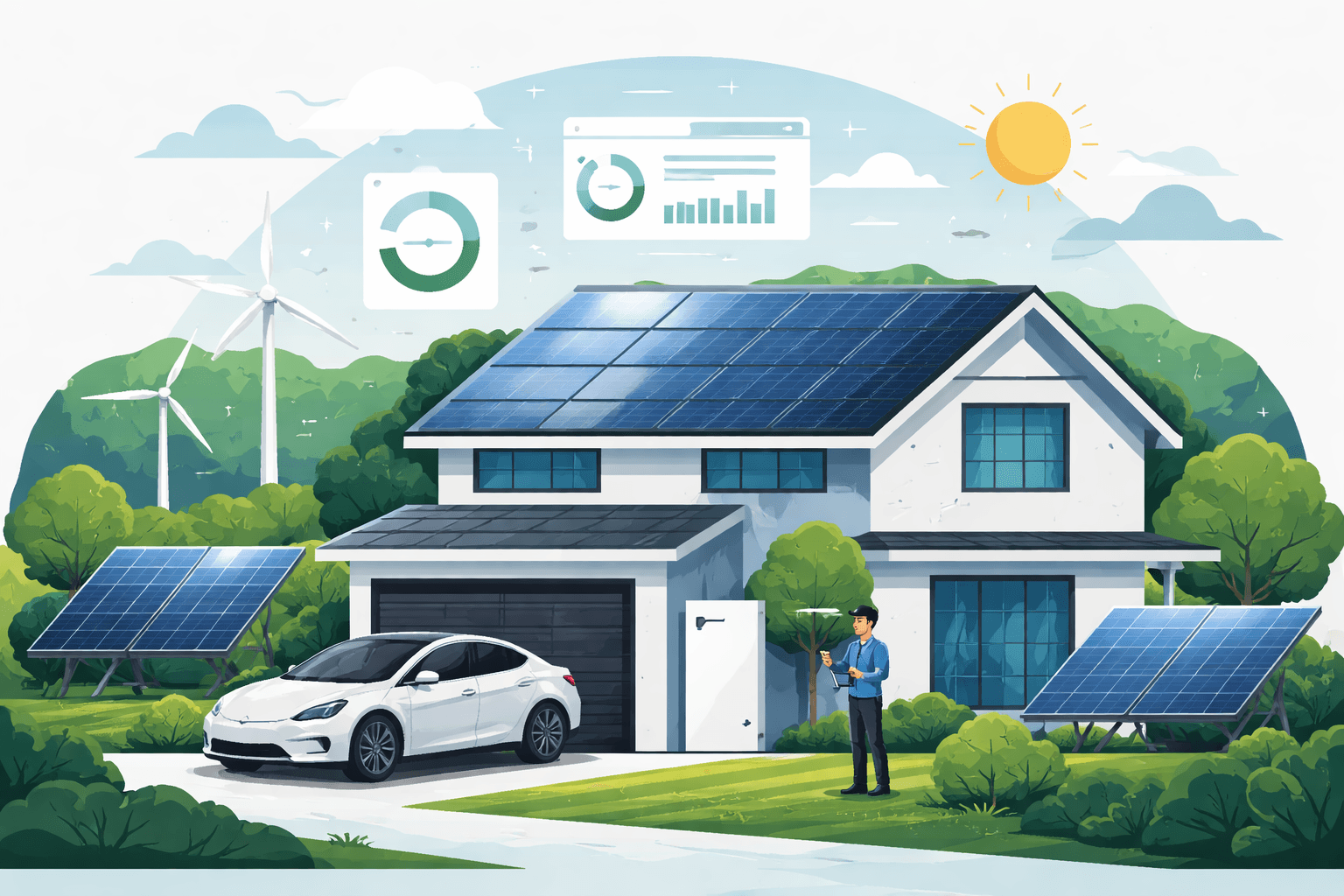
Missouri homeowners are leaning into solar as equipment prices fall and the 30% federal tax credit remains in place through 2032. For buyers specifically weighing Tesla Solar in Missouri, the big draws are transparent online pricing, integrated hardware (panels or Solar Roof paired with Powerwall), and a single mobile app. This guide breaks down products, pricing, incentives, timelines, and how Tesla compares to local installers in the Show-Me State.
Tesla Solar in Missouri: Products available
Tesla sells three core products in Missouri: standard all-black solar panels, the Tesla Solar Roof (solar shingles that replace your roofing material), and Powerwall home batteries. You can purchase panels with or without Powerwall; Solar Roof is generally bundled with at least one Powerwall because many buyers want backup power.
Solar Power Your Home For Dummies: DeGunther, Rik
Whether you’re looking to save ... ground up, Solar Power For Dummies, 2nd Edition <strong>takes the mystery out of this energy source and shows you how to put it to work for you</strong>!...
Check Price on AmazonTesla solar panels
- Panel wattage and efficiency: Tesla’s current panels typically fall in the 400–440 W range with ~20% module efficiency (based on Tesla datasheets). Panels are all-black, with low-profile racking and skirted edges for curb appeal.
- Inverter: Tesla’s hybrid inverter integrates with Powerwall and the Tesla app, enabling real-time monitoring, time-of-use mode, and Storm Watch for pre-charging before severe weather.
- App and controls: The Tesla app centralizes generation, consumption, battery state-of-charge, and grid/export status in one place.
Tesla Solar Roof
- What it is: Glass solar tiles that generate electricity while acting as your primary weatherproof roofing system. Non-solar tiles match the look to create a uniform roofline.
- When it fits: Best for homes already planning a full roof replacement or high-end new construction. The total project price includes the full roof, underlayment, flashing, and PV tiles.
Tesla Powerwall (Powerwall 2 and Powerwall 3)
- Why it matters: Solar alone will not power your home during an outage; grid-tied PV systems shut off for safety unless paired with batteries and a backup gateway. Powerwall provides whole- or partial-home backup and time-of-use bill management.
- Specs in brief: 13.5 kWh usable capacity per unit, with an integrated inverter in the Powerwall 3 generation. Multiple units can be stacked for greater backup capacity. Warranty is 10 years (see warranty section below).
Context for Missouri: Average residential electricity prices in Missouri hover around 12–14¢/kWh (U.S. EIA, 2024), lower than the national average. That means solar savings build steadily and reliably, but payback relies on getting a sharp installed price and maximizing net metering credit value.
Tesla Solar pricing in Missouri: panels vs. Solar Roof
Published national benchmarks from NREL’s 2024 cost analyses place typical U.S. residential solar prices in the $2.70–$3.50/W range (before incentives), varying by market and installer business model. Tesla often prices near the lower end due to standardized designs and online sales, but final quotes depend on roof complexity, main panel upgrades, and whether you add a Powerwall.
Based on recent quotes we’ve reviewed and national benchmarks (NREL; Lawrence Berkeley National Laboratory’s Tracking the Sun 2024), Missouri homeowners considering Tesla in 2025–2026 commonly see:
- Tesla panels: roughly $2.40–$3.00 per watt (before incentives), depending on roof faces, conduit runs, and electrical upgrades.
- Typical system sizes: 6–12 kW for Missouri single-family homes. Example: a 7.5 kW system at $2.70/W = $20,250 before incentives, about $14,175 after the 30% federal tax credit (if you’re eligible).
- Powerwall adders: Installed cost for one Powerwall (with required gateway and labor) generally lands in the mid–$10,000s before incentives. After the 30% credit, many Missouri buyers see $9,000–$12,000 per unit. For deeper detail on battery pricing, see our Missouri-specific battery guide: Tesla Powerwall in Missouri: Cost, Availability & Is It Worth It?
Solar Roof pricing varies more because it’s a roof plus solar. Project quotes depend on roof area (square footage), roof complexity (valleys, dormers, pitch), and the proportion of active PV tiles needed to reach your target kW.
- A simple 2,000–2,500 sq. ft. roof with ~8–12 kW of Solar Roof generation commonly pencils to $55,000–$85,000 before incentives in the Midwest. Applying the 30% federal tax credit reduces the net cost meaningfully, but Solar Roof typically remains a premium option relative to conventional panels + a standard asphalt roof.
Important cost drivers in Missouri:
- Main panel upgrade: Older 100–150 A service panels may need updating to support a new inverter or Powerwall. Upgrades can add $1,500–$3,500.
- Roof condition: Tesla will not install panels on a roof near end-of-life. If you need reroofing first, add that cost (asphalt tear-off and re-shingle often runs $4–$8/sq. ft. in the region). Solar Roof replaces the roofing cost entirely, but at a higher overall project price.
- Utility interconnection: Fees are modest but vary by utility; expect a meter swap or bidirectional meter setup.
By the numbers: Missouri and Tesla Solar
- 30% federal tax credit applies to Tesla panels, Solar Roof, and Powerwall when paired with solar (IRS; Inflation Reduction Act)
- Production: 1 kW of rooftop PV in Missouri generates roughly 1,250–1,500 kWh/year depending on tilt and shading (NREL PVWatts). A 7.5 kW array could produce about 9,000–10,500 kWh/year.
- Payback: With retail net metering and a sharp installed price, simple paybacks in Missouri often run 8–12 years for panels (longer for Solar Roof), based on EIA rate averages and PVWatts outputs.
Affiliate note: For homeowners comparing equipment beyond Tesla (especially with local installers), high-efficiency modules like REC Alpha Pure-R and microinverter platforms such as Enphase IQ8 can deliver strong performance and shade tolerance, which matters on complex Missouri roofs. We cite these because their datasheet efficiencies and third-party reliability records are consistently competitive in residential deployments.
How to order Tesla Solar in Missouri: steps and timeline
Tesla’s process is standardized and largely app-based.

Emporia Gen 2 Smart Home Energy Monitor with 16 50A Circuit Level Sensors | Real Time Electricity Monitor/Meter | Solar/Net Metering - Amazon.com
View on Amazon- Online design and order
- Upload your address and recent utility bill. Tesla uses satellite imagery to propose a system size and estimated savings.
- You pay a small order fee (refundable if you cancel before permit submission; Tesla’s site will show the current amount).
- Virtual or on-site assessment
- Tesla (or a certified installation partner) verifies roof measurements, shading, and your main service panel capacity. If complexity is higher than expected, your quote may be adjusted.
- Permitting and interconnection
- Tesla prepares stamped drawings and submits to your city/county and utility (Ameren Missouri, Evergy, Liberty, or your cooperative/municipal utility). Typical permit approval in Missouri is 2–5 weeks, but can vary with jurisdiction workload.
- Installation
- Crew time on site is commonly 1–3 days for panels, longer for Solar Roof. Powerwall adds time for wiring, gateway setup, and load management configuration.
- Inspection and Permission to Operate (PTO)
- City/county and utility inspections must pass before the system is energized. PTO in Missouri can take 1–4 weeks after inspections, depending on the utility.
Total timeline: Many Missouri projects run 6–12 weeks from order to PTO for standard panel systems; Solar Roof can take longer due to roofing labor and supply logistics. Weather and utility queues can add variability.
Missouri solar incentives that apply to Tesla installations
30% Federal Investment Tax Credit (ITC)
- Applies to Tesla panels, Solar Roof, and Powerwall when the battery is charged primarily from solar (IRS guidance under the Inflation Reduction Act).
- Nonrefundable credit: You need enough tax liability to capture the credit; unused portions may carry forward. Consult a tax professional.
Net metering (statewide)
- Missouri’s Net Metering and Easy Connection Act requires investor-owned utilities and most electric cooperatives to offer net metering for systems up to 150 kW. Credits for excess generation typically offset consumption at the retail rate within the billing period; kWh credits roll forward to future bills (Missouri PSC rules). Check your utility tariff for exact crediting and true-up details.
Utility-specific programs
- Rebate programs in Missouri have come and gone; as of 2025/2026, there is no guaranteed statewide solar rebate. Some utilities may offer limited-time incentives for batteries, demand response, or managed EV charging. Confirm with Ameren Missouri, Evergy, or your local provider before you sign.
Property and sales tax
- Missouri does not offer a widely available statewide sales tax exemption for residential PV, and property tax treatment can vary locally. Ask your county assessor how solar is handled in your jurisdiction (DSIRE is a good reference database for current policy status).
For a broader look at local rules, interconnection, and top regional installers, see our state overview: Solar in Missouri: Costs, Incentives & Top Installers (2026)
Tesla Solar reviews from Missouri customers: what owners report
Public reviews and interviews with Missouri buyers tend to highlight the same themes we see nationally:
What owners like
- Competitive pricing and straightforward quote process: Tesla’s per-watt quotes are often below the market median (LBNL Tracking the Sun 2024 shows substantial installer-to-installer spread). Buyers appreciate up-front transparency.
- A single ecosystem: Panels/inverter/Powerwall and the app work together reliably, with useful outage and time-of-use controls. Storm Watch has real value in the Midwest’s severe-weather season.
- Clean aesthetics: Low-profile panels and integrated skirts help with HOA approvals. Solar Roof offers a premium look when a reroof is already needed.
What owners call out as challenges
- Scheduling and communication: Centralized customer service can feel slower vs. a local shop. Some projects report longer waits between milestones (permit, install, PTO), especially during peak season.
- Change orders: If the roof or main panel differs from the satellite-based assumptions, cost adjustments after site assessment can surprise homeowners.
- Subcontractor variability: In some Missouri markets, Tesla uses certified partners for installation. Work quality is typically solid, but experiences can vary by crew.
Performance expectations
- Production usually matches or slightly exceeds Tesla’s modeled estimates when designs follow NREL PVWatts assumptions and shade analysis is accurate. Snow events reduce winter generation; annual impact is modest because Missouri’s highest solar output months are March–October.
Tesla vs. local Missouri installers: pros, cons, and price comparison
How Tesla stacks up
- Pros
- Often sharper headline pricing due to scale and standardized designs
- Integrated hardware and one app
- Strong brand and resale familiarity
- Cons
- Less custom engineering (e.g., dormer arrays, complex tilt/azimuth splits)
- Communication can be less personal; service tickets go through national channels
- Limited non-Tesla equipment options

Enphase ENPHASE IQ8PLUS-72-2-US IQ8+ ...
View on AmazonWhy consider local installers
- Customization: If your roof has partial shading, multiple pitches, or you want premium modules or microinverters, local EPCs can tailor the design.
- Service model: A dedicated project manager and local service techs can speed punch-list resolution.
- Equipment choice: Top-tier alternatives like REC Alpha Pure-R modules and Enphase IQ8 microinverters are widely available through Missouri installers and tested extensively by NREL and third-party labs for reliability and shade performance.
Price reality
- LBNL’s Tracking the Sun shows wide variance around medians in each state. In practice, competitive bids from strong Missouri installers often land in the $2.70–$3.50/W range for panels (before incentives), sometimes higher with premium equipment or challenging roofs. Tesla frequently quotes toward the lower half of that band, but verify apples-to-apples (module wattage, inverter type, electrical upgrades, and battery scope).
Note for Kansas City–area readers: If your service address is on the Kansas side, see our sister guide: Tesla Solar in Kansas: Panels, Roof & Pricing Guide (2026)
Tesla Solar warranty and what it covers in Missouri
Warranties travel with you across state lines; what matters is the product generation and your installation date. Always verify the warranty PDFs attached to your final contract, but Tesla’s current standard terms generally include:
Tesla solar panels
- Performance warranty: Typically guarantees ~85% of nameplate output at year 25 (linear degradation). Exact figure depends on panel model.
- Product/workmanship warranty: Commonly 10–12 years on product defects; Tesla also provides installation workmanship coverage for a defined period in your contract.
Tesla Solar Roof
- Tile warranty: Around 25 years for glass tile durability and weatherization on the roofing system.
- Power output on solar tiles: Typically 25 years with a linear production guarantee.
Tesla inverter
- Product warranty commonly around 10–12 years for the solar inverter generation installed with your system.
Tesla Powerwall
- Warranty: 10 years with an energy throughput guarantee and minimum retained capacity at the end of warranty (Tesla publishes a specific kWh-throughput table). Backup-only and time-of-use modes have different cycling profiles but are covered under the same 10-year term when installed with solar.
Keep records of commissioning documents and your Tesla app serial numbers. Warranty service generally starts with submitting a ticket through the app.
FAQ: common questions about Tesla Solar in Missouri
Is Tesla Solar available everywhere in Missouri?
- Yes in major metros (St. Louis, Kansas City, Springfield, Columbia) and many surrounding areas. Rural addresses may be served by partner installers; availability can vary by county and electric cooperative territory.
How much solar do I need in Missouri?
- A typical Missouri home uses 800–1,000+ kWh/month (EIA). A 7–10 kW system covers most average loads if your roof has good south/east/west exposure. Use your actual 12-month usage to size accurately.
What production should I expect?
- NREL PVWatts indicates ~1,250–1,500 kWh/year per kW DC in Missouri. A 7.5 kW array might produce 9,000–10,500 kWh/year depending on tilt (25–35° is common), orientation, and shading.
Do I need a Powerwall to get net metering?
- No. Batteries are optional for net metering. You need Powerwall if you want backup during outages or to manage time-of-use rates. See our state battery guide: Tesla Powerwall in Missouri: Cost, Availability & Is It Worth It?
Will solar work in winter and with snow?
- Yes, but generation is lower in winter due to sun angle and occasional snow cover. Annual impact is modest; spring and summer dominate total kWh.
How does hail affect Tesla systems?
- Panels and Solar Roof tiles are tested to industry impact standards (IEC 61215/UL 1703 for panels; Tesla publishes Solar Roof impact ratings). Homeowners in hail-prone counties should also confirm roof and PV coverage with their insurer.
What if my HOA has restrictions?
- Missouri HOAs generally cannot prohibit solar outright but may set reasonable aesthetic guidelines. Tesla’s low-profile panels often meet HOA design criteria; submit the spec sheets with your application.
How long does installation take?
- Most panel installations: 1–3 days on site. Solar Roof: longer due to roofing scope. Full project timeline including permits and PTO: typically 6–12 weeks for panels.
Can I add more panels later?
- Usually yes, but confirm inverter capacity and main service limits during design. Tesla can propose an expansion plan; local installers can also add strings or microinverter circuits where appropriate.
Does Tesla handle roof replacements?
- For Solar Roof, yes—it's a full roof replacement. For standard panels, Tesla does not replace your asphalt roof; coordinate with a roofer if your shingles are near end-of-life.
Affiliate tip: If you plan to pair a battery with heavy backup loads (well pump, HVAC), a smart load center like Span Smart Panel can prioritize circuits and stretch usable battery time—useful during Missouri’s storm season.
Practical takeaways for Missouri homeowners
- If you want a competitive per-watt price, streamlined app integration, and can live with standardized designs, Tesla panels + optional Powerwall are strong contenders in Missouri.
- If your roof is complex, shaded, or you want best-in-class module efficiency or microinverters, solicit at least one bid from a top local installer. Expect quotes in the $2.70–$3.50/W range for premium gear.
- Solar Roof is best when you already need a new roof and value aesthetics; even with the 30% credit, it’s usually a premium over panels + asphalt.
- Net metering remains a meaningful value driver in Missouri; confirm your utility’s tariff details and interconnection timeline before signing.
Where this is heading: Module wattage continues to rise while costs trend down in NREL’s benchmarks. Paired with the 30% federal credit and steady retail rates, panel-based systems in Missouri should remain attractive through 2032. Batteries are likely to gain value as utilities evolve time-of-use and resilience programs, making Powerwall or comparable storage an increasingly common add-on in the state.
Recommended Products
Solar Power Your Home For Dummies: DeGunther, Rik
Whether you’re looking to save ... ground up, Solar Power For Dummies, 2nd Edition <strong>takes the mystery out of this energy source and shows you how to put it to work for you</strong>!...
Emporia Gen 2 Smart Home Energy Monitor with 16 50A Circuit Level Sensors | Real Time Electricity Monitor/Meter | Solar/Net Metering - Amazon.com
See how much electricity your home is using anywhere, anytime. ... <strong>Add individual 50A sensors to your Vue to monitor up to 16 individual circuits</strong> — providing accurate energy use for t
Enphase ENPHASE IQ8PLUS-72-2-US IQ8+ ...
Enphase · 240v · Solar · Hoymiles · Iq8 See more · Eligible for Free Shipping · Free Shipping by Amazon · Get FREE Shipping on eligible orders shipped by Amazon · Delivery Day · Get It by Tomorrow · D