
Wind Turbine for Home Use: Complete Buyer’s Guide & Cost Analysis
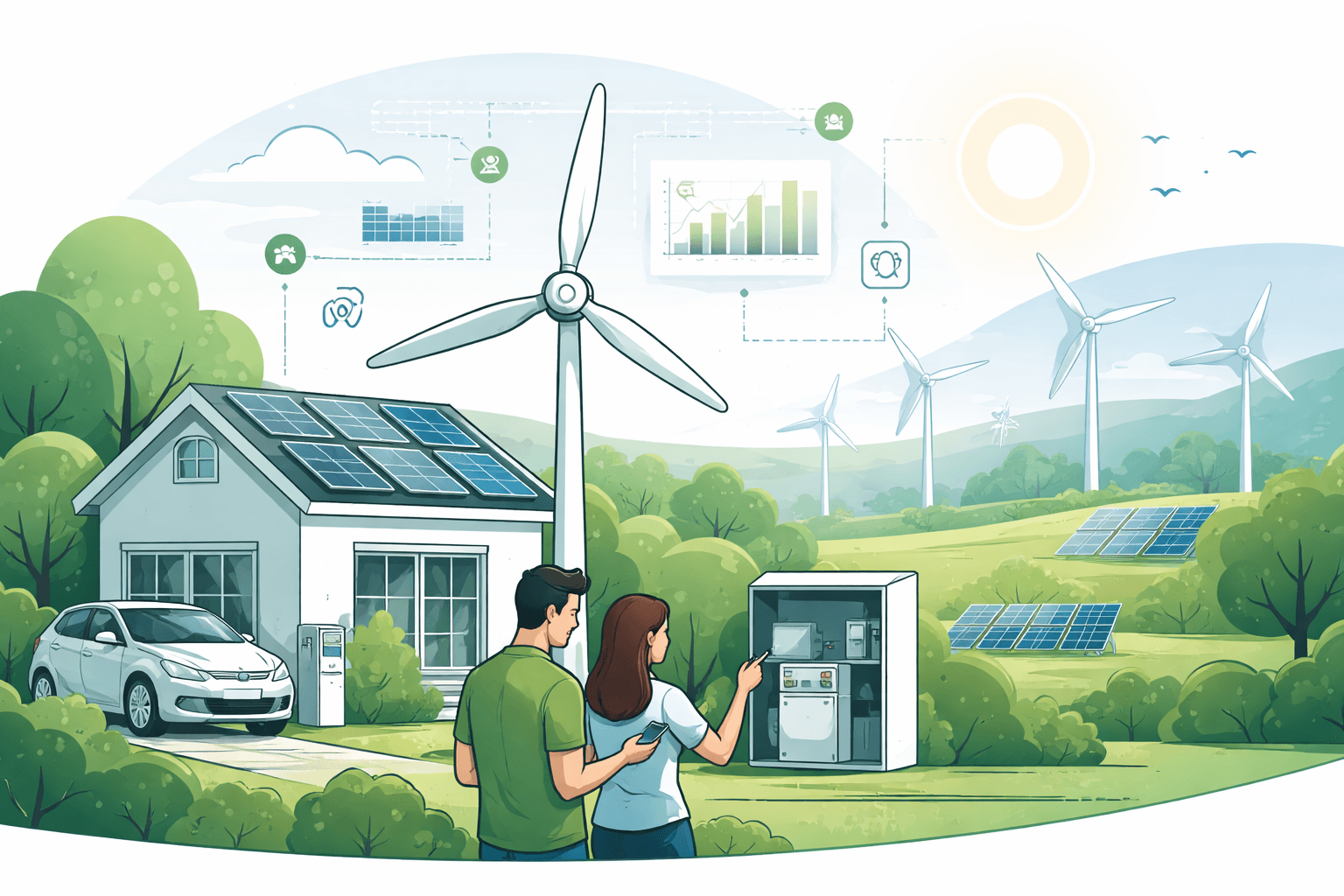
A modern wind turbine for home use can offset 50–100% of a rural household’s electricity in the right wind regime, but performance varies widely by site. The U.S. average home consumes about 10,500 kWh/year (EIA, 2023). A well-sited 10 kW small wind turbine operating at a 20% capacity factor (the share of time it effectively runs at rated output) can produce ~17,500 kWh/year—more than enough for many households. In marginal winds, however, output can drop by half. This guide lays out how to assess your wind resource, size a system, evaluate costs and incentives, and choose reliable equipment.
Why consider a home wind turbine? Benefits, limits, and who it’s for
- Emissions and resilience: A properly sited wind turbine for home use can displace 6–10 metric tons of CO₂ per year, depending on your grid mix. Hybrid wind-plus-battery systems can ride through outages and complement rooftop solar seasonally.
- Energy independence in windy rural areas: Distributed wind is most successful on properties with at least 1–2 acres and clean exposure to prevailing winds. The U.S. Department of Energy (DOE) and NREL note that small wind works best where average wind speeds at hub height are ≥5–6 m/s (11–13 mph) and local zoning allows towers 60–120 feet tall (NREL Small Wind Guidebook).
- Economics can be strong—but only in good wind: Installed costs for residential-scale small wind (5–20 kW) typically range from $50,000 to $120,000 before incentives. With the 30% federal Investment Tax Credit (ITC) available through at least 2032 for residential wind, payback can be 10–20+ years depending on wind speeds, electricity rates, and incentives (IRS/DOE).
- Limits you must respect: Rooftop mounting almost always underperforms due to turbulence. Urban or heavily treed lots are poor candidates. Interconnection, permitting, and neighbor acceptance (noise, aesthetics) require planning.

Wind Energy for the Rest of Us: A Comprehensive Guide to Wind Power and How to Use It: Gipe, Paul
It’s a sprawling book, <strong>one minute discussing how to install small wind turbines safely, the next explaining how farmers in Indiana can earn millions by installing their own multimegawatt wind
Check Price on AmazonBy the numbers
- Wind threshold: ≥5–6 m/s (11–13 mph) annual average at hub height for economic performance (NREL, IEC 61400-2 guidance)
- Typical capacity factor: 12–25% for small wind in real sites (NREL/PNNL Distributed Wind Market Reports)
- Installed cost: ~$5,000–$8,000 per kW for a 10 kW class turbine (NREL Small Wind Guidebook)
- O&M: 1–3% of installed cost/year for inspections and parts (NREL)
- Noise: 40–55 dBA at the base of the tower for modern small wind, site-dependent (manufacturer data)
Types of home wind turbines: horizontal vs vertical, micro vs small wind
- Horizontal-axis wind turbines (HAWT): The classic three-bladed design on a tower. Highest efficiency (power coefficient) and most widely certified under IEC 61400-2 for small wind. Best choice for most residential sites with clear exposure.
- Vertical-axis wind turbines (VAWT): Darrieus or Savonius styles. They can tolerate turbulent flows better in theory, but most small VAWTs have lower efficiency and limited third-party certification or bankable performance data. Independent field tests often show lower-than-claimed energy yields in real-world settings. Consider only if independently certified and sited on a tall mast with validated wind data.
- Micro wind (≤1 kW): 50–1000 W units for cabins, boats, telecom, or battery trickle-charging. Useful in off-grid scenarios with steady winds. Don’t expect meaningful whole-home offset.
- Small wind (1–20 kW): The residential “workhorse” category. Requires a 60–120 ft tower for laminar flow. Grid-tied or battery-hybrid configurations are common.
Key takeaway: If your goal is significant household offset, favor a certified HAWT in the 5–15 kW range on a tall, free-standing or guyed tower.
How to size a turbine: calculate household energy needs and expected output
- Establish your annual kWh need
- Gather 12 months of utility bills and sum kWh. U.S. average is ~10,500 kWh/year (EIA). If you’ll electrify heating, hot water, or a vehicle, add those loads. Rough additions: heat pump (2,000–6,000 kWh/year), EV (3,000–4,000 kWh/year for 10,000–12,000 miles), heat-pump water heater (1,000–2,000 kWh/year).

Windware: Wind Speed Data Logging Kit by Inspeed
View on Amazon- Estimate your wind resource at hub height
- Use mesoscale data as a starting point: NREL’s Wind Prospector (U.S.), Global Wind Atlas (worldwide) to get average wind speed at 50–100 m, then adjust to your planned hub height using wind shear. The only definitive method is to measure with an anemometer at or near hub height for 6–12 months.
- Translate wind into expected energy
- Turbine energy depends on the cube of wind speed: doubling wind speed increases power eightfold. The practical shortcut is capacity factor-based estimation: Expected annual kWh ≈ Rated power (kW) × Capacity factor × 8,760
- Example A (good site): 10 kW × 0.20 × 8,760 ≈ 17,520 kWh/year
- Example B (marginal site): 10 kW × 0.12 × 8,760 ≈ 10,512 kWh/year
- Match turbine size to your goals
- To offset 80–100% of a 10,500 kWh load in a 20% CF site, consider 6–8 kW. In a 12% CF site, you may need 10–12 kW—if siting allows. Oversizing raises costs; undersizing means lower offset but also lower capital expense. Some owners target 50–70% offset and pair with rooftop solar to smooth seasonal variability.
- Consider voltage and storage
- Grid-tied: A certified wind inverter or rectifier plus grid-tied inverter is required (UL 1741/IEEE 1547 compliant). Excess generation can net meter where allowed.
- Battery-hybrid: A DC-coupled turbine with a charge controller feeding a 48 V battery bank and hybrid inverter increases resilience. Useful in areas with outages or weak grids.
Site assessment: wind resource, height, turbulence, grid connection, zoning & permits
- Tower height and the 30/500 rule: Place the hub at least 30 feet above anything within 500 feet. Most residential towers end up 80–120 feet tall to clear tree lines and rooftops. Height is the single most impactful siting variable.
- Turbulence matters: Buildings and trees create chaotic air that slashes output and increases wear. Avoid rooftop mounting; mount on a dedicated tower in clear fetch to prevailing winds.
- Ground roughness and setbacks: Open fields and ridgelines with long fetch are ideal. Maintain setbacks equal to at least the tower height from property lines, roads, and occupied structures (local codes vary).
- Soil and foundations: Geotechnical conditions determine whether you can use a guyed tilt-up tower (lower cost) or need a freestanding monopole with deeper foundations (higher cost).
- Grid interconnection: Confirm with your utility. Requirements include an external disconnect, anti-islanding protection (UL 1741/IEEE 1547), possible production meter, and net metering or net billing rates. Interconnection fees can range from a few hundred to several thousand dollars depending on upgrades.
- Zoning and permits: Many jurisdictions have small wind ordinances with maximum height, noise limits (often 45–55 dBA at property line), and setback rules. Some areas require neighbor notification. In the U.S., towers under 200 ft generally do not trigger FAA review.
- Environmental and wildlife: For small residential turbines on existing disturbed land, wildlife risk is typically low, especially compared with large wind farms. Avoid siting on known migratory corridors and near bat roosting sites; consult local wildlife agencies if unsure.
Costs, financing, and incentives: equipment, installation, maintenance, tax credits
What you’re paying for
- Turbine head and blades: 30–45% of cost
- Tower and foundation: 25–40% (guyed tilt-up is cheapest; freestanding monopole is most expensive)
- Balance of system (BOS): 10–20% (inverter/rectifier, controllers, wiring, protection)
- Installation and commissioning: 10–20%
Typical cost ranges (U.S.)
- 5 kW class: $30,000–$60,000 installed
- 10 kW class: $50,000–$80,000 installed (NREL Small Wind Guidebook)
- 15 kW class: $75,000–$120,000 installed
- Batteries (optional): $500–$900 per kWh installed for lithium systems depending on market and permitting
Operating costs
- Routine O&M: 1–3% of installed cost per year (inspections, bolt torque checks, lubrication, occasional inverter service)
- Inverter replacement: Often required once in 10–15 years
- Insurance: Some homeowners add a rider for the tower and turbine; check with your insurer
Incentives and financing
- Federal ITC (U.S.): 30% tax credit on residential small wind through 2032, stepping down after (Inflation Reduction Act). Applies to equipment and installation.
- State/utility incentives: Check DSIRE (Database of State Incentives for Renewables & Efficiency). Some states offer rebates or performance-based incentives.
- Net metering/net billing: Policies vary widely; your export rate influences ROI.
- Loans: Some installers offer energy loans or PACE financing where available.
Top recommended models & buying checklist (best for rooftop, tower, battery hybrid)
Note: Always prioritize models with third-party certification (SWCC/IEC 61400-2), transparent power curves, and a long service record.
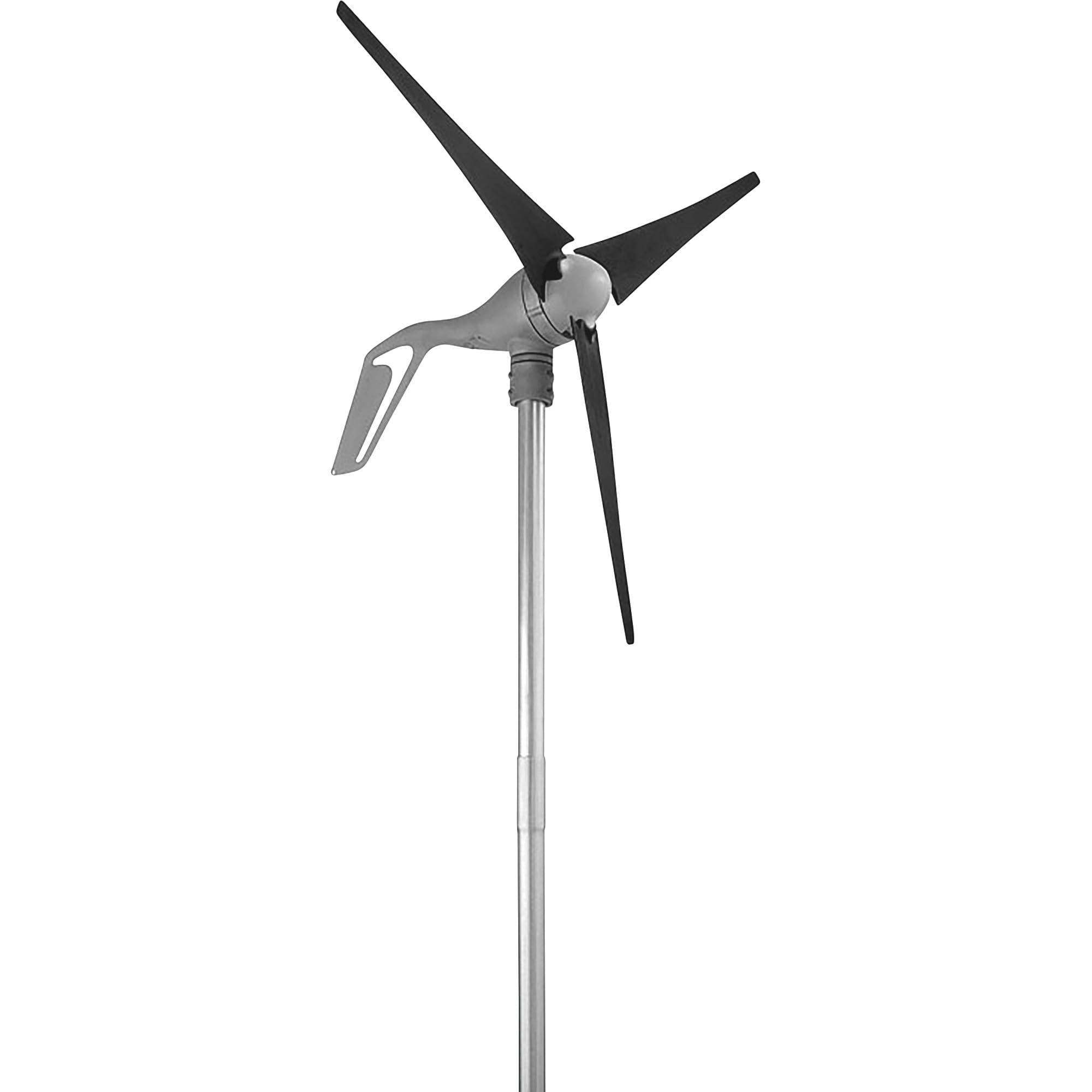
Primus Wind Power 1-AR40-10-12 Air 40 Wind Turbine 12V : Patio, Lawn & Garden
View on AmazonProven tower-mounted residential HAWT (5–15 kW)
- Bergey Excel series (10–15 kW): Among the most widely deployed small wind turbines in North America with SWCC certification and multi-decade track record. Suitable for 80–120 ft guyed or freestanding towers. Expect solid performance in 5–7 m/s sites with low turbulence.
- Buying notes: Verify cut-in speed (~3–4 m/s), rated power wind speed (often 11–12 m/s), and energy production estimates using manufacturer’s power curve and your site’s wind histogram.
Micro-wind for cabins/boats (50–400 W)
- Primus Wind Power AIR series: Well-regarded for off-grid battery charging in consistently windy locations. Not a whole-home solution; think lighting, small loads, or battery top-up.
Rooftop or mast-mounted micro-wind (not generally recommended)
- If rooftop mounting is the only option, limit expectations and use micro-wind on a short mast tied into a battery bank. Consider a structural engineer review for roof loads and vibration isolation. In most residential scenarios, rooftop solar will dramatically outperform rooftop wind.
Hybrid wind + battery systems
- Pair a certified small wind turbine with a hybrid inverter and lithium storage for outage protection and to time-shift generation. For mainstream residential storage, the Tesla Powerwall class systems offer UL 9540 listings and robust app-based controls. See our in-depth guide to compare specs and pricing: Tesla Powerwall: Complete Buyer's Guide — Cost, Installation & Alternatives.
Buying checklist
- Certification: SWCC listing or IEC 61400-2 compliance with third-party tested power curves
- Tower plan: Height, type (guyed tilt-up vs freestanding), foundation design, crane/gin pole needs
- Performance estimate: Independent energy estimate using local wind data at hub height
- Warranty and parts: 5–10 year warranty, local service availability
- Interconnection and metering: Utility approval in writing, equipment meeting UL 1741/IEEE 1547
- Noise and neighbors: Modeled dBA at property line, setback compliance
- Total cost and incentives: Written turnkey quote, ITC eligibility, state/utility rebates
For a deeper model comparison and sizing worksheets, see our dedicated resource: Home Wind Turbine Buying Guide: Cost, Sizing & Best Models (2026).
Affiliate picks to consider
- For off-grid cabins: A micro-wind unit like the AIR 40 12V Kit offers dependable battery charging in windy sites.
- For towers: A guyed tilt-up tower package such as the 60–100 ft Tilt-Up Tower Kit can reduce crane costs and simplify maintenance.
- For measurement: A calibrated Anemometer & Data Logger Bundle helps validate your wind resource before investing.
Installation, maintenance, safety, and longevity: what to expect year-to-year
Installation steps
- Foundation and tower: Excavation and concrete for guy anchors and base pads (guyed), or a single large footing (freestanding). Cure time typically 1–2 weeks.
- Electrical BOS: Trenching for conduit, rectifier/inverter installation, disconnects, grounding, surge protection, and interconnection hardware.
- Erection: Guyed tilt-up towers use a gin pole and winch; freestanding towers require a crane. Commissioning includes brake checks, controller setup, and utility witness testing for grid-tie.
Maintenance checklist (typical intervals—follow manufacturer guidance)
- Semiannual/annual: Visual inspection of blades, tower, and guys; torque checks on bolts; lubrication where applicable; inverter/controller firmware update; brake function test; electrical connections and grounding integrity.
- After severe storms: Inspect for blade nicks, lightning strikes, and guy tension changes.
- Every 5–10 years: Possible bearing replacement, inverter service/replacement.
Safety
- Lock-out/tag-out electrical isolation before any work.
- Ice throw: In icing climates, site away from walkways/driveways and consider automatic shutdowns in freezing rain.
- Lightning protection: Proper grounding and surge arrestors are essential.
- Storm resilience: Verify overspeed protections (furling, pitch control, or electronic braking) and cut-out speeds. In hurricane-prone areas, consult local codes and manufacturer wind class ratings (IEC Class I/II/III).
Longevity
- Many small wind turbines are designed for 20–25 years with proper maintenance. Towers and foundations can last longer and be reused for replacement heads.
Return on investment, alternatives (solar + battery), and decision checklist
ROI drivers
- Wind speed at hub height: The single biggest factor. Moving from 5.0 m/s to 6.5 m/s can roughly double annual energy.
- Electricity price and export credits: Higher retail rates and full retail net metering improve economics.
- Incentives: 30% ITC plus any state rebates can shave years off payback.
- Tower choice and BOS costs: Guyed tilt-up towers cut capital cost and simplify maintenance.
Illustrative payback scenarios (10 kW system)
- Good wind site (6.5 m/s; CF ~20%): 17,500 kWh/year. Installed cost $70,000; net after 30% ITC: $49,000. At $0.18/kWh retail, annual bill savings ≈ $3,150. Simple payback ≈ 15.6 years. With state rebates or higher rates, can dip near 10–12 years.
- Marginal wind site (5.0 m/s; CF ~12%): 10,500 kWh/year. Same costs, annual savings ≈ $1,890 at $0.18/kWh. Simple payback ≈ 26 years—borderline for many buyers.
Alternatives and complements
- Rooftop solar: U.S. residential solar averages $2.50–$3.50/W installed. An 8 kW system might produce ~10,000–13,000 kWh/year depending on location. For most homes, solar’s LCOE is lower and siting is simpler than wind.
- Solar + battery: Storage adds resilience and time-of-use savings. If your primary goal is outage protection and bill management rather than maximum annual kWh, a battery paired with solar can be compelling. Explore costs and sizing in our guide: Tesla Powerwall: Complete Buyer's Guide — Cost, Installation & Alternatives.
- Hybrid wind + solar: Wind can complement solar’s daytime profile and winter deficits. A hybrid system can reduce the total battery capacity needed for off-grid or resilience goals.
Decision checklist
- Do you have measured or high-confidence wind speeds ≥5.5–6.0 m/s at 80–100 ft?
- Can you erect a 60–120 ft tower with proper setbacks and neighbor support?
- Will your utility provide fair net metering/net billing and an interconnection path?
- After the 30% ITC and any local incentives, does simple payback fit your target (e.g., ≤15 years)?
- Have you compared a wind-only system to solar-only and hybrid options on cost per kWh?
- Is there local service for your chosen turbine, and a maintenance budget set aside (1–3%/year)?
Where the market is heading
- Better data and certification: Continued emphasis on SWCC/IEC certification helps filter out underperforming designs.
- Smarter controls: Advanced MPPT-style wind charge controllers and hybrid inverters ease integration with batteries and solar.
- Policy stability: The extended 30% ITC for small wind through at least 2032 (U.S.) provides a planning window for homeowners in windy regions.
Final thought: A wind turbine for home use can be a high-impact, financially sound investment—but only when the wind resource, tower height, and interconnection all align. Validate your wind, pick certified equipment, and pressure-test the economics against solar and hybrid options before you buy.
Recommended Products
Wind Energy for the Rest of Us: A Comprehensive Guide to Wind Power and How to Use It: Gipe, Paul
It’s a sprawling book, <strong>one minute discussing how to install small wind turbines safely, the next explaining how farmers in Indiana can earn millions by installing their own multimegawatt wind
Windware: Wind Speed Data Logging Kit by Inspeed
Amazon.com: wind monitor
Primus Wind Power 1-AR40-10-12 Air 40 Wind Turbine 12V : Patio, Lawn & Garden
<strong>Tower kits are available</strong>. Output and Specs: Maximum output of the wind turbine is 160 watts, exporting roughly 40 KW Hrs per month in average 12 mph wind regimes (or approximately 110