
Small Wind Turbine Guide for Homes: Cost, Size & Best Models

Residential wind is niche—but in the right wind, it’s powerful. The U.S. Department of Energy (DOE) says distributed wind has surpassed 1 gigawatt of cumulative capacity across tens of thousands of sites, with small wind (≤100 kW) providing a steady trickle of new installations each year. For homeowners considering a small wind turbine residential setup, the difference between a money-saver and a disappointment usually comes down to wind speed, tower height, and siting.
This guide covers how small wind turbines work, how to size and site them, typical costs and incentives, permitting and wildlife considerations, and the best models for cottages, farms, and grid-tied or off-grid homes.
Why consider a small wind turbine for your home?
Small wind can meaningfully reduce bills in windy locations and complement solar in hybrid systems. But it’s not a fit for every roof—or even every rural property.
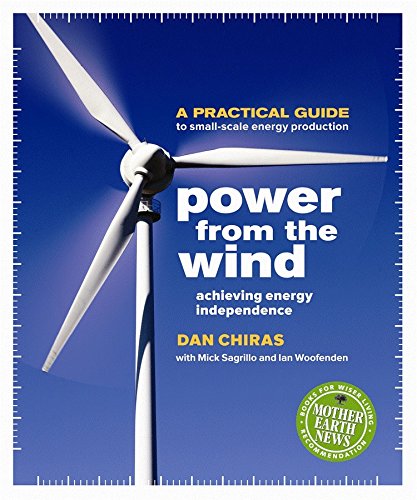
Power From the Wind: Achieving Energy Independence: Dan Chiras, Mick Sagrillo, Ian Woofenden
Power From The Wind <strong>discusses how people can use wind power to power their own homes on a small scale, reducing power consumption bills</strong>. Wind is cheap and renewable; to not harvest it
Check Price on AmazonBenefits
- Strong energy yield in windy sites: A 5 kW turbine at a 20% capacity factor (the percentage of time the turbine averages its rated output) can produce about 8,760 kWh/year—roughly the average U.S. home’s annual use.
- Night-and-winter production: Unlike solar, wind often peaks during storms, nights, and winter months in many regions, smoothing your energy profile.
- Resilience: Off-grid or hybrid systems with batteries can ride through outages; grid-tied systems can reduce peak demand charges where applicable.
- Climate impact: Each 1,000 kWh of wind-sourced electricity avoids roughly 0.4–0.8 metric tons of CO2 depending on your grid mix (U.S. EPA eGRID factors).
Limitations
- Wind resource is hyperlocal: Energy scales with the cube of wind speed. A site averaging 6 m/s (13.4 mph) can generate more than double the energy of a site at 5 m/s (11.2 mph), all else equal.
- Height matters: Turbines need clean, laminar wind on a tall tower—typically 18–37 m (60–120 ft)—which drives cost and permitting complexity.
- Maintenance: Moving parts need periodic inspection, bolt retorquing, guy tension checks, and occasional component replacement.
Ideal use-cases
- Rural homes, ranches, and farms with 6–7 m/s (13–16 mph) average wind at hub height and room for 1–1.5× tower-height setbacks.
- Off-grid cottages and telecom sites with steady winds and battery storage.
- Hybrid wind+solar sites where winter wind complements summer solar.
For a quick primer on where small wind fits among renewables, see our overview: Renewable Energy Sources: A Clear Guide to Solar, Wind & More.
How small wind turbines work: output curves and typical capacity (100 W–20 kW)
A small wind turbine converts kinetic energy in moving air into electricity via blades, a hub, a generator (often permanent magnet), and power electronics. The key relationships:
- Power in wind: Proportional to air density × swept area × wind speed³. Doubling wind speed increases power eightfold.
- Power curve: Manufacturers publish power curves showing output at different wind speeds. Look for third-party certified curves (IEC 61400-2 for design; independent certification bodies verify performance and safety).
- Cut-in and rated speeds: Most small turbines start producing around 3–4 m/s (7–9 mph) and hit rated power near 11–12 m/s (25–27 mph). Above that, control systems (furling, pitch, or stall) limit power to protect components.
Typical sizes and use-cases:
- 100–500 W: Micro turbines for boats, cabins, sensors; battery charging only.
- 1–3 kW: Small cabins and hybrid systems; supplemental power for efficient homes.
- 5–10 kW: Primary household supply in windy sites; often grid-tied.
- 15–20 kW: Larger homes, small farms, and microgrids.
Capacity factor for small wind is typically 10–30% depending on wind resource, tower height, and turbulence. Well-sited rural systems can reach the upper end; suburban rooftop systems generally underperform and are not recommended due to turbulence, vibration, and safety concerns.
Sizing and site assessment: wind speed, elevation, turbulence, and energy needs
A rigorous site assessment is the single most important step.

Davis Instruments Wireless Vantage Pro2 Weather Station with WeatherLink Console - Metric : Patio, Lawn & Garden
View on AmazonMeasure the wind (or use bankable data)
- Best practice: 12 months of on-site anemometer data at proposed hub height.
- Alternatives: High-resolution wind maps (Global Wind Atlas, national meteorological data) plus corrections for terrain and roughness. Expect uncertainty; conservative assumptions prevent over-sizing.
Target wind speeds at hub height
- Economically compelling for many homes at 6.0–7.0 m/s (13–16 mph) average.
- Marginal below ~5.5 m/s (12.3 mph) for grid-tied systems, unless electricity prices are very high or incentives are strong.
Tower height and turbulence
- Rule of thumb: Hub at least 9 m (30 ft) above any obstacle within 150 m (500 ft).
- Turbulence intensity (TI) should be low; target TI < 0.16 at hub height. Turbulent air reduces energy and accelerates wear.
Energy needs and turbine size
- Determine annual consumption (kWh). Example: 9,000 kWh/year.
- Estimate capacity factor from wind assessment. Example: 20%.
- Size by energy: Rated kW ≈ Annual kWh / (CF × 8,760). For 9,000 kWh and 20% CF: 9,000 / (0.2 × 8,760) ≈ 5.1 kW.
- Cross-check with power curve at your site’s wind speed distribution (Rayleigh/Weibull).
Siting checklist
- Clear fetch over prevailing winds with minimal upwind obstacles.
- Sufficient setbacks: 1.0–1.5× total height to property lines/structures (local code varies).
- Soil and access for foundation and crane or tilt-up tower.
- Grid proximity for interconnection, or sheltered battery/inverter location for off-grid.
For a more general buyer-focused walkthrough, compare notes with our homeowner overview: Wind Turbine for Home Use: Complete Buyer’s Guide & Cost Analysis.
By the Numbers: small wind at a glance
- Size range: 100 W to 20 kW for residential; common home units are 3–10 kW.
- Tower height: 18–37 m (60–120 ft) typical; higher is usually better.
- Capacity factor: 10–30% for well-sited systems; <10% in turbulent/low-wind sites.
- Installed cost: Roughly $4–$12 per watt depending on size, tower, and site complexity.
- O&M: About 1–3% of capex per year for inspections, wear parts, and occasional service.
- Lifespan: 20–25 years with mid-life component overhauls possible.
Sources: DOE Distributed Wind Market Reports; NREL small wind cost and performance datasets; IEC 61400-2 design standard.
Costs, incentives, and ROI: examples and expectations
Upfront costs (installed)
- Micro (≤1 kW): $1,000–$5,000; limited household impact.
- 3–5 kW: $15,000–$40,000 depending on tower and controls.
- 10–15 kW: $50,000–$100,000+; foundations and cranes dominate costs.
- Towers can represent 20–40% of system cost; tilt-up guyed towers are typically cheaper than freestanding monopoles.
Incentives (U.S. examples; confirm locally)
- Federal Residential Clean Energy Credit: 30% tax credit for qualified small wind systems through 2032 (phase-down thereafter). Applies to equipment and installation.
- Net metering or value-of-solar/wind export credits where available.
- State/utility rebates or performance-based incentives (varies widely).
Operating costs
- Routine maintenance/inspection: $150–$500/year.
- Occasional parts (blades, bearings, slip rings): budget 1–3% of capex annually over system life.
Payback examples
- 5 kW at 20% CF, $0.20/kWh electricity
- Energy: 5 × 0.2 × 8,760 ≈ 8,760 kWh/year.
- Gross savings: ≈ $1,750/year.
- Installed cost: $30,000. After 30% credit: $21,000.
- Net payback: ≈ 12 years before O&M; ~13–14 years including O&M.
- 2 kW at 8% CF, $0.20/kWh
- Energy: 2 × 0.08 × 8,760 ≈ 1,400 kWh/year; ≈ $280/year.
- Installed cost: $8,000 (after credit: $5,600).
- Net payback: >20 years; likely uneconomic.
- 10 kW at 30% CF, $0.18/kWh
- Energy: 10 × 0.3 × 8,760 ≈ 26,300 kWh/year; ≈ $4,730/year.
- Installed cost: $80,000 (after credit: $56,000).
- Net payback: ~12 years including modest O&M.
- 5 kW at 20% CF, $0.20/kWh electricity
Key insight: ROI tracks wind speed and tower height far more than turbine brand. Conservative wind estimates and a tall, well-sited tower are the best “investments” you’ll make.
Permits, zoning, safety, noise, and wildlife
Zoning and height limits
- Many jurisdictions cap structures at 35–60 ft without a variance. Small wind typically needs 60–120 ft for good performance; plan for a special use permit.
- Setbacks often 1.0–1.5× total height to property lines/roads; guy anchors may need their own setbacks.
Electrical and interconnection
- NEC Article 694 governs small wind systems in the U.S.; use UL 1741/IEEE 1547-certified inverters for grid tie.
- Utility interconnection applications often require an external AC disconnect and anti-islanding functions.
Safety
- Lightning protection, proper grounding, and surge suppression are mandatory.
- Tilt-up procedures and gin poles must follow manufacturer specs; never climb uncertified towers.
- Roof mounting is discouraged due to structural loads, vibration, and turbulent wind.
Noise
- Modern small turbines typically measure 35–50 dBA at property lines in normal operation, comparable to a quiet library to urban background noise. Verify independent acoustic data and local noise ordinances.
Wildlife
- Peer-reviewed studies and DOE/USFWS guidance indicate residential-scale turbines have far lower bird/bat impacts than large wind farms and far less than buildings or cats, but siting still matters.
- Avoid placing turbines near bat roosts, raptor nests, or along narrow ridgelines used as migration corridors. Curtailment at low wind speeds during peak bat activity can further reduce risk.
Top residential small wind turbine models and comparison
Certification matters. Favor turbines with independent certification to IEC 61400-2-derived standards, verified power curves, and track records. Local installer familiarity and parts availability are crucial.
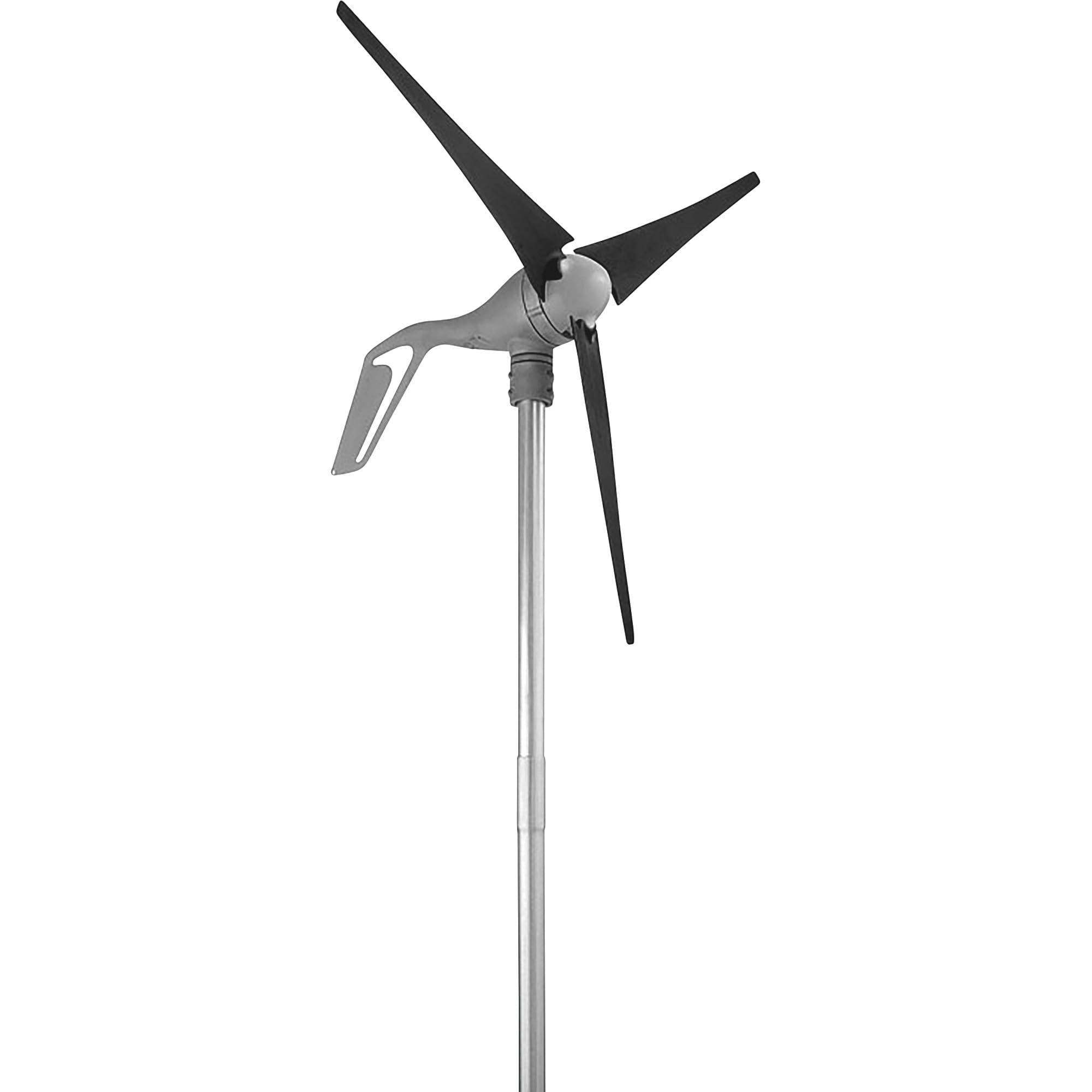
Primus Wind Power 1-AR40-10-12 Air 40 Wind Turbine 12V : Patio, Lawn & Garden
View on AmazonBest for off-grid cabins and sailboats (micro, 100–400 W)
- Primus Windpower AIR 40/AIR Silent X (≤400 W): Proven for battery charging in windy coastal sites; pair with diversion load controller.
- Leading Edge LE-300/LE-600 (300–600 W): Compact, low mass; good as a winter top-up with solar for remote monitoring sites.
Best for cottages and small homes (1–3 kW)
- Bornay 1500–3000: European-made, multiple rotor options; pairs with 48–120 V DC battery systems or grid-tie via inverter.
- Kestrel e400i (~3 kW): Robust design for high-wind coastal and farm applications; confirm current distributor support in your region.
Best for farms and primary home supply (5–15 kW)
- Bergey Excel 6/10/15 (6–15 kW): Among the longest operating histories in small wind; simple furling and direct-drive PM generators; widely supported in North America.
- Bornay 6–15 kW models: Suitable for grid tie or microgrids; check for IEC testing and installer network.
Vertical-axis turbines (VAWTs)
- Some VAWTs offer lower tip speeds and compact footprints, but many underperform vs. certified horizontal-axis turbines in real winds. Demand third-party energy production data before committing.
Model availability and certifications change; ask installers for current IEC/SWCC/MCS certifications, measured power curves, and at least three recent local references. For a current market snapshot geared to shoppers, see our updated comparison: Home Wind Turbine Buying Guide: Cost, Sizing & Best Models (2026).
Installation, wiring, batteries, and hybrid systems (solar + wind)
Towers and foundations
- Tilt-up guyed lattice or tubular towers are the most cost-effective and serviceable for residential systems.
- Monopoles reduce land take but can require cranes and larger foundations.
- Foundations must be engineered for soil conditions; frost depth and uplift loads matter.
Electrical architecture
- Grid-tied: Turbine → rectifier (if needed) → grid-tie inverter (UL 1741/IEEE 1547) → service panel. No batteries; excess exports to grid under net metering or export tariff.
- Off-grid: Turbine → wind charge controller with diversion (dump) load → battery bank → off-grid inverter. Diversion load is essential to absorb surplus and protect the turbine.
- Hybrid solar + wind: PV array via MPPT charge controller or hybrid inverter plus wind charge controller into a shared battery. Complementary production profiles can reduce battery size.
Recommended components (practical picks)
- Hybrid inverter for grid-optional homes: Based on efficiency and feature set (battery integration, grid support), the Sol-Ark 12K represents strong value for residential hybrid systems.
- Off-grid inverter/charger: The Victron MultiPlus-II is widely used for robust off-grid and microgrid applications with excellent monitoring tools.
- Wind charge controller/diversion: The MidNite Classic series with appropriate clipper/diversion hardware is a common pairing in small wind+battery systems.
Battery options
- Lithium iron phosphate (LFP) offers higher cycle life and depth-of-discharge vs. lead-acid; it pairs well with variable wind. Ensure the battery management system (BMS) and inverter are compatible.
Maintenance checklist (annual, unless otherwise specified)
- Visual blade inspection for chips, cracks, and ice damage after storms.
- Torque-check tower bolts; verify guy tensions and anchor integrity.
- Inspect electrical connections, slip rings/brushes (if present), and diversion load operation.
- Grease bearings if the model requires it; some are sealed for life.
- Firmware updates and data log review to spot underperformance early.
FAQs, troubleshooting, and next steps
Can I mount a small wind turbine on my roof?
- It’s strongly discouraged. Rooftops create intense turbulence that slashes energy and increases fatigue loads and noise. A proper tower yields far better results.
How do I estimate production from a power curve?
- Use your site’s wind speed distribution (Weibull k, typically 1.8–2.2) and integrate the turbine’s power curve across that distribution. Many installers and software tools can perform this; ask for an energy yield report (kWh/year) with P50 and P90 scenarios.
My turbine spins but I see low kWh. Why?
- Common culprits: Low average wind at hub height, turbulence, too-short tower, inverter clipping at low DC voltage, or misconfigured diversion control. Verify with data logs and anemometer readings.
What about noise complaints?
- Proper siting and modern blade designs keep sound low. If tonal noise appears, check for blade leading-edge wear, loose fasteners, or misalignment; many issues are fixable.
What permits do I need?
- Typically zoning/special use, building, and electrical permits, plus utility interconnection for grid tie. FAA notification may apply near airports for taller towers.
How do I get accurate quotes?
- Provide 12 months of electricity bills, a map of your site with elevations and obstacles, soil information (if known), and any wind data you have. Ask for itemized quotes that break out turbine, tower, foundation, electrical, interconnection, commissioning, and maintenance.
Questions to ask installers
- What is the measured average wind speed at proposed hub height, and what capacity factor are you using in the energy model?
- Which certifications does the turbine carry (IEC 61400-2, SWCC/MCS), and can I see third-party power and acoustic data?
- What tower height are you proposing and why? Show expected production at +10 m and +20 m alternatives.
- What is included in O&M, and what are typical part replacement intervals and costs?
- How will we interconnect to the utility, and what export rate/credit applies?
If you’re early in the research phase or comparing wind to batteries-only solutions, our practical homeowner guide can help frame the decision: Wind Turbine for Home Use: Complete Buyer’s Guide & Cost Analysis. And for current models and pricing snapshots tailored to shoppers, check the latest market view: Home Wind Turbine Buying Guide: Cost, Sizing & Best Models (2026).
Where the market is heading
DOE’s Distributed Wind Market Reports show steady, if modest, small wind additions annually in the U.S., while global manufacturers continue refining blades, generators, and power electronics. Three trends matter for homeowners:
- Taller, more economical towers: Tilt-up tubular designs are reducing installed cost per kWh by enabling higher hub heights without cranes.
- Better hybridization: Battery prices have fallen over 80% since 2010 (IEA), and hybrid inverters now make wind+solar+battery systems simpler and more reliable.
- Transparent performance data: Wider adoption of IEC-compliant certification and data logging helps set realistic expectations—and steers buyers toward proven models and proper siting.
The takeaway for small wind turbine residential projects is consistent: prioritize wind resource assessment and tower height, choose certified equipment with local support, and design for maintainability. Do those three things, and small wind can be a high-value complement to solar and storage for the next 20+ years.
Recommended Products
Power From the Wind: Achieving Energy Independence: Dan Chiras, Mick Sagrillo, Ian Woofenden
Power From The Wind <strong>discusses how people can use wind power to power their own homes on a small scale, reducing power consumption bills</strong>. Wind is cheap and renewable; to not harvest it
Davis Instruments Wireless Vantage Pro2 Weather Station with WeatherLink Console - Metric : Patio, Lawn & Garden
Mount anemometer up to 12 m from the rest of sensor suite for flexible siting. Rugged, weather-proof housing gives you years of reliable data. Sensor suite is solar-powered with battery back-up; conso
Primus Wind Power 1-AR40-10-12 Air 40 Wind Turbine 12V : Patio, Lawn & Garden
<strong>Tower kits are available</strong>. Output and Specs: Maximum output of the wind turbine is 160 watts, exporting roughly 40 KW Hrs per month in average 12 mph wind regimes (or approximately 110