
Clean Energy Tax Credits for Businesses: What to Know Before You Invest
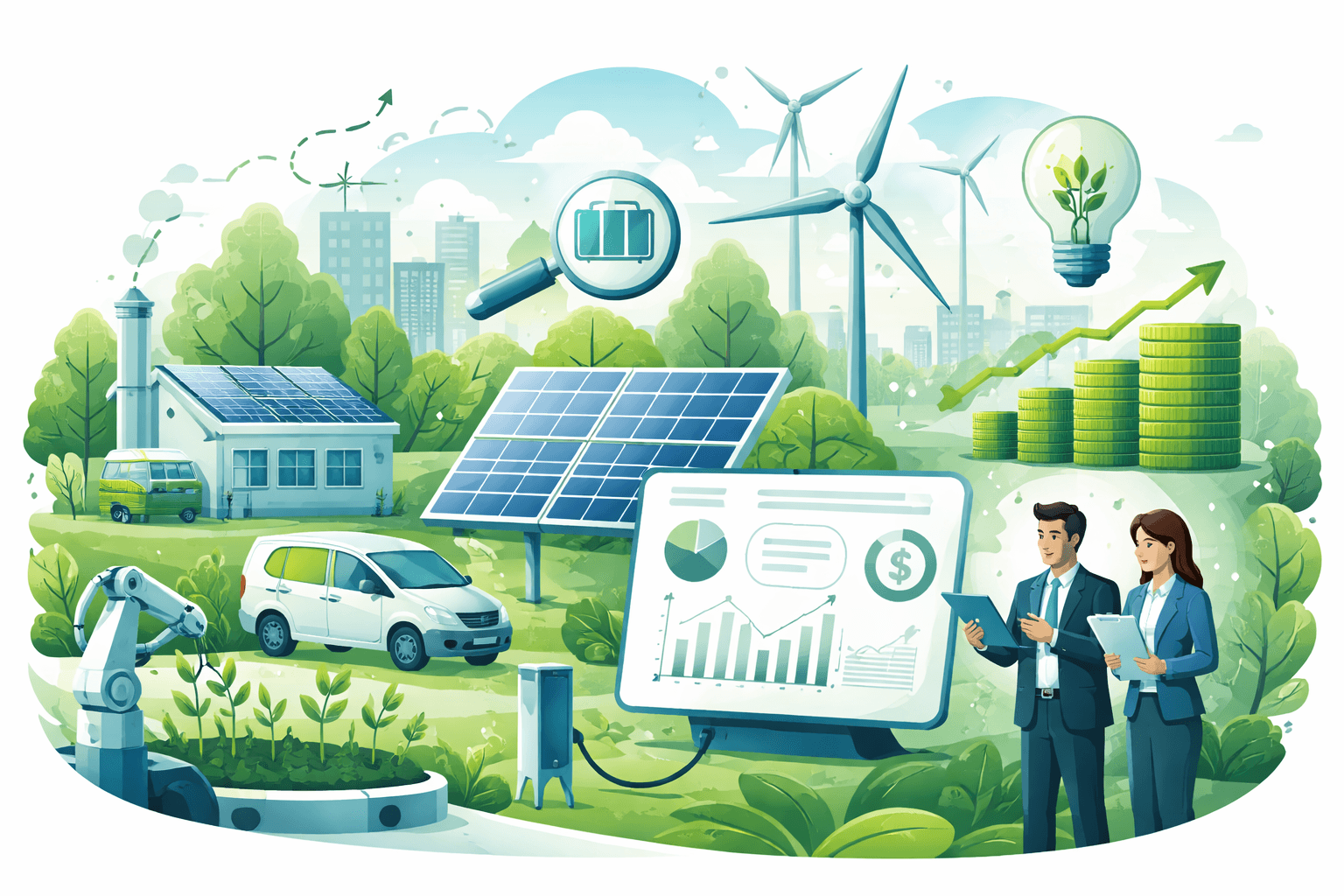
Businesses have more ways than ever to lower project costs with clean energy tax credits. The Inflation Reduction Act (IRA) of 2022 created or expanded dozens of incentives, including a 30% Investment Tax Credit (ITC) for eligible energy property and a Production Tax Credit (PTC) worth roughly 2.7 cents per kilowatt-hour of clean electricity generated (2023 level, inflation-adjusted). For many projects, bonus credits can push total benefits well above 40% of project costs. This guide explains how clean energy tax credits for businesses work, which investments qualify, and how to plan to maximize savings while staying compliant.
Why this matters now: Treasury estimates the IRA will drive hundreds of billions of dollars in clean energy investments this decade. IRS guidance in 2023–2025 clarified key rules on prevailing wage and apprenticeship, transferability (selling credits for cash), domestic content, and location-based bonuses—unlocking new pathways for businesses without large tax bills to still monetize credits.
What are business clean energy tax credits—and what qualifies?
Clean energy tax credits are dollar-for-dollar reductions of federal income tax owed when a business invests in qualifying energy property or produces clean electricity or fuels. Unlike deductions, which reduce taxable income, credits directly reduce tax liability.
Commonly eligible projects and equipment include:
- Onsite solar photovoltaic (PV) systems and associated interconnection equipment
- Standalone battery energy storage systems (BESS) and thermal energy storage
- Wind, geothermal, small hydropower, biogas, and certain waste-to-energy systems
- Electric vehicle (EV) charging equipment for employees, fleets, or public use
- Commercial EVs and fuel cell vehicles for fleets
- Energy-efficient building systems (lighting, HVAC, controls, envelope) that meet specified performance thresholds (deduction, not a credit)
Rules differ by credit and technology. Some benefits are production-based (you earn them over time per unit of energy produced), while others are investment-based (a percentage of upfront cost). Many can be combined with state and utility incentives.
Clean energy tax credits for businesses: the federal landscape
Federal incentives fall into several families. Below are the primary ones businesses use, with references to the Internal Revenue Code (IRC) sections and current policy notes from the U.S. Department of the Treasury/IRS.

Renewable Energy Finance: Funding The Future Of Energy (Second Edition): Donovan, Charles W
Renewable Energy Finance: Funding The Future Of Energy (Second Edition) [Donovan, Charles W] on Amazon.com. *FREE* shipping on qualifying offers. Renewable Energy Finance: Funding The Future Of Energy
Check Price on AmazonInvestment Tax Credit (ITC): Section 48 (through 2025) and 48E (from 2025/2026)
- Value: Base 6% of eligible project cost; rises to 30% when prevailing wage and apprenticeship (PW/A) rules are met (or construction began before Jan 29, 2023, per IRS Notice 2022-61). The 30% rate is often called the “full” ITC.
- Bonus credits: Additive 10 percentage points for qualifying domestic content and 10 percentage points for projects in designated energy communities. For small solar/wind projects under 5 MW AC, a Low-Income Communities Bonus can add 10 or 20 points (limited annual allocation). Combining these can lift a qualifying project from 30% to as high as 50%—and up to 70% for certain small low-income projects.
- Eligible property: Solar PV, fuel cells, certain wind, geothermal, biogas, energy storage technology (including standalone batteries), microgrid controllers, and interconnection costs for small projects up to 5 MW AC.
- Technology-neutral shift: For projects beginning construction after 2024 and placed in service in 2025 or later, Section 48E replaces 48. It keeps similar percentages but is technology-neutral: property must generate zero or near-zero greenhouse gas emissions based on IRS/DOE methodology.
Authoritative sources: IRS/Treasury guidance under Sections 48 and 48E; Notice 2022-61 (PW/A effective dates); domestic content rules (proposed/final regulations, 2023–2024); energy community guidance and mapping tool.
Production Tax Credit (PTC): Section 45 (through 2025) and 45Y (from 2025)
- Value: Base 0.3 cents/kWh; full value is 1.5 cents/kWh times an inflation factor (approximately 2.7–2.8 cents/kWh for 2023–2024 per IRS). PW/A compliance is required for the higher rate.
- Duration: Generally available for the first 10 years of production after the facility is placed in service.
- Eligible technologies: Historically wind, closed-loop biomass, geothermal, landfill gas, municipal solid waste, qualified hydropower, marine/hydrokinetic, and solar (if elected). Under Section 45Y (technology-neutral), facilities placed in service after 2024 must produce zero-GHG electricity to qualify.
- ITC vs PTC choice: For several technologies, developers may choose the ITC or PTC—but cannot claim both for the same facility. Modeling cash flows often dictates the better option: high-capex/low-output favors ITC; high-output/high-capacity-factor often favors PTC.
Energy storage and microgrids
- Standalone storage now qualifies for the ITC (Section 48/48E). Batteries and thermal energy storage generally must have a nameplate capacity of at least 5 kWh and be used to store electricity or energy for conversion to electricity.
- Microgrid controllers are also eligible property, enabling campuses and industrial sites to island and optimize distributed energy resources.
EV charging infrastructure: Section 30C
- Value: 6% base or 30% with PW/A, capped at $100,000 per charging unit (post-2022 rules).
- Location requirement: Property must be placed in service in eligible census tracts (low-income or non-urban areas) to qualify (see IRS/Treasury guidance and DOE’s mapping tools).
- Eligible property: Electric vehicle charging stations and alternative fuel refueling equipment.

Autel MaxiCharger Home Electric Vehicle (EV) Charger, up to 50 Amp, 240V, Level 2 WiFi and Bluetooth Enabled EVSE, Hardwired, Indoor/Outdoor, 25-Foot Cable with Separate Holster, Silver : Automotive
View on AmazonFor state-level charging incentives and stackable benefits, see Electric Vehicle Incentives by State: What’s Available, Who Qualifies, and How to Claim It (/sustainability-policy/electric-vehicle-incentives-by-state).
Commercial Clean Vehicle Credit: Section 45W
- Value: Up to $7,500 for vehicles under 14,000 lbs gross vehicle weight rating (GVWR) and up to $40,000 for heavier vehicles; calculated as the lesser of 30% of the vehicle’s basis (15% for non-plug-in fuel cell vehicles) or the caps above.
- Eligibility: No manufacturer sales cap and generally no consumer-style sourcing requirements; available for vehicles acquired for business use and not for resale.
Energy-efficient commercial buildings deduction: Section 179D (deduction, not a credit)
- Value: Sliding scale; base $0.50–$1.00 per square foot; with PW/A multiplier, up to $2.50–$5.00 per square foot for projects that meet energy savings thresholds relative to ASHRAE 90.1 standards (as specified by IRS). Can be claimed by building owners; certain designers of government- and tax-exempt-owned buildings may be allocated the deduction.
- What qualifies: Permanent systems in lighting, HVAC, and building envelope that meet modeled savings.
If you’re planning broader building upgrades, see Green Building Tax Incentives: How to Maximize Savings for Homes and Commercial Projects (/sustainability-policy/green-building-tax-incentives-maximize-savings).
Other high-impact credits businesses may use
- Carbon capture, utilization, and storage (CCUS): Section 45Q provides per-ton credits for captured and securely stored or utilized CO₂, with higher values for saline storage and larger facilities.
- Clean hydrogen: Section 45V provides a per-kg credit (up to $3/kg at the top tier) based on lifecycle greenhouse gas intensity, subject to stringent additionality, deliverability, and time-matching rules in recent Treasury/DOE guidance.
- Advanced manufacturing: Section 45X offers credits for domestic production of batteries, critical minerals, solar components, and other specified clean energy components (eligible for direct pay by taxable entities). Section 48C allocates a 30% investment credit to advanced energy manufacturing projects via competitive application rounds.
- Clean fuel production: Section 45Z (starting 2025) provides technology-neutral credits for low-carbon transportation fuels based on emissions intensity.
Authoritative sources: IRS/Treasury regulations and notices for each section; DOE and EPA technical guidance for lifecycle analyses.
Credits vs. deductions, grants, and rebates—how they differ and stack
- Credits: Dollar-for-dollar reductions in tax liability (e.g., ITC, PTC, 30C, 45W). Many fall under the General Business Credit; unused amounts can generally be carried back 1 year and forward up to 20 years (IRC Section 39). Many credits can be transferred (sold) for cash under IRA rules; some are eligible for “direct pay” only for tax-exempt entities, with limited exceptions for businesses (45Q, 45V, 45X).
- Deductions: Reduce taxable income (e.g., 179D). Deductions can pair with credits, subject to basis adjustments and other interaction rules.
- Grants: Cash awards that typically reduce the project’s depreciable basis or the cost eligible for credits to prevent “double dipping.” Examples include DOE programs and USDA’s Rural Energy for America Program (REAP) grants for agricultural producers and rural small businesses, which can cover a significant share of renewable energy and energy efficiency project costs.
- Rebates: Utility or state rebates are often treated as purchase price adjustments and can reduce the basis for credits and depreciation unless otherwise specified. Always confirm treatment with a tax advisor.
Depreciation interactions matter. Most energy property can be depreciated using MACRS (often 5-year for solar and many renewables). Bonus depreciation is phasing down: 60% (2024), 40% (2025), 20% (2026) under current law. The Section 48 ITC generally reduces the depreciable basis by 50% of the credit amount (IRC Section 50), which can slightly temper the combined benefit but still yields strong after-tax economics.
Eligibility and compliance: what determines your benefit
Key factors that influence which clean energy tax credits for businesses you can claim and at what value:
- Business structure and tax appetite: C corps, S corps, and partnerships can all claim credits, but allocation and carryforward rules differ. Limited tax liability? Consider transferability—selling credits for cash under IRS rules—versus bringing in a tax equity partner.
- Project type and placed-in-service date: Determines whether technology-specific rules (Sections 45/48) or the technology-neutral regime (45Y/48E) apply.
- Prevailing wage and apprenticeship (PW/A): Required to access the 5x “full” credit rates for most ITC/PTC and for higher 179D deductions. Generally: pay laborers and mechanics local prevailing wages (DOL guidance) and meet apprenticeship hour requirements (12.5% of total labor hours in 2023; 15% for 2024 onward) and ratio/supervision rules. Maintain certified payroll and apprenticeship documentation. See IRS Notice 2022-61 and subsequent regulations.
- Bonus credits and location:
- Domestic content bonus: Requires using U.S.-made steel/iron (100%) and achieving specified percentages of U.S.-manufactured components (e.g., 40% for most projects beginning construction before 2025, ramping up thereafter; different thresholds for offshore wind). Requires manufacturer certifications and careful supply chain documentation.
- Energy communities bonus: Available for projects in brownfields; areas with recent coal mine/plant closures; or areas with above-average fossil fuel employment and unemployment. Verify eligibility via Treasury/DOE mapping tools and maintain siting records.
- Low-Income Communities Bonus (Section 48(e)): For small solar/wind under 5 MW AC; allocation-based program with annual caps. Requires application, award, and documentation that the project meets the qualifying category (e.g., located in a low-income community or providing economic benefits to low-income households).
- Interconnection rule for small projects: Interconnection costs for projects up to 5 MW AC can qualify for the ITC.
- Recapture rules: ITC can be partially recaptured if the property is disposed of or ceases to qualify within 5 years after it’s placed in service. Maintain ownership/operation and compliance for the recapture period.
- Documentation and filings: Businesses typically claim investment-related energy credits via Form 3468 and the General Business Credit via Form 3800, with project-by-project substantiation (contracts, commissioning reports, technical certifications, siting maps, payroll records, domestic content certificates, interconnection agreements). For vehicle and fueling credits, use IRS forms specified for Sections 30C and 45W. Keep records for statute-of-limitations periods and any recapture windows.
Transferability and elective pay:
- Transferability allows most IRA energy credits to be sold for cash to unrelated parties. The sale is generally non-taxable to the seller, and the buyer cannot deduct the purchase price; both must register and report per IRS procedures.
- Elective pay (direct pay) is broadly available to tax-exempt and governmental entities; for taxable businesses, it’s generally limited to Sections 45Q, 45V, and 45X.
Common business investments that benefit
- Commercial and industrial solar PV (rooftop, canopy, ground-mount): ITC at 30% with potential 10–20 points of bonuses; or PTC/45Y where capacity factor is high. Interconnection ITC for ≤5 MW AC projects can improve economics for behind-the-meter systems.
- Standalone battery storage and solar-plus-storage: Storage ITC is often decisive for peak-shaving, demand charge management, and resilience. Many projects pencil with 2–4 hour batteries; PW/A compliance and domestic content can unlock additional value.
- EV fleets and charging: Section 45W can offset fleet electrification capital costs (up to $40,000 per heavy-duty vehicle), while Section 30C can reduce charger capex by up to 30% per unit (subject to siting and caps). For broader state support on charging and vehicles, see Electric Vehicle Incentives by State: What’s Available, Who Qualifies, and How to Claim It (/sustainability-policy/electric-vehicle-incentives-by-state).
- Energy-efficient building upgrades: Section 179D can deliver up to $5.00/sf for comprehensive retrofits meeting performance thresholds, particularly compelling for large facilities with lighting, HVAC, and envelope stacks. If you’re mapping a whole-building strategy, read Green Building Tax Incentives: How to Maximize Savings for Homes and Commercial Projects (/sustainability-policy/green-building-tax-incentives-maximize-savings).
- Other renewables and thermal systems: Geothermal heat pumps (ITC-eligible), landfill gas/biogas, and certain waste-heat-to-power systems can qualify. Project economics vary by resource quality, interconnection, and output profile.
By the Numbers
- 30%: Standard ITC rate with PW/A for eligible energy property (IRC Sec. 48; Treasury/IRS guidance)
- ~2.7–2.8 cents/kWh: Inflation-adjusted PTC value in 2023–2024 for projects meeting PW/A (IRS annual inflation notices)
- +10 percentage points each: Potential ITC adders for domestic content and energy communities (IRS proposed/final rules, 2023–2024)
- Up to 20 percentage points: Low-Income Communities Bonus for small solar/wind under 5 MW AC (IRS Sec. 48(e) allocation program)
- Up to $100,000 per charger: Section 30C cap per charging unit, at 30% with PW/A in eligible tracts (IRS)
- Up to $40,000 per vehicle: Section 45W Commercial Clean Vehicle Credit for heavy-duty EVs (IRS)
- Up to $5.00/sf: Section 179D for energy-efficient commercial buildings with PW/A (IRS/DOE/ASHRAE references)
- 1-year back/20-years forward: Typical carryback/carryforward periods for General Business Credits (IRC Sec. 39)
How to evaluate savings, avoid mistakes, and plan with your tax team
- Define the project scope and load profile
- Characterize energy use, tariffs, demand charges, operational needs (resilience, peak shaving, fleet duty cycles). For multi-measure retrofits, baseline the building using recognized methods and tools.

Emporia Gen 2 Smart Home Energy Monitor with 16 50A Circuit Level Sensors | Real Time Electricity Monitor/Meter | Solar/Net Metering - Amazon.com
View on Amazon- Model ITC vs. PTC where applicable
- For generation assets, run side-by-side cash-flow scenarios. High-capex/low-output assets (e.g., low capacity factor) tend to favor the ITC; high-output assets with strong capacity factors can earn more via the PTC.
- Test eligibility for bonus credits and siting rules
- Map energy communities, low-income census tracts (for 48(e) allocations), and 30C-eligible tracts for charging. Engage suppliers early to assess domestic content documentation. Design to meet PW/A from day one—retrofitting compliance is difficult.
- Stack incentives carefully
- Sequence utility rebates, grants (e.g., USDA REAP for rural small businesses), state tax credits, and federal incentives to avoid basis conflicts. Track whether a grant reduces eligible basis for the ITC or the depreciation basis.
- Plan for monetization
- If you lack tax capacity, evaluate credit transferability (sell at a discount to face value) versus tax equity financing. For credits eligible for elective pay (45Q, 45V, 45X), direct pay may be optimal. Budget for transaction costs, insurance/warranties, and legal opinions.
- Coordinate depreciation strategy
- Consider MACRS schedules and bonus depreciation phase-down (40% in 2025; 20% in 2026 under current law). Incorporate the Section 50 basis reduction for the ITC into your pro forma.
- Build a compliance file
- Establish document checklists: prevailing wage determinations, certified payroll, apprenticeship participation, domestic content certificates, energy community/low-income maps and applications, equipment specs, commissioning reports, and interconnection agreements. Maintain records for recapture periods.
- Anticipate interconnection and supply chain timelines
- Queue times and equipment lead times can shift placed-in-service dates, which can determine whether tech-specific rules (45/48) or tech-neutral rules (45Y/48E) apply. Protect your eligibility with start-of-construction strategies recognized by IRS (physical work test or 5% safe harbor) and continuity rules.
Common mistakes to avoid
- Missing PW/A documentation: This can shrink a 30% ITC to a 6% base credit.
- Assuming all locations qualify for EV charging credits: Section 30C has census-tract eligibility rules.
- Double-counting basis after grants/rebates: Can trigger adjustments or penalties.
- Selecting ITC when PTC would be more valuable (or vice versa) without rigorous modeling.
- Overlooking recapture risk when ownership transfers within 5 years.
If you’re aligning incentives with broader climate targets, see:
- Carbon Accounting for Small Business: A Practical Guide to Tracking and Reducing Emissions (/sustainability-policy/carbon-accounting-for-small-business-practical-guide)
- Net Zero Roadmap for Businesses: A Practical Guide to Cutting Emissions (/sustainability-policy/net-zero-roadmap-for-businesses-practical-guide)
Practical implications for SMEs and large enterprises
- Small and midsize enterprises (SMEs): Transferability has opened the door for projects even without large tax bills. Focus on smaller, quicker-to-execute measures—rooftop solar-plus-storage, Level 2 charging in eligible tracts, and 179D-driven retrofits. USDA REAP can materially improve rural SME economics.
- Large enterprises and campuses: PW/A compliance is standard; domestic content strategies can add 10 points to ITC where procurement teams can secure traceability. Portfolio-wide 179D retrofits can be sequenced over multiple tax years to manage deduction caps. Fleet electrification can combine 45W and 30C for meaningful TCO savings.
Where policy is heading
- Technology-neutral shift: Sections 45Y and 48E will dominate new projects placed in service from 2025 onward, rewarding any grid electricity with near-zero lifecycle emissions, including emerging technologies. Treasury and DOE will continue refining emissions methodology—projects should retain engineering support for documentation.
- Domestic content ramp: Manufactured-product thresholds ratchet up over time (with different paths for offshore wind). Early supplier engagement and chain-of-custody documentation will become critical to secure the 10-point bonus.
- Maturing credit markets: Transferability infrastructure—registries, insurance, and pricing benchmarks—is maturing, lowering transaction frictions for middle-market projects.
- Depreciation headwinds: With bonus depreciation stepping down to 20% in 2026 under current law, tax planning around depreciation timing will matter more to achieve target returns.
The bottom line: Clean energy tax credits for businesses can cover 30% or more of eligible project costs—and with the right siting and compliance, materially higher. With clear scoping, early PW/A planning, and careful stacking of federal, state, and utility incentives, businesses can materially cut energy costs and emissions while improving project ROI.
Recommended Products
Renewable Energy Finance: Funding The Future Of Energy (Second Edition): Donovan, Charles W
Renewable Energy Finance: Funding The Future Of Energy (Second Edition) [Donovan, Charles W] on Amazon.com. *FREE* shipping on qualifying offers. Renewable Energy Finance: Funding The Future Of Energy
Autel MaxiCharger Home Electric Vehicle (EV) Charger, up to 50 Amp, 240V, Level 2 WiFi and Bluetooth Enabled EVSE, Hardwired, Indoor/Outdoor, 25-Foot Cable with Separate Holster, Silver : Automotive
This Autel ev charger comes with a plug-and-charge setting from the manufacturer and <strong>does not include a RFID card</strong>. You can purchase our RFID cards and bind them to Autel Charge app, t
Emporia Gen 2 Smart Home Energy Monitor with 16 50A Circuit Level Sensors | Real Time Electricity Monitor/Meter | Solar/Net Metering - Amazon.com
See how much electricity your home is using anywhere, anytime. ... <strong>Add individual 50A sensors to your Vue to monitor up to 16 individual circuits</strong> — providing accurate energy use for t