
Electric Fleet Transition Guide: How to Plan, Launch, and Scale a Successful EV Fleet
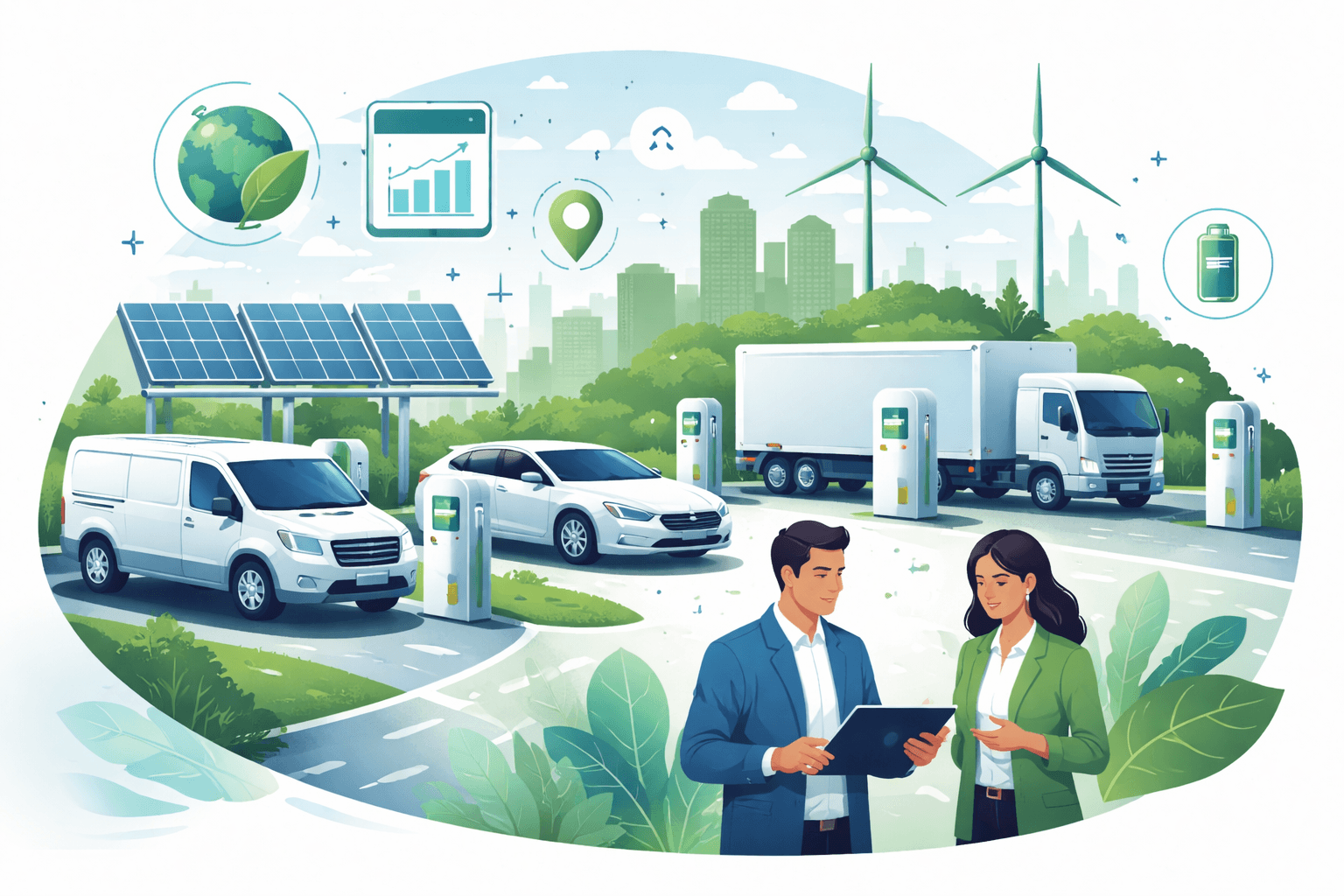
Organizations are moving fast to electrify vehicles because the economics and policy signals are aligning. This electric fleet transition guide synthesizes what leading fleets, researchers, and utilities have learned so you can plan, launch, and scale with confidence. In 2025, battery-electric light commercial vehicles (LCVs) reached total cost of ownership (TCO) parity with diesels in many duty cycles, according to BloombergNEF, while the U.S. Inflation Reduction Act’s Commercial Clean Vehicle Credit offers up to $7,500 for vehicles under 14,000 lb GVWR and up to $40,000 above that (IRS Section 45W). Real-world trials by the North American Council for Freight Efficiency (NACFE) show many last‑mile and regional routes already fit today’s ranges, and the International Council on Clean Transportation (ICCT) finds 60–80% lifecycle CO2e reductions for battery-electric trucks depending on grid intensity.
Why fleets are transitioning now
- Cost and operational stability: Electricity prices are historically less volatile than diesel. On a typical urban delivery route, a Class 6 battery‑electric truck consuming ~1.6–2.0 kWh/mile at $0.12/kWh spends about $0.19–$0.24 per mile on energy, versus ~$0.50/mile for diesel at $4/gal and 8 mpg (U.S. DOE AFDC reference values). Fleet maintenance costs drop 20–40% with EVs due to fewer moving parts and no oil changes (DOE/NACFE).
- Environmental performance: Battery-electric vehicles eliminate tailpipe emissions and reduce lifecycle greenhouse gases 60–80% on the average U.S. grid, per ICCT and Argonne GREET modeling, with deeper cuts as grids decarbonize.
- Regulatory momentum: California’s Advanced Clean Fleets (ACF) rule begins phasing in zero-emission purchases for certain fleets, while the EU adopted stricter CO2 standards for heavy-duty vehicles (−45% by 2030, −65% by 2035, and −90% by 2040 versus 2019). Many cities are announcing zero‑emission zones in the 2025–2035 window.
- Customer and brand expectations: Shippers and corporate buyers are embedding Scope 3 emissions targets into contracts, rewarding carriers that can document real reductions.

Clean Disruption of Energy and Transportation: How Silicon Valley Will Make Oil, Nuclear, Natural Gas, Coal, Electric Utilities and Conventional Cars Obsolete by 2030: Seba, Tony
He is the author of the <strong>#1 Amazon best-selling book “Clean Disruption of Energy and Transportation</strong>”, “Solar Trillions” and “Winners Take All”, and co-author of “Stellar - A World With
Check Price on AmazonFor a deeper dive into the medium- and heavy‑duty landscape—price parity dynamics, battery swapping pilots, smart charging, and policy—see Charging the Fleet Revolution: Price Parity, Swapping, Smart Charging and Policy Support Are Converging for Medium‑ & Heavy‑Duty EVs (/renewable-energy/charging-the-fleet-revolution-price-parity-swapping-smart-charging-and-policy-support-are-converging-for-medium-heavy-duty-evs).
Electric Fleet Transition Guide: planning essentials
Before ordering vehicles, clarify use cases, validate routes, and right‑size charging.
1) Define vehicle use cases and duty cycles
- Segment by job: last‑mile van, utility/service truck, municipal refuse, drayage, regional haul, shuttle/bus.
- Daily distance and distribution: Use telematics to pull a full year of odometer, GPS, and dwell time. Capture the 90th percentile daily miles, not just the average.
- Payload and auxiliary loads: HVAC, PTOs, and lifts can add 5–20% to energy use. Note roof racks or box aerodynamics.
- Environment and terrain: Cold weather, grades, and high speeds raise consumption. NREL’s FleetDNA shows Class 2b–7 urban vocational vehicles frequently operate 20–80 miles/day with frequent stops—well within current EV ranges for many segments.
![Vyncs - GPS Tracker for Vehicles, [No Monthly Fee], 4G LTE, Vehicle Location, Trip History, Driving Alerts, GeoFence, Fuel Economy, OBD Fault Codes, USA-Developed, Family or Fleets : Electronics](https://m.media-amazon.com/images/I/41Zanvm5N1L.jpg)
Vyncs - GPS Tracker for Vehicles, [No Monthly Fee], 4G LTE, Vehicle Location, Trip History, Driving Alerts, GeoFence, Fuel Economy, OBD Fault Codes, USA-Developed, Family or Fleets : Electronics
View on Amazon2) Route and energy analysis
- Baseline energy model: kWh/mile = (vehicle test data) × adjustment factors for temperature, elevation, stop‑and‑go, payload, and speed. Validate with a 2–4 week instrumented trial if possible.
- Charging windows: Identify dwell periods long enough to recover the day’s energy—overnight at depot, mid‑shift breaks, or destination dwell at warehouses or yards.
- Reserve margin: Add 15–30% energy buffer to account for weather, detours, and battery aging.
3) Charging strategy and infrastructure readiness
- Charging types:
- Level 2 AC (6.6–19.2 kW): Low capex, ideal for overnight depot charging. ~25–60 miles of range per hour for light/medium‑duty.
- DC fast charging (50–350+ kW): Necessary for quick turns, MHDV depots, and opportunity charging.
- Depot power planning: Rough rule of thumb for a shared Level 2 depot is a charger‑to‑vehicle ratio of 0.3–0.6 with software scheduling; for DC, 0.1–0.3 with power sharing and managed charging.
- Managed charging: NREL finds smart charging can cut peak demand by 20–60% while meeting readiness windows, reducing demand charges and deferring grid upgrades.
- Interconnection lead times: Medium‑voltage upgrades can take 12–36 months depending on utility workload and permitting (CALSTART/SEPA industry surveys). Engage the utility early and request a capacity and timelines study.
- Interoperability and future‑proofing: Specify OCPP‑compliant chargers, ISO 15118 plug‑and‑charge capability, and plan for the SAE J3400/NACS connector where relevant.

Autel MaxiCharger Home Electric Vehicle (EV) Charger, up to 50 Amp, 240V, Level 2 WiFi and Bluetooth Enabled EVSE, Hardwired, Indoor/Outdoor, 25-Foot Cable with Separate Holster, Dark Gray : Automotive
View on AmazonFor fundamentals on charger types, installation, and renewable integration, see EV Charging Stations: What You Need to Know About Types, Costs, Installation, and Renewable Integration (/sustainability-policy/ev-charging-stations-types-costs-installation-renewable-integration). For cost planning, EV Charging Station Installation Cost: What to Expect and How to Plan (/green-business/ev-charging-station-installation-cost) breaks down hardware, make‑ready, and labor.
4) Total cost of ownership (TCO) and financing
- Capex: EVs often carry higher upfront prices, partially offset by incentives. In the U.S., the Commercial Clean Vehicle Credit (45W) offers up to 30% of the price (capped at $7,500 or $40,000 depending on GVWR), transferable at point of sale.
- Opex: Energy per mile and maintenance per mile typically fall 30–60% and 20–40%, respectively (DOE, NACFE, Consumer Reports for LDV), though electricity tariffs and tire wear can shift results.
- Residual value and second‑life: Consider battery health warranties (often 8–10 years; MHDVs may use energy‑throughput warranties). Plan for redeploying vehicles with lower range needs as they age.
- Financing models: Explore operational leases, energy‑as‑a‑service, and infrastructure‑as‑a‑service where a third party finances and operates chargers.
U.S. readers can scan Electric Vehicle Incentives by State: What’s Available, Who Qualifies, and How to Claim It (/sustainability-policy/electric-vehicle-incentives-by-state) to stack state and utility programs on top of federal credits when applicable.
By the numbers: fleet electrification at a glance
- 20–40% lower maintenance costs: EVs eliminate oil changes and have fewer wear items (U.S. DOE, NACFE).
- 40–65% lower energy cost per mile: For typical urban MHDV duty cycles, depending on electricity tariffs and diesel prices (DOE AFDC).
- 60–80% lifecycle GHG reduction: Battery-electric trucks vs. diesel on average grids, deeper as grids decarbonize (ICCT, Argonne GREET).
- 20–60% demand reduction with smart charging: Automated load management meets readiness windows while cutting depot peaks (NREL).
- 12–36 months: Typical range for medium‑voltage utility upgrades—design this into your schedule (industry surveys: CALSTART/SEPA).
98% depot charger uptime achievable with service‑level agreements, remote monitoring, and spares; public DCFC networks report lower real‑world reliability in some regions (UC Berkeley field studies vs. fleet‑managed depots).
How to implement a phased fleet transition
A phased approach lowers risk, builds internal expertise, and informs infrastructure right‑sizing.
Phase 0: set targets and governance
- Set measurable goals: e.g., convert 25% of last‑mile vans by 2027; 50% of yard trucks by 2028; 100% of new purchases zero‑emission by 2030.
- Form a cross‑functional team: Fleet ops, facilities/real estate, IT/cyber, finance, sustainability, and utility liaison. Assign an executive sponsor.
- Data baselining: Pull 12 months of telematics and fuel records; harmonize asset IDs across maintenance, HR, and telematics.
Phase 1: pilot program (6–12 months)
- Select 5–20 vehicles in the friendliest duty cycle (short routes, reliable overnight dwell, moderate climate).
- Temporary charging: Mix Level 2 and one or two DCFC units with portable or modular hardware where possible to de‑risk siting.
- Test and learn: Track kWh/mile, charger queue times, driver satisfaction, uptime, and weather impacts. Validate TCO assumptions and refine energy models.
- Safety and training: Train drivers on regenerative braking, preconditioning, and charger operation; train technicians on high‑voltage safety and lockout‑tagout procedures.
Phase 2: scale within optimal segments (Year 1–3)
- Procurement strategy: Standardize on 1–2 vehicle platforms per segment to streamline parts and training. Lock in maintenance and uptime SLAs.
- Depot build‑out: Install permanent infrastructure with expandable switchgear and conduit to serve future phases. Deploy networked chargers with smart charging software and open protocols (OCPP 1.6/2.0.1).
- Utility coordination: File interconnection early; request EV‑specific tariffs or pilot rates; explore make‑ready programs and transformer upgrades aligned with your multi‑year ramp.
- Spare strategy and uptime: Maintain 10–15% vehicle spare ratio during early scaling, and 5–10% spare chargers. Use remote diagnostics and keep critical parts on hand.
Phase 3: extend to harder duty cycles (Year 2–5)
- Regional haul and temperature extremes: Add higher‑capacity packs, en‑route DCFC, and thermal management best practices.
- Opportunity charging: Add high‑power DC at hubs and along routes; negotiate site‑host agreements at warehouses and cross‑docks.
- Onsite generation and storage: Solar + battery systems can shave peaks, improve resilience, and lower effective $/kWh. Model payback with current tariffs and incentives.
For a broader view of technology trajectories and grid integration that will shape Phase 3 and beyond, see Future of Electric Vehicle Technology: Breakthroughs, Grids, Supply Chains, and New Mobility Models (/sustainability-policy/future-of-electric-vehicle-technology-breakthroughs-grids-supply-chains-and-new-mobility-models).
Common challenges and practical mitigations
Range limitations in cold or hilly routes
- Mitigations: Right‑size batteries; precondition cabins and packs while plugged in; spec heat pumps; optimize routes for speed and elevation; add mid‑shift top‑ups.
- Data: Winter conditions can raise consumption 20–40%; plan buffers accordingly (NREL cold‑weather studies).
Charging downtime and reliability
- Mitigations: Choose commercial‑grade hardware with SLAs; design for redundancy; stock critical spares; adopt remote monitoring and proactive maintenance; standardize connectors; train drivers on best practices.
- Target: >98% charger uptime and >95% vehicle availability for most delivery ops.
Depot power constraints and long utility timelines
- Mitigations: Implement managed charging to cap peaks; phase loads in stages; use temporary power (e.g., lower‑power DC, mobile units); consider behind‑the‑meter storage to defer upgrades; coordinate early with utilities on transformer sizing and feeder capacity.
Tariff risk and demand charges
- Mitigations: Shift charging to off‑peak and shoulder periods; enable power‑sharing across dispensers; enroll in EV or time‑of‑use rates; leverage demand charge holidays/pilots where offered; consider adding on‑site solar/storage.
Budget constraints and capex sticker shock
- Mitigations: Total‑cost framing with Opex savings; pursue grants, utility make‑ready, and tax credits; evaluate leases and as‑a‑service models; stage procurement to align with infrastructure and cash flow.
Change management and workforce readiness
- Mitigations: Early driver involvement and ride‑and‑drives; performance incentives tied to safe, efficient driving; clear SOPs for charging and pre‑trip checks; technician upskilling with OEM and high‑voltage training.
Data fragmentation and cybersecurity
- Mitigations: Consolidate telematics, charger, and maintenance data into a fleet data lake; enforce role‑based access; require vendors to meet ISO 27001/SOC 2; keep chargers on segmented networks with certificate‑based authentication.
How to measure success and iterate
Define key performance indicators (KPIs) up front and review monthly in Year 1, quarterly thereafter.
- Emissions avoided: Metric tons CO2e avoided vs. diesel baseline using location‑based grid factors and well‑to‑wheel assumptions (document methodology; ICCT/Argonne GREET references are common).
- Energy efficiency: kWh/mile by route and weather band; track improvements from driver training and preconditioning.
- Fuel and maintenance savings: $/mile vs. baseline, with tariffs and diesel prices logged; report variance to forecast.
- Fleet performance: Vehicle availability (% time road‑ready), charger uptime, mean time to repair (MTTR), and charger utilization (target 10–30% for depot L2; higher for DC hubs).
- Operational outcomes: On‑time delivery %, cost per stop, route completion without en‑route charging.
- Scalability readiness: Spare electrical capacity, conduit installed for future chargers, interconnection queue status, and training completion rates.
Visualize results in dashboards that align financial, sustainability, and operations data. Use pilot learnings to tune procurement specs (battery sizes, HVAC options), charging power levels, and software settings.
Practical checklist for your first 12 months
- Month 0–2: Finalize governance, data baselines, and incentive strategy. Open a utility interconnection ticket.
- Month 2–4: Select pilot routes and vehicles; order portable/modular chargers; design temporary site layout and safety plan.
- Month 4–6: Launch pilot; train drivers/techs; begin weekly KPI reviews; validate kWh/mile and TCO.
- Month 6–9: Freeze specs for Phase 2 procurement; file permits for permanent infrastructure; apply for grants and utility make‑ready.
- Month 9–12: Install scalable switchgear and first bank of permanent chargers; integrate smart charging; lock SLAs for uptime and service.
Where this is heading
Battery energy density is rising and pack costs continue to decline—BloombergNEF projects sub‑$80/kWh pack prices later this decade—widening the duty cycles suitable for battery‑electric trucks and vans. Charging hardware is standardizing around OCPP, ISO 15118, and the SAE J3400/NACS connector in North America, easing interoperability. Utilities are rolling out EV‑optimized tariffs and make‑ready programs, while managed charging and onsite solar‑plus‑storage are proving they can curb peaks and lower total energy costs. The fleets that win will treat electrification as a data‑driven operations program—sequenced by route and site constraints, engineered for uptime, and measured relentlessly against cost and emissions targets.
For route‑specific charging approaches and policy context across medium‑ and heavy‑duty segments, revisit Charging the Fleet Revolution: Price Parity, Swapping, Smart Charging and Policy Support Are Converging for Medium‑ & Heavy‑Duty EVs (/renewable-energy/charging-the-fleet-revolution-price-parity-swapping-smart-charging-and-policy-support-are-converging-for-medium-heavy-duty-evs).
Recommended Products
Clean Disruption of Energy and Transportation: How Silicon Valley Will Make Oil, Nuclear, Natural Gas, Coal, Electric Utilities and Conventional Cars Obsolete by 2030: Seba, Tony
He is the author of the <strong>#1 Amazon best-selling book “Clean Disruption of Energy and Transportation</strong>”, “Solar Trillions” and “Winners Take All”, and co-author of “Stellar - A World With
Autel MaxiCharger Home Electric Vehicle (EV) Charger, up to 50 Amp, 240V, Level 2 WiFi and Bluetooth Enabled EVSE, Hardwired, Indoor/Outdoor, 25-Foot Cable with Separate Holster, Dark Gray : Automotive
MaxiCharger <strong>works with all electric and plug-in hybrid vehicles</strong>. Update the app to the newest version and make sure that your mobile phone is connected to the internet. Then connect t
Vyncs - GPS Tracker for Vehicles, [No Monthly Fee], 4G LTE, Vehicle Location, Trip History, Driving Alerts, GeoFence, Fuel Economy, OBD Fault Codes, USA-Developed, Family or Fleets : Electronics
Vyncs Pro: Vyncs Basic with 60 seconds GPS update and Live Map Auto Refresh (map automatically refreshing as new GPS data comes in). Vyncs Fleet: <strong>Designed for commercial fleet vehicles</strong
More in Sustainability Policy
- Commercial EV Fleet Management: A Practical Guide to Running Electric Fleets
- Charging the Fleet Revolution: Price Parity, Swapping, Smart Charging and Policy Support Are Converging for Medium‑ & Heavy‑Duty EVs
- Electric Vehicles Explained: Types, Costs, Benefits & Impact
- Future of Electric Vehicle Technology: Breakthroughs, Grids, Supply Chains, and New Mobility Models