
Future of Electric Vehicle Technology: Breakthroughs, Grids, Supply Chains, and New Mobility Models
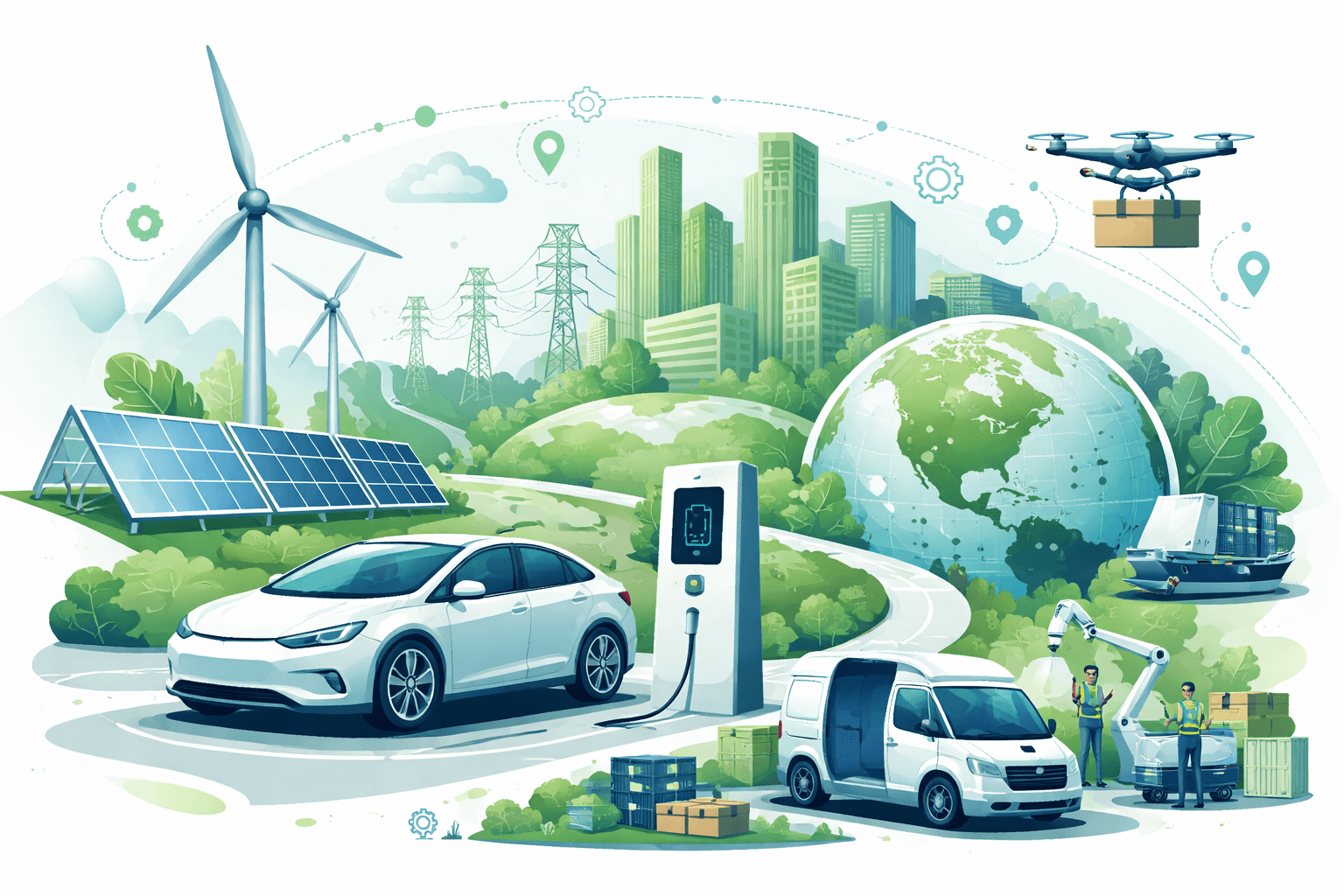
Global EV sales hit roughly 14 million in 2023—about 18% of all new cars—according to the International Energy Agency (IEA, Global EV Outlook 2024). That inflection sets the context for the future of electric vehicle technology: within the next decade, EVs will be shaped by rapid advances in batteries and power electronics, tighter integration with electricity systems, and shifting supply chains and mobility models. This analysis maps the breakthroughs likely to matter most, what they mean for grids and consumers, and where key uncertainties remain.
By the numbers
- 14 million: Global EV sales in 2023 (IEA 2024)
40 million: Global EV stock on the road (IEA 2024)
- 4.1 million: Public charging points worldwide at end‑2023; fast chargers ~0.5 million (IEA 2024)
- $139/kWh: Average lithium‑ion pack price in 2023, down ~82% since 2013 (BloombergNEF 2023)
- ~700 TWh: Projected global electricity demand from EVs in 2030—well under 10% of total power use (IEA 2024)
- 5–10%: Typical drivetrain efficiency gains from silicon‑carbide (SiC) inverters versus silicon (NREL, industry data)
1) Key technological breakthroughs shaping EVs

Electrify: An Optimist's Playbook for Our Clean Energy Future
In Electrify, <strong>Griffith lays out a detailed blueprint—optimistic but feasible—for fighting climate change while creating millions of new jobs and a healthier environment</strong>. Griffith’s pl
Check Price on AmazonNext‑gen batteries: solid‑state, silicon anodes, and new chemistries
Lithium‑ion will remain dominant this decade, but its performance envelope is widening.
Silicon‑rich anodes: Silicon can store ~10x more lithium per gram than graphite. Commercial anodes blending 5–20% silicon (by weight) are arriving in premium and performance EVs, with suppliers reporting 20–40% higher cell energy density and faster charging, alongside improved cold‑weather behavior. Managing swelling and cycle life is the engineering hurdle; expect silicon content to ratchet up as binders and porosity control improve (peer‑reviewed studies and NREL testing).
Solid‑state batteries (SSB): By replacing flammable liquid electrolyte with solid materials, SSBs target higher energy density, faster charging, and improved safety. Automakers and cell developers have announced pilot lines for the late 2020s; limited‑volume models could appear around 2027–2028, with broader scaling into the early 2030s if durability and manufacturing throughput meet targets. Lab cells exceeding 350 Wh/kg are promising, but industry‑scale stack pressure management, interface resistance, and dendrite suppression remain active R&D fronts (Toyota, Nissan, QuantumScape updates; academic literature).
LFP, LMFP, and sodium‑ion: Lithium‑iron‑phosphate (LFP) chemistries grew to roughly 40% of global EV battery demand in 2023 (BNEF), cutting costs while eliminating nickel and cobalt. Manganese‑doped LFP (LMFP) further boosts energy density. Sodium‑ion—without lithium—offers cost and cold‑weather resilience for entry‑level vehicles and two‑/three‑wheelers, with early packs around 140–160 Wh/kg. Expect sodium‑ion to complement, not replace, lithium‑ion through 2030.
Cell‑to‑pack and thermal design: Cell‑to‑pack architectures, tabless electrodes, and advanced thermal pathways (including immersion cooling prototypes) are raising volumetric energy density and enabling faster, more uniform heat removal during ultra‑fast charging. Heat pumps and preconditioning routines increasingly boost winter range and charging acceptance.
Fast charging and thermal management
The industry is shifting from 400‑V to 800‑V—and in some cases 1000‑V—architectures, slashing charge times by enabling higher power at lower currents (less heat, smaller cables). Many 2025–2027 models target 10–80% charging in ~15 minutes under optimal conditions. The limit is a system problem: pack chemistry, cell design, pack cooling, cable/connector ratings, and charger power modules all must align. Thermal preconditioning (warming or cooling the battery before arrival) remains a major real‑world enabler of advertised speeds.
Powertrain advances: motors and inverters
SiC inverters: Replacing silicon IGBTs with SiC MOSFETs reduces switching losses, improves efficiency at partial load, and shrinks cooling hardware. Independent tests and manufacturer data indicate 5–10% range improvements in mixed driving.
Motors: Automakers are minimizing rare‑earth use in permanent‑magnet (PM) motors via new magnet recipes and design optimization, while axial‑flux and switched‑reluctance architectures target higher torque density with fewer critical materials. Hairpin windings and oil‑cooling enable sustained high power for towing and fast‑charging thermal headroom.
Software‑defined EVs
Vehicles are becoming software platforms with:
- Over‑the‑air (OTA) updates for efficiency, thermal logic, charging curves, and driver assistance features.
- Predictive energy management that uses route, traffic, weather, and charger availability to optimize speed, HVAC, and preconditioning.
- Battery state‑of‑health modeling to adjust fast‑charge profiles and preserve longevity.
- Native grid communication (e.g., ISO 15118‑20) enabling plug‑and‑charge and bi‑directional energy services where regulations allow.
2) Charging and energy systems integration
The evolution of public and private charging
Home and workplace charging provide 70–80% of EV energy in many markets (IEA, utility data). Public charging, meanwhile, expanded to 4.1 million points globally by end‑2023, with fast chargers growing roughly 40% year‑on‑year (IEA 2024). The next phase focuses on reliability, uptime transparency, and standardized payment. Ultra‑fast sites (250–400 kW per stall) are proliferating on highways, while urban hubs blend 50–150 kW with retail and amenities.
For an overview of hardware types, costs, and installation options, see our guide: EV Charging Stations: What You Need to Know About Types, Costs, Installation, and Renewable Integration (/sustainability-policy/ev-charging-stations-types-costs-installation-renewable-integration).
Ultra‑fast charging and heavy‑duty
Passenger EVs are normalizing >200 kW peak rates on 800‑V platforms. For trucks and buses, the Megawatt Charging System (MCS) will underpin long‑haul corridors later this decade, paired with depot‑based high‑power charging and smart load management. Medium‑ and heavy‑duty electrification has distinct economics and infrastructure needs; we break those down here: Charging the Fleet Revolution: Price Parity, Swapping, Smart Charging and Policy Support Are Converging for Medium‑ & Heavy‑Duty EVs (/renewable-energy/charging-the-fleet-revolution-price-parity-swapping-smart-charging-and-policy-support-are-converging-for-medium-heavy-duty-evs).
Vehicle‑to‑grid (V2G) and vehicle‑to‑home (V2H)
Bi‑directional charging can turn EVs into flexible grid assets, providing backup power, demand response, and frequency regulation.
Standards and interoperability: ISO 15118‑20 defines bi‑directional power transfer over CCS; CHAdeMO already supports V2H; IEEE 1547 governs interconnection; local interconnection rules and metering remain the gating factors.
Value stacking: Pilot programs show that managed charging alone can reduce local peak loads and defer distribution upgrades; adding V2G can monetize capacity and ancillary services. NREL and utility pilots have demonstrated 20–60% reductions in feeder peaks with smart charging, depending on participation and control horizon.
Consumer use cases: V2H can cover outages with a typical 60–80 kWh battery offering a day or two of whole‑home power (longer with selective loads and rooftop solar). Automakers are increasingly releasing bi‑directional‑ready vehicles and certified home energy systems.
Grid impacts and pairing EVs with renewables and storage
EV electricity demand could reach roughly 700 TWh by 2030 (IEA), a manageable share if charging is flexible. The primary stress is local: neighborhood transformers and commercial feeders. Time‑of‑use rates, demand response, and charge‑management platforms can shift loads to low‑carbon, off‑peak hours.
Pairing charging with on‑site solar and stationary storage reduces demand charges and enhances resiliency. Daytime workplace charging aligns with solar output; depot fleets can pre‑charge batteries or site DC storage to shave peaks. For deeper context on storage markets and integration, see Latest Trends in Battery Storage: Tech, Markets, Sustainability, and Grid Integration (/sustainability-policy/latest-trends-in-battery-storage-tech-markets-sustainability-grid-integration).
3) Supply chain, materials, and lifecycle considerations
Critical minerals: risks and responses
EV demand is reshaping mineral markets. The IEA’s Critical Minerals Market Review (2023) projects several‑fold growth in lithium demand by 2030 under announced policies, with nickel and cobalt growth more modest as LFP adoption rises.
Diversification: Lithium supply additions in Australia, Chile, and Argentina are ramping, with emerging projects in North America and Africa. Direct lithium extraction (DLE) could accelerate brine recovery with lower land footprints if commercial quality and water stewardship are proven at scale.
Material thrifting: Higher‑manganese cathodes, LFP/LMFP expansion, and reduced rare‑earth PM motors lower exposure to supply risks and price volatility.
Manufacturing scale and cost trajectories
Global battery manufacturing capacity surpassed 1 TWh/year and is racing toward multiple terawatt‑hours by 2030 as gigafactories break ground across China, Europe, and North America (IEA, BNEF). Learning rates for lithium‑ion have historically been ~18%—each cumulative doubling of production cuts costs by that share. BNEF’s 2023 survey pegged average pack prices at $139/kWh, with sub‑$100/kWh plausible in the second half of the decade as energy‑dense chemistries, high‑volume tabless designs, and process automation mature.
Recycling and second life
Recycling is shifting from pilot to industrial scale. Hydrometallurgical processes routinely recover >95% of nickel, cobalt, and manganese and increasing shares of lithium and graphite. Policy is pushing the loop closed: the EU Battery Regulation phases in recycled‑content and recovery targets through the 2020s and early 2030s; U.S. programs support domestic recycling and precursor manufacturing. Second‑life applications—stationary storage for buildings, telecom, and grid support—can extend pack utility before recycling, provided reliable state‑of‑health grading and warranties.
Lifecycle emissions
Meta‑analyses by the International Council on Clean Transportation (ICCT) and IEA find that battery‑electric vehicles typically cut lifecycle greenhouse‑gas emissions by 50–70% versus equivalent internal‑combustion cars today, depending on the grid mix, with higher savings as power sectors decarbonize. As more gigafactories run on renewable electricity and upstream minerals are refined with lower‑carbon energy, manufacturing emissions will fall further. Consumers increasingly see carbon transparency labels for batteries, enabling apples‑to‑apples comparisons.
4) Future use cases, business models, and risks
Autonomy and shared mobility
Autonomous driving will likely scale in constrained operating domains first: robotaxis in geo‑fenced urban cores and autonomous trucking on specific highway corridors. High utilization favors EVs due to lower operating costs and simpler maintenance. Fleet vehicles may adopt modular interiors, easy‑clean surfaces, and emphasis on passenger experience. Shared mobility could reduce private‑car ownership in dense cities, though total vehicle miles traveled (VMT) may rise if convenience drives additional trips—an uncertainty that matters for charging infrastructure planning and urban design.
New models: energy and services
As vehicles become grid‑interactive devices, new revenue streams emerge:
- Smart‑charging services that arbitrage time‑of‑use rates and wholesale markets.
- Aggregated V2G capacity selling into capacity and ancillary markets (enabled in some regions by market rules like FERC Order 2222 in the U.S.).
- Battery‑as‑a‑service and swapping for high‑utilization fleets, where downtime costs dominate. See how these models are evolving in commercial transport: Charging the Fleet Revolution: Price Parity, Swapping, Smart Charging and Policy Support Are Converging for Medium‑ & Heavy‑Duty EVs (/renewable-energy/charging-the-fleet-revolution-price-parity-swapping-smart-charging-and-policy-support-are-converging-for-medium-heavy-duty-evs).
Regulation, standards, and cybersecurity
Emissions policy: The EU’s 2035 zero‑emission sales requirement for new light‑duty vehicles, China’s new‑energy vehicle trajectory, and the U.S. EPA’s 2024 light‑duty standards (for model years 2027–2032) collectively point to EVs comprising a large share—potentially around half—of new sales in major markets by early 2030s, though pathways vary by region and include hybrids and efficiency gains.
Cybersecurity: As OTA updates and bi‑directional charging proliferate, attack surfaces expand. UNECE R155/R156 regulations require cybersecurity management systems and software update integrity for new vehicle types in many markets. ISO/SAE 21434 provides engineering processes for threat analysis and risk assessment. Charging networks must harden payment systems, authentication (e.g., ISO 15118 with secure certificates), and site controllers.
Interconnection and permitting: Streamlined utility interconnection for high‑power sites, harmonized building codes for EV‑ready wiring, and data‑driven reliability metrics will determine how quickly public charging can scale in practice.
Adoption timelines and scenario uncertainties
2025–2030: Silicon‑enhanced anodes become common; 800‑V platforms proliferate; mainstream EVs reach 10–15‑minute 10–80% fast charges under ideal conditions; sodium‑ion enters low‑cost segments; depot‑based heavy‑duty charging scales; early V2H spreads in residential markets with supportive codes. Battery pack costs approach or dip below $100/kWh in leading factories.
2030–2035: First solid‑state models in meaningful volumes if durability and yield targets are met; LMFP and high‑Mn chemistries expand; autonomy scales in defined corridors; MCS truck corridors operate along major freight routes; widespread managed charging and growing V2G in markets with enabling tariffs and standards.
Uncertainties include critical‑mineral project timelines, community acceptance and permitting of gigafactories and transmission, tariff and trade dynamics, and the pace of software standardization across brands.
Practical implications for consumers, businesses, and policymakers
Consumers
- Total cost of ownership keeps improving as battery prices fall, maintenance remains lower than ICE, and used‑EV markets mature with better battery health reporting.
- Home charging remains the anchor; plan for a Level 2 circuit and consider load management if your panel is constrained. Our explainer on EV types and benefits can help first‑time buyers: Electric Vehicles Explained: Types, Costs, Benefits & Impact (/green-business/electric-vehicles-explained-types-costs-benefits-impact).
- Expect more vehicles to support V2H backup and seamless “plug‑and‑charge.”
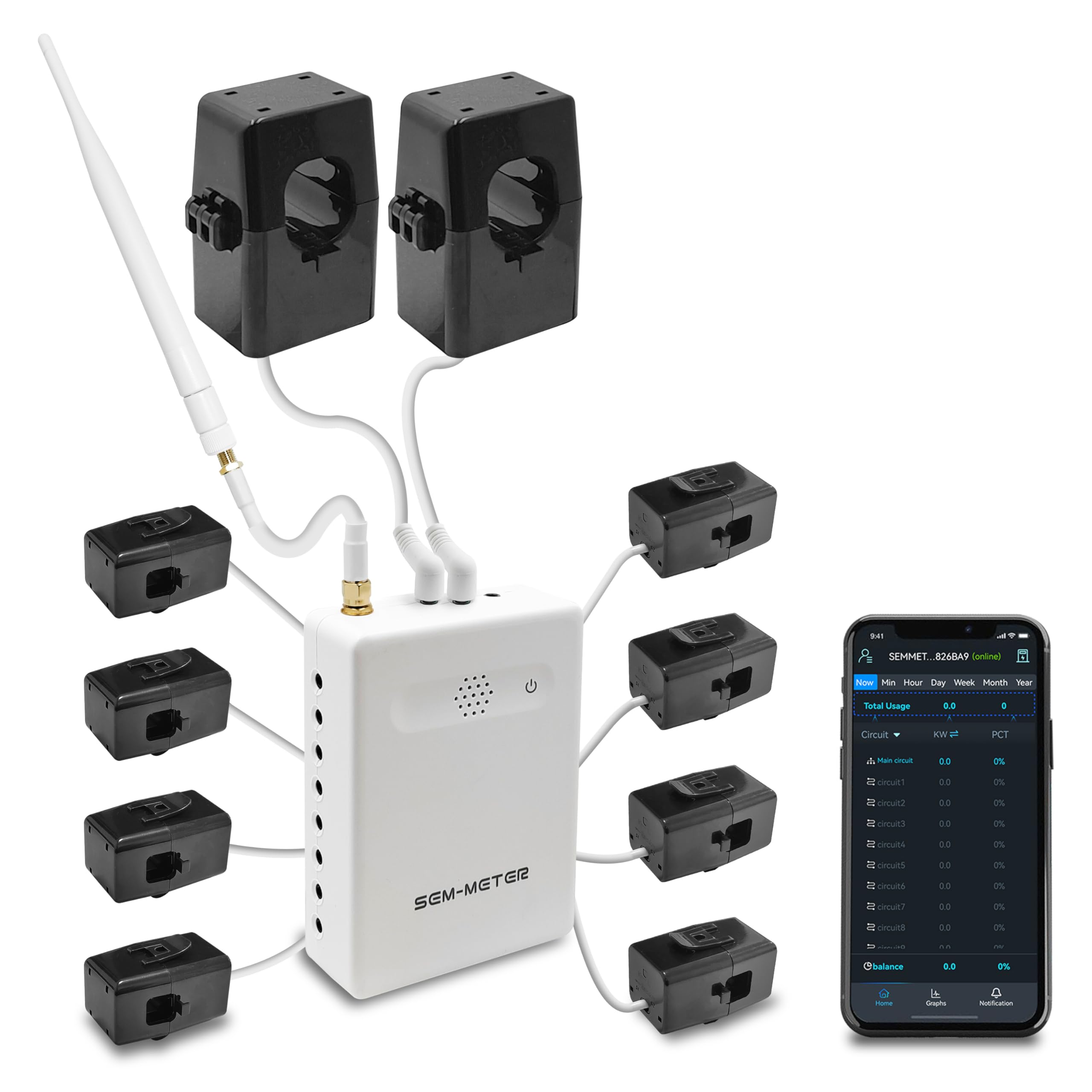
Smart Home Energy Monitor with 8 50A Circuit Level Sensors | Vue - Real Time Electricity Monitor/Meter | Solar/Net Metering - Amazon.com
View on Amazon
ChargePoint HomeFlex Level 2 EV Charger J1772 - Fast Smart Battery Power Charging at Home for Electric Automobile Vehicles - NEMA 14-50 Plug for Electric Car : Automotive
View on AmazonBusinesses and fleets
- Prioritize route analysis, charger power sizing, and demand‑charge mitigation; co‑locate solar and storage where economics pencil.
- Treat charging as a software and operations problem as much as a hardware one—telemetry, uptime SLAs, and energy market participation matter.
- For depots and logistics hubs, design for modular expansion and electrical rooms sized for step‑wise capacity adds.
Policymakers and utilities
- Align incentives with reliability, open standards, and equitable access (multi‑unit dwellings, rural corridors).
- Fast‑track interconnection for high‑power sites and enable managed charging and V2G through tariffs and aggregator participation rules.
- Support domestic supply chains and recycling to reduce exposure to price volatility and geopolitical risk; require transparent embodied‑carbon accounting for batteries.
Where the technology is heading
The future of electric vehicle technology is convergence. Chemistry gains, denser packs, and SiC power electronics are meeting better software and smarter grids. Ultra‑fast charging will feel routine on major corridors, while many daily miles will quietly refill at home and work during low‑carbon hours. Supply chains will look different—more LFP/LMFP, more regionalized manufacturing, and rising recycled content—yet the direction of travel is consistent: lower costs, higher performance, and tighter coupling to clean power.
A realistic, data‑driven outlook is neither uncritical nor pessimistic. Interoperability, cybersecurity, mineral stewardship, and equitable access require sustained attention. But the technical and policy pieces are increasingly in place for EVs to deliver on their promise: cleaner air, lower operating costs, and a flexible, resilient electricity system that gets stronger as it gets cleaner.
Recommended Products
Electrify: An Optimist's Playbook for Our Clean Energy Future
In Electrify, <strong>Griffith lays out a detailed blueprint—optimistic but feasible—for fighting climate change while creating millions of new jobs and a healthier environment</strong>. Griffith’s pl
ChargePoint HomeFlex Level 2 EV Charger J1772 - Fast Smart Battery Power Charging at Home for Electric Automobile Vehicles - NEMA 14-50 Plug for Electric Car : Automotive
Home Flex Hardwired offers the fastest charge at up to 50A. NEMA 6-50 and 14-50 versions <strong>provide up to 40A and work with existing 240V wall outlets</strong>. Yes! Choose from our list of prefe
Smart Home Energy Monitor with 8 50A Circuit Level Sensors | Vue - Real Time Electricity Monitor/Meter | Solar/Net Metering - Amazon.com
Lightweight commercial 3-phase option available as a separate bundle. APPLICATION MONITORING WITHOUT GUISEWORK <strong>Up to sixteen (16) 50A sensors to accurately monitor your air conditioner, oven,