
Community Conservation 2023: Impact, Innovation, and Lessons for Scale

In 2023, community conservation initiatives moved measurable needles on biodiversity, livelihoods, and climate resilience — and did so at scale. Brazil cut Amazon deforestation by 22% year-over-year (INPE/PRODES), Indigenous Guardians programs expanded across North America and Australia, and citizen science platforms surpassed record participation. This analysis synthesizes what worked in community conservation initiatives 2023, how impacts were measured, and where funding and governance need to evolve to scale success.
A global survey of community conservation initiatives 2023
Community-led conservation spans vast geographies and governance models — from communal conservancies in Namibia to social forestry in Indonesia and Locally Managed Marine Areas (LMMAs) across the Pacific. In 2023, three objectives dominated: habitat restoration, species protection, and climate resilience.
- Africa: Namibia’s communal conservancies remained a flagship. By 2023, 86 registered conservancies covered roughly 20% of the country (about 166,000 km²), generating tens of millions of Namibian dollars annually through tourism, sustainable hunting, and crafts (NACSO). In Kenya, community conservancies and group ranches provided critical corridors for migratory species; while estimates vary by network, these collectively span tens of thousands of square kilometers and directly employ thousands of community rangers. Across East Africa, community rangeland restoration (rotational grazing, invasive plant removal) expanded to buffer drought impacts, with projects reporting improved forage productivity and reduced conflict with wildlife.
- Asia-Pacific: Nepal’s Community Forest User Groups (CFUGs) — now numbering over 20,000 — continued to manage millions of hectares; Nepal’s national forest cover has risen from roughly 26% in the early 1990s to over 40% today, a turnaround in which community forestry is widely credited (Government of Nepal; FAO). Indonesia’s social forestry permits (hutan desa, hutan adat, community plantations) advanced toward a 12.7 million-hectare target set by government; by 2023, several million hectares were under community tenure, with empirical studies showing lower deforestation in well-supported sites. Across Melanesia and Polynesia, LMMAs and customary closures (“tabu,” “sasi”) were maintained or expanded, often co-managed by villages and provincial authorities.
- The Americas: Brazil’s deforestation drop in 2023 coincided with renewed support for Indigenous territorial protection and community-based monitoring. In Guyana, jurisdictional forest carbon finance continued after the sale of credits to Hess (a multi-year, US$750 million agreement), with 15% of revenues earmarked for Amerindian villages for community-defined projects — a high-profile test case for benefit sharing (Government of Guyana, ART-TREES). In North America, more than 120 Indigenous Guardians programs were operating in Canada by 2023, advancing caribou habitat restoration, fisheries monitoring, and wildfire prevention while strengthening governance and employment (Indigenous Leadership Initiative; Canadian government budget documents).
Participants and scale
- Demographics: Women-led and youth-led groups were more visible in 2023, particularly in mangrove restoration, small-scale fisheries, and agroforestry value chains. Many projects intentionally integrated traditional ecological knowledge with technical training for early-career community scientists.
- Participation: Large national programs (Nepal CFUGs, Indonesia social forestry) engage millions of residents. Smaller coastal or rangeland projects typically involve hundreds to thousands per site, often organized into cooperatives, water user associations, or cultural associations. Participation surged where projects tied clear livelihood benefits — legal fuelwood access, fisheries co-management rights, or tourism revenue — to conservation rules.
Outcomes and how they were measured in 2023
The strongest projects in 2023 paired ecological monitoring with socioeconomic indicators and used transparent, repeatable methods.

Occupancy Estimation and Modeling: Inferring Patterns and Dynamics of Species Occurrence
Occupancy Estimation and Modeling: Inferring Patterns and Dynamics of Species Occurrence, Second Edition, <strong>provides a synthesis of model-based approaches for analyzing presence-absence data, al
Check Price on AmazonBiodiversity and ecosystem metrics
- Species abundance and occupancy: Camera traps, acoustic recorders, and standardized surveys tracked changes in wildlife. For instance, community conservancies in southern Africa reported stable or rising populations for several ungulate species where anti-poaching patrols and grazing management were funded; occupancy modeling helped separate detection probability from true presence (peer-reviewed studies in Conservation Biology and Biological Conservation support these methods).
- Habitat integrity: Remote sensing of forest and mangrove cover (Sentinel-2, Planet NICFI) quantified avoided deforestation and regrowth at 10-meter or finer resolution. Community-led mangrove projects measured canopy cover, aboveground biomass (via allometric equations), and shoreline erosion rates. In drylands, Normalized Difference Vegetation Index (NDVI) time series were used to evaluate rangeland restoration.
- Freshwater and coastal condition: Water quality loggers and participatory reef assessments (belt transects, photogrammetry) tracked coral cover and fish biomass in LMMAs. Meta-analyses consistently find higher fish biomass and compliance in community co-managed areas compared to paper parks; 2023 field reports echoed these gains where enforcement was credible and benefits tangible.
Socioeconomic co-benefits
- Income and jobs: Namibia’s conservancies, community-based tourism in East Africa, and Indigenous Guardian programs in Canada documented direct wage employment and enterprise revenues. Where value chains matured (e.g., certified non-timber forest products, seaweed, shellfish), household income diversification reduced vulnerability to climate shocks.
- Food security: Coastal closures with seasonal openings often increased catch-per-unit-effort near reserves, as documented in Pacific LMMA networks and similar co-management schemes in Southeast Asia. Agroforestry projects reported improved yields and pollination services around restored habitats.
- Risk reduction: Mangroves and restored dunes reduced storm surge heights and erosion, with damages avoided estimated via hydrodynamic models. Grassroots fire management in savannas and boreal forests reduced late-season, high-intensity fires — cutting greenhouse gas emissions and protecting biodiversity.
Monitoring approaches and data quality
- Designs: Before–After–Control–Impact (BACI) designs, quasi-experimental matching, and difference-in-differences analyses appeared more frequently in 2023 reporting, reflecting donor expectations and academic partnerships. True randomized controlled trials remained rare but some PES pilots used lottery-based assignment for evaluation.
- Community science: iNaturalist surpassed 150 million biodiversity observations in 2023, while eBird and regional atlas projects continued to provide high-resolution species distribution data that complement professional surveys. These datasets carry sampling biases (e.g., near roads and towns) but bias-correction models and targeted community bioblitzes improved coverage.
- Data limits: Many projects still lacked counterfactuals and long time series, making attribution difficult. Carbon accounting remained a flashpoint: additionality, leakage, and permanence were scrutinized by the Integrity Council for the Voluntary Carbon Market’s Core Carbon Principles (2023). Projects that openly shared methods and raw data earned greater trust from communities and buyers alike. For a deeper dive on rigorous evaluation, see our analysis: Beyond Intentions: A Data‑Driven Analysis of the Impact of Conservation Efforts.
Technology and renewable energy in community conservation
2023 was a breakout year for practical tech — low-cost sensors, AI-enabled analytics, and renewable power — that communities actually used and maintained.
Community science platforms and field tools
- Observation platforms: iNaturalist, eBird, and regional platforms streamlined identification and data sharing, with trained community verifiers improving data quality. Mobile data collection apps (KoboToolbox, CyberTracker) standardised patrol logs and resource-use surveys.
- Spatial planning: Open-source GIS (QGIS) and web apps (Mapbox, Google Earth Engine) generated habitat maps, fire risk layers, and fishing effort heatmaps accessible to local councils and cooperatives. The Norwegian-funded NICFI program continued providing free high-resolution tropical satellite imagery in 2023, enabling communities and local NGOs to detect small-scale forest loss quickly.
Remote sensing, drones, and bioacoustics
- Drones: Community pilots used small drones for mangrove planting alignment, peatland rewetting planning, and post-storm damage assessment, with open photogrammetry (OpenDroneMap) turning imagery into actionable elevation models.
- Acoustic and camera networks: Solar-powered acoustic sensors flagged chainsaws and gunshots in tropical forests and monitored bird and bat communities. AI classifiers trained on local soundscapes reduced false alarms and ranger fatigue. Camera traps with on-board ML filtered by species, accelerating reporting.

DJI Mini 3 Fly More Combo (DJI RC), Drones with Camera for Adults 4K, 3 Batteries for 114-min Flight Time, Vertical Shooting, 32800ft (10km) Video Transmission, Lightweight Mini Drone for Beginners : Toys & Games
View on AmazonRenewable-powered interventions
- Powering protection: Falling solar PV module prices — roughly 50% lower in 2023 compared with late 2022 (IEA market reports) — made solar mini-systems the default for ranger posts, camera networks, and community centers off-grid. Lithium iron phosphate batteries improved durability and safety.
- Reducing conflict: Solar-pumped water points for livestock reduced illegal grazing in riparian zones; solar fencing and lighting decreased night-time crop raiding in human–wildlife conflict hotspots. Projects reported fewer retaliatory killings and better tolerance where response teams were community-staffed and benefits equitable.
- Sustainable livelihoods: Solar ice plants and cold storage cut post-harvest fish losses by double digits in small-scale fisheries, while efficient electric dryers improved seaweed and fruit processing. In agroforestry, solar irrigation supported dry-season vegetable income without diesel costs or emissions.
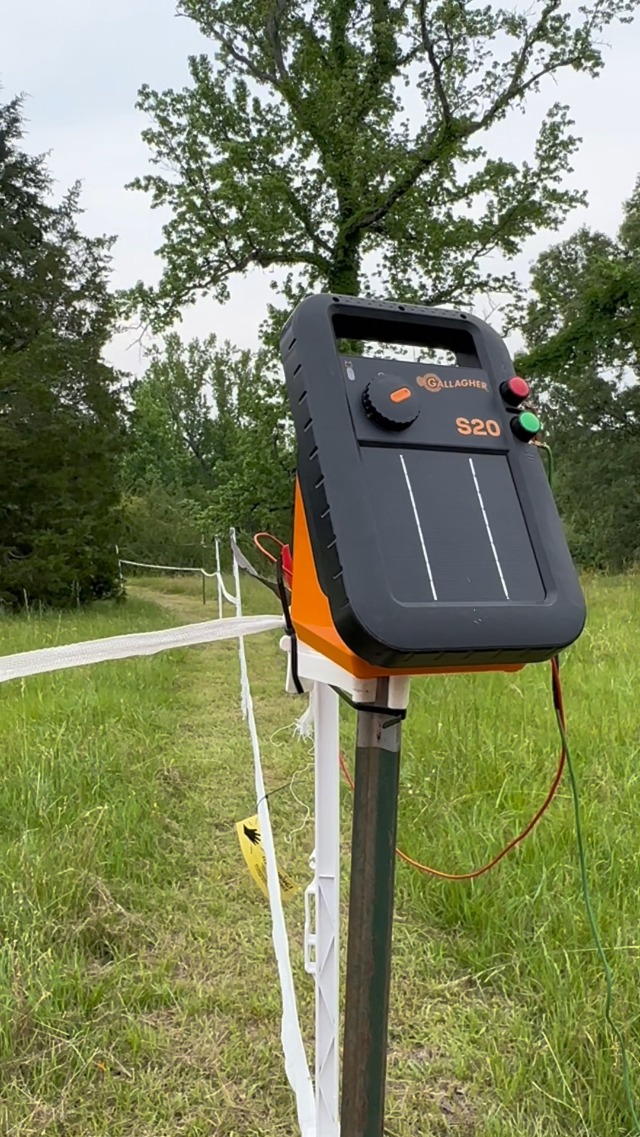
Gallagher S20 Solar Electric Fence Charger | Powers Up to 2 Miles of Typical Fence | Lithium Battery Technology | 0.2 Joule Solar Energizer for Poultry, Livestock, Gardens, and Pets : Patio, Lawn & Garden
View on AmazonFor a broader look at automation and AI in conservation, see How AI Is Used in Conservation: Technologies, Real-World Uses, and Key Challenges.
Funding, governance, equity, and scaling
Funding models in 2023
- Grants and small funds: The GEF Small Grants Programme (SGP) continued to back thousands of community projects across 100+ countries with typical awards around US$50,000. These funds are often catalytic — enabling legal registration, early equipment, and participatory plans.
- Payments for ecosystem services (PES): Mexico’s long-running national PES program and Costa Rica’s forest incentives remained templates, showing that well-targeted payments can slow deforestation and restore tree cover, particularly in high-pressure zones (multiple peer-reviewed evaluations). New municipal PES pilots in 2023 tied upstream watershed restoration to downstream water-user fees.
- Carbon and biodiversity finance: Integrity concerns tempered voluntary carbon markets in 2023, but high-integrity, jurisdictional REDD+ advanced (e.g., Guyana, with transparent benefit-sharing). Blue carbon projects matured — community mangrove initiatives packaged carbon revenue with fisheries benefits to reduce overreliance on credits. Biodiversity credits were piloted but remained nascent, with 2023 efforts focused on measurement frameworks and safeguards.
Governance and partnerships
- NGO–government–private collaboration: The most successful 2023 projects embedded communities as decision-makers, with NGOs providing technical backstopping, governments recognizing rights and enabling enforcement, and private partners creating market access. Transparent data portals and community audit committees increased accountability.
- Co-management and legal recognition: Where customary tenure and Indigenous rights were recognized in law, outcomes were stronger and conflicts fewer. Co-management agreements for protected areas and fisheries that embedded dispute resolution — and funded it — saw higher compliance.
Equity and inclusion
- Indigenous and local knowledge: Projects that co-designed indicators with communities — e.g., combining seasonal calendars and cultural keystone species with scientific metrics — generated stronger stewardship. Revenue-sharing policies specifying household-level benefits, women’s leadership quotas in committees, and youth stipends correlated with better ecological and social outcomes.
- Safeguards: Free, Prior, and Informed Consent (FPIC) moved from paperwork to practice in many 2023 programs, with iterative consent checkpoints. This was particularly important in carbon and offset-linked initiatives.
Barriers to scale — and pragmatic recommendations
- Tenure insecurity: Unclear or overlapping land and sea tenure remains the top barrier. Recommendation: pair restoration finance with legal support to secure collective rights; condition public funds on demonstrable rights progress.
- Short funding cycles: One- to two-year grants don’t match ecological timelines. Recommendation: blend capital — core grants for institutions plus performance-based top-ups for verified outcomes.
- Data gaps: Many initiatives lack baselines or counterfactuals. Recommendation: standardize BACI or matched designs from the start; budget 10–15% for monitoring, with open data where safe. For guidance on program design and scaling, see Community Initiatives for Sustainability: What Works, How to Start, and How to Scale.
- Capacity strain: Tech adoption can fail without local maintenance. Recommendation: fund paid local technician roles and peer-to-peer exchanges; choose “appropriate tech” over shiny tools.
By the numbers: community conservation in 2023
- 22%: Year-over-year drop in Amazon deforestation in 2023 (INPE/PRODES), with stepped-up community and Indigenous territorial protection a key factor.
150 million: iNaturalist biodiversity observations by 2023, expanding community science inputs for local planning.
- ~20%: Share of Namibia’s land area managed by 86 communal conservancies, supporting jobs and enterprise revenue (NACSO).
- 120+: Indigenous Guardian programs active in Canada by 2023, linking stewardship to paid employment and governance (Indigenous Leadership Initiative; Government of Canada).
- US$750 million: Value of Guyana’s multi-year jurisdictional forest carbon deal, with 15% of proceeds committed to Amerindian communities (ART-TREES; Government of Guyana).
- ~50%: Approximate decline in global solar PV module prices through 2023, lowering costs for off-grid conservation power systems (IEA).
Practical implications for 2024–2025
For communities and practitioners
- Design for co-benefits: Tie conservation rules to clear livelihood gains (legal access, income, risk reduction). Track both ecological and socioeconomic indicators.
- Budget for monitoring: Use BACI or matched designs; train community monitors; combine community science with remote sensing for verification. See Beyond Intentions: A Data‑Driven Analysis of the Impact of Conservation Efforts for evaluation playbooks.
- Choose appropriate tech: Favor tools that locals can repair; standardize data collection with simple mobile apps; leverage free satellite data for rapid alerts.
For funders and policymakers
- Fund institutions, not just projects: Provide multi-year core support to community governance bodies; add performance incentives for verified outcomes.
- Secure rights: Invest in tenure clarification and legal support as a precondition for durable outcomes and investability.
- Align markets with integrity: Channel finance to high-integrity jurisdictional forest and blue carbon with transparent benefit-sharing; back biodiversity credit pilots cautiously with strong safeguards.
- Mainstream equity: Require FPIC, gender equity in decision bodies, and youth training; publish benefit-sharing formulas.
For readers ready to get involved locally, explore Find and Join Conservation Projects Near You: What to Look For and How to Get Involved.
Where the field is heading
Community conservation in 2023 demonstrated that measurable impact and social legitimacy go hand-in-hand. Three arcs to watch:
- From pilots to portfolios: Jurisdictional approaches that aggregate dozens of community projects under shared standards and benefit-sharing rules will attract more climate and biodiversity finance — if integrity holds.
- Verified data ecosystems: Open, privacy-respecting data pipelines will make local achievements visible to national policymakers and global markets, unlocking better funding. Expect wider use of eDNA, standardized acoustic indices, and near-real-time satellite alerts co-managed by communities.
- Energy-enabled stewardship: As renewable costs keep falling, more conservation functions — patrols, monitoring, processing — will electrify off-grid, reducing diesel dependence and enabling year-round operations.
The headline from 2023 is not just that communities can conserve; it’s that when equipped with rights, resources, and appropriate technology, they deliver conservation with traceable outcomes at scales that matter for biodiversity and climate. The task for 2024–2025 is to lock in integrity, expand equitable governance, and fund the long game. For practical program design and scaling strategies, see Community Initiatives for Sustainability: What Works, How to Start, and How to Scale, and for tooling up on emerging tech, How AI Is Used in Conservation: Technologies, Real-World Uses, and Key Challenges.
Recommended Products
Occupancy Estimation and Modeling: Inferring Patterns and Dynamics of Species Occurrence
Occupancy Estimation and Modeling: Inferring Patterns and Dynamics of Species Occurrence, Second Edition, <strong>provides a synthesis of model-based approaches for analyzing presence-absence data, al
DJI Mini 3 Fly More Combo (DJI RC), Drones with Camera for Adults 4K, 3 Batteries for 114-min Flight Time, Vertical Shooting, 32800ft (10km) Video Transmission, Lightweight Mini Drone for Beginners : Toys & Games
<strong>DJI Flip Fly More Combo With RC 2 Screen Remote Controller, Drone With 4K UHD Camera for Adults, Palm Takeoff, Auto Return, Intelligent Flight, 3 Batteries for 93-Min Flight Time</strong> · DJ
Gallagher S20 Solar Electric Fence Charger | Powers Up to 2 Miles of Typical Fence | Lithium Battery Technology | 0.2 Joule Solar Energizer for Poultry, Livestock, Gardens, and Pets : Patio, Lawn & Garden
This item: Gallagher S20 Solar Electric Fence Charger | Powers Up to 2 Miles of Typical Fence | Lithium Battery Technology | <strong>0.2 Joule Solar Energizer for Poultry, Livestock, Gardens, and Pets
More in Conservation
- Beyond Intentions: A Data‑Driven Analysis of the Impact of Conservation Efforts
- Conservation Explained: Goals, Strategies, and How You Can Help
- Community Initiatives for Sustainability: What Works, How to Start, and How to Scale
- Designing High-Impact Conservation Education Programs: Goals, Curriculum, Delivery, and Evaluation