
Designing High-Impact Conservation Education Programs: Goals, Curriculum, Delivery, and Evaluation
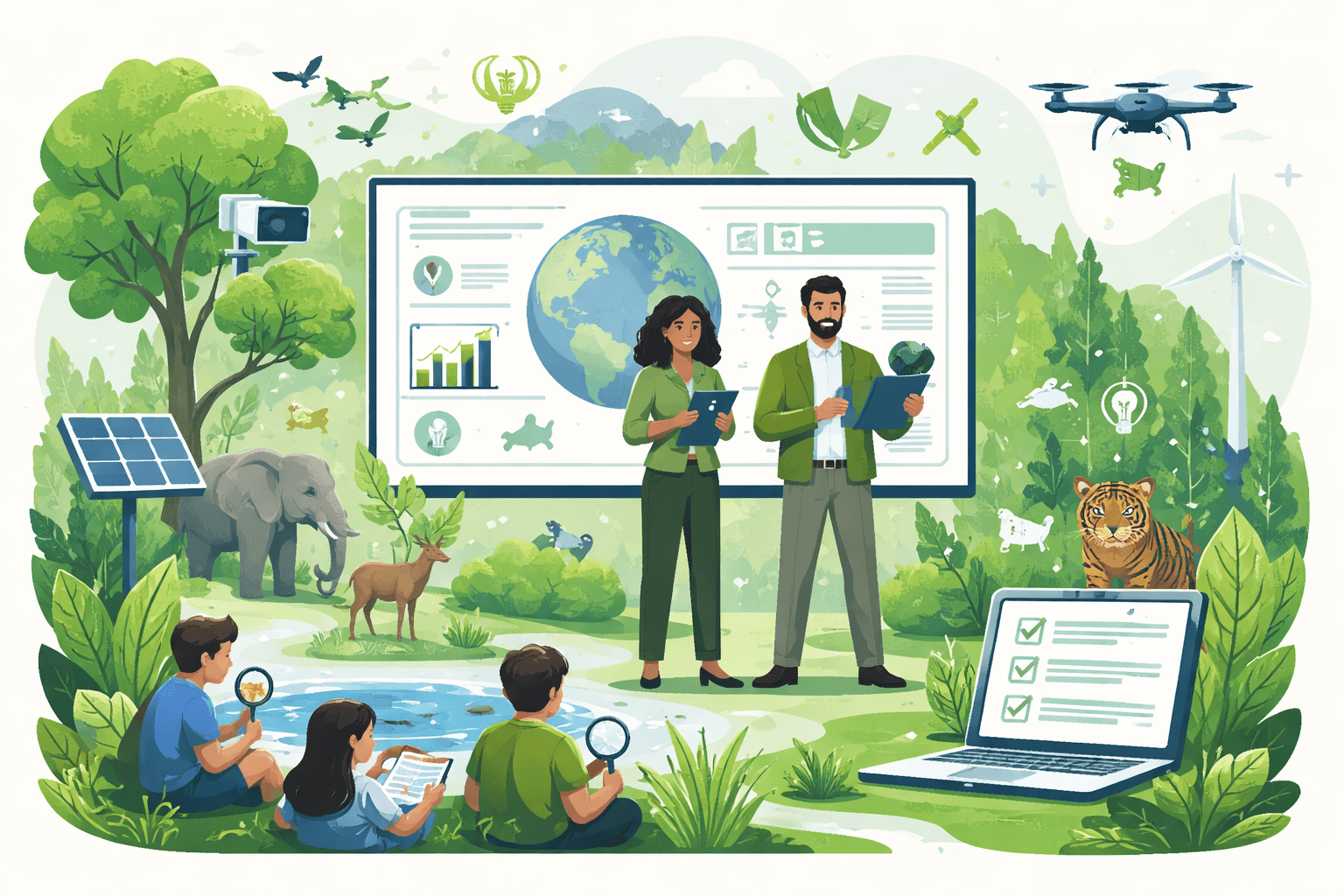
Conservation education programs are moving from “nice-to-have” to essential infrastructure for biodiversity recovery. The Intergovernmental Science-Policy Platform on Biodiversity and Ecosystem Services (IPBES) estimates 1 million species face extinction, many within decades, without transformative change (IPBES 2019). Education is one of the fastest pathways to build the knowledge, skills, and social norms that enable that transformation—yet impact varies widely by design. This guide distills evidence and practice to help you create conservation education programs that are equitable, data-driven, and measurably effective.
By the numbers
- 1 million species threatened with extinction due to human activity (IPBES 2019)
- 75% of terrestrial and 66% of marine environments significantly altered by people (IPBES 2019)
- Environmental and conservation education programs consistently improve knowledge and attitudes, with a growing body of studies showing behavior change and, in some cases, ecological outcomes (Ardoin et al., Conservation Biology 2020; NAAEE/Stanford 2018 review)
- Citizen-science platforms now operate at planetary scale, enabling authentic student contributions: eBird has logged over 1 billion bird observations globally, while iNaturalist has surpassed 150 million biodiversity observations (Cornell Lab of Ornithology; iNaturalist program data)
The sections below lay out a blueprint—from goals to evaluation—for high-impact conservation education programs.
Define the purpose and outcomes of conservation education programs
Clarity at the outset drives results. Well-designed conservation education programs start with a theory of change: how learning activities will plausibly lead to conservation outcomes through changes in knowledge, skills, motivations, and behavior, and when feasible, ecological indicators.
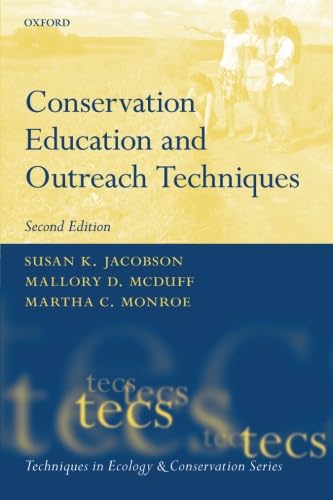
Conservation Education and Outreach Techniques (Techniques in Ecology & Conservation)
Amazon.com: Conservation Education and Outreach Techniques (Techniques in Ecology & Conservation): 9780198716693: Jacobson, Susan K., McDuff, Mallory, Monroe, Martha: Books
Check Price on AmazonTarget audiences and tailored competencies
- Early childhood (ages 4–8): Prioritize nature connection, sensory exploration, empathy for living things, and foundational biodiversity concepts (e.g., habitats, seasons). Outcomes: curiosity measures, time-in-nature, simple classification skills.
- Upper elementary (9–11): Build biodiversity literacy, local species identification, food webs, and simple data collection. Outcomes: species ID accuracy, field journal quality, collaborative skills.
- Middle school (12–14): Introduce systems thinking, human impacts, inquiry methods, and data interpretation. Outcomes: experimental design quality, graph literacy, pro-environmental intentions.
- High school (15–18): Advance to population ecology, conservation genetics basics, GIS mapping, policy tools (protected areas, incentives), and community-based conservation. Outcomes: analysis of trade-offs, proposal writing, citizen-science data quality, service hours.
- Teachers and educators: Pedagogical content knowledge in inquiry- and place-based learning, classroom management outdoors, culturally responsive teaching, assessment design, and safety/risk management.
- Community members and land stewards: Practical stewardship skills (invasive species control, habitat restoration, water quality monitoring), social marketing for conservation, and local policy engagement.
- Policymakers and civic leaders: Evidence synthesis, cost–benefit framing, community co-design, equitable access strategies, and monitoring frameworks.
Measurable learning outcomes
Define 3–6 outcomes per audience segment, each tied to an assessment method. Examples:
- Knowledge: Students can explain three local drivers of biodiversity loss and propose a mitigation strategy; assessed via a short concept inventory.
- Skills: Students collect and submit 20+ verifiable observations to a vetted citizen-science platform with >90% ID accuracy; assessed via platform verification logs.
- Attitudes: Increased nature relatedness and collective efficacy; assessed via validated scales (e.g., Nature Relatedness Scale, Collective Efficacy items).
- Behaviors: Documented adoption of two home or school conservation actions (e.g., pollinator plantings, waste sorting fidelity); assessed via checklists and photos.
- Ecological indicators (when feasible): Increase in native plant cover or pollinator visits in student-managed plots; assessed via standardized transects.
Core curriculum content and pedagogical approaches
High-impact conservation education programs blend rigorous science with culturally relevant, hands-on learning.
Place-based and experiential learning
Place-based education connects learning to local landscapes, cultures, and issues. Experiential components—field surveys, restoration days, schoolyard biodiversity audits—consistently improve engagement and retention. Evidence reviews find outdoor and place-based instruction is associated with gains in academic achievement, environmental attitudes, and stewardship behaviors (NAAEE/Stanford 2018; Dillon et al., 2006).
Implementation tips:
- Anchor each unit in a local question: “How is urban heat affecting street trees in our neighborhood?”
- Use the school grounds as a living lab: Install quadrats, pollinator gardens, rain gauges, or air quality sensors.
- Co-develop case studies with local tribes, land trusts, or parks to ensure accuracy and reciprocity.
Inquiry-based science
Adopt the 5E model (Engage, Explore, Explain, Elaborate, Evaluate) or similar frameworks. Students should ask questions, develop hypotheses, gather and analyze data, and communicate findings. Align with national or regional science standards (e.g., NGSS performance expectations on ecosystem dynamics, human impacts, and argument from evidence).
Key practices:
- Data literacy: Teach sampling, bias, uncertainty, and visualization from the start.
- Modeling: Use simple population models (e.g., logistic growth) and conceptual system maps to highlight feedbacks.
- Argumentation: Students craft claims supported by evidence and reasoning about conservation trade-offs.
Indigenous and local knowledge
Knowledge co-production—combining Indigenous knowledge systems with western science—improves sustainability decisions (IPBES 2019). Practices include seasonal rounds, phenological calendars, and culturally specific stewardship protocols. Principles:
- Free, prior, and informed consent for content inclusion.
- Teach about biocultural diversity and rights-based conservation.
- Invite local knowledge holders as paid co-instructors and co-authors of materials.
Behavior-change theory
Information alone rarely changes behavior. Integrate insights from tested frameworks:
- COM-B model: Target Capability (skills, knowledge), Opportunity (infrastructure, social norms), and Motivation (values, emotions) to shift behavior.
- Theory of Planned Behavior: Address attitudes, perceived norms, and perceived control through peer leadership, public commitments, and barrier removal.
- Community-Based Social Marketing: Identify specific barriers/benefits, pilot-test prompts and incentives, and measure actual behaviors rather than intentions.
Translate theory into design:
- Focus on specific, observable actions (e.g., “Plant three native species and log pollinator visits weekly”) rather than abstract values.
- Use social proof: Publish class dashboards of collective impacts (trees planted, observations logged, liters of water saved).
- Reduce friction: Provide tools, templates, and micro-grants so desired actions are easy and visible.
Integrating STEM and biodiversity literacy
- Math: Species accumulation curves, diversity indices (Shannon, Simpson), confidence intervals around counts.
- Technology: GPS, smartphone macro lenses, open-source sensors, GIS story maps.
- Engineering: Design–build of nest boxes, green roofs, or erosion-control structures; rapid prototyping cycles.
- Cross-curricular links: Art-science field journals, language arts for advocacy briefs, civics for policy simulations.
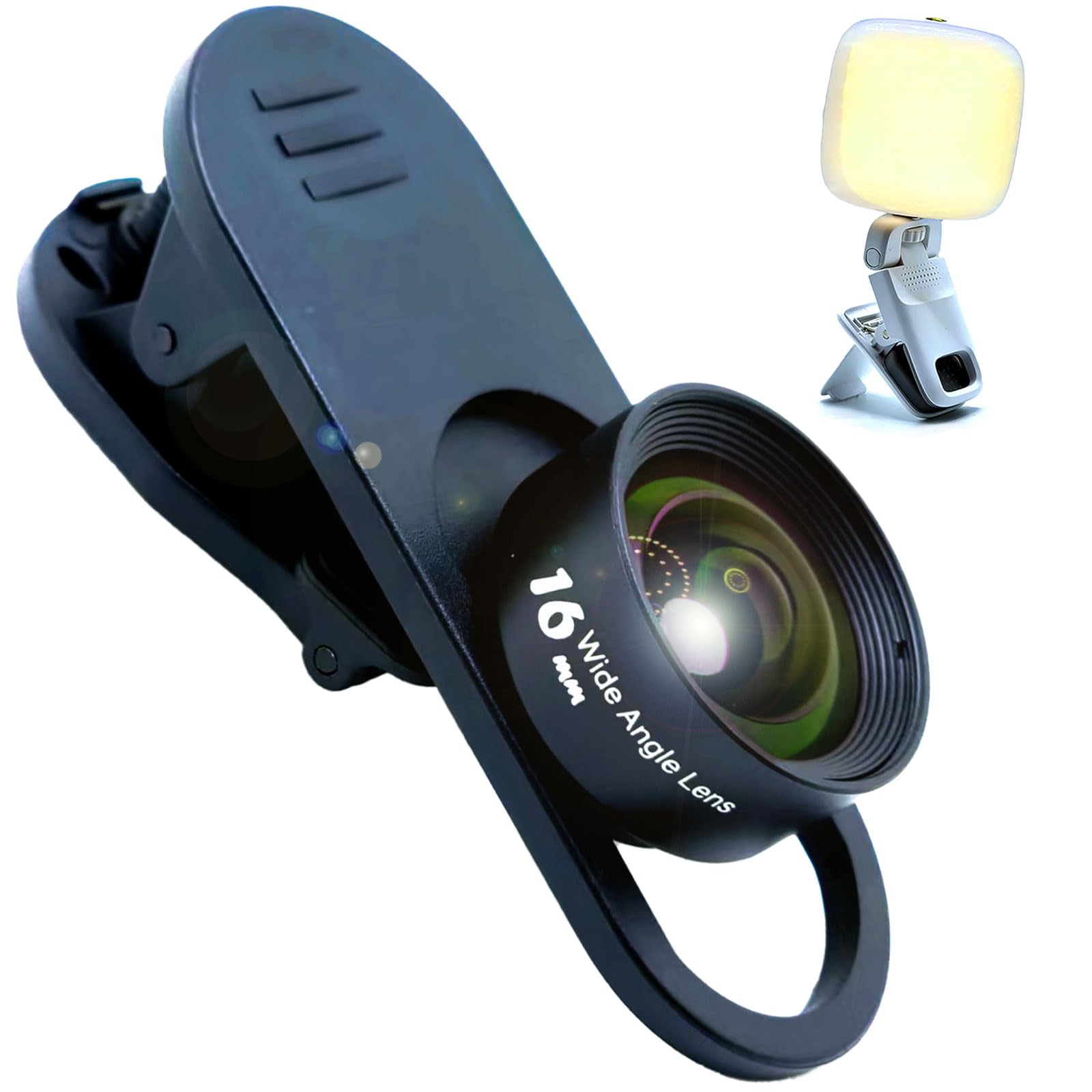
Xenvo Pro Lens Kit for iPhone and Android, Macro and Wide Angle Lens with LED Light and Travel Case Black : Cell Phones & Accessories
View on AmazonDelivery models, resources, and tools
Conservation education programs thrive when content is adaptable across settings and budgets.
Classroom modules
- Modular units: 5–10 lesson sequences with clear prerequisites and flexible timing.
- Anchoring phenomenon: Start with a compelling local image or data set, then spiral skills.
- Assessment-aligned rubrics: Share criteria with students at the outset.
Field experiences
- Micro-fieldwork: 30–60 minute bioblitzes on school grounds or nearby parks.
- Full-day trips: Partner with nature centers or reserves; align with unit outcomes and ensure equitable access (transportation, meals, accessibility accommodations).
- Restoration activities: Invasive removal, native plantings, wetland clean-ups linked to monitoring to reveal outcomes over time.
Citizen-science projects
Authentic data collection boosts relevance and persistence. Options include biodiversity observations, water quality monitoring, pollinator counts, and night sky brightness surveys. When projects connect to real conservation decisions, motivation rises. For additional context on methods and tools, see Wildlife Conservation Methods: Practical Approaches, Tech Tools, and How to Measure Success (/sustainability-policy/wildlife-conservation-methods-practical-approaches-tech-tools-measure-success).
Design choices that improve data quality and learning value:
- Standardized protocols with practice rounds and calibration.
- Metadata capture (time, location, effort) and simple QA/QC steps.
- Feedback loops: Students see their contributions mapped and used by scientists or land managers.
Digital platforms and apps
- Learning management: Host modules, discussion boards, and reflection prompts.
- Data tools: Spreadsheet templates, simple R/Python notebooks for older students, and dashboards that visualize class data over time.
- Storytelling: Student-made ArcGIS StoryMaps or short videos summarizing findings and recommendations.
Teacher training and professional learning
- Workshops that model outdoor management, risk assessment, and trauma-informed, culturally responsive practice.
- Ongoing communities of practice: Peer observation cycles, shared instrumentation libraries, and protocol updates.
- Micro-credentials: Competency-based badges for field safety, data literacy, and citizen-science facilitation.
Low-cost resource kits
Design for constrained budgets by focusing on multifunctional, durable materials:
- Biodiversity kit: 1 m x 1 m PVC quadrat, 10 m tape, hand lenses, clipboards, field guides or offline ID apps.
- Water kit: Bucket, transparency tube, thermometers, pH strips, conductivity meter if available, sample jars, gloves.
- Pollinator kit: Native seed packets, colored pan traps (reused containers), timers, and observation sheets.
- DIY sensors: Simple Arduino-based temperature or soil moisture loggers; open-source build guides reduce cost.
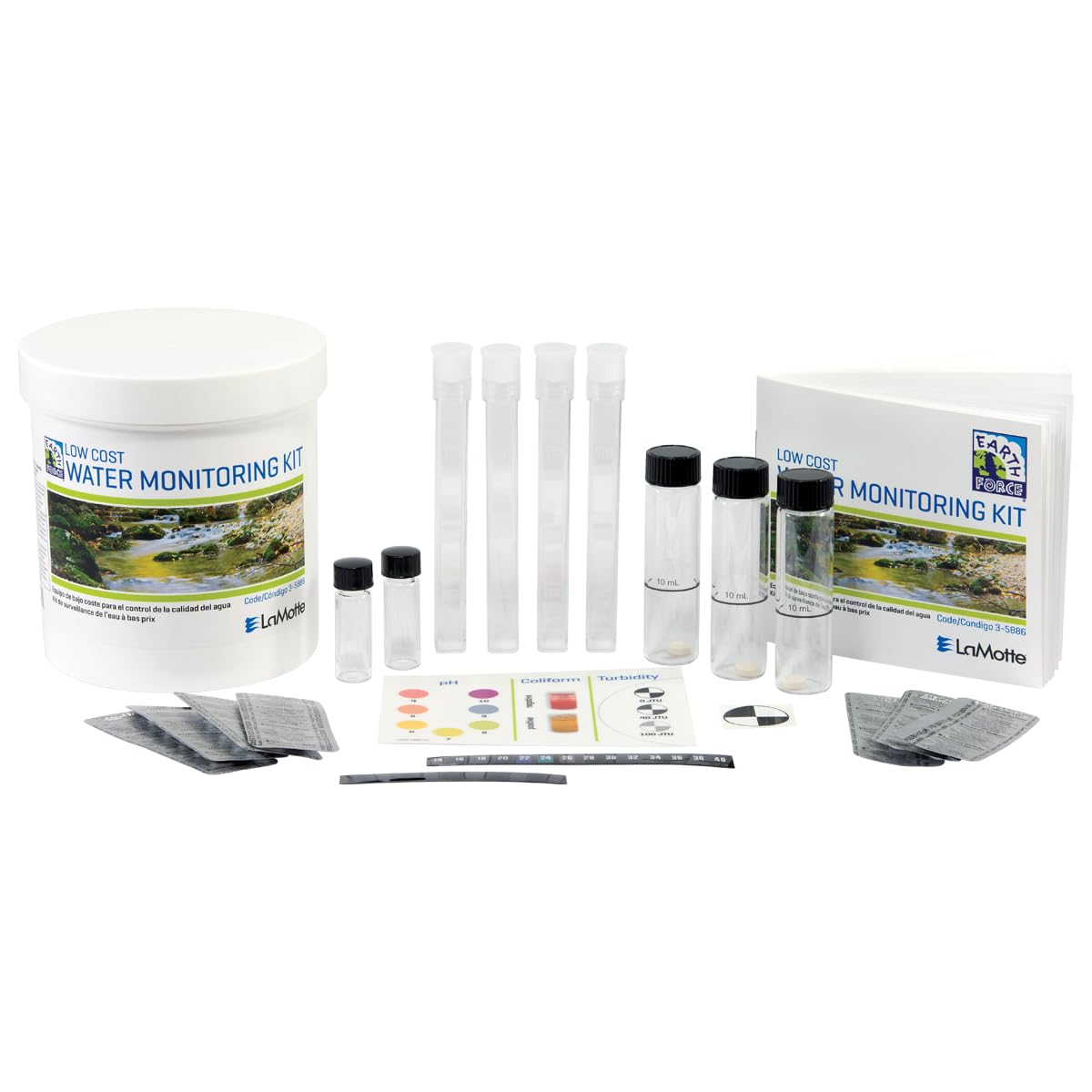
Lamotte Green Program Low Cost Water Monitoring Kit : Pet Supplies
<strong>The Kit comes with all the necessary apparatus and non-hazardous TesTab(R) reagents required to perform water quality tests on ten water samples</strong>. The GREEN Low Cost Water Monitoring K
Check Price on AmazonTemplates and open licenses
Publish lesson plans, rubrics, consent forms, risk assessments, and data sheets under Creative Commons licensing to enable adaptation and scaling.
Evaluation and sustainability: metrics, monitoring, funding, and equity
Impact requires evidence. Build evaluation into program DNA from day one.
Metrics and mixed-methods evaluation
Use a logic model linking inputs, activities, outputs, outcomes, and impacts. Triangulate across data types:
- Knowledge and skills: Short concept inventories, performance tasks, and practical exams (e.g., set up a transect and justify sampling strategy).
- Attitudes and efficacy: Validated scales (Nature Relatedness, New Ecological Paradigm, collective efficacy) with pre/post and follow-up at 3–12 months.
- Behaviors: Direct observation, participation logs (e.g., citizen-science submissions), and utility/waste data when relevant.
- Ecological indicators: Plot-based biodiversity measures, water quality parameters, or habitat condition indices where students are active stewards.
- Equity and access: Participation by demographic group, accommodation requests met, transportation provided, language accessibility, and cost to participants.
Methodological tips:
- Use comparison groups when ethical and feasible, or phased rollouts for quasi-experimental designs.
- Apply difference-in-differences or multilevel models for classroom-clustered data.
- Pre-register evaluation plans and store de-identified data securely; obtain IRB or ethics review for research-grade studies.
- Report effect sizes and confidence intervals, not just p-values, and share null results to improve the field.
Monitoring tools
- Digital forms (mobile or paper) with consistent IDs link students, classes, and sites over time.
- Dashboards that integrate learning and ecological metrics to keep stakeholders aligned.
- Annual “evidence briefs” for partners and funders that highlight learning gains, behavior adoption, and any ecological changes.
Funding and partnerships
Diversify support and embed programs in lasting institutions.
- Schools and districts: Align with standards, offer PD credits, and integrate into school improvement plans.
- NGOs and community groups: Co-deliver field days, host service projects, and cross-promote volunteer pathways. For guidance on building community coalitions that scale, see Community Initiatives for Sustainability: What Works, How to Start, and How to Scale (/sustainability-policy/community-initiatives-for-sustainability-guide).
- Government agencies: Parks, wildlife, and water agencies can supply sites, permits, datasets, and staff expertise.
- Universities and research institutes: Provide scientific advisement, data QA/QC, and undergraduate mentors.
- Private sector: Support through employee volunteer days, in-kind materials, and place-based sponsorships tied to measurable outcomes.
- Grants: Look to education, environment, and STEM funders; structure proposals around clear outcomes, equity strategies, and evaluation plans. For a landscape of options and writing tips, see Conservation Funding Opportunities: Where to Find Support and How to Win It (/conservation/conservation-funding-opportunities-guide).
Budgeting principles:
- Prioritize educator time, transportation, and essential gear before advanced tech.
- Build a 10–15% evaluation line item for data systems, instruments, and analysis.
- Plan for replacement cycles and consumables; track true costs per learner.
Inclusivity and accessibility
Conservation education programs must work for every learner.
- Universal Design for Learning (UDL): Multiple means of engagement, representation, and action/expression.
- Physical access: Route assessments, adaptive tools (e.g., gripped handles, audio ID), and quiet spaces.
- Language access: Bilingual materials, community translators, and family engagement strategies.
- Cultural relevance: Co-design with communities; honor local priorities and build on cultural relationships with land and water.
- Safety and care: Trauma-informed facilitation, clear risk assessments, and consent procedures.
- Logistics: Stipends, meal provision, and transportation remove participation barriers.
Scalability and staying power
- Train-the-trainer: Certify lead educators to mentor cohorts and maintain quality.
- Modular design: Core protocols stay constant while local content flexes by place and culture.
- Open sharing: Public repositories for curricula, data tools, and evaluation instruments.
- Policy integration: Advocate for standards alignment and graduation requirements that include environmental literacy.
- Alumni pathways: Internships, youth advisory councils, and volunteer roles sustain engagement beyond a single course.
Real-world case examples and promising practices
- Schoolyard biodiversity monitoring: Urban schools establish native plant plots and quarterly bioblitzes. Over two years, classes document increased native pollinator visits and reduced lawn maintenance. Students present findings to facilities staff, informing grounds management.
- Watershed-to-classroom model: A regional partnership links upstream restoration (riparian planting) to downstream water-quality labs. Students test for temperature, turbidity, and conductivity pre/post restoration, connect results to salmonid habitat needs, and brief city council on riparian buffer ordinances.
- Community science for policy: High school students contribute light-pollution measurements and advocate for dark-sky-friendly fixtures at athletic fields. Adoption reduces energy use and improves nocturnal insect activity; students integrate findings with physics lessons on optics. For home-based conservation actions that reinforce learning, see How to Practice Conservation at Home: Practical Steps to Save Energy, Water, Waste and Support Wildlife (/conservation/how-to-practice-conservation-at-home-practical-steps-save-energy-water-waste-wildlife).
- Youth advisory boards for protected areas: Teen councils co-design interpretive programs and social media campaigns, increasing visitation diversity and volunteer recruitment.
Evidence from systematic reviews underscores several best practices across cases (Ardoin et al., 2020; NAAEE/Stanford 2018): authentic tasks connected to real decisions, repeated and sustained engagement rather than one-off events, family and community involvement, and explicit behavior-change design all increase the odds of durable outcomes.
Practical planning checklist
- Define audiences and 3–6 measurable outcomes per group.
- Map a theory of change linking learning to behaviors and, when feasible, ecological indicators.
- Select 1–2 place-based anchoring questions per unit; integrate local and Indigenous knowledge with consent and co-authorship.
- Choose delivery models that fit your context: classroom modules, fieldwork, citizen science, and digital tools.
- Build an evaluation plan with mixed methods, validated instruments, and equity metrics.
- Secure partnerships and diversified funding; document roles and data-sharing agreements.
- Pilot, gather feedback, iterate; publish materials under an open license for scalability.
Where conservation education programs are headed
Three trends are reshaping the field:
- Data-rich learning: Massive biodiversity databases and cheap sensors let students do real science—if programs invest in data literacy and QA/QC.
- Justice-centered design: Programs are broadening to include environmental justice, land back movements, and community-defined outcomes, aligning with calls from IPBES for inclusive, values-based transformations.
- Outcomes-based accountability: Funders and districts increasingly expect documented behavior change and, where feasible, ecological impact—pushing programs to adopt stronger evaluation designs and multi-year monitoring.
With deliberate design—clear outcomes, evidence-based pedagogy, equitable delivery, and rigorous evaluation—conservation education programs can do more than raise awareness. They can cultivate the competencies and collective efficacy that translate to measurable conservation gains, now and for the long term.
Recommended Products
Conservation Education and Outreach Techniques (Techniques in Ecology & Conservation)
Amazon.com: Conservation Education and Outreach Techniques (Techniques in Ecology & Conservation): 9780198716693: Jacobson, Susan K., McDuff, Mallory, Monroe, Martha: Books
Lamotte Green Program Low Cost Water Monitoring Kit : Pet Supplies
<strong>The Kit comes with all the necessary apparatus and non-hazardous TesTab(R) reagents required to perform water quality tests on ten water samples</strong>. The GREEN Low Cost Water Monitoring K
Xenvo Pro Lens Kit for iPhone and Android, Macro and Wide Angle Lens with LED Light and Travel Case Black : Cell Phones & Accessories
Amazon.com: Xenvo Pro Lens Kit for iPhone and Android, Macro and Wide Angle Lens with LED Light and Travel Case Black : Cell Phones & Accessories
More in Conservation
- How Technology Is Transforming Conservation: Tools, Impacts, and Responsible Deployment
- Wildlife Conservation Methods: Practical Approaches, Tech Tools, and How to Measure Success
- Ways to Advocate for Conservation: Practical Actions from Local to Policy Level
- Protecting Wildlife Habitats: A Practical Guide to Conservation, Technology, and Action