
Used Electric Car Buying Guide: What to Check Before You Buy
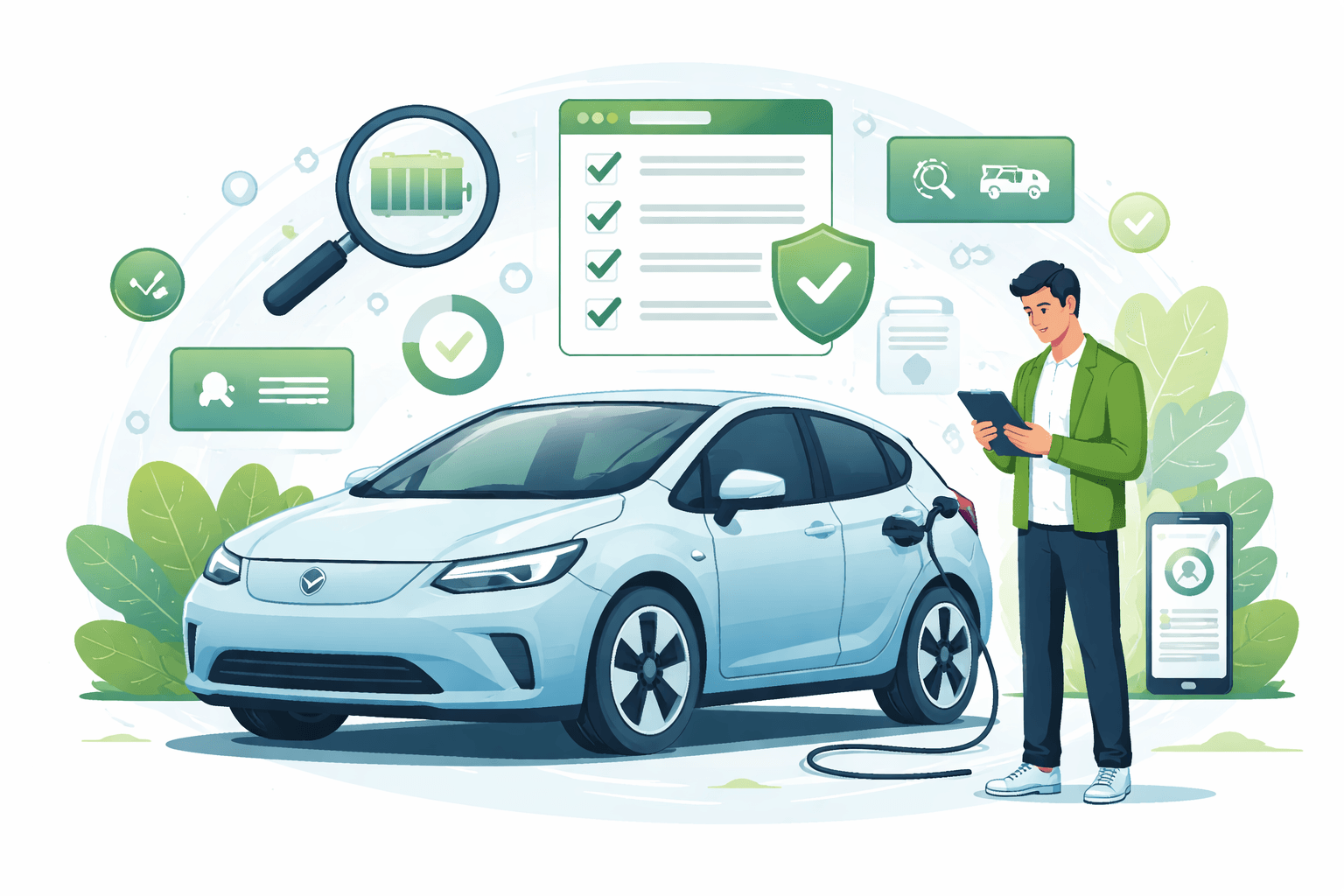
Buying pre-owned is where electric vehicles get especially compelling: used EV asking prices fell roughly 30–40% year-over-year in 2023–2024 in the U.S., according to market trackers like Cox Automotive and iSeeCars. That puts many long‑range models within reach, often still under factory battery warranty. This used electric car buying guide breaks down how to assess battery health, range, charging speed, vehicle condition, ownership costs, and where to shop—so you can purchase with confidence.
How to evaluate a used EV’s battery health, range, charging speed, and warranty
Battery condition is the single most important variable in a used EV. Capacity affects range, fast‑charging performance, and resale value more than any other component.

Electric Cars For Dummies: Culp, Brian
<strong>Written by an insider in the electric vehicle industry, dive in to learn more about the tech that powers electric cars, the various electric car options, and how to purchase and maintain the p
Check Price on AmazonBattery State of Health (SOH): what it is and what’s normal
- Definition: SOH is the percentage of original usable battery capacity remaining (100% = as new). It’s typically estimated from onboard diagnostics.
- Typical aging: Large-field analyses (e.g., Geotab’s study of thousands of EVs) suggest average capacity fade around 2–3% per year, though chemistry, thermal management, climate, and fast‑charging habits matter.
- What to look for: Ask the seller for a recent SOH or capacity report from the manufacturer service tool or a reputable EV specialist. Some models display capacity directly (e.g., bar indicators) or can be read via diagnostic tools. A healthy used pack often shows 85–95% SOH at ~5 years, but model-to-model variation is real.

OBDLink MX+ OBD2 Bluetooth Scanner for iPhone ...
View on AmazonRed flags
- Rapid, step-like capacity losses or recent “range reset” after a software update.
- Frequent DC fast‑charging history without adequate thermal management, or operation long-term in very hot climates, which can accelerate degradation.
Remaining range: test and verify
- EPA-rated range is a lab estimate when new. Real-world range depends on SOH, temperature, speed, elevation, tires, and HVAC use.
- Cold weather effect: Independent testing (AAA) has shown winter range losses up to ~40% at 20°F with cabin heat on for some models; recent heat‑pump systems typically reduce this penalty. Fleet data aggregators (e.g., Recurrent) often report 15–30% winter reductions for many modern EVs.
- Test drive plan: Start near 80% state of charge (SOC), drive your typical route at usual speeds with climate control on, and compare projected vs actual miles. If possible, repeat a short highway run at 65–75 mph to assess high‑speed efficiency.
Charging speed and standards: future-proof your purchase
- Onboard AC charger: Check the car’s AC charging rate (kW). Older models may be limited to 3.3–6.6 kW; newer cars often support 7.2–11 kW. Higher AC power shortens home charging time on a Level 2 station.
- DC fast charging: Confirm the peak DC rate (e.g., 50, 100, 150, 250+ kW) and charging curve. Peak power is less important than how long the car sustains higher rates from 10–60% SOC.
- Charging standards: In North America, CCS and Tesla’s NACS are becoming the dominant standards; CHAdeMO support is declining. If you’re considering a CHAdeMO-equipped model, verify local network coverage and plan for fewer site options over time.
- Real test: If the seller agrees, perform a brief DC fast‑charge session (e.g., 20–50%) to see the car’s actual charging behavior.
For charging basics and how speed translates to real time saved, see How to Charge an Electric Vehicle: Practical Guide to Home, Public, Costs, and Best Practices (/sustainability-policy/how-to-charge-an-electric-vehicle-guide-home-public-costs-best-practices).
Battery warranty and transferability
- Typical coverage: Most automakers warranty EV batteries for 8 years/100,000 miles (some up to 10 years/100,000 miles) against excessive capacity loss, often defined near 70% SOH. Terms vary by brand and model year.
- Verify transfer: Many warranties transfer to subsequent owners; some require paperwork or exclusions for commercial use. Get written confirmation from a dealer or the manufacturer.
- Why it matters: A valid, transferable battery warranty can shift risk away from you during the highest-depreciation years.
Thermal management: liquid vs air
- Packs with liquid cooling generally show more consistent performance and longevity across climates compared with passive/air‑cooled designs, especially in hot regions.
- Check for thermal management recalls or software revisions that alter charging or range predictions.
Vehicle condition: accident history, records, software, and EV-specific wear
An EV’s powertrain has fewer moving parts than a gas car, but condition still matters—especially underbody and high‑voltage components.
Accident, flood, and underbody checks
- Accident history: Obtain a third‑party history report and inspect panel gaps, paint overspray, and radar/lidar sensor alignment.
- Flood exposure: Look for corrosion, silt under carpets, moisture in lights, or “musty” cabin smells. Water damage can compromise high‑voltage insulation.
- Battery enclosure: Have a technician inspect the pack’s exterior and mounting points for scrapes or impacts from curbs or debris.
Maintenance, recalls, and software updates
- Records: Request service history, including coolant service for liquid‑cooled packs, brake fluid changes, and cabin air filter replacements.
- Recalls and service campaigns: Check for open recalls, especially those addressing battery management or charging reliability.
- Software currency: Many EVs receive over‑the‑air (OTA) updates that enhance range estimates, charging logic, and safety systems. Confirm the car is on the latest stable software branch and that connectivity (cellular or Wi‑Fi) works.
For what routine EV service actually entails, see Essential Guide to Electric Vehicle Maintenance: Care, Safety, and Battery Longevity (/sustainability-policy/essential-guide-electric-vehicle-maintenance-care-safety-battery-longevity).
EV‑specific wear items
- Tires: Due to higher torque and weight, EVs can wear tires faster—especially soft compounds or aggressive driving. Inspect for uneven wear (alignment), sidewall damage, and tread depth; budget for earlier replacement.
- Brakes: Regenerative braking reduces pad and rotor wear, but rust can affect rotors on cars driven infrequently or in wet/salty climates. Listen for scraping and check for pitting.
- 12‑volt battery: Many EVs still rely on a 12‑V battery to power control systems; replacement intervals can be 3–5 years.
- Charge port and cables: Inspect for bent pins, excessive heat discoloration, or broken latches. Confirm the included EVSE (portable Level 1/2 cable) works.
- Thermal system: Fans, pumps, and valves in liquid‑cooled systems should be quiet, with no coolant residue around fittings.
Total cost of ownership: price, incentives, charging, insurance, and depreciation
A smart used EV buy weighs operating costs against purchase price and residual value.
Purchase price and incentives
- Market dynamics: Sharp new‑EV price cuts in 2023–2024 flowed into used markets, lowering resale values and creating buyer opportunity.
- Incentives: Some regions offer rebates or tax credits for used EVs, often with price caps and income limits. U.S. federal law introduced a used clean vehicle credit (up to $4,000 for eligible purchases under a set price cap with income requirements) in recent years; details evolve by model year and seller requirements. Check current state and local programs and eligibility. See Electric Vehicle Incentives by State: What’s Available, Who Qualifies, and How to Claim It (/sustainability-policy/electric-vehicle-incentives-by-state).
Charging costs: home vs public
- Home electricity: U.S. residential electricity averaged about $0.16/kWh in 2024 (EIA). EV efficiency commonly ranges 27–33 kWh/100 miles (EPA-rated), translating to roughly $4–$5.50 per 100 miles at home.
- Public Level 2: Often free or priced similar to local kWh rates, but parking fees may apply.
- DC fast charging: Typically $0.30–$0.50/kWh or per‑minute equivalents; road‑trip energy can cost 2–3× home rates. Opportunities for discounted memberships exist on some networks.
- Calculating your cost per mile: Cost/mi ≈ (kWh/100 mi ÷ 100) × price per kWh. Example: 30 kWh/100 mi at $0.16/kWh ≈ $0.048/mi (~4.8¢/mi).
Insurance and repairs
- Insurance: Some EVs carry higher premiums than comparable gas cars because of repair complexity and parts availability, especially for luxury models. Rates vary widely—shop multiple quotes and ask about telematics discounts.
- Repairs: Routine maintenance is usually lower than for ICE vehicles (no oil changes, fewer fluids), but body repairs and certain components (e.g., advanced driver-assistance sensors) can be pricier. High‑voltage safety work must be done by qualified technicians.
Depreciation and resale
- EV depreciation has been steeper than ICE in some years due to rapid tech improvements, tax credits, and new‑vehicle price cuts. The flip side: compelling used values today. If you plan to resell soon, choose models with strong demand, robust charging support, and transferable warranties.
- Battery replacement economics: BloombergNEF reported average battery pack prices of ~$139/kWh in 2023, continuing a long‑term downward trend. Full pack replacements can still run many thousands of dollars once labor and overhead are included, but they remain uncommon within warranty periods.
Best places to shop and safest buying steps
Where you buy influences price, transparency, and recourse.
Shopping channels
- Private sellers: Often the lowest prices. Insist on maintenance documentation, a clear title, and the ability to perform diagnostics and a thorough inspection.
- Franchised dealers: May provide access to OEM diagnostic tools, open recall checks, and financing options.
- EV‑savvy independent dealers: Some specialize in EVs and can interpret SOH data, charging standards, and software histories.
- Certified Pre‑Owned (CPO) programs: Usually add inspections, warranty extensions, and software compliance, though prices can be higher.
Safe buying steps (checklist)
- Verify battery warranty terms and transferability in writing.
- Pull a vehicle history report; scrutinize for flood, salvage, or repeated service issues.
- Request a recent battery SOH or capacity test from a qualified service center.
- Test home and public charging. If possible, perform a short DC fast‑charge session to observe the charging curve.
- Confirm charging standard(s) and adapter availability for your region (CCS, NACS, CHAdeMO).
- Check for open recalls and confirm software is current.
- Book a pre‑purchase inspection (PPI) with an EV‑trained technician. Ask for a high‑voltage isolation check and underbody/battery enclosure inspection.
- Validate that all keys, charging cables, and accessories are present.
If you’re comparing networks and connector types, see Charging Stations for Electric Cars: Types, Costs, Networks, and How to Choose (/sustainability-policy/charging-stations-for-electric-cars-types-costs-networks-how-to-choose).
Match the EV to your driving needs
Right‑sizing your battery and charging access saves money and avoids frustration.
Commute distance and daily use
- Aim for at least 2× your typical round‑trip distance in real‑world range to preserve a buffer for weather, detours, and battery aging. Example: 40‑mile daily commute → target 120+ miles practical range at your climate.
- Urban stop‑and‑go favors EVs thanks to regenerative braking; highway‑heavy drivers should prioritize larger batteries and better aerodynamics.
Home and workplace charging access
- Home Level 2 charging (240 V) transforms ownership—topping up overnight covers most daily needs. If you rent, confirm outlet access and lease permissions.
- Without home charging, look for reliable workplace charging or dense public Level 2 coverage near home.
- Onboard AC charger power (e.g., 11 kW vs 6.6 kW) affects how quickly you can recover range nightly.
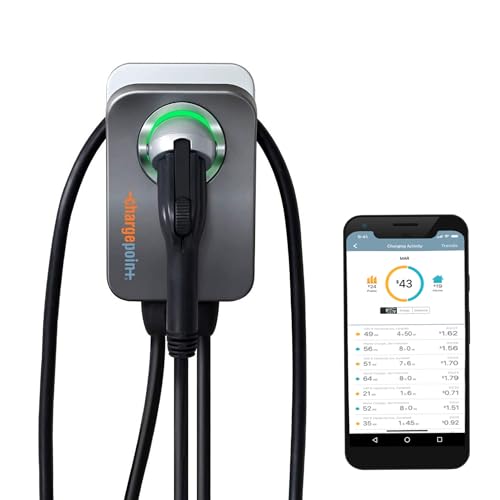
ChargePoint HomeFlex Level 2 EV Charger J1772
Discover the latest in EV charging technology. Explore a diverse selection of smart, efficient, and compatible charging solutions for your electric vehicle.
Check Price on AmazonFor choosing and using home, workplace, and public charging effectively, see Electric Car Charging Options: How to Choose the Right Charger for Your Needs (/sustainability-policy/electric-car-charging-options-choose-right-charger).
Climate and terrain
- Cold regions: Favor models with heat pumps, battery preconditioning, and robust thermal management. Expect winter range reductions.
- Hot regions: Liquid‑cooled packs age more gracefully; shaded parking helps. Verify active thermal management performance.
- Hilly areas: Regeneration recovers energy downhill but plan for higher uphill consumption.
Fast‑charging compatibility and road trips
- Long‑distance drivers should prioritize efficient highway range, strong charging curves (sustained 100–150+ kW), and access to reliable, well‑spaced stations on your routes.
- Check whether the car can precondition the battery before DC charging; this often improves speed and consistency.
Towing and cargo
- Towing can cut range by 30–50% depending on load and speed. If you plan to tow, validate the rated towing capacity, hitch availability, and real‑world reports for that model.
- Roof racks and cargo boxes increase drag and reduce highway efficiency; plan range accordingly.
By the numbers: key figures to anchor your decision
- 30–40%: Year‑over‑year decline in many used EV prices in 2023–2024 (Cox Automotive, iSeeCars), expanding buyer options.
- 2–3%/year: Typical average EV battery capacity fade seen in large datasets (Geotab), with significant variation by model and use.
- ~16¢/kWh: Average U.S. residential electricity price in 2024 (EIA), yielding ~$4–$5.50 per 100 miles for many EVs.
- 27–33 kWh/100 mi: Common EPA efficiency range for compact/midsize EVs, though design and driving style matter.
- Up to ~40%: Potential winter range loss at 20°F with heat on in older tests (AAA). Modern heat pumps often reduce this.
- 8–10 years: Typical OEM battery warranty length, often to ~100,000 miles, with minimum capacity thresholds.
Model‑specific considerations to research
- Chemistry and cooling: Models with liquid‑cooled NMC/NCA packs often show steadier long‑term health than air‑cooled packs in hot climates.
- Charging standard: Confirm whether the car supports CCS or NACS (now widely adopted by automakers) and whether adapters are supported; CHAdeMO is waning in North America.
- Onboard AC rate: Older 3.3–6.6 kW systems double home charge times vs 11 kW units.
- Software ecosystem: Over‑the‑air updates, battery preconditioning, and route planning with charger integration significantly improve ownership.
A practical inspection script for test day
- Cold start: Check 12‑V voltage health and infotainment boot behavior; warning lights should extinguish.
- HVAC and heat pump: Verify quick cabin heating/cooling and quiet compressor operation.
- Drive: Evaluate ride quality, brake feel, and regen settings; track energy use at 35–45 mph and again at 65–75 mph.
- Charging demo: Try Level 2 at 30–50% SOC; cable should latch firmly and remain cool. If feasible, do a short DC fast‑charge to observe peak rate and taper.
- Software: Confirm latest version, maps, and that remote app controls work (lock/unlock, precondition, charge limit).
- Underbody: Look for scrapes near battery crossmembers and signs of impact.
- Paperwork: Confirm title status, lien release, second key, charging cable, and owner’s manual.
What this means for buyers and policymakers
- Buyers: The combination of lower used prices, maturing charging networks, and long battery warranties makes the used EV market attractive—especially if you can charge at home and pick a model with strong thermal management.
- Fleet managers: SOH transparency and standardized capacity reporting would improve residual values and confidence; consider telematics to monitor pack health.
- Policymakers: Expanding used‑EV incentives, consumer education on charging, and support for reliable public fast charging accelerates equitable electrification.
Selecting the right used EV isn’t about chasing the biggest battery—it’s about matching real-world range and charging access to your life, verifying battery health with data, and choosing models with proven charging performance. That’s how pre‑owned electrics deliver quiet, low‑maintenance miles at a compelling total cost of ownership.
Recommended Products
Electric Cars For Dummies: Culp, Brian
<strong>Written by an insider in the electric vehicle industry, dive in to learn more about the tech that powers electric cars, the various electric car options, and how to purchase and maintain the p
OBDLink MX+ OBD2 Bluetooth Scanner for iPhone ...
Online shopping from a great selection at Automotive Store.
ChargePoint HomeFlex Level 2 EV Charger J1772
Discover the latest in EV charging technology. Explore a diverse selection of smart, efficient, and compatible charging solutions for your electric vehicle.