
Net Metering Explained: How Solar Owners Get Credit for Excess Power

Why What Is Net Metering? A Clear Guide for Homeowners & Businesses matters right now
In 2023, the United States added 6.8 GWdc of residential solar—an all-time high, according to SEIA/Wood Mackenzie. Most of these rooftop systems depend on net metering or its successors to pencil out financially. As utilities shift to Green Energy Explained: Types, Benefits, and How to Adopt It and export pricing, understanding how net metering works—and how it’s changing—is essential for homeowners, businesses, and community solar subscribers.
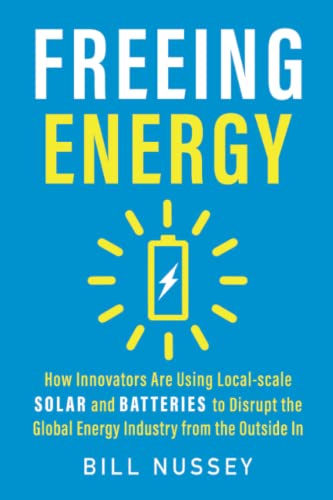
Freeing Energy: How Innovators Are Using Local-scale Solar and Batteries to Disrupt the Global Energy Industry from the Outside In: Nussey, Bill
Nussey is comprehensive and convincing in his portrayal of the relentless technological innovation driving down costs for small-scale solar and battery solutions, and the ability of these systems to i
Check Price on AmazonThis guide explains net metering from the ground up: what it is, how credits flow on your bill, how it differs from net billing and feed-in tariffs, who qualifies, regional rules in the U.S. and Europe, real-world savings math, enrollment steps, and the policy trends shaping the next decade.
What is net metering? A clear definition
Net metering is a billing arrangement that lets customers with on-site generation—most often Solar Power Explained: How It Works, Costs, and Climate Benefits—offset the electricity they import from the grid with electricity they export. Under classic retail net metering, each kilowatt-hour (kWh) you export to the grid earns a one-for-one credit at your retail rate, which you can use to offset kWh you draw later in the billing cycle. Many programs allow unused credits to roll over to future months and reconcile any remaining balance at an annual “true-up.”
Key points:
- Retail-rate credit: Exports are credited at the full retail rate (energy plus most delivery charges) in traditional net metering.
- Monthly or annual netting: Charges and credits are netted over a defined period, commonly monthly with an annual reconciliation.
- One bi-directional meter: Your utility meter measures both imports from and exports to the grid.
Why it exists: Net metering was created in the 1990s to encourage distributed energy resources (DERs) like rooftop solar, reduce peak demand, and cut emissions. IEA and IRENA note that distributed PV can reduce line losses and defer certain grid upgrades when deployed strategically, while accelerating clean energy deployment at the edge of the grid.
By the numbers: distributed solar and compensation
- 6.8 GWdc residential solar added in the U.S. in 2023; total U.S. solar additions across all segments were 32.4 GWdc (SEIA/Wood Mackenzie, 2024).
- Average U.S. residential electricity price was 15.9¢/kWh in 2023 (U.S. EIA).
- Typical U.S. home uses ~10,500 kWh/year (U.S. EIA). A 7 kW rooftop PV system can produce ~9,000–11,000 kWh/year depending on location (NREL PVWatts typical yields of 1,250–1,600 kWh/kW-year).
- Self-consumption (the share of solar used on-site as it’s generated) for a typical U.S. home without a battery is roughly 30–50% depending on load shape and system size (NREL/IEA PVPS analyses).
- Compensation models are shifting: California moved from retail net metering to a Net Billing Tariff in 2023 (CPUC Decision D.22-12-056), with export values varying by hour and season.
How net metering works: meters, credits, and billing cycles
The meter
- Bi-directional smart meter: Records imports (from grid to you) and exports (from you to grid). Some meters maintain separate registers; others calculate a net value over the billing interval.
- Interval data: Smart meters typically log 15-minute or hourly data, enabling time-of-use (TOU) billing and granular export credits.

Sense Energy Monitor with Solar – Track Electricity Usage and Solar Production in Real Time
View on AmazonBilling cycle and credits
- Monthly netting: At the end of each billing period, your utility nets your kWh imports against your kWh exports.
- Credit rollover: If exports exceed imports in a month, credits can roll forward to future bills (rules vary: some roll credits indefinitely, others settle annually).
- Minimum bill and non-bypassable charges: Many programs include a monthly minimum bill (e.g., $10–$15) and/or non-bypassable charges—fixed per-kWh surcharges that cannot be offset with solar credits. California’s NEM frameworks, for example, include non-bypassable charges of a few cents per kWh on imports.
Annual true-up
- Balancing the ledger: Many programs perform an annual settlement. If you’ve used more than you exported across the year, you pay the net amount owed. If you’ve exported more, you may receive a payment or see credits expire/zeroed out, often at an “excess generation” or wholesale rate rather than retail.
What changes under time-of-use (TOU)
- TOU netting: Imports and exports are tallied by TOU period. A kWh exported during off-peak may only offset an off-peak kWh imported; an on-peak import typically cannot be offset by an off-peak export at a one-for-one value unless your tariff explicitly allows it.
- Dynamic export pricing: In net billing regimes (see below), each hour has a distinct export price, decoupling export credits from your retail import price.
Net metering vs. net billing vs. feed-in tariffs: key differences
- Net metering (retail netting): You receive retail-rate credit for exported kWh that can offset retail charges within the billing period. Pros: simplicity and strong economics for customers. Cons: utilities argue it may under-collect fixed grid costs if not designed with minimum bills or non-bypassable charges.
- Net billing: Exports are credited at a specified export rate (often based on avoided costs or market prices), separate from the retail rate you pay for imports. Your bill shows imports charged at retail, exports credited at the export rate; the monetary values are netted. This better reflects the time-varying value of energy. California’s Net Billing Tariff (NEM 3.0) uses hourly export prices derived from the CPUC’s Avoided Cost Calculator.
- Feed-in tariff (FiT): All your PV production is purchased by the utility at a fixed tariff, and you buy all your consumption at retail. There’s no netting; generation and consumption are on separate ledgers. Germany’s EEG has long used FiTs (with rates declining over time), while the UK’s Smart Export Guarantee is a supplier-set export tariff, functionally a form of net billing for exports.
Who is eligible: residential, commercial, and community solar
Eligibility depends on jurisdiction and utility rules, but common elements include:
- Customer classes: Residential, small commercial, and larger commercial/industrial customers are often eligible, though size caps differ by class (e.g., 25 kW for residential in some states; hundreds of kW to multiple MW for commercial).
- System size limits: Many programs cap eligible system capacity either in kW (e.g., up to 1 MW) or as a percent of a customer’s historical annual load (often 100–150%).
- Equipment standards: Inverters must typically be UL 1741/IEEE 1547 compliant with anti-islanding and grid support functions. Utilities may require advanced inverter settings for ride-through and voltage regulation.
- Interconnection: Approval under a utility interconnection tariff is required, potentially including screens for feeder capacity and voltage rise.
Community and multi-tenant options:
- Virtual net metering (VNM): Credits from a single PV system are allocated to multiple accounts within a building or campus, common in multifamily and commercial properties in states like California and Massachusetts.
- Community solar: Off-site shared arrays allocate bill credits to subscribers. Minnesota, New York, Colorado, and others support community solar with credit formulas that approximate retail or use value-based tariffs.
Regional rules and examples: U.S. state snapshots and EU approaches
United States snapshots
- California: As of April 2023, new residential and commercial customers take service under the Net Billing Tariff (NEM 3.0). Exports are compensated at hourly values that average lower midday (often 5–8¢/kWh) and higher during evening peaks (e.g., 25–35¢ for a few critical hours), per the CPUC’s Avoided Cost Calculator. The CPUC’s decision (D.22-12-056) noted that export compensation would more closely track grid value and encourage pairing with batteries.
- Hawaii: Retail net metering closed in 2015. Successor tariffs like Smart Export credit evening exports while midday exports may be curtailed or valued lower, reflecting a saturated midday solar period on island grids (Hawaiian Electric).
- New York: Net metering has largely transitioned to the Value of Distributed Energy Resources (VDER) “Value Stack,” which pays for energy, capacity, environmental attributes, and locational value. Compensation varies by utility zone and time (NY PSC).
- Massachusetts: Retail net metering remains for many classes with class-specific credits and system caps. The state also uses the SMART program, a declining-block incentive layered on top of energy bill credits (MA DOER/DPUs).
- Florida: Statewide retail net metering remains in place for investor-owned utilities. A 2022 legislative rollback was vetoed, and retail NEM continues as of 2024 (Florida PSC/Governor’s office statements).
- Arizona: Major utilities like APS use net billing; export credits are set by the utility and may be around 5–10¢/kWh and adjust periodically. Customers are often on TOU rates that increase the value of on-peak How Much Can Solar Panels Save You? Real Costs, Savings & Payback (Arizona Corporation Commission/APS tariffs).
- Minnesota: Community solar is robust under Xcel Energy; bill credits have evolved and can be pegged to a Value of Solar (VOS) methodology (MN PUC). Residential rooftop typically uses net metering up to certain size thresholds.
- Texas: No statewide net metering; competitive retail electric providers offer solar buyback plans that function like net billing with varying export prices. Terms differ widely, and distribution utilities’ delivery charges remain (ERCOT/PUC of Texas context).
Note: Program names, sizes, and credit rates update frequently; always check your utility’s latest tariff.
Europe and other markets
- Netherlands: Classic net metering (“salderingsregeling”) has strongly supported rooftop solar adoption. A 2024 bill to phase it down was rejected by the Senate, so retail netting continues for now, though policymakers may revisit reforms (Government of the Netherlands; press reports).
- Spain: Royal Decree 244/2019 enabled “self-consumption with simplified compensation.” Exports are credited on a monthly basis up to the value of consumption; excess beyond that typically carries over at supplier-set rates. Administrative barriers were sharply reduced, catalyzing rooftop growth (Spain’s Ministry for the Ecological Transition).
- Germany: No retail net metering. Prosumer PV is incentivized via FiTs or market premiums while self-consumed energy avoids retail purchases and certain surcharges. Export tariffs have been periodically adjusted under the EEG (Federal Network Agency/BNetzA).
- United Kingdom: The Smart Export Guarantee (SEG) requires suppliers to pay for exports; rates vary by supplier—from a few pence up to 20+ p/kWh in some offers. Imports remain at retail; there’s no netting (Ofgem).
- Australia: Most states use net feed-in tariffs where exports earn a per-kWh credit set by regulators or retailers, often lower than retail. South Australia and other jurisdictions are piloting “Flexible Exports,” allowing dynamic export limits to manage grid constraints (AEMO/SA Power Networks).
Financial impact: sample calculations, payback, and savings scenarios
Let’s run a realistic example. Assumptions are illustrative; use local tariffs for precision.
Household and system:
- Location: U.S. suburb with average solar resource
- Annual usage: 10,500 kWh (EIA average)
- Utility rate: 16¢/kWh flat retail
- PV system: 7 kWdc rooftop, producing 9,800 kWh/year (NREL PVWatts mid-range)
- Self-consumption without battery: 40% (3,920 kWh used on-site as produced)
- Exports: 60% (5,880 kWh)
Scenario A: Retail net metering (monthly netting)
- Value of self-consumed energy: 3,920 kWh × $0.16 = $627
- Export credits at retail: 5,880 kWh × $0.16 = $941
- Gross annual bill before solar: 10,500 × $0.16 = $1,680
- Net annual bill after credits: $1,680 − ($627 + $941) = $112
- Add minimum bill/non-bypassable charges: suppose $120/year
- Estimated net annual savings: ~$1,448
Scenario B: Net billing with time-varying export prices
- Imports still billed at retail (16¢/kWh)
- Assume average export value: 7¢/kWh (typical of mid-day-heavy export periods in some net billing programs)
- Value of self-consumed energy: 3,920 × $0.16 = $627
- Export credits at export price: 5,880 × $0.07 = $412
- Net annual bill: $1,680 − ($627 + $412) = $641
- Add minimum bill charges: $120/year
- Estimated net annual savings: ~$919
Scenario C: Net billing + Tesla Powerwall in New Jersey: Cost, Availability & Is It Worth It?
- Battery shifts 2,000 kWh of would-be exports to on-site use during higher-priced hours
- New self-consumption: 3,920 + 2,000 = 5,920 kWh
- Remaining exports: 5,880 − 2,000 = 3,880 kWh
- Self-consumed value: 5,920 × $0.16 = $947
- Export credit value: 3,880 × $0.07 = $272
- Net annual bill: $1,680 − ($947 + $272) = $461
- Battery round-trip losses (10–15%) reduce shifted kWh slightly; assume 12% loss → shifted value ~1,760 kWh effective. Adjusted net bill ~ $1,680 − [$0.16 × (3,920 + 1,760) + $0.07 × (5,880 − 2,000)] ≈ $520
- Added demand charge or TOU savings: Batteries can further reduce peak-period imports; some tariffs include demand charges that storage can mitigate.
Simple payback considerations
- System cost: If a 7 kW system costs $2.75/Wdc before incentives ($19,250), the U.S. federal tax credit (Federal Solar Tax Credit 2026: What Homeowners Need to Know) reduces net cost to ~$13,475 (consult IRS guidance).
- Payback under retail net metering: $13,475 / $1,448 ≈ 9.3 years
- Payback under net billing (no battery): $13,475 / $919 ≈ 14.7 years
- With battery: Adding a $9,000 battery (net after tax credit ~$6,300) increases project cost but can boost savings and resilience. Economics depend heavily on TOU spread, export prices, and available rebates (e.g., state storage incentives).
These scenarios reflect a central policy reality: as export credits move from retail toward avoided-cost values, self-consumption and load shifting grow in importance. TOU-aware operation—running dishwashers and EV charging during sunny hours, or storing solar for evening use—meaningfully boosts savings under net billing.
How to enroll and what to check in your interconnection agreement
Step-by-step:
- Confirm eligibility and tariff: Check your utility’s net metering or net billing tariff. Note size caps, TOU requirements, and any application windows.
- Design for your load: Most utilities limit system size based on your historical 12-month usage. Ask your installer for a production estimate and avoid oversizing beyond allowed thresholds.
- Submit an interconnection application: Typically includes a one-line electrical diagram, site plan, equipment spec sheets (UL 1741/IEEE 1547), and evidence of structural/electrical compliance.
- Utility review and meter upgrade: The utility performs engineering screens (voltage rise, feeder capacity) and may install a bi-directional smart meter.
- Inspection: Local authority having jurisdiction (AHJ) inspects the installation.
- Permission to Operate (PTO): After approvals, you can energize and start accruing credits.
What to scrutinize in the paperwork:
- Compensation type and term: Is it retail netting, net billing with fixed/seasonal rates, or hourly dynamic export pricing? Are export rates locked for a term or adjustable annually? California’s Net Billing includes a limited-duration adder for some residential segments; base export rates adjust over time.
- Grandfathering: Many programs offer a 10–20 year term for customers to keep their original compensation method. Understand what events (e.g., service upgrades, system expansions) could reset your eligibility.
- Minimum bills and non-bypassable charges: These can materially affect savings. Ask how they apply under TOU and to what portion of usage.
- Annual true-up rules: Will excess credits be cashed out, rolled over, or forfeited? At what rate are they cashed out—retail, wholesale, or a set “excess generation” price?
- Export limits and curtailment: Some utilities impose static or dynamic export caps per inverter or per phase. Understand if “zero export” operation could ever be required.
- Metering and data access: Confirm that interval data will be available via the utility portal to track performance and optimize usage.
- Insurance and indemnification: Commercial customers should review liability and insurance requirements.
Grid and policy trends: time-of-use, export limits, and the future of net metering
- Shift from retail netting to value-based exports: Regulators from California to New York are migrating toward net billing and value-of-solar methodologies to better align customer compensation with grid needs and wholesale prices (CPUC; NY PSC). Expect more hourly and seasonal differentiation.
- Time-of-use as the default: TOU is becoming standard for solar customers. This rewards evening availability and dampens the value of mid-day exports when solar is abundant—the “duck curve” effect documented by CAISO.
- Storage integration and virtual power plants (VPPs): Batteries turn solar customers into flexible resources. Utilities are paying for aggregated, dispatchable capacity, creating new revenue streams that can partially replace lost export value. NREL and utility pilots (e.g., ConnectedSolutions in New England) have shown VPPs can reduce peak demand and defer infrastructure.
- Dynamic export constraints: High-solar feeders can face voltage and thermal limits. Australia’s “Flexible Exports” and some U.S. utilities are piloting dynamic setpoints that raise export caps when capacity is available and lower them when constrained, maximizing overall DER hosting capacity (AEMO/SA Power Networks).
- Cost recovery reforms: Expect more minimum bills, fixed charges, or capacity-based delivery charges to ensure grid cost recovery as prosumer adoption grows. The design challenge is to maintain efficient price signals without stifling DER adoption.
- Data-driven siting and locational value: Compensation that reflects local congestion and loss reduction (e.g., NY’s VDER locational adders) can steer DERs to where they provide the most grid benefit, aligning private incentives with public value.
Practical implications for consumers, businesses, and policymakers
- Consumers: Under classic net metering you can optimize by right-sizing your system to match annual load and managing usage to avoid minimum bills. Under net billing, focus on self-consumption: pre-cool or pre-heat during solar hours, run major appliances midday, and consider EV charging and optional storage to shift to high-value periods. Monitor your interval data to tune behavior over time. See: Time-of-Use Rates.
- Businesses: Demand charges dominate many commercial bills. Solar plus storage can reduce both energy and demand charges, even under net billing. Evaluate tariff options and consider participating in VPP or demand response programs to monetize flexibility.
- Policymakers: Clear, durable rules with transparent valuation build market confidence. Combining minimum bills with value-based exports, enabling advanced inverters, and investing in hosting capacity maps can unlock higher DER penetration while protecting non-participant ratepayers.

Kasa Smart Plug Mini 15A, Apple HomeKit Supported, Smart Outlet Works with Siri, Alexa & Google Home, UL Certified, App Control, Scheduling, Timer, 2.4G WiFi Only, 4 Count (Pack of 1) (EP25P4), White - Amazon.com
View on AmazonGlossary of key terms
- Capacity factor: The ratio of actual energy output over time to the output if a system ran at full power 100% of the time. Rooftop PV in the U.S. often has an 15–22% capacity factor.
- Self-consumption: The share of on-site generation consumed instantly on premises rather than exported.
- True-up: The periodic reconciliation that nets energy charges and credits over a longer interval (often annually).
- Avoided cost: The cost a utility avoids by purchasing from a DER instead of generating or procuring energy from other sources; used to set export rates in many net billing tariffs.
Additional resources and internal links
- U.S. EIA: Average retail electricity prices and consumption
- NREL PVWatts: Production estimates by location
- CPUC (California): Net Billing Tariff (NEM 3.0) decision D.22-12-056 and Avoided Cost Calculator
- NY PSC: VDER Value Stack
- Ofgem: Smart Export Guarantee
- AEMO/SA Power Networks: Flexible Exports pilots
Explore more on DigitalWindmill:
- How Solar Panels Work
- Time-of-Use Rates
- Community Solar Guide
- Interconnection Agreements
- Solar Payback Calculator
Where this is heading: Net metering is evolving into a more dynamic, data-rich framework that values when and where energy is delivered. For solar owners, pairing generation with flexible loads and storage—and choosing the right tariff—will be the keys to maximizing value. For grid operators, well-designed export pricing, DER aggregation, and smarter interconnection will turn millions of rooftops into a dependable, emissions-free resource.
Recommended Products
Freeing Energy: How Innovators Are Using Local-scale Solar and Batteries to Disrupt the Global Energy Industry from the Outside In: Nussey, Bill
Nussey is comprehensive and convincing in his portrayal of the relentless technological innovation driving down costs for small-scale solar and battery solutions, and the ability of these systems to i
Sense Energy Monitor with Solar – Track Electricity Usage and Solar Production in Real Time
KNOW WHAT’S ON: Track how much electricity you’re using, what time your kids got home, or when someone leaves the basement light on. Sense <strong>identifies patterns in your energy use to help your f
Kasa Smart Plug Mini 15A, Apple HomeKit Supported, Smart Outlet Works with Siri, Alexa & Google Home, UL Certified, App Control, Scheduling, Timer, 2.4G WiFi Only, 4 Count (Pack of 1) (EP25P4), White - Amazon.com
The EP25 is Kasa’s latest Apple HomeKit supported WiFi mini smart plug that <strong>supports 15A maximum load, with Energy Monitoring</strong>. You can use it to control lamps, fans, humidifiers, and