
Solar Tax Credit Explained: Save on Solar with the Federal ITC
Note: This guide is informational and not tax advice. Always check the latest IRS instructions and consult a qualified tax professional for your situation.
Why the solar tax credit matters now
The Inflation Reduction Act (IRA) restored the federal solar tax credit to 30% and extended it for a decade. According to the Solar Energy Industries Association (SEIA), the Investment Tax Credit (ITC) has helped grow U.S. solar capacity more than 200-fold since 2006, catalyzing hundreds of thousands of jobs and over 4.5 million cumulative installations. With residential electricity prices up 14% from 2020–2023 (U.S. EIA) and module prices falling, the 30% solar tax credit is a central driver of household and business savings.
This guide explains what the ITC is, who qualifies, how to claim it step-by-step, how it stacks with state and utility incentives, and how it shapes real-world payback periods.
What is the solar tax credit (ITC)? A clear definition and history
- Definition: The federal solar tax credit lets you reduce your federal income tax by a percentage of eligible solar installation costs. For homeowners, it’s formally the Residential Clean Energy Credit under Internal Revenue Code Section 25D. For businesses and commercial projects, it’s the Investment Tax Credit under Section 48 (and, starting in 2025, the tech-neutral Clean Electricity Investment Credit under Section 48E).
- What it covers: Solar electric property (PV modules, inverters, racking, balance of system, wiring, conduit, sales tax, permitting, and interconnection fees), plus battery storage for homes beginning in 2023. For businesses, it covers similar eligible energy property installed at facilities or on-site.
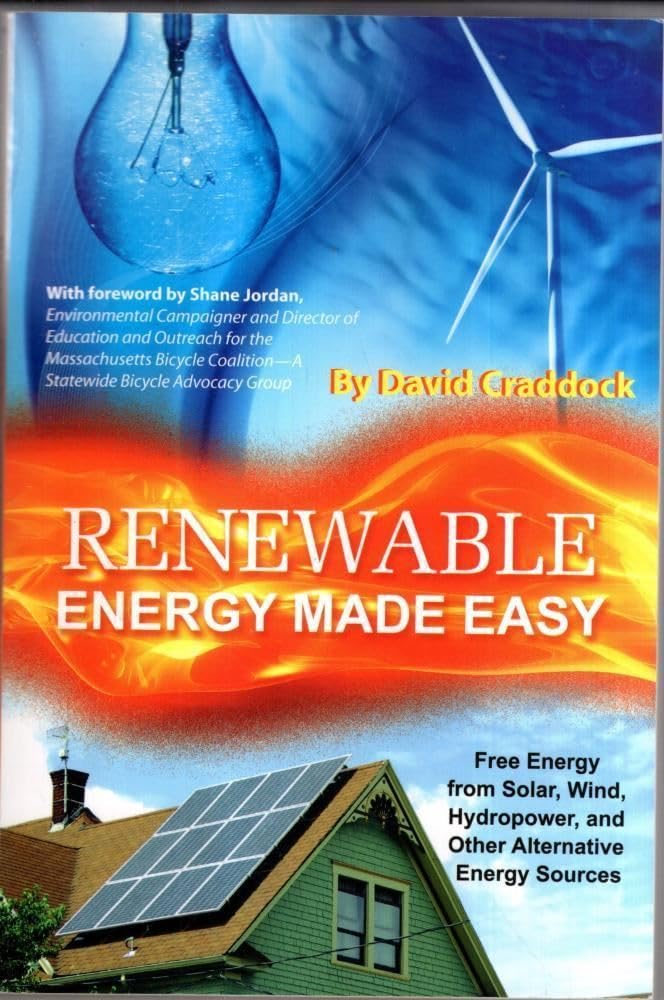
The Homeowner's Guide to Renewable Energy - Revised & Updated Edition: Achieving Energy Independence through Solar, Wind, Biomass and Hydropower: Chiras, Dan
After beginning with the all important discussion about energy efficiency and conservation, <strong>Dan guides you through everything you need to choose which renewable options to integrate into your
Check Price on AmazonKey milestones:
- 2005: Energy Policy Act creates the ITC.
- 2008: Emergency Economic Stabilization Act removes a $2,000 residential cap, enabling the full 30% credit to apply to total costs.
- 2015–2020: Extensions and planned phase-downs (30% to 26% to 22%).
- 2022: The Inflation Reduction Act restores the credit to 30% for systems placed in service in 2022–2032, renames Section 25D as the Residential Clean Energy Credit, and explicitly includes standalone residential batteries (≥3 kWh) starting in 2023.
Sources: IRS Code §§25D, 48, 48E; IRA (Pub. L. 117-169); IRS Form 5695 and Form 3468 instructions; SEIA industry data.
Who qualifies? Eligibility rules for homeowners, businesses, and renters
Homeowners (Section 25D):
- You must own the system and it must be installed on a residence you own in the United States (primary or secondary home). Condos and co-ops may qualify proportionally for your share of common-area systems if you pay your share of costs.
- New construction: The credit can apply to solar installed on a newly built home, but you claim it when the system is placed in service (operational), not when you purchase the home.
- Rentals: If you own a home you rent to others and do not use it as a residence, you generally cannot claim the 25D credit. If you both rent and use it as a residence part of the year, you may claim a proportional share.
- Off-site/community solar ownership: The IRS allows the 25D credit if you own the solar equipment (e.g., assigned panels in a cooperative/condo-like structure), the electricity is used to power your residence, and the system is not used to power a business property. Subscription-based community solar where you do not own the underlying equipment typically does not qualify. See IRS Notice 2013-70 Q&As.
Businesses and commercial entities (Section 48):
- Corporations, partnerships, and other taxpayers that place eligible energy property in service may claim the ITC.
- Nonprofits, state/local governments, Tribes, rural electric co-ops, and certain other tax-exempt entities can choose elective pay (“direct pay”) for the ITC under IRC §6417, receiving a cash refund in lieu of a tax credit.
- For-profit businesses may sell (transfer) certain clean energy credits for cash under §6418, subject to rules and registration; the buyer cannot also depreciate the purchased credit.
Renters:
- Most renters cannot claim the solar tax credit because they don’t own the property or the system.
- Exception: If you own a share of an off-site system that directly offsets your residence’s electricity and you have ownership documentation, you may qualify under the limited off-site ownership scenario above.
How much is the credit now? Current rates, phase-down schedule, and IRA changes
Residential Clean Energy Credit (Section 25D):
- 30% for systems placed in service 2022–2032.
- Phases down to 26% in 2033 and 22% in 2034.
- Expires after 2034 under current law.
- Batteries qualify starting in 2023 if they have at least 3 kWh of capacity, even if they’re not charged 100% by solar.
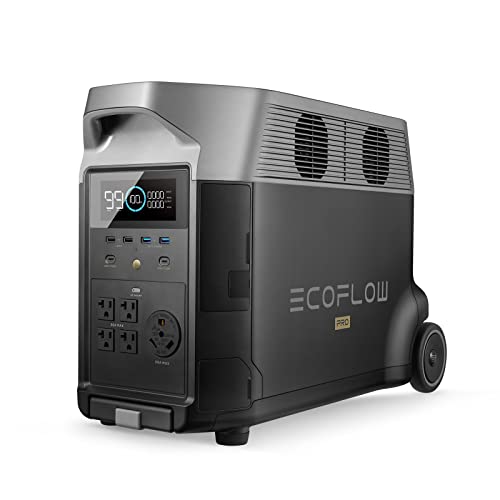
EF ECOFLOW Portable Power Station 3600Wh DELTA Pro, 120V AC Outlets x 5, 3600W, 2.7H Fast Charge, Lifepo4 Power Station, Solar Generator for Home Use, Power Outage, Camping, RV, Emergencies : Patio, Lawn & Garden
View on AmazonBusiness Investment Tax Credit (Section 48) and Clean Electricity ITC (Section 48E):
- Base rate is 6% and increases to 30% if prevailing wage and apprenticeship (PWA) requirements are met. Projects under 1 MW AC are generally treated as meeting PWA automatically; projects ≥1 MW must meet PWA to receive the full 30%.
- Additional “bonus” credits may apply for qualifying projects:
- Domestic content bonus: +10 percentage points for meeting steel/iron and manufactured product domestic content rules.
- Energy community bonus: +10 percentage points if located in an eligible energy community (brownfields, coal community, or fossil-fuel employment/closure areas per Treasury guidance).
- Low-income communities bonus (48(e), ≤5 MW AC, competitive allocation): +10 or +20 percentage points depending on project category.
- Depreciation interplay: For §48, the asset’s depreciable basis is reduced by 50% of the ITC taken (IRC §50(c)). Five-year MACRS applies; bonus depreciation rates phase down (80% in 2023, 60% in 2024, 40% in 2025, 20% in 2026 under current law).
- Timeline: Section 48 continues through 2024; Section 48E begins in 2025 as a tech-neutral credit for emissions-free generation. Phase-out of 48E occurs after the power sector achieves a 75% emissions reduction (to 25% of 2022 levels) for three consecutive years, per IRA; until then, credits continue at least through 2032.
Sources: IRS/Treasury guidance on PWA and bonus credits (Nov 2022 onward), IRA statutory text, IRS Form 5695 and 3468 instructions.
Step-by-step: How to claim the solar tax credit
For homeowners (Form 5695):
- Confirm eligibility and placed-in-service date
- Placed in service means the system is operational and connected (often the utility Permission to Operate date or final inspection sign-off). You claim in that tax year.
- Gather documentation
- Contract(s) and itemized invoices showing equipment and labor costs.
- Proof of payment and placed-in-service documentation (utility PTO letter, inspection sign-off, interconnection agreement).
- Product specifications and any manufacturer statements (especially for solar shingles/tiles or batteries to confirm ≥3 kWh capacity).
- Allocation documents for condos/co-ops or off-site ownership arrangements, if applicable.
- Determine eligible costs
- Include: modules, inverters, racking, balance-of-system, wiring and conduit, mounting hardware, sales tax, permitting, design/engineering directly tied to the system, and interconnection fees.
- Roof work: Structural upgrades solely to support PV can be included. Re-roofing unrelated to PV does not qualify. Solar shingles/tiles that serve as PV are eligible; for hybrid products, only the PV-related incremental cost is eligible.
- Standalone batteries (≥3 kWh) placed in service in 2023 or later are eligible.
- Account for rebates that reduce basis
- Utility rebates that are purchase-price adjustments generally reduce the eligible cost basis before computing the credit (see IRC §136 and IRS guidance). State tax credits typically do not reduce federal basis but may affect your state taxes.
- Complete IRS Form 5695 (Residential Energy Credits)
- Part I for Residential Clean Energy (solar PV and storage). Enter total qualified expenditures, subtract any basis-reducing rebates, then compute 30% (or applicable rate by year).
- Apply any carryforward from a prior year (line instructions detail this).
- Transfer the resulting credit to Schedule 3 (Form 1040) and then to Form 1040.
- If your tax liability is insufficient this year
- The 25D credit is nonrefundable. Unused amounts can carry forward to future years while the credit remains in effect (see Form 5695 instructions). Consult a tax advisor for carryforward strategy.
- Keep records
- Retain all documents for at least as long as the statute of limitations for your return (generally three years, longer if carrying credits forward).
For businesses (Form 3468):
- Determine credit type and rate
- Section 48 vs. 48E (for systems placed in service 2025+), confirm PWA applicability and eligibility for bonus credits (domestic content, energy community, low-income allocation for ≤5 MW AC).
- Establish placed-in-service date and cost basis
- Include direct and indirect costs properly allocable to the energy property. Exclude non-qualifying site work.
- Model depreciation and basis reduction
- Reduce depreciable basis by 50% of the ITC per §50(c). Coordinate with federal bonus depreciation and state depreciation rules.
- Consider transferability or elective pay
- For-profits may elect to transfer the credit for cash (registration and one-time transfer rules apply). Tax-exempt entities may elect direct pay under §6417.
- Complete IRS Form 3468 and attach to the business return
- Maintain cost records, construction/placed-in-service documentation, and PWA compliance records when applicable.
How the ITC interacts with state/local incentives and utility rebates (stacking strategies)
- State tax credits: Generally do not reduce your federal ITC basis. They reduce your state tax liability; some states allow carryforwards or refunds. State credits may be taxable income at the federal level depending on structure—consult a tax professional.
- Utility rebates: Public utility rebates for energy conservation are often excluded from income under IRC §136 and treated as purchase-price adjustments, which reduce the cost basis for the federal ITC. That means you calculate 30% on the net cost after such rebates.
- State rebates and performance incentives (SRECs): Many state or utility performance-based incentives (e.g., SRECs, production payments) are taxable income and typically do not reduce federal ITC basis. They do affect cash flow and ROI.
- Sales tax exemptions and property tax abatements: Don’t reduce ITC basis but can significantly improve project economics.
- Low-income, domestic content, and energy community bonuses (business): Can increase commercial ITCs beyond 30% if criteria are met.
Stacking example (homeowner):
- Gross system cost: $22,000
- Utility rebate: $1,000 (purchase price adjustment)
- Federal ITC basis: $21,000
- Federal credit at 30%: $6,300
- State tax credit (e.g., 25% up to $5,000): $5,000 state credit (does not reduce federal basis)
- Net out-of-pocket after incentives (ignoring timing and taxes on state incentives): $22,000 − $1,000 − $6,300 − $5,000 = $9,700
Always check DSIRE (Database of State Incentives for Renewables & Efficiency) for current state programs.
By the numbers: Costs, output, and payback drivers
- Average residential installed price: NREL’s Q1 2023 benchmark places residential PV around $3.28/Wdc (system-only; actual market prices vary by region and installer). A typical 7 kW system would be about $23,000 before incentives.
- Production: U.S. residential PV produces roughly 1,200–1,800 kWh per kW-year depending on location and tilt (NREL PVWatts). That’s 8,400–12,600 kWh/year for 7 kW.
- Electricity prices: U.S. average residential rate was ~15.9¢/kWh in 2023 (EIA), with many states above 20¢/kWh.
- Federal credit value: 30% of eligible costs for 2022–2032 placements in service.

Emporia Vue 3 Home Energy Monitor - Smart Home Automation Module and Real Time Electricity Usage Monitor, Power Consumption Meter, Solar and Net Metering for UL Certified Safe Energy Monitoring - Amazon.com
View on AmazonReal-world savings: Example calculations, payback periods, and ROI scenarios
Assumptions for all scenarios:
- System size: 7.0 kW DC
- Installed cost: $3.25/W ⇒ $22,750 gross
- Federal solar tax credit: 30% of eligible basis
- Degradation: 0.5%/year
- O&M: $20/kW-year ($140/year), ignored in first-year simple payback
- No loan financing modeled (cash purchase)
Scenario A: High-sun, high-rate market (e.g., Southwest urban area)
- Annual production: 1,600 kWh/kW-year ⇒ 11,200 kWh
- Retail rate: $0.22/kWh
- First-year bill savings: 11,200 × $0.22 = $2,464
- Federal ITC: 30% × $22,750 = $6,825
- Simple payback (after ITC only): Net cost = $15,925; Payback ≈ $15,925 / $2,464 ≈ 6.5 years
- 25-year net savings (ignoring escalation, after ITC): Roughly $2,464 × 25 − $15,925 ≈ $45,675 (before O&M and degradation adjustments)
Scenario B: Average-sun, average-rate market (e.g., Midwest)
- Annual production: 1,400 kWh/kW-year ⇒ 9,800 kWh
- Retail rate: $0.16/kWh
- First-year bill savings: 9,800 × $0.16 = $1,568
- Federal ITC: $6,825
- Net cost after ITC: $15,925
- Simple payback: $15,925 / $1,568 ≈ 10.2 years
Scenario C: Lower-sun, higher-rate market with a $1,000 utility rebate (basis reduction)
- Annual production: 1,250 kWh/kW-year ⇒ 8,750 kWh
- Retail rate: $0.20/kWh
- First-year bill savings: 8,750 × $0.20 = $1,750
- ITC basis: $22,750 − $1,000 = $21,750
- Federal ITC: 30% × $21,750 = $6,525
- Net cost after ITC and rebate: $22,750 − $1,000 − $6,525 = $15,225
- Simple payback: $15,225 / $1,750 ≈ 8.7 years
Commercial rooftop example (simplified)
- 500 kW system at $1.75/W ⇒ $875,000 cost
- ITC at 30% (PWA met): $262,500
- Basis reduction for depreciation: 50% × ITC = $131,250 ⇒ Depreciable basis = $743,750
- Bonus + MACRS depreciation yields additional tax benefits; many projects reach sub-5–7 year paybacks depending on rates and incentives. Businesses may further improve cash position via credit transferability.
Actual results depend on net metering, time-of-use rates, system design, shading, financing costs, and state/local incentives. Use PVWatts for site-specific production and review your utility tariff.
Common pitfalls and FAQs
- Do leased systems or PPAs qualify? If you lease your system or sign a power purchase agreement (PPA), you generally cannot claim the residential solar tax credit—the owner (lessor/third-party) does. If you buy the system via a loan and you own it, you can claim the credit.
- What if I don’t owe enough tax this year? The 25D credit is nonrefundable. You can carry forward unused amounts to future years while the credit remains in effect (see Form 5695 instructions). Keep records of carryforwards.
- Can I claim the credit for batteries added later? Yes. Starting in 2023, standalone residential batteries ≥3 kWh qualify. If you add a battery in a later year, you can claim a new credit on the battery cost when it’s placed in service that year.
- Does the credit cover a roof replacement? Not generally. The credit applies to solar electric property and components integral to PV (e.g., solar shingles/tiles). Ordinary roof replacement or structural work not exclusively to support PV isn’t eligible. You may include the incremental cost of PV-integrated roofing.
- What’s the “placed in service” date? Typically when the system is operational and approved (e.g., utility PTO or inspector approval). Prepayments before the system runs don’t trigger the credit.
- Can renters claim it? Usually no. Unless you own the system or a share of off-site equipment that directly offsets your residence’s usage (and you meet IRS ownership criteria), renters cannot claim the 25D credit.
- Will state incentives reduce my federal credit? Utility rebates that reduce purchase price usually reduce your federal basis before applying the 30%. State tax credits generally do not reduce federal basis. Production incentives (e.g., SRECs) are typically taxable income but don’t reduce basis.
- Are labor, permitting, and interconnection fees eligible? Yes, if directly related to installing and activating the solar energy property.
- Is there an income limit for the federal solar tax credit? No income cap applies at the federal level for 25D or 48.
- For businesses, what if I don’t meet prevailing wage/apprenticeship? Projects ≥1 MW that do not meet PWA generally receive only the 6% base ITC (plus any applicable bonuses). Projects under 1 MW are deemed to meet PWA and can receive the full 30% absent other disqualifying factors.
- Can businesses sell their credits? Yes. Under §6418, many business taxpayers can transfer credits for cash. Registration, one-time transfer, and anti-abuse rules apply.
Next steps and resources: Tools, calculators, official forms, and where to get help
Official IRS resources
- IRS Form 5695 (Residential Energy Credits) and Instructions — for homeowners
- IRS Schedule 3 (Form 1040) — to report the credit on your individual return
- IRS Form 3468 (Investment Credit) and Instructions — for businesses
- IRS guidance on prevailing wage/apprenticeship, domestic content, energy community bonuses, and credit transfer/direct pay (Treasury and IRS notices, FAQs)
Planning tools
- NREL PVWatts Calculator — estimate site-specific solar production and savings
- DSIRE (Database of State Incentives for Renewables & Efficiency) — find current state, local, and utility incentives
- LBNL Tracking the Sun / SEIA-Wood Mackenzie Solar Market Insight — market pricing and deployment trends
Who can help
- Certified public accountants (CPAs) and enrolled agents familiar with energy credits
- Experienced solar installers who can provide itemized invoices and documentation for tax filing
- Energy offices in your state or utility program administrators
Practical tips
- Ask your installer for an itemized bill that separates PV, storage, electrical upgrades, roof structural work, and unrelated roofing.
- Confirm whether any rebates you receive are treated as purchase-price adjustments or taxable income.
- If you’re considering a battery, ensure capacity is ≥3 kWh (homes) and keep manufacturer documentation.
- For businesses, document PWA compliance from day one if your project is ≥1 MW, and evaluate eligibility for domestic content and energy community bonuses early in design.
SEO-friendly answers to top questions about the solar tax credit
- What is the solar tax credit? It’s a federal incentive that reduces your income tax by 30% of eligible solar and battery storage costs for systems placed in service 2022–2032 (residential), with phase-down afterward. Businesses can receive up to 30% or more with bonuses under Section 48/48E.
- How do I claim it? Homeowners file IRS Form 5695 with their tax return in the year the system is placed in service; businesses file Form 3468. Keep invoices and PTO documents.
- How much will I save? A typical 7 kW home system at $22,750 yields a $6,825 federal credit, plus any state/utility incentives.
- Can I stack it with state incentives? Yes. Most state tax credits don’t reduce the federal ITC basis. Many utility rebates do reduce the basis; performance incentives like SRECs generally don’t.
- Does it apply to batteries? Yes, for homeowners starting in 2023 (≥3 kWh), and for businesses under Section 48/48E.
Where the policy is heading
- Stability for homeowners through 2034: The 30% residential credit runs through 2032, then 26% in 2033 and 22% in 2034. Expect broader adoption of batteries as storage qualifies independently.
- Business credit modernization: The shift to Section 48E in 2025 and the availability of transferability and direct pay are designed to unlock capital and broaden participation, particularly for public and nonprofit sectors.
- Supply-chain and interconnection realities: While module prices eased in 2023–2024, interconnection queues and distribution upgrades may affect timelines. The credit’s long runway allows planning around these frictions.
- Equity and domestic manufacturing: Bonus credits for domestic content, energy communities, and low-income allocations aim to distribute benefits and build U.S. manufacturing capacity.
Internal link suggestions
- How net metering works Net metering explained
- battery storage Home battery storage guide
- time-of-use rates TOU rates and solar
- Business incentives overview Commercial solar incentives
Recommended Products
The Homeowner's Guide to Renewable Energy - Revised & Updated Edition: Achieving Energy Independence through Solar, Wind, Biomass and Hydropower: Chiras, Dan
After beginning with the all important discussion about energy efficiency and conservation, <strong>Dan guides you through everything you need to choose which renewable options to integrate into your
EF ECOFLOW Portable Power Station 3600Wh DELTA Pro, 120V AC Outlets x 5, 3600W, 2.7H Fast Charge, Lifepo4 Power Station, Solar Generator for Home Use, Power Outage, Camping, RV, Emergencies : Patio, Lawn & Garden
<strong>Fully recharge the lifepo4 battery in 1.8 hrs with 240V outlets(3000W), 2.7 hrs with 1800W wall outlets or solar charged in 2.8 hours with 4*400W solar panels</strong> thanks to the industry-l
Emporia Vue 3 Home Energy Monitor - Smart Home Automation Module and Real Time Electricity Usage Monitor, Power Consumption Meter, Solar and Net Metering for UL Certified Safe Energy Monitoring - Amazon.com
<strong>Add individual 50A sensors to your Vue to monitor up to 16 individual circuits</strong> — providing accurate energy use for the appliances and equipment that is important to you. No guesswork.