
How Long Do Solar Panels Last? Lifespan, Degradation & Replacement Guide
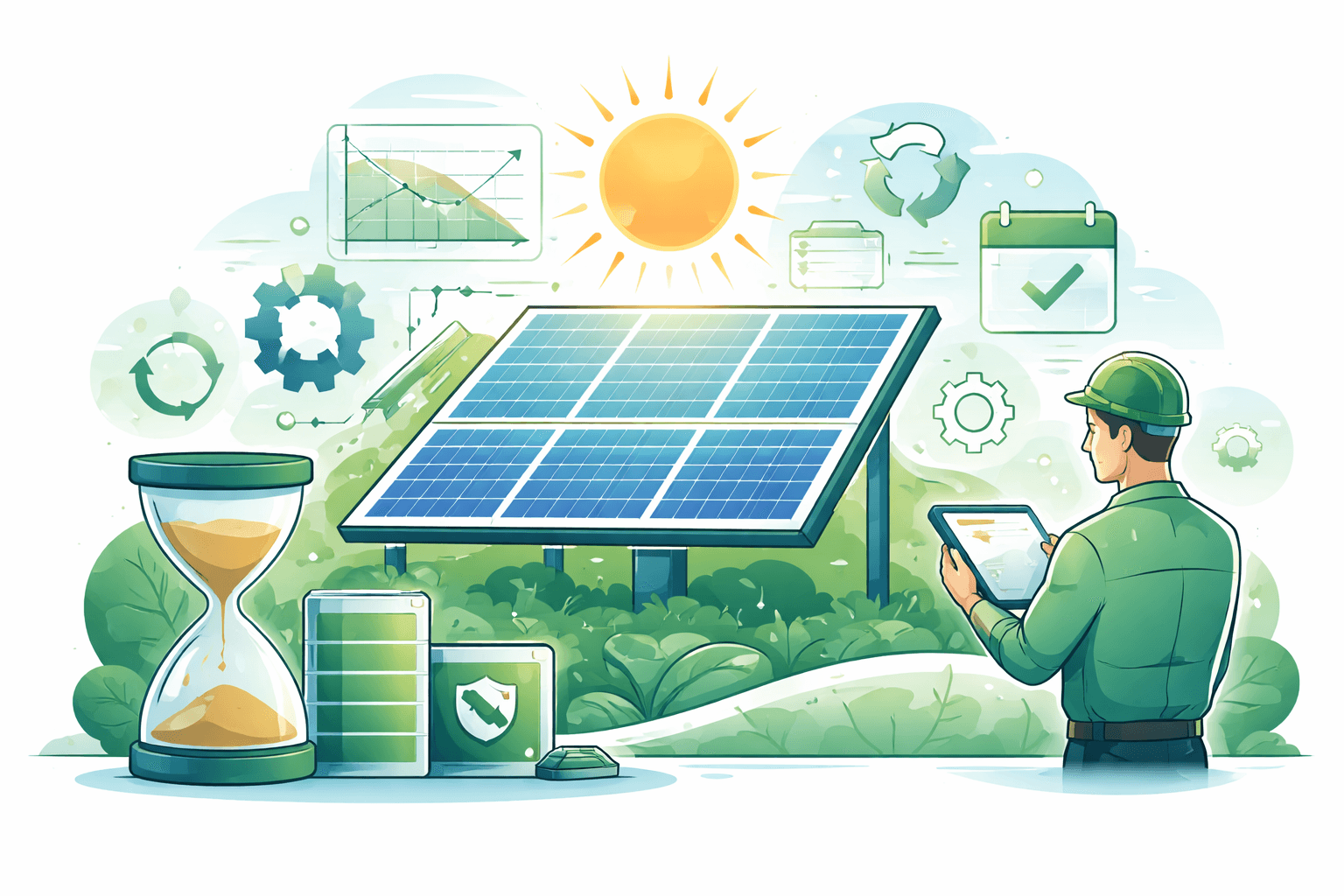
Modern field data show a clear answer to the question, how long do solar panels last: today’s photovoltaic (PV) modules routinely deliver 25–35 years of service with gradual output loss. NREL’s widely cited meta-analyses of more than 50,000 module‑years of data find median degradation around 0.5% per year, with newer technologies trending even lower. Most Tier‑1 manufacturers now back this reality with 25–30‑year performance warranties that guarantee roughly 80–92% of original power at term.
Why this matters now: Global PV capacity crossed 1.6 TW in 2024 (IEA), with 350–400 GW expected to be added annually through the mid‑2020s. Understanding lifespan and degradation helps homeowners, businesses, and policymakers plan maintenance, replacement timing, and true lifetime cost per kWh.
By the numbers
- Typical service life: 25–35 years (many arrays exceed 30 years of operation)
- Median degradation: ~0.5%/year across global datasets (NREL; IEA PVPS Task 13)
- Premium modules: 0.2–0.35%/year warranted after year 1; 88–92% power guaranteed at year 30
- Standard warranty terms: 25 years (performance/power); 12–25 years (product/materials)
- Inverter replacement: 10–15 years for string inverters; 20–25 years for microinverters/optimizers (based on typical product warranties)
How long do solar panels last? — TL;DR
- Most modern crystalline‑silicon panels last 25–30+ years before performance declines enough to prompt replacement. Fielded systems from the 1990s still operate today at 75–90% of initial output.
- Annual degradation averages ~0.5% across mixed vintages (NREL), but newer mono PERC, TOPCon, and heterojunction (HJT) modules often degrade 0.2–0.45%/year after the initial light‑induced drop.
- “End of life” is economic, not a hard failure. Panels are typically replaced when the energy they produce is no longer worth the roof space or when a warranty claim, damage, or a repower makes better financial sense.
Key factors that affect solar panel lifespan
Materials and design
- Cell technology: Modern N‑type TOPCon/HJT cells mitigate common degradation modes like light‑induced degradation (LID) and LeTID better than older P‑type mono PERC.
- Encapsulants and backsheets: EVA vs. POE encapsulants differ in moisture and acetic acid formation resistance; high‑quality POE often improves damp‑heat performance. Backsheet cracking and UV embrittlement are classic long‑term failure points when materials are subpar (IEA PVPS Task 13 reliability reports).
- Glass and frame: Thicker tempered glass, robust frames, and well‑bonded edge seals reduce moisture ingress and mechanical stress from wind and snow.
- Junction boxes and diodes: IP‑rated enclosures and reliable bypass diodes prevent hot spots and thermal damage under partial‑shade conditions.
Installation quality
- Mechanical mounting: Correct clamp zones, torque, and rail spacing reduce microcracks and flexing. Poor racking alignment or overhangs can accelerate wear.
- Electrical practices: Strain‑relieved cabling, UV‑resistant wiring, proper grounding, and neatly managed conductors lower the risk of insulation abrasion and potential induced degradation (PID).
- Shading and layout: Avoiding near‑object shading and heat traps sustains performance and lowers thermal cycling stress.
Climate stressors
- Heat and humidity: High temperature and damp‑heat drive encapsulant browning, corrosion, and PID. Accelerated tests like IEC 61215 damp‑heat (1,000 h at 85°C/85% RH) are designed to screen for this.
- Thermal cycling: Large temperature swings expand/contract solder joints and interconnect ribbons, creating microcracks over decades.
- UV exposure: Long‑term UV can yellow encapsulant and degrade backsheets if formulations are weak.
- Salt mist and ammonia: Coastal and agricultural settings require modules certified for salt‑mist and ammonia resistance.
- Hail and wind: Standard IEC hail tests use 25 mm ice balls at ~23 m/s; severe hail (≥45–50 mm) can exceed standard ratings. Robust frames and glass, plus site‑appropriate tilt and wind engineering, matter.
Operations and maintenance
- Soiling: Dust, pollen, ash, and bird droppings cause 2–7% average annual losses globally, with higher peaks in arid regions. Regular cleaning helps.
- Monitoring: Catching inverter trips, string faults, or arc‑fault issues early can prevent damage progression.
- Vegetation and pests: Keeping arrays clear of shading and nesting prevents hotspots and chewed wiring.
For practical upkeep tactics, see our guide: Solar Panel Maintenance Tips: Maximize Output & Lifespan.
- Link: /renewable-energy/solar-panel-maintenance-tips
Typical lifespan by panel type
- Monocrystalline silicon (P‑type mono PERC): 25–30+ years typical. Real‑world degradation ~0.3–0.6%/year after the first‑year LID step (often ~1–2%).
- Monocrystalline silicon (N‑type TOPCon/HJT): 30+ years likely. Lower susceptibility to LID/LeTID; many warranties now specify ≤0.25–0.4%/year linear degradation after year 1, with 88–92% power at year 30.
- Polycrystalline silicon: 25–30 years. Older poly modules often show ~0.5–0.8%/year degradation; quality varies by vintage.
- Thin‑film (CdTe, CIGS): 25–30 years. Long‑term field data show competitive stability; modern CdTe modules report ~0.2–0.4%/year median degradation in hot climates due to better temperature coefficients and materials design. Early‑generation CIGS variability was higher.
- Bifacial modules: Similar intrinsic lifespan to mono counterparts. The backside adds power and different soiling dynamics; robust backsheets or dual‑glass improve moisture resistance but increase weight and handling sensitivity.
For a deeper dive on modern cell architectures and materials science behind durability, see: Solar Panel Technology in 2026: A Complete Guide to Modern Photovoltaics.
- Link: /renewable-energy/solar-panel-technology-2026-complete-guide
Degradation rates explained — and how they’re measured
Degradation is the gradual reduction in the maximum power (Pmax) a panel can produce under standardized test conditions (STC: 1,000 W/m² irradiance, 25°C cell temperature, AM1.5 spectrum). Two common patterns appear:
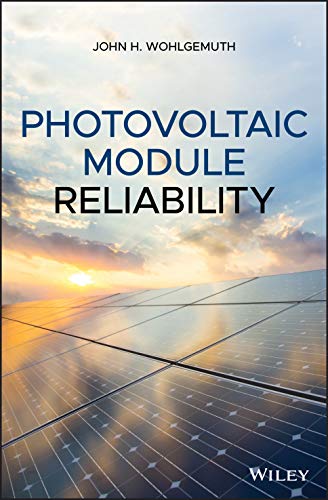
Photovoltaic Module Reliability: Wohlgemuth, John H.
Photovoltaic Module Reliability <strong>starts with a brief history of photovoltaics, discussing some of the different types of materials and devices used for commercial solar cells</strong>. It then
Check Price on Amazon- Initial light‑induced degradation (LID): Some silicon modules lose ~1–3% in the first weeks/months as boron‑oxygen complexes form. Modern N‑type cells largely avoid this.
- Long‑term linear degradation: After LID, most panels decline by a near‑linear percentage each year due to thermal cycling, UV, and moisture effects.
Key modes and mitigations
- PID (potential‑induced degradation): High system voltages can drive ionic drift and shunt paths, cutting power. Mitigations include better glass/surface passivation, negative grounding, and inverter PID recovery features.
- LeTID (light and elevated temperature‑induced degradation): Affects some PERC cells under heat and light; process tweaks and hydrogenation strategies have largely contained it in recent generations.
What the data say
- NREL/Jordan & Kurtz meta‑analyses: Median ~0.5%/year across technologies and climates; newer modules show lower rates as manufacturing has matured.
- IEA PVPS Task 13: Confirms improving degradation trends and highlights climate‑specific failure modes (e.g., damp‑heat in tropical sites vs. thermal cycling in continental climates).
- Independent reliability testing (e.g., PVEL Scorecard) shows substantial variance among products; top performers pass extended stress sequences with minimal power loss.
How manufacturers quantify it
- Factory “flash tests” measure nameplate Pmax at STC during production.
- Long‑term outdoor monitoring and accelerated stress tests (IEC 61215/61730) bound expected field performance and safety, informing the linear degradation curve used in warranties.
What you should expect
- Standard modules: after the first‑year step, ~0.4–0.6%/year.
- Premium N‑type: ~0.2–0.35%/year.
- Thin‑film CdTe: ~0.2–0.4%/year, with strong hot‑climate energy yield due to better temperature coefficients.
Performance warranties vs. product/production warranties
Terminology varies by manufacturer, but you’ll typically see two distinct coverages:
Product (materials & workmanship) warranty: Covers manufacturing defects and durability of the physical module (glass, frame, junction box, lamination). Common terms are 12–15 years, with many premium brands offering 20–25 years. This is what applies if a backsheet cracks, a junction box fails, or lamination delaminates.
Performance (power production) warranty: Guarantees that the panel will still produce a specified percentage of its original power (Pmax) after a certain number of years under STC. Modern linear warranties often promise:
- Year 1: 97–98% of nameplate after the initial LID allowance
- Annual decline: ≤0.25–0.55%/year thereafter
- Year 25: ~84–90% guaranteed
- Year 30 (increasingly common): ~88–92% for premium N‑type modules
How to interpret a linear performance warranty
- Example: 98% in year 1, then −0.45%/year to year 25. Guaranteed Pmax at year 25 = 98% − (0.45% × 24) ≈ 87.2% of nameplate. For a 400 W panel, that’s a warranted ~349 W at year 25.
- Claims usually require proof via approved testing or energy‑yield evidence. The remedy may be replacement panels, additional panels to “make up” the shortfall, or a prorated refund—terms vary.
Remember: The performance warranty sets a floor; many panels outperform it in the field.
Signs your solar panels need repair or replacement
Watch for these indicators in monitoring data and visual inspections:
- Persistent output drop beyond weather/seasonal expectations, compared to neighbors or PVWatts baselines, after cleaning and inverter checks
- Step‑change loss on a single string or panel (points to a failed bypass diode, connector, or module)
- Hotspots or non‑uniform temperatures seen via IR camera
- Visible defects: yellowing/browning of encapsulant, snail trails, cell/interconnect cracks, delamination, backsheet chalking/cracking, burn marks at junction boxes
- Glass damage from hail or impact, water ingress, or corrosion on frames and mounting hardware
- Frequent ground faults, arc‑fault trips, or PID symptoms (voltage‑dependent power loss that recovers when strings are reconfigured or after a night‑time PID recovery cycle)

FLIR ONE Pro LT - High resolution Thermal Imaging Camera for iOS Smartphones (iPhone w/Lightning Port Only) : FLIR: Industrial & Scientific
Amazon.com: FLIR ONE Pro LT - High resolution Thermal Imaging Camera for iOS Smartphones (iPhone w/Lightning Port Only) : FLIR: Industrial & Scientific
Check Price on AmazonBefore replacing modules, rule out inverter or optimizer/microinverter issues, loose connectors, shade growth, and soiling.
How to extend panel life: maintenance and preventive steps
- Keep modules clean where soiling is significant: In dusty or pollen‑heavy regions, plan periodic rinses with deionized water and soft brushes. Avoid abrasive tools and high‑pressure jets that can compromise edge seals.
- Inspect racking and fasteners annually: Retorque clamps if needed, check for corrosion, and confirm proper drainage and roof penetrations.
- Manage vegetation and pests: Trim trees to prevent new shade; use critter guards to keep birds/rodents away from wiring.
- Monitor performance: Compare monthly energy to expected values (e.g., PVWatts). Set alerts for sudden drops at the string/panel level if you have module‑level electronics.
- Address PID/LeTID risks: Ensure modern inverter settings and grounding schemes; some inverters include night‑time PID reversal features.
- Firmware and safety checks: Keep inverter/optimizer firmware current and verify rapid‑shutdown devices function as intended.
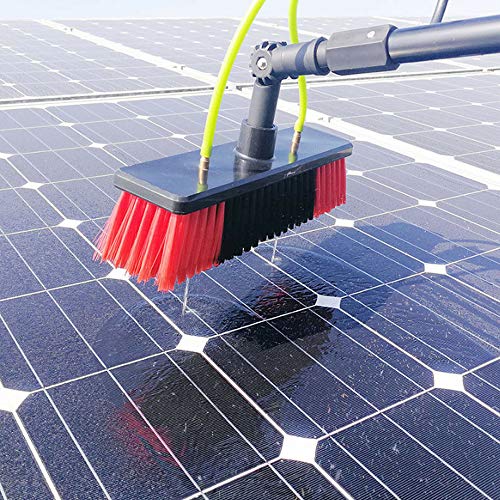
26 Feet Reach Solar Panel Cleaning Brush & Pole Water Fed Pole Kit,Suitable for high Windows Cleaning, Solar photovoltaic Panel Cleaning and Cleaning Cars Trucks Vans caravans Windows : Patio, Lawn & Garden
View on AmazonHands‑on guidance is here: Solar Panel Maintenance Tips: Maximize Output & Lifespan.
- Link: /renewable-energy/solar-panel-maintenance-tips
Replacement costs, ROI, and timing: repair vs. repower
When does it make economic sense to replace solar panels? Consider four variables:
- Remaining performance vs. roof space value
- Cost of panel‑only replacement vs. full repower
- Balance‑of‑system (BOS) status (inverters, racking, wiring)
- Incentives/net billing rules that change the value of energy exported to the grid
Typical cost ranges (United States; 2025–2026 market conditions)
Panel‑only swap (like‑for‑like, small job): $300–$700 per panel including labor, lift, and minor electrical (roughly $0.75–$1.75/W for 400 W panels). Truck rolls dominate costs for one‑off replacements.
Partial repower (new panels, reuse racking and wiring where compliant): $1.25–$2.25/W depending on scale, roof complexity, and permitting.
Full new system (panels, racking, wiring, inverter): See our breakdown with regional ranges and soft costs: Solar Panel Installation Cost: 2026 Pricing, Breakdown & Savings Guide.
Link: /renewable-energy/solar-panel-installation-cost-2026-pricing-breakdown-savings
Inverter considerations
- String inverters typically require replacement once over a 25–30 year period (often year 10–15). Budget $1,500–$3,500 for residential units.
- Microinverters and DC optimizers carry 20–25 year product warranties; failures are less frequent but replacements are labor‑intensive.
Repair vs. replace decision tree
- Single underperforming panel with obvious defect within warranty: File a claim; replacement is usually best.
- Broad performance loss with aging panels (e.g., 75–82% of nameplate at 25–30 years): If roof space is limited and electricity prices are high, a repower with higher‑efficiency modules can boost site kW by 30–60% on the same footprint.
- Imminent roof work: Coordinate replacements or full repower to minimize labor duplication and re‑permitting.
Calculating lifetime cost per kWh (simple homeowner LCOE)
Formula (ignoring financing and taxes): LCOE ≈ (Net installed cost + present value of O&M and replacements) ÷ Lifetime energy production
Estimate steps
- Annual energy (year 1): System size (kW) × site yield (kWh/kW‑yr). Typical U.S. sites: 1,200–1,800 kWh/kW‑yr (NREL PVWatts).
- Lifetime energy with degradation: Sum a geometric series using annual decline r. A quick multiplier for 30 years at 0.5%/yr is ~27.86× year‑1 output (vs. 30× with no degradation).
- Add O&M and inverter replacement costs (discount to present value if you wish; a simple estimate adds $100–$200/year O&M plus one inverter replacement).
Example A: High‑sun site (Phoenix‑like)
- 7 kW system; year‑1 yield ~1,800 kWh/kW‑yr ⇒ 12,600 kWh
- Lifetime energy (30 years; 0.5%/yr decline): 12,600 × 27.86 ≈ 351,000 kWh
- Installed cost: $3.25/W ⇒ $22,750 before incentives; after 30% federal credit: ~$15,925
- Add $3,000 inverter (year 12–15) + average O&M $150/yr × 30 = $4,500 (simple total: ~$7,500)
- Simplified LCOE: ($15,925 + $7,500) ÷ 351,000 ≈ $0.066/kWh (6.6 cents)
Example B: Moderate‑sun site (New York‑like)
- 7 kW; year‑1 yield ~1,200 kWh/kW‑yr ⇒ 8,400 kWh
- Lifetime energy: 8,400 × 27.86 ≈ 234,000 kWh
- Same net cost + O&M/replacement: ~$23,425
- Simplified LCOE: $23,425 ÷ 234,000 ≈ $0.100/kWh (10.0 cents)
These back‑of‑envelope figures are competitive with typical U.S. residential retail rates (often 15–30 cents/kWh), which is why even with degradation, long lifespans underpin strong economics. For a fuller decision framework, see: Is Solar Worth It in 2026? Cost, Savings & Payback Guide.
- Link: /renewable-energy/is-solar-worth-it-2026
When should you repower?
- Roof‑space constrained homes: If your 2012‑era 15–17%‑efficient panels are at ~80–85% output, replacing with 21–23%‑efficient modules can add 30–60% capacity on the same area, improving self‑consumption under net billing.
- Major incentive step‑downs or tariff changes ahead: Pulling forward a repower can lock in favorable terms.
- Multiple failures across strings or systemic backsheet issues: Broad defects suggest product‑warranty claims and comprehensive replacement are prudent.
FAQ
Does snow or hail shorten lifespan?
- Temporary snow cover doesn’t harm modules but can stress racking if heavy. Don’t use metal tools to clear snow. Hail risk depends on local storm severity and module rating; severe hail beyond certification can crack glass.
Will cleaning void my warranty?
- Follow the manufacturer’s cleaning guidance. Harsh chemicals, abrasive pads, or pressure washers can void product warranties by damaging coatings and seals.
Do panels “stop working” at 25 years?
- No. The warranty term is not a hard stop; many panels will keep producing for years beyond—just at lower output.
How do I verify degradation at home?
- Compare long‑term normalized production (kWh/kW) to PVWatts expectations, adjusting for weather. Module‑level electronics can isolate outliers.
Where do these numbers come from?
- Long‑term datasets from NREL, IEA PVPS Task 13 reliability studies, field performance reports from national labs and utilities, and third‑party reliability testing (e.g., PVEL). Warranties reflect steady advances in cell passivation, encapsulants, and quality control.
The road ahead
Cell technology is shifting quickly to N‑type TOPCon and HJT, which reduce LID/LeTID and promise sub‑0.4%/year degradation. Dual‑glass bifacial builds and improved polymers harden modules against moisture and UV. As manufacturers increasingly offer 30‑year performance warranties above 88–92%, planning horizons for rooftops and utility‑scale PV will extend. For owners, that means thinking in 30‑year increments: budgeting one inverter replacement, maintaining racking integrity, and using monitoring to catch small issues before they become lifetime‑shortening failures.
Recommended Products
Photovoltaic Module Reliability: Wohlgemuth, John H.
Photovoltaic Module Reliability <strong>starts with a brief history of photovoltaics, discussing some of the different types of materials and devices used for commercial solar cells</strong>. It then
FLIR ONE Pro LT - High resolution Thermal Imaging Camera for iOS Smartphones (iPhone w/Lightning Port Only) : FLIR: Industrial & Scientific
Amazon.com: FLIR ONE Pro LT - High resolution Thermal Imaging Camera for iOS Smartphones (iPhone w/Lightning Port Only) : FLIR: Industrial & Scientific
26 Feet Reach Solar Panel Cleaning Brush & Pole Water Fed Pole Kit,Suitable for high Windows Cleaning, Solar photovoltaic Panel Cleaning and Cleaning Cars Trucks Vans caravans Windows : Patio, Lawn & Garden
Buy <strong>26 Feet Reach Solar Panel Cleaning Brush & Pole Water Fed Pole Kit,Suitable for high Windows Cleaning, Solar photovoltaic Panel Cleaning and Cleaning Cars Trucks Vans caravans Windows<