
How Many Solar Panels Do I Need? A Practical Guide & Estimate

The average U.S. home used about 10,791 kWh of electricity in 2023 (U.S. EIA). In most climates, meeting that with rooftop solar requires roughly 7–10 kW of DC capacity—about 18–26 modern 400 W panels. If you’re asking “how many solar panels do I need,” this guide walks you through a simple, data-driven way to calculate it for your home, with formulas, site-adjusted production, and three worked examples.
Why trust these numbers? We lean on standardized methods from NREL’s PVWatts, utility-grade definitions of kW and kWh, and peer-reviewed performance data. Use this as a planning baseline, then validate with a site-specific quote.
How system size is measured: kW vs kWh and why it matters
- kW (kilowatts) is power—your solar system’s peak output under standardized test conditions. A “7 kW” system has panels totaling 7,000 watts DC at STC (1,000 W/m², 25°C).
- kWh (kilowatt-hours) is energy—what you consume and what solar generates over time. Your utility bills list monthly kWh; solar generation is also tracked in kWh.
- Capacity factor and specific yield bridge the two. Specific yield is the kWh a system produces per kW of panels per year (kWh/kW-year). In the U.S., typical specific yields range from about 1,100–1,700 kWh/kW-year depending on location and roof conditions (NREL PVWatts).

Solar Electricity Handbook - 2023 Edition: A simple, practical guide to solar energy – designing and installing solar photovoltaic systems: Boxwell, Michael
Solar Electricity Handbook - 2023 Edition: <strong>A simple, practical guide to solar energy – designing and installing solar photovoltaic systems</strong> [Boxwell, Michael] on Amazon.com. *FREE* shi
Check Price on AmazonWhy it matters: You size solar in kW to produce the annual kWh you need. The same 1 kW of panels will generate far more kWh in Phoenix than in Seattle.
For a refresher on how PV systems work end-to-end, including inverters and wiring, see our breakdown in Solar Panels Explained: How They Work, Costs, and Installation Guide.
Step 1 — Calculate your annual and peak electricity use
Start with your bills:
- Gather 12 months of electricity bills and total the kWh. That’s your baseline annual load.
- Note your highest-use month (kWh). This helps with inverter sizing, battery considerations, and evaluating seasonal mismatch.
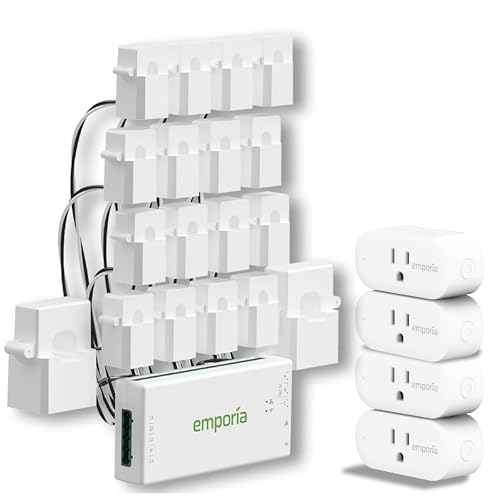
Emporia Energy Monitor with 16 Sensors + 4 Smart Plugs Super Bundle - Whole Home Electricity Usage Tracking & Real-Time Control - Supports Solar Net Metering - Works with iOS, Android, Alexa - Amazon.com
View on AmazonQuick methods if you don’t have all bills:
- Multiply a representative monthly bill (kWh) by 12.
- Use smart meter or utility apps that summarize 12-month usage.
Adjustments to consider:
- Electrification plans: An EV typically adds ~2,500–4,000 kWh/year (10,000–12,000 miles at 3–4 miles/kWh). A heat pump can add 2,000–6,000 kWh/year depending on climate and home size.
- Efficiency upgrades: Air sealing, heat pump water heaters, LEDs, and smart thermostats can trim 10–30% of usage. Right-size solar after planned efficiency.
- Offset target: Many households aim to offset 80–100% of annual use. If your utility’s compensation for exports is low, you might size closer to daytime self-consumption instead of 100% annual offset.
Step 2 — Panel output explained: wattage, efficiency, performance ratio, and real-world production
- Panel wattage: New residential modules commonly range 370–430 W in 2026-class products; 400 W is a practical planning assumption. Higher wattage doesn’t mean higher efficiency by itself—it often reflects a larger panel.
- Efficiency: Most top-tier monocrystalline panels are 20–22% efficient. Efficiency mostly affects roof area needed, not energy production per kW.
- Temperature coefficient: Output drops as cells heat. Typical coefficients are around −0.30% to −0.35% per °C above 25°C (manufacturer datasheets; NREL). Hot roofs lose a few percent midday in summer.
- Performance ratio (PR): Real systems don’t deliver lab-rated output continuously. Losses include temperature, wiring, soiling, inverter conversion, mismatch, and downtime. Residential PR commonly lands ~0.75–0.85 (NREL), and PVWatts bakes these into its specific yield.
- DC vs AC and inverter “clipping”: A typical DC-to-AC ratio is 1.15–1.30. Slightly “oversizing” DC relative to the inverter raises annual kWh even if a few peak minutes clip. Many residential designs target ~1.2 (NREL best practices).
For model-specific performance and dimensions, see our picks in Best Solar Panels for Home 2026: Top Picks, Cost & Buying Guide.
Step 3 — Site factors: sunlight, tilt/orientation, shading, and temperature
Your roof and location drive specific yield (kWh/kW-year).

Klein Tools 935DAG Digital Electronic Level and Angle ...
View on Amazon- Sunlight (insolation): U.S. annual specific yield often ranges:
- Southwest deserts: ~1,600–1,800 kWh/kW-year
- California/Intermountain West: ~1,400–1,600
- Midwest and Northeast: ~1,200–1,400
- Pacific Northwest: ~1,000–1,200 Values from NREL PVWatts and NSRDB.
- Tilt and orientation:
- South-facing, tilt near latitude maximizes yield.
- East- or west-facing roofs typically produce ~8–15% less annually than south at similar tilt (NREL/CSI data). Very shallow or very steep tilts can trim output several percent.
- Shading: Even partial shading can create outsized losses on string-inverter arrays. Module-level power electronics (microinverters or DC optimizers) reduce mismatch and shade impacts but don’t eliminate them.
- Temperature: Hotter climates and dark shingles raise cell temperatures, nudging PR downward during peak sun. Ventilated racking and light-colored roofs can help.
Use NREL’s free PVWatts to estimate your site’s specific yield accurately. Your installer will also run PVWatts or similar software.
Step 4 — Convert kWh needs into number of panels (the formula and 3 examples)
Here’s the straightforward math. Define:
- Annual_Load_kWh = Your annual electricity use (kWh)
- Specific_Yield = kWh produced per kW of panels per year at your site (kWh/kW-year)
- Panel_Watts = Nameplate rating of the module you plan to use (W)
Then:
- System_Size_kWdc = Annual_Load_kWh ÷ Specific_Yield
- Number_of_Panels = (System_Size_kWdc × 1,000) ÷ Panel_Watts
Notes:
- If you plan to offset only a percentage of your load, multiply Annual_Load_kWh by that fraction first (e.g., 0.9 for 90%).
- PVWatts-derived Specific_Yield already accounts for performance losses typical of residential arrays.
Worked Example 1 — Small home (low-to-moderate use)
- Location: Columbus, OH (typical Midwest yield ~1,300 kWh/kW-year per NREL PVWatts)
- Annual load: 6,000 kWh
- Target offset: 100%
- Panel: 400 W
System_Size_kWdc = 6,000 ÷ 1,300 = 4.62 kW Number_of_Panels = (4.62 × 1,000) ÷ 400 ≈ 11.6 → plan for 12 panels
Roof area check: 12 × ~21 sq ft/module ≈ 250–275 sq ft plus spacing.
Worked Example 2 — Medium home (near U.S. average use)
- Location: Long Island, NY (~1,250 kWh/kW-year)
- Annual load: 10,800 kWh (close to U.S. average; EIA 2023)
- Target offset: 95% (net metering compensation is moderate)
- Panel: 400 W
Adjusted load = 10,800 × 0.95 = 10,260 kWh System_Size_kWdc = 10,260 ÷ 1,250 = 8.21 kW Number_of_Panels = (8.21 × 1,000) ÷ 400 ≈ 20.5 → plan for 20–21 panels
If roof faces east/west, consider +10% capacity to maintain the offset.
Worked Example 3 — Large home (high use + EV)
- Location: Phoenix, AZ (~1,700 kWh/kW-year)
- Annual load: 14,000 kWh base + 3,000 kWh EV = 17,000 kWh
- Target offset: 100%
- Panel: 420 W
System_Size_kWdc = 17,000 ÷ 1,700 = 10.0 kW Number_of_Panels = (10.0 × 1,000) ÷ 420 ≈ 23.8 → plan for 24 panels
Because Phoenix is hot, consider modules with lower temperature coefficients and good ventilation.
By the Numbers — quick reference
- Average U.S. household use: ~10,791 kWh/year (U.S. EIA, 2023)
- Typical residential panel: 370–430 W; ~20–22% efficient
- Typical specific yield: ~1,100–1,700 kWh/kW-year (NREL PVWatts)
- Rule-of-thumb system size to offset average U.S. usage: ~7–10 kWdc
- Panels for the “average” system: ~18–26 panels (assuming 400 W)
- Roof area needed: ~55–70 sq ft per kW of panels (including spacing)
- East/west orientation: ~8–15% lower annual output vs. south
- DC-to-AC ratio: 1.15–1.30 common; modest clipping is normal
Other considerations: roof space, inverter sizing, batteries, future loads, permitting
- Roof geometry and setbacks: Chimneys, skylights, hips/valleys, and fire code setbacks limit array size. Designers aim for full, contiguous strings where possible.
- Inverter sizing: A 1.15–1.30 DC/AC ratio often maximizes annual kWh without overspending. Microinverters or DC optimizers are favored on shaded or complex roofs.
- Batteries: Storage doesn’t increase annual kWh production, but it shifts when you use solar. For time-of-use rates or backup, 10–20 kWh batteries are common. Batteries can justify slightly higher DC/AC ratios to better “catch” midday energy.
- Future loads: Plan solar for known electrification—EVs, heat pumps, induction cooking. It’s cheaper to size once than to add later if interconnection caps tighten.
- Structural and electrical: Roof condition (sheathing, rafters) and main service panel capacity matter. The NEC 120% rule can limit backfeed on busbars; line-side taps or service upgrades may be required.
- Interconnection and permitting: Utility interconnection queues and city approvals can add weeks. Export limits or grid caps may influence optimal system size.
Costs, savings & finance options — payback, incentives, and when to request quotes
- Installed cost: U.S. residential turnkey pricing typically spans ~$2.50–$3.50 per watt (before incentives), varying with region, equipment, and roof complexity (SEIA/Wood Mackenzie; NREL benchmarks). A 7 kW system might price around $17,500–$24,500 before incentives.
- Incentives: The 30% federal Investment Tax Credit (ITC) is available through 2032 (Inflation Reduction Act). Many states add tax credits, rebates, or performance-based incentives.
- Bill savings and payback: With retail rates ~$0.15–$0.35/kWh and solid solar resource, simple paybacks of ~6–10 years are common, though net metering rules, export rates, and financing terms can swing results (LBNL Tracking the Sun, utility tariffs).
- Financing: Cash maximizes lifetime savings; loans spread costs with slightly lower NPV; leases/PPAs can deliver bill savings with minimal upfront cost but smaller lifetime benefit.
For a deeper, data-forward breakdown of current pricing and what drives it, see our guide: Solar Panel Installation Cost: 2026 Pricing, Breakdown & Savings Guide. If you’re still weighing value versus alternatives, read Are Solar Panels Worth It in 2026? Cost, Payback & Decision Guide.
CTA: Getting multiple bids is one of the easiest ways to improve ROI—independent marketplace analyses (e.g., EnergySage) show that comparing quotes from several installers typically saves 15–25% on total system cost. Request at least three site-specific quotes before you decide.
Quick estimator tool and next steps
Use this three-step estimator to get a first-pass answer to “how many solar panels do I need.” Then validate with an installer using PVWatts and a shade analysis.
Step A — Pick your regional specific yield (kWh/kW-year):
- Southwest desert: 1,700
- West Coast/intermountain: 1,500
- Midwest/Northeast: 1,300
- Pacific Northwest: 1,100
Step B — Do the math:
- System_Size_kWdc = Annual_Load_kWh ÷ Specific_Yield
- Panels = (System_Size_kWdc × 1,000) ÷ Panel_Watts
Step C — Adjustments (add capacity if any apply):
- East/west roof: +10%
- Significant partial shading: +10–20% (and consider microinverters/optimizers)
- Future EV or heat pump: add forecast kWh to Annual_Load before calculating
- Limited roof space: you may need higher-wattage modules or lower offset
Example (Midwest/Northeast): 9,500 kWh/year, 400 W panels, 1,300 kWh/kW-year → 9,500/1,300 = 7.31 kW → 7,310/400 = 18.3 → about 18–19 panels. East/west roof? Multiply 7.31 kW by 1.1 ≈ 8.04 kW → ~20 panels.
Want a printable worksheet? Copy these lines into a note and fill them in:
- Annual kWh (last 12 months): ______
- Target offset (%): ______ Adjusted kWh = Annual × (Offset/100)
- Specific yield (from above or PVWatts): ______ kWh/kW-year
- Panel watts: ______ W
- System kWdc = Adjusted kWh ÷ Specific yield = ______ kW
- Number of panels = (System kWdc × 1,000) ÷ Panel watts = ______ panels
- Roof orientation penalty (if any): ______% New total panels = ______
If you’d like to firm up numbers before calling installers, our plain-language explainer can help: Solar Panels Explained: How They Work, Costs, and Installation Guide. For product shortlists by efficiency, temperature coefficient, and warranty, see Best Solar Panels for Home 2026: Top Picks, Cost & Buying Guide.
Practical implications for homeowners and policymakers
- Homeowners: The fastest path to an accurate count of panels is pairing your 12-month kWh with a PVWatts run for your address. Ask installers to share their PVWatts inputs, shade losses, and DC/AC ratio so you can compare apples-to-apples.
- Businesses: Commercial roofs often support higher DC/AC ratios and benefit more from east/west arrays that flatten peak demand. Demand charges and tariffs shape optimal sizing.
- Policymakers: Stable, transparent export compensation and streamlined permitting (e.g., SolarAPP+) reduce soft costs and help households right-size systems confidently.
Where this is heading
Panel power classes are inching up each year, and module-level electronics have become standard on complex roofs. Expect modestly higher panel wattage (and better temperature performance) to shave panel counts slightly by the late 2020s. On the policy side, evolving net billing and time-of-use rates will push more designs to pair solar with right-sized batteries and to optimize arrays for late-afternoon production (e.g., west-tilt strings).
Second CTA: Ready for a precise, site-modeled answer to “how many solar panels do I need”? Collect 12 months of kWh and request three quotes. Comparing bids typically saves 15–25% and reveals design tradeoffs you can optimize.
Recommended Products
Solar Electricity Handbook - 2023 Edition: A simple, practical guide to solar energy – designing and installing solar photovoltaic systems: Boxwell, Michael
Solar Electricity Handbook - 2023 Edition: <strong>A simple, practical guide to solar energy – designing and installing solar photovoltaic systems</strong> [Boxwell, Michael] on Amazon.com. *FREE* shi
Emporia Energy Monitor with 16 Sensors + 4 Smart Plugs Super Bundle - Whole Home Electricity Usage Tracking & Real-Time Control - Supports Solar Net Metering - Works with iOS, Android, Alexa - Amazon.com
Comprehensive Whole-Home Monitoring: Includes the Emporia Vue Energy Monitor with 16 sensors to <strong>track usage from your main panel and up to 16 individual circuits</strong>.
Klein Tools 935DAG Digital Electronic Level and Angle ...
Rely on Klein Tools' premium-grade hand tools built to stand up to the demands of the job. Discover a diverse selection of electrical and measurement solutions.