
How to Go Off-Grid with Solar: Complete Step-by-Step Guide
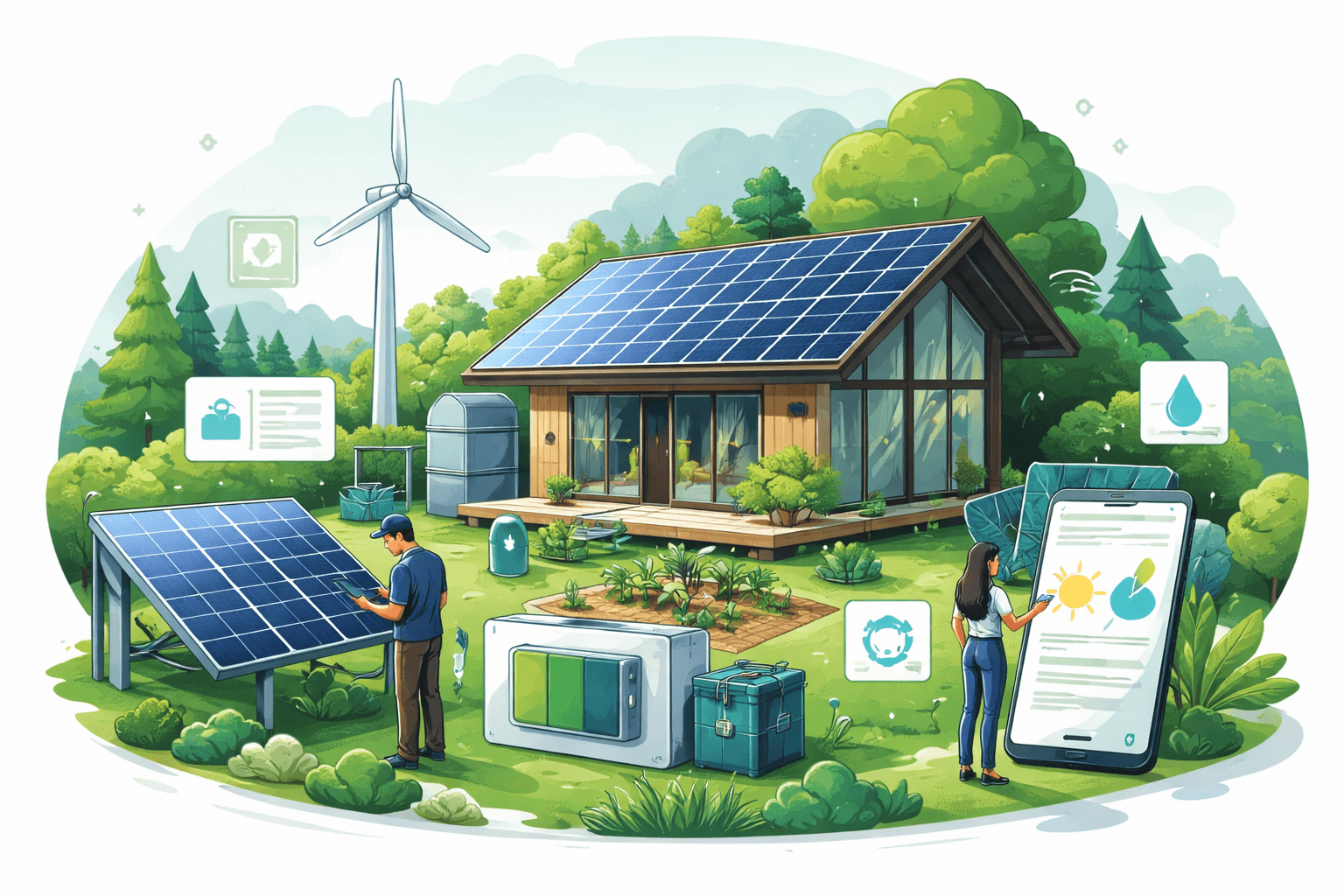
Going off-grid with solar is no longer a fringe experiment. Module prices fell below $0.20/W at the factory in 2024 (BloombergNEF), and lithium battery pack prices dropped to about $139/kWh in 2023 (BNEF), making complete systems more attainable. If you’re asking how to go off grid with solar in a way that’s safe, economical, and resilient, this guide walks you through the data, the design math, and two sample builds you can adapt to your site.
If you want a shorter buyer-focused overview first, see our Off-Grid Solar: Complete Buyer’s Guide to Systems, Costs & Setup.
- Internal link: /renewable-energy/off-grid-solar-complete-buyers-guide
What “off-grid” means—and when it’s the right choice
Off-grid means your home or cabin is not connected to the electric utility. Every watt you use must come from your solar array, your battery, and—when needed—your backup generator. There’s no net metering and no grid export. In the U.S., this typically requires an appropriately sized solar PV array, an inverter/charger, a battery bank (often lithium iron phosphate, LFP), and a standby generator.
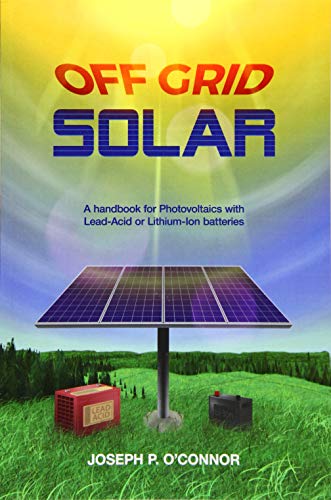
Off Grid Solar: A handbook for Photovoltaics with Lead-Acid or Lithium-Ion batteries: O'Connor, Joseph P
With all the steps to build an ... technology needs rather than trust other's recommendations. Joe O'Connor, <strong>solar entrepreneur and product designer</strong>, has installed solar ene
Check Price on AmazonWhen it makes sense:
- Remote locations with high line-extension costs: Utilities commonly quote tens of thousands of dollars to extend service, and in rural terrain the customer contribution can exceed $20,000–$50,000 per mile depending on local tariffs and trenching/rock conditions.
- Reliability and resilience: If outages are frequent or you want full energy independence, off-grid puts you in control—at the cost of more equipment.
- New construction or cabins: Designing for efficient loads from day one reduces system size and cost substantially.
When it’s not ideal:
- If reliable, reasonably priced grid power is available, a grid-tied solar-plus-battery system often delivers better economics because the grid acts as your “infinite battery.”
- Conservation-first retrofits of large, inefficient homes can make off-grid prohibitively expensive unless loads are aggressively reduced.
Assess your energy needs: daily kWh, peak loads, and load profile
Accurate load analysis drives everything—panel count, battery capacity, inverter size, and generator needs. Use a worksheet or spreadsheet, then validate with a clamp meter or smart plugs.
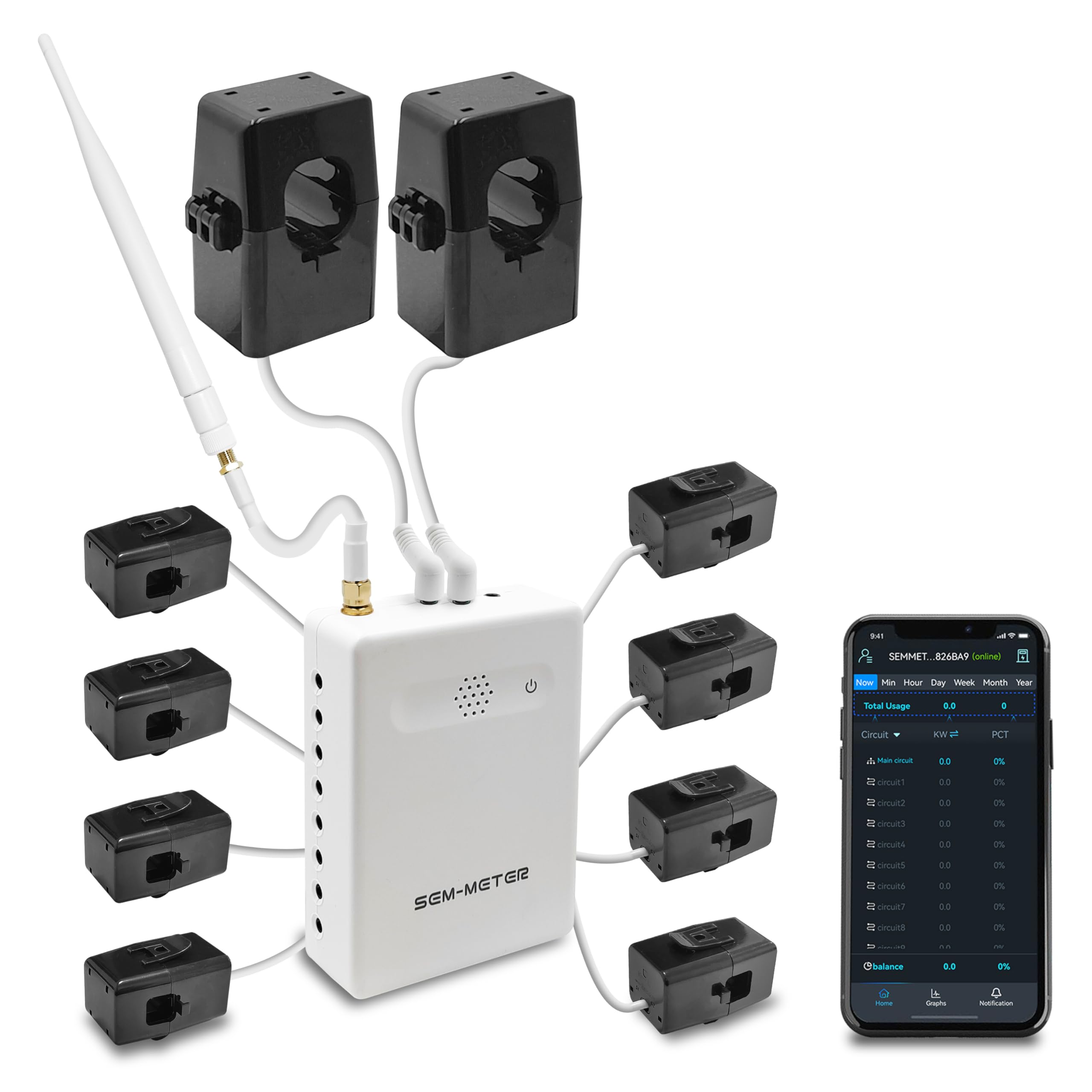
Smart Home Energy Monitor with 8 50A Circuit Level Sensors | Vue - Real Time Electricity Monitor/Meter | Solar/Net Metering - Amazon.com
View on AmazonStep 1: Inventory devices
- List each appliance, its power (W), and estimated daily runtime (hours/day). Use nameplates, EnergyGuide labels, or actual measurements.
- Note surge loads: motors (well pumps, fridges), compressors, and tools can draw 2–6x their running watts during startup.
Step 2: Calculate energy and power
- Daily energy (kWh/day) = Sum of (Watts × hours) / 1000
- Peak power (kW) = Largest combination of devices you’ll use simultaneously
- Surge power (kW) = Peak power plus the worst-case motor start (often 3–6x the motor’s rated power for a fraction of a second)
Step 3: Profile your use over 24 hours
- Day vs. night loads matter. Directly powering daytime loads from the array reduces battery cycling and system size.
- Seasonal differences: Heating elements (resistance heaters, electric water heaters) can be solar budget killers. Prefer heat pumps and solar thermal/pre-heat.
Rule-of-thumb cross-checks (NREL PVWatts, typical U.S. conditions):
- 1 kW of PV yields roughly 3.5–5.0 kWh/day depending on location, weather, and tilt.
- Well-insulated, efficient small homes can operate on 8–15 kWh/day; conventional family homes often use 20–40+ kWh/day unless electrification and efficiency upgrades are made.
Core components: panels, batteries, inverters, charge controllers, and generators
Building blocks of an off-grid system:

Victron SmartSolar Charge Controller (150V 60A Tr) : Patio, Lawn & Garden
View on Amazon- Solar PV array: Converts sunlight to DC electricity. Crystalline silicon modules dominate the market. Bifacial modules can add 5–15% yield in high-albedo sites but require proper mounting.
- Charge controller: Regulates charging to the battery. Maximum Power Point Tracking (MPPT) controllers harvest 10–30% more energy than PWM controllers in most climates (NREL), especially in cold weather when panel voltage is high.
- Battery storage: Stores energy for nights and cloudy periods. LFP lithium batteries typically deliver 90–95% round-trip efficiency, 80–100% usable depth of discharge (DoD), and 3,000–6,000+ cycle life—substantially better than flooded lead-acid’s 50% recommended DoD and 80–85% efficiency (manufacturer data, NREL). Look for UL 9540-listed energy storage systems for code compliance and safety.
- Inverter/charger: Converts battery DC to AC for household loads and manages generator charging. Off-grid inverters must be sized for both continuous and surge loads and should support grid-forming (creating a stable AC waveform) and generator auto-start.
- Backup generator: Covers prolonged clouds and high seasonal loads. Propane and diesel are common; right-size so it operates within its efficient load band (typically 40–80% of rated output) and integrates with your inverter/charger.
Affiliate recommendations (practical picks):
- Based on MPPT efficiency and robust low-temperature performance, the SmartSolar 150/60 MPPT represents strong value for mid-size off-grid arrays.
- For batteries, UL 9540-listed 48V rack LFP modules like LFP 48V 100Ah Rack Battery offer 5–10 kWh per module, >6,000 cycles at 80% DoD, and easy expansion.
- Hybrid inverter-chargers with 2x surge capability—such as the Hybrid 6kW 48V Inverter/Charger—cover common well pump and appliance startups with >94% inverter efficiency.
For deeper background on residential batteries and sizing, see our Home Solar Battery Storage: Complete Buyer’s Guide & Cost Calculator and Solar Battery Buying Guide: Choose the Best Home Battery in 2026.
- Internal links:
- /renewable-energy/home-solar-battery-storage-buyers-guide-cost-calculator
- /renewable-energy/solar-battery-buying-guide-2026
By the Numbers: quick sizing anchors
- Solar yield: 1 kW PV ≈ 3.5–5.0 kWh/day (NREL PVWatts; site-specific)
- Battery efficiency: LFP 90–95% vs. lead-acid 80–85%
- Usable DoD: LFP 80–100% vs. lead-acid ~50% for long life
- Autonomy: 2–5 days typical; remote/winter cabins may target 5–7 days
- System losses: Design for 10–20% (wiring, inverter, temperature, controller)
- Inverter surge: 2–3x continuous for motor starts
Sizing your system: panels, batteries, inverter, and days of autonomy
This is where how to go off grid with solar becomes math you can trust. Work the steps in order and round up for safety.
Step 1: Daily energy and peak power
- Use your kWh/day result from the load assessment.
- Record continuous kW and surge kW.
Step 2: Size the PV array
- PV array (kW DC) = Daily energy (kWh/day) ÷ Expected daily kWh per kW (from PVWatts) ÷ 0.85 (to account for 15% system losses)
- Example: If you need 12 kWh/day and your site yields 4.5 kWh/day per kW, PV ≈ 12 ÷ 4.5 ÷ 0.85 ≈ 3.1 kW. Round up to 3.6–4.0 kW for winter/cloud variability.
Step 3: Choose system voltage
- 12V: Tiny systems (<1 kW, <1 kW inverter)
- 24V: Small cabins (1–3 kW PV, 1–3 kW inverter)
- 48V: Homes and most robust systems (≥3 kW PV, ≥3 kW inverter)
Higher voltage lowers current, reducing cable size and losses.
Step 4: Size the battery bank
- Decide days of autonomy: 2–5 days typical. In cloudy winter climates or for medical/critical loads, consider 4–7 days.
- Battery capacity (kWh) = Daily energy × Days of autonomy ÷ (Allowable DoD × Round-trip efficiency)
- With LFP (DoD ~0.9, efficiency ~0.93), for 12 kWh/day and 3 days: 12 × 3 ÷ (0.9 × 0.93) ≈ 43 kWh. With lead-acid (DoD ~0.5, eff. ~0.85), the same autonomy needs ≈ 85 kWh of nameplate capacity.
- Convert to Ah if needed: Ah = (kWh × 1000) ÷ System voltage. For 43 kWh at 48V: ≈ 896 Ah.
Step 5: Inverter/charger sizing
- Continuous rating ≥ 1.25 × your peak continuous load.
- Surge rating ≥ 2–3 × the largest motor starting current. Confirm with pump/fridge specs.
- Ensure the inverter/charger can handle your generator’s charging current and auto-start logic.
Step 6: Generator sizing
- Size to support your typical house load plus a healthy battery charging rate.
- A practical rule: Generator continuous rating ≈ 0.5–1.0 × inverter continuous rating for homes, ensuring it can charge at 25–50A DC at system voltage via the charger without bogging down.
Sanity checks:
- Winter solar: Use PVWatts monthly values. It’s common to size for winter minimums or plan for more frequent generator runs in winter.
- Expansion: Favor modularity—rack LFP batteries and stringable arrays let you add capacity later.
Site and technical considerations: orientation, tilt, shading, and controllers
Orientation and tilt
- Face true south in the Northern Hemisphere (true north in the Southern Hemisphere). Magnetic declination maps from USGS can help correct a compass reading.
- Tilt near latitude is a decent year-round compromise; tilt steeper (+10–15°) in snowy climates improves winter production and sheds snow. Adjustable tilt racks can add winter yield.
Shading analysis
- Even partial shading can collapse output on a string. Use a solar pathfinder or app with LiDAR and horizon scanning to quantify shade across seasons.
- Keep rows spaced to avoid self-shading in winter sun angles.
Mounting options
- Roof mounts: Lower BOS cost, but limited tilt selection and harder maintenance; ensure roof structure and fire setbacks meet code.
- Ground mounts: Higher upfront, but optimal orientation, easier snow removal, and room for expansion.
Wiring and protection
- Use appropriately sized conductors to limit voltage drop to ≤2–3% on critical DC runs. Larger wire pays for itself in efficiency.
- DC disconnects, fusing/breakers, and rapid shutdown (for roof arrays) per NEC 690/706. Follow manufacturer instructions for overcurrent protection and combiner boxes.
- Ventilation and spacing for batteries/inverters per UL 9540, NEC, and local fire code.
MPPT vs. PWM controllers
- MPPT controllers convert excess panel voltage into charging current, effectively “tracking” the panel’s best operating point as irradiance and temperature change. Expect 10–30% higher annual harvest vs. PWM (NREL testing and field data), especially on cold, clear days.
- PWM makes sense only on very small, cost-constrained 12V systems with panel Vmp matched to battery voltage.
AC vs. DC coupling
- DC-coupled (panels → MPPT → battery → inverter) is the classic off-grid topology: high round-trip efficiency and excellent battery charging control.
- AC-coupled can simplify retrofits and support larger PV but may incur extra conversion losses and require careful controller coordination.
Permits, codes, and legal issues: inspections, regulations, insurance
- Electrical code: NEC Articles 690 (Solar PV) and 706 (Energy Storage Systems) govern wiring, protection, and labeling. Many jurisdictions are on NEC 2020 or 2023; check with your Authority Having Jurisdiction (AHJ).
- Fire code: Local adoption of IFC and UL 9540/9540A test standards influences where and how ESS can be installed (garage, outdoor enclosures, setbacks, ventilation).
- Permits: Off-grid doesn’t mean off-permit. Structural (racking/roof), electrical (PV/ESS), and sometimes zoning or environmental permits are typical. Inspections verify compliance.
- Insurance: Many carriers require UL 9540-listed batteries and professionally installed systems for coverage. Notify your insurer before installation.
- Generator fuel storage: Local rules govern propane tank placement and diesel storage quantities; coordinate with your fuel provider and fire marshal.
Costs, financing, incentives, and ROI
Cost ranges vary widely by location, labor rates, and component choices. As directional benchmarks (NREL Solar and Storage Cost Benchmarks 2023; manufacturer price lists):
- PV modules and BOS (racking, wiring, combiner): Residential installed PV averages around $2.50–$3.50/W in the U.S. for roof-mount systems; ground mounts trend higher.
- Batteries (installed): Stationary LFP systems often land in the $500–$1,000 per kWh installed range for larger capacities; smaller residential ESS can be higher on a per-kWh basis.
- Inverter/charger and controls: $2,000–$8,000+ depending on power rating and redundancy.
- Generator: $2,000–$8,000 plus transfer/auto-start integration.
Illustrative system totals (equipment + labor):
- Small cabin (1–2 kW PV, 5–10 kWh LFP, 2–3 kW inverter): ~$7,000–$18,000
- Efficient family home (8–12 kW PV, 30–60 kWh LFP, 8–12 kW inverter, standby generator): ~$45,000–$120,000+
Operating costs
- Minimal for PV (periodic cleaning/inspection). Batteries have finite cycles; LFP replacements may be required after 10–15+ years depending on depth of discharge. Generators incur fuel and maintenance costs.
Incentives
- In the U.S., the federal Clean Energy Credit (ITC) can cover 30% of eligible solar and battery costs for residences, even off-grid, if installed at a primary or secondary home you own (IRS guidance; confirm with your tax advisor). State/utility incentives may focus on grid-tied systems but some equipment rebates still apply.
Financing
- Cash yields best lifetime economics. HELOCs or green loans are common. Be cautious with dealer financing carrying high APRs.
ROI reality check
- Off-grid systems are built for access and resilience. Pure financial payback may be longer than grid-tied solar, but when compared to the avoided cost of line extensions and ongoing utility fees—or to the value of reliable power where none exists—the economics can be compelling.
For a cost deep dive on panels themselves, see our Solar Panel Cost Guide: How Much You'll Pay & How to Save.
- Internal link: /renewable-energy/solar-panel-cost-guide
How to go off-grid with solar: a step-by-step workflow
- Reduce loads first
- Swap to LED lighting, Energy Star fridges/freezers, heat pump water heaters, induction cooking, and mini-split heat pumps. Every kWh saved is a smaller battery and array.
- Measure real usage
- Use smart plugs and a whole-home monitor where possible for two weeks. Capture seasonal appliances (well pump, A/C, space heating) in your estimates.
- Model solar production
- Use NREL PVWatts for your coordinates, panel orientation/tilt, and monthly insolation. Note winter minimums.
- Size PV, battery, and inverter with the formulas above
- Round up; choose modular components that allow expansion.
- Plan the generator
- Size for efficient operation and integrate auto-start with the inverter/charger.
- Engineer the system
- Single-line diagram; wire sizing for voltage drop; OCPD and disconnects; equipment placement with clearances, ventilation, and service access.
- Secure permits and inspections
- Submit drawings and spec sheets. Coordinate with the AHJ and your insurer.
- Install or hire a pro
- If DIY, follow manufacturer instructions to the letter. Torque, labeling, and commissioning checklists matter.
- Commission and test
- Verify open-circuit voltages, insulation resistance (if required), controller settings, inverter firmware, and generator autostart. Simulate outages and heavy loads.
- Monitor and maintain
- Use app-based monitoring and keep a log of battery SOC, generator hours, and seasonal performance.
Installation, maintenance, and troubleshooting
Installation best practices
- Keep battery and inverter close to reduce DC cable length and losses.
- Use outdoor-rated enclosures (NEMA 3R/4X) where required; avoid direct sun on battery cabinets.
- Label everything: DC PV, DC battery, AC loads, emergency shutdown.
Maintenance schedule
- Monthly: Visual inspect modules, wiring, and racking; check for rodent or UV damage. Review battery SOC history and alarms.
- Quarterly: Wash modules if soiling losses exceed ~5% (dust, pollen, salt); test generator under load for 30 minutes; update inverter/ESS firmware when available.
- Annually: Torque-check racking and electrical terminations, test ground resistance where applicable, validate lightning/surge protection. For flooded lead-acid (if used), check electrolyte and equalize per manufacturer.
For panel care specifics, see Solar Panel Maintenance Tips: Maximize Output & Lifespan.
- Internal link: /renewable-energy/solar-panel-maintenance-tips
Troubleshooting checklist
- Low production: Check shading (seasonal vegetation), module soiling, snow cover, or a failed string fuse/breaker. Confirm MPPT input voltage/current vs. expected.
- Battery not charging fully: Verify charge setpoints for your chemistry and temperature compensation. Inspect for loose connections; confirm generator charger output.
- Inverter overload trips: Revisit load sequencing; add soft-start kits for large compressors; consider a higher-surge inverter if margins are tight.
- Frequent generator runs: Increase PV or battery capacity, shift loads to daylight, or add demand response (e.g., pre-heat water mid-day).
Two sample system builds you can adapt
These examples show how to go off grid with solar using real numbers. Adjust for your climate and loads using PVWatts and your inventory.
A) Small off-grid cabin (weekends + seasonal use)
- Target loads: LED lights, laptop/phone, 12V DC fridge or efficient AC fridge, water pump, small induction hot plate, fan. Daily energy: ~2.5–4.0 kWh/day.
- Site: Good sun, mild winters, minimal shading.
- Array: 1.2–1.6 kW PV (e.g., 3–4 × 400 W modules). Expected yield ~4.5–7 kWh/day in good seasons.
- Charge controller: 40–60A MPPT at 24V or 48V.
- Battery: 7–10 kWh LFP (usable DoD ~90%). 2–3 days autonomy at ~3 kWh/day ⇒ 7–10 kWh is adequate.
- Inverter/charger: 2–3 kW continuous, 5–6 kW surge.
- Generator: 2–3 kW portable or 4–5 kW standby for winter/clouds.
- Notes: Consider DC fridge to reduce inverter idle losses. Shift cooking and water heating to propane if budget constrained.
- Approximate installed cost: $7,000–$18,000 depending on racking, grounding, and labor.
B) Efficient family home (full-time, 3–4 occupants)
- Target loads: Heat pump space conditioning, heat pump water heater, induction range, Energy Star fridge, well pump, washer, LED lighting, electronics, EV Level 1/2 managed charging.
- Daily energy: Aggressively efficient home ~12–18 kWh/day; typical efficient retrofit ~18–25 kWh/day. We’ll model 18 kWh/day.
- PV yield: Assume 4.2 kWh/day per kW (site-specific).
- Array: 18 ÷ 4.2 ÷ 0.85 ≈ 5.0 kW minimum; scale to 8–10 kW to reduce winter generator hours and support EV trickle charging.
- Battery: 3 days autonomy, LFP (DoD 0.9, eff. 0.93): 18 × 3 ÷ (0.9 × 0.93) ≈ 64 kWh usable. A 60–70 kWh bank (e.g., 6–7 × 10 kWh rack modules) provides strong resilience.
- Inverter/charger: 8–12 kW continuous with 2–3x surge handling for well pump and appliances.
- Generator: 8–12 kW propane/diesel with auto-start, sized for efficient load during charging and high-demand events.
- EV charging: Prefer daytime Level 2 when solar is abundant; otherwise Level 1 overnight to avoid deep cycling batteries.
- Approximate installed cost: $45,000–$120,000+ depending on mounting, equipment brands, and labor.
Affiliate notes for these builds:
- A modular rack LFP like LFP 48V 100Ah Rack Battery scales cleanly from 10 kWh to 70+ kWh with consistent BMS integration.
- Mid/high-power inverter-chargers such as Hybrid 6kW 48V Inverter/Charger or its 10–12 kW sibling support generator auto-start and 2–3x surge—critical for well pumps.
Practical implications for homeowners and builders
- Expect to iterate: It’s normal to add PV and a battery module in year 2 after living with the system for a season.
- Electrify efficiently: Heat pumps, induction, and smart load controls are non-negotiable for comfortable off-grid living without oversizing.
- Plan for winter: Even in sunny regions, set realistic generator expectations for prolonged storms.
- Keep spares: Fuses, breakers, MC4 tools, spare charge controller, and a backup water pump save multi-day outages.
Where off-grid solar is heading
- Better batteries: LFP continues to improve; sodium-ion could offer robust, lower-cost alternatives for moderate climates by the late 2020s (industry roadmaps, early deployments in stationary storage).
- Smarter controls: Inverter-chargers are increasingly software-defined, optimizing charge windows, generator runs, and thermal limits via firmware and cloud analytics.
- Integrated systems: UL 9540-certified, factory-integrated PV+ESS packages simplify permitting and reduce on-site wiring—a win for safety and cost.
For step-by-step component selection and calculators, also explore:
Solar Panels for Beginners: A Practical, Data-Driven Guide
Home Solar Battery Storage: Complete Buyer’s Guide & Cost Calculator
Off-Grid Solar: Complete Buyer’s Guide to Systems, Costs & Setup
Internal links (already referenced above):
- /renewable-energy/solar-panels-for-beginners-guide
- /renewable-energy/home-solar-battery-storage-buyers-guide-cost-calculator
- /renewable-energy/off-grid-solar-complete-buyers-guide
Recommended Products
Off Grid Solar: A handbook for Photovoltaics with Lead-Acid or Lithium-Ion batteries: O'Connor, Joseph P
With all the steps to build an ... technology needs rather than trust other's recommendations. Joe O'Connor, <strong>solar entrepreneur and product designer</strong>, has installed solar ene
Smart Home Energy Monitor with 8 50A Circuit Level Sensors | Vue - Real Time Electricity Monitor/Meter | Solar/Net Metering - Amazon.com
Lightweight commercial 3-phase option available as a separate bundle. APPLICATION MONITORING WITHOUT GUISEWORK <strong>Up to sixteen (16) 50A sensors to accurately monitor your air conditioner, oven,
Victron SmartSolar Charge Controller (150V 60A Tr) : Patio, Lawn & Garden
Victron Energy SmartSolar MPPT Tr 150-Volt 60 amp: <strong>A solar charger gathers energy from your solar panels, and stores it in your batteries</strong>, Using the latest, fastest technology, Victro