
Renewable Energy Jobs: Solar Careers, Salaries & How to Break In

Renewable Energy Jobs: Solar Careers, Salaries & How to Break In
Renewable energy jobs are growing fast—and solar leads the pack. The International Renewable Energy Agency (IRENA) and the International Labour Organization (ILO) estimate 13.7 million renewable energy jobs worldwide in 2022, with solar PV accounting for 4.9 million of them (IRENA/ILO, Renewable Energy and Jobs – Annual Review 2023). In 2023, global renewable capacity additions jumped by about 50% to a record 510 GW, three-quarters from solar PV (International Energy Agency, Renewables 2023). Policy momentum—from the U.S. Inflation Reduction Act (IRA) to the EU Green Deal and REPowerEU—is turning that capacity buildout into sustained employment.
This guide explains where the jobs are, what they pay, and the skills that open doors—especially in solar.
By the numbers: the 2024 solar labor market snapshot
- 13.7 million renewable energy jobs globally (2022); solar PV: 4.9 million; hydropower and biofuels ~2.5 million each; wind ~1.4 million (IRENA/ILO, 2023)
- +50% year-over-year growth in global renewable capacity additions in 2023—about 510 GW; ~75% solar PV (IEA, 2024)
- U.S. solar added 32.4 GW in 2023, up 55% year-over-year (SEIA/Wood Mackenzie, 2024)
- Clean energy jobs now outnumber fossil fuel jobs globally; growth since 2019 concentrated in solar, EVs, and batteries (IEA, World Energy Employment 2023)
- BLS projects solar PV installer employment to grow 22% from 2022 to 2032; wind turbine technicians 45% (U.S. Bureau of Labor Statistics, 2024)
Why renewable energy jobs matter now
- Market size and growth: Renewable energy jobs scale with deployments. With solar providing the majority of new capacity additions, solar-intensive roles—from electricians and installers to O&M analysts—represent one of the most resilient job pools in energy. IRENA’s transition scenarios indicate tens of millions of additional clean energy jobs possible by 2030 under accelerated pathways.
- Policy drivers: The U.S. IRA extends 10-year investment and production tax credits (ITC/PTC) with bonuses for domestic content, energy communities, and apprenticeships, incentivizing onshoring manufacturing and project labor standards. In Europe, the Green Deal Industrial Plan and the Net-Zero Industry Act aim to boost domestic manufacturing of PV, wind, and batteries, while REPowerEU accelerates permitting and grid buildout. India’s Production-Linked Incentive (PLI) scheme is backing gigawatt-scale PV manufacturing. These policies convert capital investment into sustained employment and training pipelines.
- Energy security and electrification: Electrifying vehicles, heating, and industry pushes up demand for clean power and grid services. That multiplies roles not only in generation (solar, wind) but also in storage, transmission, demand response, and power electronics—expanding the definition of “renewable energy jobs.”
Renewable energy jobs: categories and where solar leads
Solar touches nearly every segment of the clean energy workforce. Here’s how job categories map across the project and product lifecycle.
Installation and construction
- Residential and commercial PV installers
- Utility-scale solar construction crews: pile driving, tracker assembly, module installation, DC/AC wiring, commissioning
- Electricians and low-voltage technicians
- Site assessment, surveying, and geotechnical teams
System design and engineering
- PV system designers/engineers (residential, C&I, utility-scale)
- Electrical, civil, and structural engineers
- Interconnection and protection engineers
Manufacturing and supply chain
- Operators and technicians in ingot/wafer, cell, and module lines
- Power electronics (inverters, optimizers) manufacturing
- Quality assurance, reliability engineering, supply chain and logistics
R&D and product development
- PV materials and device scientists (cells, perovskites, tandems)
- Power electronics and firmware engineers
- Performance modeling and testing (PVsyst, NREL test methods)
Sales, finance, and development
- Sales representatives (retail solar, C&I, community solar)
- Project developers and originators (site control, permitting)
- Finance and underwriting (PPAs, tax equity, project finance)
Operations, maintenance, and asset management
- Field service technicians (inverters, trackers, SCADA)
- Performance analysts and energy modelers (data, analytics)
- Asset managers (contracts, compliance, revenue optimization)
Top solar roles: what they do and the skills to get hired
Below are common solar jobs, day-to-day tasks, and the skills that hiring managers look for.
Solar PV installer (residential/C&I)
- What you do: Mount racking, set modules, pull wire, make DC/AC terminations under a licensed electrician’s supervision, test and commission systems, follow OSHA safety procedures.
- Tools/skills: Hand and power tools, multimeters, fall protection, electrical safety (NFPA 70E), reading plans, basic conduit bending; customer communication.
- Software: Mobile field apps for checklists and photos; basic familiarity with layout drawings.
- Pathways: Trades/apprenticeships, community college PV programs, NABCEP PV Associate (PVA), OSHA 10/30.

iCrimp Solar PV Panel Crimping Tool Kit, c/w Solar Connector Crimper works for AWG14-10,2.5/4/6mm², Solar Connectors, Wire Cable Cutter, Solar Spanner Wrench, All in One Oxford Bag : Patio, Lawn & Garden
View on AmazonPV system designer/engineer (residential/C&I)
- What you do: Translate site surveys into code-compliant designs; module/inverter selection; stringing and wire sizing; shading analysis; plan set production; interconnection paperwork.
- Tools/skills: Electrical fundamentals, National Electrical Code (NEC) Article 690/706, shading and production modeling.
- Software: Aurora Solar/HelioScope, AutoCAD/Revit, PVsyst, Excel.
- Pathways: Associate or bachelor’s in electrical engineering/technology; on-the-job training; NABCEP PV Design Specialist; experience as installer is a plus.
Utility-scale solar project engineer
- What you do: Layout optimization, tracker selection, cable routing, grounding, substation and interconnection coordination; construction support and RFIs.
- Tools/skills: Power systems, grounding, protection, EPC workflows; familiarity with IEEE/IEC standards.
- Software: PVsyst, PlantPredict, CAD, GIS, Python/Excel for analytics.
- Pathways: BS in electrical/civil; EIT/PE beneficial; EPC or developer experience.
Operations & maintenance (O&M) technician
- What you do: Preventive and corrective maintenance on inverters, combiner boxes, trackers; IV curve tracing; thermography; vegetation management coordination; uptime reporting.
- Tools/skills: SCADA, lockout/tagout, electrical troubleshooting, PPE, drones/thermal cameras (increasingly common).
- Software: CMMS, OEM inverter portals, SCADA HMIs.
- Pathways: Electrical trades, military technician experience, OEM training; NABCEP PV Installation Professional (PVIP) valued.
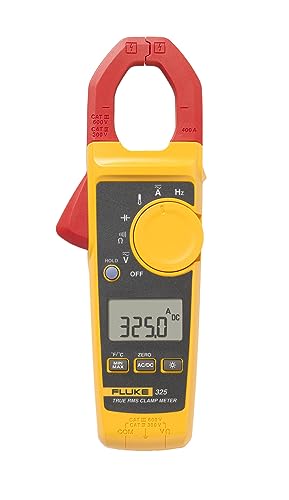
Fluke 325 True-RMS Clamp Meter with Frequency ...
View on AmazonPerformance analyst / asset performance engineer
- What you do: Monitor energy KPIs, identify underperformance, quantify degradation, validate weather-adjusted losses, optimize O&M dispatch and warranties.
- Tools/skills: Data analysis, statistics, financial acumen (PPA structures, availability guarantees).
- Software: PVsyst, R/Python, SQL, Power BI/Tableau; understanding of IEC 61724-1 performance metrics.
- Pathways: Engineering, physics, or data analytics background; utility-scale experience.
Project manager / construction manager
- What you do: Schedule crews, manage subcontractors, track budget and change orders, oversee safety and QA/QC, coordinate utility inspections and COD.
- Tools/skills: Critical path scheduling, contracts, stakeholder management, leadership; OSHA 30.
- Software: Primavera P6/MS Project, Procore, Bluebeam.
- Pathways: Construction management, trades-to-PM transitions; PMP a plus.
Sales representative / business development (retail, C&I, community solar)
- What you do: Qualify leads, develop proposals, model savings, navigate incentives, close deals; in C&I, originate multi-site portfolios and PPAs.
- Tools/skills: Communication, policy and incentive literacy, financial modeling.
- Software: CRM (Salesforce/HubSpot), proposal tools (Aurora, EnergyToolbase), Excel.
- Pathways: Sales experience; NABCEP PV Technical Sales (PVTS) helps differentiate.
Manufacturing technician / process engineer (cells, modules, inverters)
- What you do: Run and tune production equipment, SPC data monitoring, yield improvement, quality audits, reliability and failure analysis.
- Tools/skills: Lean/Six Sigma, materials/electronics basics, metrology, FMEA, root-cause analysis.
- Software: MES, statistical tools (Minitab/Python), ERP.
- Pathways: Engineering tech degree or BS in materials/electrical/mechanical; OEM training.
R&D engineer / scientist (PV devices and materials)
- What you do: Cell and module process development (PERC/TOPCon/heterojunction/perovskites), encapsulants and backsheets, reliability testing (damp heat, UV), techno-economic analysis.
- Tools/skills: Semiconductor processing, thin films, characterization (IV, EQE), accelerated testing (IEC 61215/61730), data analysis.
- Pathways: MS/PhD in materials science, physics, or EE; national labs and university labs are common entry points.
Salaries, benefits, and regional demand
Note: Salaries vary by experience, certifications, union status, and cost of living. Ranges below use authoritative labor statistics where available and credible market data where needed.
United States
- Solar PV installer: Median annual pay around $48,000 (May 2023); top quartile $60,000+ (U.S. BLS). Overtime and per-diem travel can boost earnings on utility-scale sites.
- Electrician (many solar roles require one): Median $60,240 (BLS, May 2023); union wages often higher.
- Electrical engineer: Median $109,010 (BLS, May 2023); utility-scale and interconnection roles pay a premium.
- Construction manager: Median ~$104,900 (BLS, May 2023); EPC utility-scale projects often include bonuses.
- Wind turbine technician (for comparison): Median $61,770 (BLS, May 2023).
- Sales (retail solar): Base often $40,000–$75,000 plus commission; total comp can exceed $100,000 in strong markets (market data from Glassdoor/Payscale, 2024).
- Regional demand: California, Texas, and Florida lead installed solar capacity; North Carolina, Arizona, and New York are also top markets (SEIA, 2024). Utility-scale buildout is especially strong in TX, CA, AZ, NM, and the Midwest. The IRA has catalyzed dozens of new or expanded factories for modules, cells, wafers, and inverters, opening manufacturing roles across the Southeast and Midwest (SEIA Manufacturing Tracker; DOE manufacturing announcements, 2023–2024).
- Benefits trends: Apprenticeship requirements tied to tax credits are increasing access to paid training and prevailing wage benefits on large projects; many employers offer 401(k) matches, health insurance, tool stipends, and tuition assistance.
European Union and United Kingdom
- Employment scale: SolarPower Europe estimates ~648,000 solar jobs in the EU in 2022, with potential to reach 1 million by mid-decade if deployment and manufacturing targets are met (SolarPower Europe, EU Solar Jobs, 2023).
- Solar installer/technician pay (market data, 2024):
- Germany: €36,000–€50,000 gross annually for installers; €50,000–€75,000 for PV designers/engineers (Glassdoor/StepStone).
- United Kingdom: £28,000–£40,000 installers; £40,000–£65,000 design/engineering; London/South East often higher (ONS occupation data plus market sources).
- Netherlands: €34,000–€48,000 installers; €48,000–€70,000 engineers (market sources).
- Demand hotspots: Germany, Spain, the Netherlands, Italy, and Poland are leading EU solar additions, driving hiring in installation, O&M, and grid interconnection (SolarPower Europe, 2024). The EU’s Net-Zero Industry Act aims to expand domestic PV manufacturing, creating upstream roles in cells/modules and power electronics.
Emerging markets (India, Southeast Asia, MENA, Latin America)
- Job growth drivers: Rapidly falling PV costs, distributed solar for MSMEs and households, utility-scale tenders, and grid expansion. India and Brazil are among the top growth markets (IEA; IRENA market data).
- Indicative salaries (market data, 2024):
- India: Solar PV installer ₹200,000–₹400,000; design engineer ₹350,000–₹800,000; project engineer ₹500,000–₹1,000,000 (Glassdoor/Payscale).
- Brazil/Mexico: Installer R$30,000–R$55,000; engineer MXN 300,000–600,000 (market sources).
- Workforce programs: National rooftop programs (e.g., India’s PM Surya Ghar) and utility-scale auctions are expanding demand for electricians, civil works crews, and O&M techs; international developers bring standardized safety and QA/QC practices that raise skill requirements.
Education, certifications, and training pathways
- Degrees and diplomas
- Trades and technical college: Electrical technology, renewable energy technician diplomas, CAD certificates—fastest route into field roles.
- Engineering degrees: Electrical, mechanical, civil, materials—align with design, interconnection, manufacturing, and R&D.
- Energy and sustainability programs: Master’s in energy systems or sustainability management for development/finance roles.
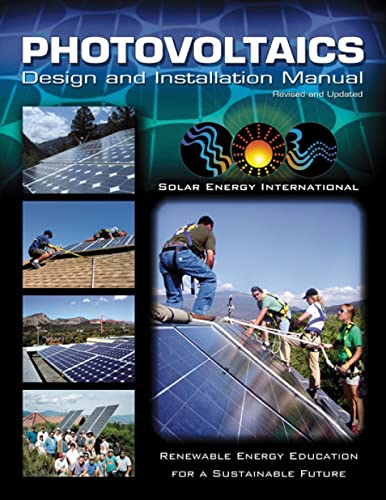
Photovoltaics: Design and Installation Manual: Solar Energy International
It also includes chapters on sizing photovoltaic systems, analyzing sites and installing PV systems, as well as detailed appendices on PV system maintenance, troubleshooting and solar insolation data
Check Price on AmazonIndustry certifications
- NABCEP (North America):
- PV Associate (PVA): Entry-level comprehension; widely recognized by employers.
- PV Installation Professional (PVIP): Gold-standard installer credential; requires documented experience and rigorous exam.
- PV Design Specialist (PVDS), PV Commissioning & Maintenance Specialist (PVCMS), and PV Technical Sales (PVTS): Mid-career differentiators.
- Safety: OSHA 10/30 (U.S.), First Aid/CPR, NFPA 70E electrical safety; EU analogs include country-specific electrical worker credentials and safety passports (e.g., VCA in Benelux).
- Project management: PMP/Prince2 for PM roles; Lean/Six Sigma for manufacturing.
- NABCEP (North America):
Apprenticeships and union pathways
- U.S.: Registered apprenticeships via Apprenticeship.gov; IBEW/NECA electrical apprenticeship (JATC) with solar rotations; many IRA-eligible projects require apprentice participation.
- Europe: National apprenticeship systems (e.g., Germany’s Ausbildung for electricians; UK Trailblazer Apprenticeships) and employer-led programs tied to large EPCs.
Short courses and upskilling
- PV design/modeling (Aurora, HelioScope, PVsyst), NEC 690/706 code updates, inverter OEM training, SCADA fundamentals, thermography for O&M.
How to break into solar and other renewables
Target the right entry points
- Field crew/installer helper: Fastest on-ramp with paid training; build electrical and safety skills.
- Site surveyor/assessor: Bridge from construction, surveying, or drone work.
- Design drafter: CAD-focused roles open doors to engineering.
- Operations coordinator: Exposure to asset management and O&M workflows.
Build a focused resume
- Quantify relevant achievements: “Installed 1.2 MW across 90 rooftops with <1% punch-list rework,” or “Modeled 50+ C&I systems; cut BOS by 7% via stringing optimization.”
- List tools and standards: Aurora/HelioScope, PVsyst, AutoCAD, NEC 690, IEC 61724-1, OSHA 30.
- Add certifications and safety training prominently (NABCEP PVA, OSHA 10/30).
Network where hiring happens
- Join industry groups and attend events: SEIA/SEPA, American Solar Energy Society (ASES), local Solar Energy Associations, Women in Renewable Industries and Sustainable Energy (WRISE), Blacks in Green, veterans’ networks.
- Engage on projects: Volunteer with community solar co-ops or nonprofit installs to earn references and hands-on experience.
Use specialized job boards and channels
- United States: SEIA and ACORE job boards, IREC’s workforce resources, state energy offices, USAJOBS for DOE, NREL, and national labs, utility and EPC career pages.
- Europe: SolarPower Europe member listings, national solar associations, EURES for cross-border roles, utility/EPC/manufacturer portals.
- Global: Energy Jobline, LinkedIn, and major OEM/developer sites (e.g., inverter and tracker manufacturers, IPPs).
Internships, fellowships, and labs
- National labs (e.g., NREL, Sandia) offer internships and postgrad fellowships in PV reliability, modeling, and grid integration.
- City/state energy offices and public utility internships build policy and program experience.
Transitioning from adjacent sectors
- Oil & gas and heavy industry: Safety culture, QA/QC, project execution, and electrical/mechanical skillsets map well to EPC and O&M.
- Construction trades: Journeyman electricians, carpenters, and equipment operators transition quickly with solar-specific training.
- Data/IT: Analysts and SCADA/controls technicians are in demand for performance analytics and grid-edge roles; add power systems basics and PVsyst/Aurora to your toolkit.
Future trends reshaping renewable energy jobs—and resilient skills
- Automation and robotics on-site: Drones and AI-driven image analytics already cut inspection time and improve fault detection; robotic cleaning is expanding in arid regions. Skills: UAV operations, thermography, data interpretation, CMMS integration.
- AI in design and forecasting: Generative design and constraint solvers accelerate layout optimization; ML-based forecasting reduces imbalance costs. Skills: PVsyst + Python/R, GIS, understanding grid constraints and interconnection.
- Grid integration and storage: Storage attachments, hybrid plants, and advanced inverters demand power electronics and protection expertise. Skills: IEEE 1547/2030.5, utility interconnection, EMS/SCADA.
- Domestic manufacturing and supply chain resiliency: U.S. IRA and EU industrial policies are nurturing cell/module and inverter production. Skills: SPC, reliability engineering, supplier quality, and compliance with IEC/UL standards.
- Electrification and demand-side flexibility: Heat pumps, EV charging, and V2G create cross-training opportunities. Skills: Electrical codes for DERs, networking/controls, cybersecurity basics.
- Policy and permitting modernization: Faster permitting (e.g., automated solar permitting pilots) and new labor standards (apprenticeship and prevailing wage) reward candidates with code literacy and documented training hours.
Resilient skill sets blend hands-on electrical competence, safety, and standards literacy with data proficiency and communication. Credentials that travel—NABCEP, OSHA, UAV thermography, and OEM inverter certifications—help weather policy or market swings.
Resources and next steps
Training and certifications
- NABCEP: Credential guides and approved training provider directory.
- IREC (Interstate Renewable Energy Council): Clean energy training program directories and workforce reports.
- Community colleges and technical institutes: Search for “solar PV” or “electrical technology” certificates in your region.
Safety and standards
- OSHA Outreach (U.S.) or national safety bodies (EU member-state equivalents) for construction/electrical safety.
- National Electrical Code (NEC) updates and PV-specific training; IEC standards for performance and reliability (IEC 61724-1, IEC 61215/61730).
Apprenticeships and workforce programs
- U.S.: Apprenticeship.gov; IBEW/NECA JATC directories; state energy office workforce portals.
- Europe: National apprenticeship services (e.g., Germany’s Bundesagentur für Arbeit, UK Apprenticeships) and solar trade associations.
Industry groups and events
- SEIA/SEPA, ASES, WRISE, local solar associations; SolarPower Europe for EU policy and market insights.
Job search
- USAJOBS for public-sector and lab roles; utility and EPC career pages; Energy Jobline and LinkedIn for private-sector openings.
Where the market is heading: Solar remains the engine of renewable energy jobs, and the skills that win—electrical fundamentals, safety, standards, and data fluency—are durable across roles and regions. With record deployments and long-dated policy support, there’s rarely been a better time to step into the field.
Recommended Products
Photovoltaics: Design and Installation Manual: Solar Energy International
It also includes chapters on sizing photovoltaic systems, analyzing sites and installing PV systems, as well as detailed appendices on PV system maintenance, troubleshooting and solar insolation data
iCrimp Solar PV Panel Crimping Tool Kit, c/w Solar Connector Crimper works for AWG14-10,2.5/4/6mm², Solar Connectors, Wire Cable Cutter, Solar Spanner Wrench, All in One Oxford Bag : Patio, Lawn & Garden
Amazon.com: <strong>iCrimp Solar PV Panel Crimping Tool Kit, c/w Solar Connector Crimper</strong> works for AWG14-10,2.5/4/6mm², Solar Connectors, Wire Cable Cutter, Solar Spanner Wrench, All in One O
Fluke 325 True-RMS Clamp Meter with Frequency ...
Discover Fluke multimeters built for rugged reliability. Measure AC/DC voltage, current, resistance, and more with precision and safety.
More in Renewable Energy
- Renewable Energy Job Opportunities: Sectors, Skills, Market Outlook and How to Break In
- Renewable Energy Sources: A Clear Guide to Solar, Wind & More
- Renewable Energy Explained: Why Solar Leads the Transition
- Renewable Energy Trends 2023: Deployment, Tech Breakthroughs, Policy Shifts and Market Risks