
Renewable Energy Explained: Why Solar Leads the Transition
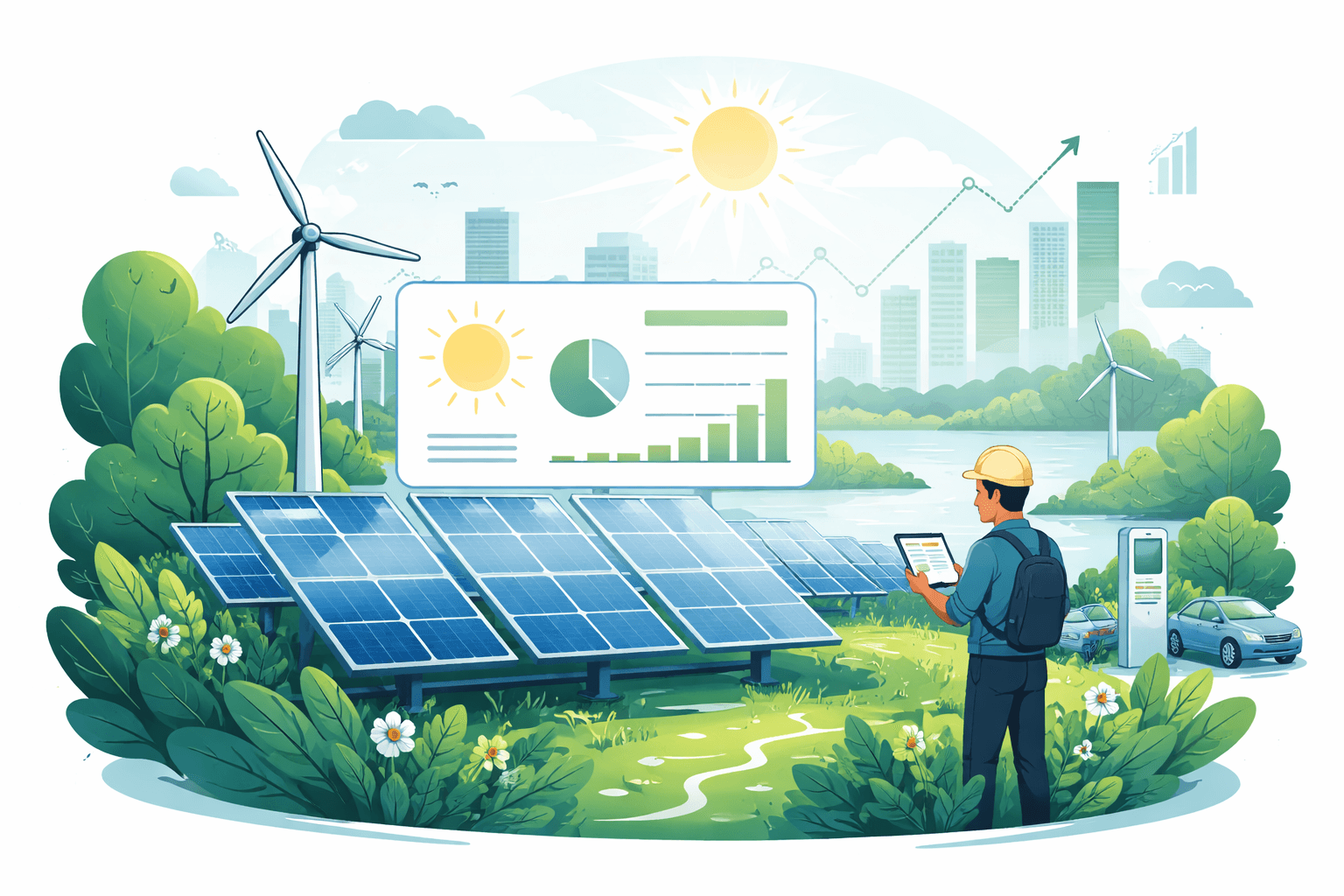
Renewable energy added a record-shattering 510 GW of new power capacity in 2023—up 50% year over year—with solar PV accounting for roughly three-quarters of those additions, according to the International Energy Agency (IEA). Renewables generated about 30% of the world’s electricity in 2023, and solar alone supplied around 5–6% of global power—small but growing at the fastest clip of any source. This guide explains what renewable energy is, how the major technologies compare, and why solar is scaling fastest—plus how homes and businesses can adopt it cost-effectively.
What is renewable energy?
Renewable energy comes from resources that are naturally replenished on human timescales—sunlight, wind, water, heat from the Earth, and biological materials. In power markets, we track it with three core metrics:
- Capacity: the total installed generation potential (measured in gigawatts, GW)
- Generation: actual electricity produced over time (gigawatt-hours, GWh or terawatt-hours, TWh)
- Share of the electricity mix: percentage of total generation
By end-2023, global renewable power capacity reached about 3,870 GW (International Renewable Energy Agency, IRENA). That capacity produced roughly 30% of global electricity in 2023 (IEA). The gap between capacity and generation is largely explained by “capacity factor”—the percent of time a plant generates at or near its rated output. For example, a solar farm with a 25% capacity factor produces about one-quarter of its nameplate output averaged across the year; a hydropower dam might average 40–50% depending on water availability.
For a primer on definitions and benefits, see our explainer What Is Renewable Energy? Types, Benefits, and How Solar Fits In (/renewable-energy/what-is-renewable-energy-types-benefits-solar).
Main renewable sources: a comparative overview
Across technologies, the global capacity picture at the end of 2023 (IRENA/GWEC/IEA) looked roughly like this:
- Solar PV: ~1,400 GW installed; fastest-growing source by far
- Wind (onshore + offshore): ~1,000 GW cumulative; strong new additions in 2023
- Hydropower: ~1,260–1,390 GW; still the largest single renewable by generation
- Bioenergy (electricity): ~140–160 GW; dispatchable but feedstock-limited
- Geothermal: ~15–16 GW; highly reliable but geographically constrained
Regional standouts in 2023:
- China added over 200 GW of solar PV (China’s National Energy Administration), more than the entire world installed just a few years ago, and expanded wind at record pace.
- The European Union deployed roughly 50–60 GW of new solar (industry associations; national agencies), aided by REPowerEU measures.
- The United States installed over 30 GWdc of solar (SEIA/Wood Mackenzie) as supply-chain bottlenecks eased and Inflation Reduction Act incentives took hold.
Hydropower remains the largest renewable by annual generation because of its higher capacity factors (often 40–60%) and reservoir storage, while wind contributed around 8% of global power and solar about 5–6% in 2023 (IEA Electricity Market Report 2024). For a deeper dive on pros and cons by source, see Renewable Energy Sources: A Clear Guide to Solar, Wind & More (/renewable-energy/renewable-energy-sources-guide).
Renewable energy by the numbers
- 510 GW: Global renewable capacity additions in 2023 (+50% year over year, IEA)
- ~75%: Share of 2023 additions from solar PV (IEA)
- ~3,870 GW: Total global renewable capacity (end-2023, IRENA)
- ~30%: Share of global electricity from renewables in 2023 (IEA)
- ~5–6%: Share of global electricity from solar PV in 2023 (IEA)
- <$0.15/W: Global benchmark spot prices for mainstream solar modules in late 2023 (industry pricing; BNEF)
- $24–96/MWh: Levelized cost of utility-scale solar PV (Lazard LCOE v17, 2024)
- $27–73/MWh: Levelized cost of onshore wind (Lazard LCOE v17, 2024)
- $39–101/MWh: Levelized cost of gas combined-cycle for comparison (Lazard LCOE v17, 2024)
Why solar is scaling fastest
Three reinforcing trends explain solar’s surge: cost, manufacturability, and market fit.

Taming the Sun: Innovations to Harness Solar Energy and Power the Planet (Mit Press): Sivaram, Varun
What's more, its potential is nearly ... year. But in Taming the Sun, <strong>energy expert Varun Sivaram warns that the world is not yet equipped to harness erratic sunshine to meet most of its
Check Price on AmazonCost curves and learning rates
Solar PV exhibits one of the steepest learning rates in energy: module prices fall about 20% for every doubling of cumulative production (long-observed “Swanson’s Law”). After supply shocks in 2021–2022, global module prices fell below ~$0.15/W in late 2023 as new manufacturing capacity came online (BloombergNEF market data). Lazard’s 2024 analysis places utility-scale solar’s levelized cost at $24–96/MWh before subsidies—competitive with or below new-build fossil generation in many regions.
Manufacturing at scale
Solar’s supply chain is highly standardized and increasingly automated. The IEA’s supply chain assessment finds that China holds 80–95% of global manufacturing across polysilicon, wafers, cells, and modules, enabling massive scale and cost compression. New factories are also expanding in the U.S., EU, India, and Southeast Asia to diversify supply. Standardized form factors (e.g., 210 mm wafers, TOPCon/PERC cell lines) accelerate replication and incremental efficiency gains.
Ubiquitous siting: rooftop and utility-scale
Unlike most power plants, PV can be deployed from watts to gigawatts. Rooftop systems leverage existing buildings, avoid land-use conflicts, and offset retail electricity prices. Utility-scale PV delivers the lowest costs at scale and now commonly integrates with batteries to shift mid-day output to evening peaks. This dual market—behind-the-meter and grid-scale—lets solar fit diverse grid needs and policy frameworks.
For a data-driven cross-check with wind, see Is Wind Energy Better Than Solar? A Data-Driven Comparison (/renewable-energy/is-wind-energy-better-than-solar-comparison).
How renewables integrate with grids
Variable renewables like solar and wind are predictable on average but fluctuate hour to hour. Modern grids manage this variability with four building blocks:
1) Storage
- Short-duration storage (1–8 hours), primarily lithium-ion batteries, shifts solar from mid-day to evening peaks and provides fast frequency response. BloombergNEF estimates global storage deployments in 2023 at roughly 40–45 GW and ~90–100 GWh, a record year.
- Long-duration options (8+ hours)—pumped hydropower, thermal storage, flow batteries, compressed air—are scaling more slowly but are critical for multi-day balancing.
- In the U.S., grid-scale battery capacity roughly quadrupled from 2021 to about 16 GW by end-2023 (EIA), with interconnection queues indicating rapid growth.
2) Demand response and flexible load
Industrial processes, buildings, and EV charging can shift consumption away from peak or low-renewable periods. Digital controls, smart thermostats, and time-of-use pricing align demand with renewable output. FERC Order 2222 in the U.S. enables aggregated distributed energy resources (DERs) to participate in wholesale markets, increasing available flexibility.
3) Transmission and geographic diversity
Wider transmission networks smooth variability: when it’s cloudy in one region, it’s often sunny or windy in another. The U.S. interconnection queues surpassed 2 TW of proposed capacity by 2023—over 95% renewables and storage (Berkeley Lab)—highlighting both momentum and the need to streamline grid upgrades.
4) Curtailment management
As solar grows, some output is occasionally curtailed (intentionally reduced) when supply exceeds demand or transmission limits bind. Curtailment can be economically rational if rare, but persistent curtailment signals a need for more storage, flexible demand, or transmission. For example, California’s system operator curtailed several terawatt-hours of solar in recent years during spring afternoons; targeted storage and transmission have begun reducing these events.
Costs, incentives, and financing
System costs and LCOE trends
- Utility-scale solar PV: $24–96/MWh (Lazard 2024). Best-in-class projects in high-irradiance regions routinely beat new fossil generation on cost.
- Onshore wind: $27–73/MWh (Lazard 2024). Offshore wind costs remain higher but are declining as supply chains mature.
- Residential and commercial PV: Installed prices vary by market. In the U.S., NREL’s 2023 benchmarks place typical installed costs around $2.7–3.5/Wdc for residential and lower for large commercial systems, excluding incentives.
- Battery storage: Lithium-ion pack prices fell to about $139/kWh in 2023 (BloombergNEF), down nearly 90% since 2010, translating into rapidly improving economics for 2–4 hour grid batteries and behind-the-meter storage.
Incentives and market structures
- United States: The Inflation Reduction Act extends a 30% Investment Tax Credit (ITC) for solar and storage through at least 2032, with potential 10% adders for domestic content and energy communities, plus targeted low-income adders for qualifying projects. Businesses can alternatively choose the Production Tax Credit (PTC) for eligible projects. Many states offer additional rebates or performance incentives. Net metering rules are evolving; some states have shifted to “net billing,” which values exports at lower wholesale-like rates while preserving high self-consumption value.
- European Union: Contracts for Difference (CfDs), feed-in premiums, and auctions drive utility-scale buildout, while VAT reductions and grants support rooftop adoption in some member states.
- Other regions: India runs large-scale auctions with declining tariffs; Brazil and South Africa use auctions and distributed generation policies; China employs a mix of provincial incentives and grid mandates.
Financing options for homes and businesses
- Cash purchase: Highest lifetime savings; you capture all incentives.
- Solar loan: Spreads upfront cost over 5–20 years; often cash-flow positive when loan payments are below avoided utility costs.
- Lease or Power Purchase Agreement (PPA): Little to no upfront cost; a third party owns the system and sells you power or leases the equipment at a fixed rate. Useful for tax-exempt entities that can’t directly monetize tax credits.
- Commercial and industrial (C&I): On-balance-sheet ownership, PPAs, or virtual PPAs for multi-site corporates. Corporate clean energy procurement set new records in recent years (BNEF), signaling bankable offtake for large projects.
Environmental and social impacts
Lifecycle emissions
The IPCC’s Sixth Assessment reports median lifecycle greenhouse gas intensities of roughly:
- Solar PV: ~48 gCO2e/kWh (range varies by manufacturing energy mix and module type)
- Onshore wind: ~12 gCO2e/kWh
- Hydropower: ~24 gCO2e/kWh (site-specific methane emissions can raise this)
- Coal: ~820 gCO2e/kWh; Gas: ~490 gCO2e/kWh Even accounting for manufacturing, renewables cut emissions dramatically versus fossil fuels.
Land use and biodiversity
- Solar PV: Typically 5–10 acres per MWac for utility-scale sites (NREL). Dual-use strategies—agrivoltaics with crops or pollinator habitats, and siting on rooftops, carports, brownfields, and reservoirs (floating PV)—reduce land conflicts and can enhance biodiversity.
- Wind: Spacing requires large land areas (tens of acres per MW), but the permanent disturbed footprint is often 1–2% of the leased area; the rest remains usable for farming or grazing (NREL). Wildlife impacts can be mitigated with careful siting, turbine curtailment during sensitive periods, and technology such as detection-and-deter systems.
- Hydro: Powerful and dispatchable but can impact river ecosystems and fish migration; modern fish passages and environmental flow regimes help mitigate.
For a broader look at aligning clean energy with conservation, see Balancing the Scales: How Renewable Energy Impacts Conservation and How to Maximize Benefits (/conservation/balancing-scales-renewable-energy-impacts-conservation-maximize-benefits). [Note: include this only if it counts within the 3–5 internal links budget; otherwise omit.]
Raw materials and circularity
- Materials: Silicon modules are mostly glass, aluminum, polymers, and silicon with small amounts of silver, copper, and tin. Silver use per watt is falling due to “thrifting” and copper busbar redesigns; cell technologies like TOPCon and heterojunction can reduce silver intensity further.
- Supply chain: The IEA notes high concentration risks in polysilicon and wafers. New manufacturing in the U.S., EU, India, and elsewhere aims to diversify supply and enforce labor and traceability standards.
- Recycling: EU rules already mandate PV collection and recycling. Industry and IEA PVPS studies show 80–95% material recovery is technically feasible for modules; closed-loop recycling is commercially mature for some thin-film technologies. Battery recycling capacity is also scaling quickly to recover lithium, nickel, and cobalt.
How homeowners and businesses can adopt renewables
Adoption starts with a good site assessment, a right-sized system, and a reputable installer. Here’s a practical pathway, with a solar-focused lens.
Step 1: Understand your load and roof/site
- Gather 12 months of electricity bills to find annual kWh and monthly patterns.
- Assess the site: roof age and condition, orientation (south-facing in the Northern Hemisphere is ideal), tilt (15–40 degrees typical), and shading (trees, chimneys). Ground-mounted and carport systems expand options when roofs aren’t ideal.
- Use a sizing tool: NREL’s PVWatts or local equivalents estimate annual production by location and tilt. Target producing 60–100% of annual consumption, depending on net metering rules and planned EVs or heat pumps.
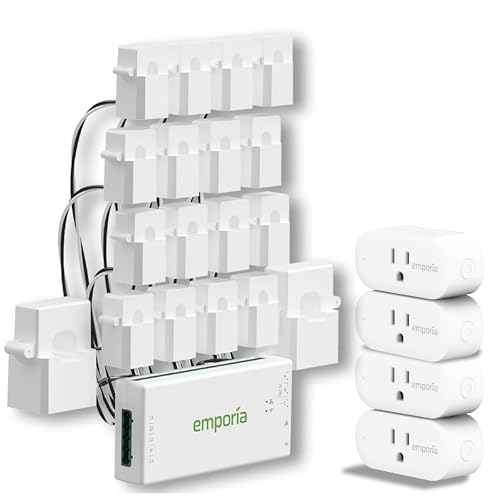
Emporia Energy Monitor with 16 Sensors + 4 Smart Plugs Super Bundle - Whole Home Electricity Usage Tracking & Real-Time Control - Supports Solar Net Metering - Works with iOS, Android, Alexa - Amazon.com
View on AmazonStep 2: Consider PV + storage
- Battery value: Backup power for critical loads, time-shifting to avoid peak rates, and resilience during outages.
- Right-sizing: Size the battery to your goals. For outage protection, start with 4–10 kWh per day of critical loads and 4–8 hours of discharge duration. Example: If your critical loads average 1.5 kW, a 10 kWh battery provides roughly 6–7 hours at that draw. For rate arbitrage, 5–15 kWh is common for homes; C&I sites often deploy multiple 2–4 hour battery units.
- Solar-to-battery ratio: A common rule is 3–5 kW of PV per 10 kWh of storage to ensure regular charging, adjusted for climate and tariffs.
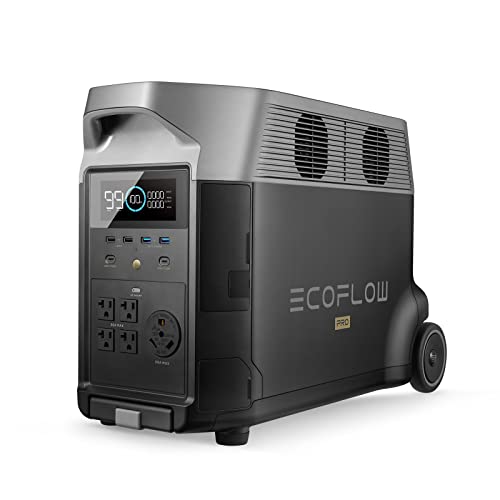
EF ECOFLOW Portable Power Station 3600Wh DELTA Pro, 120V AC Outlets x 5, 3600W, 2.7H Fast Charge, Lifepo4 Power Station, Solar Generator for Home Use, Power Outage, Camping, RV, Emergencies : Patio, Lawn & Garden
<strong>Fully recharge the lifepo4 battery in 1.8 hrs with 240V outlets(3000W), 2.7 hrs with 1800W wall outlets or solar charged in 2.8 hours with 4*400W solar panels</strong> thanks to the industry-l
Check Price on AmazonStep 3: Get multiple bids from qualified installers
- Ask for module and inverter specifications, production estimates (kWh/year), warranties (product and performance), and a shade analysis.
- Verify licenses, certifications, and references. Compare not just price per watt but projected lifetime kWh, degradation rates, and service terms.
- Review interconnection and permitting timelines. Clarify who handles utility applications and incentive paperwork.
Step 4: Choose the financing that fits
- Cash if you want maximum savings and can use available tax credits.
- Loans if you prefer low upfront cost with ownership benefits.
- Leases/PPAs if you want predictable payments with minimal responsibility for O&M.
Step 5: Complement with efficiency and electrification
Efficiency lowers the size and cost of the system you need. Consider weatherization, LED lighting, heat pump HVAC, heat pump water heaters, and smart controls. Homeowners can find actionable upgrades in Energy-Efficient Green Renovations: Practical Solutions to Cut Bills, Reduce Carbon, and Boost Home Value (/sustainability-policy/energy-efficient-green-renovations-practical-guide).
Checklist for homeowners and small businesses:
- One year of bills; load profile if available
- Site photos and roof plans; note any shading
- Three bids with comparable equipment and production estimates
- Clear warranties (modules, inverters, workmanship)
- Interconnection timeline and responsibilities
- Post-install monitoring plan and performance guarantees
Policy, market trends, and what to watch next
Storage everywhere
Battery deployments are rising across utility-scale, commercial, and residential segments. Expect hybrid plants (solar + storage) to dominate new-build PV in many markets, enabling firm, dispatchable clean energy blocks for evening peaks. Falling battery prices and new market products (fast frequency response, capacity) bolster revenues.
Offshore wind and seasonal balancing
Offshore wind often produces more in winter and at night, complementing solar’s summer daytime profile. Countries with both resources can achieve higher renewable shares with fewer curtailments and less storage. Interregional transmission further smooths variability.
Green hydrogen and flexible demand
Electrolyzers can act as flexible loads that soak up midday solar or windy nights to produce hydrogen for industry, shipping fuels, and fertilizer. While installed electrolyzer capacity is still small (on the order of ~1 GW globally in 2023, IEA), project pipelines into the tens of gigawatts suggest growing demand-side flexibility by late decade.
Grid modernization and interconnection reform
Advanced inverters, dynamic line ratings, grid-forming controls, and probabilistic planning are moving from pilots to practice. Interconnection queues—now dominated by renewables and storage—need transparent, staged studies and cost-allocation reforms to unlock buildout at lower cost.
2030 targets and trajectories
- China’s goal of 1,200 GW of wind + solar by 2030 has effectively been reached early based on 2023 capacity tallies, shifting focus to grid integration.
- The EU’s binding target is at least 42.5% renewable energy share by 2030, with aspirations toward 45%.
- The U.S. Inflation Reduction Act puts the country on a path where multiple analysts (IEA, national labs) project 35–40% renewable electricity by 2030 if transmission and interconnection keep pace.
- India targets 500 GW of non-fossil capacity by 2030, with solar as the workhorse.
What this means: Renewable energy will deliver the majority of new global power capacity this decade. Solar will lead on raw gigawatts, and wind—especially offshore—will be pivotal for seasonal balance. Storage, flexible demand, and transmission are the linchpins that turn variable generation into reliable, 24/7 clean power. As costs continue to fall and policies mature, the next competitive frontier will be speed: how quickly grids can connect projects, and how effectively markets can reward flexibility.
For foundational concepts across sources and technologies, visit Renewable Energy Sources: A Clear Guide to Solar, Wind & More (/renewable-energy/renewable-energy-sources-guide) and our primer What Is Renewable Energy? Types, Benefits, and How Solar Fits In (/renewable-energy/what-is-renewable-energy-types-benefits-solar).
Recommended Products
Taming the Sun: Innovations to Harness Solar Energy and Power the Planet (Mit Press): Sivaram, Varun
What's more, its potential is nearly ... year. But in Taming the Sun, <strong>energy expert Varun Sivaram warns that the world is not yet equipped to harness erratic sunshine to meet most of its
Emporia Energy Monitor with 16 Sensors + 4 Smart Plugs Super Bundle - Whole Home Electricity Usage Tracking & Real-Time Control - Supports Solar Net Metering - Works with iOS, Android, Alexa - Amazon.com
Comprehensive Whole-Home Monitoring: Includes the Emporia Vue Energy Monitor with 16 sensors to <strong>track usage from your main panel and up to 16 individual circuits</strong>.
EF ECOFLOW Portable Power Station 3600Wh DELTA Pro, 120V AC Outlets x 5, 3600W, 2.7H Fast Charge, Lifepo4 Power Station, Solar Generator for Home Use, Power Outage, Camping, RV, Emergencies : Patio, Lawn & Garden
<strong>Fully recharge the lifepo4 battery in 1.8 hrs with 240V outlets(3000W), 2.7 hrs with 1800W wall outlets or solar charged in 2.8 hours with 4*400W solar panels</strong> thanks to the industry-l