
Renewable Energy Sources: A Clear Guide to Solar, Wind & More
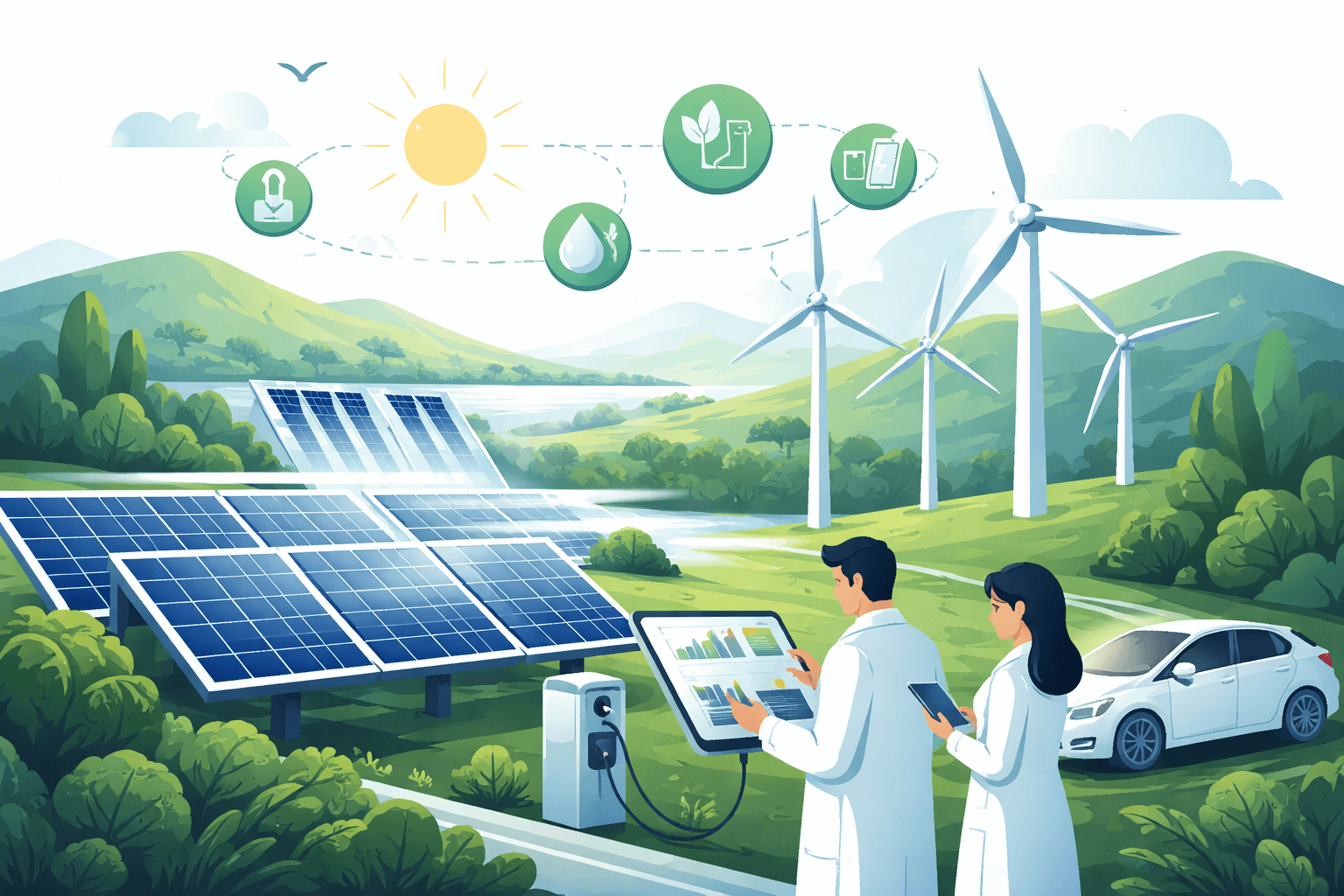
Renewable energy sources moved from niche to mainstream in record time: the IEA reports the world added roughly 510 GW of renewable capacity in 2023, while IRENA counted 473 GW (different methods), lifting global renewables to about 3,870 GW. Solar PV dominated additions. This guide unpacks what “renewable energy sources” means, how each technology performs, and why solar often leads—backed by data from IEA, IRENA, NREL, IPCC, and Lazard.
What “renewable energy sources” means—and why they matter
Renewable energy sources: sunlight, wind, moving water, Earth’s heat, and organic matter. They differ from fossil fuels in three practical ways:
Sustainable Energy - without the hot air: MacKay, David JC
Written by David MacKay, who was an esteemed Professor of Engineering at the University of Cambridge and Chief Scientific Advisor to the UK Department of Climate Change, this is <strong>an uplifting,
Check Price on Amazon- Fuel is free and clean at the point of use. Sunlight and wind have zero fuel cost and emit no CO2 while operating.
- Emissions occur mostly upstream. Most lifecycle emissions come from manufacturing, construction, and transport, not generation.
- Variability is common. Many renewables are intermittent or seasonal, so grid integration relies on storage, transmission, and flexible demand.
Why they matter now:
- Cost: Unsubsidized utility-scale solar and onshore wind are among the cheapest new power sources in many markets (Lazard Levelized Cost of Energy, 2024).
- Speed: IEA expects global renewable additions to rise again through 2025, led by distributed and utility-scale solar.
- Climate: IPCC AR6 finds lifecycle emissions from wind and solar are a small fraction of fossil power, enabling deep decarbonization when paired with a clean grid.
Major renewable types at a glance: capacity factor, LCOE, best uses
Key terms
- Capacity factor: the percentage of time a plant produces at its rated output, averaged over a year. A 30% capacity factor means a 100 MW plant produces the energy equivalent of running 30 MW constantly.
- LCOE (Levelized Cost of Energy): the lifetime average cost per unit of electricity ($/MWh), accounting for capital, operations, fuel, and financing.
Ranges below reflect typical modern projects; values vary by site and market. Sources: Lazard LCOE 2024; NREL; IEA; IPCC.
-
- Capacity factor: 18–30% (desert sites can exceed 30%)
- Unsubsidized LCOE: ~$24–$96/MWh
- Best uses: Rooftops and carports behind the meter; utility-scale in high-irradiance regions; co-located with batteries to shift midday output into evening.
-
- Capacity factor: 30–45% (best sites >45%)
- Unsubsidized LCOE: ~$27–$73/MWh
- Best uses: Large-scale generation on ridgelines and plains; complementary to solar with nighttime and seasonal output.
Offshore wind
- Capacity factor: 40–55%
- Unsubsidized LCOE: ~$72–$140+/MWh (subject to recent cost inflation and supply-chain constraints)
- Best uses: Coastal population centers with limited land; higher, steadier winds.
Hydropower (run-of-river and reservoirs)
- Capacity factor: 35–60% (highly site- and hydrology-dependent)
- Unsubsidized LCOE: ~$51–$200/MWh (new build can be costly; existing assets are low-cost)
- Best uses: Firm power, flexibility, and storage (pumped hydro) where geography allows.
Geothermal (flash/binary)
- Capacity factor: 70–95% (near-baseload)
- Unsubsidized LCOE: ~$72–$142/MWh
- Best uses: Firm, low-carbon power and heat in geologically suitable areas; district heating.
Biomass/biogas
- Capacity factor: 70–85% (fuel-dependent)
- Unsubsidized LCOE: ~$83–$157/MWh
- Best uses: Combined heat and power (CHP); waste-to-energy with strict air controls; industrial sites with reliable feedstock.
Tidal and wave (emerging)
- Capacity factor: Tidal stream ~35–45%; tidal range ~20–30%
- LCOE: Currently high and project-specific
- Best uses: Predictable complement to wind/solar at select coastal sites.
Solar vs. other renewables: when solar is the best choice
Performance and intermittency
- Profile: Solar’s midday peak aligns with air-conditioning and commercial loads; wind often complements with evening, nighttime, and winter output in many regions.
- Predictability: Solar is highly predictable day-ahead; clouds reduce output but forecasting is strong. Wind is variable but forecastable; hydro and geothermal can provide steadier output.
Land use and siting
- Solar PV typically needs about 5–10 acres per MWac for utility-scale arrays (NREL). Dual-use options—agrivoltaics, rooftops, carports, and brownfields—cut land conflicts and can boost agricultural yields for shade-tolerant crops.
- Wind has a larger spatial footprint but low direct land take; turbines can coexist with farming and grazing. Hydro and reservoirs have the largest land and ecological footprints per site.
When solar wins
- Distributed settings: Rooftops, parking canopies, and community solar reduce transmission needs and keep value local.
- High-insolation regions: Southwest U.S., MENA, Australia, Chile’s Atacama deliver low LCOE and high capacity factors.
- Speed to deploy: Utility solar projects can be built in 12–24 months; rooftop systems in weeks.
When others lead
- Firm power: Geothermal and hydropower provide near-baseload; biomass/biogas can be dispatchable if feedstock is reliable.
- Space-constrained coasts: Offshore wind supplies large coastal loads without land use.
Environmental impacts and lifecycle emissions
Lifecycle emissions (IPCC AR6 medians, gCO2e/kWh)
- Onshore wind: ~14; Offshore wind: ~12; Solar PV: ~38; Hydropower: ~24 (wider range in tropical reservoirs); Geothermal: ~27; Biomass: variable and context-dependent. By contrast, gas CCGT ~490 and coal ~820 gCO2e/kWh.
Materials and mining
- Solar PV: Polysilicon (energy-intensive to refine), aluminum, glass, copper; silver use is being reduced through “thrifting.”
- Wind: Steel, concrete, copper; some turbines use rare earth elements (neodymium, praseodymium, dysprosium) in permanent magnets—though gear-driven designs can avoid REEs.
- Geothermal: Well drilling uses steel and cement; non-condensable gases must be managed.
Water and land
- PV and wind have minimal operating water use; CSP (concentrating solar) can require cooling water unless dry-cooled.
- Hydro alters river ecosystems and sediment flows; careful design and fish passage help but do not eliminate impacts.
- Biomass can affect air quality and land if feedstock is not truly residual waste.
End-of-life and circularity
- Solar PV: Modules last 25–35 years; aluminum frames and glass are readily recyclable. EU WEEE rules cover PV; manufacturers like First Solar run take-back and closed-loop recycling for CdTe. Dedicated PV recycling is expanding in the U.S. and Asia (NREL tracking ongoing).
- Wind: Steel towers recycle well; composite blades are harder—co-processing in cement kilns and emerging thermal/chemical recycling are scaling in Europe and North America.
- Batteries: Lithium-ion recycling (nickel, cobalt, lithium, copper) is ramping with new facilities; policies and extended producer responsibility accelerate recovery.
Economics: costs, incentives, and how to read LCOE and payback
LCOE benchmarks (unsubsidized, Lazard 2024)
- Utility solar PV: ~$24–$96/MWh; Onshore wind: ~$27–$73/MWh; Offshore wind: ~$72–$140+/MWh; Geothermal: ~$72–$142/MWh; Hydropower: ~$51–$200/MWh; Biomass: ~$83–$157/MWh.
Interpreting LCOE vs bills
- LCOE is a project-level metric. Your retail bill includes transmission, distribution, and policy charges. Rooftop solar offsets retail rates, so its “bill payback” can beat its modeled LCOE.
Residential solar example (U.S.)
- System: 7 kW DC rooftop at $2.60/W installed cost (2024 benchmark), gross cost ~$18,200.
- Incentive: 30% federal Investment Tax Credit → net cost ~$12,740 (state/utility incentives may reduce further).
- Output: At 1,400 kWh/kW-year (sunny U.S. Southwest), annual generation ≈ 9,800 kWh.
- Savings: At $0.20/kWh retail, annual bill reduction ≈ $1,960.
- Simple payback: ~$12,740 / $1,960 ≈ 6.5 years. Over 25 years, internal rate of return can exceed 8–12% depending on rate escalation and performance.
Commercial and industrial
- Power purchase agreements (PPAs) and leases avoid upfront capex. In 2024, U.S. solar PPA offers often cleared in the $30–$60/MWh range in high-resource markets (LevelTen Energy market data), though interconnection and supply-chain conditions drive variance.
Biomass, hydro, geothermal economics
- Site-specific. Firm renewables can command higher value where capacity and ancillary services matter. Tax credits (e.g., U.S. IRA for geothermal) improve project viability.
Grid integration and reliability: storage, flexibility, transmission, green hydrogen
Storage
- Lithium-ion dominates new storage. BloombergNEF reports global storage deployments around 42 GW/99 GWh in 2023, with costs for battery packs averaging $139/kWh in 2023 after supply-chain normalization.
- Solar-plus-storage delivers “shaped” power, shifting midday output into evening peaks. Four-hour batteries are common today; eight- to 12-hour options are emerging.
Demand response and virtual power plants (VPPs)
- Flexible loads—EV charging, smart thermostats, heat pumps, water heaters—can shift or shave peaks.
- The U.S. DOE’s 2023 VPP Liftoff report estimates 80–160 GW of VPP potential by 2030, improving reliability while cutting costs and emissions.
Transmission and interconnection
- More wires mean more diversity. High-voltage transmission smooths variability by connecting distant wind, solar, and hydro resources.
- In the U.S., FERC Order No. 2023 modernizes interconnection queuing; Order No. 1920 (2024) requires long-term transmission planning—both crucial for integrating large shares of renewables.
Green hydrogen and long-duration storage
- Electrolyzers can absorb excess renewable output to produce hydrogen for industry, shipping, or power. The IEA notes installed electrolyzer capacity remains small today but the project pipeline to 2030 is large; realization hinges on supportive policy and cheap clean electricity.
- Long-duration storage options—pumped hydro (≈180 GW globally, IHA), flow batteries, iron-air, compressed air, and thermal storage—are scaling to backstop multi-day lulls.
How to choose the right renewable for your home or business
Start with load, roof, and rates
- Know your usage: Gather 12–24 months of bills; note seasonal peaks.
- Site assessment: Roof age, orientation (south-facing preferred in the Northern Hemisphere), tilt, shading analysis (NREL’s PVWatts or equivalent), and available parking for canopies.
- Rate structure: Time-of-use rates increase the value of late-afternoon generation and storage.
Sizing and options
- Rooftop solar: Often size to 80–110% of annual consumption (subject to net metering rules). Pair with a battery if outages are a concern or TOU rates are steep.
- Community solar: If you rent or have a shaded roof, subscribe to a local project to receive bill credits without installing hardware.
- Heat pumps and EVs: Electrification increases the value of on-site solar by raising self-consumption.
Installer checklist
- Credentials: NABCEP-certified (U.S.) or recognized local accreditation; strong local references.
- Design transparency: Module and inverter make/model; expected production (kWh/year) and assumptions; shading report; degradation rate.
- Financials: Total installed cost ($/W), incentives, projected bill savings, warranty terms (modules 25-year, inverter 10–15-year, workmanship 10+ years).
- Interconnection and permits: Lead times, utility requirements, and potential upgrades.
- Operations and monitoring: Online monitoring; rapid service response.
Businesses and institutions
- Consider rooftop, carport, and on-site ground-mount; evaluate behind-the-meter economics and resilience.
- For off-site procurement, assess physical or virtual PPAs, REC quality, and additionality. Model hourly matching if 24/7 clean energy is a goal.
By the numbers
- 473–510 GW: Global renewable capacity added in 2023 (IRENA vs IEA methodologies), with solar the largest share.
- ~$24–$96/MWh: Unsubsidized utility-scale solar LCOE in 2024 (Lazard).
- 18–30%: Typical capacity factor for utility-scale PV; 30–45% onshore wind; 70–95% geothermal.
- ~38 gCO2e/kWh: Median lifecycle emissions for solar PV (IPCC AR6); ~12–14 g for offshore/onshore wind.
- 5–10 acres/MWac: Typical land use for utility-scale solar (NREL), often reduced via rooftops, carports, and agrivoltaics.
- $139/kWh: Average Li-ion battery pack price in 2023 (BloombergNEF), aiding solar-plus-storage adoption.
Future trends, trusted data sources, and FAQs
What’s next
- Perovskite and tandem PV: NREL’s research-cell efficiency chart shows perovskite–silicon tandems surpassing 30% in the lab, pointing to higher-yield, lighter modules.
- Floating PV (FPV): Growing on reservoirs and hydropower lakes, reducing evaporation and leveraging existing grid interconnections.
- Long-duration storage: Iron-air, sodium-ion, and vanadium flow batteries move from pilots to early commercial projects, complementing pumped hydro.
- Digital grids: Advanced forecasting, dynamic line ratings, and AI-enabled VPPs improve reliability at high renewable shares.
Trusted sources to bookmark
- IEA: Renewables market reports; Grid integration studies.
- IRENA: Global capacity and cost statistics; innovation outlooks.
- NREL: PV and wind performance data; PVWatts; Best Research-Cell Efficiency Chart; land-use studies.
- IPCC AR6: Lifecycle emissions meta-analyses.
- Lazard LCOE/LCOS: Comparable cost benchmarks across technologies.
- National agencies: U.S. EIA, FERC; European ENTSO-E; and your country’s energy/statistics offices.
FAQs
- Are renewable energy sources reliable? Yes—at system scale with a portfolio approach. Diversity of wind, solar, hydro, and geothermal plus storage, transmission, and flexible demand delivers high reliability, as shown in multiple grid studies (IEA, NREL).
- Do renewables lower bills? Utility-scale solar and wind often deliver the lowest-cost new power; rooftop solar can reduce household bills significantly where retail rates are moderate-to-high and policies support exports.
- What about winter and clouds? Solar output drops in winter at high latitudes, but wind and hydropower often increase. Storage and demand flexibility bridge daily and weekly gaps.
- Is biomass carbon-neutral? Only when feedstocks are truly residual (e.g., landfill gas, agricultural waste) and supply chains are well-managed. Lifecycle accounting varies by project.
- Can I add batteries later? Usually yes. Ensure your inverter is battery-ready or plan for a hybrid system. Batteries add resilience and can arbitrage time-of-use rates.
- How long do panels last? Modern modules carry 25-year performance warranties; many operate well past 30 years with modest degradation (~0.3–0.6%/year typical).
Keep learning
- How Solar Works
- Community Solar Explained
- Home Battery Basics
- Wind Power 101
- Green Hydrogen
- EV Smart Charging and V2G
- Transmission and the Clean Grid
- Heat Pumps 101

EF ECOFLOW Solar Generator DELTA 2 Max 2048Wh With 400W Solar Panel, LFP Battery Portable Power Station Up to 3400W AC Output Fast Charging 0-80% in 43 Min solar powered generator For Camping, RV : Patio, Lawn & Garden
[Fast Green Charging] Charge DELTA 2 Max wherever there's sun with portable solar panels. <strong>With a single 400W panel that has a high conversion efficiency of up to 23%, top-up in 5.1 hours<
Check Price on Amazon
Sense Energy Monitor with Solar – Track Electricity Usage and Solar Production in Real Time
View on AmazonRecommended Products
Sustainable Energy - without the hot air: MacKay, David JC
Written by David MacKay, who was an esteemed Professor of Engineering at the University of Cambridge and Chief Scientific Advisor to the UK Department of Climate Change, this is <strong>an uplifting,
EF ECOFLOW Solar Generator DELTA 2 Max 2048Wh With 400W Solar Panel, LFP Battery Portable Power Station Up to 3400W AC Output Fast Charging 0-80% in 43 Min solar powered generator For Camping, RV : Patio, Lawn & Garden
[Fast Green Charging] Charge DELTA 2 Max wherever there's sun with portable solar panels. <strong>With a single 400W panel that has a high conversion efficiency of up to 23%, top-up in 5.1 hours<
Sense Energy Monitor with Solar – Track Electricity Usage and Solar Production in Real Time
KNOW WHAT’S ON: Track how much electricity you’re using, what time your kids got home, or when someone leaves the basement light on. Sense <strong>identifies patterns in your energy use to help your f