
Solar in Arizona: Costs, Incentives & Top Installers (2026)
Arizona is one of the best places in the U.S. to go solar. The state has more than 7 GW of installed solar capacity (SEIA, 2025), over 290 sunny days a year in many communities (NOAA climate normals), and some of the highest solar irradiance in North America (NREL). If you’re evaluating solar in Arizona in 2026, here’s what the resource, costs, incentives, and installer landscape mean for your home and your bill.
By the numbers: Solar in Arizona (2026)
- Installed solar capacity: 7–8+ GW across utility, commercial, and residential (SEIA/Wood Mackenzie 2025)
- Peak sun hours: ~6.0–7.5 kWh/m²/day statewide (NREL Solar Resource Data)
- Typical residential system size: 7–12 kW DC (NREL/marketplace data)
- Average installed price: ~$2.30–$3.00 per watt before incentives (NREL Benchmark + Arizona market quotes)
- Federal tax credit: 30% through at least 2032 (Inflation Reduction Act)
- Arizona state tax credit: 25% of system cost, capped at $1,000 (Arizona Department of Revenue)
- Property tax: exemption for added home value from solar (Arizona statute)
- Net metering: replaced by export credits ("net billing"); typical credits ~6–10¢/kWh depending on utility (Arizona Corporation Commission dockets; utility tariffs)
Solar Electricity Handbook - 2023 Edition: A simple, practical guide to solar energy – designing and installing solar photovoltaic systems: Boxwell, Michael
Solar Electricity Handbook - 2023 Edition: <strong>A simple, practical guide to solar energy – designing and installing solar photovoltaic systems</strong> [Boxwell, Michael] on Amazon.com. *FREE* shi
Check Price on Amazon1) Arizona’s solar resource: sun hours, irradiance, and climate factors
Arizona’s solar resource is exceptional. NREL maps place much of the state in the top tier for global horizontal irradiance (GHI), commonly translating to 6.0–7.5 “peak sun hours” per day. In practical terms, a well-sited 8 kW rooftop array in Phoenix or Tucson can often generate 12,000–14,500 kWh annually using PVWatts defaults and typical temperature/soiling losses.
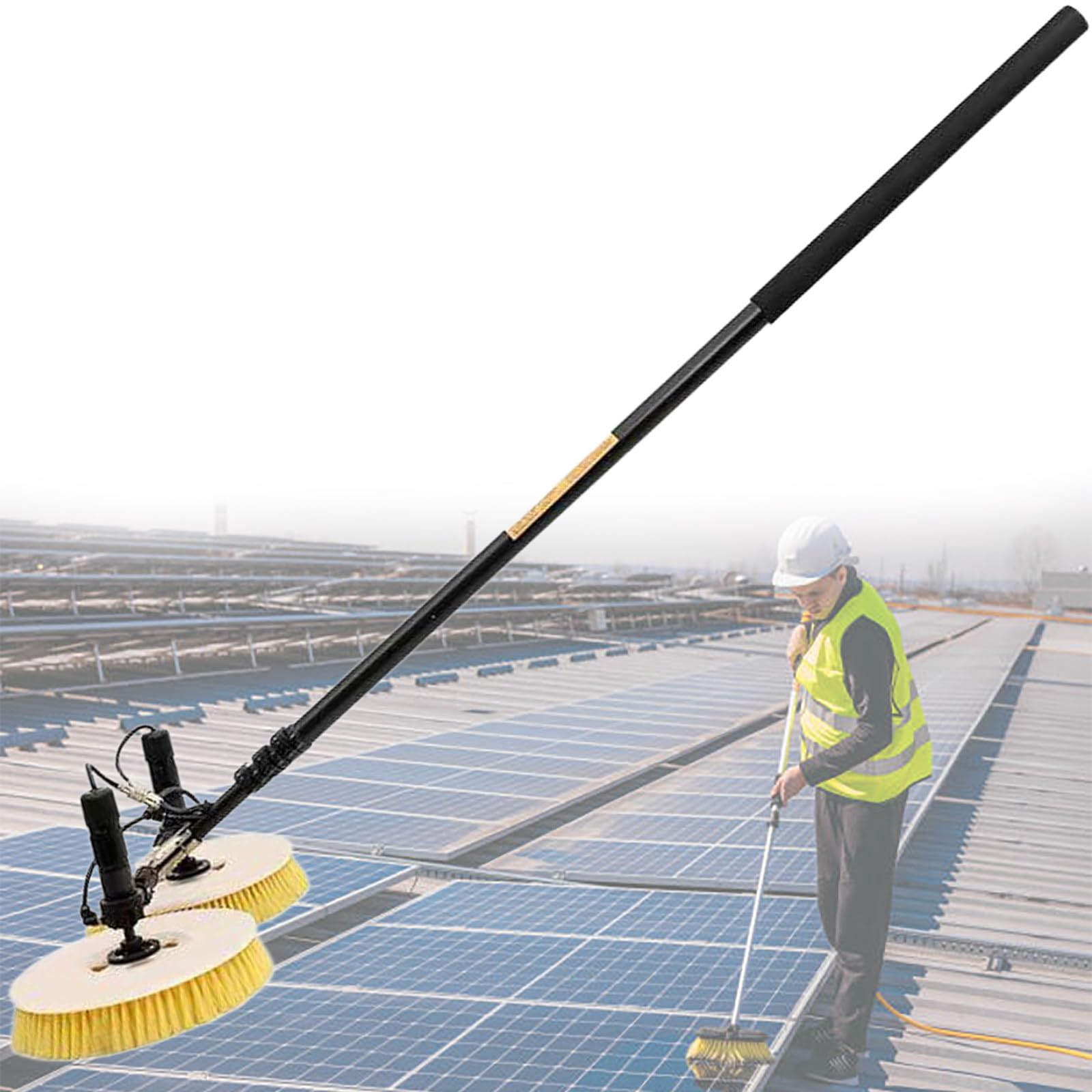
Electric Solar Panel Cleaning Kit, Water Fed Rod Kit, Outdoor Washing Cleaner Equipment, 110V-240V City Power Supply, for Roof, Solar Panel,11.5ft(3.5m)
View on AmazonClimate matters for performance:
- Heat derating: Solar modules lose efficiency as temperatures rise. Most panels list a temperature coefficient around −0.3% to −0.5% per °C above 25°C. Arizona roofs run hot by mid-afternoon in summer, so racking that allows air flow, light-colored roofing, and higher-efficiency modules can materially improve annual output.
- Soiling and dust: Desert dust can trim production by 2–5% (varies by site). Seasonal rinsing or rainfall during monsoon can help. In especially dusty corridors, light cleaning a few times a year may be worth it.
- Monsoon winds and hail: Modern modules are tested for hail impact and wind uplift. Installers in Arizona commonly specify wind load ratings to meet local codes. A reputable installer will match racking and attachment methods to your roof structure and wind zone.
Capacity factor, the share of a system’s nameplate capacity that actually generates power over time, is typically 22–28% for Arizona residential rooftops depending on tilt, azimuth, shading, and equipment (NREL PVWatts).
2) Solar in Arizona: costs and price-per-watt breakdown
Arizona is a competitive solar market with mature installer networks and strong utility-scale activity. In 2026, most homeowners will see turnkey quotes (equipment, labor, permits) in the range of $2.30–$3.00 per watt DC before incentives. That means:
- 7 kW system: ~$16,100–$21,000
- 9 kW system: ~$20,700–$27,000
- 12 kW system: ~$27,600–$36,000
What drives the price?
- Equipment: Module brand/efficiency (premium N-type panels cost more), inverter choice (microinverters vs. string + optimizers), and optional battery storage.
- Roof complexity: Steep pitches, tile roofs, or structural upgrades add labor.
- Soft costs: Sales, design, permitting, and interconnection. Several Arizona jurisdictions use online permitting (including DOE SolarAPP+ pilots), which helps keep soft costs down.
Helpful deep dives:
- Learn how system sizes, equipment choices, and soft costs shape your final quote in our Solar Panel Cost Guide: How Much You'll Pay & How to Save (/renewable-energy/solar-panel-cost-guide).
- See our Best Solar Panels 2026: Top Picks, Specs & Buying Guide (/renewable-energy/best-solar-panels-2026) for efficiency, warranty, and price tiers.
3) Arizona solar incentives: state credits, exemptions, net metering, and SRECs
Arizona’s most impactful state-level incentives focus on taxes and meter policy.
State tax credit (income tax):
- Amount: 25% of the system cost, capped at $1,000.
- Timing: Typically claimed in the tax year the system is placed in service; unused amounts may carry forward (check current ADOR guidance).
- What it is: A nonrefundable state income tax credit, not a rebate. It reduces your state tax bill.
Sales tax treatment:
- Arizona exempts qualifying “solar energy devices” from state sales tax. Most residential rooftop systems qualify; your installer normally handles the paperwork at purchase. Local taxes may vary—confirm with your installer and city.
Property tax:
- Energy Equipment Property Tax Exemption: The added value from a solar energy system is exempt from property tax assessment under Arizona law.
Net metering/export credits (critical for economics):
- Arizona no longer offers retail-rate net metering for the major investor-owned utilities. Instead, systems are on “net billing” or “export credit” structures.
- Export credits (a.k.a. RCP in APS) are set by each utility and approved by the Arizona Corporation Commission (ACC) or utility boards (for SRP). Recent export rates commonly fall in the ~6–10¢/kWh range and may adjust annually, often declining over time based on avoided-cost methodologies.
- Time-of-use (TOU): Many utilities require solar customers to take a TOU plan, which raises on-peak prices and lowers off-peak prices. Your savings depend heavily on shifting consumption to off-peak and maximizing self-consumption when rates are high.
- Utility specifics vary:
- APS (Arizona Public Service): Net billing with an ACC-approved export rate, typically reviewed annually; solar customers choose from TOU plans.
- TEP (Tucson Electric Power) and UNS: Net billing/export credit and TOU-based plans.
- SRP (Salt River Project, not ACC-regulated): Solar customers are placed on specialized rate plans that may include demand charges, significantly affecting savings if peak demand isn’t managed.
SRECs:
- Arizona does not offer a statewide, tradable SREC market for residential systems in 2026. Utilities may count your system’s renewable energy credits toward compliance if required, but there’s no common consumer SREC revenue stream as in some East Coast markets.
For a plain-language walkthrough of bill credits and exports, see Net Metering Explained: How Solar Owners Get Credit for Excess Power (/sustainability-policy/net-metering-explained-credit-for-excess-power).
4) The federal ITC: how the 30% credit applies in Arizona
The federal residential Clean Energy Credit (often still called the ITC) remains at 30% for solar through at least 2032 under the Inflation Reduction Act.
- What it covers: Solar panels, inverters, balance of system, labor; also batteries of 3 kWh+ capacity, whether installed with new solar or retrofitted to existing systems.
- How it stacks: The federal 30% credit generally applies to your contract price; then Arizona’s $1,000 state credit further reduces what you owe at the state level. Utility rebates (if any) can alter the federal credit basis. Consult a tax professional for your specific situation.
- Claiming: File IRS Form 5695 with your federal tax return. Unused federal credit can typically carry forward to future years.
More details here: Solar Tax Credit Explained: Save on Solar with the Federal ITC (/renewable-energy/solar-tax-credit-explained-federal-itc).
5) Best solar installers serving Arizona
Arizona hosts a mix of strong local firms and national providers. Always compare at least three quotes, verify licenses, and ask for recent local references. Selection criteria to consider:
- Equipment: Panel efficiency and degradation warranties; inverter platform (microinverters vs. DC optimizers); battery options.
- Workmanship warranty: 10 years is common; 20–25 years is premium.
- Service model: In-house crews vs. subcontractors, monitoring portal, and O&M support.
- Pricing transparency: Clear price-per-watt, change-order policy, interconnection and permitting handling.
Examples of active providers (not exhaustive, no endorsements):
- Arizona-focused independents: Sun Valley Solar Solutions, Sunny Energy, Elevation, Arizona Solar Concepts, PEP Solar, Solar Topps. These firms typically offer multiple equipment lines and deep familiarity with APS/SRP/TEP rates.
- National brands operating in AZ: Sunrun, ADT Solar, Freedom Forever, Tesla (roof and standard arrays via third-party installers), SunPower dealers. National firms can bring scale and standardized processes; pricing varies.
Equipment picks for Arizona heat:
- High-efficiency, low-temperature-coefficient panels can add a few percent of annual output in hot climates. Based on published efficiency and warranty terms, options like REC Alpha Pure-R and Qcells Q.TRON often represent strong value for residential installations.
- For complex roofs or shade, microinverters such as Enphase IQ8 enable module-level optimization and rapid shutdown compliance.
If you’re still choosing modules, our Best Solar Panels 2026 guide compares top brands by efficiency, cost, and warranty (/renewable-energy/best-solar-panels-2026).
6) ROI and payback period for solar in Arizona
Your payback depends on five main variables: installed price, annual production, your utility’s rate and export credit, your self-consumption fraction, and incentives.
A worked example (typical APS/TEP territory):
- System size: 8 kW DC
- Installed price: $2.70/W ($21,600)
- Incentives: 30% federal credit (−$6,480) and $1,000 AZ credit → net cost ≈ $14,120
- Annual production: 13,200 kWh (PVWatts mid-case for Phoenix/Tucson tilt and losses)
- Bill impacts: Assume 60% self-consumption valued at an average retail rate of $0.16/kWh on TOU; 40% exports credited at $0.085/kWh
- Behind-the-meter savings: 7,920 kWh × $0.16 = $1,267
- Export credits: 5,280 kWh × $0.085 = $449
- Total first-year savings/credits ≈ $1,716
- Simple payback: ~$14,120 / $1,716 ≈ 8.2 years
Sensitivity:
- Lower installed price ($2.40/W) or higher self-consumption (e.g., daytime loads, EV charging off solar) can drop payback to 6.5–7.5 years.
- SRP solar plans with demand charges often yield longer paybacks (9–13 years) unless you manage peak demand with smart controls or storage.
- Modest annual rate inflation (historically 2–4%/yr per EIA in the Southwest) tends to shorten effective payback over time as avoided costs rise.
What about batteries?
- Battery addition (e.g., 10–13.5 kWh) typically adds $9,000–$14,000 installed. In APS/TEP, batteries primarily boost resilience and shift solar to on-peak periods. Purely on bill savings, batteries in 2026 often pencil at 10–15+ year simple paybacks unless there’s a targeted rate arbitrage or a utility incentive.
- SRP customers can use batteries and smart load controls to shave peak demand, materially improving solar economics on demand-based plans.
If you’re evaluating storage, see Tesla Powerwall: Complete Buyer’s Guide — Cost, Installation & Alternatives (/green-business/tesla-powerwall-buyers-guide-cost-installation-alternatives) and our Solar Battery Buying Guide (coming soon) for cost and performance details.
7) Arizona-specific permitting, HOA rules, and interconnection
Permitting
- Many Arizona jurisdictions use online or over-the-counter permits for standard residential PV. Several participate in DOE’s SolarAPP+ or similar e-permitting, which can reduce approval times to days instead of weeks for code-compliant designs.
- Typical requirements include structural review (roof load), electrical diagrams, setbacks, and fire code clearances. Tile roofs may require extra attachment hardware or underlayment considerations.
HOA restrictions
- Arizona’s “solar rights” statutes prevent homeowners associations from outright prohibiting solar installations on single-family homes. HOAs can set reasonable aesthetic guidelines (e.g., conduit routing, frame color, placement attempts), but rules that effectively prevent functioning systems are generally unenforceable. Provide your HOA with stamped plans early to streamline approvals.
Utility interconnection and meter setup
- Step 1: Pre-approval. Your installer submits an interconnection/export application to your utility (APS, TEP/UNS, SRP, or a cooperative). Don’t install before pre-approval.
- Step 2: City permit and inspection. After installation, your city/county inspects.
- Step 3: Utility inspection, meter swap, and Permission to Operate (PTO). Timelines vary by utility and season, commonly 2–6 weeks after city sign-off.
- Metering: Expect a bi-directional meter and assignment to a solar-appropriate TOU plan. Your export credit rate is set by tariff and may adjust annually.
8) FAQs: Solar in Arizona
Q: Is solar worth it in Arizona in 2026? A: For most APS, TEP, and UNS customers with decent roof exposure, paybacks of ~7–10 years are common after incentives, with 20–25 years of panel production. SRP customers can still benefit, but careful rate and load management (or storage) are often needed to keep paybacks under ~12 years. Your exact case depends on installed price, shading, and consumption profile.
Q: How many panels do I need? A: Divide your annual usage (kWh) by expected annual output per kW. In much of Arizona, 1 kW of PV produces ~1,500–1,800 kWh/year. A home using 12,000 kWh/year may need roughly 7–9 kW, or ~18–24 panels at today’s 380–440 W module sizes.
Q: Do high summer temperatures reduce production? A: Yes—module efficiency drops with heat. Panels with better temperature coefficients and adequate rear ventilation can recover several percent of annual output. Consider high-efficiency modules such as REC Alpha Pure-R or Qcells Q.TRON if your roof runs especially hot.
Q: What about dust and cleaning? A: Light soiling losses (2–5%) are typical. Many homeowners let monsoon rains do the work. If you’re near construction, agriculture, or unpaved roads, occasional rinses or professional cleanings can be cost-effective.
Q: What happens during monsoon storms and outages? A: Grid-tied PV systems shut down during outages for lineworker safety. Adding a battery (e.g., Enphase IQ Battery or Powerwall-class unit) can keep critical loads powered and time-shift solar to evening peaks, though it adds cost.
Q: Does Arizona still have net metering? A: No. The major IOUs use export credits (net billing). Credits are typically below retail rates and may decline over time, which is why maximizing self-consumption is key.
Q: Can my HOA stop me from going solar? A: Generally no. Arizona law protects the right to install solar, though HOAs can set reasonable aesthetic standards that don’t meaningfully impair performance.
Q: Are there utility rebates? A: Statewide, upfront solar rebates have largely sunset. Some utilities periodically offer targeted incentives—for example, pilots for batteries or demand-response. Availability changes; your installer will know current programs.
Q: What roof types work in Arizona? A: Composite shingle and standing-seam metal are straightforward. Clay/tile roofs are common; installers use tile hooks or replace a course with comp shingles and flashing at attachment points. Good installers in Arizona handle tile routinely.
Q: Can I go off-grid in Arizona? A: Yes, but most suburban homeowners remain grid-tied for economics and reliability. Off-grid requires oversized PV, significant battery capacity, and often a backup generator. See Off-Grid Solar: Complete Buyer’s Guide to Systems, Costs & Setup (/renewable-energy/off-grid-solar-complete-buyers-guide) if you’re building remotely.
Practical tips to maximize value in Arizona
- Right-size your array: Sizing to your on-site use (and TOU windows) beats oversizing into low export credits.
- Shift loads: Run pool pumps, laundry, and EV charging in off-peak or midday solar hours to raise self-consumption and avoid on-peak prices.
- Consider smart panels and controls: Load controllers and smart panels help dodge SRP demand spikes and compress payback times.
- Compare equipment and warranties: Arizona’s heat rewards premium modules with strong temperature performance and longer product warranties.
- Get multiple quotes: Price dispersion of $0.50/W or more is common across Arizona bids. Transparent apples-to-apples comparisons save thousands.

Emporia Gen 2 Smart Home Energy Monitor with 16 50A Circuit Level Sensors | Real Time Electricity Monitor/Meter | Solar/Net Metering - Amazon.com
View on AmazonWhere Arizona solar is heading
- Falling soft costs: More jurisdictions are adopting streamlined e-permitting (SolarAPP+ and equivalents), cutting weeks off project timelines.
- Smarter rate design: Expect continued evolution of TOU and export credits. As midday solar surpluses grow, shifting flexible loads to the afternoon and storing into evening peaks will become core to savings.
- Storage and demand flexibility: As batteries and smart load control drop in price, they’ll play a larger role under SRP’s demand structures and APS/TEP evening peaks, stabilizing paybacks despite lower export values.
For a full foundation on how solar works and what to expect from installation to ROI, see The Complete Guide to Solar Energy: How It Works, Costs, and Benefits (/renewable-energy/complete-guide-solar-energy-how-it-works-costs-benefits).
Recommended Products
Solar Electricity Handbook - 2023 Edition: A simple, practical guide to solar energy – designing and installing solar photovoltaic systems: Boxwell, Michael
Solar Electricity Handbook - 2023 Edition: <strong>A simple, practical guide to solar energy – designing and installing solar photovoltaic systems</strong> [Boxwell, Michael] on Amazon.com. *FREE* shi
Emporia Gen 2 Smart Home Energy Monitor with 16 50A Circuit Level Sensors | Real Time Electricity Monitor/Meter | Solar/Net Metering - Amazon.com
See how much electricity your home is using anywhere, anytime. ... <strong>Add individual 50A sensors to your Vue to monitor up to 16 individual circuits</strong> — providing accurate energy use for t
Electric Solar Panel Cleaning Kit, Water Fed Rod Kit, Outdoor Washing Cleaner Equipment, 110V-240V City Power Supply, for Roof, Solar Panel,11.5ft(3.5m)
Dual brush heads counter-rotate and balance, and the electric brush rotates at high speed to spray friction, and at the same time, it can <strong>powerfully remove dust and sticky dirt on the surface