
Solar in Florida: Costs, Incentives & Top Installers (2026)
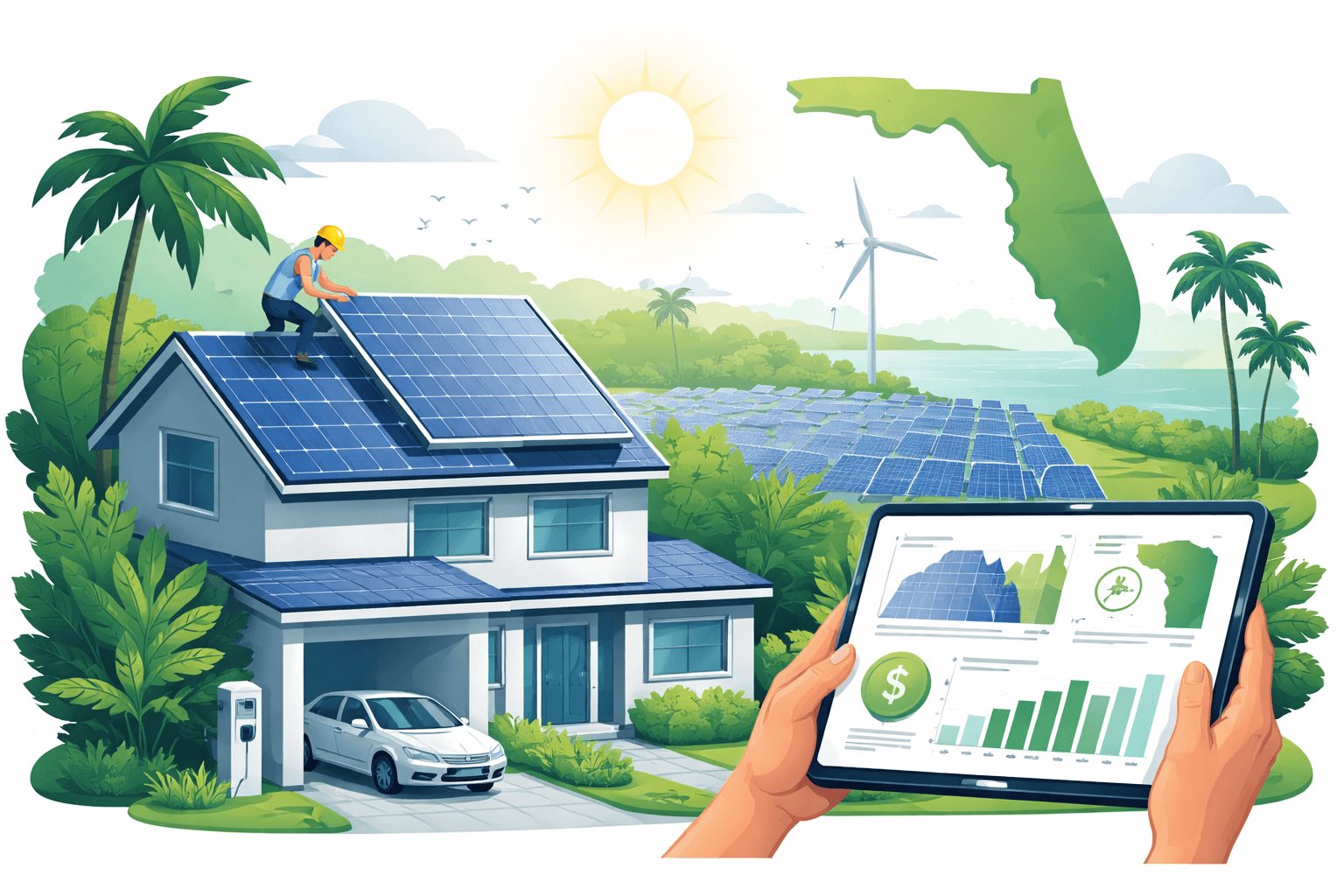
Florida added gigawatts of new solar in the past two years and now ranks among the top three U.S. states for installed capacity, according to SEIA/Wood Mackenzie market reports. For homeowners, solar in Florida benefits from abundant sun (roughly 5 peak-sun-hours per day across much of the state), a permanent sales-tax exemption on equipment, property-tax protection, and retail-rate net metering rules that still make rooftop systems compelling in 2026. This guide breaks down Florida’s sun potential, installed costs, incentives, best installers, payback math, permitting and interconnection, plus practical tips for hurricane-ready systems.
By the numbers: Solar in Florida (2026)
- Peak sun hours: ~4.9–5.4 (Miami ~5.3; Orlando ~5.0; Jacksonville ~4.9), based on NREL PVWatts solar resource estimates.
- Typical residential capacity factor: ~18–21% for fixed-tilt rooftops (NREL).
- Installed price: ~$2.20–$2.80/W (before incentives) for residential projects quoted in 2025–2026 Florida markets; national residential benchmark was ~$2.9/Wdc in NREL’s 2024 cost study, with Florida commonly below that due to competition and scale.
- Common system sizes: 7–10 kWdc.
- Federal ITC: 30% through 2032 under the Inflation Reduction Act (U.S. Treasury/IRS guidance).
- Florida incentives: 6% state sales tax exemption on solar equipment and 100% property-tax exclusion for the added value of a home solar installation (Florida statutes and Dept. of Revenue guidance).
- Net metering: Investor-owned utilities offer retail-rate net metering with monthly kWh rollover and annual cash-out of any residual at avoided-cost rates (Florida Public Service Commission Rule 25-6.065).
- First-year production: ~1,400–1,600 kWh per installed kWdc (NREL PVWatts, depending on tilt, azimuth, and shading).
- Electricity price context: Florida residential rates have averaged roughly 14–16¢/kWh in recent years (U.S. EIA), a key driver of savings.
- Typical simple payback: ~6–10 years for well-sited homes that offset most annual usage at today’s rates and incentives; details below.
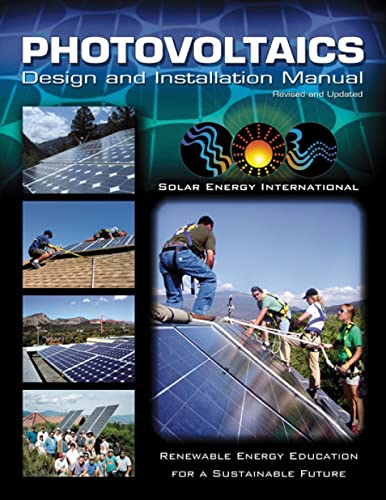
Photovoltaics: Design and Installation Manual: Solar Energy International
It also includes chapters on sizing photovoltaic systems, analyzing sites and installing PV systems, as well as detailed appendices on PV system maintenance, troubleshooting and solar insolation data
Check Price on AmazonFlorida’s solar resource: sun hours, irradiance, and climate factors
Florida’s latitude and low seasonal variability give it one of the most consistent residential solar yields in the eastern U.S. NREL PVWatts data indicate:
- Miami–Fort Lauderdale: ~5.2–5.4 peak sun hours per day
- Orlando–Tampa: ~4.9–5.2
- Jacksonville–Tallahassee: ~4.8–5.0
In practical terms, a 1 kWdc rooftop array in much of the state can produce about 1,400–1,600 kWh per year, assuming minimal shading and a modern module/inverter combination. That translates to robust capacity factors (the percentage of time a system produces its nameplate output when averaged across the year) of around 18–21% for fixed rooftops — strong for the Southeast.
Florida’s climate considerations:
- Heat and humidity: High ambient temperatures lower module efficiency. High-efficiency panels with better temperature coefficients can mitigate this.
- Hurricanes and wind: South Florida’s High Velocity Hurricane Zone (HVHZ) requires higher wind-load ratings and Miami-Dade Notice of Acceptance (NOA) hardware. A code-compliant design and qualified installer are essential.
- Roof types: Concrete/clay tile is common; ensure your installer has tile-specific attachments and flashing to prevent leaks and meet uplift requirements.
Solar in Florida: costs and price-per-watt in 2026
Florida is a competitive market with mature installation networks. Based on recent installer quotes and market trackers:
- Typical residential price: ~$2.20–$2.80 per watt (W) before the federal tax credit
- Example system: An 8 kWdc array might be quoted between $17,600–$22,400 before incentives
Price components you’ll see on proposals:
- Hardware (modules, inverters, racking): 35–45% of total cost
- Soft costs (labor, permitting, engineering, sales, overhead): 45–60%
- Optional batteries: Add ~$900–$1,400 per kWh of storage capacity, installed, depending on brand and scope
NREL’s most recent U.S. Solar Photovoltaic System and Energy Storage Cost Benchmark (2024) places national residential PV around $2.9/Wdc. Florida frequently comes in below the national median thanks to volume, favorable permitting in many jurisdictions, and strong installer competition. For a deeper dive into equipment, labor, and soft-cost drivers, see our broader Solar Panel Cost Guide: How Much You'll Pay & How to Save.
What impacts your Florida quote
- Roof complexity and material: Tile roofs increase labor and mounting hardware costs; steep roofs add safety requirements.
- Main panel upgrades: Older homes sometimes need electrical service upgrades to meet interconnection standards.
- Shading and layout: More module types/strings, optimizers, or microinverters can improve production on complex roofs but raise cost.
- Battery or smart-load integration: Resilience features add cost but can be valuable during hurricanes.
Florida solar incentives: tax exemptions, net metering, and SRECs
Florida does not offer a state income-tax credit (Florida has no state income tax), but it does provide two powerful incentives:
- State sales tax exemption: Solar energy systems and components are exempt from Florida’s 6% state sales tax. Installers generally apply this at sale.
- Property tax exclusion: The added value of a residential solar installation is excluded from property tax assessment, protecting you from higher property taxes due to the system’s value. This has been codified following the voter-approved Amendment 4 and implementing statutes.
Net metering in Florida
- Investor-owned utilities (IOUs) — including Florida Power & Light (FPL), Duke Energy Florida, and Tampa Electric (TECO) — must offer net metering for systems up to 2 MW under Florida PSC Rule 25-6.065.
- Monthly netting: Excess kWh produced in a billing cycle offset consumption at retail energy rates and roll forward as a credit.
- Annual true-up: Any remaining credit at year-end is typically paid out at the utility’s avoided-cost rate (a wholesale proxy), not the retail rate — a reason to size systems to meet, but not far exceed, your annual load.
- Municipal utilities and electric co-ops may have different terms; always check your provider’s tariff.
For a plain-English explanation of how billing works and what “retail” vs. “avoided-cost” credits mean, see our Net Metering Explained: How Solar Owners Get Credit for Excess Power.
About SRECs
- Florida does not have a Solar Renewable Energy Credit (SREC) market because the state lacks a solar carve-out in a binding Renewable Portfolio Standard. Some out-of-state SREC programs accept only in-state generation, so most Florida homeowners cannot count on selling SRECs for additional income.
The 30% federal ITC for Florida homeowners
The federal Investment Tax Credit (ITC) remains the single largest incentive for residential solar in Florida. Under the Inflation Reduction Act:
- Credit value: 30% of total installed cost for home solar placed in service through 2032
- Applies to: Panels, inverters, racking, balance-of-system equipment, permitting/engineering, and eligible energy storage of 3 kWh or more when installed with solar
- Tax credit vs. rebate: The ITC reduces your federal income tax liability; unused amounts can typically roll forward to future years (consult a tax professional)
We break down eligibility, timing, and filing tips here: Solar Tax Credit Explained: Save on Solar with the Federal ITC.
Best solar installers and companies serving Florida
Florida’s market includes strong local firms and national brands. Always solicit multiple quotes and check recent local references. Helpful signals include NABCEP-certified professionals, Miami-Dade NOA-approved racking, and proven hurricane-repair experience.

Enphase IQ8M Microinverter for 260-460 Watt Solar Panels - Works with Grid Tied and Off Grid Solar PV Systems - Compatible with Batteries - IQ8M-72-2-US 240V - UL Listed for Safety : Patio, Lawn & Garden
View on AmazonNotable installer categories (examples reflect known activity in Florida as of 2026; always verify current licensing and service areas):
- Florida-focused specialists: Goldin Solar; Solar Source (Tampa Bay and statewide); May Electric Solar; Solar Bear; ProSolar Florida
- National providers operating in Florida: Sunrun (select markets); Freedom Forever (EPC partner network); Momentum Solar; Tesla (direct or certified installers depending on region); Palmetto (installer network with service plans)
- Commercial and large-scale (if you’re exploring multifamily or business): Advanced Green Technologies (AGT) and other commercial EPCs with Florida portfolios
How to choose in hurricane country:
- Ask for wind-load calculations tailored to your roof and AHJ (city/county) requirements.
- Confirm racking, attachments, and fasteners meet HVHZ standards where applicable.
- Request a shade and production analysis (e.g., NREL PVWatts or equivalent) and a degradation/lifetime energy forecast.
- Verify workmanship warranties (10+ years typical) and module/inverter warranties (20–30 years for modules; 10–25 years for inverters).
Equipment notes for Florida homes
- High-heat performance: Panels with strong temperature coefficients and higher efficiency can yield more in Florida summers. Based on recent efficiency ratings, the Qcells Q.PEAK DUO 400W represents strong value for residential installations.
- Complex roofs, shade, and code compliance: Microinverters can improve shade tolerance and simplify module-level rapid shutdown. The Enphase IQ8 Microinverter line is a common Florida choice.
- Resilience: For storm outages, homeowners frequently consider the Tesla Powerwall 3 or similar lithium-iron-phosphate batteries; pair with a protected loads panel for essential circuits.
If you’re comparing module specs and warranty terms, our roundup can help: Best Solar Panels 2026: Top Picks, Specs & Buying Guide.
ROI and payback period for solar in Florida
The math depends on system cost, production, your utility rate, and how closely your annual solar output matches your usage.
Example scenario (typical, not a quote):
- System size: 8 kWdc
- Installed price: $2.60/W → $20,800 before incentives
- Federal ITC (30%): −$6,240 → net cost $14,560
- First-year production: ~12,000 kWh (assuming ~1,500 kWh/kWdc)
- Electricity rate savings: If offsetting kWh billed at 15¢, that’s ~$1,800 in year-one avoided utility purchases (before any fixed fees)
- Simple payback: ~$14,560 ÷ $1,800 ≈ 8.1 years
Sensitivity ranges:
- Costs at $2.20–$2.80/W and rates between 14–16¢/kWh place simple payback roughly in the 6–10 year range for well-sited systems.
- If you oversize the array and regularly spill credits to the avoided-cost payout at year-end, payback lengthens. Right-sizing to your annual load matters under Florida’s net metering.
Financing and cash flow:
- Cash purchases yield the highest lifetime returns and fastest payback.
- Solar loans spread payments over 10–25 years; compare APRs and dealer fees. Many homeowners target a monthly solar payment at or below their typical electric bill.
- Third-party PPAs: Florida does not broadly permit third-party power purchase agreements for residential customers because only regulated utilities can sell electricity to retail customers under current interpretations. Some equipment leases exist, but read terms carefully.
Home value and insurance:
- Property value: Peer-reviewed research from Lawrence Berkeley National Laboratory finds PV-equipped homes sell at a premium roughly on the order of installed system value in many U.S. markets (e.g., “Selling Into the Sun” studies). Florida markets generally follow this trend, though premiums vary by metro and system age.
- Insurance: Contact your insurer before installation; some Florida carriers require roof age documentation or specific mounting details. A compliant solar installation should be insurable; make sure your contractor provides engineering letters and final permits.
Florida-specific permitting, HOA rules, and interconnection
Permitting timelines
- Many Florida AHJs (Authorities Having Jurisdiction) turn residential solar permits in 1–4 weeks, faster in jurisdictions with online submissions. HVHZ counties (Miami-Dade, Broward, coastal Palm Beach, parts of Monroe) can take longer due to wind-load engineering reviews and Miami-Dade NOA requirements.
- Typical plan set includes structural and electrical drawings, product data sheets (modules/racking/inverters), load calcs, wind-load/anchor schedules, and a site plan.
HOA rules: the Florida Solar Rights Act
- Florida Statutes §163.04 prohibit HOAs and similar entities from banning solar collectors. HOAs may offer reasonable placement requirements but cannot effectively prevent installation or significantly impair performance.
- Practical tip: Submit your HOA package with the permit-ready plan set and an installer letter explaining why the proposed location is necessary for performance and code.
Interconnection steps (IOUs like FPL, Duke, TECO)
- Pre-application/estimate: Some utilities offer optional pre-checks.
- Interconnection application: Submit system details and single-line diagram. Level 1 (≤10 kW) is the simplest path.
- Approval to install: Utility reviews and issues conditional approval.
- Install and inspections: City/county inspections clear the project.
- Meter swap and PTO: Utility installs a bi-directional meter and issues Permission to Operate (PTO). From contract to PTO, 6–10 weeks is common; HVHZ or peak seasons can extend timelines.
Battery and backup considerations
- Economics: With full retail net metering, batteries are not required to maximize bill savings, but they add resilience during hurricane outages.
- Code: Ensure your battery system meets NEC and local fire codes (clearances, ventilation, and emergency shutoffs). Whole-home backup often requires a service upgrade; many opt for a protected loads panel.
Practical tips to maximize value in Florida
- Right-size to annual usage: Aim to offset 90–110% of your annual kWh. Oversizing can push credits to avoided-cost payout, reducing ROI.
- Prioritize high-heat performance: Look for favorable temperature coefficients (e.g., −0.30 to −0.35%/°C) and strong 25-year production guarantees.
- Hurricane-ready hardware: Miami-Dade NOA racking/attachments, stainless or coated fasteners, and sealed penetrations. Ask about uplift testing and torque specs.
- Panel-level visibility: Microinverters or DC optimizers deliver per-panel monitoring — useful for diagnosing shading debris after storms.
- Trim vegetation: Keep arrays debris-free and trim trees that cast seasonal shade.
Frequently asked questions: Florida solar
What solar size do I need?
- Divide your last 12 months of kWh by ~1,500 to estimate kWdc. Example: 12,000 kWh/year ÷ 1,500 ≈ 8 kWdc. Your installer will adjust for roof tilt, azimuth, and shading.
Are PPAs or leases available in Florida?
- Traditional third-party PPAs are generally not allowed for residential customers under current Florida law. Some equipment leases exist; compare total costs and ownership terms carefully.
Will solar survive a hurricane?
- Code-compliant systems designed for your wind zone perform well; post-storm field reports show properly anchored arrays withstand high winds. Choose HVHZ-compliant hardware where required and an installer with hurricane experience.
Do I need a battery?
- Not for bill savings under today’s net metering. Batteries are for backup. If outages are a concern, sizing one or two batteries to run essentials (fridge, lights, fans, internet, select A/C or mini-splits) is common.
How long does installation take?
- On-roof work is typically 1–3 days. Permitting, utility approval, and inspections drive the total schedule (often 6–10 weeks, longer in HVHZ or during peak season).
Will solar increase my property taxes?
- Florida excludes the added value of residential solar from property tax assessment, so the system should not raise your property tax bill.
What about HOAs?
- HOAs cannot prohibit solar. They can request reasonable placement changes that don’t harm performance or violate code. Provide them with your engineered plans.
Which panels and inverters perform best in Florida heat?
- High-efficiency modules with strong temperature coefficients and robust warranties, paired with microinverters (for complex/shaded roofs) or high-quality string inverters, deliver reliable output. See our Best Solar Panels 2026: Top Picks, Specs & Buying Guide for current models and specs.
What if my utility changes net metering later?
- Florida’s rule has been durable, and Gov. DeSantis vetoed a 2022 bill that would have weakened it. Policy risk exists everywhere; designing systems close to on-site consumption reduces exposure. Many customers still enjoy long-term savings even under modest policy changes.
Where solar in Florida is heading
- More rooftops, more batteries: As utilities expand solar and hurricanes highlight resilience needs, hybrid solar-plus-storage adoption will rise. NREL and industry data already show falling battery costs per kWh installed, improving payback for backup-minded buyers.
- Faster permitting: Wider uptake of standardized plan sets and online portals should trim soft costs in many jurisdictions.
- Smarter load management: Pairing solar with high-efficiency heat pumps, smart thermostats, and EV charging schedulers deepens savings without oversizing arrays. These measures can often deliver returns comparable to adding more panels.
If you’re just starting your research, these explainers can help round out your understanding:
- The Complete Guide to Solar Energy: How It Works, Costs, and Benefits
- Solar Panel Cost Guide: How Much You'll Pay & How to Save
- Net Metering Explained: How Solar Owners Get Credit for Excess Power
- Solar Tax Credit Explained: Save on Solar with the Federal ITC
With abundant sun, robust consumer protections, and the 30% federal credit, solar in Florida remains one of the strongest residential clean-energy investments in the country. Design for your roof and wind zone, right-size to your usage, and compare quotes from at least three vetted installers — you’ll put the state’s sunshine to work and harden your home against the next outage.
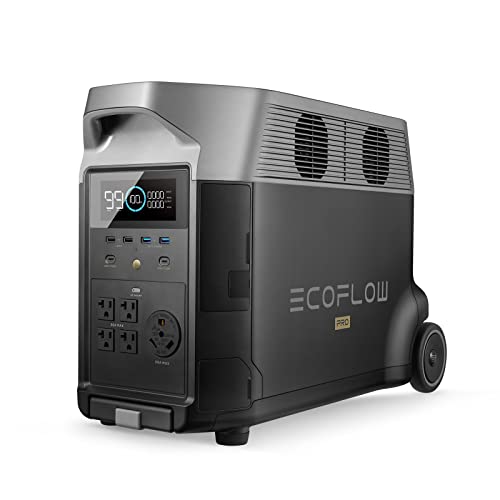
EF ECOFLOW Portable Power Station 3600Wh DELTA Pro, 120V AC Outlets x 5, 3600W, 2.7H Fast Charge, Lifepo4 Power Station, Solar Generator for Home Use, Power Outage, Camping, RV, Emergencies : Patio, Lawn & Garden
<strong>Fully recharge the lifepo4 battery in 1.8 hrs with 240V outlets(3000W), 2.7 hrs with 1800W wall outlets or solar charged in 2.8 hours with 4*400W solar panels</strong> thanks to the industry-l
Check Price on AmazonRecommended Products
Photovoltaics: Design and Installation Manual: Solar Energy International
It also includes chapters on sizing photovoltaic systems, analyzing sites and installing PV systems, as well as detailed appendices on PV system maintenance, troubleshooting and solar insolation data
Enphase IQ8M Microinverter for 260-460 Watt Solar Panels - Works with Grid Tied and Off Grid Solar PV Systems - Compatible with Batteries - IQ8M-72-2-US 240V - UL Listed for Safety : Patio, Lawn & Garden
Amazon.com: Enphase IQ8M Microinverter for 260-460 Watt Solar Panels - Works with Grid Tied and Off Grid Solar PV Systems - Compatible with Batteries - IQ8M-72-2-US 240V - UL Listed for Safety : Patio
EF ECOFLOW Portable Power Station 3600Wh DELTA Pro, 120V AC Outlets x 5, 3600W, 2.7H Fast Charge, Lifepo4 Power Station, Solar Generator for Home Use, Power Outage, Camping, RV, Emergencies : Patio, Lawn & Garden
<strong>Fully recharge the lifepo4 battery in 1.8 hrs with 240V outlets(3000W), 2.7 hrs with 1800W wall outlets or solar charged in 2.8 hours with 4*400W solar panels</strong> thanks to the industry-l