
Solar in Arkansas: Costs, Incentives & Top Installers (2026)
Arkansas homeowners are asking a simple question: does solar in Arkansas pencil out? With 4.6–5.0 peak sun hours per day across much of the state (NREL PVWatts) and residential electricity prices averaging roughly 11–13¢/kWh in recent years (U.S. EIA, 2024), the math can work—especially with the 30% federal tax credit in place through 2032.
Below, we dig into Arkansas solar resource, costs, incentives, installers, and realistic payback—backed by data and practical guidance for going solar in 2026.
By the numbers: Arkansas solar snapshot
- Solar resource: ~4.6–5.0 peak sun hours/day; annual production 1,350–1,550 kWh per kWdc (NREL PVWatts, Typical Meteorological Year)
- Typical system size: 6–10 kW for single-family homes
- Installed cost: about $2.60–$3.40 per watt before incentives (LBNL Tracking the Sun; regional installer quotes)
- Federal tax credit: 30% of project cost through 2032 (U.S. Treasury/IRS; Inflation Reduction Act)
- Net metering: available statewide; crediting rules and rates vary by utility and may evolve (Arkansas PSC; DSIRE)
- Payback: often 9–15 years, depending on rates, net metering, and financing assumptions
Solar Electricity Handbook - 2023 Edition: A simple, practical guide to solar energy – designing and installing solar photovoltaic systems: Boxwell, Michael
Solar Electricity Handbook - 2023 Edition: <strong>A simple, practical guide to solar energy – designing and installing solar photovoltaic systems</strong> [Boxwell, Michael] on Amazon.com. *FREE* shi
Check Price on AmazonArkansas solar energy potential: sun hours, irradiance, and climate factors
Arkansas sits in a favorable solar belt. NREL’s irradiance maps and PVWatts modeling indicate:
- Little Rock: ~4.9 peak sun hours/day; ~1,450–1,500 kWh per kWdc annually
- Fayetteville: ~4.7–4.8 peak sun hours/day; ~1,380–1,450 kWh per kWdc annually
- Jonesboro: ~4.8–4.9 peak sun hours/day; ~1,420–1,500 kWh per kWdc annually
- Texarkana: ~5.0 peak sun hours/day; ~1,500–1,550 kWh per kWdc annually
What this means in practice: a 7 kWdc rooftop array in Little Rock typically generates ~10,000–10,500 kWh per year—enough to offset a large share of a typical home’s annual consumption when paired with net metering.
Climate considerations for Arkansas:
- Heat and humidity: High summer temperatures reduce photovoltaic (PV) efficiency slightly. Look for panels with strong temperature coefficients (−0.30%/°C to −0.35%/°C is better than −0.40%/°C).
- Hail and severe weather: Quality modules meet IEC 61215 hail-impact standards (1-inch ice at ~23 m/s). In hail-prone areas, consider panels with enhanced glass and racking rated for local wind speeds per ASCE 7-16. Insurers in Arkansas generally cover roof-mounted PV as part of dwelling coverage—confirm terms and deductibles.
- Shading and trees: The Ozarks and mature tree canopies can reduce output. Ensure your installer runs a shade analysis (using tools like Solmetric SunEye or Aurora) and positions arrays to achieve >80–85% solar access.
Solar in Arkansas: costs and price-per-watt breakdown
Installed residential solar prices in Arkansas typically land around $2.60–$3.40 per watt (pre-incentive) in 2026, based on regional quotes and recent national datasets from Lawrence Berkeley National Laboratory’s Tracking the Sun. That means:
- 6 kW system: ~$15,600–$20,400 before incentives; ~$10,920–$14,280 after the 30% federal ITC
- 7.5 kW system: ~$19,500–$25,500 before; ~$13,650–$17,850 after ITC
- 10 kW system: ~$26,000–$34,000 before; ~$18,200–$23,800 after ITC
What drives the price-per-watt:
- Hardware (modules, inverters, racking): ~35–45% of total cost
- Labor and electrical balance-of-system (BOS): ~15–25%
- Soft costs (design, permitting, interconnection, overhead, sales): ~30–40%
Equipment choices matter. High-efficiency modules, microinverters or DC optimizers, and premium all-black aesthetics add cost but can improve energy yield on complex roofs. For cost-per-watt optimization, compare:
- Panels: standard mono PERC vs. high-efficiency TOPCon/heterojunction; 21–23% module efficiency options can reduce array footprint
- Inverters: string + optimizers (e.g., DC optimizers) vs. microinverters; microinverters excel on multi-plane roofs with variable shading
- Racking: rail vs. rail-less systems; both can be reliable when installed to spec
For a deeper look at national pricing patterns and ways to save on soft costs, see our Solar Panel Cost Guide: How Much You'll Pay & How to Save (/renewable-energy/solar-panel-cost-guide).
Arkansas solar incentives: tax credits, rebates, net metering, and SRECs
State-level incentives in Arkansas are fairly limited, but the combination of federal support and net metering still moves the needle.
- State tax credits: Arkansas does not currently offer a statewide personal income tax credit for residential solar (DSIRE). Check for any local or utility pilots.
- Sales and property tax: Arkansas has no broad statewide sales tax exemption or property tax exclusion specifically for residential solar as of recent DSIRE summaries. Because PV can increase appraised value, confirm treatment with your county assessor.
- Utility rebates: Some utilities periodically offer limited-time rebates for solar water heating or energy efficiency measures. PV-specific rebates are uncommon; verify with Entergy Arkansas, SWEPCO, or your electric cooperative.
- Net metering: Arkansas provides net metering under Arkansas Public Service Commission (APSC) rules. Credit rates, monthly carryover, and true-up policies can vary by utility and have been the subject of recent proceedings. Many customers historically received retail-rate bill credits with kWh carryover; however, new customers may be placed on net billing or alternative credit structures closer to a utility’s avoided cost. Always review your utility’s current net metering tariff. For fundamentals on how crediting works, see Net Metering Explained: How Solar Owners Get Credit for Excess Power (/sustainability-policy/net-metering-explained-credit-for-excess-power).
- SRECs: Arkansas does not have a solar carve-out in a statewide renewable portfolio standard that would create a robust Solar Renewable Energy Credit (SREC) market. Most Arkansas homeowners cannot monetize SRECs locally.
- Third-party ownership: Arkansas law has evolved to enable certain third-party financing structures and leasing; availability depends on your utility territory and contract terms (APSC; Act 464 of 2019). Vet any lease/PPA carefully against cash or loan options.
Commercial note: Some Arkansas jurisdictions support Commercial PACE (C-PACE), enabling long-term financing repaid via property assessments. This is typically not available for single-family residential.
The 30% Federal ITC and how it applies in Arkansas
The Investment Tax Credit (ITC) remains the single most valuable incentive for solar in Arkansas.
- Credit amount: 30% of total installed cost for residential solar through 2032; steps down in 2033–2034 (U.S. Treasury/IRS; Inflation Reduction Act)
- Eligible costs: Panels, inverters, balance-of-system, permitting fees, sales tax, labor, and standalone batteries ≥3 kWh installed from 2023 onward
- Claiming: The ITC is a nonrefundable personal income tax credit; you need sufficient tax liability to use it, but you can carry unused credit forward
- Ownership: Homeowners must own the system (cash or loan). Lease/PPA customers cannot claim the ITC; the lessor takes the credit
Learn the mechanics and filing steps in our Solar Tax Credit Explained: Save on Solar with the Federal ITC (/renewable-energy/solar-tax-credit-explained-federal-itc).
Best solar installers and companies serving Arkansas
Arkansas has a mix of homegrown installers and regional/national firms. We recommend soliciting at least three proposals and comparing equipment, warranties, and production estimates on a normalized $/W and $/kWh basis.
Reputable companies active in Arkansas include (verify current service areas):
- Seal Solar (North Little Rock): Residential and commercial PV and batteries; known for custom design and local permitting expertise
- Shine Solar (Rogers): Residential-focused; wide Arkansas coverage; offers battery options
- ADT Solar (formerly Sunpro): National provider with Arkansas presence; tier-1 equipment and strong workmanship warranties
- Today’s Power, Inc.: Utility-affiliated developer focusing on commercial/co-op projects; a resource for businesses and ag operations
- Regional EPCs/SunPower-certified dealers: Several SunPower and premium-module dealers serve Arkansas from neighboring states; good option for high-efficiency, smaller-roof projects
What to look for:
- Credentials: NABCEP-certified PV Installation Professional on staff; Arkansas contractor license; OSHA training
- Equipment transparency: Module and inverter make/model, data sheets, temperature coefficients, degradation rates, and UL/IEEE certifications
- Warranties: At least 10-year workmanship. Module performance warranties of 84–92% at year 25 are now common; inverters 10–25 years depending on model
- Production guarantee: Clear modeling assumptions (NREL PVWatts or equivalent), shading reports, and guaranteed kWh where offered
- Service: Local references, storm-response protocols, and monitoring platform support
ROI and payback period for solar in Arkansas
A realistic payback depends on four main variables: installed cost, annual production, electricity rates, and your net metering arrangement.
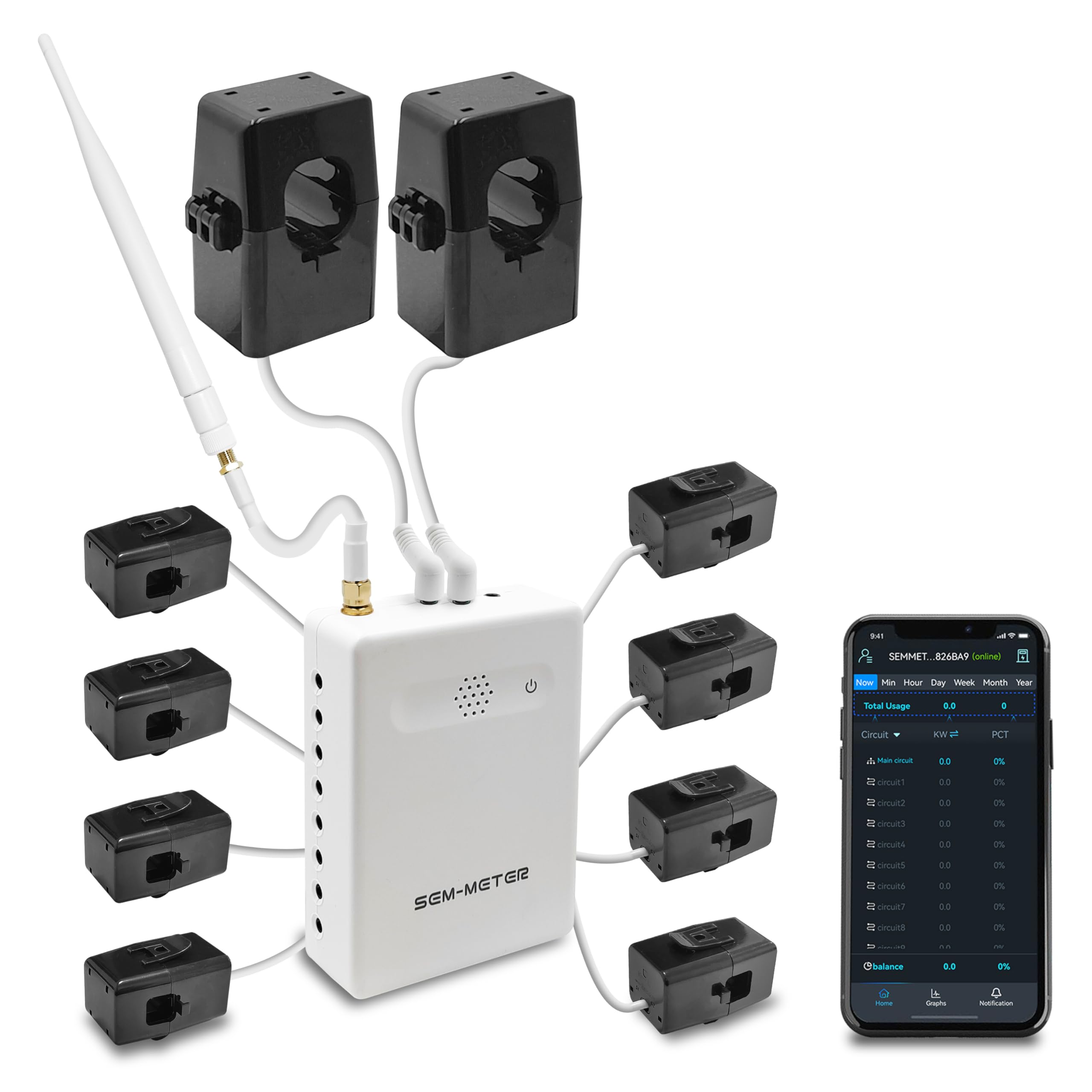
Smart Home Energy Monitor with 8 50A Circuit Level Sensors | Vue - Real Time Electricity Monitor/Meter | Solar/Net Metering - Amazon.com
View on AmazonExample scenario (owner-occupied home in Little Rock):
- System: 7 kWdc, $2.85/W installed = $19,950 before incentives
- Federal ITC: −$5,985 (30%); net cost = $13,965
- Annual production: ~10,300 kWh/year (NREL PVWatts)
- Retail electricity rate: $0.12/kWh (EIA AR average; adjust for your bill)
- First-year bill savings under retail-rate net metering: ~$1,236
- Simple payback: ~11.3 years; 25-year savings: $18,000–$28,000 depending on rate escalation (1.5–3%/yr) and maintenance
If your utility uses net billing or credits exports below the retail rate, payback lengthens. Two bookends:
- Retail-rate net metering with annual kWh carryover: ~9–13 years
- Net billing with avoided-cost export credits and 60–80% self-consumption: ~11–16 years
Financing effects:
- Cash maximizes lifetime savings, but low-interest secured loans (e.g., HELOCs) can make positive cash flow possible
- Be cautious with long-term unsecured loans at double-digit APRs; total interest can erode savings
Degradation and maintenance:
- Modern panels degrade ~0.25–0.5%/year (manufacturer data sheets). Budget $150–$300 for a mid-life inverter component service if using string inverters; microinverters/optimizers have longer warranties but more units
Batteries in Arkansas: economics and resilience
Batteries improve resilience and can optimize solar self-consumption, but payback depends on rates and incentives. With flat residential rates common in Arkansas, batteries are primarily a backup investment rather than a bill-cutting tool—unless your utility offers time-of-use pricing or demand charges.
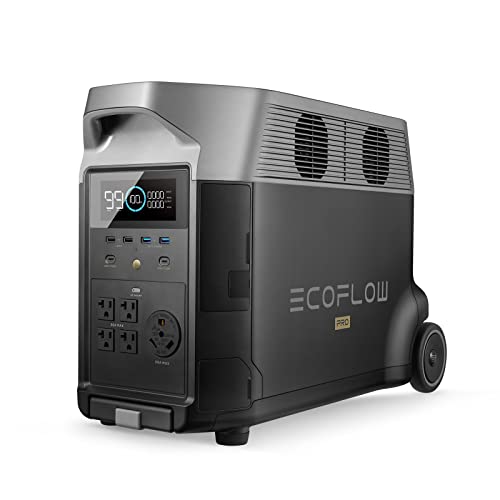
EF ECOFLOW Portable Power Station 3600Wh DELTA Pro, 120V AC Outlets x 5, 3600W, 2.7H Fast Charge, Lifepo4 Power Station, Solar Generator for Home Use, Power Outage, Camping, RV, Emergencies : Patio, Lawn & Garden
<strong>Fully recharge the lifepo4 battery in 1.8 hrs with 240V outlets(3000W), 2.7 hrs with 1800W wall outlets or solar charged in 2.8 hours with 4*400W solar panels</strong> thanks to the industry-l
Check Price on Amazon- Backup value: A 10–13.5 kWh home battery can keep refrigerators, lighting, communications, and a mini-split running during outages. Standalone batteries qualify for the 30% ITC.
- Product picks: Based on round-trip efficiency, warranty cycles, and integration with microinverters, options like Tesla Powerwall 3 and Enphase IQ Battery 10T represent strong value for residential installations. For details on specs, cost, and installer selection, see our Tesla Powerwall buyer’s guide (/green-business/tesla-powerwall-buyers-guide-cost-installation-alternatives).
Arkansas-specific permitting, HOA rules, and interconnection
Permitting
- Jurisdiction: City or county building departments manage structural/electrical permits; Arkansas follows International Residential Code (IRC) and National Electrical Code (NEC) with state-specific amendments
- Timeline: 1–4 weeks typically, faster in jurisdictions familiar with PV; combined permit packets (structural letter, one-line diagram, spec sheets) speed approvals
Interconnection
- Process: Apply under your utility’s net metering/interconnection tariff with a one-line diagram, site plan, equipment spec sheets (UL 1741 SA/IEEE 1547 compliance), and proof of liability insurance if required
- Size caps: Residential net metering systems are commonly capped at up to 25 kWac; larger systems may qualify for non-residential or special tariffs (APSC rules; check your utility)
- Utility review: 10–30 business days is typical for residential; meter swap and Permission to Operate (PTO) follow a successful inspection and installed anti-islanding protection via certified inverters
HOAs and solar access
- Solar access easements: Arkansas allows voluntary solar easements between property owners to secure sunlight rights (DSIRE)
- HOA rules: Arkansas lacks a broad statewide “solar rights” statute that fully preempts HOA restrictions. Many HOAs will approve rooftop PV subject to design guidelines (conduit placement, flush mounting, color). Review covenants, conditions, and restrictions (CCRs) and secure written architectural approval to avoid delays
Roof readiness
- Age and structure: If your roof is >15 years old or near end-of-life, consider reroofing under the array footprint before installation; it’s cheaper than removing/reinstalling PV later
- Wind/hail: Ask for stamped structural letters where required and racking engineered for local wind speeds. Many premium modules carry enhanced hail ratings; confirm on the data sheet
Choosing equipment for Arkansas roofs
Performance and durability are paramount in Arkansas heat and storms. Consider:
- High-efficiency modules (21%+), low temperature coefficients, robust wind/hail ratings. Products like REC Alpha Pure-R and Qcells Q.TRON BLK balance efficiency with strong warranties
- Inverter architecture that fits your roof. Microinverters (e.g., Enphase IQ8) excel on complex roofs with shade; DC optimizers with a central inverter can minimize upfront cost on simple arrays
- Monitoring apps that show per-module output, making it easier to spot shading or maintenance issues
For a technology primer, see Solar Panel Technology in 2026: A Complete Guide to Modern Photovoltaics (/renewable-energy/solar-panel-technology-2026-complete-guide).
Practical tips to lower your Arkansas solar quote
- Bundle reroof + solar: Installers often discount mobilization when combining projects
- Standardize components: Commodity TOPCon modules and widely available racking often beat boutique brands on price with negligible output loss
- Compare $/kWh, not just $/W: A slightly pricier, higher-yield design can deliver cheaper lifetime energy
- Ask about permitting/interconnection fees upfront: Arkansas utilities and jurisdictions vary; transparency prevents surprises
What this means for homeowners, businesses, and policymakers
- Homeowners: Solar in Arkansas can offset 60–100% of annual usage with right-sized arrays and favorable net metering, delivering 9–15 year paybacks for many households. Batteries add resilience but are a lifestyle choice unless time-of-use rates apply
- Businesses and farms: Larger roofs and daytime loads improve economics; C-PACE and accelerated depreciation (MACRS) can materially shorten payback for eligible entities
- Policymakers and utilities: Clear, stable net metering rules and streamlined permitting/interconnection reduce soft costs that now make up 30–40% of system price. Adoption of instant online permitting can lower residential prices by $0.10–$0.20/W (NREL/DOE SolarAPP+ studies)
Where Arkansas solar is heading
Three trends to watch through 2030:
- Higher-efficiency modules: TOPCon and heterojunction cells continue raising module efficiencies into the 22–24% range, shrinking array footprints
- Domestic manufacturing: Expanded U.S. production of modules, cells, and inverters (spurred by IRA incentives) could reduce supply-chain risk and stabilize pricing in the Southeast
- Smarter interconnection: IEEE 1547-2018 compliant inverters enable grid-support functions (volt/VAR, frequency-watt) that ease higher solar penetration without costly grid upgrades
FAQ: common questions about going solar in Arkansas
Q: How much does a typical solar system cost in Arkansas in 2026? A: Most homeowners see quotes in the $2.60–$3.40/W range before incentives. That’s roughly $15,600–$20,400 for a 6 kW system and $26,000–$34,000 for 10 kW, before the 30% ITC.
Q: What’s the payback period for solar in Arkansas? A: Usually 9–15 years. Retail-rate net metering and higher electricity rates shorten payback; net billing at lower export credits extends it. Production, shading, and financing also matter.
Q: Does Arkansas have state solar incentives? A: Arkansas does not currently offer a broad statewide personal income tax credit or sales/property tax exemption for residential PV. Net metering is available, and the 30% federal ITC remains the main driver.
Q: Can I get paid for SRECs in Arkansas? A: There’s no active, state-supported SREC market for most residential customers. Some third-party programs exist in other states but typically aren’t accessible for Arkansas-hosted systems.
Q: What net metering rate will I get? A: It varies by utility and interconnection date. Some customers receive bill credits at or near the retail rate with kWh carryover; others are on net billing with export credits closer to avoided cost. Check your utility’s current tariff and any grandfathering provisions. See Net Metering Explained for the mechanics (/sustainability-policy/net-metering-explained-credit-for-excess-power).
Q: Are batteries worth it in Arkansas? A: For backup during storms and outages—yes, many homeowners value them. For bill savings alone under flat rates, paybacks are longer. Standalone batteries qualify for the 30% ITC.
Q: How long does it take to install solar? A: From signed contract to Permission to Operate, expect 6–12 weeks: 1–4 weeks for permitting, 1–2 days for installation, then utility inspection/meter swap in 1–4 weeks.
Q: What about hail and tornadoes? A: Tier-1 modules are hail-tested; racking is engineered for local wind loads. No rooftop system is invulnerable to extreme events, but proper engineering, quality hardware, and insurance reduce risk. Ask your installer about module hail ratings and wind design.
Q: Will my HOA allow solar? A: Many Arkansas HOAs do allow solar with design conditions. Arkansas permits solar access easements but lacks a statewide statute that universally preempts HOA restrictions; review your CCRs and secure written approval.
Q: Should I lease or buy? A: Buying (cash or loan) captures the ITC and maximizes long-term savings. Leases/PPAs can work for low-upfront-cost needs but often yield lower lifetime value; compare total 20–25 year costs.
Q: Which panels and inverters perform best in Arkansas heat? A: Look for modules with low temperature coefficients (−0.30 to −0.35%/°C) and robust warranties. High-efficiency options like REC Alpha Pure-R and Qcells Q.TRON BLK pair well with microinverters such as Enphase IQ8 on complex roofs.
If you’re new to solar technology, our Solar Power Explained primer covers how panels work, costs, and climate benefits (/renewable-energy/solar-power-explained-how-it-works-costs-and-climate-benefits).
Recommended Products
Solar Electricity Handbook - 2023 Edition: A simple, practical guide to solar energy – designing and installing solar photovoltaic systems: Boxwell, Michael
Solar Electricity Handbook - 2023 Edition: <strong>A simple, practical guide to solar energy – designing and installing solar photovoltaic systems</strong> [Boxwell, Michael] on Amazon.com. *FREE* shi
EF ECOFLOW Portable Power Station 3600Wh DELTA Pro, 120V AC Outlets x 5, 3600W, 2.7H Fast Charge, Lifepo4 Power Station, Solar Generator for Home Use, Power Outage, Camping, RV, Emergencies : Patio, Lawn & Garden
<strong>Fully recharge the lifepo4 battery in 1.8 hrs with 240V outlets(3000W), 2.7 hrs with 1800W wall outlets or solar charged in 2.8 hours with 4*400W solar panels</strong> thanks to the industry-l
Smart Home Energy Monitor with 8 50A Circuit Level Sensors | Vue - Real Time Electricity Monitor/Meter | Solar/Net Metering - Amazon.com
Lightweight commercial 3-phase option available as a separate bundle. APPLICATION MONITORING WITHOUT GUISEWORK <strong>Up to sixteen (16) 50A sensors to accurately monitor your air conditioner, oven,