
Tesla Powerwall in Arkansas: Cost, Availability & Is It Worth It?

Arkansas homeowners are asking whether a Tesla Powerwall in Arkansas delivers real value—especially after another year of severe storms and grid disruptions across the South. With Tesla reporting more than 500,000 Powerwalls installed globally by 2023 and the federal 30% clean energy tax credit now covering standalone batteries, interest is surging. Here’s the data-driven guide to costs, incentives, payback, and performance in Arkansas.
Tesla Powerwall in Arkansas: specs, capacity, and how it works
The Tesla Powerwall is a lithium-ion home battery designed to store energy—either from the grid or a rooftop solar array—and deliver it when you need it most. It can provide backup power during outages, shift your energy use to lower-cost hours under time-of-use (TOU) rates, and increase self-consumption of solar.
Solar Electricity Handbook - 2023 Edition: A simple, practical guide to solar energy – designing and installing solar photovoltaic systems: Boxwell, Michael
Solar Electricity Handbook - 2023 Edition: <strong>A simple, practical guide to solar energy – designing and installing solar photovoltaic systems</strong> [Boxwell, Michael] on Amazon.com. *FREE* shi
Check Price on AmazonKey concepts, defined:
- Usable capacity: The amount of energy you can actually draw. Tesla lists 13.5 kWh usable capacity per Powerwall. In simple terms, that’s about enough to run a 1,000-watt space heater for 13.5 hours, or a refrigerator for several days.
- Power (kW): How much the battery can deliver at once. Power determines whether you can start large appliances like central AC or a well pump.
- Round-trip efficiency: The percentage of energy you get back after charging and discharging. Tesla’s round-trip efficiency is roughly 90% (manufacturer spec), meaning you lose ~10% to conversion and heat.
- Capacity factor for batteries: Not the same as for wind/solar—it reflects how frequently a battery cycles its stored energy over time. Residential batteries typically cycle partially once per day under TOU optimization, more during frequent outages.
Models and what matters in Arkansas:
- Powerwall 2 (AC-coupled) pairs with virtually any existing solar inverter and is common in retrofits.
- Powerwall 3 (hybrid) integrates a solar inverter and offers higher power output than Powerwall 2. Tesla lists 13.5 kWh usable capacity and a significantly higher continuous output, which matters for whole-home backup and large motor loads.
- Warranty: 10 years, with at least 70% capacity retention for typical residential use, per Tesla’s warranty terms.
For storm-prone Arkansas—tornadoes in spring, thunderstorms in summer, and occasional ice events—higher instantaneous power (kW) helps the battery start air conditioners and pumps. Multiple Powerwalls can be stacked to increase both energy (kWh) and power (kW).
Powerwall pricing in Arkansas, including installation costs
Installed costs in Arkansas are generally lower than coastal markets but vary with site complexity:
- Single Powerwall turnkey: $11,000–$14,000 before incentives (equipment, Gateway/Backup Switch, labor, permits). Arkansas’ labor and permitting tend to be mid-to-low nationally, but service upgrades and long wire runs increase costs.
- Each additional Powerwall: Typically $7,500–$9,500 incremental before incentives due to shared labor and balance-of-system savings.
- Whole-home backup costs more: Expect $1,000–$3,000 extra if you need a main panel upgrade, load-shedding hardware, or trenching for a detached garage install.
Federal incentive:
- 30% Investment Tax Credit (ITC): Available for standalone batteries placed in service through at least 2032 under the Inflation Reduction Act. A $12,500 install drops to $8,750 net after the federal credit. Consult a tax professional to confirm eligibility.
Home energy upgrades to budget for:
- Main panel/service upgrade (if older 100A service): $1,500–$3,500 typical.
- Roof/structural work (for solar pairing): Varies; not required for battery-only installs.
- Utility meter swap or relay: Often included in your installer’s scope.
If you’re pairing with solar, see local pricing ranges and installer options in our state guide: Solar in Arkansas: Costs, Incentives & Top Installers (2026).
Arkansas battery storage incentives: state rebates, SGIP, utility programs
- Federal ITC (30%): The main driver in Arkansas for residential batteries, now available even without solar attached.
- State rebates: As of the latest program updates, Arkansas does not offer a statewide battery rebate for homeowners. Check DSIRE (Database of State Incentives for Renewables & Efficiency) for any new local or pilot offerings.
- SGIP: California’s Self-Generation Incentive Program does not apply in Arkansas.
- Utility rebates/pilots: Arkansas utilities periodically test demand response or battery pilots for specific customers. Availability changes; ask your installer to check current Entergy Arkansas, SWEPCO, and electric cooperative programs when you quote.
- Financing: Some installers offer low-interest loans. Local PACE availability is limited in Arkansas; confirm with your city/county.
Bottom line: In Arkansas, your biggest incentive is the federal ITC coupled with any bill savings under TOU or demand-based rates (if available from your utility).
How the Powerwall pairs with solar in Arkansas: backup vs. self-consumption
There are two primary strategies:
Backup-first: Keep the battery mostly charged to ride through outages. This is popular in Arkansas because of severe weather. With a 13.5 kWh battery, you can run essentials—refrigerator, lights, Wi‑Fi, outlets, a gas furnace blower, and a small window AC—typically 24–48 hours if you conserve. Whole-home backup or running central AC in summer usually requires 2–3 Powerwalls.
Self-consumption/time-shifting: Charge from solar midday and discharge evenings to reduce grid imports. If your net metering credit is less than your retail rate or you’re on a TOU/demand rate, this increases savings. The app’s modes—Self-Powered, Time-Based Control, and Storm Watch—let you prioritize economics or resilience based on season and weather alerts.
Arkansas net metering context: The Arkansas Public Service Commission has historically supported net metering for residential solar, and utilities maintain specific tariffs and interconnection rules that can affect battery control strategies. If you receive near-retail credit for exports, batteries save relatively less on the bill and are primarily about backup and demand management; if export crediting is lower or you’re on TOU, batteries can materially improve solar economics. Always verify your current tariff with your utility (Entergy Arkansas, SWEPCO, or your cooperative).
For a deeper primer on hardware, system sizing, and operational modes, see our Tesla Powerwall: Complete Buyer's Guide — Cost, Installation & Alternatives.
Arkansas utility rate structures and how Powerwall saves with time-of-use
Average residential electricity prices in Arkansas remain below the U.S. average—roughly in the 12–13¢/kWh range in 2024, per the U.S. Energy Information Administration (EIA). Lower prices mean bill savings from batteries are often modest unless TOU or demand charges create spreads you can arbitrage.
Time-of-Use (TOU): Entergy Arkansas and SWEPCO have offered optional TOU structures or pilots for residential customers. Peak prices during late afternoon/evening can be substantially higher than off-peak, especially in summer. Some electric cooperatives are rolling out TOU or demand-based residential rates. Check your utility’s current tariff sheet.
Demand charges: A few utilities apply a monthly fee based on your highest 15–60-minute demand (kW). A Powerwall can cap short peaks by discharging during high-load intervals (e.g., when AC and oven overlap), reducing demand charges. Savings depend on the utility formula and your load profile.
Illustrative TOU savings math (example only):
- Off-peak price: 8¢/kWh; on-peak price: 20¢/kWh; spread = 12¢/kWh.
- Battery round-trip efficiency ~90% means you must charge ~1.11 kWh off-peak to deliver 1 kWh on-peak.
- Arbitrage margin ≈ (on-peak – off-peak) × 1 kWh – off-peak losses ≈ 12¢ – (0.11 × 8¢) ≈ 11.1¢/kWh.
- If you shift 8 kWh/day, that’s ≈ $0.89/day or ≈ $325/year. Over 10 years, ≈ $3,250 (ignoring rate escalation). This is meaningful but rarely enough alone to justify a battery; outages and solar self-consumption/ITC typically tip the scales.
On flat rates near 12–13¢/kWh and retail-rate net metering, a Powerwall’s economic value is primarily resilience. On TOU/demand rates or with reduced net metering credits, it becomes an energy management tool with a clearer payback.
By the numbers: Arkansas and the Powerwall
- 13.5 kWh usable per Powerwall (Tesla spec). Two units = 27 kWh; three = 40.5 kWh.
- ~90% round-trip efficiency (Tesla). Expect ~10% losses charging/discharging.
- 10-year warranty with capacity retention. Many systems continue operating beyond warranty with reduced capacity.
- Average Arkansas residential price: ~12–13¢/kWh (EIA, 2024).
- U.S. outage duration averaged several hours annually in recent years (EIA reliability data), with the South seeing frequent weather-related events. Batteries are primarily resilience assets in this context.
Powerwall availability and certified installers in Arkansas
- Availability: Tesla-direct and third-party Tesla Certified Installers serve most Arkansas ZIP codes. Typical timelines are 4–10 weeks from signed contract to commissioning, largely dependent on permitting and utility interconnection approval.
- Site assessment: Installers evaluate panel capacity, main service rating (100A/150A/200A), critical loads, Wi‑Fi/cellular connectivity for the Gateway, and backup strategy (whole-home vs. essential loads).
- Permitting/interconnection: Expect electrical permit approval from your AHJ (Authority Having Jurisdiction) and utility approval. For solar-paired systems, net metering and/or interconnection applications add steps and may extend timelines.
- Storm readiness: Ask your installer to enable Storm Watch and verify backup circuits before tornado season.
Tip: If your main panel is cramped, a smart load management panel can avoid a costly service upgrade. Based on Arkansas cost benchmarks, a SPAN Smart Panel can be competitive when it replaces both a service upgrade and a subpanel while giving you app-based load shedding during outages.
Alternatives to Powerwall available in Arkansas: Enphase, LG, Generac
Arkansas homeowners have strong alternatives, each with tradeoffs:
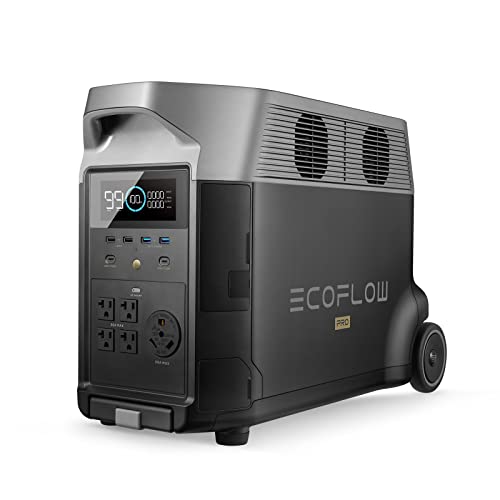
EF ECOFLOW Portable Power Station 3600Wh DELTA Pro, 120V AC Outlets x 5, 3600W, 2.7H Fast Charge, Lifepo4 Power Station, Solar Generator for Home Use, Power Outage, Camping, RV, Emergencies : Patio, Lawn & Garden
<strong>Fully recharge the lifepo4 battery in 1.8 hrs with 240V outlets(3000W), 2.7 hrs with 1800W wall outlets or solar charged in 2.8 hours with 4*400W solar panels</strong> thanks to the industry-l
Check Price on AmazonEnphase IQ Battery (5P/10/3T series): Modular lithium iron phosphate (LFP) systems that pair seamlessly with Enphase microinverters. Pros: high reliability, strong app, granular solar/load visibility, excellent with existing Enphase solar. Consider the Enphase IQ Battery 5P for smaller homes or to right-size in 5 kWh increments.
LG Energy Solution (RESU Prime 10H/16H): 10–16 kWh LFP batteries with good energy density. Often chosen for DC-coupled new solar installs. Warranty is competitive.
Generac PWRcell: Modular DC-coupled system sized from ~9–18 kWh per cabinet; integrates well when planned alongside new solar. Generac also offers automatic standby generators; hybrids (battery + generator) are popular in rural Arkansas where outages can last multiple days.
Portable power stations: For renters or cabins, a high-capacity unit like an EcoFlow DELTA Pro plus a manual transfer switch can back up essentials at a fraction of whole-home costs. Not a substitute for a code-compliant, permanently installed system, but useful where installation isn’t feasible.
How to choose:
- If you already have Enphase microinverters: Enphase batteries keep systems in one ecosystem.
- If you want the simplest app experience and high power output for whole-home backup: Tesla Powerwall 3 stands out.
- If you’re planning DC-coupled new solar with high capacity: Consider LG or Generac sizing flexibility.
Practical sizing for Arkansas homes
- 1 Powerwall (13.5 kWh): Essential-load backup; runs fridge, lights, outlets, gas furnace blower, small window AC, or mini-split. Good for short outages.
- 2 Powerwalls (27 kWh): Better for hot, humid summers; can support a typical 3–4 ton central AC for shorter duty cycles and more overnight resilience.
- 3+ Powerwalls (40.5+ kWh): Whole-home comfort for extended outages, multiple HVAC zones, or well pumps plus septic.

Emporia Gen 2 Smart Home Energy Monitor with 16 50A Circuit Level Sensors | Real Time Electricity Monitor/Meter | Solar/Net Metering - Amazon.com
View on AmazonCritically, the required number isn’t just square footage; it’s your peak loads and duty cycles. An energy monitor such as the Emporia Vue or your utility’s smart meter data can inform sizing. Installers often conduct a load analysis to avoid under- or over-sizing.
Is a Tesla Powerwall worth it in Arkansas?
- Best cases for ROI: Homes on TOU or demand rates, reduced net metering credits, or frequent short outages. Pairing with solar plus the 30% ITC improves economics.
- Resilience value: In neighborhoods with repeated storm outages, the value of refrigeration, medical devices, sump/well pumps, and summer cooling can outweigh pure bill savings.
- Low-rate caveat: At ~12–13¢/kWh flat rates with retail net metering, bill savings alone rarely pay for a battery. Consider it a resilience investment with secondary savings.
A common hybrid approach in Arkansas is a solar + 2× Powerwall system configured for Time-Based Control most days and Storm Watch during severe weather. Homes on rural co-ops may add a small generator for multi-day events and let the Powerwalls handle 95% of reliability needs while the generator covers the rare marathon outage.
FAQ: Tesla Powerwall in Arkansas
Q: How many Powerwalls do I need for a 2,500 sq. ft. Arkansas home? A: Most homes that want essential backup and occasional central AC start at 2 units. If you have electric resistance backup heat or a large well pump, plan for 2–3 units and/or targeted load management.
Q: Will a Powerwall run my central air during a summer outage? A: Often yes, especially with Powerwall 3’s higher output and two or more units. The ability to start and run a 3–4 ton AC depends on total household load and soft-start features. Your installer can test compressor LRA (locked-rotor amps) and design accordingly.
Q: Can I claim the 30% federal tax credit without solar? A: Yes. Under the IRA, standalone residential storage qualifies for the ITC. Always confirm with a tax professional.
Q: Does Arkansas offer a state battery rebate? A: No statewide rebate currently. Look for periodic utility pilots and verify with your installer.
Q: How long will one Powerwall last in an outage? A: With essential loads only, 12–48 hours is common. Running central AC or electric heat will shorten runtime significantly.
Q: What about net metering and batteries in Arkansas? A: Batteries typically operate behind the meter and can charge from solar or the grid. Your exact export credit and metering rules depend on your utility’s tariff and interconnection agreement. Check Entergy Arkansas, SWEPCO, or your cooperative’s latest filings.
Q: Powerwall 2 vs. Powerwall 3—which should I pick in Arkansas? A: Powerwall 2 is great for retrofits with an existing solar inverter. Powerwall 3 integrates the solar inverter, offers higher power output, and can simplify new installs—useful for whole-home backup and AC-heavy summers.
Q: Can I add more Powerwalls later? A: Yes. Plan conduit and wall space up front to minimize future labor.
Q: Do I need a critical loads subpanel? A: If you want to back up only essentials, yes. For whole-home backup, installers may use a service-side transfer switch and load management instead of a dedicated subpanel. Smart panels like SPAN can provide app-based control per circuit.
Q: How long does installation take in Arkansas? A: Physical installation is usually 1–2 days. Permitting and utility approvals can extend total timelines to 4–10 weeks.
What this means for Arkansas homeowners
- If resilience is your priority, a Tesla Powerwall is a strong fit—especially with the 30% ITC lowering net costs.
- If you’re on TOU/demand rates or your export credit is below retail, a battery can materially lift solar savings by shifting solar to evening peaks and shaving demand spikes.
- Get multiple quotes and ask installers to model savings with your utility’s actual tariff, including round-trip efficiency and seasonal rates. Ask for a version with/without solar export assumptions to see the incremental value of storage.
Arkansas is entering a period where batteries are about both comfort and control. With improving hardware, smarter load management, and evolving utility tariffs, the Tesla Powerwall—and strong alternatives from Enphase, LG, and Generac—gives Arkansas households more resilience and more choices than ever.
Recommended Products
Solar Electricity Handbook - 2023 Edition: A simple, practical guide to solar energy – designing and installing solar photovoltaic systems: Boxwell, Michael
Solar Electricity Handbook - 2023 Edition: <strong>A simple, practical guide to solar energy – designing and installing solar photovoltaic systems</strong> [Boxwell, Michael] on Amazon.com. *FREE* shi
Emporia Gen 2 Smart Home Energy Monitor with 16 50A Circuit Level Sensors | Real Time Electricity Monitor/Meter | Solar/Net Metering - Amazon.com
See how much electricity your home is using anywhere, anytime. ... <strong>Add individual 50A sensors to your Vue to monitor up to 16 individual circuits</strong> — providing accurate energy use for t
EF ECOFLOW Portable Power Station 3600Wh DELTA Pro, 120V AC Outlets x 5, 3600W, 2.7H Fast Charge, Lifepo4 Power Station, Solar Generator for Home Use, Power Outage, Camping, RV, Emergencies : Patio, Lawn & Garden
<strong>Fully recharge the lifepo4 battery in 1.8 hrs with 240V outlets(3000W), 2.7 hrs with 1800W wall outlets or solar charged in 2.8 hours with 4*400W solar panels</strong> thanks to the industry-l