
Solar in Wyoming: Costs, Incentives & Top Installers (2026)

Wyoming’s wide-open skies aren’t just a postcard—NREL’s solar resource maps show much of the state averages 5.0–5.5 peak sun hours per day, comparable to parts of Colorado and Utah. That strong irradiance, paired with the 30% federal tax credit, makes solar in Wyoming a viable long-term hedge against rising utility costs—even though the state’s electricity rates are among the nation’s lowest. This guide covers costs, incentives, installers, permitting, and expected returns for Wyoming homeowners in 2026.
Sources cited throughout include: NREL PVWatts and NSRDB (solar resource and production), EIA (electric rates and consumption), DSIRE (state incentives and net metering), EPA eGRID (emissions), and utility tariffs from Rocky Mountain Power and Wyoming co-ops.
By the numbers: solar in Wyoming
- Peak sun hours (average): 5.0–5.5 PSH/day (NREL NSRDB)
- Annual production from a 7 kW system: ~9,800–11,500 kWh (NREL PVWatts, fixed-tilt, south-facing)
- Average residential electricity rate: ~11–12¢/kWh in 2025 (EIA Form 861M); U.S. avg: ~16–17¢
- Typical installed price: $2.80–$3.60/W (2026 quotes, regional market data)
- Typical system size: 7–9 kW for detached single-family homes
- Federal clean energy tax credit (ITC): 30% through 2032 (Inflation Reduction Act)
- Net metering: Available at investor-owned utilities; rules vary for co-ops (DSIRE)
- Carbon avoided: ~6–8 metric tons CO₂/year for a 7–8 kW system (EPA eGRID intensity for WY-dominant coal mix)
Solar energy potential in Wyoming: sun hours, irradiance, and climate factors
Wyoming’s high elevation and clear, dry air translate into robust solar resource. According to NREL’s National Solar Radiation Database, most Wyoming locations receive roughly 5.0–5.5 peak sun hours (PSH) per day on average. In practical terms, a well-sited 7 kW rooftop array in Cheyenne, Casper, or Laramie typically produces 9,800–11,500 kWh per year with a south-facing, fixed-tilt design (PVWatts v8 assumptions: 30–35° tilt, minimal shading).

Photovoltaics: Design and Installation Manual: Solar Energy International
It also includes chapters on sizing photovoltaic systems, analyzing sites and installing PV systems, as well as detailed appendices on PV system maintenance, troubleshooting and solar insolation data
Check Price on AmazonClimate considerations:
- Cold boosts efficiency: Photovoltaic (PV) modules operate more efficiently in cold temperatures. Wyoming’s winter cold often offsets short-daylight losses by improving panel voltage and reducing heat-related efficiency drops.
- Snow: Snow events can temporarily reduce output. Steeper roof pitches (30–45°) shed snow faster; a few inches usually melt or slide within days. NREL analyses suggest annual losses from snow in the Mountain West are typically 1–5% depending on tilt and roof orientation.
- Wind: Wyoming is windy. Most Tier-1 PV modules are certified to 2,400–5,400 Pa load ratings; in windy corridors, racking with higher wind ratings and adequate roof attachment schedules is essential. Ask installers about site-specific wind engineering.
What it means for homeowners: Wyoming’s solar resource sits comfortably above the U.S. average. Combined with the 30% federal ITC, the production profile supports respectable paybacks, even with relatively low retail electricity prices.
How much does solar in Wyoming cost in 2026?
Residential solar prices in Wyoming are shaped by a smaller installer base and longer travel distances, which can nudge costs above big metro markets. Recent quotes and regional benchmarks indicate:
- Installed price (turnkey): $2.80–$3.60 per watt (W) before incentives
- Typical 7 kW system: $19,600–$25,200 before incentives
- Typical 9 kW system: $25,200–$32,400 before incentives
Price-per-watt breakdown (indicative ranges):
- Modules (panels): $0.45–$0.85/W (monocrystalline PERC or TOPCon; premium heterojunction higher)
- Inverters: $0.20–$0.45/W (string with optimizers vs. microinverters)
- Racking, balance-of-system, and wiring: $0.25–$0.45/W
- Labor and overhead: $1.00–$1.60/W (crew time, engineering, travel, permitting, margin)
Battery storage (optional):
- Installed: ~$900–$1,300 per kWh of usable capacity in 2026 quotes
- 13.5 kWh unit: ~$12,000–$17,000 before the 30% ITC (storage also qualifies if paired or standalone, ≥3 kWh)
Equipment value picks for Wyoming’s climate and roof types:
- High-efficiency, snow-shedding modules: Based on cold-weather efficiency and snow load ratings, the REC Alpha Pure-R or Qcells Q.TRON BLK M-G2+ offer strong value for residential installations.
- Microinverters for complex roofs: For multi-plane or partially shaded roofs, Enphase IQ8 microinverters provide module-level optimization and rapid-shutdown compliance.
- All-in-one backup: The Tesla Powerwall 3 integrates inverter and battery, simplifying design for backup-focused homes.
Wyoming solar incentives: state tax credits, rebates, net metering, and SRECs
State tax credits and rebates
- State income tax: Wyoming has no personal income tax, so there’s no state solar income-tax credit.
- Sales/property tax: As of 2026, Wyoming does not offer a statewide sales or property tax exemption specifically for residential solar. Some local jurisdictions may treat solar as a home improvement for property tax purposes; homeowners should confirm with county assessors.
- Utility rebates: A few municipal or cooperative utilities may offer limited-time rebates. Availability changes; check your utility’s current programs or DSIRE.
Net metering
- Policy: Wyoming statute provides net metering for investor-owned utilities (IOUs), with some participation by electric cooperatives depending on board decisions (see DSIRE: Net Metering—Wyoming).
- System size caps: Commonly up to 25 kW for residential systems; larger limits may apply for nonresidential (e.g., 100 kW) depending on utility tariffs.
- Compensation: Customer-generators typically receive retail-rate credits for energy exported within the billing period. Annual surplus, if any, is often settled at the utility’s avoided-cost rate. Specifics vary by utility and may evolve via legislation or dockets—review your provider’s current tariff.
SRECs and RPS
- SRECs: Wyoming does not have a solar renewable energy certificate (SREC) market because the state lacks a binding renewable portfolio standard (RPS) (NCSL, DSIRE). That means homeowners generally cannot sell SRECs for extra revenue.
Bottom line on incentives: The 30% federal ITC is the primary driver of economics for solar in Wyoming, with net metering further improving returns where retail-rate crediting is available.
Federal ITC and how it applies to Wyoming homeowners
The federal Residential Clean Energy Credit provides a 30% tax credit on eligible project costs for systems placed in service through 2032 (phasing down afterward). Key points (IRS Notice 2022-61; Inflation Reduction Act):
- Applies to solar PV, balance-of-system components, labor, permitting fees, and associated electrical upgrades.
- Batteries (≥3 kWh usable capacity) qualify at 30% whether installed with solar or as a standalone system.
- The credit is nonrefundable but can be carried forward to future tax years if it exceeds your tax liability.
- You must own the system (cash or loan). If you sign a lease or power purchase agreement (PPA), the third party claims the credit, not you.
For a $24,000 solar project, the 30% ITC reduces net cost by $7,200, bringing the out-of-pocket to $16,800 (before any utility rebates). A $14,000 battery would receive a $4,200 credit.
Best solar installers and companies serving Wyoming
Wyoming’s installer market is smaller than neighboring states, so start early and request multiple bids. Look for NABCEP-certified professionals, detailed production estimates (PVWatts or HelioScope), and clear warranties (25-year module/production, 10–25-year inverter, 10-year workmanship typical).
Well-regarded companies that serve parts of Wyoming:
- Creative Energies Solar (WY/UT/ID): Longstanding regional installer with Wyoming roots; residential and commercial; on- and off-grid expertise; NABCEP-certified teams.
- Intermountain Wind & Solar (UT/ID region): Large regional EPC, often serving southwest Wyoming; string or microinverter designs; battery integrations.
- Independent Power Systems (MT/CO): Based in Bozeman and Boulder; may serve northern and eastern Wyoming projects; emphasis on premium modules and batteries.
- Local electrical contractors with solar divisions: In smaller towns, established electricians often install PV under a master electrician’s license with solar-specific training.
How to vet quotes:
- Ask for a 12-month, month-by-month production estimate and the PV modeling inputs (tilt, azimuth, shading losses/TSRF).
- Verify inverter compliance with IEEE 1547-2018 and UL 1741 SB for modern grid-support functions.
- Clarify roof work (flashing type, attachment schedule, wind uplift design), snow management (setbacks, pathways), and rapid shutdown compliance (NEC 690.12).
- Compare warranties side by side: module (product + performance), inverter, workmanship, and roof penetration warranties.
If you’re researching nearby markets to compare pricing and policies, our state guides for neighbors can be useful reference points: Solar in Idaho: Costs, Incentives & Top Installers (2026), Solar in Montana: Costs, Incentives & Top Installers (2026), and Solar in Colorado: Costs, Incentives & Top Installers (2026).
ROI and payback period for solar in Wyoming
Assumptions for a representative home in Cheyenne or Casper:
- System: 7.5 kW, $3.10/W installed cost → $23,250 gross
- Federal ITC (30%): −$6,975 → $16,275 net cost
- Production: ~10,800 kWh/year (NREL PVWatts, 35° tilt, south-facing, minimal shade)
- Retail rate: 11.5¢/kWh year-one (EIA state average range)
- Bill savings year one: ~$1,240 (assuming retail-rate net metering and typical self-consumption)
- Utility rate escalation: 2%/year (historical EIA avg varies; adjust for your utility)
Simple payback: ~11–13 years under retail net metering. If your utility credits annual excess at avoided-cost (e.g., ~3–4¢/kWh) or if your roof orientation is east/west with modest shading, payback may extend to ~13–16 years. Conversely, higher-than-average usage, superior orientation, or lower install price can shorten payback to the 9–11 year range.
Cash flow considerations:
- Loans: 10–20 year solar loans can make systems cash-flow positive in year one depending on terms and site yield. Factor interest into ROI.
- Batteries: Add resilience but lengthen payback. Consider batteries primarily for backup or if time-of-use rates arrive in your service territory.
- Home value: Multiple appraiser studies (e.g., Lawrence Berkeley National Laboratory) find PV systems generally increase home resale value. Valuation tends to align with annual bill savings and system age.
Emissions impact: Wyoming’s grid remains coal-heavy, so each kWh of solar displaces high-carbon electricity. Using EPA eGRID regional emissions factors (~0.6–0.8 kg CO₂/kWh), a 10,800 kWh/year solar system avoids roughly 6.5–8.5 metric tons of CO₂ annually.
Wyoming-specific permitting, HOA rules, and interconnection process
Permitting
- Authority having jurisdiction (AHJ): City or county building departments (e.g., Cheyenne, Casper, Laramie County, Teton County) issue electrical/building permits for rooftop PV.
- Typical documents: Site plan, roof layout with setbacks and pathways, structural letter or rafter span data, attachment details, single-line diagram, spec sheets, and labels per NEC 690/705.
- Timeline: 1–4 weeks for standard residential projects; longer in peak season or for engineered truss evaluations.
Interconnection
- Utility application: Submit interconnection request (Level 1 for ≤25 kW single-phase residential typical), provide one-line diagram, equipment certifications (UL 1741 SB, IEEE 1547-2018), and proof of liability insurance if required by tariff.
- Approval and meter swap: After building inspection, the utility completes a meter change and permission to operate (PTO). Typical timelines run 10–30 business days after final inspection, depending on utility workload.
HOAs and solar access
- Statewide solar-rights law: Wyoming does not have a broad solar-rights statute that universally prevents HOAs from restricting solar. Covenants, Conditions & Restrictions (CC&Rs) may impose aesthetic or placement limits.
- Best practice: Engage your HOA early with a professional plan set, frame color samples (black-on-black modules reduce glare and blend visually), and roof-view renderings. Many HOAs approve when safety and aesthetics are addressed.
Rural and off-grid properties
- Off-grid: For ranches, cabins, and remote parcels, hybrid solar+battery+generator systems are common. Robust racking, snow-rated structures, and service access plans are critical. Oversize winter PV and add a backup generator for resilience.
Practical tips to maximize returns in Wyoming
- Prioritize orientation and tilt: South-facing, 25–40° tilt optimizes winter production and snow shedding.
- Reduce shading: Trim trees on the southern horizon; ask for a shade analysis (TSRF or Solar Access %).
- Choose durable hardware: Snow- and wind-rated racking, flashed roof attachments, and modules with higher mechanical load ratings.
- Monitor performance: Use app-based monitoring to spot snow cover, inverter faults, or underperformance quickly.
- Consider load shaping: Water heating timers, EV charging midday, and smart thermostats increase self-consumption and reduce exports if export credits are uncertain.

Sense Energy Monitor with Solar – Track Electricity Usage and Solar Production in Real Time
View on AmazonFrequently asked questions: solar in Wyoming
Q: Are solar panels worth it in Wyoming with low power prices? A: Yes for many homeowners—especially those with good roof orientation and adequate usage. With 5.0–5.5 PSH/day and a 30% federal ITC, simple paybacks of ~10–14 years are common under retail net metering. Homes with very low usage or unfavorable roofs may see longer paybacks.
Q: What size system do I need? A: Divide your annual kWh usage by expected first-year kWh/kW. Example: If you use 11,000 kWh/year and your site yields ~1,450 kWh/kW/year, you’d target ~7.6 kW. Your installer will refine based on roof area, tilt, and shading.
Q: Do batteries make sense in Wyoming? A: For backup during winter outages and for remote homes, yes. For pure bill savings under flat residential rates, batteries extend payback. The 30% ITC softens costs, and all-in-one units like the Tesla Powerwall 3 can simplify installation.
Q: What maintenance do solar panels need in Wyoming? A: Very little. Snow generally sheds on sunny days; natural rainfall handles dust. Inspect annually for debris, check monitoring, and ensure roof penetrations and wire management remain intact after storms.
Q: Can my HOA block solar? A: Wyoming lacks a broad solar-rights law, so CC&Rs may impose conditions. Many HOAs allow solar with design guidelines. Submit professional plans early.
Q: Will Wyoming change net metering? A: Policy discussions occur periodically. As of 2026, retail-rate net metering remains available at IOUs with some variations across utilities. Always confirm your utility’s current tariff before signing.
Q: What about ground mounts? A: Ground mounts offer optimal tilt and easy snow clearing, great for rural properties with space. Expect higher balance-of-system and trenching costs.
Where policy and technology are heading
- Smarter inverters: IEEE 1547-2018 compliant inverters with grid-support functions are standard, easing interconnection as PV penetration grows.
- Storage integration: As battery prices trend down and programs for peak reduction emerge, expect more solar+storage—particularly for backup in rural Wyoming.
- Load electrification: EVs and heat pumps increase household electricity demand, improving solar utilization and economics.
- Policy stability: Even without SRECs or state income-tax credits, the 30% federal ITC through 2032 underpins steady adoption. Watching net metering dockets will remain key for ROI.
If you’re near a state border or comparing offers across regions, check pricing and policy context in neighboring markets like Idaho, Montana, and Colorado. Regional quotes can help you benchmark costs and equipment.
References and data sources
- NREL PVWatts and NSRDB: Solar resource and production modeling for Wyoming locales
- U.S. EIA (Form 861M, Electric Power Monthly, 2024–2025): State electricity rates and consumption
- DSIRE (Database of State Incentives for Renewables & Efficiency): Wyoming net metering and incentives
- EPA eGRID (latest available release): Regional grid emissions intensities
- Utility tariffs and interconnection handbooks: Rocky Mountain Power (PacifiCorp) and Wyoming electric cooperatives
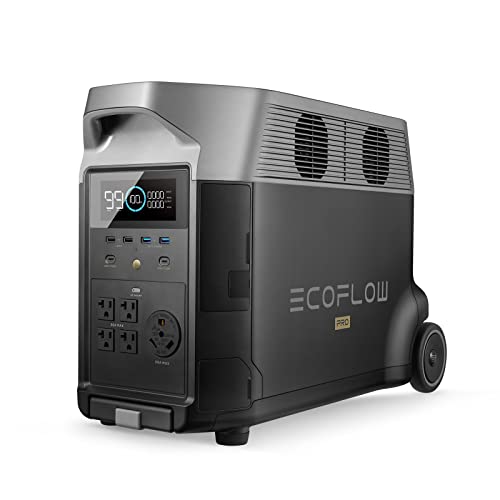
EF ECOFLOW Portable Power Station 3600Wh DELTA Pro, 120V AC Outlets x 5, 3600W, 2.7H Fast Charge, Lifepo4 Power Station, Solar Generator for Home Use, Power Outage, Camping, RV, Emergencies : Patio, Lawn & Garden
<strong>Fully recharge the lifepo4 battery in 1.8 hrs with 240V outlets(3000W), 2.7 hrs with 1800W wall outlets or solar charged in 2.8 hours with 4*400W solar panels</strong> thanks to the industry-l
Check Price on AmazonRecommended Products
Photovoltaics: Design and Installation Manual: Solar Energy International
It also includes chapters on sizing photovoltaic systems, analyzing sites and installing PV systems, as well as detailed appendices on PV system maintenance, troubleshooting and solar insolation data
Sense Energy Monitor with Solar – Track Electricity Usage and Solar Production in Real Time
KNOW WHAT’S ON: Track how much electricity you’re using, what time your kids got home, or when someone leaves the basement light on. Sense <strong>identifies patterns in your energy use to help your f
EF ECOFLOW Portable Power Station 3600Wh DELTA Pro, 120V AC Outlets x 5, 3600W, 2.7H Fast Charge, Lifepo4 Power Station, Solar Generator for Home Use, Power Outage, Camping, RV, Emergencies : Patio, Lawn & Garden
<strong>Fully recharge the lifepo4 battery in 1.8 hrs with 240V outlets(3000W), 2.7 hrs with 1800W wall outlets or solar charged in 2.8 hours with 4*400W solar panels</strong> thanks to the industry-l