
Solar in Kentucky: Costs, Incentives & Top Installers (2026)

Why solar in Kentucky matters now
Kentucky homeowners are paying roughly 12–13¢ per kWh for electricity on average in 2024–2025, according to the U.S. Energy Information Administration (EIA). While that’s below the national average, residential rates in Kentucky have risen in recent years alongside fuel and grid costs. With fixed-tilt solar in the state capable of producing about 1,300–1,450 kWh per kW of DC capacity per year (NREL PVWatts), “solar in Kentucky” can offset a meaningful share of household demand and hedge against future rate increases—especially when paired with right-sized systems and smart load management.

Solar Electricity Handbook - 2023 Edition: A simple, practical guide to solar energy – designing and installing solar photovoltaic systems: Boxwell, Michael
Solar Electricity Handbook - 2023 Edition: <strong>A simple, practical guide to solar energy – designing and installing solar photovoltaic systems</strong> [Boxwell, Michael] on Amazon.com. *FREE* shi
Check Price on AmazonThis 2026 guide explains Kentucky’s solar potential, current costs per watt, incentives and net metering rules, how the federal tax credit applies, top installers to consider, expected payback periods, and practical permitting steps.
By the numbers: Kentucky solar at a glance
- Peak sun hours (fixed tilt): ~4.2–4.7 sun hours/day, varying by location (NREL NSRDB)
- Specific yield: ~1,300–1,450 kWh per kWdc per year (NREL PVWatts, modeled for Louisville–Lexington range)
- Typical residential system size: 6–10 kWdc
- Installed cost (before incentives): $2.40–$3.10/Wdc (EnergySage Marketplace data; LBNL Tracking the Sun 2024 trendlines)
- 30% federal tax credit (IRA) available through 2032
- Net metering: export credit set by utility-specific tariff approved by Kentucky PSC (post–SB 100), generally below full retail rate
- State SRECs: none (no solar carve-out market)
- Emissions impact: offsetting ~7–9 metric tons CO2 per year for a ~7–8 kW system, based on EPA eGRID regional emissions factors and NREL production estimates
1) Solar energy potential in Kentucky: sun hours, irradiance, and climate factors
- Irradiance: Kentucky sits in a moderate solar resource zone. NREL’s National Solar Radiation Database indicates Global Horizontal Irradiance (GHI) typically in the 4.3–4.7 kWh/m²/day range statewide.
- Production: A properly oriented, fixed-tilt residential array typically delivers ~1,300–1,450 kWh/kWdc annually. For example, a 7 kWdc system could produce about 9,100–10,100 kWh per year—often covering 60–90% of a household’s annual load, depending on usage and roof conditions.
- Weather & climate considerations:
- Cloudiness and humidity in summer modestly reduce output compared with the Desert Southwest, but Kentucky’s cooler spring and fall improve panel efficiency.
- Hail and thunderstorms are part of Kentucky’s risk profile. Choose modules tested to IEC 61215 hail standards (e.g., 25 mm ice at 23 m/s) and verify your installer’s mounting/wind load engineering.
- Snow is typically light to moderate in most of Kentucky; tilt angles of 25–35° encourage natural shedding and minimize winter losses.
2) Average cost of solar panels in Kentucky and price-per-watt breakdown
Residential solar pricing in 2026 varies by equipment class, roof complexity, and installer. Based on recent marketplace quotes (EnergySage) and national cost trends (LBNL Tracking the Sun 2024), Kentucky homeowners typically see:
- Pre-incentive installed price: $2.40–$3.10/Wdc for turnkey residential projects
- Typical system costs (before incentives):
- 6 kWdc: ~$14,400–$18,600
- 8 kWdc: ~$19,200–$24,800
- 10 kWdc: ~$24,000–$31,000
Price-per-watt drivers:
- Equipment efficiency and brand: Premium high-efficiency panels and microinverters add ~$0.20–$0.50/Wdc.
- Roof material and pitch: Steep, multi-plane, or slate/metal roofs increase labor and racking costs.
- Electrical upgrades: Service panel upgrades (e.g., from 100A to 200A) can add $1,500–$3,500.
- Battery storage: Add ~$900–$1,400 per kWh of usable capacity (installed) depending on brand and configuration.
Note on 2026 supply chain: Module prices softened globally from 2023–2025 as manufacturing expanded, but U.S. pricing reflects domestic content preferences, tariffs, and labor. Kentucky’s installed prices track the broader Midwest/Southeast—generally below coastal averages but above the national rock bottom achieved in the highest-competition markets.
3) Kentucky solar incentives: state tax credits, rebates, net metering, and SRECs
- State tax credits: As of 2026, Kentucky does not offer a statewide personal income tax credit for residential solar PV (DSIRE; Kentucky Department of Revenue). Most households rely on the federal 30% tax credit.
- Sales or property tax incentives: There is no statewide residential sales tax or property tax exemption specifically for solar PV. Check with your county property valuation administrator (PVA) for how improvements are assessed; practices can vary.
- Utility or local rebates: Some municipal utilities and electric cooperatives periodically offer limited-time rebates or low-interest financing for energy efficiency or renewables. Availability is patchy—ask your installer to check your utility’s current programs.
- Net metering (export credit):
- Kentucky revised its net metering framework with SB 100 (2019). For systems installed under the newer tariffs, excess generation exported to the grid is credited at a utility-specific rate approved by the Kentucky Public Service Commission (PSC), typically below the full retail rate.
- The export rate often reflects components like avoided energy, capacity, and line losses. In practice, credits may be ~25–60% of the retail rate depending on the utility’s approved tariff.
- System sizing and load shifting matter more under these rules. Households that self-consume a higher share of production see faster payback than those exporting large midday surpluses.
- SRECs: Kentucky has no solar renewable energy certificate (SREC) market because the state lacks a solar carve-out in a Renewable Portfolio Standard.
4) The federal ITC and how it applies to Kentucky homeowners
The federal Investment Tax Credit (ITC) remains at 30% for residential solar through 2032 under the Inflation Reduction Act (IRA). Key points (IRS; U.S. DOE):
- Eligible costs: Panels, inverters, racking, balance-of-system hardware, wiring, permitting, and labor. Roofing costs are eligible only if directly related to solar installation (e.g., necessary structural upgrades for the array area).
- Standalone batteries: Residential battery systems of 3 kWh+ installed in 2023 or later qualify for the 30% credit even without solar, and solar-coupled batteries qualify as well.
- Tax liability: The ITC reduces your federal income tax liability; it is not a refundable credit. Unused amounts can roll forward to future tax years subject to IRS rules.
- Timing: You claim the credit for the tax year the system is placed in service (passes final inspection/permission-to-operate).
Example: An 8 kW system at $2.70/Wdc costs $21,600 before incentives; the 30% ITC is $6,480, dropping the net cost to about $15,120—before considering any utility rebates or financing costs.
5) Best solar installers and companies serving Kentucky
Installer quality and service track record drive long-term performance. Look for NABCEP-certified professionals, strong workmanship warranties (10+ years), and bankable equipment with 25-year performance guarantees. Reputable companies serving much of Kentucky include:
- Solar Energy Solutions (SES) — Kentucky-based regional installer with operations across KY/IN/OH. Known for NABCEP-certified crews and a mix of microinverter and string+optimizer designs. Offers residential, commercial, and battery storage.
- Icon Solar — Greater Cincinnati/Northern Kentucky installer with long tenure in the tri-state area. Emphasis on comprehensive site evaluation and right-sizing systems for net-billing economics.
- Solar Is Freedom — Cincinnati-based installer active in Northern Kentucky; provides roofing coordination and multiple panel/inverter options.
- Local electrical contractors with solar divisions — In markets like Louisville–Lexington, established electricians have launched solar practices; ask about dedicated solar teams and references.
- National dealer networks — Brands like SunPower often have certified dealers covering parts of Kentucky. Dealer-based models can offer top-tier modules and consolidated warranties; verify who services the system locally.
What to ask prospective installers:
- Are designers/crew leaders NABCEP-certified? Who handles structural/electrical stamps?
- What is the modeled annual production (kWh) and the assumed degradation rate in the proposal?
- How are export credits modeled under my specific utility tariff? What self-consumption percentage is assumed?
- What is the workmanship warranty term? Who handles warranty claims for modules/inverters?
- Interconnection and PTO timeline with my utility based on recent projects?
Equipment picks that fit Kentucky conditions:
- High-efficiency, hail-rated modules with strong wind/snow load specs
- Inverter architectures that handle shade diversity (e.g., microinverters or DC optimizers) in leafy neighborhoods
- Batteries sized for backup-critical loads rather than arbitrage, unless you’re on a time-of-use pilot
Affiliate recommendations (data-backed):
- Based on high module efficiencies and robust 25-year product/performance coverage, the REC Alpha Pure-R line represents strong value for residential installations targeting constrained roof space.
- For complex roofs and shade mitigation, Enphase IQ8 microinverters enable panel-level optimization and provide grid-forming capability with a compatible battery for daytime backup.
- If backup power is a priority, the Powerwall 3 offers integrated inverter architecture and competitive usable capacity per dollar; in Kentucky’s net-billing context, it’s best sized to back up essentials rather than whole-home for cost-effective resilience.
6) ROI and payback period for solar in Kentucky
Payback depends on four main inputs: installed price, production, your utility’s retail rate, and the export credit for excess generation. Using NREL PVWatts production and EIA rate data:
Example scenario (owner-occupied home):
- System: 7 kWdc at $2.70/Wdc = $18,900 before incentives
- ITC: 30% = -$5,670; net cost ~$13,230
- Production: ~9,500 kWh/year
- Retail rate: ~12.5¢/kWh; export credit: utility tariff, often below retail
- Self-consumption share: 55–75% depending on household schedule and load shifting
Modeled outcomes:
- Higher self-consumption case (70% self-use, 30% exported at 50% of retail):
- Annual savings ≈ (0.70 × 9,500 × $0.125) + (0.30 × 9,500 × $0.0625) ≈ $831 + $178 ≈ $1,009/year
- Simple payback ≈ $13,230 / $1,009 ≈ 13.1 years
- Moderate self-consumption (60% self-use, 40% exported at 50% of retail):
- Savings ≈ (0.60 × 9,500 × $0.125) + (0.40 × 9,500 × $0.0625) ≈ $713 + $238 ≈ $951/year
- Payback ≈ $13,230 / $951 ≈ 13.9 years
- With premium equipment/pricing ($3.00/Wdc) or lower export credit shares, payback lengths can extend into the 14–16 year range. Conversely, sharper pricing ($2.40–$2.60/Wdc), excellent roof orientation, and active load shifting can bring payback toward 10–12 years.
Financing considerations:
- Low-interest home equity lines (HELOCs) can keep carrying costs below bill savings. Zero-down solar loans increase total interest paid; compare APR and dealer fees carefully.
- Batteries in Kentucky are primarily a resilience investment; they lengthen payback unless your utility offers time-varying rates or you place high value on backup.
Home value impact: A national Zillow analysis found solar homes sold at a ~4.1% premium (2019). While local appraisals vary, owned systems with documentation (warranties, production logs) are more likely to be accurately valued than third-party-owned systems.
7) Kentucky-specific permitting, HOA rules, and interconnection process
Permitting
- Authority Having Jurisdiction (AHJ): City or county building departments (e.g., Louisville Metro, Lexington-Fayette Urban County) typically require electrical permits and may require structural review for roof load.
- Codes: Most Kentucky jurisdictions have adopted recent National Electrical Code (NEC) editions (2020 or 2023 in many places). Your installer will produce a site-specific plan set and equipment cut sheets.
- Timeline: 2–6 weeks for permits in many jurisdictions; rural areas can be faster.
HOA rules
- Kentucky does not have a statewide solar rights statute prohibiting HOA restrictions. Review your covenants, conditions, and restrictions (CC&Rs). Many HOAs allow solar with design review focused on aesthetics (flush mounting, color-matched conduit). Early communication and a complete plan set expedite approval.
Utility interconnection
- Process: Application submission (site plan, single-line diagram, spec sheets) → utility engineering review → meter upgrade scheduling → city/county inspection → Permission to Operate (PTO).
- Export credit enrollment: Your installer will enroll you in the utility’s net metering/net billing tariff and set up the bi-directional meter if required.
- Timeline: 2–8 weeks post-install for PTO is common, varying by utility and season.
- Safety: Utilities follow IEEE 1547 interconnection standards. Anti-islanding protection is standard; systems shut down during outages unless paired with a battery-backed, UL 1741 SB–listed inverter system.
Practical tip: Ask your installer for recent interconnection timelines with your specific utility and whether any queue backlogs or transformer upgrades affect your neighborhood.
8) FAQ: Common questions about going solar in Kentucky
How big should my system be?
- Aim to cover 80–100% of your annual usage on paper, then adjust for your utility’s export credit. Right-sizing to increase self-consumption (e.g., 60–75%) often beats oversizing under Kentucky’s net-billing structure.
Do I need a battery in Kentucky?
- Not for standard grid-tied operation. Batteries are most compelling for backup power during storms. Without time-of-use rates, batteries rarely improve financial payback—but they add resilience.
Which direction should panels face?
- South-facing at 25–35° tilt maximizes annual output. West-facing can improve late-afternoon production and self-consumption if your household’s peak use is after school/work.
How will snow and hail affect performance?
- Snow losses are modest in most of Kentucky and typically recede quickly. Choose hail-tested modules and confirm racking wind/snow load ratings that match your county’s code requirements.
What maintenance is required?
- Solar is low-maintenance: occasional inspection, debris removal, and inverter firmware updates. Keep trees trimmed to limit shading. Most module warranties cover 25 years of performance with <0.25–0.6% annual degradation depending on brand.
Can I install ground mounts?
- Yes, with appropriate setbacks and zoning approvals. Ground mounts can optimize tilt/azimuth and reduce shading but add racking/foundation costs.
Will solar work with my metal or slate roof?
- Yes. Experienced installers use roof-specific attachments (e.g., standing seam clamps) that preserve roof integrity. Labor costs can be higher than for composite shingle roofs.
Can I charge an EV from solar?
- Absolutely. A 7 kW system producing ~9,500 kWh/year can cover roughly 25,000–30,000 EV miles annually at 3.2–3.8 miles/kWh, depending on driving and charging habits.
Practical next steps for Kentucky homeowners
- Gather 12 months of utility bills to quantify your kWh use and seasonal patterns.
- Get at least three bids with apples-to-apples comparisons: system size (kWdc), modeled production (kWh), equipment brands, total cost, and export credit assumptions under your specific utility.
- Prioritize self-consumption: consider shifting laundry, dishwashing, and EV charging to daylight hours; ask about load controllers or smart panels.
- Consider hail/wind resilience: verify module certifications and racking engineering for local code loads.
- If you live near the Indiana border, compare cross-state pricing and policies. For a regional benchmark, see our guide to Solar in Indiana: Costs, Incentives & Top Installers (2026).

Emporia Gen 2 Smart Home Energy Monitor with 16 50A Circuit Level Sensors | Real Time Electricity Monitor/Meter | Solar/Net Metering - Amazon.com
View on AmazonWhere Kentucky solar is heading
- Technology: Module efficiencies continue to inch up (TopCon, HJT, and tandem architectures), enabling more kWh from limited roof space. Inverters are adding grid-forming and advanced grid support features (UL 1741 SB) as utilities modernize.
- Pricing: Hardware costs remain favorable, but installed prices will depend on labor markets and domestic manufacturing premiums. Expect Kentucky’s pricing to remain competitive within the Midwest/Southeast band.
- Tariffs and export credits: With net-billing firmly in place, system design will increasingly emphasize self-consumption—smart load controls, daytime EV charging, and targeted storage for critical loads.
- Resilience: Severe weather underscores the value of battery-backed circuits and whole-home surge protection. Expect more installers to bundle backup packages tailored to Kentucky’s storm profile.
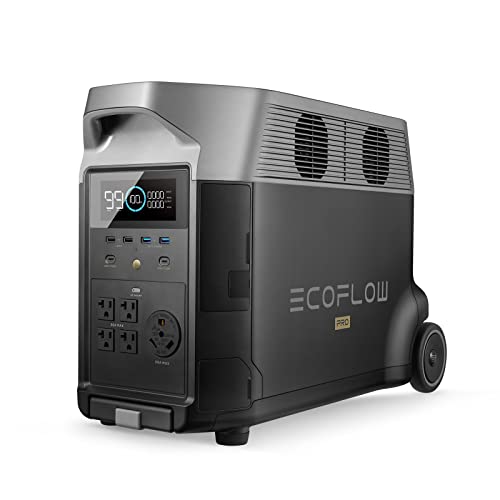
EF ECOFLOW Portable Power Station 3600Wh DELTA Pro, 120V AC Outlets x 5, 3600W, 2.7H Fast Charge, Lifepo4 Power Station, Solar Generator for Home Use, Power Outage, Camping, RV, Emergencies : Patio, Lawn & Garden
<strong>Fully recharge the lifepo4 battery in 1.8 hrs with 240V outlets(3000W), 2.7 hrs with 1800W wall outlets or solar charged in 2.8 hours with 4*400W solar panels</strong> thanks to the industry-l
Check Price on AmazonWith the 30% federal ITC secure through 2032, moderate but solid solar resource, and careful attention to net-billing economics, solar in Kentucky remains a strong long-term hedge against rising grid costs—especially for homes with favorable roofs, daytime loads, and a focus on durable equipment and quality installation.
Recommended Products
Solar Electricity Handbook - 2023 Edition: A simple, practical guide to solar energy – designing and installing solar photovoltaic systems: Boxwell, Michael
Solar Electricity Handbook - 2023 Edition: <strong>A simple, practical guide to solar energy – designing and installing solar photovoltaic systems</strong> [Boxwell, Michael] on Amazon.com. *FREE* shi
Emporia Gen 2 Smart Home Energy Monitor with 16 50A Circuit Level Sensors | Real Time Electricity Monitor/Meter | Solar/Net Metering - Amazon.com
See how much electricity your home is using anywhere, anytime. ... <strong>Add individual 50A sensors to your Vue to monitor up to 16 individual circuits</strong> — providing accurate energy use for t
EF ECOFLOW Portable Power Station 3600Wh DELTA Pro, 120V AC Outlets x 5, 3600W, 2.7H Fast Charge, Lifepo4 Power Station, Solar Generator for Home Use, Power Outage, Camping, RV, Emergencies : Patio, Lawn & Garden
<strong>Fully recharge the lifepo4 battery in 1.8 hrs with 240V outlets(3000W), 2.7 hrs with 1800W wall outlets or solar charged in 2.8 hours with 4*400W solar panels</strong> thanks to the industry-l