
Tesla Solar in Kentucky: Panels, Roof & Pricing Guide (2026)
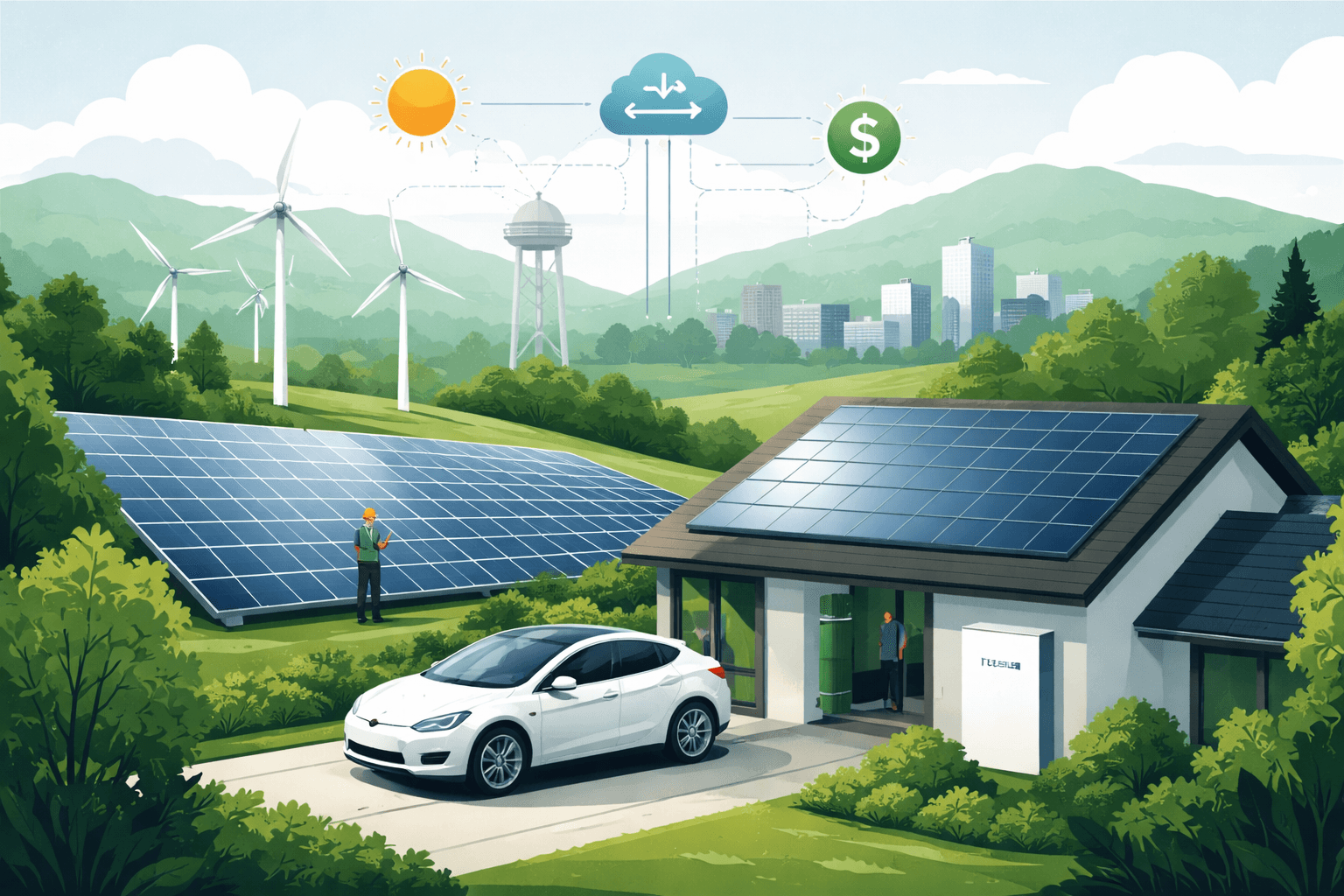
Kentucky homeowners are asking a focused question in 2026: is Tesla Solar in Kentucky a good deal right now? With the 30% federal tax credit still live, coal-heavy grid emissions, and rising resilience needs after severe weather, the timing is compelling. NREL’s PVWatts suggests a well-sited 1 kW array in central Kentucky can generate roughly 1,300–1,500 kWh per year, enough that an 8 kW Tesla system could offset most of a typical home’s annual use depending on net metering and shading (NREL PVWatts). Meanwhile, the U.S. Energy Information Administration (EIA) reports Kentucky residential customers use more electricity than the national average, so each solar kWh displaces more utility spend—and more carbon—than in many states (EIA State Energy Data, 2025 update).
This guide explains Tesla’s products, pricing, ordering steps, incentives, real-world feedback from Kentucky owners, and how Tesla compares with local installers in 2026.
By the numbers: Tesla Solar in Kentucky
- 30% federal tax credit (Investment Tax Credit, ITC) through 2032 for eligible solar and batteries (U.S. Treasury/IRS guidance under the Inflation Reduction Act)
- 1 kW of solar in Kentucky: ~1,300–1,500 kWh/year production (NREL PVWatts)
- Typical system size for a single-family home: 6–10 kW
- Powerwall 3 usable capacity: 13.5 kWh; 10-year warranty (Tesla datasheet)
- Kentucky grid mix remains coal-heavy, so a typical 8 kW system can offset an estimated 6–9 metric tons CO2 annually depending on utility and export rates (EPA emissions factors, EIA generation mix)

Solar Electricity Handbook - 2023 Edition: A simple, practical guide to solar energy – designing and installing solar photovoltaic systems: Boxwell, Michael
Solar Electricity Handbook - 2023 Edition: <strong>A simple, practical guide to solar energy – designing and installing solar photovoltaic systems</strong> [Boxwell, Michael] on Amazon.com. *FREE* shi
Check Price on AmazonTesla Solar in Kentucky: products available
Tesla sells three residential offerings that are generally available in Kentucky through Tesla crews or certified installers:
Tesla Solar Panels: Black, high-efficiency monocrystalline modules paired with Tesla’s string inverter and native monitoring in the Tesla app. Typical module power ratings are in the ~400 W class with all-black aesthetics. Systems are roof-mounted on racking compatible with asphalt shingle, metal, and some tile roofs. Capacity factor (the percentage of time a system generates at its full rated output) depends on sun angle, weather, and shading; in Kentucky, annual output is strong for south- or west-facing arrays.
Tesla Solar Roof: A building-integrated photovoltaic (BIPV) roof that replaces your existing roofing with PV tiles and non-generating tiles. It’s primarily for full reroofs or new construction where homeowners want integrated aesthetics. Production density (watts per square foot) is lower than panels, and costs vary widely with roof complexity.
Tesla Powerwall bundles: Powerwall 3 integrates an inverter for direct PV-to-battery connection, supports backup, and delivers 13.5 kWh of storage with higher on-grid and off-grid power than earlier versions. Many Kentucky buyers pair 1–2 Powerwalls for storm resilience and time-based control. For a deeper dive on costs and availability, see our local guide: Tesla Powerwall in Kentucky: Cost, Availability & Is It Worth It?.
What’s actually available to you depends on roof type, span, snow/wind loads, and local permitting. Tesla can typically install panels on most shingle and standing-seam metal roofs statewide; Solar Roof access may be more limited in rural counties and complex multi-plane roofs.
Tesla Solar pricing in Kentucky: panels vs. Solar Roof
National pricing for residential PV hovered around $2.90–$3.50 per watt (W) before incentives in recent years, depending on hardware and market (LBNL Tracking the Sun, 2024; SEIA/Wood Mackenzie U.S. Solar Market Insight, 2025). Tesla often undercuts local averages because of standardized designs and vertical integration. As of early 2026, Tesla’s online configurator in Southeast markets frequently quotes roughly $2.30–$2.70/W before incentives for typical homes, though final site conditions drive the exact price (Tesla.com quotes vary by ZIP and roof complexity).
Example panel system (estimates for illustration):
- 8 kW Tesla Solar Panels at $2.50/W: $20,000 before incentives
- Federal 30% ITC: −$6,000
- Net cost after ITC: ~$14,000 (excludes permitting or electrical upgrades if required)
Production and savings context:
- 8 kW in Kentucky could produce ~10,400–12,000 kWh/year (NREL PVWatts, typical roof tilt and azimuth)
- Kentucky residential rates have historically been lower than U.S. averages, but with high household consumption, annual utility spend is still meaningful (EIA). Payback depends heavily on your utility’s net metering export credit—see the incentives section.
Solar Roof cost comparison:
- Tesla Solar Roof pricing varies widely with roof size, pitch, stories, obstructions, and required structural work. Publicly reported quotes and marketplace data often place Solar Roof projects at a substantially higher total cost than a panel retrofit, because you’re paying for a new premium roof and PV together. Depending on home size and complexity, many Kentucky homeowners report Solar Roof all-in quotes in the tens of thousands beyond a comparable panel system, even after the ITC (EnergySage marketplace analyses; consumer-reported quotes 2024–2026). Solar Roof can be more cost-competitive if you already plan a full reroof with a premium material and value the aesthetics.
Important caveats:
- Site-specific conditions (structural upgrades, service panel changes, trenching) add cost.
- Batteries add roughly five figures per Powerwall before incentives; see the Powerwall link above for Kentucky-specific battery economics.
How to order Tesla Solar in Kentucky: timeline, site assessment, and installation
Tesla’s process is mostly digital and standardized:
- Online design and quote
- You enter your address and typical electric bill. Tesla uses satellite imagery and LiDAR where available to size the system and ballpark production.
- You can add Powerwall and select preferred system size. A refundable order fee may apply.
- Remote/onsite assessment
- Tesla (or a certified installer) verifies roof condition, rafters, setbacks, and main electrical service. They finalize layout, conduit paths, and inverter/battery placement.
- Permitting and utility interconnection
- Tesla submits electrical and structural permits to your Authority Having Jurisdiction (AHJ) and interconnection applications to your utility.
- In Kentucky, investor-owned utilities and co-ops follow state net metering and export credit rules set by the Kentucky Public Service Commission (PSC). Interconnection review commonly takes a few weeks to a couple of months, depending on utility workload.
- Installation
- Panels: commonly 1–2 days onsite for typical homes.
- Solar Roof: often 3–5+ days, depending on roof complexity and square footage.
- Powerwall: add 4–10 hours depending on service panel upgrades and transfer switches.
- Inspection, PTO, and activation
- Local inspection occurs shortly after install. Once the utility grants Permission to Operate (PTO), Tesla activates monitoring in the Tesla app.
Typical timeline: 6–12 weeks from order to PTO is common in Kentucky, but schedules range wider based on county permitting and utility queues. Tesla’s app tracks milestones; good communication about tree trimming, roof work, or panel upgrades helps avoid delays.
Kentucky solar incentives that apply to Tesla installations
- Federal ITC (30%): Applies to eligible solar equipment and stand-alone batteries installed through 2032. Batteries paired with solar or installed separately now qualify if they meet capacity requirements (U.S. Treasury/IRS, IRA guidance).
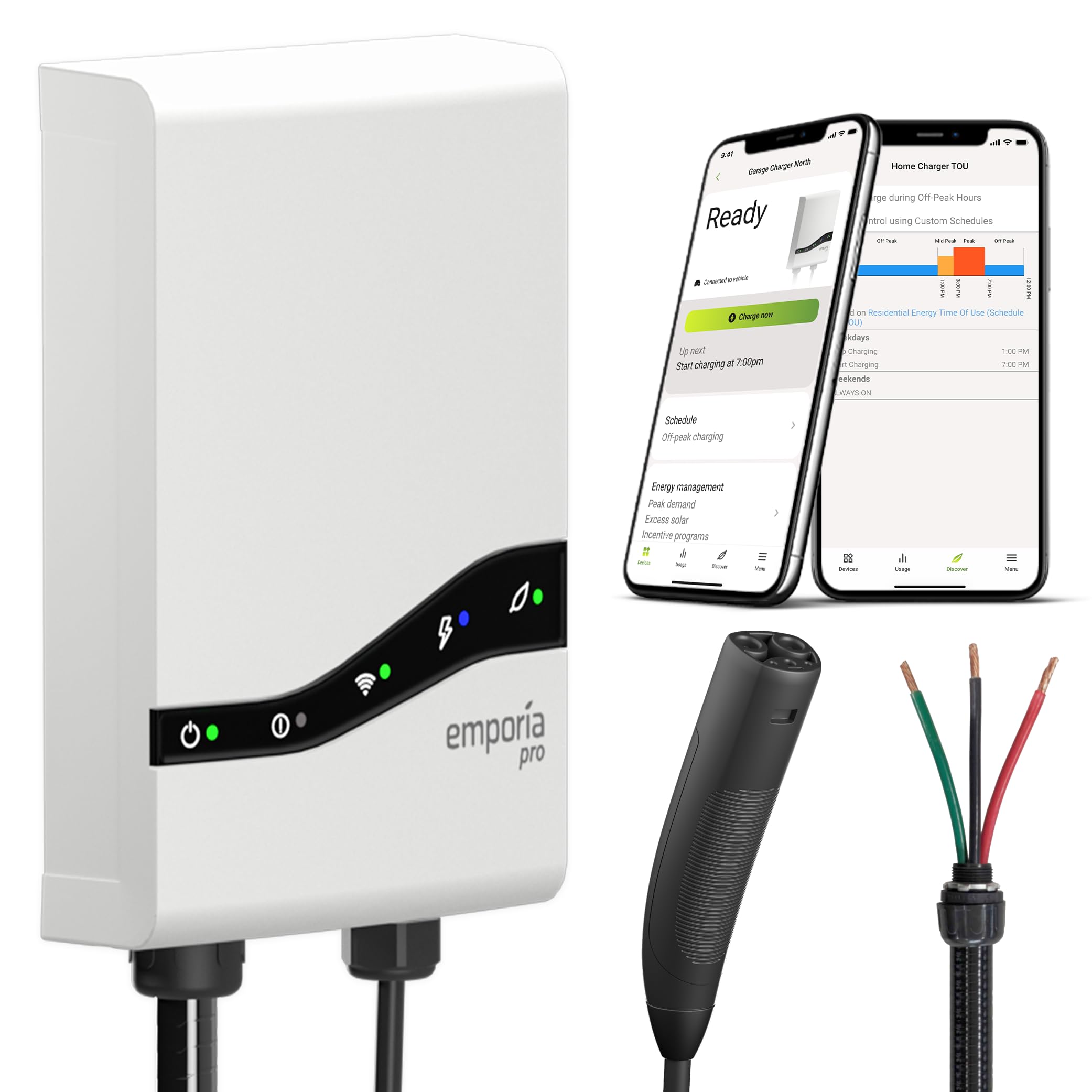
Emporia Pro Level 2 EV Charger with PowerSmart, ...
View on AmazonNet metering and export credits: Kentucky’s net metering framework changed under SB 100 (2019), allowing the PSC to set export credit rates for new customers. New solar customers typically receive a monthly bill credit for excess generation exported to the grid, but at a rate lower than the full retail rate. Credit values and terms vary by utility (e.g., LG&E/KU, Duke Energy Kentucky, AEP/Kentucky Power, and electric co-ops). This structure slightly lengthens payback versus 1:1 retail netting and makes right-sizing and daytime self-consumption strategies—like EV charging or running heat pumps during sunny hours—more valuable (Kentucky PSC orders, 2021–2025).
State incentives: Kentucky does not currently offer a statewide residential solar tax credit. Local jurisdictions may have permitting fee differences, but broad sales tax or property tax exemptions for residential PV are not widely available as of 2026. Always verify the latest programs via DSIRE (Database of State Incentives for Renewables & Efficiency) and your utility’s tariff.
For a broader run-down of typical system costs, financing, and city-by-city context, see our companion guide: Solar in Kentucky: Costs, Incentives & Top Installers (2026).
Tesla Solar reviews from Kentucky customers: what owners actually report
Public review platforms and customer forums from 2024–2026 show consistent themes in Kentucky and neighboring states:
What owners like
- Pricing and transparency: The online configurator and standardized hardware often deliver a lower $/W quote than local competitors (supported by EnergySage marketplace data and LBNL price trends).
- Clean aesthetics and app: All-black modules and integrated monitoring get high marks. Power outage performance with Powerwall is frequently praised during severe weather.
- One-vendor ecosystem: A single app for PV, battery, and EV charging simplifies energy management.
What owners flag as challenges
- Scheduling and communication: Some Kentucky customers report longer-than-expected intervals between milestones (design, permit, install, PTO), particularly during peak season or after storms.
- Subcontractors and roof nuance: Tesla relies on local crews in parts of Kentucky; workmanship is generally solid but communication quality can vary. Complex or aging roofs may require pre-work.
- Export credits below retail: New net metering structures reduce bill credit value for exports, so systems that were oversized for future EVs or electrification may feel less “instant payback” without load-shifting strategies.
Takeaway: Satisfaction tends to be highest when the system is sized to your daytime loads, you plan for a realistic 6–12 week timeline, and your roof is in good condition.
Tesla vs. local Kentucky installers: pros, cons, and price comparison
Pros of Tesla
- Competitive pricing and standardization: Often 10–20% below marketplace medians in many regions according to EnergySage’s 2024–2025 Marketplace Intel.
- Strong battery integration: Powerwall 3 pairs tightly with Tesla’s inverter and app.
- Scalable monitoring: Simple solar+battery+EV energy management.
Cons of Tesla
- Less customization: Fewer racking/optimizer options and less flexibility with specialty roofs.
- Variable communication: Centralized support can be slower than a local shop owner who picks up the phone.
- Solar Roof availability: Access and timelines are more variable than panels.
Pros of local installers
- Tailored designs: Microinverters, optimizers, specialty racking for metal or tile, and creative layouts around dormers or dormer valleys.
- Hands-on service: Direct contact with project managers who know your AHJ and co-op.
- Maintenance relationships: Easier to schedule site visits years later.
Price snapshot
- Kentucky quotes from full-service local installers frequently land in the ~$2.90–$3.60/W pre-ITC range for premium hardware, and occasionally lower on aggressive promotions (EnergySage, LBNL). Tesla often prices below this band, but not always—especially on small systems, very steep roofs, or long wire runs.
Hardware alternatives to consider if you shop locally
- Panels: Based on performance and 25-year product warranties, Qcells Q.PEAK DUO BLK 425W modules represent strong value in many residential designs.
- Inverters: For complex roofs with multiple orientations or shading, Enphase IQ8 Microinverters deliver module-level optimization and rapid shutdown compliance.
- Load management: Pairing solar with a Sense Home Energy Monitor can maximize self-consumption under Kentucky’s export credit rules by shifting flexible loads to sunny hours.
If you want quotes from local firms alongside Tesla’s number, we track reputable options in our statewide overview here: Solar in Kentucky: Costs, Incentives & Top Installers (2026).
Tesla Solar warranty: what it covers in Kentucky
Tesla publishes standardized U.S. warranties; Kentucky installs follow the same terms:
Solar panels
- Performance warranty: Typically 25 years with a guaranteed output percentage at year 25 (Tesla panel datasheet). Performance warranties cover degradation; output generally tapers slightly each year.
- Product warranty: Often 12–25 years on workmanship and materials, depending on the exact module line.
Inverter
- Tesla’s string inverter carries a limited warranty (commonly 12.5 years on residential units). Inverters are the most likely component to need replacement in years 10–15 across the industry (NREL reliability studies).
Powerwall
- 10-year limited warranty with capacity retention terms (Tesla warranty). Designed for daily cycling for solar self-consumption and backup.
Workmanship/roof penetrations
- Limited warranties address roof penetrations and workmanship for a defined term. Verify your agreement for leak coverage details, especially if your roof is older.
Solar Roof
- Limited lifetime or 25-year roof weatherization and 25-year power output coverage for PV tiles, plus inverter and workmanship terms. Review your specific Solar Roof agreement, as coverage can vary with tile generation and install date.
As always, warranties require proper maintenance and exclude damage from extraordinary events. Kentucky’s hail and wind events make it worth confirming hail, wind, and snow load ratings in your final design package (UL/IEC certifications and manufacturer datasheets).
Practical implications for Kentucky homeowners
- Right-size for self-consumption: Because export credits for new customers are below retail rates, modeling your daytime loads (HVAC, water heating, EV charging) and shifting them to solar hours improves economics. Powerwall enhances this but isn’t required if your load profile already aligns with solar output.
- Roof check: If your roof is 10–15 years old, consider reroofing before panels to avoid future removal/reinstall costs. If you want BIPV aesthetics, compare Solar Roof’s “roof + PV” all-in cost to “new roof + conventional panels.”
- Resilience value: Outage minutes spike after severe weather. A single Powerwall can keep lights, refrigeration, internet, and a gas furnace blower running; two Powerwalls can support more whole-home loads. See our localized perspective: Tesla Powerwall in Kentucky: Cost, Availability & Is It Worth It?.

Sense Energy Monitor with Solar – Track Electricity Usage and Solar Production in Real Time
View on AmazonFAQ: common questions about Tesla Solar in Kentucky
Q: How does Kentucky’s net metering affect Tesla Solar payback? A: New solar customers typically receive export credits below the full retail rate, set by PSC-approved utility tariffs. That makes payback more sensitive to self-consumption. Many Kentucky homeowners still see double-digit internal rates of return over system life, especially when pairing solar with daytime loads or a battery.
Q: What system size is typical in Kentucky? A: Many homes land in the 6–10 kW range. Use a year of bills to estimate annual kWh, then divide by about 1,400 kWh/kW to estimate a first-pass system size. Final sizing should account for roof space, shading, and your plan to add an EV or heat pump.
Q: Will snow and ice ruin my production? A: Kentucky sees winter snow, but arrays are tilted and panels warm in sun, so snow typically sheds quickly. Annual production modeling already accounts for typical weather patterns (NREL PVWatts). Solar Roof tiles perform similarly once sun returns.
Q: Is Solar Roof available statewide? A: Tesla panels are widely available, but Solar Roof access can be more limited in rural areas or very complex roofs. Tesla or a certified installer will confirm feasibility after a structural and layout review.
Q: Can Tesla work with metal roofs? A: Yes, many standing-seam metal roofs are compatible with clamp-based racking that avoids penetrations. Corrugated or exposed-fastener metal may need different hardware. Tesla confirms during site assessment.
Q: How many Powerwalls do I need in Kentucky? A: One Powerwall (13.5 kWh) covers essential loads for many homes. Two or more support larger HVAC compressors or whole-home backup. Your installer will build a backed-up loads panel and estimate runtimes.
Q: What about hail and storms? A: Tesla panels and Solar Roof meet U.S. wind, fire, and impact certifications. Panels use tempered glass and aluminum frames; Solar Roof tiles have rated hail and wind performance per UL standards. Insure the system as part of your homeowner’s policy.
Q: Can I go off-grid with Tesla in Kentucky? A: Technically possible with sufficient solar and storage, but most Kentucky homes stay grid-tied for economics and reliability. Batteries are ideal for backup and bill optimization under export credits.
Q: Do HOAs in Kentucky allow solar? A: Kentucky doesn’t have a broad statewide “solar rights” statute limiting HOA restrictions. Many HOAs permit rooftop solar with design review. Seek written approval before proceeding.
Q: How long does installation take? A: The onsite work is usually 1–2 days for panels, longer for Solar Roof. The overall project—design to PTO—often spans 6–12 weeks depending on permits and utility timelines.
Where this is heading in 2026
Three trends shape Tesla Solar in Kentucky over the next few years:
- Storage-first designs: As export credits remain below retail, more Kentucky systems will include batteries or active load management. Powerwall 3’s integrated inverter simplifies this architecture.
- Electrification load growth: EVs and heat pump water heaters create daytime loads that raise solar self-consumption and improve payback. Smart devices and tariff-aware controls in the Tesla app help.
- Gradual price declines and higher module efficiency: Industry learning curves continue to reduce hardware costs and raise energy yield per square foot (IEA, NREL). That favors standardized providers like Tesla while keeping pressure on local installers to differentiate on service and customization.
If you value the lowest friction, strong pricing, and a single-app experience, Tesla is compelling. If you have a complex roof, want microinverters, or prefer a long-term local service partner, shop at least two local quotes alongside Tesla. Either way, model your actual usage and make the export-credit math work for Kentucky’s tariff environment.
Recommended Products
Solar Electricity Handbook - 2023 Edition: A simple, practical guide to solar energy – designing and installing solar photovoltaic systems: Boxwell, Michael
Solar Electricity Handbook - 2023 Edition: <strong>A simple, practical guide to solar energy – designing and installing solar photovoltaic systems</strong> [Boxwell, Michael] on Amazon.com. *FREE* shi
Sense Energy Monitor with Solar – Track Electricity Usage and Solar Production in Real Time
KNOW WHAT’S ON: Track how much electricity you’re using, what time your kids got home, or when someone leaves the basement light on. Sense <strong>identifies patterns in your energy use to help your f
Emporia Pro Level 2 EV Charger with PowerSmart, ...
EMPORIA Level 2 EV Charger w/ J1772 Connector — 48 Amp, 240V WiFi Enabled Electric Vehicle Charging Station, 25ft Cable, NEMA 14-50, White